
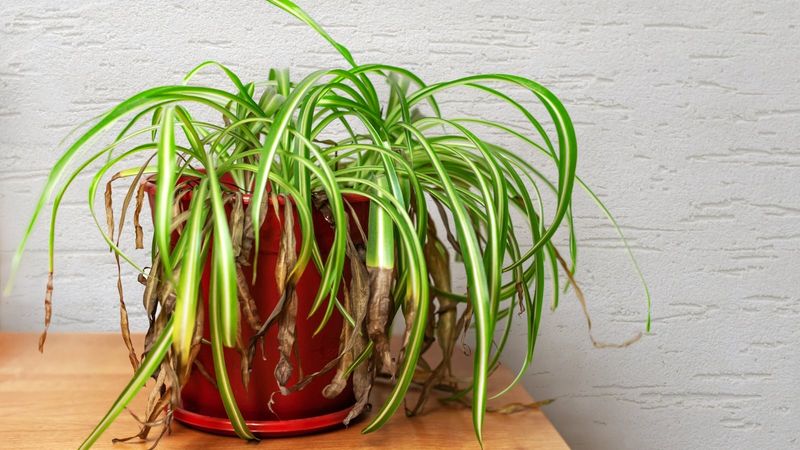
Those crispy brown tips on your spider plant can make a healthy-looking plant seem like it is struggling. Water is one possible cause, but it is not the only one.
A few simple checks can help you sort out what your plant is reacting to. Once you know the likely cause, you can choose a fix that actually fits.
Brown tips have more than one possible cause
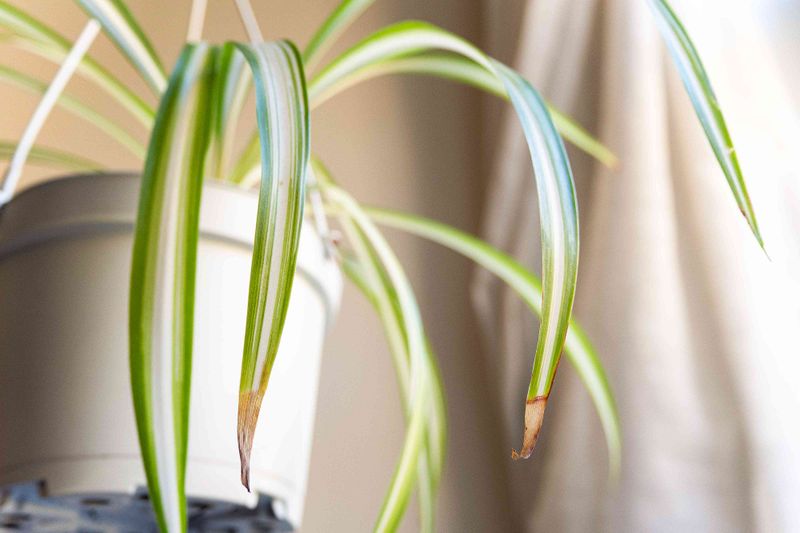
Brown tips are a symptom, not a verdict. Your watering can may play a part, but so can several other things in the room.
Fluoride or soluble salts in water can contribute, and Clemson Extension lists salty water alongside excess fertilizer, low humidity, and dry soil as possible causes.
Other habits can look the same on the leaf. Soil that dries out completely, then gets soaked, can brown the tips.
A pot with poor drainage can stress the roots. Too much fertilizer can leave salts behind that burn the leaf edges.
That is why a good plan checks the water and the plant’s care together. Iowa State Extension also lists low humidity, inconsistent watering, fertilizer salts, and chemicals in water as potential causes.
Work through the clues one at a time, and you are less likely to change the wrong thing.
If your plant sits near a heating vent or an air conditioner, note that too. Dry moving air can scorch tips all by itself.
Jot down what you see, because the next sections build on those notes.
Find out what is in your tap water
Guessing about your water will not get you far, because tap water differs from place to place. Start with your utility’s annual water-quality report, or call the utility and ask two questions.
Does the supply contain added fluoride, and which disinfectant is used?
Those are separate things. Fluoride is an ion in the water.
Chlorine and chloramine are disinfectants, and the CDC explains that utilities may use chlorine, chloramine, or in some cases no disinfectant. Some systems also have fluoride that occurs naturally, and the CDC has a fluoridation FAQ that explains how it works.
You may have heard that letting a watering can sit out overnight fixes everything. It is not a safe bet.
The CDC says standing water can lose chlorine over a few days but does not lose chloramine. Advice on fluoride is mixed, and some Extension guidance says it evaporates, so do not count on it.
Choose water that addresses the suspected cause
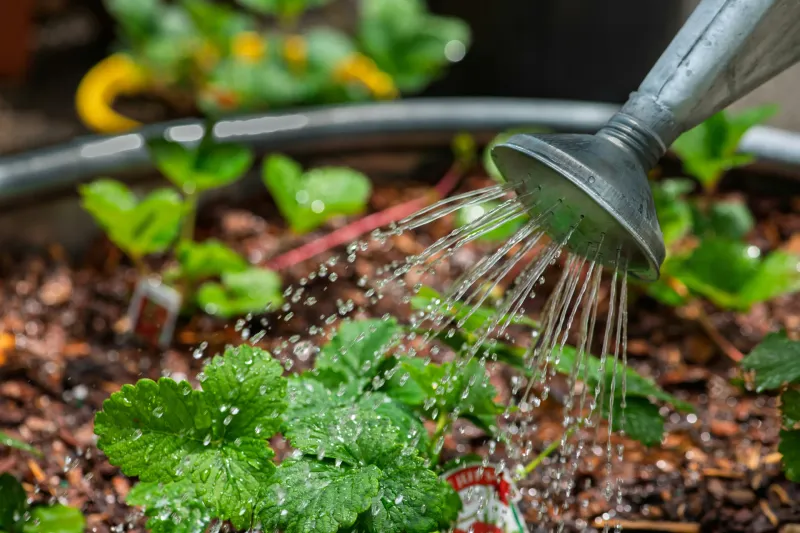
If your tap water is fluoridated, a different water source may help. UF/IFAS says spider plants are especially sensitive to fluoridated water and suggests rainwater or distilled water instead.
Collect rain in a clean container, and use it soon.
Skip water from a sodium-based softener. Penn State Extension explains that these systems swap calcium and magnesium for sodium, which can build up and harm plant growth.
A bathroom or kitchen tap on a softener loop is a poor choice for your plant.
Think of distilled water as a targeted tool for a fluoride-sensitive plant, not a rule for every houseplant. Virginia Tech Extension says tap water is generally fine for most houseplants.
It also notes that long-term use of mineral-free distilled water may lead to nutrient shortages in some plants. A new water source will not fix dry soil, low humidity, or heavy feeding.
Use a salt crust as a clue, not a diagnosis
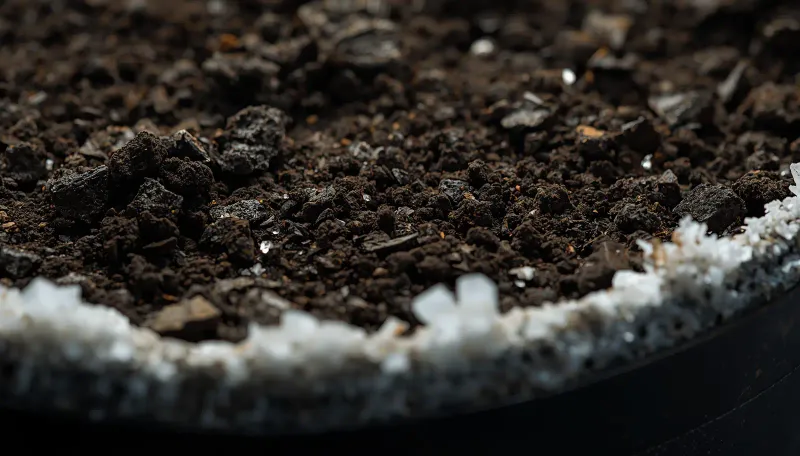
A white crust on the soil surface or along the pot rim is worth a closer look. It may point to mineral or fertilizer-salt buildup.
It does not tell you which one, and it does not prove salts are the reason for your brown tips.
Maryland Extension recommends flushing the growing medium from the top with several volumes of suitable water. Let the pot drain completely afterward, and do not let it sit in a saucer of runoff.
If the buildup is severe, repotting in fresh mix is the next step.
Flushing is a one-time cleanup, and it is different from changing your regular water source. A flush clears salts that have already collected.
Your everyday watering choice decides whether new salts keep arriving.
Scrape off the crust you can see, then flush. Check back in a few weeks to see if the crust returns, since quick return hints at an ongoing source such as hard water or frequent feeding.
Check watering, drainage, and fertilizer
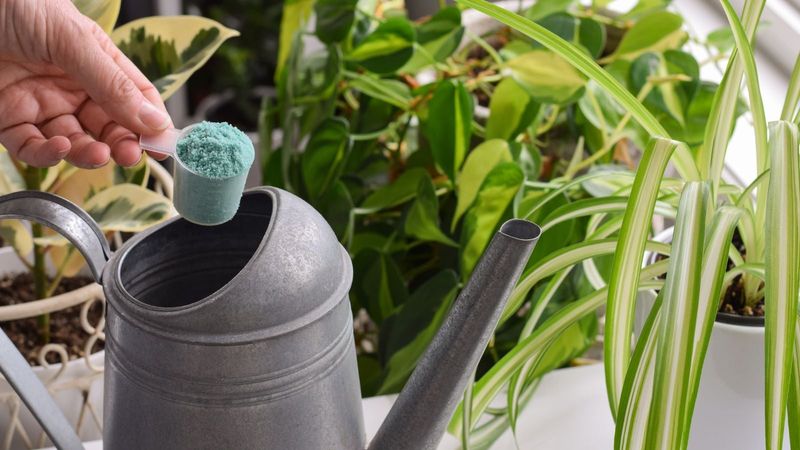
A water switch cannot repair a care routine that is off. Push a finger into the soil.
Clemson Extension advises letting the plant dry briefly between waterings, then watering thoroughly. It also warns that overwatering or poor drainage can cause root rot, so make sure the pot has holes and empty the saucer.
Next, think about how dry your plant gets. Iowa State treats low humidity, uneven watering, and fertilizer as separate possible causes of brown tips.
A plant by a heater, or one that wilts before each drink, may be telling you something other than a water-quality story.
Finally, look at your feeding habits. Wisconsin Horticulture notes that excess fertilizer and soluble salts can burn tips.
Cutting back on feeding may help, though no single change solves every case.
Judge progress by new growth
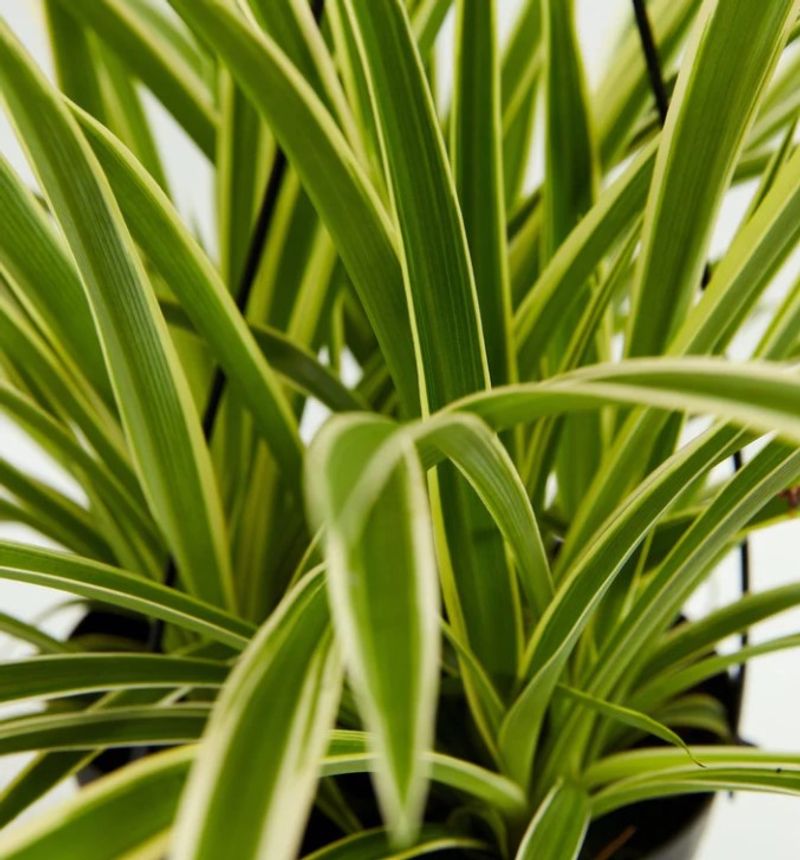
Brown tissue will not turn green again, so look at the newest leaves instead. You can snip off the damaged tips with clean scissors for looks.
Iowa State Extension notes that trimming improves appearance, but new browning can continue if the cause is still there.
Pick the most likely culprit, change one thing, and watch the next few leaves for a month or two. Clean tips on fresh growth are a good sign.
If browning returns, revisit your water source and the other care factors rather than assuming one change would settle it.
A plant tells its story slowly, one leaf at a time.