
A long, keeled lizard slipping under your garden shed can stop a homeowner cold, especially when it moves with the slow, side-winding glide of something much more dangerous. California alligator lizards get that reaction a lot, and some homeowners never give them a second chance. That’s worth reconsidering, because these native predators quietly work through snails, beetles, and other garden pests without touching a single plant. Understanding what they actually do, and what they don’t do, helps you make a smarter call the next time one shows up.
Meet the California Alligator Lizard
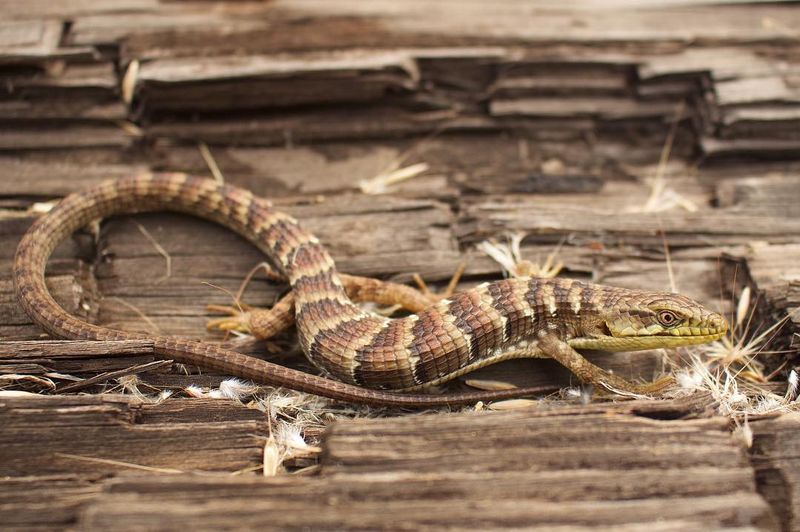
Spotted low in the grass or curled beneath a stepping stone, a California alligator lizard can genuinely startle someone who has never seen one before. The name alone does not help: “alligator lizard” sounds like something that belongs in a Florida swamp, not a suburban backyard in Riverside or Marin County. What the name actually refers to is the texture of the scales, which are heavily keeled and arranged in neat rows that give the skin a rough, plated look similar to an alligator’s hide.
“Alligator lizard” covers more than one California species. Southern alligator lizards range broadly across much of the state, while northern alligator lizards occupy parts of northern and central California. Telling them apart from a quick glance, or even a photograph, can be tricky. UC Statewide IPM guidance on California lizards notes that these animals are generally harmless to people and that leaving them alone is usually the right move.
Adults typically measure 8 to 13 inches from snout to tail tip, and their coloring runs from yellowish-green to olive-brown, sometimes with faint stripes or a mottled pattern along the back. The body is noticeably elongated relative to the short legs, which means the lizard moves with a sinuous, low-to-the-ground motion that reads as snake-like at a distance. That combination of movement, length, and rough texture is what triggers alarm in most homeowners.
Knowing the real risk profile matters. Alligator lizards are not closely related to alligators, they pose no threat to children or pets when encountered outdoors, and they do not damage plants. The National Park Service profile of the southern alligator lizard confirms their predatory role and their wide presence in California habitats. One important qualifier: “generally harmless” is not the same as “incapable of biting.” An alligator lizard that is cornered, grabbed, or restrained may bite, and its teeth are sharp enough to puncture skin.
The safest posture is to observe without touching.
What These Native Predators Eat
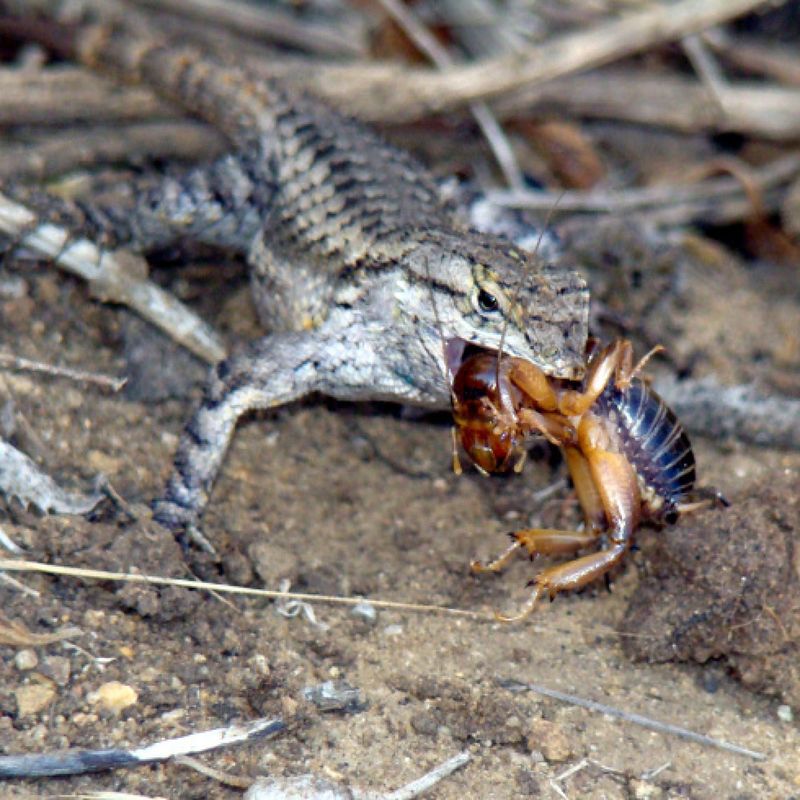
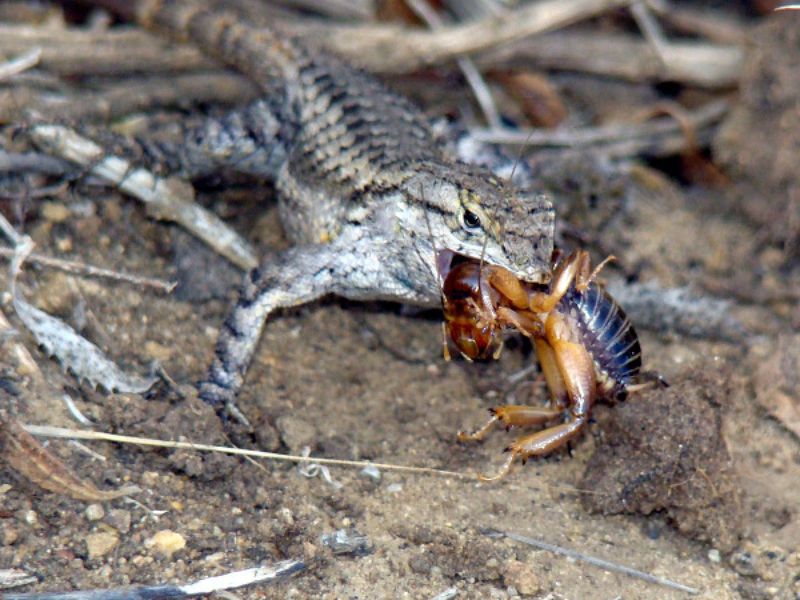
Forget the idea of a picky eater. Alligator lizards approach foraging with a broad appetite that sweeps through much of the invertebrate community living in and around a California garden. Their documented prey list reads like a who’s-who of common garden nuisances: insects and their larvae, ground beetles, grasshoppers, crickets, spiders, centipedes, scorpions, sow bugs, and snails. The National Park Service’s account of the southern alligator lizard describes them as voracious predators that take a wide range of prey items.
Snails deserve a specific mention because they represent a real and frustrating problem for California gardeners. Brown garden snails can shred seedlings, hollow out hostas, and devastate a vegetable bed overnight. Alligator lizards eat snails, and that is a well-supported fact from multiple wildlife accounts. What is not supported is the idea that a resident lizard will eliminate a snail problem entirely.
Predation adds pressure, but it does not guarantee that the snail population collapses. Think of it as one part of a larger, working system rather than a silver bullet.
The diet also extends to other lizards on occasion, and sometimes to small vertebrates. The California Department of Fish and Wildlife life history account for the southern alligator lizard confirms the species’ opportunistic feeding behavior across a wide prey spectrum. That flexibility is part of what makes them effective in varied California habitats.
From a garden management standpoint, the key takeaway from UC Integrated Pest Management is direct: California garden lizards cause no measurable plant damage and may benefit gardens by consuming pest insects. That framing aligns with the documented diet and sets a reasonable expectation. A lizard in the yard is working, not loitering, and the work it does targets many of the same organisms a homeowner would otherwise try to control with products. That is a useful relationship to protect, even without overstating how much any single lizard can accomplish.
The Tick-Hunter Claim Does Not Hold Up
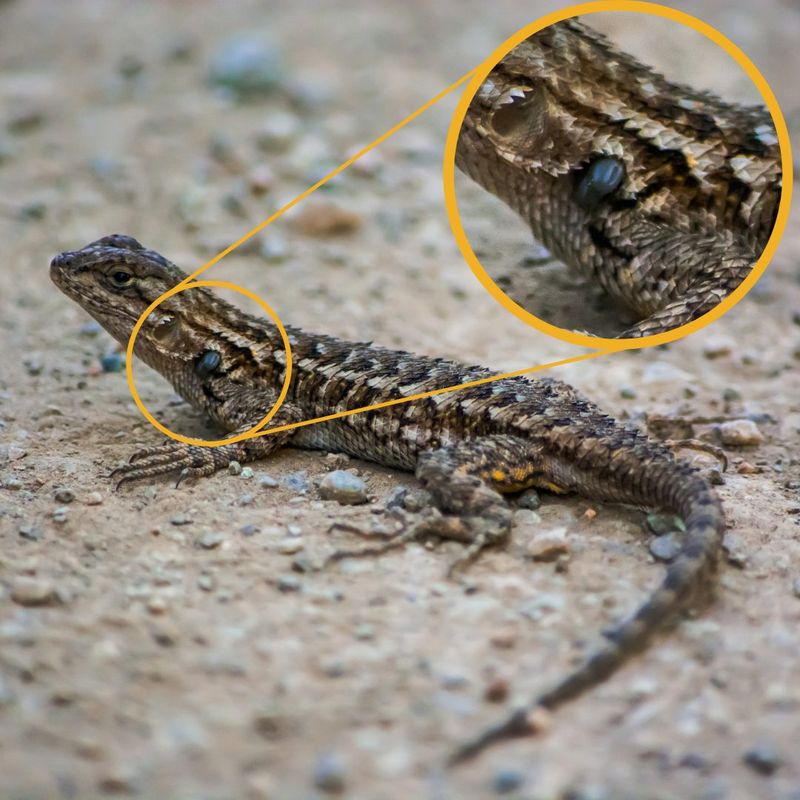
A popular version of the alligator lizard story positions it as the yard’s premier tick hunter, quietly vacuuming up the ticks that would otherwise bite your family and pets. That framing is appealing, but the evidence does not back it up, and it is worth unpacking why the confusion exists in the first place.
“Tick control” can mean four very different things: a lizard eating ticks directly, a lizard serving as a host that ticks feed on, a lizard whose blood chemistry changes whether ticks become infected with Lyme-disease bacteria, or a lizard whose presence or absence shifts total tick numbers in a landscape. These are separate mechanisms, and the evidence for each one varies considerably depending on which lizard species you are discussing.
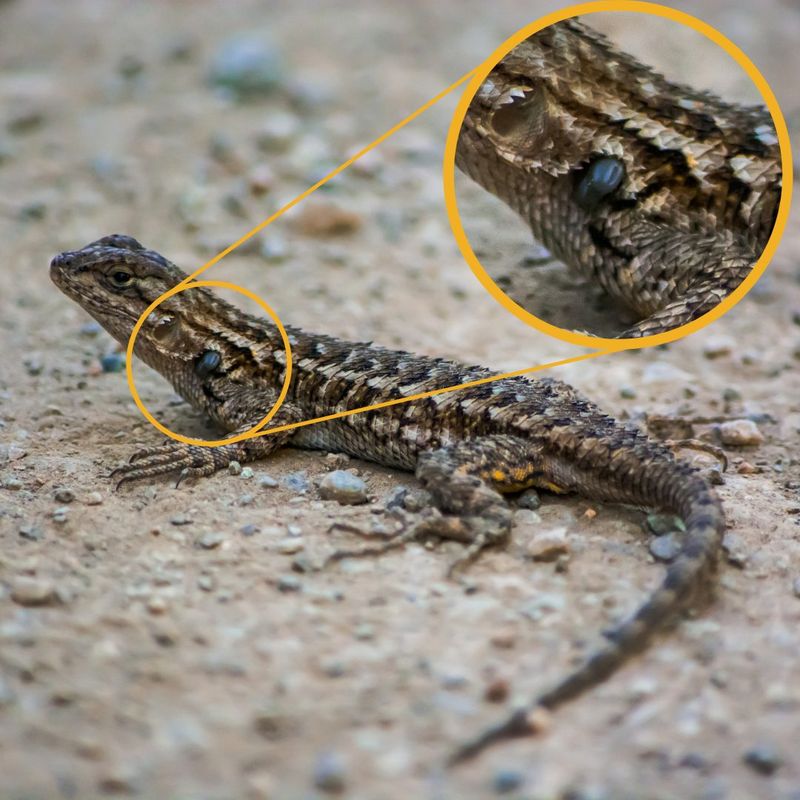
The well-documented California relationship involves western fence lizards, not alligator lizards. Immature western blacklegged ticks commonly feed on western fence lizards, and UC Berkeley research published in 1998 found that a protein in western fence lizard blood can kill Lyme-disease bacteria inside ticks that feed on them. That is a meaningful finding, but notice what it describes: ticks feeding on the lizard, and the lizard’s blood affecting bacterial survival inside those ticks. The lizard is not hunting ticks.
The lizard is a host, and its blood has an effect on the pathogen, not on tick numbers.
For alligator lizards specifically, a published study on southern alligator lizards and Ixodes pacificus documented that western blacklegged ticks do feed on southern alligator lizards. However, researchers in that study were unable to successfully isolate Borrelia burgdorferi, the Lyme-disease bacterium, from alligator lizard blood or from the ticks that had fed on them. That result leaves the alligator lizard’s role in tick ecology genuinely unresolved. UC IPM’s overview of Lyme disease in California focuses the lizard-tick discussion on western fence lizards, not alligator lizards, which reflects where the established evidence actually sits.
The bottom line: alligator lizards eat snails and a wide range of arthropods, and that is genuinely useful. Calling them tick hunters, however, goes past what the science currently supports.
Why No Lizard Makes a Yard Tick-Safe
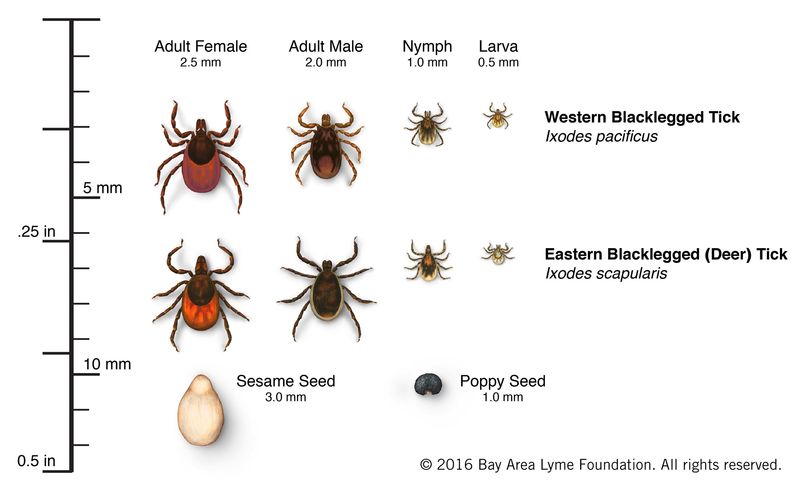
Even the most lizard-friendly yard in California is not a tick-safe yard. That distinction matters because tick-borne illness is a real health concern, and overestimating what any wildlife species can do for protection leads to skipped precautions at exactly the wrong moment.
The western fence lizard research offers a useful lesson in how counterintuitive tick ecology can be. Fence lizards can affect Lyme-bacteria survival in feeding ticks, which sounds like a straightforward benefit. But a UC Berkeley field experiment found that removing western fence lizards from a study area actually reduced tick density in that location. The lizards were serving as hosts that sustained the tick population, so their absence meant fewer ticks overall, even though their presence had been reducing the proportion of infected ticks.
That result does not mean fence lizards are bad for a yard, and it should not be generalized to alligator lizards or to every California landscape. What it does show is that the relationship between lizards and ticks is complicated enough that no simple rule, such as “more lizards equals fewer ticks,” reliably holds.
UC IPM’s Lyme disease guidance for California makes clear that western blacklegged ticks feed on lizards, birds, and mammals at different life stages, and that human exposure risk depends on far more than which lizards live nearby. Tick habitat in California, including brushy edges, tall grass, leaf litter, and overgrown areas, creates exposure opportunities regardless of local lizard populations.
Practical precautions remain the right response. After time spent in tick habitat, check skin and hair carefully, inspect clothing before coming indoors, shower promptly, and talk to a veterinarian about tick prevention options for dogs and cats. These steps work regardless of what wildlife lives in the yard, and no lizard, however useful in other ways, substitutes for them.
Why One Appears in a Yard or Garage
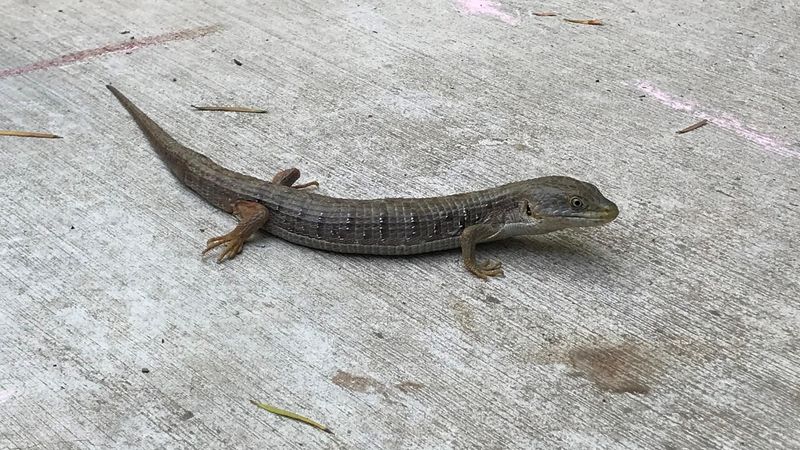
An alligator lizard in the garage is not a sign that something has gone wrong with the yard. Southern alligator lizards occupy a wide range of California habitats, including grasslands, chaparral, foothill oak woodlands, and open forests, and suburban yards fit comfortably within that range wherever suitable cover and food are available. The California Department of Fish and Wildlife’s life history account for the southern alligator lizard confirms that the species regularly uses yards, outbuildings, and other human-modified spaces as part of its normal range.
Cover is the key variable. Alligator lizards are active hunters but also vulnerable to predators, so they spend a lot of time close to shelter. Rocks, logs, boards, dense low-growing plants, and other surface features all serve as resting spots and thermal regulators. A yard with rock borders, a wood pile, or established shrubs is essentially offering prime alligator lizard real estate.
Garages are attractive because they offer shade, stable temperatures, and small openings that lead to sheltered interior spaces where insects and other prey also tend to concentrate.
Seeing one does not mean a population has moved in. UC IPM’s lizard page notes that alligator lizards sometimes enter homes and garages while foraging, which is ordinary exploratory behavior rather than a sign of infestation. Most encounters involve a single individual moving through on its own schedule.
Seasonal patterns also explain timing. The National Park Service profile notes that alligator lizards are active across much of the year in mild California climates, with activity peaking when temperatures are moderate and prey is abundant. A lizard showing up in spring or early summer is simply responding to the same conditions that bring out the insects and snails it eats.
Handle an Indoor Encounter Without Harm
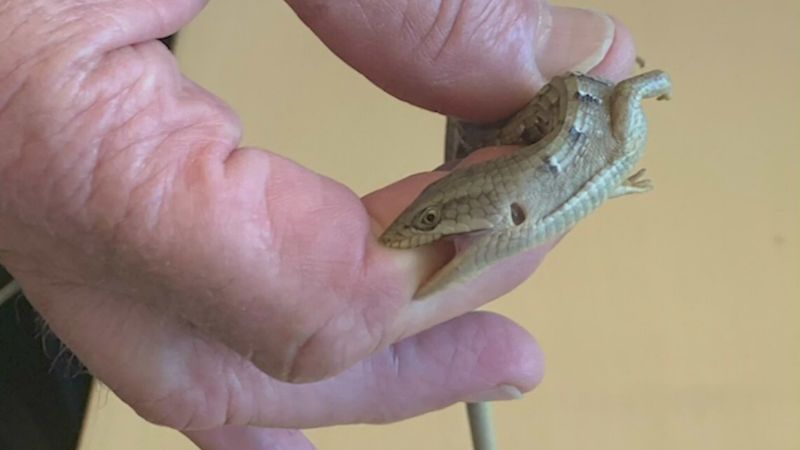
Finding an alligator lizard inside the house or garage calls for a calm response, not a dramatic one. An outdoor lizard going about its business in the garden needs no intervention at all. Leave it alone, and it will continue hunting. The situation that occasionally requires action is an indoor visitor that has worked its way through a gap and ended up somewhere it cannot easily exit on its own.
When removal is necessary, the process is straightforward. Place a container, such as a box or a large cup, over the lizard and slide a piece of cardboard underneath to trap it gently. Then carry the container outside and release the lizard in a sheltered spot near the original entry point. UC IPM’s guidance on California lizards specifically recommends wearing a glove during this process, because an alligator lizard that feels cornered or restrained may bite.
The bite is not venomous, but the teeth are sharp and can break skin. Gloves turn a potentially unpleasant interaction into a routine one.
Never grab, restrain, or pull the lizard by its tail. The National Park Service’s southern alligator lizard profile explains that lizards can shed their tails as a defense mechanism when they feel threatened, a process called autotomy. The detached tail continues to wriggle briefly, which distracts a predator while the lizard escapes. A replacement tail does grow back, but it is typically made of cartilage rather than bone and may differ in color and texture from the original.
Preventing repeat visits is more effective than repeated removals. Seal openings approximately one-quarter inch and larger, paying close attention to gaps beneath exterior doors, around window frames, along pipe penetrations, near vents, and at utility entry points. Weatherstripping and door sweeps handle most door gaps. Foam backer rod or caulk works well for gaps around pipes and conduit.
These same seals also reduce entry by insects, which removes part of what draws a lizard indoors in the first place.
Support Native Predators Without Creating Fire Risk

Welcoming native predators like alligator lizards does not require turning the yard into an overgrown refuge. Thoughtful pest management is often enough, because the single biggest threat to a yard’s natural predator community is not habitat loss but indiscriminate pesticide use that kills the hunters along with the pests.
UC IPM’s guidance on protecting natural enemies and pollinators recommends a disciplined sequence: identify the pest accurately before doing anything, monitor its population to determine whether control is actually needed, use nonchemical methods wherever practical, and if a pesticide becomes necessary, choose the least hazardous effective option and follow both the label and California’s specific restrictions. Broad, preventive spraying applied on a calendar schedule, rather than in response to a confirmed problem, is the approach most likely to harm beneficial species including lizards, ground beetles, spiders, and other predators that do the same work without any cost to the homeowner.
Molluscicides for snail control deserve special attention. Some formulations are toxic to wildlife, and a lizard that eats a poisoned snail can be harmed indirectly. UC’s integrated pest management guide for California growers emphasizes selecting products with the least off-target impact and reading labels carefully for wildlife precautions before application.
The habitat question requires a careful balance, particularly in fire-prone parts of California. Alligator lizards do use surface cover, including rocks, logs, and low vegetation, as shelter. But recommending that homeowners pile up dry boards, accumulate dead leaves, or allow dense combustible vegetation to grow immediately beside a structure is advice that could contribute to wildfire risk. CAL FIRE’s defensible-space guidance requires homeowners in fire-hazard severity zones to maintain ember-resistant space within the first 0 to 5 feet of a structure and to remove dead or dry combustible material.
Flat stones, low-water native groundcovers, and gravel borders can provide microhabitat for lizards without the fire risk that comes from accumulated dry debris. Prioritizing fire safety is not in conflict with supporting native wildlife; it just requires choosing the right materials.
Leave Local Lizards Local and Keep Taking Tick Precautions
Collecting alligator lizards from a park or wild area and releasing them in your yard as a pest-control strategy is not a good idea, and not just because it probably will not work. California Fish and Game Code provisions governing reptile taking and possession regulate the collection of native reptiles, and the specific rules depend on species, activity, location, and current regulations. The safest position is to treat wild lizards as wildlife that belongs where it is found, not as a resource to be redistributed.
UC Berkeley researchers who studied western fence lizards and tick populations specifically cautioned against moving lizards as a Lyme-disease control strategy, noting that the ecological dynamics are too complex and context-dependent for relocation to function as a reliable method. That caution applies to alligator lizards as well, whose tick-related role remains unresolved.
The practical summary is straightforward. An alligator lizard that shows up in a California yard is a native predator eating snails, beetles, and other arthropods, and that is worth something. Treat it accordingly: observe without grabbing, leave outdoor individuals undisturbed, use pesticides only when necessary and with care for off-target effects, design any habitat features to comply with CAL FIRE defensible-space requirements, and seal entry points to reduce indoor encounters. For tick protection, UC IPM’s California Lyme disease guidance and UC IPM’s lizard page both reinforce that checking skin, clothing, and pets after exposure to tick habitat remains the right approach, regardless of which lizards live nearby.
A yard with an alligator lizard in it is a yard with one more working predator on the team, which is a reasonable thing to appreciate without expecting it to solve every problem.