
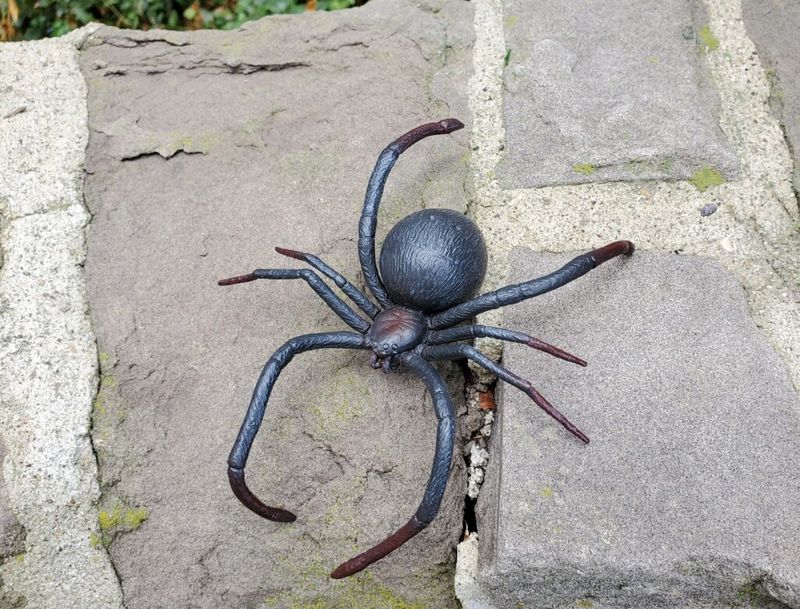
A scaly, prehistoric-looking lizard slipping under your garden debris might actually be doing you a quiet favor. Southern alligator lizards are native California predators known to eat western black widows, and they turn up in suburban yards, garages, and garden beds more often than most homeowners realize.
Keeping them around is not a magic fix for spider problems, but accidentally clearing out every patch of cover they depend on may make your yard less welcoming to one of your best natural allies.
Meet the Southern Alligator Lizard in Your Yard
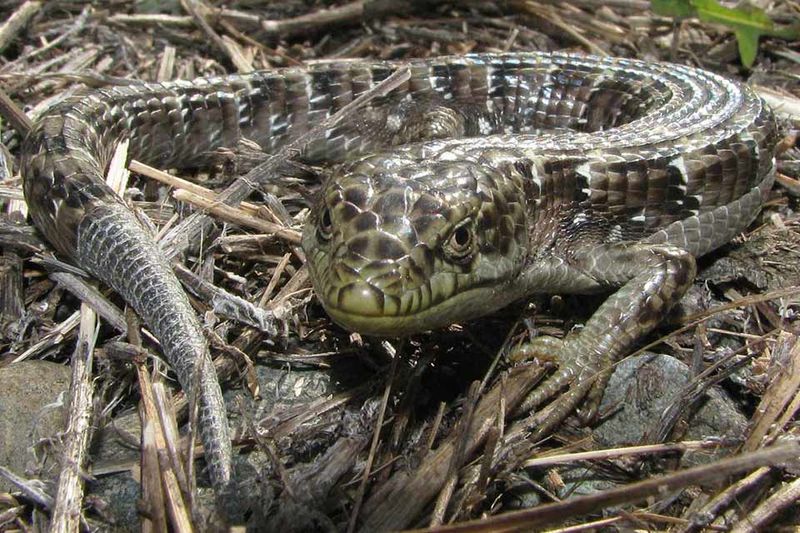
Rough, keeled scales running down a long body, a wedge-shaped head, and a tail that can stretch to nearly twice the body’s length – the southern alligator lizard is hard to mistake once you know what you are looking at. Elgaria multicarinata is the species’ formal name, and it ranges from southern Washington down through California and into northwestern Baja California, making it a genuinely native part of the California landscape.
The National Park Service notes that these lizards commonly turn up in yards, garages, chaparral, woodland edges, and other human-adjacent spaces across the state.
The diet is broad and opportunistic. Beetles, crickets, grasshoppers, centipedes, scorpions, sow bugs, snails, and spiders all appear on the menu.
That generalist appetite is part of what makes the animal useful in a suburban yard, though “useful” should not be read as “reliable pest control.” A lizard foraging through your garden beds is following its own hunger, not a homeowner’s schedule.
One practical caution worth keeping in mind: a casual yard sighting does not always confirm the exact species. California is home to several lizard species, and a quick glance at a long brown lizard slipping under a board does not settle identification with certainty.
California Herps documents the regional variation within alligator lizards, and the UC IPM program notes that lizards generally present few problems for homeowners and are broadly beneficial. The southern alligator lizard specifically is the one with documented interactions with western black widows, so species identity matters when evaluating those claims.
Seeing one in your yard is a reasonable sign that local habitat conditions suit it. Whether it is actively working through a spider population nearby is a separate question with a more complicated answer.
What the Evidence Says About Black Widows
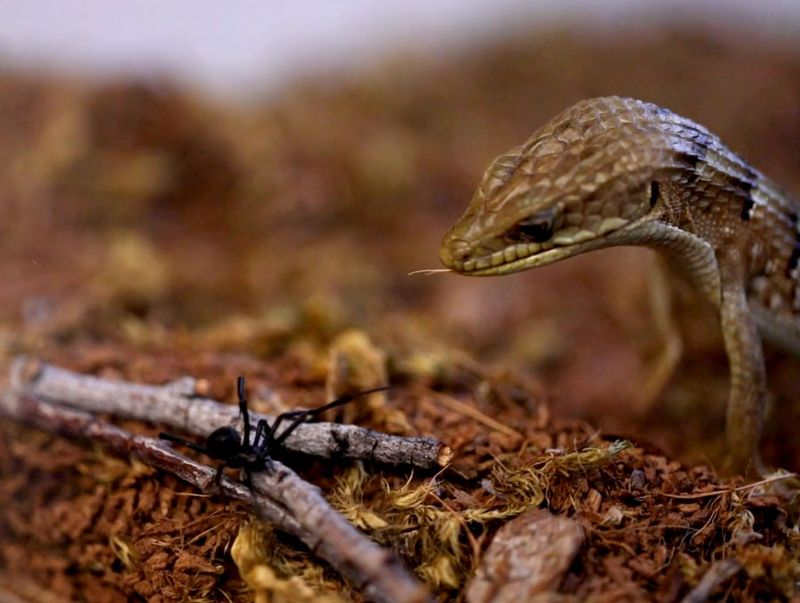
Documented predation on western black widows by southern alligator lizards is not folklore. A peer-reviewed study published in the journal Royal Society Open Science investigated the relationship directly, finding that southern alligator lizards are known to consume western black widows and may seek out their egg sacs.
The researchers also explored whether repeated exposure to black widow venom may have contributed to the lizards developing measurable venom tolerance over time. That is a remarkable biological detail, but it comes with an important qualifier.
Venom tolerance or resistance is not the same as immunity. The research supports the idea that these lizards can handle black widow venom better than many other animals under experimental conditions.
It does not mean an alligator lizard is invulnerable to every consequence of a black widow encounter, and the article should not be read that way. The Royal Society’s commentary on the research frames the finding as an intriguing evolutionary arms-race story, not as proof that lizards neutralize all spider risk.
Beyond black widows, the diet documented by the National Park Service includes beetles, crickets, grasshoppers, centipedes, scorpions, sow bugs, and snails. Black widows are one item in a broad menu, not the lizard’s exclusive target.
That distinction matters because it shapes realistic expectations.
A southern alligator lizard living in or near your yard may occasionally eat a black widow. What the available evidence does not show is that lizard presence measurably reduces the black widow population at a household level.
Predation and reliable biological control are two different things, and conflating them leads to the kind of false confidence that keeps someone from wearing gloves when they reach into a woodpile.
Why Removing All Ground Cover May Matter
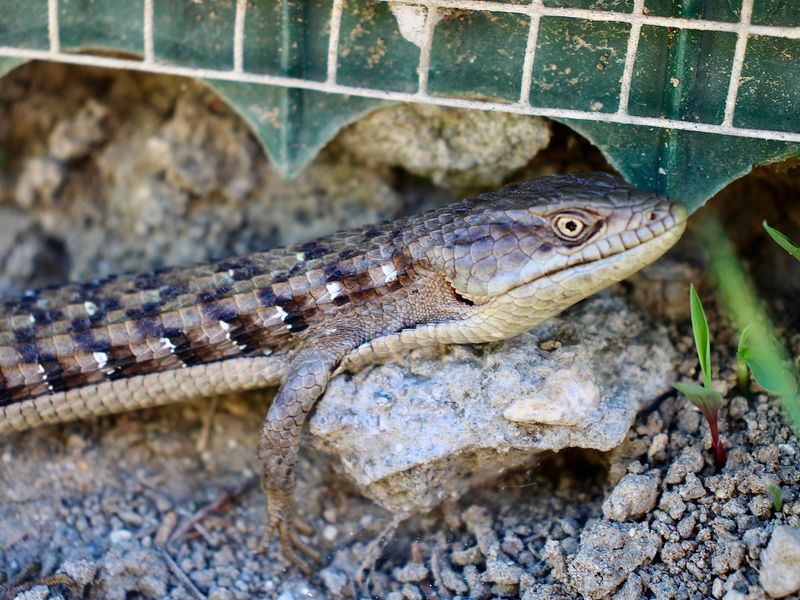
Southern alligator lizards are not open-ground animals. They favor spots where sunny basking areas sit close to cover they can retreat into quickly.
Rocks, logs, boards, dense leaf litter, and low debris piles are not just hiding places – they are the structural features that make a yard usable habitat for this species. Remove all of those elements, and you have not just tidied up; you may have made the space genuinely unsuitable for a lizard that depended on them.
The National Park Service’s species profile describes the lizard’s preference for areas with nearby cover, and Yosemite’s wildlife documentation confirms that these animals are regularly found in rocky, brushy, and debris-adjacent spots. The UC IPM lizard resource similarly notes that lizards use a variety of sheltered yard features.
Taken together, those sources point to a clear habitat relationship: surface cover matters to this animal.
The headline framing that “one cleanup habit drives them off” is too definitive, though. No available source establishes that a single chore – raking leaves, clearing a specific board pile, or any one action – is the decisive event that sends a local lizard elsewhere.
What the evidence supports is a more gradual picture: as ground cover disappears across a yard, the habitat becomes progressively less suitable. A lizard that loses all its shelter options may eventually move on, but that outcome is the result of a pattern, not a single afternoon of tidying.
That distinction matters for homeowners who want a clean yard and a functional ecosystem at the same time. You do not have to choose between tidying and supporting native wildlife, as long as you are thoughtful about where the last patches of cover end up.
Create a Small, Managed Habitat Zone

A workable compromise for most California homeowners is not “keep everything” or “clear everything” – it is “choose where the cover lives.” Designating one low-conflict area of the yard as a managed habitat zone lets you retain the features a southern alligator lizard needs without scattering those features near doors, play structures, seating, or garage entries where they create spider-risk problems.
Based on documented habitat preferences, a useful habitat zone might include a flat rock or two for basking, a short section of log or a stack of a few larger stones, and some dense low ground cover or native shrubs at the edge of a bed. A UC Agriculture and Natural Resources guide on attracting reptiles and amphibians supports the value of rock piles, brush piles, and dense vegetation as intentional habitat features.
The key word is intentional: a neat, defined rock cluster in a back garden bed is different from a sprawling debris accumulation behind the garage.
Yosemite’s wildlife team and the National Park Service profile both describe alligator lizards thriving in exactly these kinds of mixed sunny-and-sheltered conditions. Translating that into a suburban yard means picking a spot that gets some direct sun, borders a planting bed, and sits well away from the areas your family uses most.
Call this an informed recommendation rather than a tested garden prescription. No study has measured lizard retention rates against specific habitat-zone designs in suburban California yards.
What the evidence does support is that these animals use the features described, and that providing them in a contained, managed way is more sensible than either stripping the yard bare or letting clutter accumulate unchecked. Trash, old tarps, broken pots, and random debris are not habitat features – they are hazards that shelter spiders and rodents without offering the lizard the sun exposure it also needs.
The UC IPM lizard guidance reinforces that lizards are generally beneficial and worth supporting, making selective habitat retention a reasonable goal for any California homeowner who wants a more alive yard without introducing new risks.
Lizard Habitat Can Also Shelter Black Widows
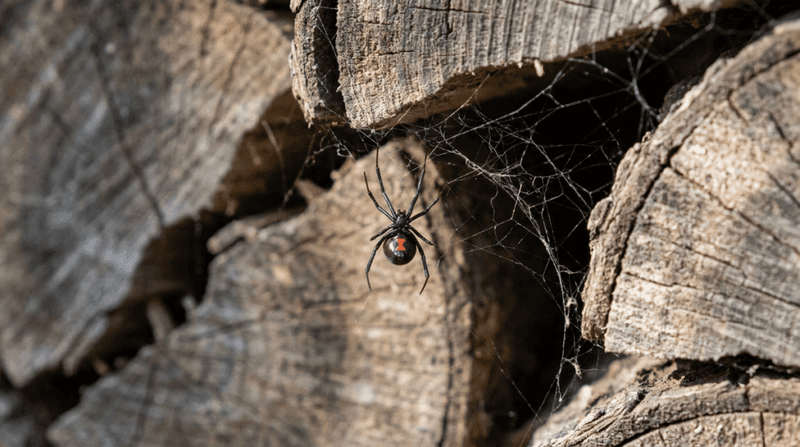
Rocks, logs, dense leaf litter, and sheltered garden edges are exactly the features a southern alligator lizard uses – and they are also exactly where western black widows build webs. That overlap is the central tension in any lizard-friendly yard plan, and ignoring it creates a false sense of security.
A habitat zone designed to attract alligator lizards is not a spider-free zone.
UC IPM’s widow spider resource notes that black widows commonly occupy holes, cracks, crevices, trash, clutter, garages, and areas around building foundations. Those are not abstract locations – they are the same corners, gaps, and sheltered edges that make a suburban yard feel interesting to a foraging lizard.
Keeping both realities in mind shapes where you place intentional habitat and which areas you keep consistently clear.
The practical rules follow from that overlap. Never reach blindly into a woodpile, under a pot, into a garage corner, or into any sheltered space where spiders could be resting.
Poison Control’s black widow guidance and CDC/NIOSH venomous spider safety recommendations both advise wearing gloves when moving wood, mulch, pots, or debris, and shaking out stored gloves, shoes, and clothing before putting them on. Those habits matter regardless of whether a lizard is living nearby.
Keep any intentional habitat zone well away from doors, children’s play equipment, seating areas, stored clothing, frequently handled garden tools, and building-adjacent spaces like garages and crawl spaces. The National Park Service notes that alligator lizards themselves turn up in garages and building edges, which is a reminder that the lizard and the spider can occupy the same space.
A lizard nearby does not mean a spider is absent. The two can coexist in the same sheltered corner, which is one more reason to treat every sheltered outdoor space with the same cautious habits, year-round.
Observe the Lizard; Do Not Stock the Yard
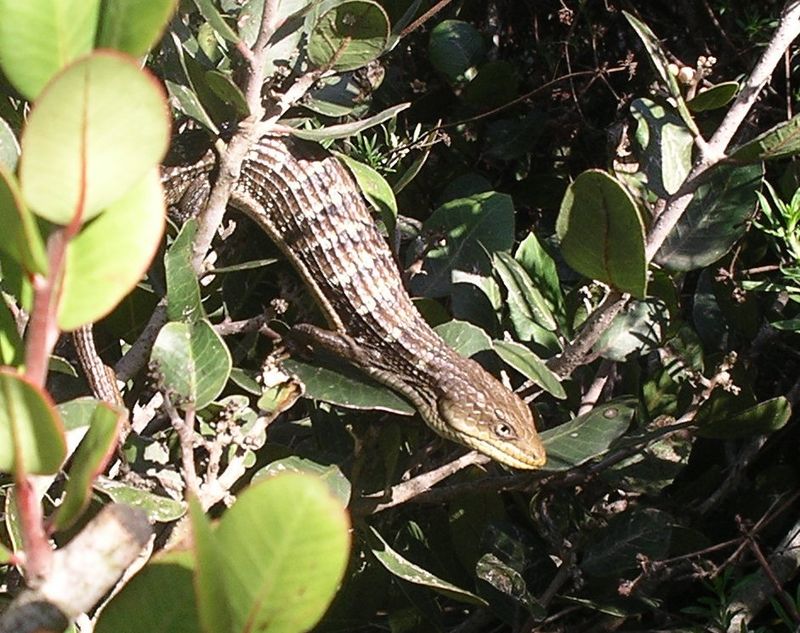
Spotting a southern alligator lizard in your yard is a good sign, and the best response is to leave it alone. These animals are self-sufficient predators that navigate suburban habitats on their own terms.
They do not need supplemental feeding, water dishes set out specifically for them, or any form of active management from a homeowner.
More critically, do not collect, transport, release, or attempt to introduce alligator lizards as a spider-control strategy. UC IPM’s lizard guidance makes clear that California regulates the taking and possession of native lizards, and the sources supporting this article document naturally occurring animals, not stocked or relocated ones.
Moving a lizard from one location to another does not serve the animal and may expose you to legal issues.
Handling is the other area to avoid. The National Park Service profile notes that alligator lizards can deliver a painful bite if grabbed or restrained, and that rough handling can cause tail loss.
Tail loss is not fatal to the lizard, but it is stressful and costly for the animal to regrow. A lizard that bites in self-defense is behaving normally, not aggressively – it is simply reacting to being caught.
The right approach is straightforward: if you see one basking on a warm path or slipping under a rock, watch it for a moment and then leave it to its work. If one has wandered into a garage or enclosed space and you need to move it, use a container to gently guide it outside rather than picking it up bare-handed.
Beyond that, the most useful thing a homeowner can do is maintain the habitat features that keep naturally occurring lizards comfortable, without turning wildlife observation into a hands-on project.
Handle Black-Widow Risks Separately
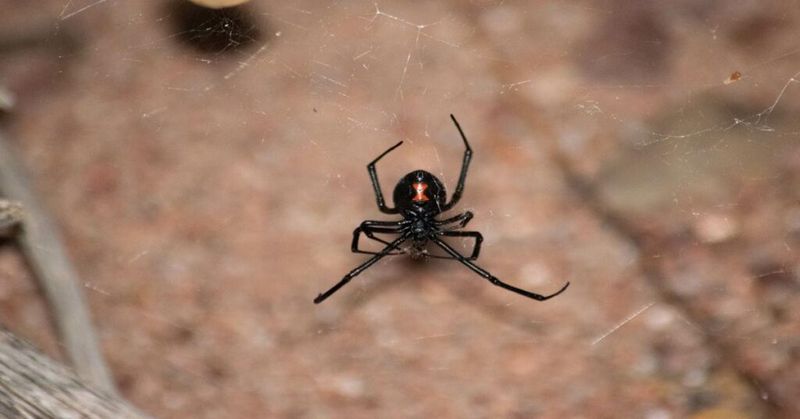
A southern alligator lizard in the yard is not a reason to delay action when a black widow appears in a dangerous spot. A web in a garage corner, under patio furniture, near a children’s sandbox, or around a frequently used doorframe is a real and immediate concern that requires a direct response – not patience while waiting for a lizard to find it first.
For accessible webs and spiders in low-risk areas, cautious removal with a long-handled tool, a stick, or a vacuum with a hose attachment works well. Wear gloves and avoid crushing the spider with bare hands.
UC IPM’s widow spider resource recommends reducing clutter, sealing cracks and gaps around foundations and doors, and installing door sweeps and tight-fitting screens as structural exclusion steps that reduce entry points over time. Those measures address the conditions that attract spiders, not just individual spiders themselves.
For substantial infestations or black widows repeatedly appearing in high-use areas, a qualified pest professional is the appropriate resource. Broad pesticide spraying is not a good first move – it can affect non-target insects and other wildlife, including the arthropods that lizards and other beneficial animals depend on, while doing little about spiders hiding deep in cracks.
Black widows are generally reclusive, and bites typically occur when a spider is trapped or disturbed – inside a glove, a shoe left outdoors, or a pile of materials being moved. Poison Control’s black widow information and CDC/NIOSH venomous spider guidance both recommend cleaning a suspected bite area with soap and water, applying a cold pack, and contacting Poison Control or seeking medical care if significant pain, muscle cramping, spreading symptoms, difficulty breathing, or other systemic effects develop.
Those steps apply regardless of severity – when in doubt, call Poison Control at 1-800-222-1222 or go to an emergency room.
Preserve Useful Cover Without Promising Pest Control
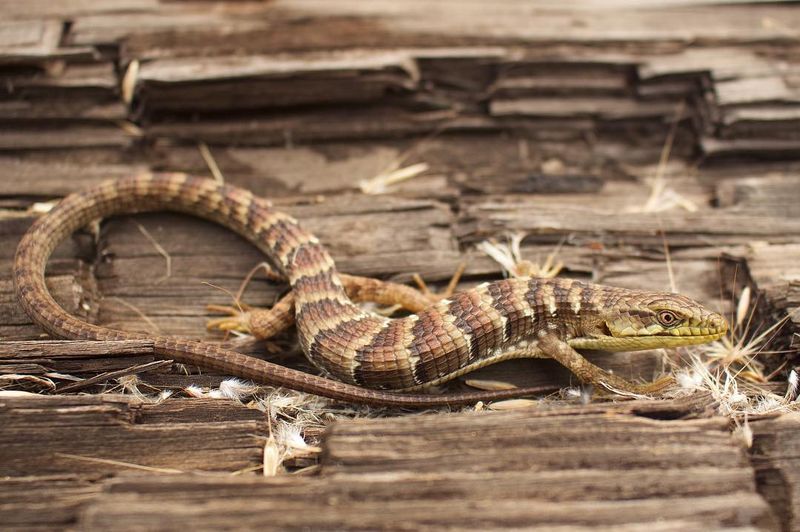
Southern alligator lizards may eat western black widows and contribute to the food web running through a California backyard. That is a meaningful ecological role worth supporting – but it is not a guarantee that your yard will have fewer spiders, and it is not a substitute for the direct precautions that actually keep people safe around venomous spiders.
The National Park Service and UC IPM both document these lizards as naturally occurring beneficial animals in California yards. The practical takeaway is selective habitat retention: keep a modest patch of rocks, a short log, and some dense ground cover in a low-conflict corner of the yard, maintain clear and tidy conditions near doors, play areas, garages, and seating, and handle any confirmed black widow concerns directly rather than deferring to wildlife.
Leave naturally occurring lizards undisturbed, and do not attempt to introduce or manage them as a pest-control program.
A yard that supports native lizards is a healthier yard – just not a spider-free one. The lizard earns its place in the ecosystem on its own schedule, and that is exactly the kind of ally worth keeping around.