
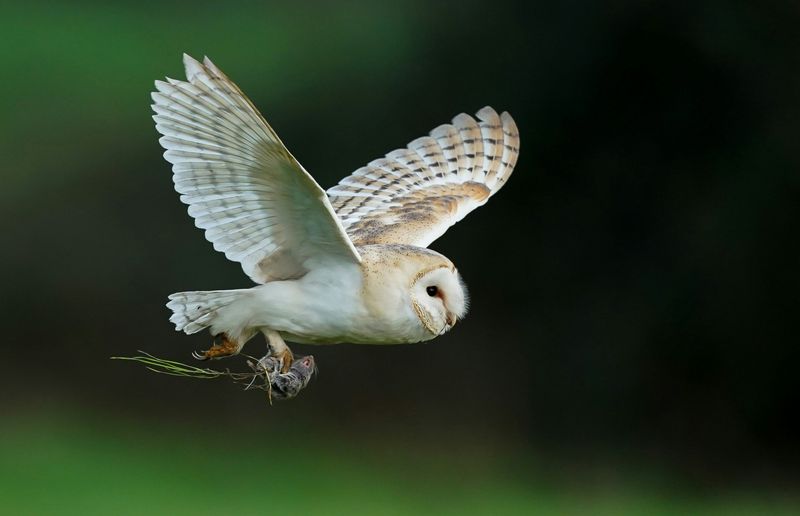
Barn owls have a reputation in California wine country as nature’s rodent patrol, and the research behind that reputation is real enough to take seriously. But the full picture is more complicated than a simple swap of owl box for snap trap. Understanding what owls can actually reach, where they genuinely help, and what a homeowner still needs to do independently is the difference between a useful wildlife partnership and a pest problem that quietly grows worse.
California research shows promise, not a backyard knockout
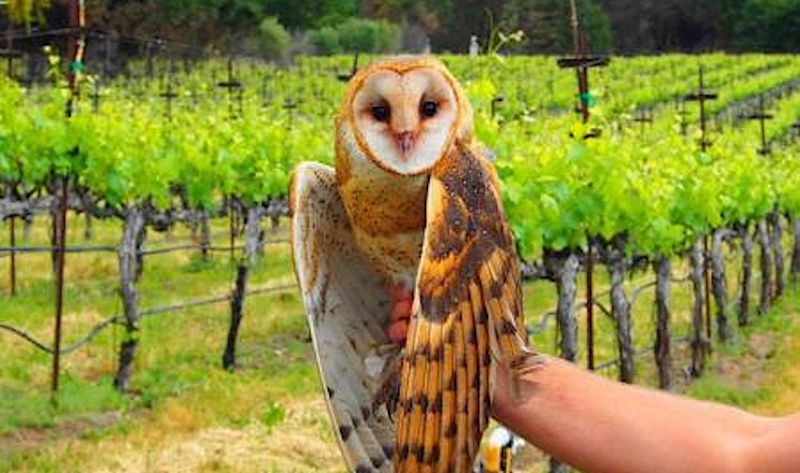
Vineyard managers in Napa Valley have watched barn owls work the rows at night for years, and now there is California-specific data to anchor those observations. A 2026 study in Napa Valley vineyards found that greater barn-owl hunting pressure was associated with a 38 to 52 percent reduction in aboveground rodent abundance and a 16 to 38 percent increase in the perceived predation risk that rodents experienced. Those are meaningful numbers, and they come from California landscapes, not a lab in another state.
Earlier work in the Sacramento area added another dimension to the picture. Researchers estimated that a barn-owl aggregation consumed roughly 30,020 rodents over three breeding seasons in a 40-hectare vineyard, and gopher numbers declined relative to a control vineyard during that period. That Sacramento-area study, along with supporting research on barn-owl prey consumption, documents substantial predation and a relative decline in one rodent species, though neither was a randomized controlled trial proving that nest boxes alone caused every observed change.
Both studies were conducted in vineyards, not suburban backyards. Agricultural settings typically offer large open hunting areas, high prey densities, and networks of boxes that a single residential lot simply cannot replicate. The Napa findings show a meaningful association between owl presence and lower rodent abundance in that context; they do not establish that owls outperform every trap or rodenticide across all California properties, nor that they can access rodents that other control methods cannot reach.
What the research does support is this: where prey is accessible, hunting habitat is open, and nest sites are available, barn owls can contribute real predation pressure. That contribution is worth encouraging, as long as homeowners understand it as one part of a broader rodent-management approach rather than a standalone solution.
What barn owls can reach determines what they can control
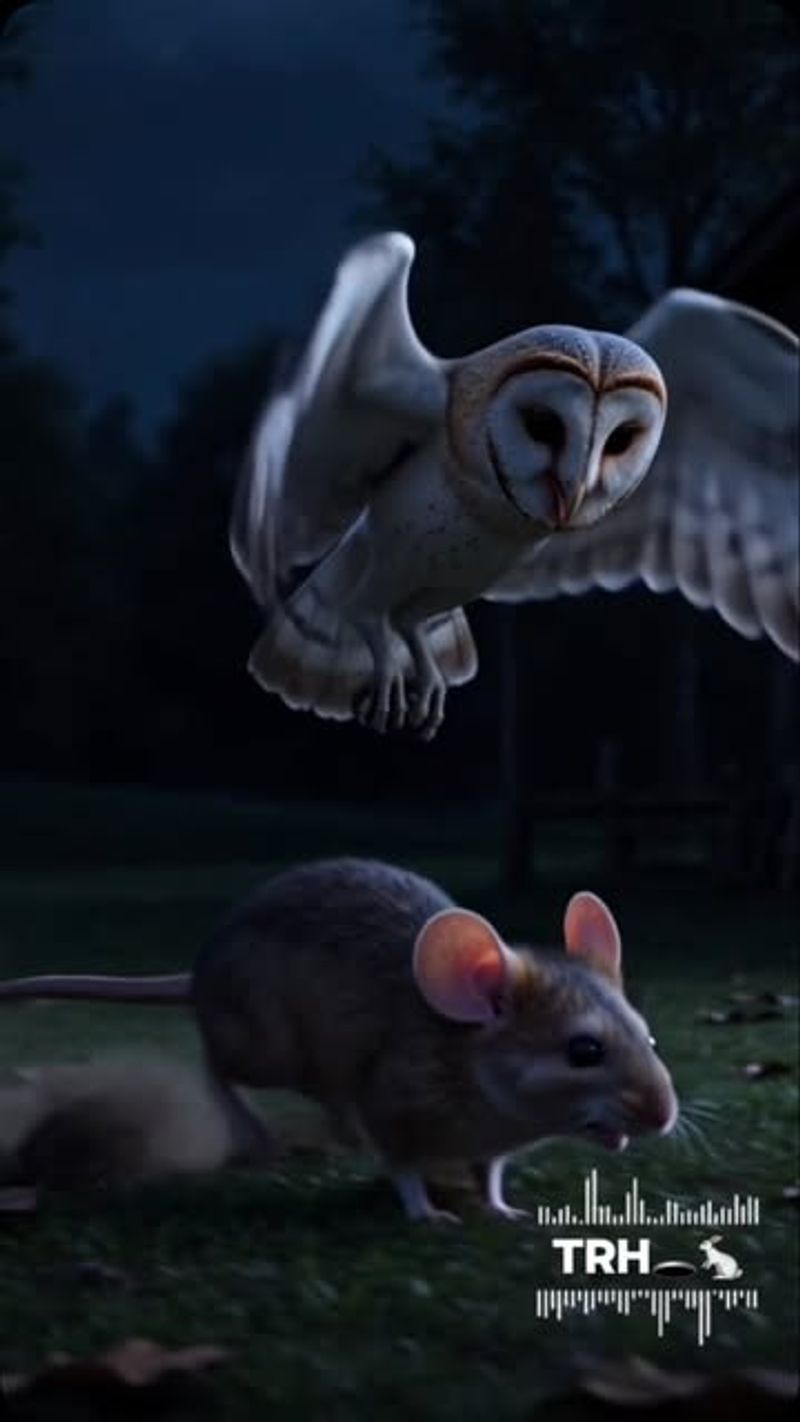
Barn owls are primarily nocturnal hunters that work open ground. Cornell Lab of Ornithology describes their diet as dominated by small mammals, including mice, rats, voles, gophers, and shrews, taken in fields, meadows, and other areas with low, sparse vegetation where the owls can fly low and use their extraordinary hearing to locate prey. The Audubon Society similarly notes their preference for open country and their reliance on sound to pinpoint prey moving through grass or soil.
That hunting style defines both the owl’s strength and its limit. An owl patrolling a yard at night can take a vole crossing an open lawn or a mouse moving along a garden bed edge. Central Valley agricultural research found that mice were the most numerous and biomass-significant prey in barn-owl diets, with prey composition shifting based on surrounding land use, which suggests owls are opportunistic and responsive to what is actually available in the landscape around them.
What owls cannot do is follow a rodent behind drywall, intercept a roof rat traveling through an attic soffit, or extract a mouse nesting inside a kitchen cabinet. UC IPM’s house-mouse guidance and its rat management pages both emphasize structural exclusion and targeted trapping for indoor infestations, because those rodents are simply not accessible to a predator working outdoors at night.
Identifying the specific rodent and where it is living is the practical first step. An owl box may help suppress field mice and voles moving through an open yard, but it will not solve a roof-rat problem traveling through enclosed eaves or a mouse colony established inside a wall cavity. Those situations call for exclusion, trapping, or other targeted methods that can reach where the animals actually are.
A California yard needs prey and hunting space, not just an owl box
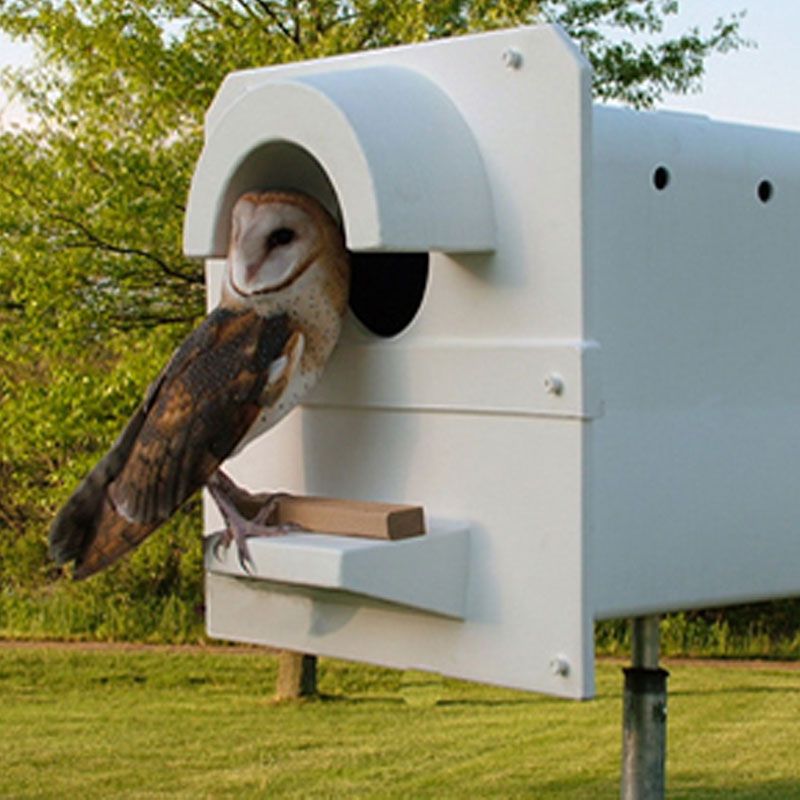
Putting up a nest box is a satisfying action, but the box itself is not what attracts barn owls. Occupancy research consistently points to landscape conditions as the deciding factor. A California nest-box study found that occupancy was associated with surrounding landscape composition, particularly the proportion of grassland near the box. Owls are looking for places to hunt, and a box surrounded by dense ornamental plantings or paved surfaces offers a shelter without a food source.
Placement details matter too. A multiyear study on nest-box occupancy found that boxes mounted in trees or shaded positions had higher occupancy rates than boxes in full sun on open poles, and that only about 40 percent of boxes were occupied in any given year. That figure is worth sitting with before investing significant effort: even well-placed boxes in reasonable habitat go unused more often than not.
A small, heavily landscaped suburban lot faces additional challenges. Vineyards and orchards that appear in the strongest California studies offer extensive unobstructed hunting corridors, large rodent populations spread across open ground, and sometimes dozens of boxes working together across a landscape. Cornell Lab notes that barn owls favor open country and avoid densely wooded or heavily developed areas, which describes many California residential neighborhoods.
None of this means a suburban nest box is pointless. Properties near open space, parks, agricultural edges, or large undeveloped lots may genuinely offer the conditions that make occupancy plausible. The honest framing is that a box is a supplemental habitat measure whose success depends on prey availability, hunting space, suitable placement, and whether local owls are already present. It is not a switch that turns on rodent control.
The safer correction is a purpose-built nest box—not an open house
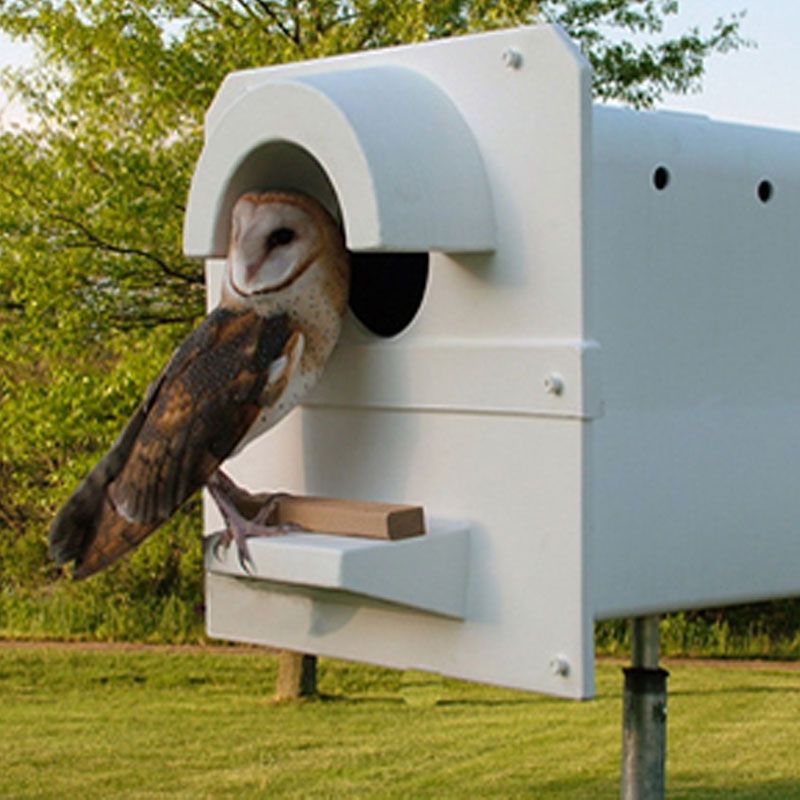
Barn owls use a wide range of nest sites: cavities in live or dead trees, barns, bridges, haystacks, caves, and purpose-built boxes. USDA Forest Service documentation and Audubon’s barn-owl profile both describe this flexibility, which means homeowners do not need to preserve every dead snag on the property to support owls. A properly built box can substitute for a natural cavity.
Open eaves are a different matter. Some homeowners have heard that leaving gaps in eave boards invites owls to nest, but CAL FIRE’s home-hardening guidance specifically identifies unscreened vents and gaps in eaves as pathways for ember intrusion during wildfires. An opening sized for an owl is also an opening for roof rats, squirrels, wasps, and other unwanted guests. Creating or preserving a gap in an occupied building to attract owls trades one problem for several others.
A separate, purpose-built nest box avoids all of that. UC Agriculture and Natural Resources provides California-specific barn-owl box plans with exact dimensions and construction details, and those plans are the right starting point rather than generic designs found online. The box should be structurally secure, protected from excessive summer heat, and mounted where a person can safely reach it for periodic maintenance.
Placement relative to the house also matters for practical reasons. Cornell Lab cautions that barn-owl nest sites accumulate pellets, feces, and uneaten prey over a season, and that nestlings are vocal enough to disturb sleep. Positioning the box away from doorways, bedroom windows, and frequently used patios keeps those realities at a manageable distance. A box that becomes a nuisance is likely to come down, which helps no one.
Start rodent control with the changes owls cannot make
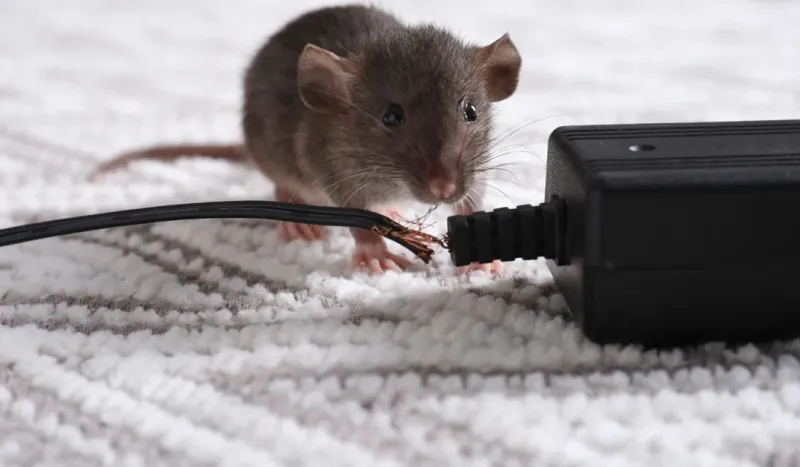
Before a nest box, before any conversation about natural predators, the most reliable rodent management starts with removing what sustains the infestation. UC IPM’s rat management guidance and its property-level pest-prevention resources both put sanitation at the top of the list: secure garbage in bins with tight-fitting lids, store pet food in sealed containers and remove it overnight, pick up fallen fruit, and eliminate excess birdseed on the ground. These steps cut off the food supply that draws rodents in and keeps them reproducing.
Shelter reduction follows food control. Woodpiles stacked against the house, piles of garden debris, dense ground cover near the foundation, and cluttered storage areas all give rodents places to nest and hide. Moving those conditions away from the building or eliminating them reduces the habitat that lets a small population grow into a serious problem. Neither an owl nor a trap can compensate for a yard that continues to offer food and cover.
Exclusion is the most durable fix, particularly for house mice. UC IPM’s house-mouse page emphasizes that mice can squeeze through openings as small as a dime, making even modest gaps around pipes, utility lines, doors, and foundation vents potential entry points. Sealing those openings with hardware cloth, caulk, or metal flashing stops the problem at the boundary rather than managing it after animals are already inside.
Trapping is the practical next step for indoor rodents that exclusion has not yet addressed. Snap traps placed along walls and in the travel paths rodents use are effective, low-cost, and do not carry the secondary-poisoning risk that rodenticide does. These measures together, sanitation, exclusion, and targeted trapping, form the foundation of residential rodent control. Owl support can complement that foundation where conditions allow; it cannot substitute for it.
Poison can turn a rodent meal into a predator hazard
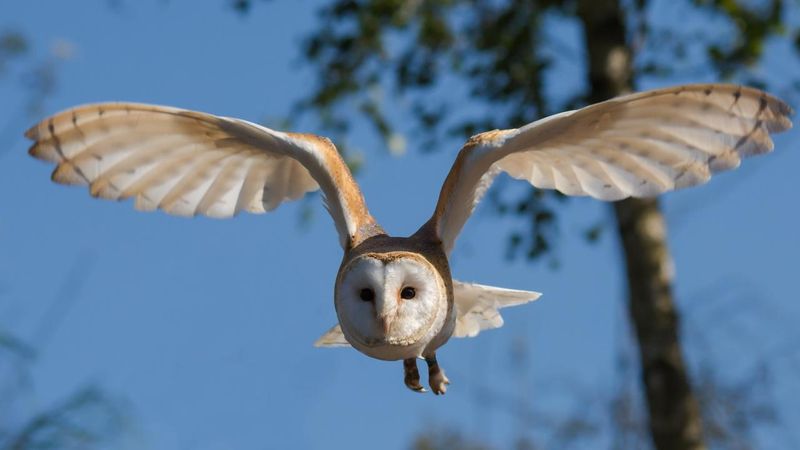
Rodenticide can be an effective tool, but it carries a risk that does not disappear once the bait is taken. Poisoned rodents often remain active for hours or days before dying, and during that time they are slower, more exposed, and easier for a predator to catch. EPA’s pesticide safety review for rodenticides documents that predators and scavengers, including raptors, hawks, foxes, and owls, can be exposed through consuming poisoned prey. Persistent anticoagulant products carry particular concern because they accumulate in tissue and can affect animals well up the food chain.
The mistaken assumption is that poison becomes safe once it is inside a bait station, out of an owl’s direct reach. The hazard transfers when the owl catches and eats the dying rodent, not when the rodent first contacts the bait. Prompt carcass collection is one of the most practical steps a homeowner can take to reduce that secondary exposure. EPA guidance on safe rodent-bait use specifically calls for removing dead rodents quickly and disposing of them properly.
When rodenticide is genuinely necessary, follow the product label exactly. Use only the tamper-resistant bait station and application method that the label requires or permits. Keep bait completely inaccessible to children and pets, and check the station regularly. UC IPM’s rat guidance recommends exhausting sanitation, exclusion, and trapping options first, reserving rodenticide for situations where those approaches have not resolved the problem.
That sequence protects both the homeowner’s family and the wildlife that shares the yard.
Fire safety and nest protection set limits on wildlife habitat
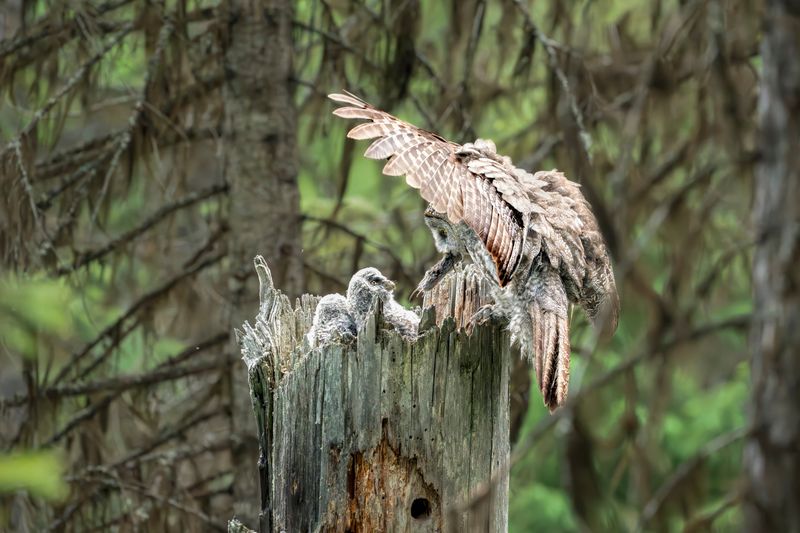
California homeowners in fire-prone areas face a direct conflict between wildlife-habitat instincts and defensible-space requirements. CAL FIRE’s defensible-space guidance requires clearing dead vegetation and debris from within 100 feet of a structure, maintaining spacing between trees and shrubs, and keeping combustible material away from buildings. A dead snag that could theoretically provide an owl cavity may also be a fire-loading hazard that poses unacceptable risk to the structure it stands near.
CAL FIRE’s vegetation management program and its home-hardening resources both reinforce the same principle: fire resilience takes priority over habitat features that increase ignition or spread risk. Retaining a hazardous dead tree, a pile of brush, or dense combustible vegetation solely to benefit an owl is not a trade-off that fire authorities or most arborists would endorse without a careful site assessment. Any homeowner considering keeping a snag should consult a certified arborist and check with their local fire authority before making that decision.
A separate set of limits applies once owls are actually nesting. Homeowners sometimes discover a barn owl using an eave, a gap in an outbuilding wall, or another part of the structure and want to remove it quickly. The U.S. Fish and Wildlife Service explains that active migratory-bird nests containing eggs or young generally cannot be destroyed or removed without federal authorization, and barn owls are protected under the Migratory Bird Treaty Act.
An important distinction applies to location. FWS guidance on activities that do not require a permit specifically distinguishes birds nesting inside building interiors from birds nesting on exterior surfaces such as eaves. Exterior eave nests are not covered by the interior-removal authorization, so a homeowner who wants to address an active eave nest should contact a licensed wildlife professional or their state wildlife agency for current, site-specific guidance rather than acting unilaterally.
Support the owl without asking it to replace a pest plan
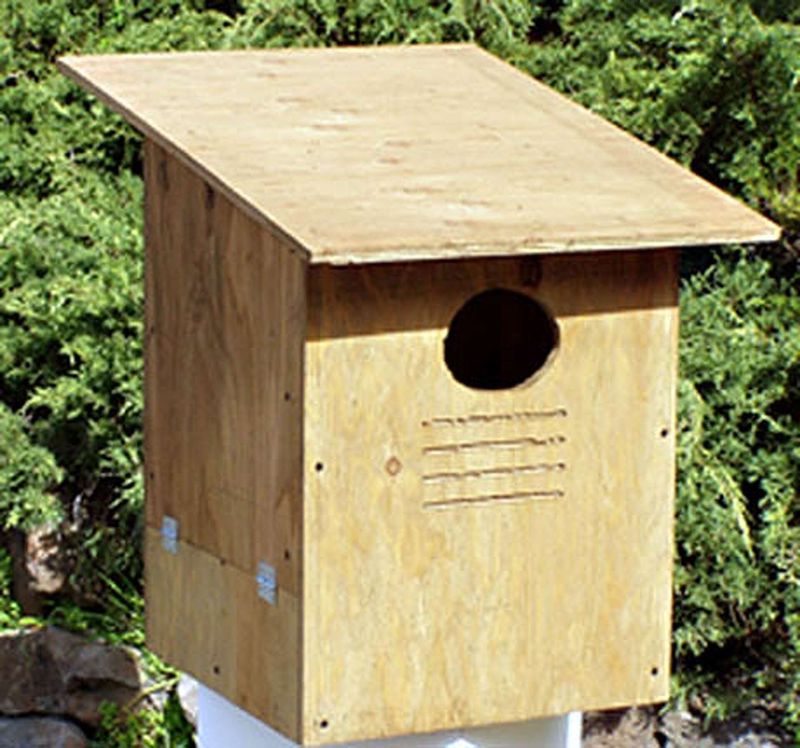
A barn owl nest box, built to UC Agriculture and Natural Resources specifications and placed where prey and open hunting habitat are genuinely present, is a responsible way to invite owls without compromising the building or the landscape. Remember that occupancy rates in multiyear studies run around 40 percent annually even in reasonably suitable habitat, so the expectation should be possibility, not certainty.
Dependable rodent control still rests on the foundation that owls cannot provide: securing food sources, sealing entry points, and using targeted trapping where animals are already inside. UC IPM’s house-mouse guidance and its companion resources make clear that exclusion and sanitation are the steps that prevent re-infestation, not predator presence alone. When rodenticide is necessary, use it according to the label, inside a required tamper-resistant bait station, with carcasses collected promptly, and follow CAL FIRE’s home-hardening standards before adjusting any habitat feature near the structure.
Protecting people, pets, buildings, and fire resilience comes first. Within those constraints, preserving a safe cavity or adding a well-placed nest box is genuine stewardship, not wishful thinking. The difference between responsible habitat conservation and a liability is whether the feature is structurally safe, fire-code compliant, and located where an owl might actually use it, rather than where a homeowner simply hopes one will appear.