
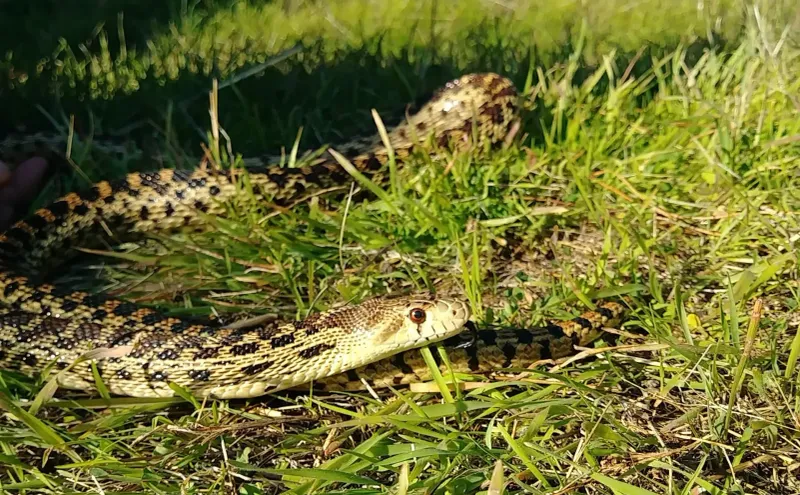
A long, patterned snake slides across your California yard, and your heart jumps. Gopher snakes are native, nonvenomous predators that may eat the pocket gophers chewing up your plants.
They also resemble rattlesnakes, which can make an encounter confusing. Knowing what a gopher snake can and cannot do helps you protect your garden and the wildlife around it.
A gopher snake may eat gophers, but it cannot promise a gopher-free yard
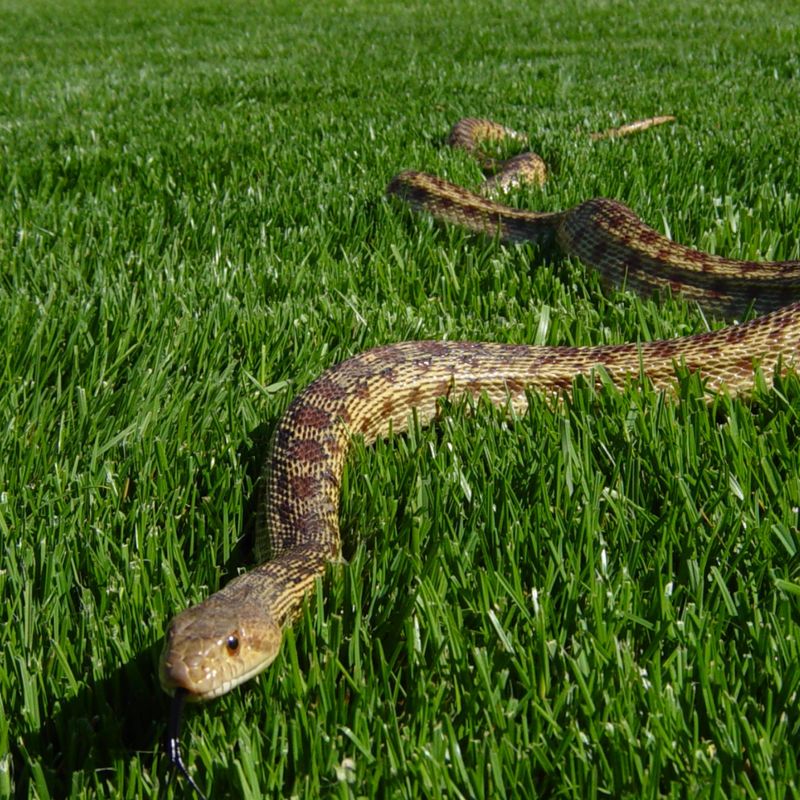
The name is a clue. California gopher snakes are native, nonvenomous predators, and pocket gophers are on the menu.
Still, a snake’s appetite is not the same as a yard-wide cleanup crew.
In a large study of more than 2,600 gopher snakes, mammals were the most frequent prey category. Birds, eggs, and lizards showed up in the diet too.
So gophers are one possible meal among many, not the only target.
Gophers also spend nearly all their time underground, which makes them hard for any predator to reach. UC IPM cautions that natural predators may not control gophers to the level you want.
A snake passing through your yard does not prove your gopher population is under control.
That leaves you with two separate jobs. One is deciding how to treat a snake that shows up.
The other is stopping gopher damage to your plants and irrigation. The rest of this article covers both, starting with why snakes can cause a scare.
Why can a gopher snake resemble a rattlesnake?
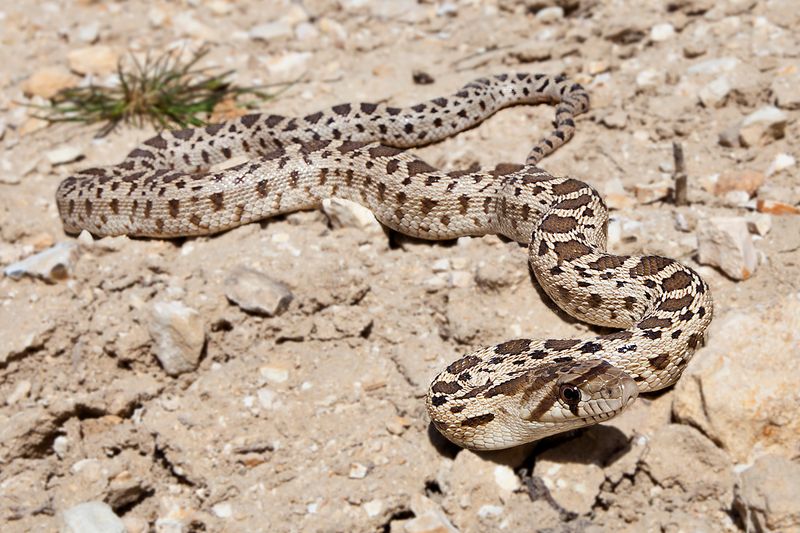
Surprise a gopher snake and it may put on a show. It can hiss loudly and vibrate its tail, and in dry leaves or grass that rattling sound can be startling.
California State Parks describes this behavior as imitation of a rattlesnake.
The act is a bluff. A snake that looks scary and sounds scary may convince a predator, or a person, to back off.
That is the whole point of the display.
It helps to know what the display does not tell you. Hissing and tail vibration do not mean a snake is venomous, and they do not mean it has a rattle.
The California Department of Fish and Wildlife confirms that gopher snakes are nonvenomous and lack a rattle.
Because the two snakes can look and act alike in the moment, a quick glance may leave you unsure. That uncertainty is normal, and the next section explains why one clue alone will not settle it.
No single visual clue safely settles the identification
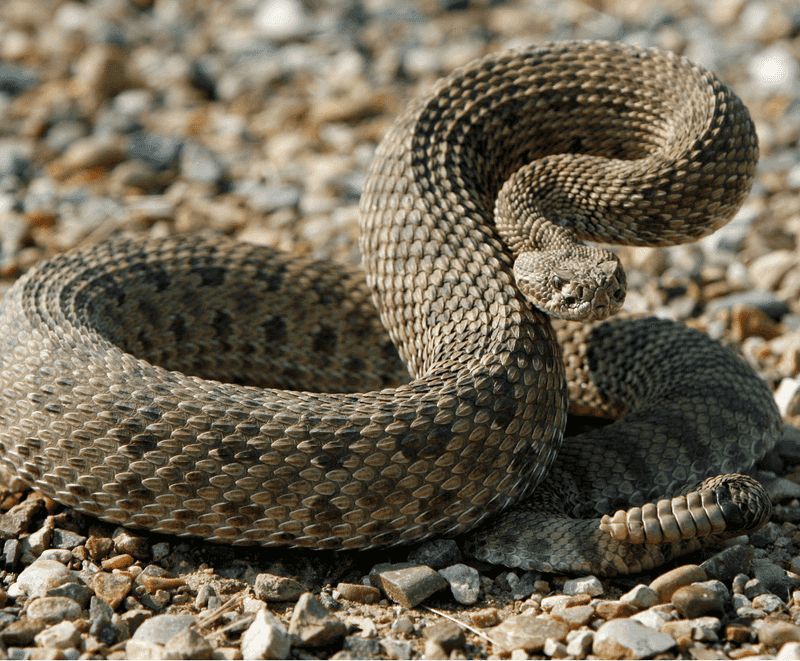
Head shape is a popular clue. California State Parks describes gopher snakes as having slender heads and rattlesnakes as having distinctly triangular heads.
That comparison can be useful, but only as one piece of a bigger picture.
A snake that is coiled, flattened, or partly hidden in mulch can be hard to judge. Even a calm snake seen from a distance may not show its head clearly.
Treat shape as a hint, never as a final answer.
The rattle is another trap. A snake with no visible rattle is not automatically a gopher snake.
CDFW notes that a rattlesnake may have lost its rattle, and a young rattlesnake may have only a small button that does not make a proper buzz.
Color, pattern, and tail movement can mislead too, since gopher snakes copy rattlesnake behavior. If you cannot say with confidence what you are looking at, do not step closer for a better view.
Keep your distance and let the snake go on its way.
Give an uncertain snake space instead of handling it
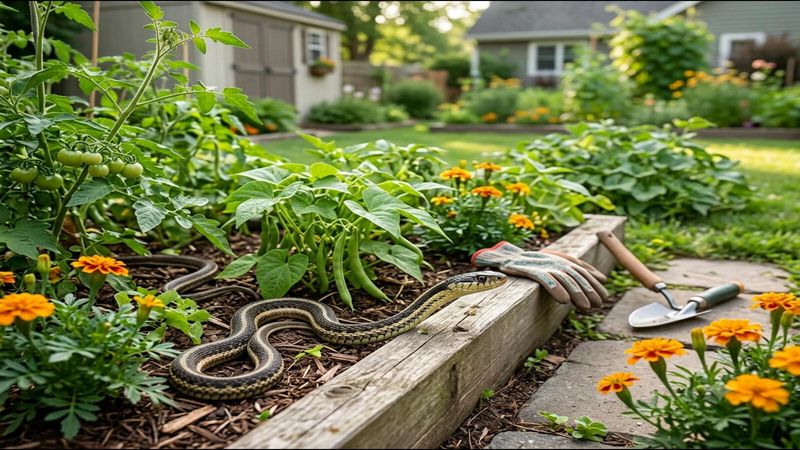
Once a snake has you worried, the safest move is also the simplest: stay back. Do not touch, pick up, move, or kill a snake to find out what it is.
CDFW advises against handling snakes, whether they are dead or alive, and recommends giving rattlesnakes space.
That advice holds even if you think you recognize the species. A guess is not a good enough reason to reach for a snake.
Bites can happen when people get close, and a wrongly identified snake is a risk you do not need to take.
Here is a practical routine. Stop where you are, walk away slowly, and bring children and pets indoors or well away from the area.
Give the snake room to leave on its own, which most will do when left alone.
If a snake stays somewhere unsafe, such as near a doorway, CDFW’s snake guidance is a good place to look for next steps.
Fresh mounds call for direct gopher management
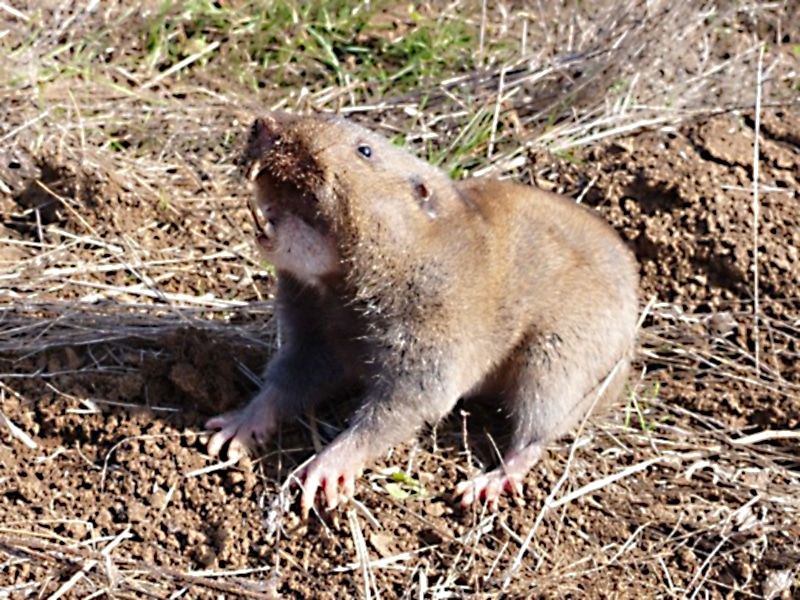
Fresh, loose mounds of soil are your sign that gophers are active right now. Old, crusted mounds may mean the tunnels have been abandoned.
When plants are being damaged, waiting for a snake to solve it is a gamble.
UC IPM recommends trapping and underground fencing for home yards. Trapping targets the gopher in its tunnel system.
Underground fencing protects beds and planting areas by keeping gophers from reaching roots. Neither is guaranteed to work in every situation, but both are direct methods.
Snakes face a hard job here. Gophers live in burrows and can block tunnels with earthen plugs, so a snake’s presence does not mean it can reach them.
Residential toxic baits deserve extra caution. They can pose risks to wildlife, pets, and children.
Rather than following casual bait tips, check the current UC IPM guidance and read the full product label before you decide on anything.
A simple habit helps: note where new mounds appear, and watch whether they keep coming after you act.
Tolerate a snake that is already there, but do not treat it as a control plan
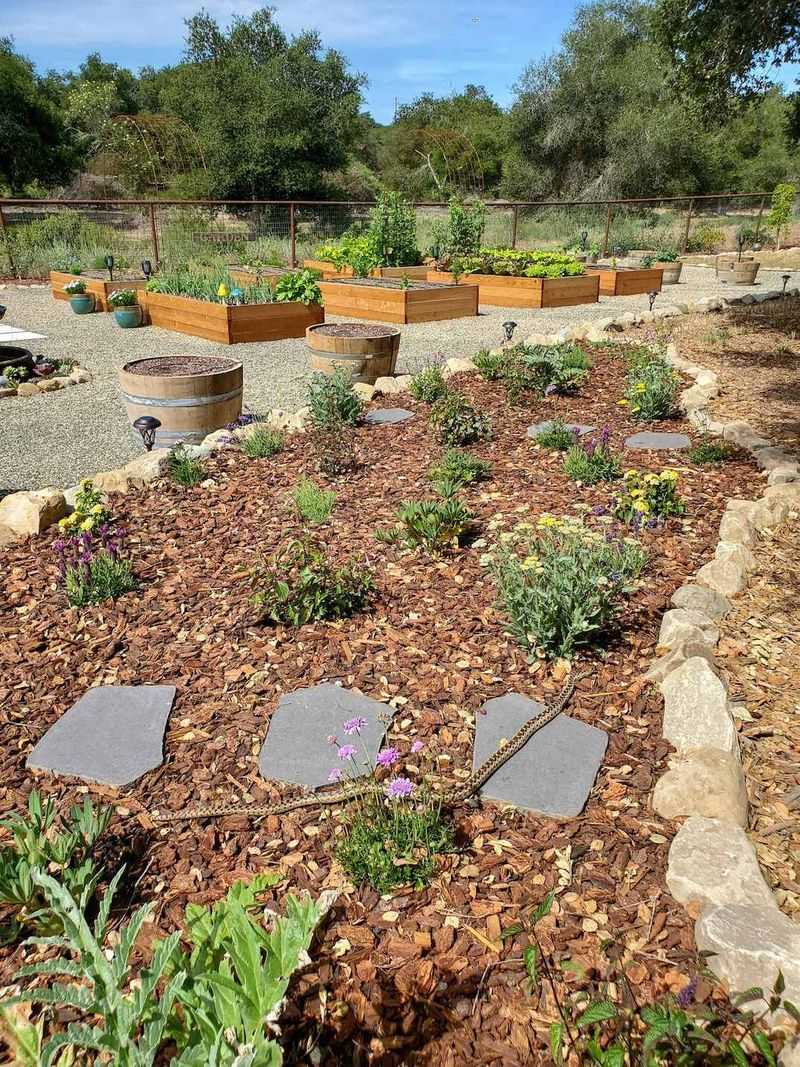
If a snake is already in your yard and is not threatening anyone, leaving it undisturbed is a kind, low-effort choice. Do not capture, relocate, feed, or deliberately attract snakes, and keep in mind CDFW’s advice not to handle them.
Pair that patience with action. If mounds keep appearing, use the trapping or fencing methods from UC IPM.
A snake may eat a gopher now and then, but your roses need a plan that does not depend on it.