
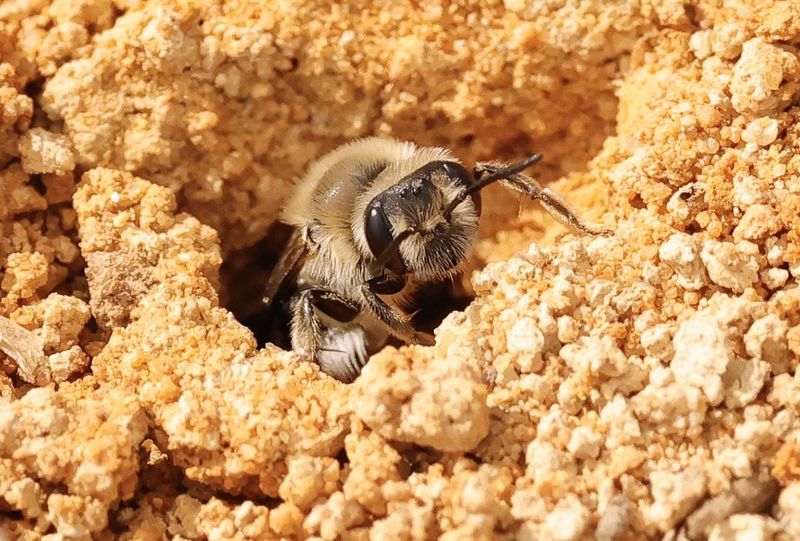
Most California gardeners plant flowers to help bees, and that instinct is exactly right. But a whole group of native bees quietly needs something else from your yard too: a small patch of open, undisturbed soil where females can dig their nests and raise their young. Without that second ingredient, even the most flower-filled garden can leave these bees with nowhere to live. Understanding what these bees actually need, and how easy it is to accidentally remove it, is one of the most practical things a California homeowner can do for local wildlife.
Meet California’s ground-nesting bees
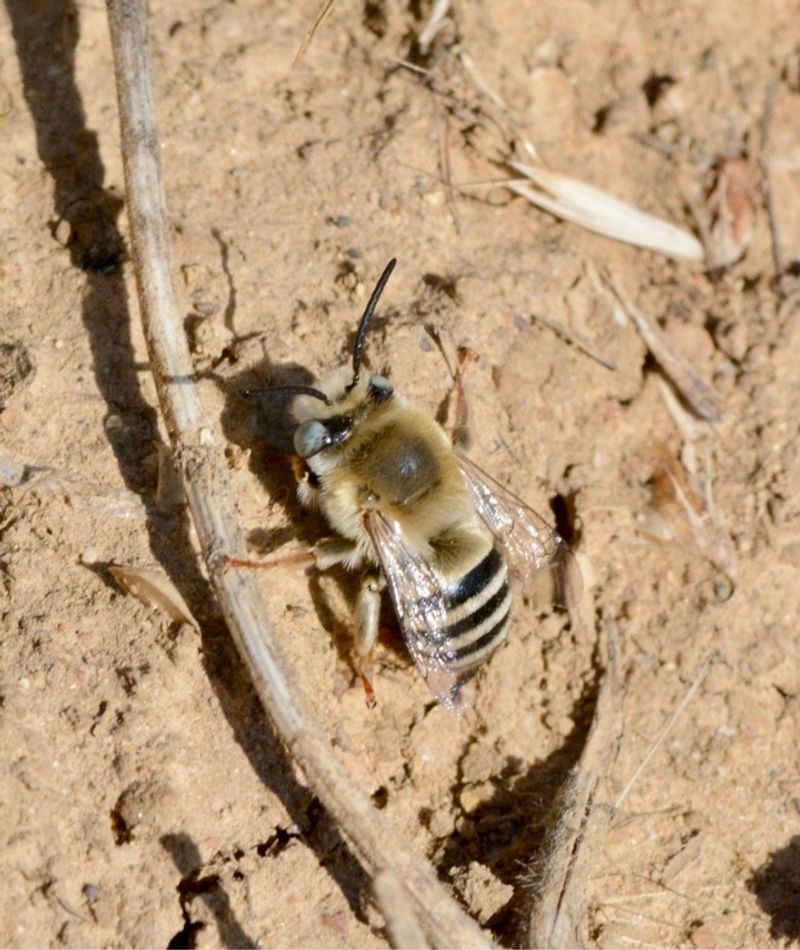
California is home to roughly 1,600 native bee species, though estimates vary by source, and a broad educational estimate suggests that around 70% of them nest in the ground. That figure, cited in UC Agriculture and Natural Resources pollinator guidance, covers a wide range of bee groups: mining bees, sweat bees, digger bees, and squash bees, each with its own soil preferences, seasonal timing, and flower associations. No single species defines this story; what unites them is the combination of floral resources and accessible nesting ground they all require.
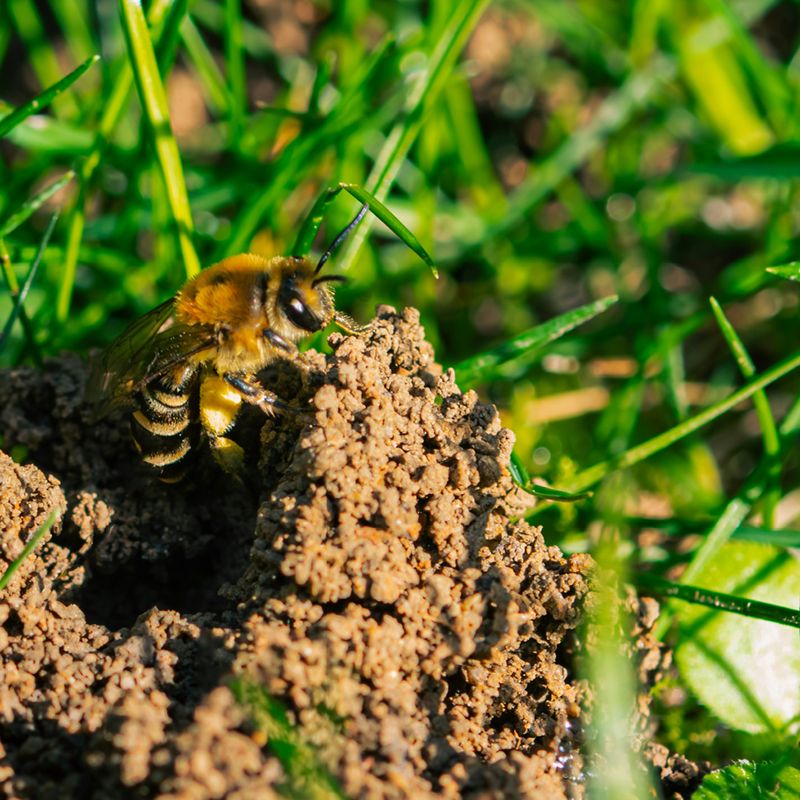
One recognizable example is Anthophora urbana, the urbane digger bee, a solitary, ground-nesting species native to North and Central America. UC ANR’s Bug Squad profile of the urbane digger bee describes it visiting garden plants including lavender, catmint, sage, phacelia, and toadflax, so it absolutely relies on flowers. The useful discovery here is not that it skips flowers but that it also depends on nesting soil that a tidy yard may have quietly removed.
Ground-nesting bees are generally solitary in their reproductive behavior: each female selects a spot, excavates a tunnel, and provisions her own nest cells with pollen and nectar for her offspring. When dozens of females choose the same favorable patch, the result looks like a busy colony but is actually an aggregation of independent nests. According to the UC ANR catalog entry on common California bees, and confirmed by UC Master Gardener Alameda County materials on native solitary bees, these aggregations do not share a queen or defend a communal food supply the way honey bees do. That distinction matters when you find a cluster of holes in your garden and wonder whether to be concerned.
Flowers feed the bee, while soil shelters its young
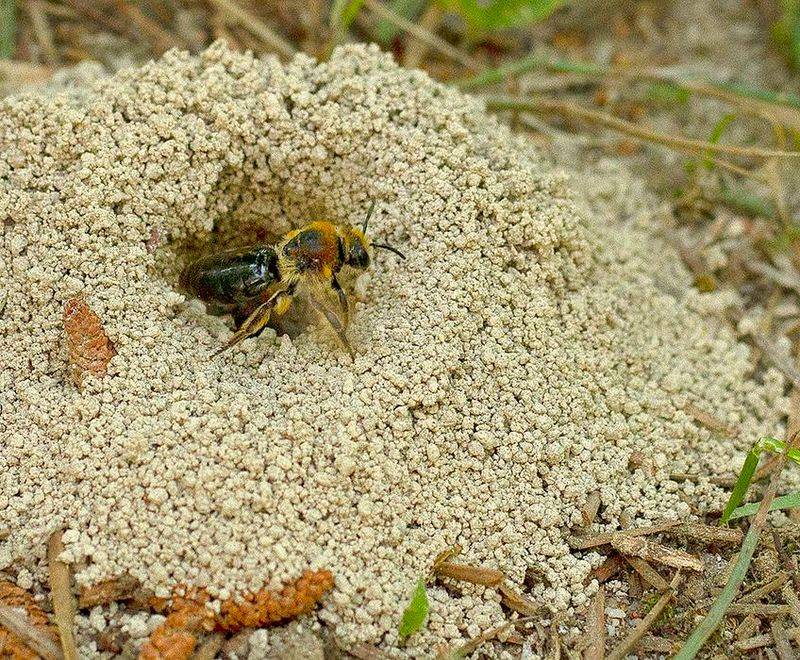
Adult ground-nesting bees spend much of their above-ground lives foraging. Females collect nectar for their own energy and gather pollen to pack into underground nest cells, where it will feed the next generation. According to UC ANR’s guide to attracting and maintaining pollinators, native bees need both pollen and nectar, and a yard without flowers cannot sustain them regardless of how much open soil it offers. Bare ground complements flowers; it does not replace them.
The nesting side of the equation works like this: a female bee finds a suitable patch of soil, excavates a burrow, and then makes repeated foraging trips to stock each cell with a pollen-and-nectar mixture before laying an egg and sealing the cell. That underground chamber is where larvae develop, protected from weather and most predators. If the soil surface is sealed, deeply mulched, or compacted, she cannot complete that cycle even when nearby flowers are abundant.
A flower-filled yard that lacks accessible soil is, in practical terms, a restaurant with no place to sleep. The Xerces Society’s nesting resources overview frames the habitat challenge this way: pollinators need both food plants and nesting sites, and losing either one limits the population that a yard can support. Homeowners who have invested in native plants may be providing one essential resource while unintentionally removing the other through perfectly reasonable yard-care choices. Recognizing that gap is the first step toward closing it without overhauling the whole landscape.
How tidy landscaping can close a nest entrance
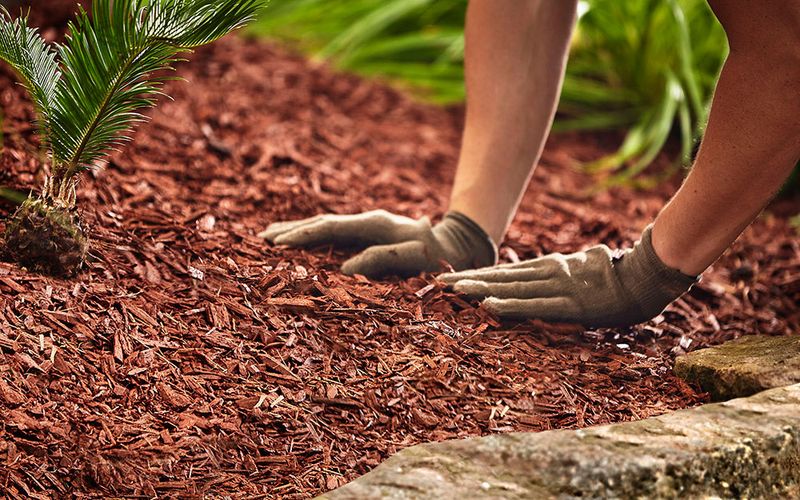
Common yard-care practices that look neat and finished can quietly block the soil access that ground-nesting bees need. Each barrier works differently, so understanding the mechanism helps homeowners make targeted adjustments rather than rethinking the entire yard.
Thick or dense mulch is one of the most widespread obstacles. A generous layer of wood chips or bark keeps moisture in and weeds down, but it also covers the soil surface that females need to excavate. UC ANR guidance on promoting native bee habitat recommends leaving some areas with bare soil or only light leaf litter, noting that thick mulch, lawn, and paving reduce nesting access. Light, sparse cover may be compatible with some species, but deep or compacted mulch layers generally are not.
Dense turf presents a similar barrier: a continuous mat of grass roots and thatch makes soil penetration difficult for a bee trying to excavate a burrow a few inches deep. Paving and hardscape are the most absolute form of closure, sealing the surface entirely. Compacted soil, whether from foot traffic, vehicle parking, or repeated mechanical work, can become so dense that even bees adapted to firm ground cannot tunnel through it effectively.
Tillage is a less obvious but significant problem. A study on tillage impacts on ground-nesting squash bees in California found that repeated soil disturbance can destroy active nests in the upper soil profile. Repeated digging, rototilling, and seasonal bed preparation all disturb nests that may already be in progress.
Urban-garden research adds helpful context: a study on bee abundance and species richness in urban gardens found that greater floral abundance, less mulch, and available bare ground were associated with higher bee abundance and diversity. That association does not establish a universal formula or prove that every tidy yard harms bees, but it does suggest that the tradeoff between uniformly finished surfaces and habitat variety is real and worth considering on a yard-by-yard basis. The Xerces Society reinforces this, noting that nesting habitat loss is one of the factors contributing to native bee decline in managed landscapes.
Create a small patch of accessible, undisturbed soil
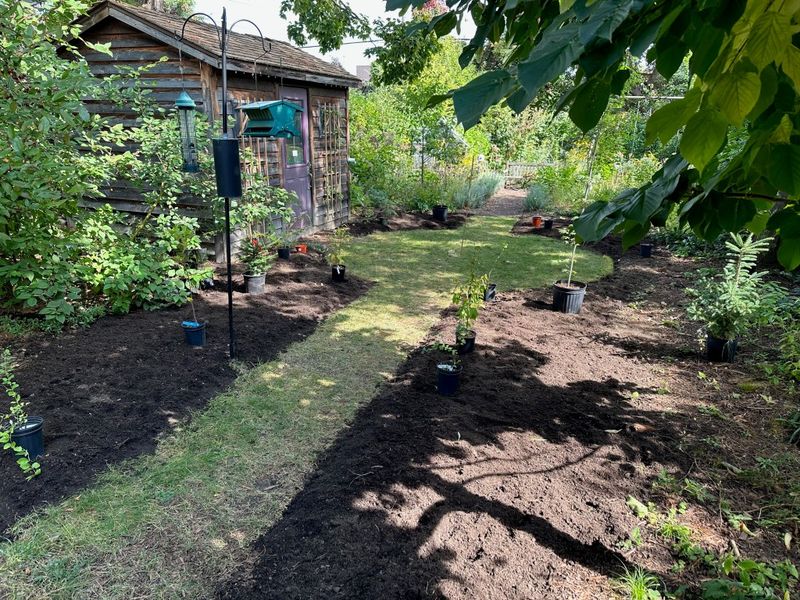
Supporting ground-nesting bees does not require stripping a yard bare or redesigning the whole landscape. A modest, mulch-free area near flowering plants can make a meaningful difference, and the approach is simpler than most habitat projects.
Location matters more than size. A spot that gets direct sun for most of the day, drains reasonably well after rain, and sees little foot traffic gives bees the conditions they tend to favor. UC ANR’s Solano County gardening guidance describes a practical setup as a small mulch-free area near flowering plants with good drainage and minimal disturbance. Proximity to flowers matters because females make many foraging trips between the nest and nearby blooms.
Soil texture is not one-size-fits-all. Some species excavate in sandy or loose soil, while others can work with firmer, clay-based ground. UC ANR pollinator guidance notes that soil preferences vary by species and recommends undisturbed, reasonably well-drained soil as the general target, not a particular imported mix. Working with what your yard already has, and simply leaving it alone, is often the most useful step.
The California pollinator habitat assessment guidelines from USDA distinguish favorable, untilled, well-drained bare ground from hard-packed dirt or contaminated fill. Compacted construction soil, chemically treated ground, or areas regularly soaked and then baked hard are unlikely to serve as useful nesting sites. The goal is soil that is accessible and left undisturbed, not soil that has simply had its cover removed.
Pavers set in sand or lightly covered soil may allow some soil access around the edges, though that is one option rather than a proven design. UC ANR habitat guidance also notes that light leaf litter may be compatible with some nesting, so the aim is reducing dense barriers rather than achieving perfectly bare ground everywhere.
Keep a seasonal supply of flowers beside the soil patch
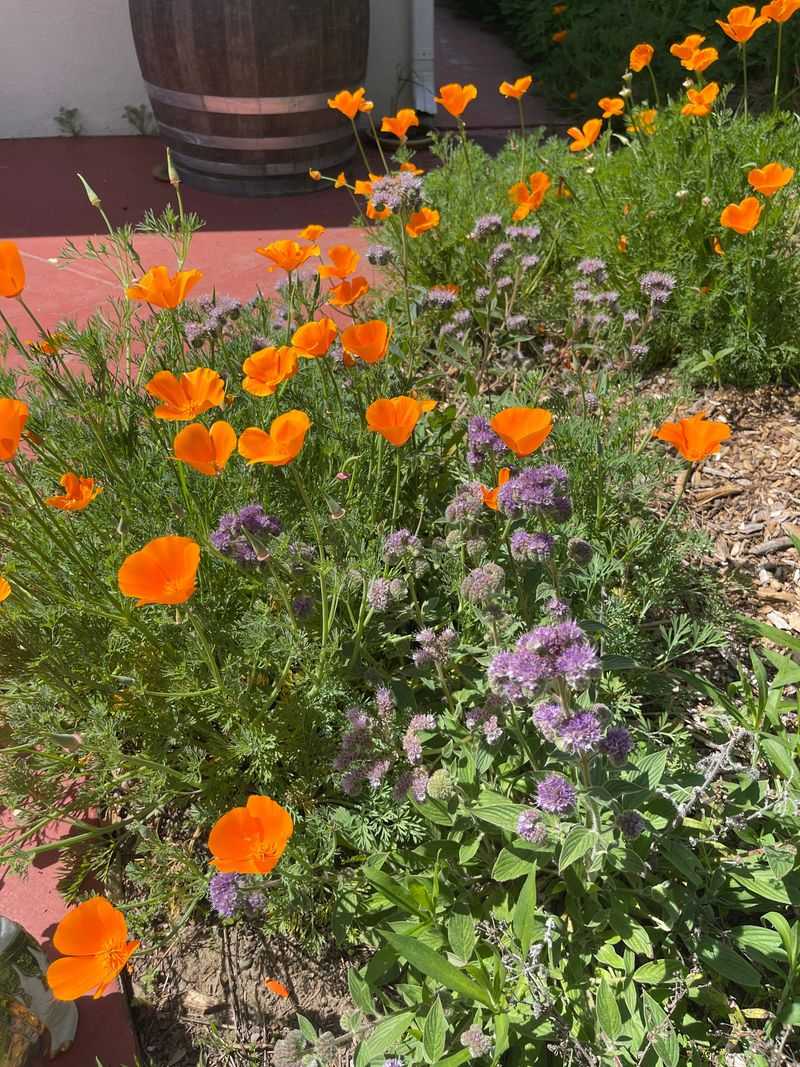
A patch of open soil without nearby flowers is only half the picture. Ground-nesting bees still need nectar for their own energy and pollen to stock their nest cells, so the soil patch and a reliable flower supply work as one connected strategy, not two separate projects.
UC ANR’s gardening-to-attract-pollinators resource recommends planting for a succession of blooms across the year so that bees have access to food from early spring through late fall. In California’s Mediterranean climate, that means selecting plants that cover the long dry summer as well as the cooler, wetter months when some early-season bees are already active.
Regionally appropriate examples from UC ANR materials include California lilac (Ceanothus), salvias, phacelia, California poppy, and asters. These are illustrations of plants that appear in research-backed guidance for California gardens, not a guaranteed list or proof that any specific bee will arrive. UC ANR’s pollinator attraction guide encourages matching plant choices to local climate zone and water availability, which is especially relevant in drought-prone regions of the state where water-wise selections make the garden more sustainable year-round.
Neither flowers alone nor bare soil alone will restore native bee populations or guarantee pollination in your yard. According to UC ANR’s overview of honey bees and native bee pollination, bees need multiple resources in the same landscape, and the combination of food, nesting habitat, and reduced disturbance gives any yard the best realistic chance of supporting them. Treat the flower supply and the soil patch as partners in the same habitat goal.
Observe holes before disturbing the ground
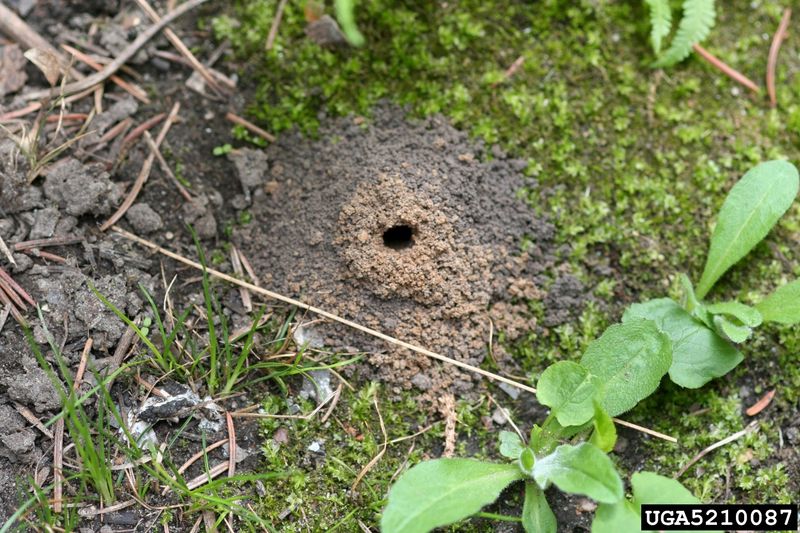
Finding a cluster of small holes in a garden bed is often the moment when well-meaning homeowners reach for a shovel or a spray can. Pausing to watch first is the most useful thing you can do, because a hole alone does not tell you who dug it.
Solitary wasps, beetles, and other soil-dwelling insects also excavate the ground, and some of them look similar to bees at a quick glance. Utah State University Extension guidance on gardening for native bees advises identifying the insect by watching it enter or leave the hole, not by the hole’s shape or location alone. Spending a few minutes observing during the warmer part of the morning, when bees are most active, usually reveals whether the occupant is a bee, a wasp, or something else entirely.
A dense cluster of holes does not mean a hive or communal colony is present. As described in UC Master Gardener Alameda County materials on native solitary bees, ground-nesting aggregations are groups of independent females each working her own tunnel, not a shared social structure with guard bees defending a queen. UC ANR’s California native bee information recommends checking for bee activity before digging or spraying, particularly during spring when nesting activity peaks.
When practical, avoid trampling, blocking, or tilling areas where bees appear to be actively nesting. That said, safety, accessibility, and required maintenance always take priority over preserving a nest site. If the insect or its location presents a genuine stinging risk, such as near a frequently used path, a play area, or a structure entrance, professional identification is the right next step. BC Native Bees nesting and overwintering guidance notes that solitary bees are generally nonaggressive, but that is not a reason to assume every underground stinging insect is harmless without a proper look.
Protect pollinators without compromising fire safety
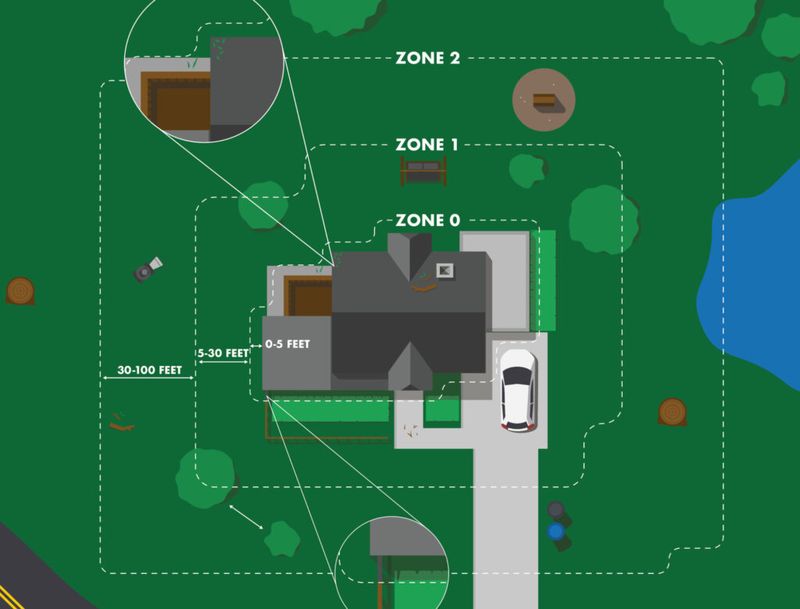
Protecting native bees and protecting your household are not competing goals, but they do require some deliberate coordination, especially around pesticides and California’s fire-safety requirements.
On the pesticide side, the first step is always identification. Knowing what insect you are dealing with determines whether any treatment is warranted at all. UC IPM’s best management practices for protecting bees from pesticides recommends using integrated pest management, reading product labels carefully, and following any pollinator-protection restrictions printed on those labels. Labels are legal documents, and their timing and application instructions exist for good reasons.
One common piece of informal advice worth setting aside is the idea that spraying at dusk automatically makes pesticide use bee-safe. Some native bees rest on vegetation or in soil overnight rather than returning to a central hive, so they can be present and vulnerable at dusk or after dark. The EPA’s pollinator protection tools and strategies emphasize following label guidance on timing rather than relying on informal rules of thumb. When in doubt, choosing a targeted, lower-risk product and applying it only where needed reduces exposure risk more reliably than timing alone.
For California homeowners in fire-hazard areas, the pollinator patch itself needs to fit within legal defensible-space requirements. CAL FIRE’s defensible space guidance establishes zone requirements around structures, and combustible materials, including certain mulches and dense dry vegetation, are restricted near buildings. California Board of Forestry defensible-space zone rules describe specific requirements for zones 0, 1, and 2, and local governments may impose stricter standards on top of those. A small bare-soil habitat patch is unlikely to create fire risk on its own, but its placement, the plants surrounding it, and any materials nearby all need to comply with whatever rules apply to your property.
Safety and legal clearance take precedence over preserving any particular nest site, full stop.
Give a finished yard one useful opening
None of this requires turning your yard into an unmanaged field. A finished, orderly landscape can still offer ground-nesting bees what they need with a few modest adjustments applied where your yard rules allow.
The practical checklist is short: keep a seasonal rotation of flowers going, preserve at least one small area of accessible, undisturbed soil near those plants, reduce unnecessary compaction and digging in that area, and watch before intervening when holes appear. Limiting routine pesticide use around potential nesting areas removes one more barrier, and placing any habitat feature where it complies with CAL FIRE and local fire-clearance rules keeps the whole plan on solid legal ground. UC ANR pollinator guidance and UC ANR habitat guidance on leaving stems and leaves both frame these steps as realistic additions to a maintained yard, not a wholesale redesign.
These measures may support ground-nesting native bees, but they cannot promise a specific species, a set population level, or a measurable pollination outcome. What they can do is remove an accidental obstacle that many well-kept California yards have quietly put in place. The original idea of a bee that skips flowers entirely turns out to be a useful misconception: the real story is a group of bees that needs flowers and soil together, and a yard that provides both gives them a genuine foothold. CAL FIRE’s defensible space rules and household safety always set the outer limits, but within those limits, one small patch of open ground beside a flower bed is a quiet, low-effort act of habitat stewardship.