
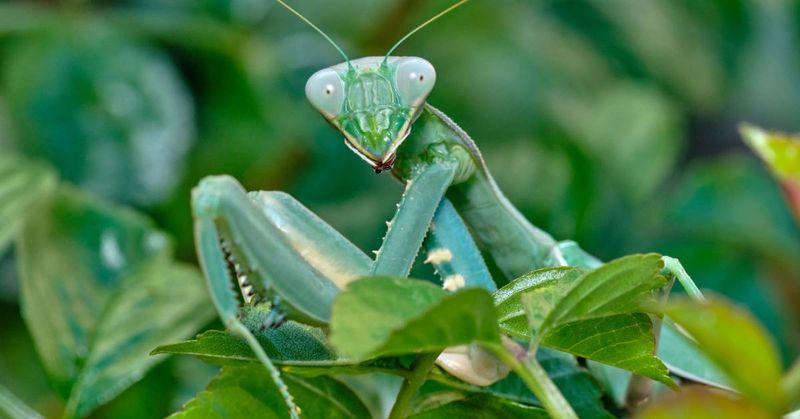
Praying mantises are one of the most recognizable insects in a California garden, and many homeowners are quietly rooting for them to devour the aphids and grasshoppers working through their vegetable beds. The good news is that mantises do eat those insects.
The catch is that they eat plenty of other things too, and the routine fall pruning you do with the best intentions may be quietly scraping away the egg cases that would have hatched next spring.
Mantises hunt garden insects, but they are not a pest-control service
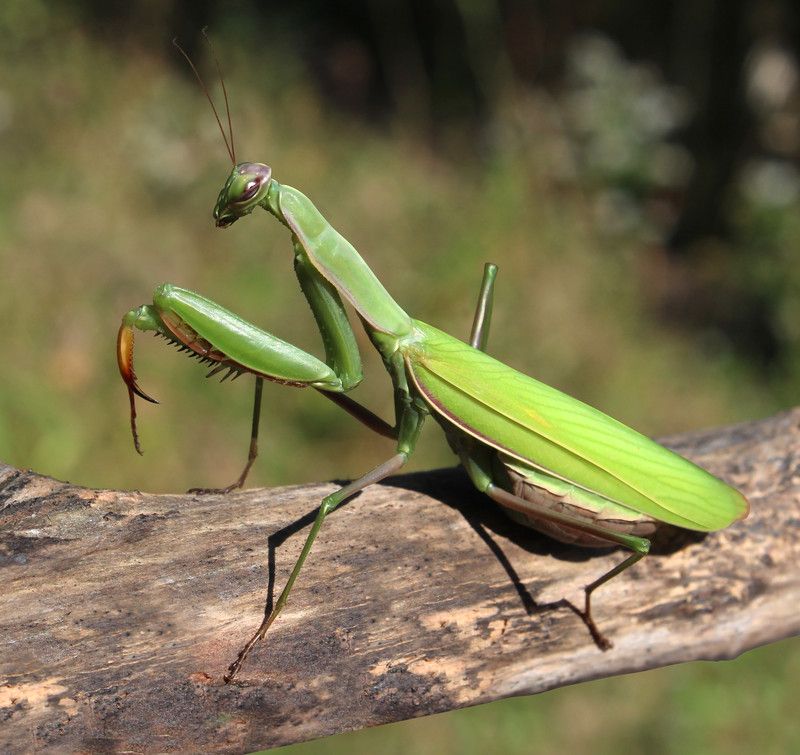
Watching a praying mantis hold perfectly still on a pepper plant, then snap at a passing fly, feels like free pest control. The reality is more complicated.
California mantises do eat aphids, grasshoppers, flies, caterpillars, beetles, and other insects, but they are ambush predators that take whatever prey happens to wander within striking range, not specialists that zero in on the insects damaging your crops.
UC IPM’s profile of mantids puts it plainly: mantises are relatively inactive, consume relatively few insects compared with other predators, and do not discriminate between pest species and beneficial ones. That last point matters.
A mantis sitting on a squash blossom is just as likely to grab a honeybee, a syrphid fly, or a butterfly as it is to catch a caterpillar. Syrphid flies, in particular, are important aphid predators in their own right, so a mantis that eats one may actually slow down the natural aphid suppression already happening in your garden.
Extension guidance from Florida echoes the same concern: a University of Florida IFAS natural-enemies guide notes that commercially released mantises are often unsuccessful as biological control agents precisely because their generalist appetite makes them unreliable allies. For vegetable-pest management, UC IPM recommends monitoring, water sprays, and protecting the natural enemies already present rather than counting on any single predator.
None of that makes a mantis unwelcome in the garden. Watching one hunt is genuinely interesting, and they are part of a healthy yard ecosystem.
The correction worth making is simply this: a mantis in your tomatoes is not a guarantee that your aphid or grasshopper problem will disappear. Treat it as one unpredictable participant in a larger food web, not as a targeted solution to a specific pest.
An ootheca protects a possible next generation
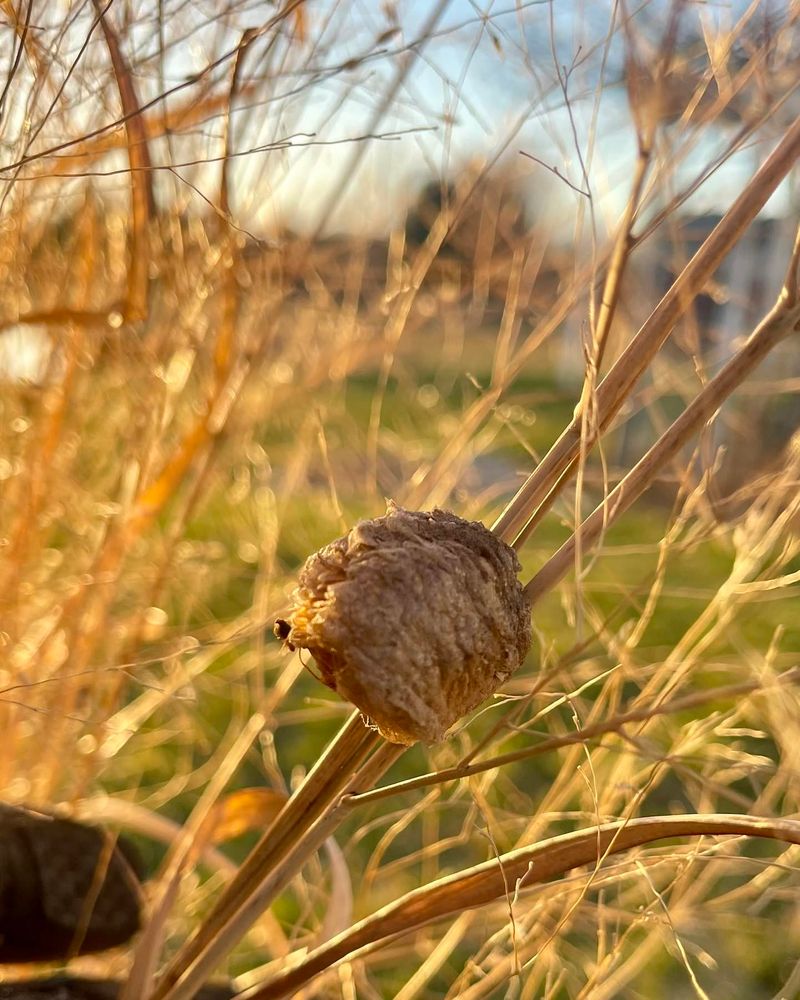
Every mantis you see in the garden from spring through fall is the product of a single overwintering structure called an ootheca. In late summer and fall, a female mantis deposits her eggs inside a frothy secretion that hardens into a protective case.
That case stays attached to whatever surface she chose, and the eggs inside develop slowly through the cool months.
UC IPM describes the California mantis life cycle as one generation per year, with adults and nymphs active from spring through fall, females laying egg masses in fall, and nymphs hatching from late winter into spring. The exact timing shifts with climate and species, so coastal gardens may see hatchlings earlier than inland valley gardens.
California hosts multiple native mantis species alongside introduced ones such as the Chinese, European, Mediterranean, and South African mantises, which means the population in any given yard reflects a mix of natural history that varies by region.
A single ootheca can hold many eggs, but that number does not translate directly into a large spring mantis population. UC ANR’s Bug Squad blog on oothecae explains that survival is sharply limited by starvation, predation, dispersal, and cannibalism among siblings.
Nymphs that hatch together quickly scatter or eat each other, so even a case with hundreds of viable eggs may contribute only a handful of adults to your yard by midsummer.
Preserving an ootheca is worth doing as a habitat-friendly habit, with the understanding that you are supporting a potential hatch rather than stocking the garden with a guaranteed mantis workforce. The value is ecological, not transactional.
Keep expectations grounded: one case, if it survives and hatches successfully, may contribute some mantises to next spring’s garden, not a population large enough to solve any specific pest problem.
The specific fall risk is cutting or scraping attached cases
The fall-cleanup warning connected to mantis egg cases is more precise than the common version of the story suggests. Raking leaves off the lawn is not the primary way gardeners accidentally destroy oothecae.
Mantis egg cases are generally attached above ground to woody or rigid surfaces, so they ride out an ordinary leaf-raking session without any trouble.
The real risk comes from cutting. When you prune back shrubs, trim dead tomato stalks, pull out old pepper plants, remove spent flower stems, or clear woody debris from the border, any ootheca attached to that material goes with it.
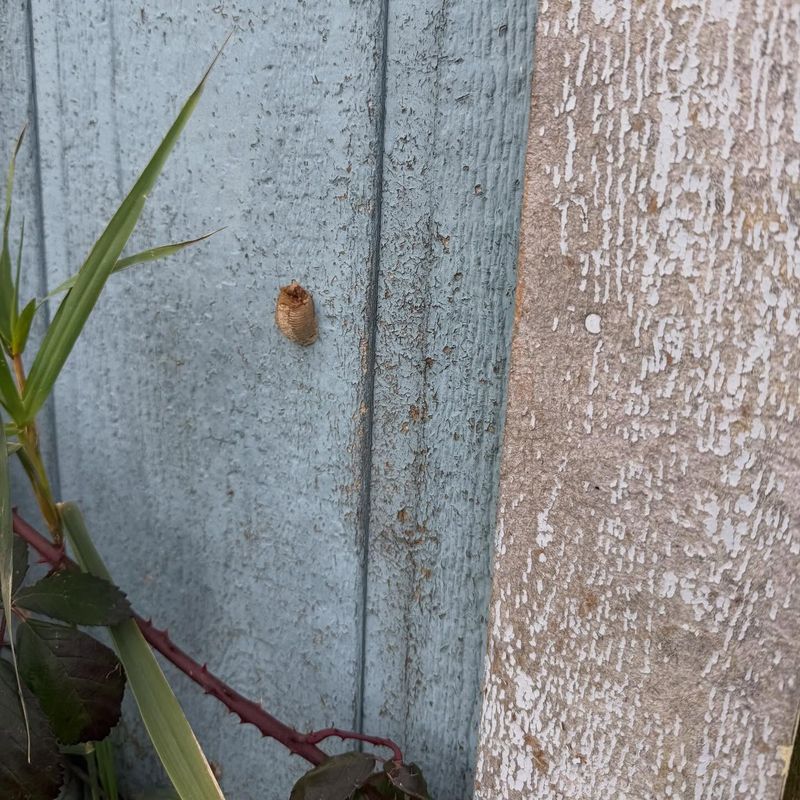
The same is true when you scrape or wash down a stake, a tomato cage, a fence slat, or a trellis rail. UC ANR extension guidance on oothecae notes that cases are commonly found on twigs, stems, wooden stakes, and fence slats, which are precisely the surfaces that get aggressively cleared or replaced during fall garden overhaul.
Habitat-friendly fall care does not mean stopping all maintenance. The Xerces Society’s guidance on leaving habitat for overwintering insects recommends retaining some standing stems and suitable leaf litter while still removing diseased plant material, invasive plants, fallen fruit, and heavily pest-infested vegetable debris.
The distinction is between selective cleanup and wholesale clearing. Cutting every stem to the ground in one October afternoon is the scenario most likely to destroy any cases present.
Pausing to look first costs very little time and can preserve a case that would otherwise end up in the green bin.
UC IPM confirms that the eggs overwinter inside the hardened case attached to those above-ground surfaces, reinforcing why the pruning and scraping steps are the specific moments of risk, not the general act of tidying the yard.
Inspect stems, stakes, cages, and fences before cleanup

Before reaching for the pruning shears or pulling out the tomato cage, spend a few minutes looking at the surfaces you are about to cut or move. A mantis ootheca is not easy to miss once you know what you are looking for, but it can blend into bark and dried stems well enough to go unnoticed during a fast cleanup session.
The case looks like a hardened, brown or tan blob with a slightly foamy or layered texture, roughly the size of a large grape or small walnut depending on the species. UC ANR’s ootheca identification guidance describes cases as commonly attached to twigs, stems, wooden stakes, or fence slats, which means your inspection should cover the full length of every stem you plan to cut, every stake you pull, every cage section you fold up for storage, and any fence rail or trellis board in or near the garden.
Run a gloved hand along woody shrub branches, check the lower halves of ornamental grass clumps before cutting them back, and look at both sides of fence boards. UC IPM notes that California has multiple native and introduced mantis species, so appearance alone cannot confirm whether a case belongs to a native or nonnative species.
Do not assume one way or the other based on size or color; those characteristics overlap between species.
One thing to do immediately if you find a case is to keep it outside. UC ANR’s Real Dirt blog on mantises in the garden cautions that bringing an ootheca indoors is a mistake: the warmth of a heated house can trigger hatching, potentially releasing dozens to hundreds of nymphs inside.
The case belongs outdoors, exposed to natural temperature cues, regardless of what you decide to do with the stem it is attached to.
Preserve an attached case with species awareness
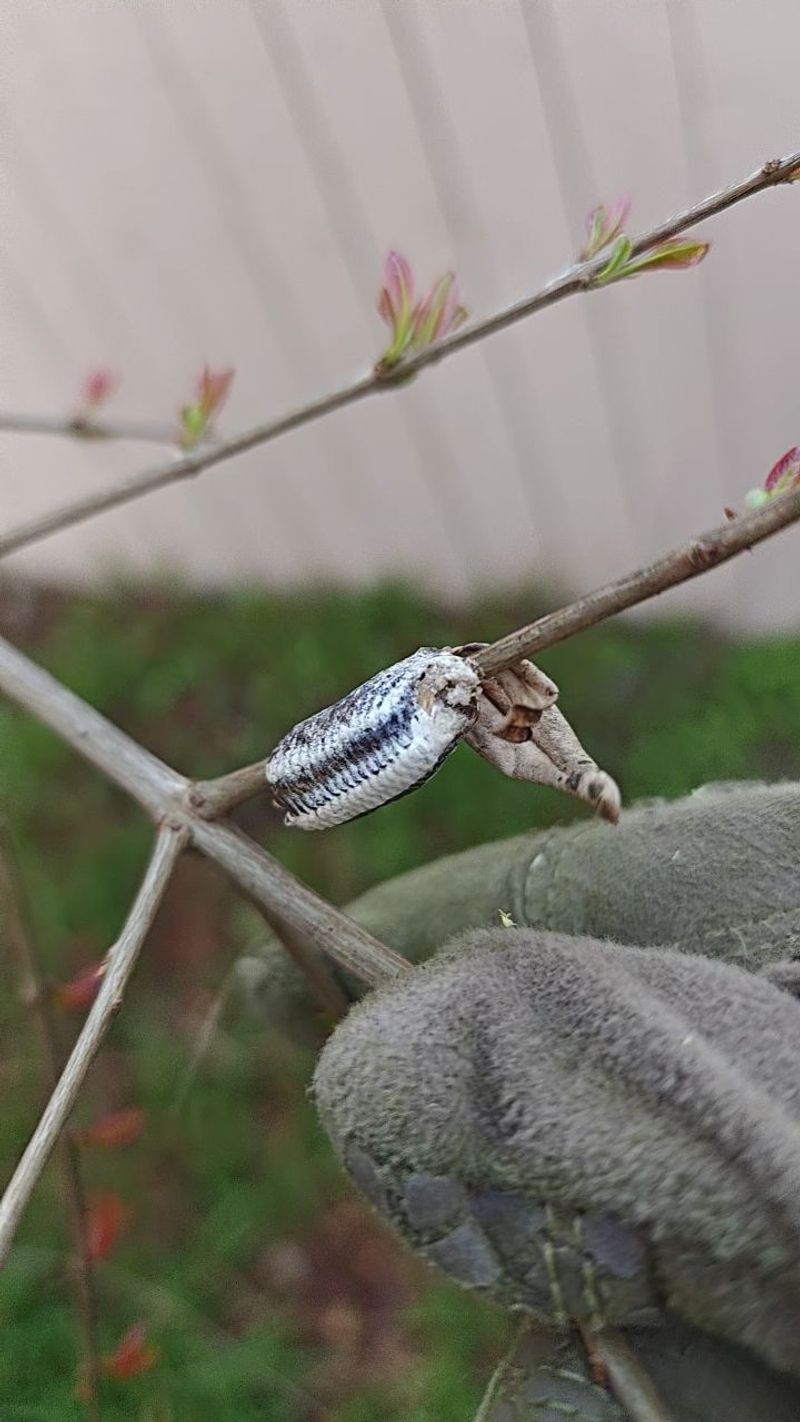
When you find an ootheca on a plant or structure that can stay in place, the simplest and safest choice is to leave it alone. An undisturbed case attached to a living or intact stem is already in the right position, at the right height, and oriented correctly for nymphs to emerge in spring.
You do not need to do anything to it except make sure the stem does not get accidentally cut during later pruning passes.
UC IPM’s mantid profile lists both native California species and introduced ones, including Chinese, European, Mediterranean, and South African mantises. A case you find on your fence or rose bush could belong to any of them, and visual identification from the outside of the ootheca alone is not reliable enough to distinguish native from nonnative.
That uncertainty matters because not all extension and conservation guidance treats every ootheca the same way. NC State Extension’s analysis of Chinese mantids points out that in regions where the Chinese mantis is considered invasive or where it may compete with native species, some programs recommend removing its oothecae rather than preserving them.
That guidance is region- and species-specific, and it should not be applied as a blanket California rule without local expert identification.
For most California homeowners who have not had a case identified, leaving it in place is a reasonable habitat-friendly default. If you are in an area where native mantis conservation is a priority, or if you suspect a large nonnative species based on case size or other clues, contact your UC Cooperative Extension office or a local entomologist for guidance before deciding.
The goal is informed stewardship, not reflexive preservation of every case regardless of species, and not reflexive removal either. When in doubt and no expert is immediately available, leaving the case undisturbed outdoors is the lower-risk choice for the local ecosystem.
Move the cut piece outdoors, above ground, and intact
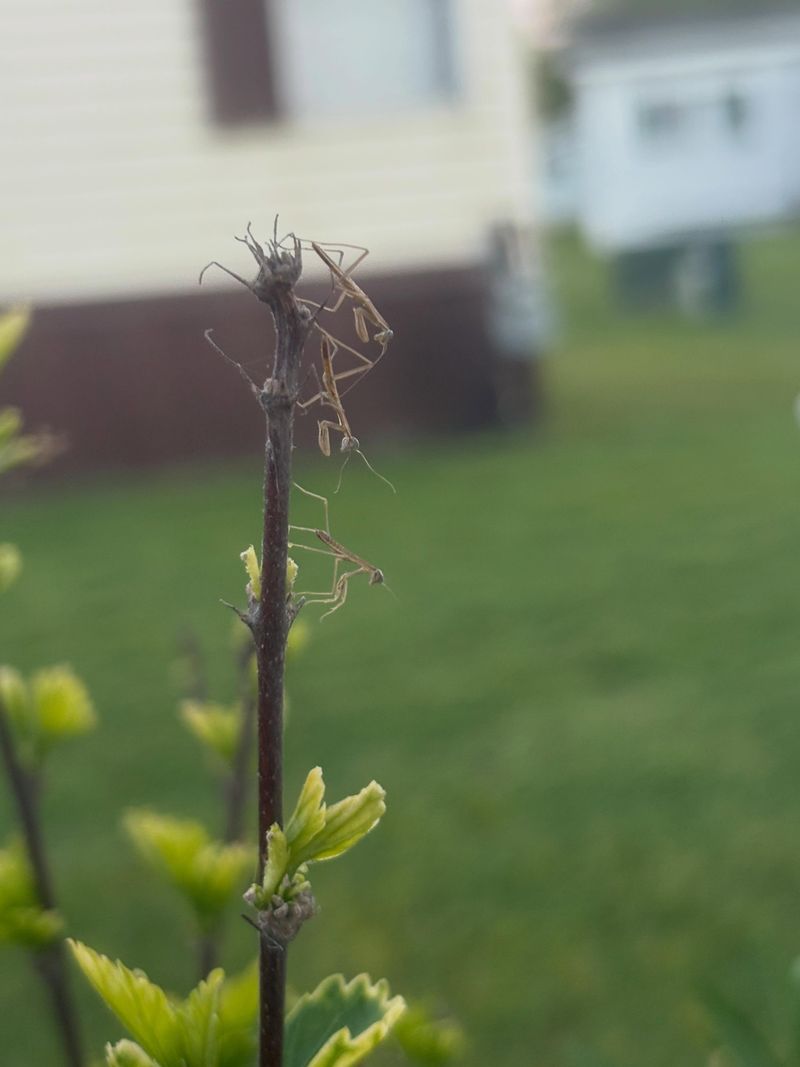
Sometimes the branch, stem, or stake carrying an ootheca has to come out. A diseased shrub needs to be removed, a rotting stake needs replacing, or a fence section needs repair.
In those situations, the case does not have to be lost, but the way you handle it matters considerably.
The key rule is to keep the piece it is attached to. Do not try to scrape or peel the ootheca off its surface.
The case is bonded to the substrate, and forcing it off can damage the structure or dislodge it in a way that harms the eggs inside. Instead, cut the branch or stem so you have a workable length of material with the case still firmly attached, then bring that piece to a new location.
Yolo County UC Master Gardener guidance recommends securing the cut piece among the branches of an intact shrub or in a similarly protected outdoor spot, keeping the case above ground, exposed to natural weather, and oriented as close to vertically as the original position allowed. That orientation matters because nymphs emerge from the top of the case and need to hang freely to complete their development.
A case placed flat on the ground or wedged horizontally can trap emerging nymphs.
Ask Extension guidance on mantis oothecae reinforces the same points: keep the case outdoors, above ground, and in a position where newly hatched nymphs can disperse. Placing the cut piece directly on soil also invites ant predation, since ants can reach and consume nymphs before they have a chance to climb to safety.
Bringing the piece inside, even briefly, risks triggering an early hatch. UC ANR cautions that indoor warmth can fool the developing eggs into hatching weeks or months ahead of schedule, releasing nymphs into a heated room where they have no food and no way out.
The outdoor placement is not optional; it is the step that makes the relocation worthwhile.
Protect overwintering habitat while managing real garden problems
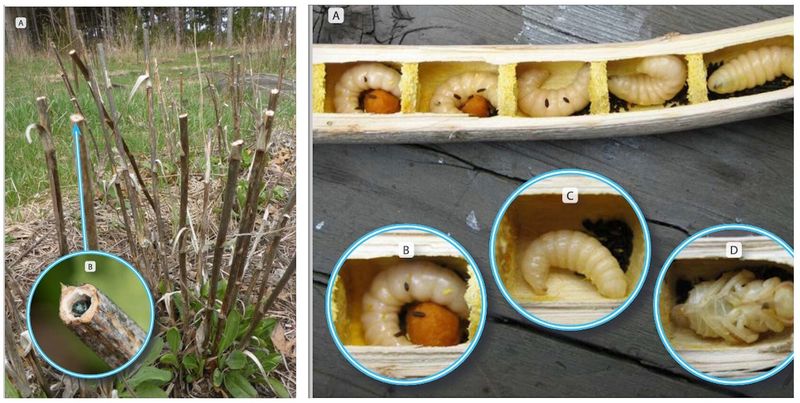
Mantis oothecae are not the only reason to reconsider a full-scale fall garden clearing. Many other beneficial insects, including native bees, ground beetles, and parasitic wasps, overwinter in standing stems, hollow stalks, and undisturbed leaf litter.
Leaving some of that material in place through winter costs very little and supports a broader community of natural enemies that help keep pest populations in check year-round.
The Xerces Society’s guidance on leaving habitat for overwintering insects recommends retaining some standing stems and a layer of suitable leaf litter while still removing materials that pose a genuine problem. Diseased plants, heavily pest-infested vegetable debris, invasive weed stalks that are setting seed, and fallen fruit that harbors fungal disease or pests are worth removing.
The distinction is between material that serves no useful habitat function and material that actively creates a problem if left in place.
Pesticide choices during the growing season also affect whether mantises and other natural enemies survive to lay eggs in the first place. UC IPM’s guidance on protecting natural enemies and pollinators advises avoiding broad-spectrum insecticides when possible, using spot treatments rather than blanket applications, and choosing selective or nonpersistent products when treatment is genuinely necessary.
Systemic insecticides and broad-spectrum sprays can eliminate natural enemies as efficiently as they eliminate target pests, which resets the balance in the pest’s favor.
For aphid problems specifically, UC IPM’s aphid management guidance outlines a practical sequence: monitor plants regularly, knock aphids off with a firm water spray, protect and encourage the natural enemies already present, and treat only when damage reaches a threshold that justifies it. Mantises may or may not eat a few aphids along the way, but they are one small variable in that sequence rather than the solution to it.
Treat an ootheca as habitat, not a guarantee of pest control
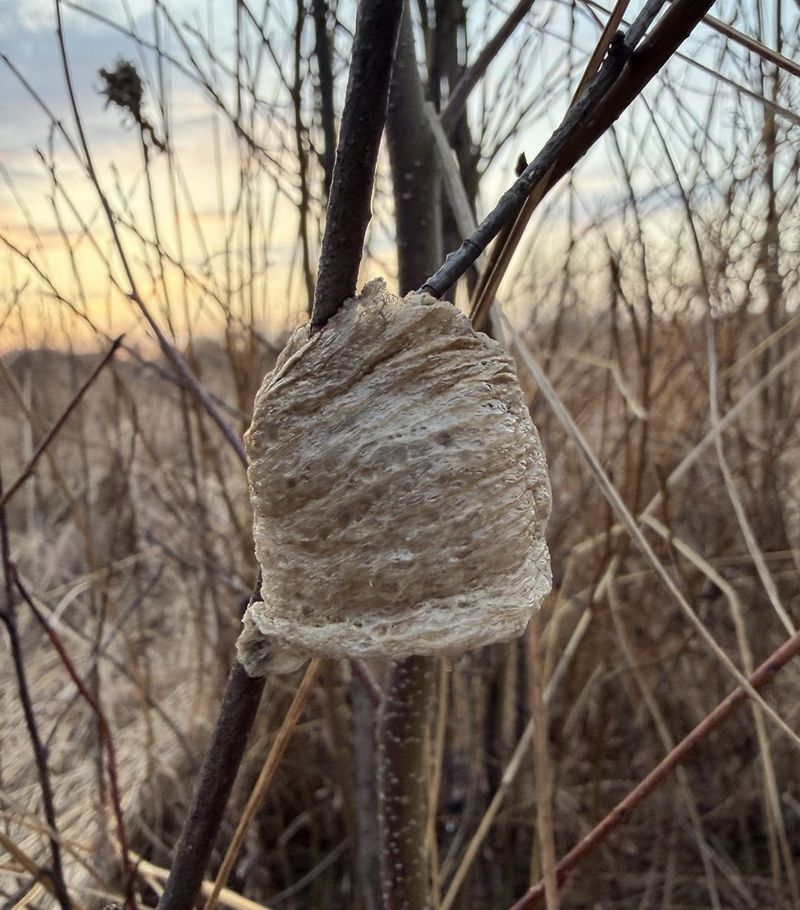
The practical decision rule for fall garden work is straightforward: before cutting, scraping, or discarding any above-ground stem, stake, cage, or fence surface, take a moment to look for a hardened brown or tan case attached to it. If one is present and the plant or structure can stay, leave it undisturbed outdoors.
If the material has to be removed, keep the case on its attached piece, secure that piece in a protected outdoor shrub above ground, and preserve its original orientation as closely as you can.
When species identity matters, whether because of local native-mantis conservation priorities or a suspicion that the case belongs to a nonnative species, seek local identification from a UC Cooperative Extension office or entomologist before deciding. Preserving an unidentified case is a reasonable habitat-friendly default when expert guidance is not immediately available, but it is not a rule that applies without exception in every California context.
UC IPM is clear that mantises offer limited value as biological pest control, and protecting one ootheca will not eliminate aphids or grasshoppers from a vegetable garden. A successful hatch may contribute some mantises to next spring’s yard, not a managed pest-free growing season.
For vegetable pests, UC IPM’s integrated pest management approach remains the reliable framework, and extension guidance on oothecae supports preservation as a habitat habit rather than a pest-control strategy. A mantis that hatches in your garden next April is a small ecological success, and that is enough of a reason to look before you cut.