
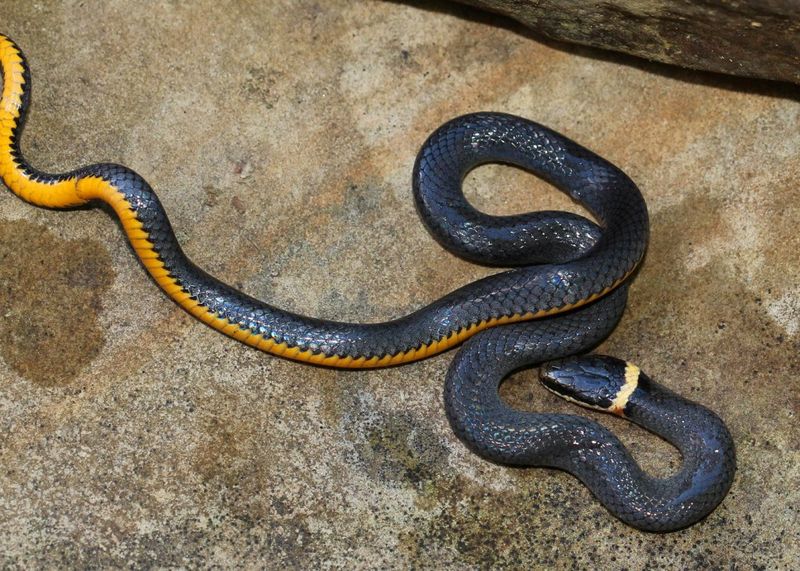
Tiny, secretive, and rarely seen, California ring-necked snakes turn up in gardens across much of the state, and some homeowners have heard they eat the slugs chewing holes in leaves overnight. That part is true, but only partly useful.
These snakes may consume slugs as one item in a broader menu, and no evidence shows they reliably protect a garden bed the way a targeted pest-management routine can. What is worth knowing is that the way many of us tidy up our yards can quietly reduce the habitat these native snakes need to survive.
Ring-necked snakes may eat slugs, but they are not a slug-control service
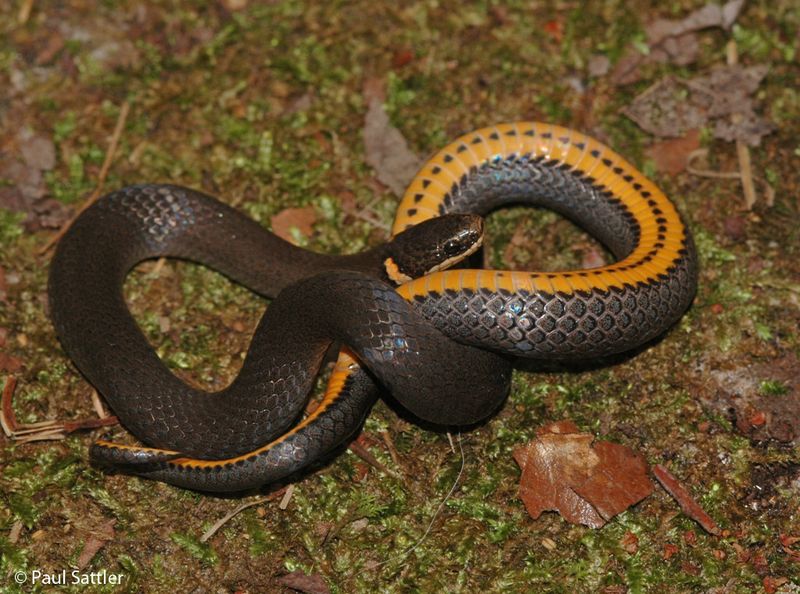
Spotting a slender, pencil-thin snake curled under a stepping stone can feel like a lucky discovery, especially if slugs have been shredding your hostas. California ring-necked snakes (Diadophis punctatus) are small, secretive native predators, and they do occasionally eat slugs.
However, treating that fact as a guarantee of pest control sets up a disappointment.
According to the California Department of Fish and Wildlife’s Wildlife Habitat Relationships account for the ring-necked snake, the species feeds primarily on earthworms, slender salamanders, treefrogs, small lizards, and other small snakes. Slugs appear on the list of possible prey, but they are not the centerpiece of the diet.
Calling these animals slug hunters misrepresents what they actually do and sets unrealistic expectations for gardeners.
Regional differences matter here, too. A California species account notes that southwestern populations, including the regal ring-necked snake, eat proportionately more reptiles, while other populations lean more heavily on amphibians and earthworms.
That variation makes a single, tidy description like “slug-eater” even harder to defend across the state.
No study located for this article quantifies how many slugs a ring-necked snake removes from a residential garden in a season. A snake living under your rock pile may eat a slug now and then, but there is no reason to expect that presence to translate into noticeably cleaner leaves on your pepper plants.
The practical takeaway is straightforward: welcome these snakes for what they are, native predators contributing to backyard biodiversity, without expecting them to replace a targeted slug-management routine.
Removing all surface cover may make a yard less suitable
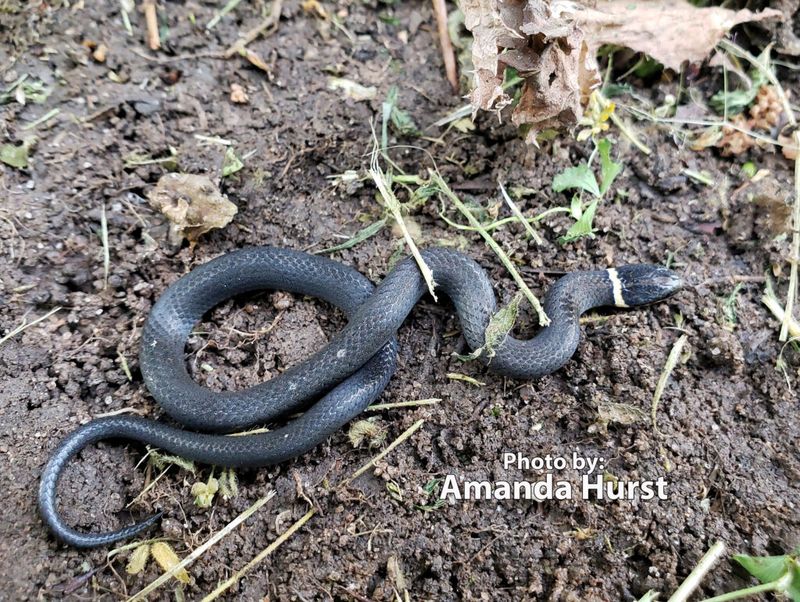
Walk through a yard where every bed has been raked clean, every log hauled away, and every rock removed, and you have created something ring-necked snakes tend to avoid. CDFW’s habitat documentation describes these snakes as animals that forage on and beneath surface objects, relying on leaf litter, rotting logs, woodpiles, rocks, boards, and patches of herbaceous vegetation for both cover and movement corridors.
The same CDFW Wildlife Habitat Relationships account states directly that ring-necked snakes restrict their movements to surface litter or herbaceous vegetation and avoid crossing open or barren areas. A yard that has been stripped of all surface structure does not simply become neutral ground for these animals.
It becomes terrain they are documented to avoid.
That said, the research does not show that every neatly maintained bed automatically loses its snakes. A garden with some mulch, a few ornamental grasses, a small rock border, or a corner left slightly wild may still offer enough cover to support occasional use.
The inference is that wholesale removal of surface structure reduces suitability, not that a single afternoon of weeding empties the yard permanently.
Think of it as a spectrum. A yard with diverse surface cover, moist soil patches, and some undisturbed corners offers more suitable conditions than one that is uniformly bare and dry.
The snakes are not reading a checklist, but they are responding to the presence or absence of the micro-habitats they depend on. Keeping at least some structure in place gives them a reason to stay, or to return after a disturbance, without requiring the homeowner to abandon maintenance entirely.
Mulch can support cover and slugs at the same time
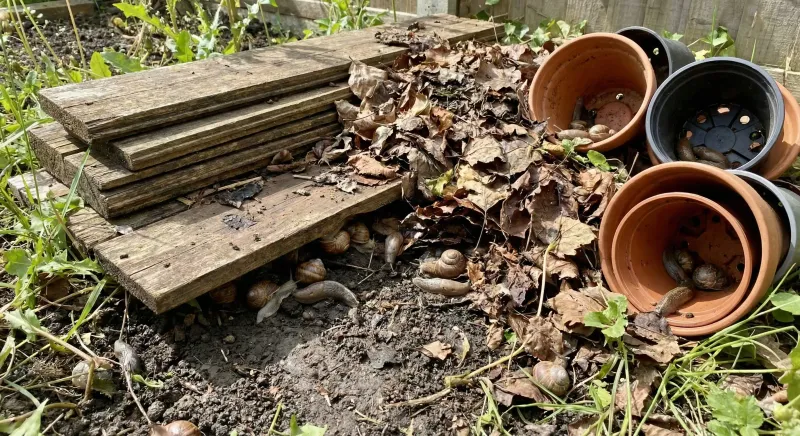
Mulch occupies a genuinely awkward position in this conversation, because it can help both ring-necked snakes and slugs at the same time. Surface litter and organic mulch provide the kind of moist, sheltered microhabitat that ring-necked snakes use for cover and foraging.
The same conditions, especially when mulch is thick, persistently damp, or piled against plant stems, create ideal slug territory.
Slug biology drives this overlap. University of Minnesota Extension guidance on slugs explains that slugs seek dark, moist hiding places and that excessive leaf mulch, poor drainage, heavy shade, and late-day watering all increase slug pressure.
Oregon State University Extension similarly notes that reducing moist refuges near vulnerable plants is one of the most effective ways to lower slug populations. Neither source recommends stripping every bed bare, but both are clear that managing moisture and cover selectively makes a real difference.
Mulch is not the enemy. CalRecycle’s guidance on compost and mulch documents the genuine benefits: moisture retention, weed suppression, erosion control, and soil temperature moderation.
These are real advantages for California gardeners dealing with dry summers and water restrictions, and eliminating mulch entirely would trade one problem for several others.
The practical resolution is to think about mulch depth and placement rather than presence or absence. A moderate layer around established plants in a well-drained bed is unlikely to become a slug refuge if morning watering keeps the surface drier by evening.
Thick, soggy accumulations against stems in shaded corners are where the tradeoff tips toward slugs. Managing those specific spots, while keeping mulch where it genuinely helps, threads the needle between habitat value and pest pressure.
Create one intentional refuge instead of leaving every bed unmanaged

Rather than choosing between a perfectly manicured yard and a completely wild one, there is a middle path that makes sense for both the homeowner and the snake. Documented habitat use by ring-necked snakes points toward a practical option: set aside one small, intentional refuge and manage the rest of the yard on your own terms.
Based on what CDFW’s habitat documentation shows about ring-necked snake cover preferences, a useful refuge could include a flat rock or two, a short section of decomposing log, some accumulated leaf litter, and a patch of low native vegetation. None of these elements require much space.
A corner roughly the size of a large raised bed can hold all of them comfortably.
Placement matters as much as composition. Keep the refuge away from high-traffic paths, children’s play areas, doorways, and spots where you need to work regularly.
A back fence line, the shaded side of a storage shed, or a slope behind established shrubs all work well. The goal is a spot that stays relatively undisturbed between seasonal check-ins.
Label this approach honestly: it is an inference drawn from documented habitat use, not a formally tested residential snake-management prescription. Nobody has run a controlled experiment confirming that a specific rock cluster in a specific corner will attract or retain ring-necked snakes in a suburban California yard.
What the evidence does show is that these snakes use exactly the kinds of features a refuge would provide. Offering them in a concentrated, low-traffic spot is a reasonable response to that evidence, and it keeps the rest of the yard as tidy or as managed as the homeowner needs.
Reduce slug damage by targeting moisture and hiding places
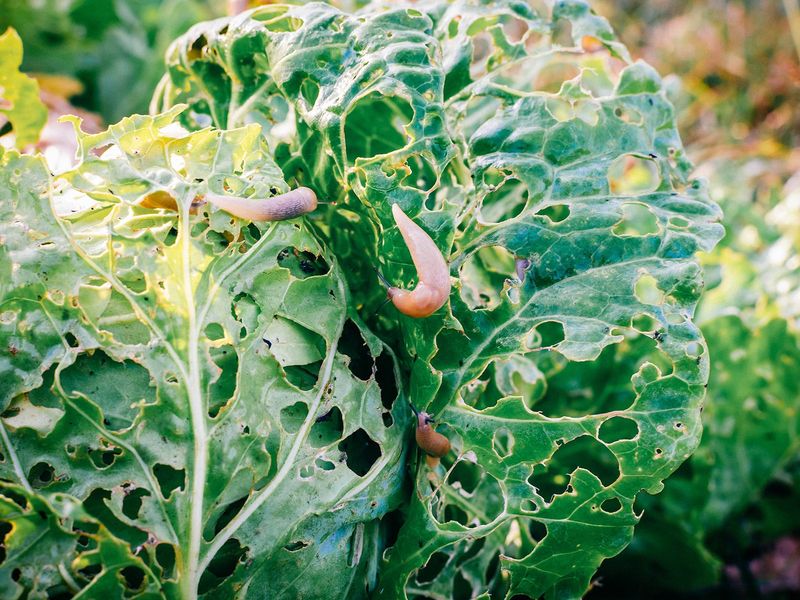
Garden slugs are most active after dark, which makes nighttime scouting one of the most effective tools available. Heading out with a flashlight an hour or two after sunset, especially on nights following rain or irrigation, lets you find and remove slugs by hand before they feed.
Drop them into a container of soapy water. It takes only a few evenings of consistent effort to reduce a heavy population noticeably.
Watering timing makes a significant difference. UC Statewide IPM Program guidance on slugs supports shifting irrigation to early morning so soil surfaces have time to dry before evening, when slugs emerge.
Drip irrigation or root-zone delivery reduces the surface moisture that slugs depend on for movement and feeding, while keeping plants adequately watered. Overhead watering in the late afternoon is one of the easiest habits to change and one of the most rewarding in terms of slug reduction.
Air circulation plays a supporting role. Crowded plantings hold moisture longer and create the shaded, humid microclimates slugs prefer.
Thinning dense foliage, lifting low-hanging branches, and spacing transplants adequately all help surfaces dry faster after irrigation or morning dew. Oregon State University Extension’s slug management guide points to these structural changes as reliable complements to direct removal.
Drainage improvements around vulnerable beds are worth the effort if low spots stay wet for extended periods after rain. Raised beds with good drainage solve this problem structurally rather than requiring ongoing management.
Selective removal of excess damp hiding places, such as soggy cardboard, stacked pots sitting on wet ground, or thick wet leaf accumulations against stems, targets slug refuges without requiring a wholesale cleanout of the yard. Apply these changes near the beds where slug damage is actually occurring rather than treating the entire property as a problem zone.
Use caution around any snake and avoid handling wildlife
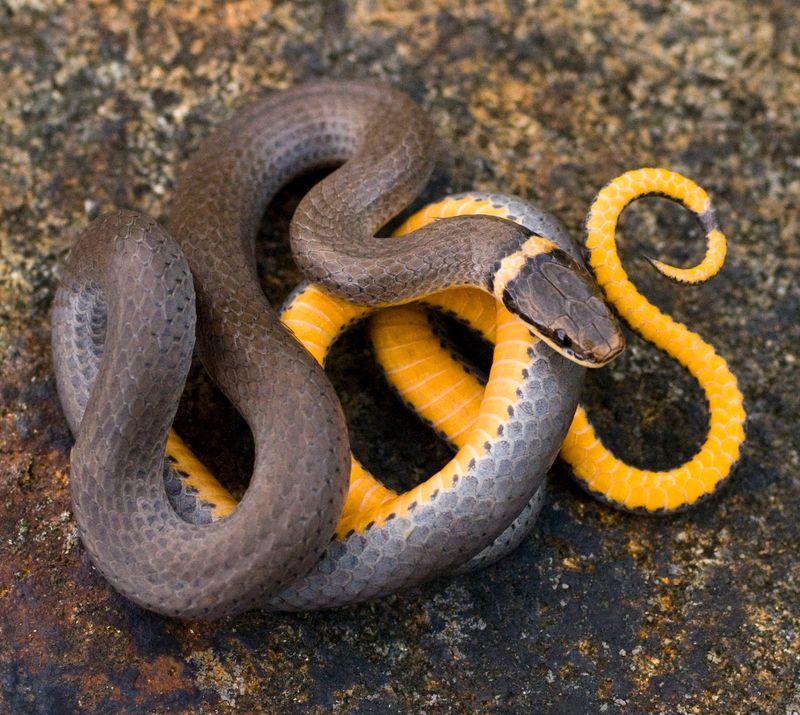
Ring-necked snakes are not rattlesnakes. They are small, generally regarded as harmless to people, and they pose no meaningful threat when encountered in a garden.
That reassurance, however, should not translate into picking them up or trying to move them. The same caution applies to any snake whose identity cannot be confirmed from a safe distance.
UC IPM guidance on snakes in home landscapes advises leaving even nonvenomous snakes alone. Handling any unfamiliar snake increases the risk of a defensive bite and stresses the animal unnecessarily.
If a snake is in a location that genuinely requires removal, contacting a qualified local wildlife professional is the appropriate step rather than attempting relocation yourself.
California wildlife regulations cover native reptiles, including ring-necked snakes. CDFW’s native reptile captive propagation laws and regulations and California Code of Regulations Title 14, Section 5.60 address what is and is not permitted for native reptiles.
Collecting, selling, relocating, or keeping wild ring-necked snakes without checking current rules can put a well-meaning homeowner in violation of state law.
A ring-necked snake seen moving through a garden or resting under a board is behaving normally. The best response is to observe it briefly from a comfortable distance, then leave it to go about its business.
Children and pets should be supervised around any snake that has not been confidently identified, and the standard rule applies here as it does everywhere in California wildlife encounters: when in doubt, leave it alone and let someone qualified handle the situation.
Keep useful cover while managing excess dampness
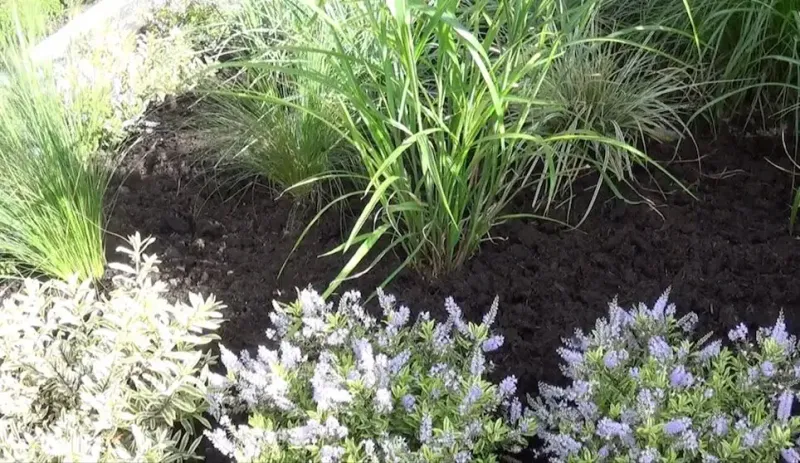
California ring-necked snakes contribute to backyard biodiversity and may eat slugs as part of a broader diet, but they cannot substitute for direct slug management. Waiting for a snake to solve a slug problem is not a plan.
The practical balance looks like this: preserve one small, purposeful refuge with litter, rocks, or a log in a low-traffic corner, keep beneficial mulch where it genuinely helps with moisture and weeds, and manage wet hiding places selectively near the beds where slugs are causing real damage. Shift watering to mornings, scout at night when slug pressure is high, and thin crowded plantings to improve airflow.
These steps, outlined in detail by University of Minnesota Extension’s slug guidance, target the conditions slugs need without requiring a barren yard.
A yard stripped bare is not a solution, and neither is one left constantly wet and heavily mulched everywhere. The snakes that occasionally pass through a California garden are worth supporting through thoughtful habitat choices, and the documented cover preferences of ring-necked snakes give clear enough direction to act on.
Manage the yard for people first, add one quiet corner for wildlife, and handle slugs directly where they cause trouble. A native snake finding shelter there is a small sign that the yard is doing something right.