
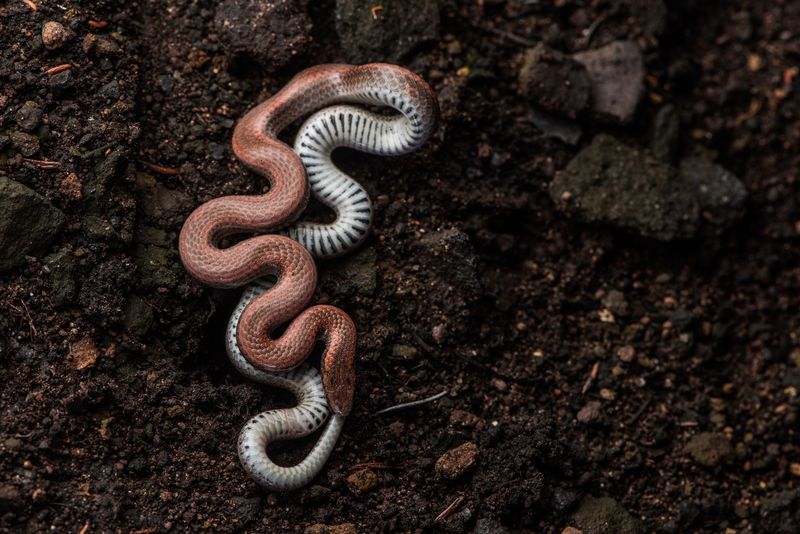
A pencil-thin snake sometimes turns up under a flowerpot or a pile of leaves in parts of California. It is the common sharp-tailed snake, a shy native that seems to live mostly on slugs.
Slugs are a big headache for gardeners, so it is easy to wish this little snake would do the work for you. Here is what is known about it, how to stay safe around any snake you cannot name, and what actually helps with slugs.
A slug specialist is not proven garden pest control
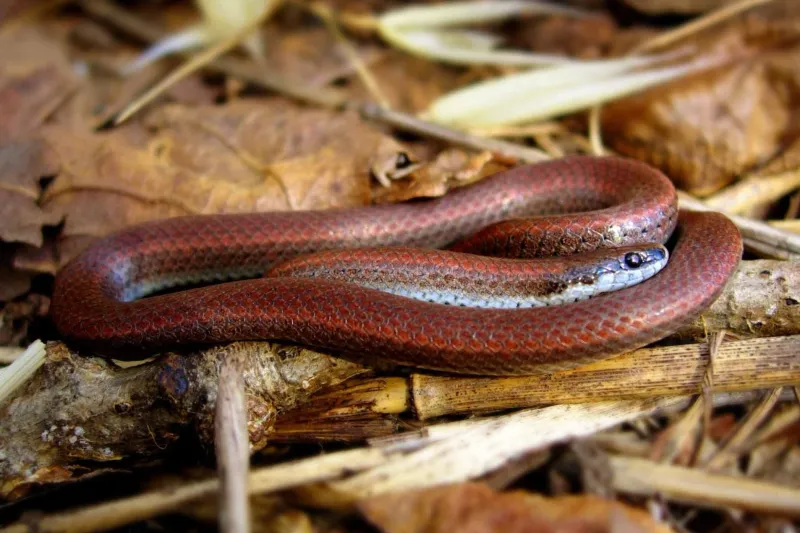
The common sharp-tailed snake, Contia tenuis, is a small, secretive snake whose diet appears to be specialized for slugs. California Department of Fish and Wildlife’s habitat account describes it as a slug specialist and notes that small salamanders may also be prey.
That dietary claim belongs to C. tenuis. California has a second sharp-tailed species, and nothing here extends the slug-eating label to it.
Eating slugs is not the same as protecting your plants. The sources describing this snake come from wildlife habitat accounts and field descriptions, not from garden trials.
Nobody has measured how many slugs these snakes remove from a yard or how much leaf damage they prevent.
That means the headline gets ahead of the facts. Nothing shows these snakes are working through slugs in garden beds, and nothing shows they keep a garden slug-free.
The National Park Service’s Presidio page describes a quiet animal that stays out of sight, which fits what gardeners report: a rare surprise under a pot or a board, not a patrol of the vegetable bed.
The mix-up with baby rattlesnakes is also unproven as a common pattern. Some people may well confuse a small snake with a dangerous one, and that worry is understandable.
But no authoritative source shows that gardeners do this often. So treat the snake as a welcome bonus where it lives, not a pest-control plan.
Where and when might one turn up?
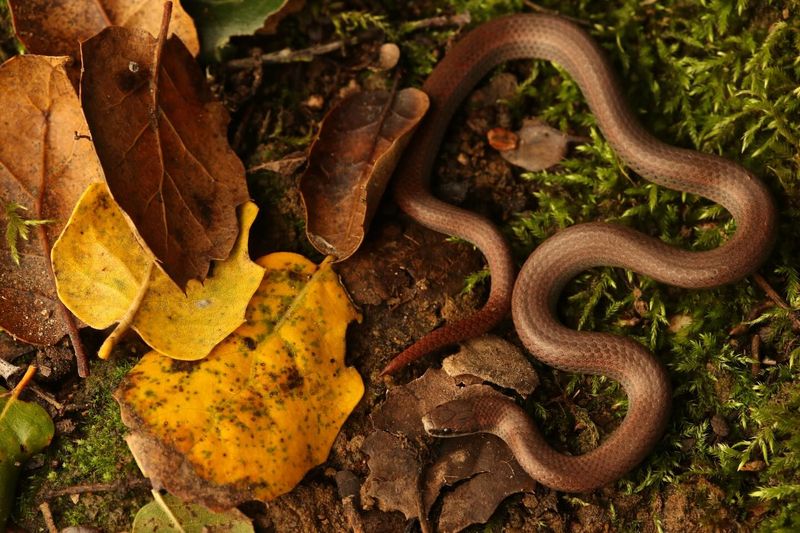
Geography matters here. Common sharp-tailed snakes live in parts of California’s Coast Ranges and the Sierra Nevada foothills.
CDFW’s range dataset generally leaves out the Central Valley. If your yard sits on the valley floor, this advice about finding the snake likely does not describe your neighborhood.
Even within its range, not every garden offers what it needs. The snake is small, slender, and seldom seen in the open.
CDFW’s habitat account says it is often found under rocks, loose bark, woodpiles, and other surface debris, especially in somewhat moist microhabitats. A tidy, dry, paved-in yard may never host one.
Timing is another clue. Encounters are reported most often in early spring and after the first fall rains, when the ground is damp and the snakes are more likely to be on the move.
A dry midsummer afternoon is a much less likely moment.
So a sighting is most plausible in a cool, damp season, in a foothill or Coast Range yard with leaf litter or old wood close by. Even then, it is a lucky glimpse rather than something to count on.
What can a quick look tell you?
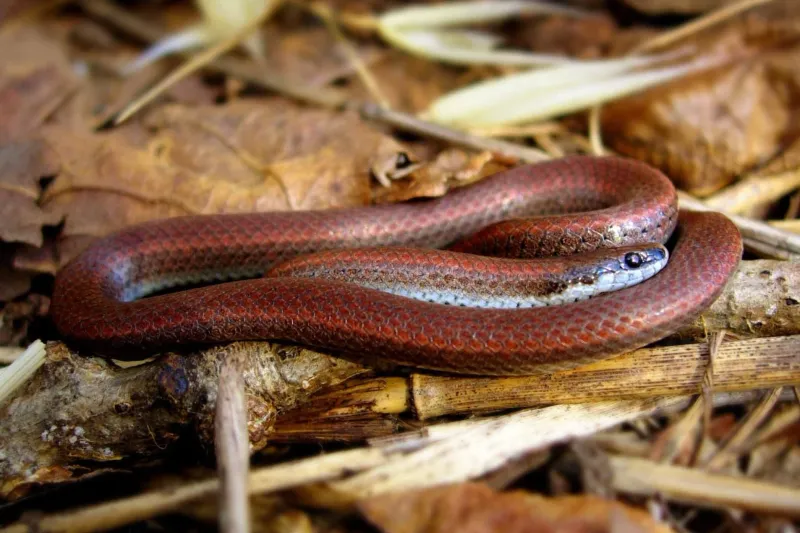
Descriptions of sharp-tailed snakes share a few features. They are small and slender, with a small head and a pointed tail tip.
California Herps describes a rusty or reddish-brown back in many individuals and a pale belly crossed with dark bars.
Color varies, though, so a brown snake in your yard is not automatically this one. The National Park Service describes similar traits for the Presidio population, which is a helpful picture but not a guarantee.
Species adds another layer. California has two recognized Contia species, the common sharp-tailed snake and the Forest Sharp-tailed Snake, Contia longicaudae.
A peer-reviewed study in Copeia describes C. longicaudae as a distinct species that can be hard to tell from C. tenuis by sight. That is why this article says sharp-tailed snakes when the exact species is unknown.
Treat these traits as background, not as a test. A pointed tail, a small head, or belly bars are not a safe way to rule out a rattlesnake, and getting close enough to check them is exactly what to avoid.
A snapshot taken from several steps away may help a local expert later, but it should never replace distance.
A small or missing rattle is no all-clear
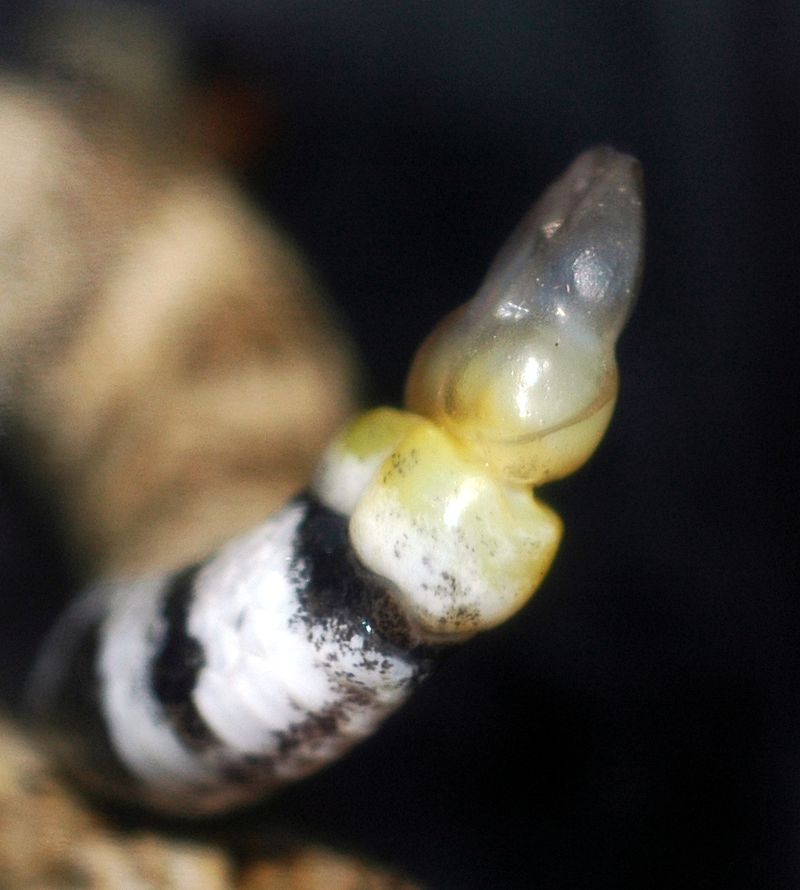
Rattle size can fool anyone. According to CDFW’s rattlesnake safety page, young rattlesnakes are born with a small rattle button, which can be easy to miss.
Rattles can also break off over time, so an adult may have a short or absent one.
That means “I don’t see a rattle” does not mean “this is harmless.” A snake that is quiet may simply be a snake that is staying still, and a rattlesnake does not always buzz before it strikes.
For the same reason, never walk up to a snake to look at its tail. Do not nudge it, lift it, or crouch close for a better view.
A visual checklist of colors and shapes cannot replace distance, especially when your goal is only to learn what the animal is.
If you cannot be sure what you are looking at, treat it as a potential rattlesnake and step back. Keep children and pets away, and let the snake move on at its own pace.
Leave a snake you find undisturbed
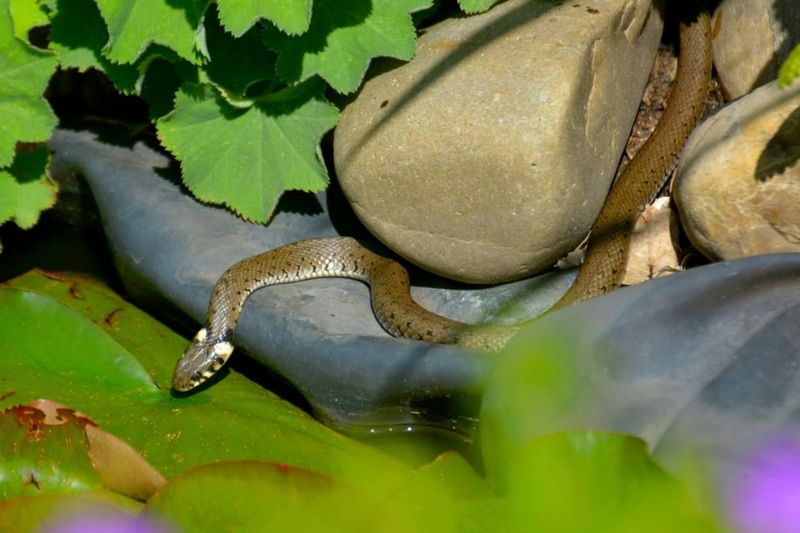
The safest response is the simplest one: stay back and let it be. CDFW advises people not to touch or handle snakes.
Skip the shovel, the bucket, and any plan to capture or relocate it. Watching from several steps away is enough.
Do not go looking for them, either. The habitat account notes that sharp-tailed snakes shelter under rocks, loose bark, woodpiles, and other debris, but that is not an invitation to lift those things.
Reaching under cover is how a surprise turns into a bite or a stressed animal.
If a snake has already turned up in a suitable foothill or Coast Range yard, avoid needless changes to the cover around it. CDFW’s habitat account ties the snake to leaf litter and debris, so waiting to rake, move boards, or turn the woodpile can give it time to settle elsewhere on its own.
Keep dogs on a leash and kids at a distance while it is around. A quiet, hands-off approach protects you, your pets, and a native animal that is almost certainly just passing through.
Manage slugs with more than a predator
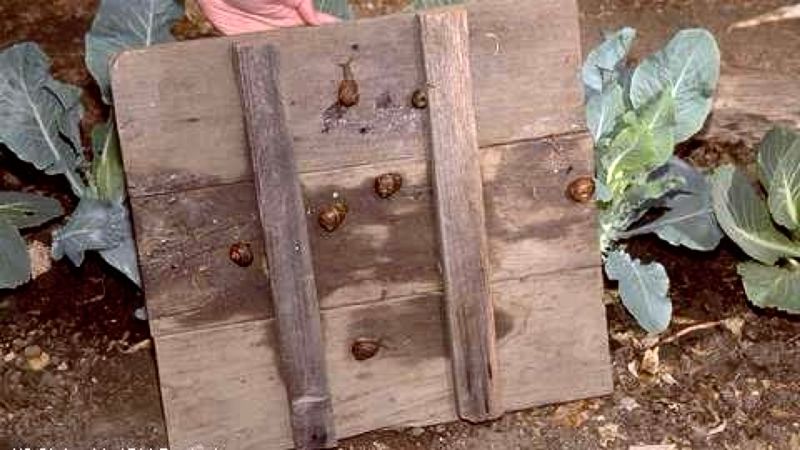
Slug trouble calls for a plan that does not depend on wildlife. UC IPM’s guidance on snails and slugs recommends integrated management, which means combining several steps rather than relying on one fix.
Start with shelter, food, and moisture. Slugs hide in dense groundcover, boards, and clutter by day, so reducing those hiding spots where practical helps.
Water in the morning and use drip lines so the soil surface is not damp all night. You do not need to strip the yard bare, and leaving cover where a snake lives is fine.
Hand-picking at dusk or after rain can knock numbers down fast, and barriers or trap boards you check regularly can add to it. Choosing plants slugs find less tasty is a quiet long-term help.
Baits can be one part of the plan, not the whole thing. If you consider metaldehyde, UC IPM warns that it can be particularly poisonous to dogs and cats.
Read the label, store it out of reach, and think about pets before you scatter anything.
A sharp-tailed snake may eat a slug now and then, but it is no substitute for steady habits. Think of one in your yard as a small gift, not a pest service.