
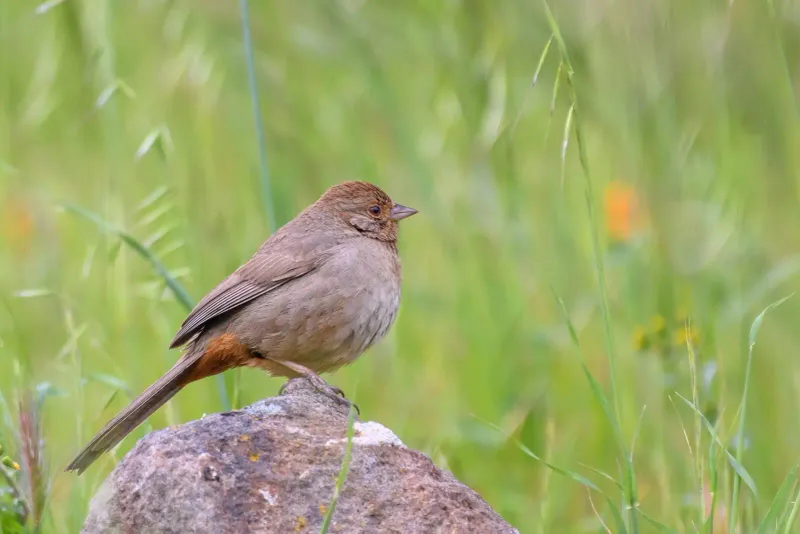
A plain brown bird scratching through your garden beds might be doing more than making a mess. California Towhees are year-round residents across much of California, and they occasionally turn up snails and other invertebrates while foraging on the ground.
Many gardeners unknowingly make their yards less welcoming to these birds by keeping beds too tidy, though the full picture is more nuanced than that. Understanding what towhees actually eat, where they like to forage, and when you still need to manage pests yourself can help you get the most out of sharing your yard with them.
California Towhees may eat garden pests, but they are not a pest-control crew
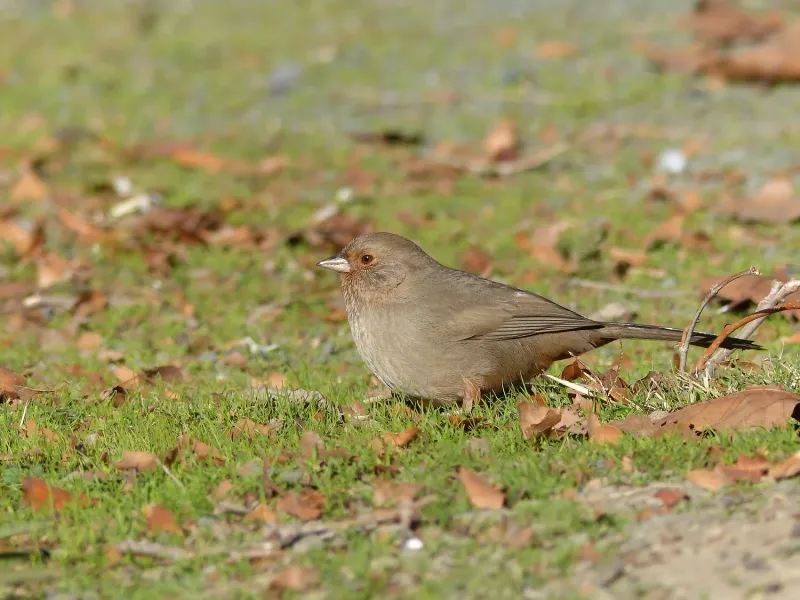
Spend enough time watching a California Towhee work through your garden and it is easy to imagine a tireless pest patrol operating just below the surface. The reality is more modest, and worth understanding before you start counting on a bird to keep your plants safe.
California Towhees are a California-region species, found primarily throughout California and extending into southern Oregon and adjacent Baja-related habitats. According to the California Department of Fish and Wildlife life-history account, the species forages on the ground and consumes a broad mix of food: seeds, insects, spiders, millipedes, some fruit, and occasionally snails.
That variety matters because towhees are not insectivores in the strict sense. Seeds and plant material can make up a substantial share of the diet outside the breeding season, and adults may also sample garden produce such as peas, plums, and apricots.
Animal food does become more important during the breeding season, when nestlings are fed mostly or entirely invertebrates. Cornell Lab of Ornithology’s life-history account lists beetles, grasshoppers, spiders, millipedes, and snails among the foods California Towhees may eat. “May eat” is the operative phrase: snail consumption is documented, but it is opportunistic rather than a focused hunting strategy.
That distinction matters when pest pressure is high. UC IPM’s snail and slug guidance notes that wild birds are among the natural predators of snails and slugs, but that most natural enemies are rarely effective enough on their own to provide satisfactory garden control.
A towhee scratching through your beds may pick off a snail or two, but it will not hold a population in check.
The claim that towhees specifically target or suppress cutworms in home gardens is also not supported by the available evidence. Cutworms are moth larvae that live at or just below the soil surface, and while towhees eat various insect larvae, no authoritative source establishes them as a meaningful check on cutworm numbers.
Treating a towhee sighting as proof that your cutworm problem is handled would be a mistake.
They often forage on open ground near brushy cover
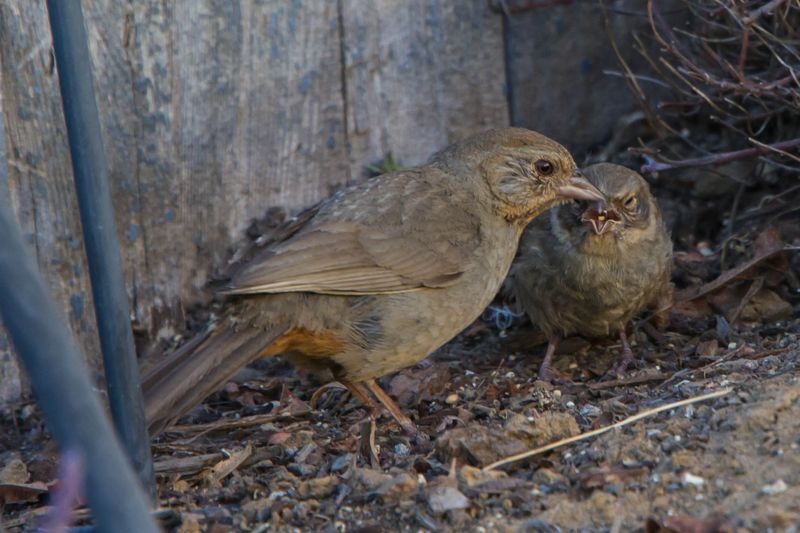
Watch a California Towhee for a few minutes and a clear pattern emerges: the bird stays close to cover. It moves out onto open ground to scratch and search, then retreats quickly toward a shrub, brush pile, or dense low planting when startled.
That rhythm is not random.
The California Department of Fish and Wildlife specifically describes the species as preferring open ground adjacent to brushy cover. The foraging method is equally characteristic: towhees use a two-footed backward scratch to flip leaf litter and loose debris, exposing seeds and invertebrates hidden underneath.
That scratching behavior is why you often see small divots and scattered mulch where a towhee has been working.
The habitat preference is best understood as a combination rather than a single requirement. A towhee is not simply seeking bare ground, nor is it looking for dense vegetation it cannot move through.
It wants accessible foraging surface close enough to shelter that escape is fast. Cornell’s life-history account confirms that the species forages primarily on the ground and typically stays near shrubs or brushy edges rather than venturing far into open lawn or into thick undergrowth.
A sterile expanse of bare soil with no nearby shrubs does not match that description any better than a bed so densely planted that the ground is completely shaded and inaccessible. Both extremes omit something the bird uses.
The practical takeaway is that the combination of open foraging surface and close-by refuge is what supports towhee activity, not either element alone.
Seasons and local conditions also influence where towhees appear. Development pressure, loss of shrub cover, predator activity, and food availability all affect bird presence in a given yard.
The habitat structure you maintain is one factor among several, not a guaranteed switch for attracting or keeping the species.
Overtidying can remove habitat features without explaining every empty yard
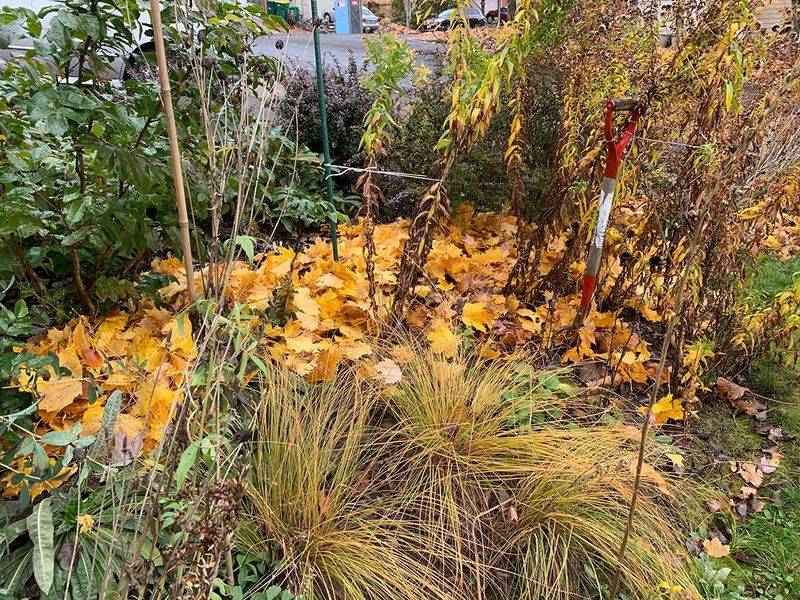
A well-kept garden bed feels like an accomplishment, and for most of gardening history it was treated as one. Bare, raked soil between plants was a sign of diligence, not a problem.
The question now is whether that standard of tidiness removes things that ground-foraging birds depend on.
Stripping away all leaf litter, low cover, natural debris, and nearby shrubs takes away the structural features that California Towhees use most. There is no longer anything to scratch through, and the open ground that remains offers no quick escape route.
That combination may make a bed less useful to a foraging towhee than a bed with some natural texture. Saying that manicuring alone drives towhees away, however, would overstate what the evidence shows.
Development patterns, shrub removal across the neighborhood, predator pressure, seasonal movement, and food availability all shape whether the species shows up in a particular yard.
Broader residential research points in a useful direction. A study of yards in Greater Los Angeles found that native-landscaped properties contained more natural habitat elements, including leaf litter and bare-ground cover, and supported greater bird richness and abundance than non-native-landscaped yards.
The study was not specific to California Towhees and did not prove that any single element caused towhee presence, but it supports the idea that varied ground structure benefits ground-foraging birds as a group.
The practical implication is not to stop maintaining your yard. A completely untended space creates its own problems, including fire risk, pest harborage, and accessibility concerns.
The point is narrower: treating every fallen leaf as a housekeeping failure removes something that has ecological value. A small amount of retained litter and natural debris in a defined area costs little in terms of upkeep and may preserve foraging habitat that an otherwise tidy yard eliminates entirely.
The CDFW account reinforces that brushy cover and open adjacent ground together form the habitat type this species uses most consistently.
Create a small, managed transition zone beside the cultivated bed
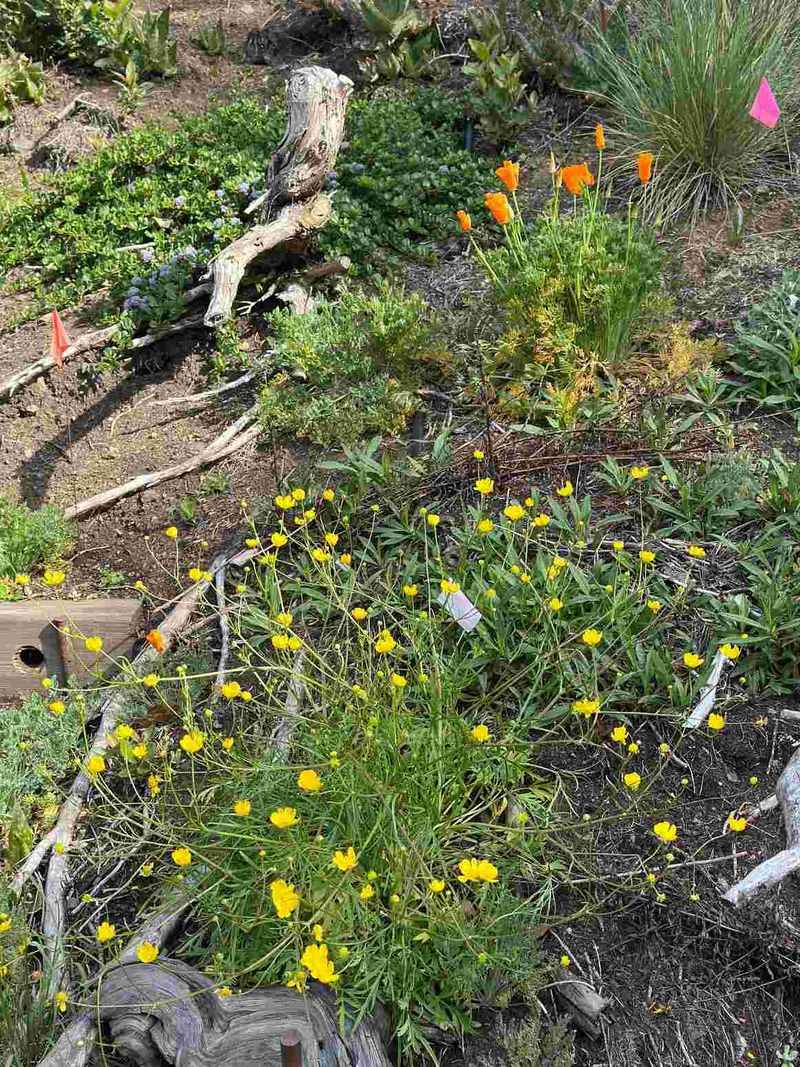
Retaining habitat features does not mean converting your entire yard into an untended thicket. A more useful approach is to designate a limited area, somewhere between a few square feet and a narrow border strip, where the ground stays a little less formal while the rest of the yard remains orderly and maintained.
The goal is to match what CDFW describes as preferred California Towhee habitat: open ground adjacent to brushy cover. Practically, that might look like a patch of accessible soil beneath an established native or drought-tolerant shrub, with a thin layer of leaf litter or scattered natural debris left in place rather than raked clean.
The shrub provides the cover; the open, litter-strewn ground beneath it provides the foraging surface.
Keep the transition zone manageable. A strip one to three feet wide along a fence line or under a mature coyote brush, toyon, or coffeeberry is enough to offer the structural combination without creating a maintenance burden.
Vulnerable seedlings, frequently used paths, and areas near structures should stay clear and orderly. The point is to zone the yard rather than abandon maintenance everywhere.
The Greater Los Angeles residential study found that yards with more natural habitat elements supported greater bird richness and abundance, which suggests that even modest retained structure can matter at the yard scale. That said, the research describes a correlation across many yards, not a guaranteed outcome for any single garden.
Fire safety is a real constraint for many California homeowners, particularly those in wildland-urban interface zones or areas subject to defensible-space requirements. Dense accumulated vegetation, woody debris, and brush piles near structures can conflict with local fire codes.
Before retaining or adding significant amounts of litter, low cover, or brush near a building, check with your local California fire authority. Requirements vary by jurisdiction and distance from structures, and no general gardening article can substitute for that guidance.
Sanitation also matters. A transition zone should not become a hiding place for dense snail populations or a spot where standing water accumulates.
Turning the litter occasionally and keeping the area well-drained reduces harborage for pests while keeping the ground accessible for foraging birds.
Confirm snail, slug, or cutworm damage before treating
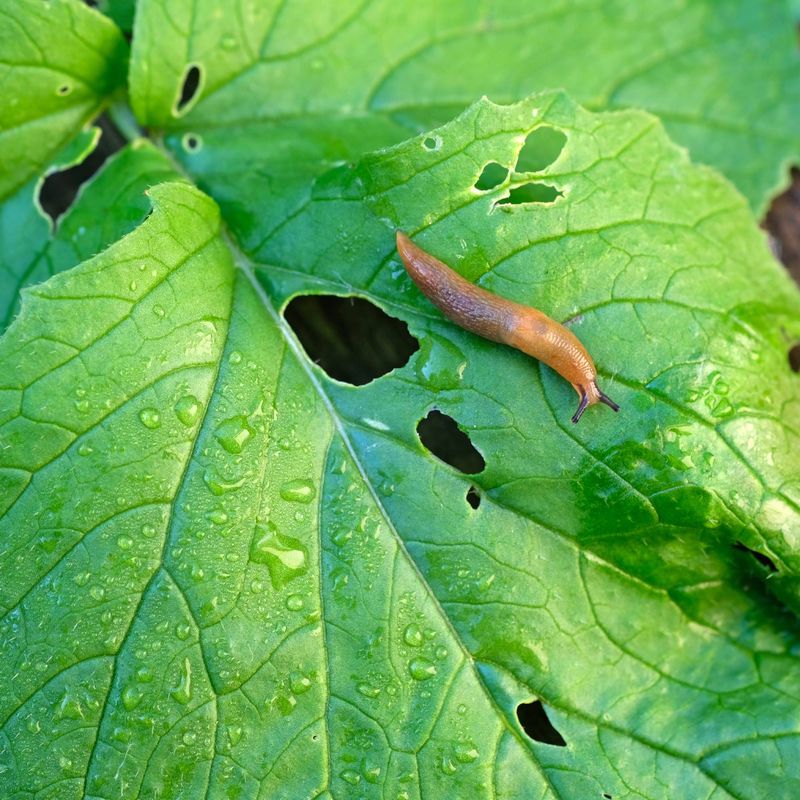
Before reaching for any control method, including habitat changes meant to attract more birds, it helps to know what is actually damaging your plants. Misidentifying the pest leads to wasted effort and sometimes makes the problem worse.
Snail and slug feeding leaves a recognizable signature. Look for irregular holes chewed through leaves, often with ragged edges, along with the silvery mucous trails that slugs and snails leave behind as they move.
UC IPM’s snail and slug guidance recommends confirming both the feeding damage and the trail before concluding that snails or slugs are responsible, since other pests can produce similar-looking chewing injury without the mucus. Not every snail you find near a damaged plant is the culprit, and some snail species are predators of other snails rather than plant feeders.
Cutworm damage looks different. These moth larvae typically sever seedlings at or just below the soil line, leaving a cleanly cut stem rather than chewed leaf tissue.
Utah State University Extension guidance on cutworms notes that the larvae are nocturnal, so daytime inspection of soil near damaged plants may turn up nothing. Checking after dark with a flashlight, or digging carefully in the top inch of soil around a severed seedling, is a more reliable way to confirm their presence.
Finding a California Towhee near a damaged plant does not identify the pest or confirm that the bird is providing any control. The bird may simply be foraging for seeds or other invertebrates unrelated to the damage you are seeing.
University of Florida IFAS extension guidance on snails and slugs similarly emphasizes identification before control, noting that some animals associated with garden damage may not be the primary cause of plant injury.
Distinguishing actual plant damage from the mere presence of an animal takes a few extra minutes but prevents unnecessary treatments and protects the invertebrates, birds, and other beneficial wildlife that depend on an unsprayed garden environment.
Use integrated pest management when habitat alone cannot protect plants
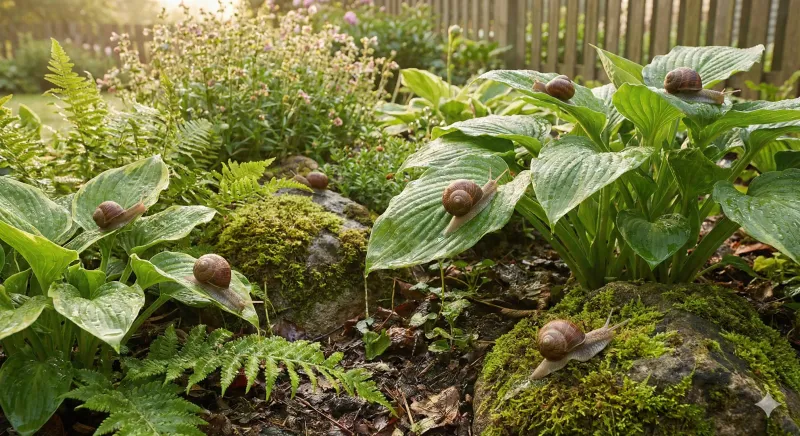
Once you have confirmed the pest and the damage, a proportionate response is more effective than either spraying everything or doing nothing and hoping the birds handle it. UC IPM describes integrated pest management as a sequence: identify the pest accurately, monitor damage and pest numbers over time, start with the least disruptive measures, and reserve pesticides for situations where they are genuinely necessary and appropriately targeted.
For snails and slugs, cultural and mechanical controls are the logical first step. Hand-picking at night, when snails are most active, removes large numbers quickly and costs nothing beyond time.
Traps baited with beer or commercial attractants can reduce populations in a defined area. Reducing hiding places, such as boards, dense ground cover immediately around seedlings, and debris piles near vulnerable plants, removes daytime shelter that snails depend on.
Adjusting irrigation to water in the morning rather than evening leaves the soil surface drier at night, when snails feed. UC IPM’s snail and slug management page covers copper barriers and seedling protection as additional options worth considering for high-value plants.
Cutworms respond to similar physical approaches: cardboard or plastic collars pressed an inch into the soil around seedling stems block larvae from reaching the plant. Checking at night and removing larvae by hand is effective for small plantings.
When a pesticide becomes necessary, the choice of product and how it is applied both matter for wildlife. UC IPM specifically advises avoiding or limiting broad-spectrum, persistent products such as carbamates, organophosphates, and pyrethroids where feasible, because these materials reduce the invertebrate populations that birds, natural enemies, and pollinators depend on.
Removing the prey base undermines the very wildlife benefit you are trying to support.
If you use snail bait, choose a product legally labeled for your specific pest, plant, and site, follow the label exactly, and spot-treat rather than broadcasting widely. Iron-phosphate baits are generally considered safer around birds and other wildlife than some older alternatives, but no bait is harmless.
Keep all baits away from children, pets, and areas where birds are actively foraging, and store them according to label instructions. Do not consider releasing predatory decollate snails as an alternative; their release is legally restricted to certain California counties and poses risks to native snail species near natural areas.
Treat California Towhees as useful neighbors, not guaranteed patrols
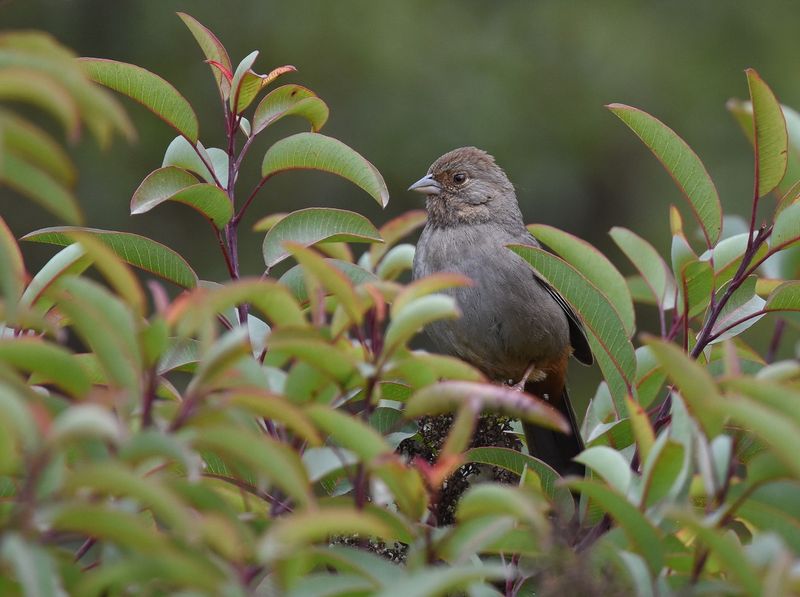
A California Towhee scratching through your yard is worth encouraging, but not because it will solve your pest problems. The bird’s value is real and modest at the same time: it may pick off snails and other invertebrates opportunistically, it adds wildlife interest to a California garden, and supporting its presence costs little beyond keeping a small patch of ground a little less manicured than the rest of the bed.
The practical approach is to preserve a safe mix of accessible soil, limited leaf litter, and nearby low cover where your yard allows it, while keeping cultivated areas, seedling beds, and paths properly maintained. CDFW’s habitat description and Cornell’s life-history account together point to the same combination: open foraging ground next to brushy cover, not a sterile bed and not an untended tangle.
Towhee activity does not replace pest monitoring. If plants are being damaged, identify the pest, confirm the injury, and use UC IPM’s step-by-step management sequence to choose a proportionate response.
A bird foraging nearby is not evidence that a pest population is under control.
All of this guidance applies specifically to California and to California Towhees. Other towhee species in other states differ in range, habitat use, and diet, and the evidence here does not transfer to them.
Balance any habitat choices with local fire-safety rules, accessibility needs, and sanitation, particularly if your property sits in or near a wildland-urban interface zone. A yard that works for both you and the wildlife in it is one where the ground has some texture, the shrubs have some presence, and the gardener is still paying attention.