
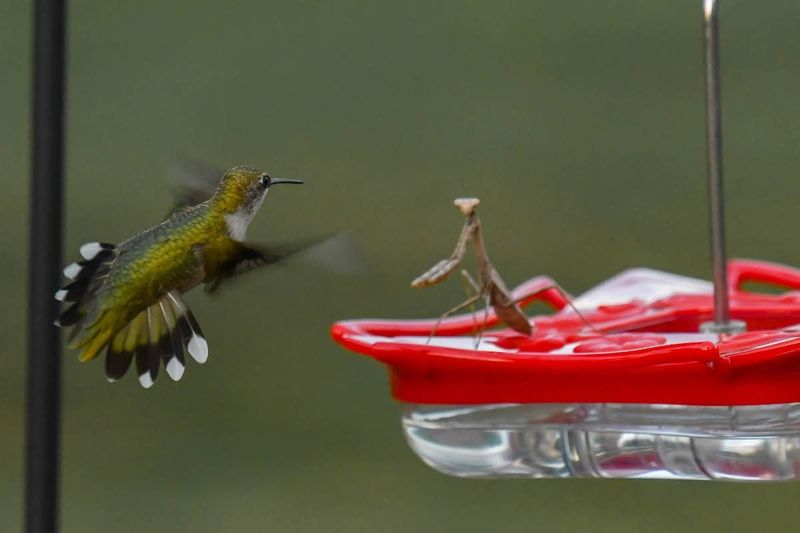
A praying mantis waiting beside a hummingbird feeder sounds like something out of a nature thriller. Mantises can and do catch hummingbirds now and then, and that has many Texas feeder owners worried.
The real story is smaller than the scary headlines, and it comes with simple steps you can take. Here is what is known, what is not, and how to protect your birds without hurting other wildlife.
A documented possibility, not an established Texas-wide threat
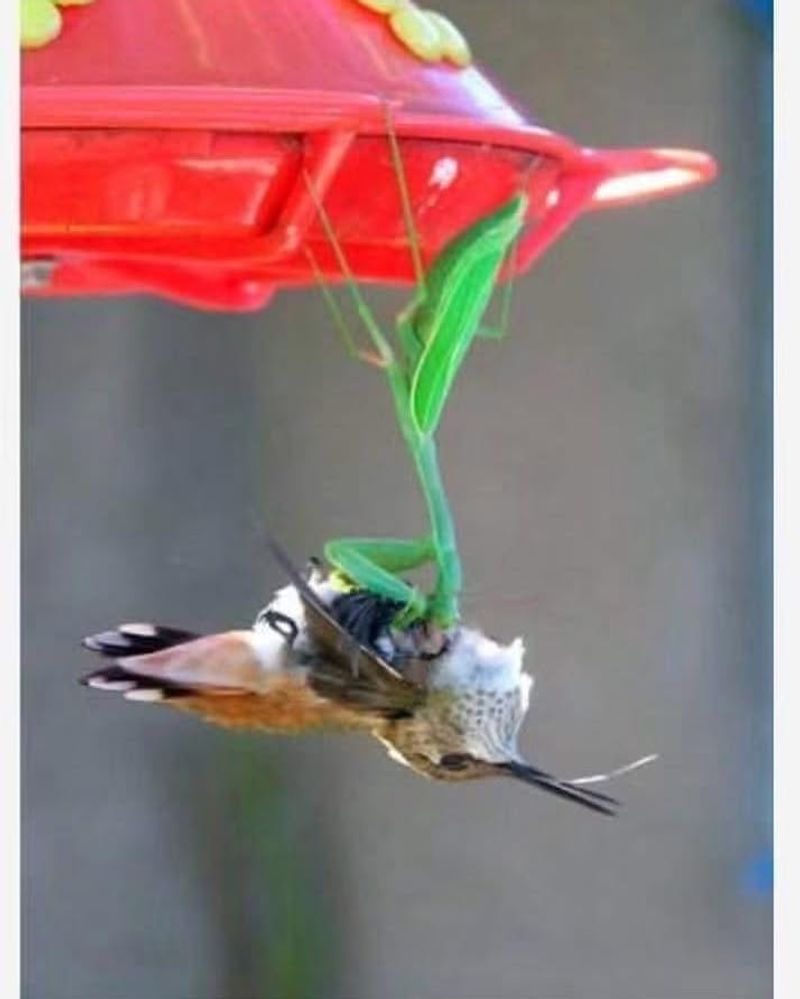
Yes, a mantis can catch and eat a hummingbird. A global review of bird predation by praying mantises gathered 147 reported captures or attempted captures worldwide, involving 12 mantid species and 24 bird species.
Hummingbirds showed up often among the prey.
Before that number scares you, look at what it is. It is a collection of reports from around the world, and the authors describe most of them as anecdotal.
It is not a Texas count, not a fall total, and not a measure of how likely your backyard birds are to be attacked.
The review also has no denominator. Nobody counted how many feeders, mantises, or hummingbirds were out there, or for how many hours anyone watched.
That means it cannot tell us how often feeder attacks happen in Texas, and it cannot show that they are rising.
Timing matters too. Texas is a major route for migratory birds, as Texas Parks and Wildlife explains.
Fall migration varies across such a big state, though, and that source does not tell us which hummingbirds are visiting your feeder on any given day.
So the fair summary is this: it can happen, it has been reported, and nobody can say how often it happens in Texas.
A Texas sighting does not settle identity or status
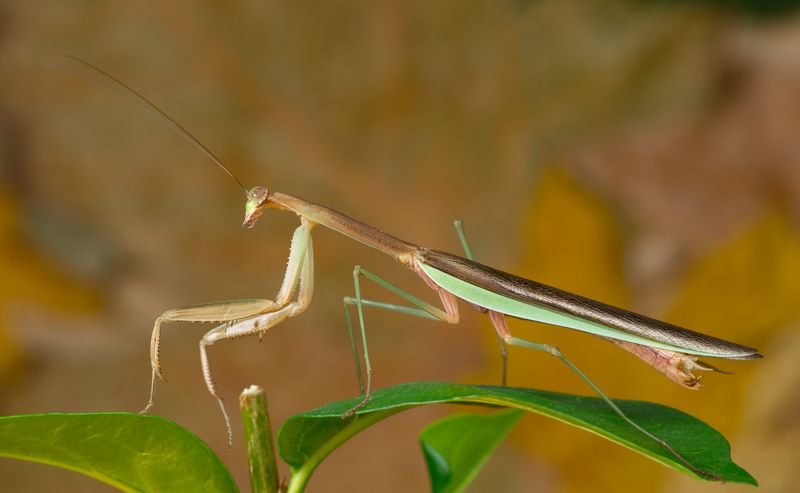
Spotting a big mantis near your feeder does not mean you have a Chinese mantis. NC State Extension describes adult Chinese mantids as roughly 3 to 4 inches or more, with wings that stretch the length of the abdomen and a nearly square face plate.
Several mantids share that general look.
Size and color alone will not settle it. Brown and green forms turn up in many species, and young mantises look different from adults.
Status is another puzzle. Texas A&M’s field guide says the Chinese mantis does not occur naturally in Texas, while other records suggest one may occasionally be found here.
NC State calls it non-native and says some people consider it invasive. None of that shows it is common in Texas or that it harms Texas hummingbirds.
Names vary as well. Texas A&M uses Tenodera aridifolia sinensis, while newer sources use Tenodera sinensis.
Both point to the same animal.
If you are unsure, take a clear photo from a few angles and send it to your county Extension office. A single sighting tells you what you saw, not how many are out there.
Respond calmly to a mantis near a feeder
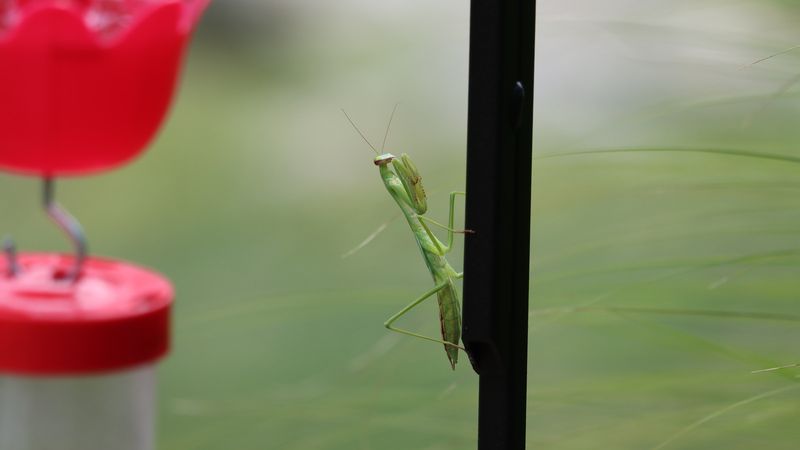
Picture a mantis sitting motionless on the perch of a feeder, front legs folded and waiting. Audubon describes mantises ambushing hummingbirds this way.
That is a documented behavior, not proof that it happens often in Texas.
Finding a mantis nearby does not mean a hummingbird is in immediate danger. It also does not tell you the mantis is a Chinese mantis.
Treat it as a small chore, not an emergency.
Audubon suggests gently coaxing the mantis onto a stick and moving it. Hold the stick near its front legs and let it climb on.
Then carry it to a shrub or tree away from the feeder. No exact relocation distance has been tested, so just choose a spot that is not right beside the feeder.
Skip the insecticide. Sprays near feeders can harm hummingbirds and other backyard wildlife, and they hit helpful insects too.
Texas A&M notes that mantids eat both pest and beneficial insects, so there is no reason to squash every one you meet.
Make the feeder a less convenient ambush site
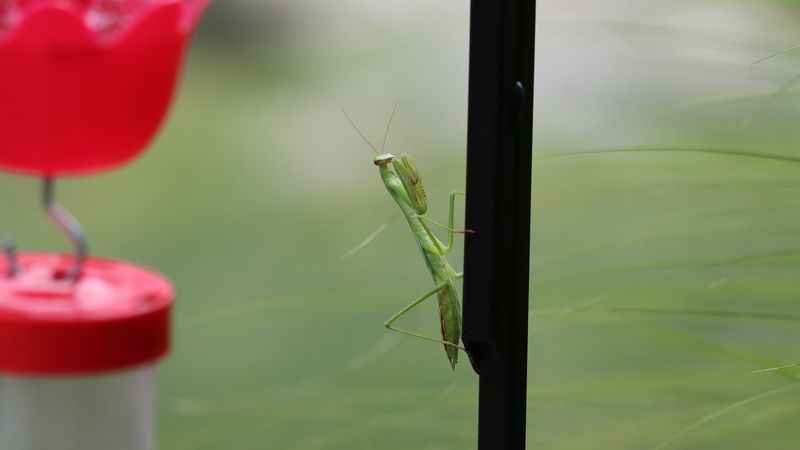
Mantises like to wait where they can hide and grab. Audubon suggests hanging a feeder away from nearby shrubs and trees, so there are fewer leafy perches for a mantis to climb from.
It is a sensible tweak that may reduce ambush chances.
A broad cover over or around the feeder is another idea Audubon mentions. Think of a wide dome or shield that makes the feeder harder to approach.
Like moving the feeder, it is a possible deterrent and not a proven fix.
Mantids can fly, so no setup is a guarantee. A feeder in the open can still get a visitor, and a mantis that wanders in can still reach a perch.
Keep the changes focused on the feeder itself. Try shifting it a few feet into a clearer spot, check the area around it every few days, and watch how birds use it.
You do not need to strip out the plants in your yard, and removing all foliage would not make hummingbirds completely safe.
Maintain the feeder without using pesticides
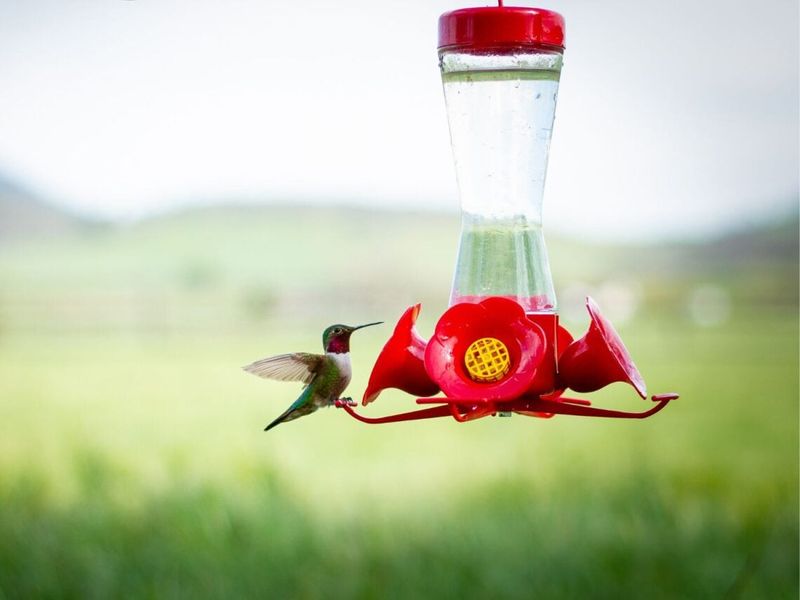
Clean nectar is a separate job from dealing with mantises. Washing a feeder will not keep a mantis away or stop an ambush.
It does protect birds from spoiled sugar water, which is worth doing on its own.
For a recipe, UF/IFAS recommends mixing sugar and water at a ratio of 1 part sugar to 4 parts water. It also gives a cleaning interval of every four to five days, with fresh nectar each time.
Texas heat changes the math. If the weather is hot or the nectar looks cloudy or moldy, clean and refill sooner.
A feeder sitting in a blazing afternoon can spoil faster than the schedule suggests.
When insects crowd a feeder, resist the spray can. UF/IFAS advises avoiding pesticides for feeder pests, since the chemicals can end up where birds feed.
Wash the feeder, move it, or fix leaks instead, and handle any mantis with the stick method.
Use proportionate steps, not alarm
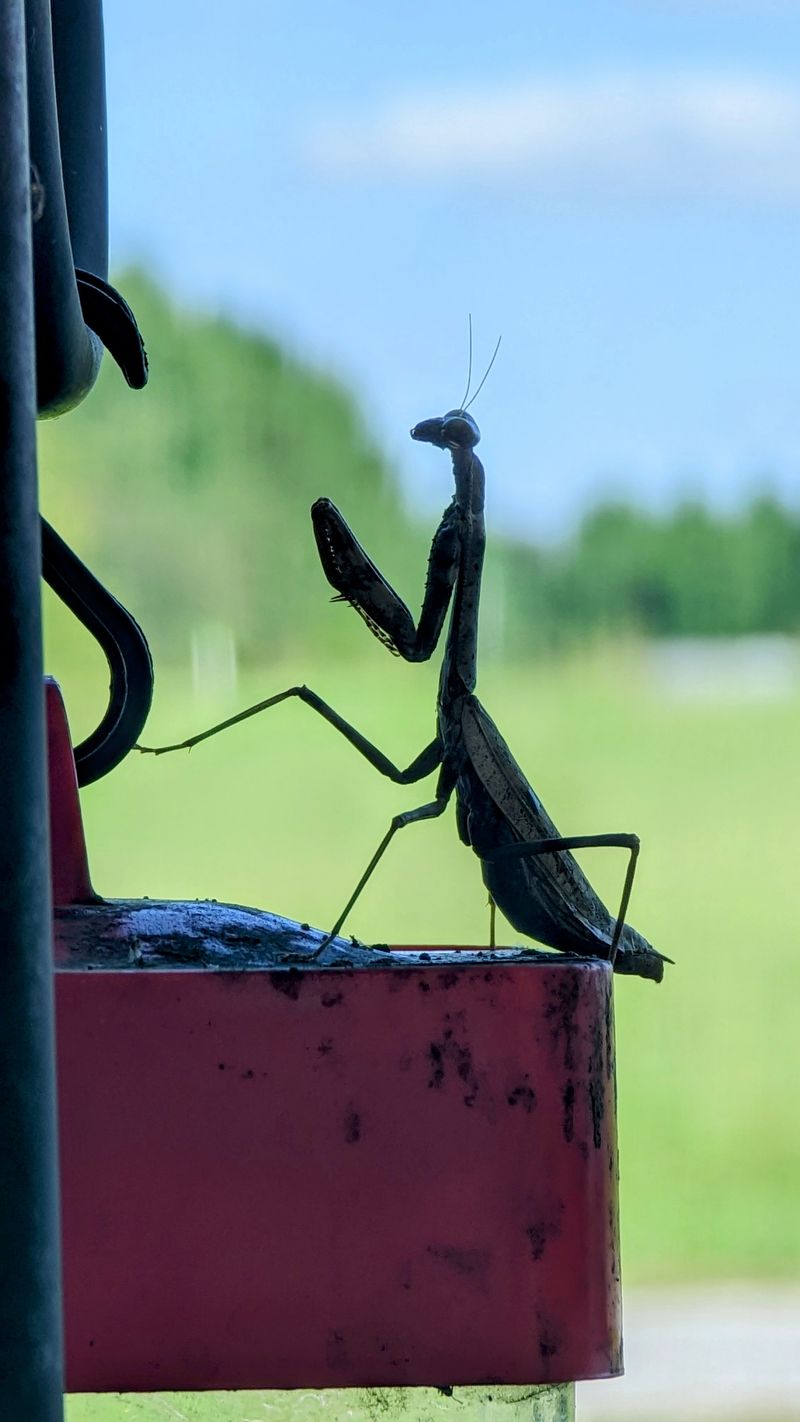
Mantises can take hummingbirds, as the global review shows, but nothing says Chinese mantises are a widespread danger at Texas feeders this fall. Identify any mantis carefully, and relocate it by stick as Audubon suggests instead of spraying.
Treat feeder changes as possible deterrents, not guarantees.
A watchful eye and a stick beat panic every time.