
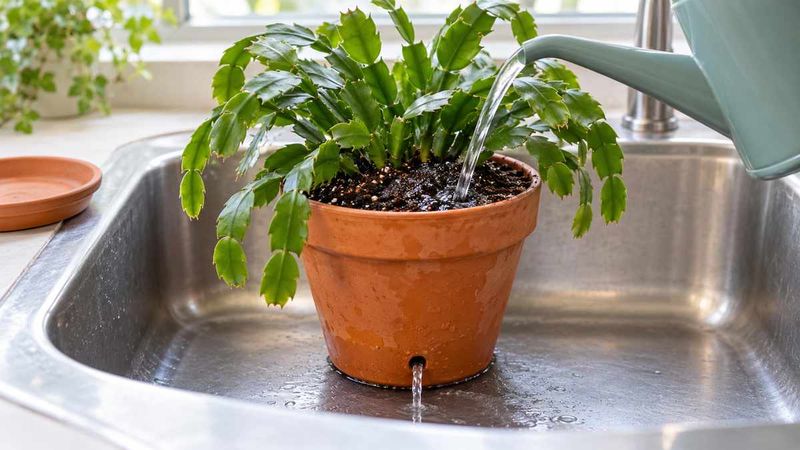
A droopy Christmas cactus can make any Florida gardener reach for the watering can. But water poured on a pot that is already wet is how mushy roots get started.
The better move is to let the potting mix tell you what the plant needs. A simple soil check, good drainage, and a little patience can keep your holiday blooms on track.
Florida humidity does not set a watering schedule
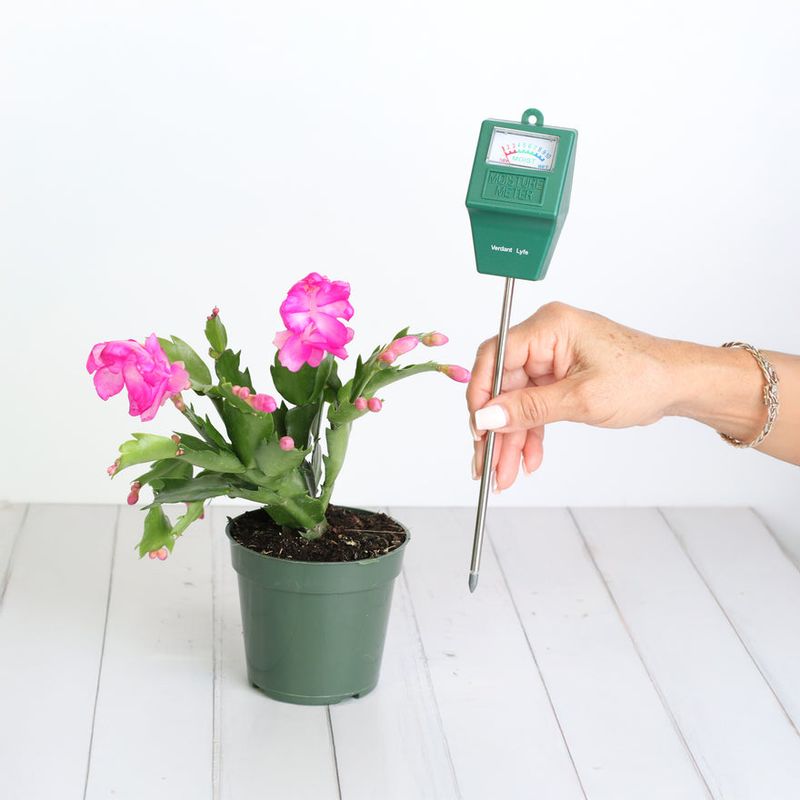
Plenty of Florida gardeners hear that humid air means a Christmas cactus needs less water. It sounds logical, but it leaves out most of the story.
Humidity is only one of several things that change how fast a pot dries, and it does not tell you what is happening down in the root zone.
Light, temperature, pot size, and the type of potting mix all play a part. A small pot in a sunny, warm spot can dry out quickly even on a muggy day.
A big pot of dense mix in a shady corner can stay wet for a long time. As Illinois Extension watering guidance explains, humid air and a well-drained root zone are related but not the same thing, so the mix itself is the best thing to check.
It also helps to know what kind of plant you have. Holiday cacti are not desert cacti.
They are rainforest epiphytes that grow on trees in the wild, so they like some moisture and do not handle extreme dryness well. University of New Hampshire Extension notes that letting the soil dry out completely can even cause flowers to drop.
The goal is steady moisture without long stretches of soggy soil. Also keep in mind that the name Christmas cactus is often used for several look-alike holiday cacti, including Thanksgiving cactus.
Store labels are not always precise, but the care is very similar.
Check the upper inch before you water
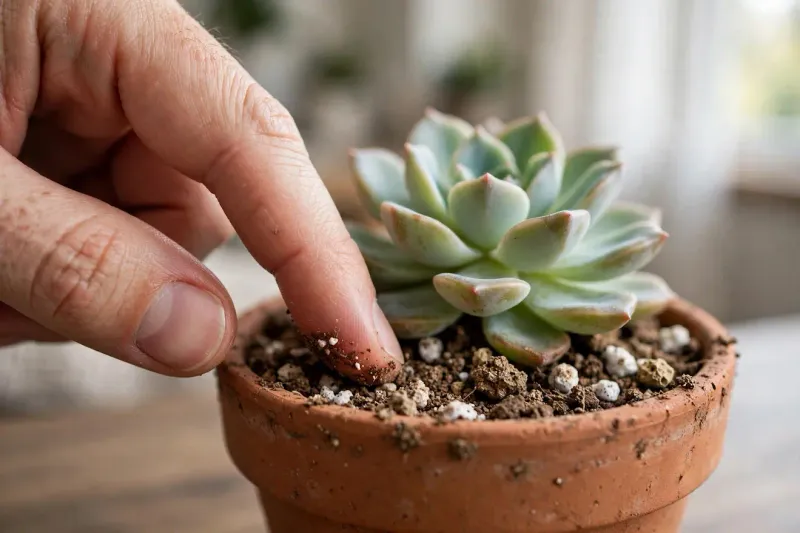
Here is the routine that replaces guesswork. Push a finger into the potting mix up to the first knuckle, about an inch deep.
If that layer feels dry, it is time to water. If it still feels damp or cool, leave the can alone and check again in a day or two.
This is the method UF/IFAS Gardening Solutions recommends for Christmas cactus, and it works because it measures what the roots are actually experiencing. A calendar cannot do that.
Neither can a guess based on how sticky the air feels outside.
Watering needs change from week to week. A cloudy, cool stretch slows drying, while a bright room with the air conditioner or heater running can speed it up.
A plant that needed water every five days last month might need it every ten days now, or the other way around.
Make the check a habit. Touch the soil whenever you walk past, or pick a regular day to look at it, and let the mix decide whether water is needed.
Lifting the pot also helps, since a dry pot feels noticeably lighter than a wet one.
Skipping a watering because the soil is still moist costs the plant nothing. Watering a pot that is already wet is where trouble begins.
Water thoroughly and let the pot drain
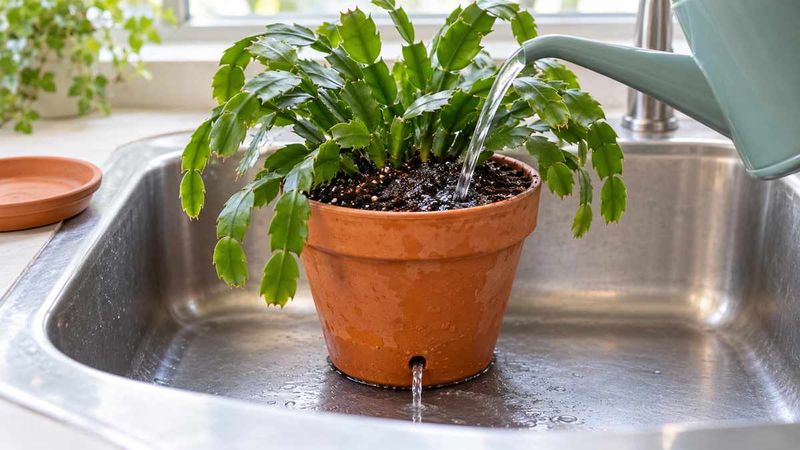
Once the soil check says it is time, water the plant well. Pour slowly around the pot until water runs out of the drainage holes at the bottom.
This soaks the whole root ball instead of just wetting the surface.
Then comes the step many people skip. UF/IFAS guidance on Christmas cactus care says to empty the saucer after watering, and the same goes for any decorative outer pot.
Standing runoff keeps the bottom of the pot wet long after you are done.
The pot itself matters too. Choose one with drainage holes, and fill it with a light, well-drained mix rather than heavy soil that holds water like a sponge.
If your favorite container has no holes, keep the plant in a plain nursery pot and slip it inside, lifting it out to drain each time.
Holiday cacti do need moisture, so a thorough soak is not the problem. The trouble comes when the mix stays too wet for too long, which can contribute to root or stem rot.
Water that drains away is fine, and water that sits around the roots is what to avoid.
Try setting the pot in the sink for a few minutes after watering so the extra can finish dripping. Then return it to its spot with a dry saucer underneath.
Wilt is a clue, not a diagnosis
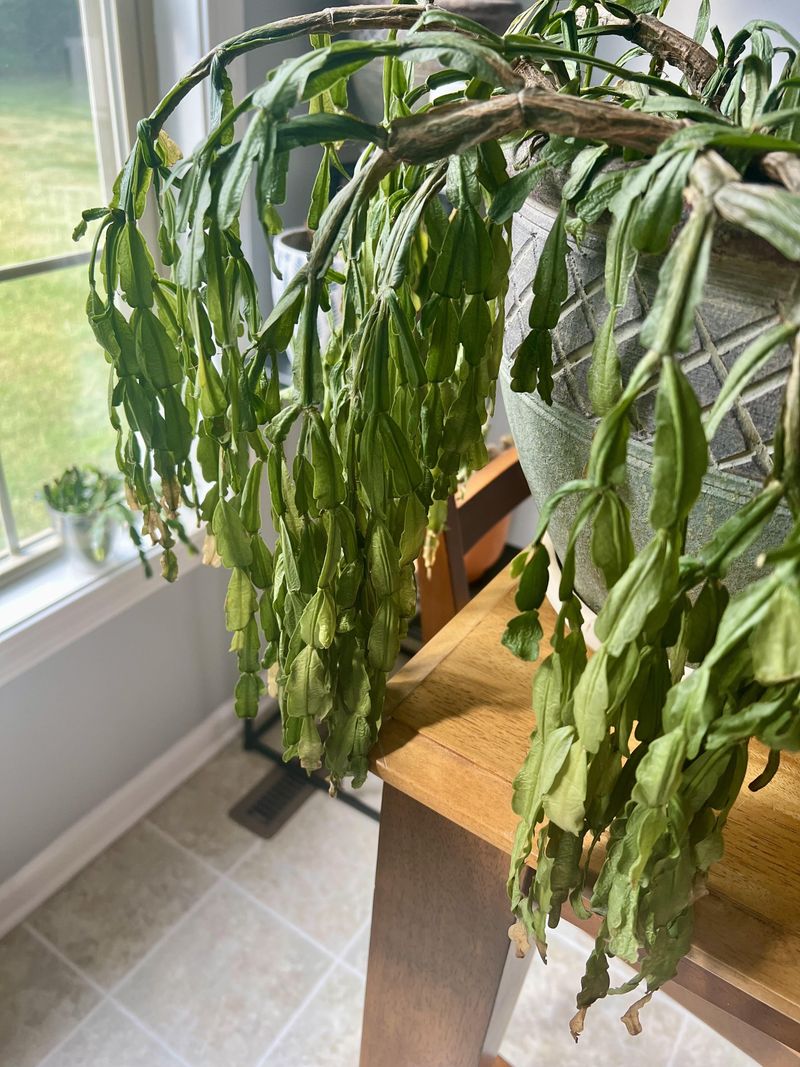
Limp stems tempt people to grab the watering can. Appearance alone cannot tell you why a plant looks tired.
Wilting or shriveling can happen when a plant is too dry, but it can also show up when the roots are damaged.
That is why the soil check comes first. If the mix is dry, the plant is probably thirsty, and a thorough watering makes sense.
If the mix is wet and the plant still looks wilted, extra water will not help, and the roots may have been harmed by too much moisture. University of Minnesota Extension makes this same point about holiday cacti.
Rot can come in different forms. Fungal root and stem rot is described as causing dark, mushy roots and collapse.
Bacterial soft rot is a separate problem that can produce black, wet, slimy lesions starting near the soil line. These are possible explanations, not conclusions you can reach from one symptom.
So a dark or collapsing segment does not automatically mean root rot. Look at the whole picture: how wet the mix is, how the pot drains, and whether the problem is spreading.
If the plant keeps declining in damp soil, gently slide it out of the pot and look at the roots.
Healthy roots look firm. Until you know more, hold off on watering and let the mix dry to that upper inch.
Rain and cold can change porch care
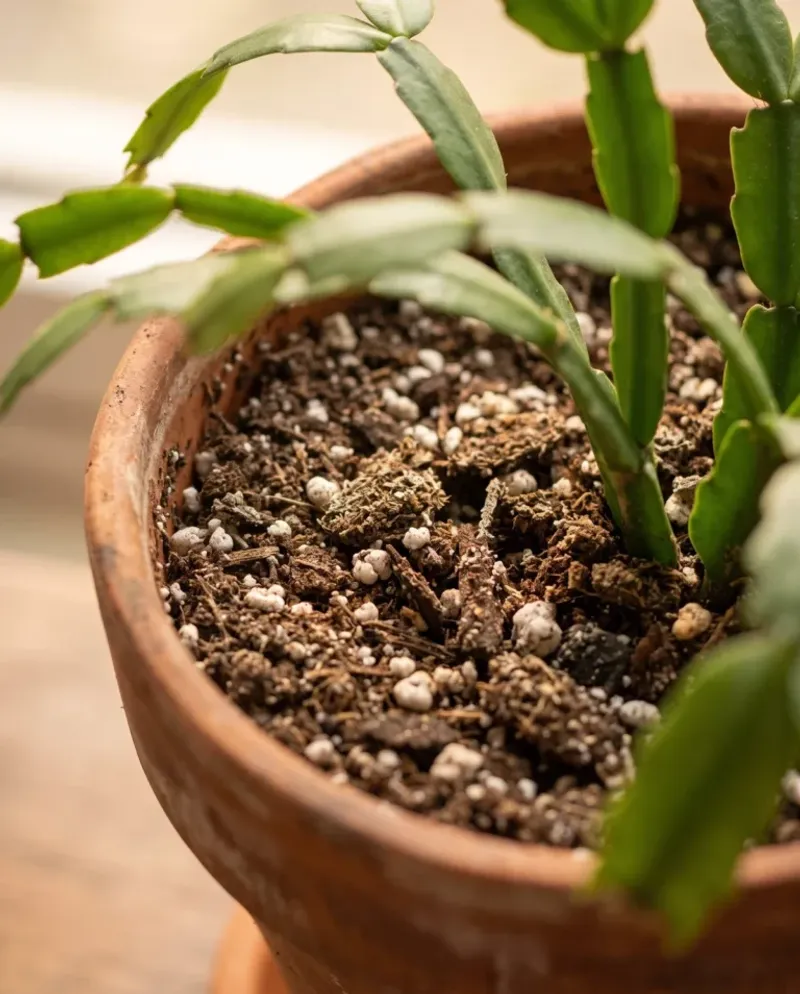
In the warmer parts of Florida, a Christmas cactus can live outdoors, and a shady porch is a popular spot. The same soil-first method still applies out there.
The only difference is that the weather now helps decide how wet the pot gets.
Rain can soak a pot that is not fully covered, so the mix may stay damp longer than it would indoors. After a rainy week, check the upper inch before you reach for the hose.
In a dry, breezy spell the pot may dry faster than expected. According to UF/IFAS Gardening Solutions, a plant exposed to rain may need a different watering interval from one kept indoors, so there is no single porch schedule to follow.
Drainage matters even more outside. Make sure the pot has open holes, and do not let a saucer fill up with rainwater and sit there.
Tip it out after storms.
Cold is the other concern. UF/IFAS warns that temperatures below 50 degrees Fahrenheit can cause adverse damage.
Florida cold snaps can arrive quickly in winter, so watch the forecast in December and January.
When a chilly night is coming, bring the plant indoors or move it somewhere sheltered. Doing it early is easier than trying to repair cold-damaged stems later.
Let the soil—not the calendar—make the call
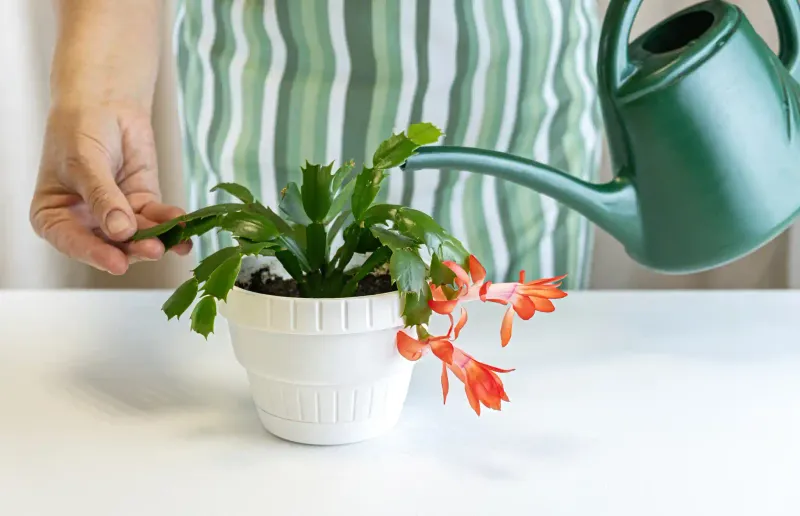
Keep the routine simple. Check the upper inch of the mix, water thoroughly when it feels dry, and pour off any runoff so the pot is never standing in water.
Florida humidity does not replace that check, and a pot with good drainage, as UF/IFAS advises, helps keep roots from staying waterlogged.
Your fingertip knows more about the pot than the weather app ever will.