
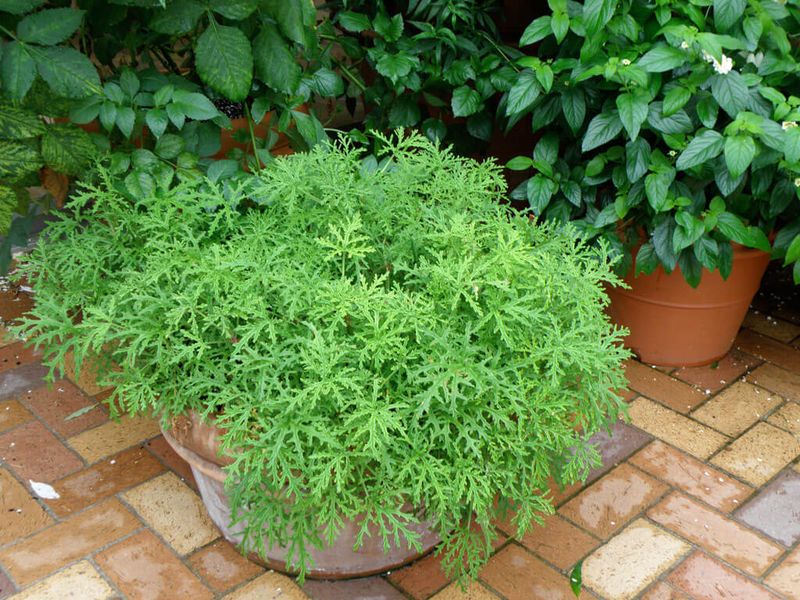
Walk into a Texas garden center in spring and you may see a leafy pot labeled “mosquito plant.” It promises calm evenings on the patio, and that is a hard pitch to resist. The plant is real and pretty, but the research on what it does against mosquitoes is less exciting than the tag.
Here is what the studies found and what actually helps when you want to sit outside in Austin and the rest of Central Texas.
The “mosquito plant” is a scented geranium
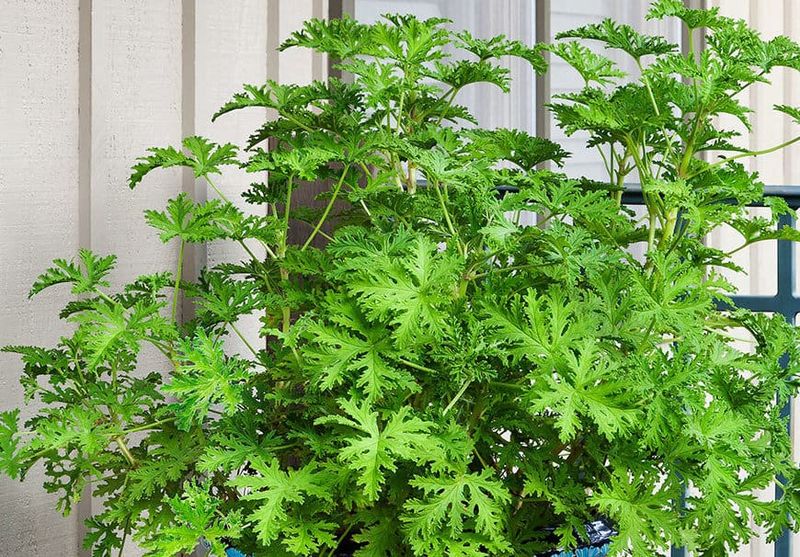
The plant sold as a “mosquito plant” is usually Pelargonium citrosum, a scented geranium also called citrosa or citronella-scented geranium. It has lacy, deeply cut leaves and a lemony fragrance when the foliage is brushed.
Garden centers across Texas stock it in spring, often with a tag that hints at mosquito protection.
The word “citronella” causes a lot of confusion. It can point to citronella grass, to the oil pressed from that grass, or to this geranium, which is a different plant altogether.
Candles, sprays, and potted plants may all carry the name without being the same thing.
Naming the plant correctly matters because a label tells you what you are buying, not what the plant does. Being sweet-smelling and sold with a catchy nickname does not prove it keeps mosquitoes off your skin.
The claim has to be tested, and researchers have tested this exact plant. A 1996 field evaluation of the citrosa plant looked at its essential oil and at how it performed against Aedes mosquitoes, which gives us a starting point.
The next section looks at what those tests found. If you already own one of these geraniums, there is no need to rush it to the compost pile.
It just helps to know which job it can do well and which job it cannot.
Does the living plant keep mosquitoes away?
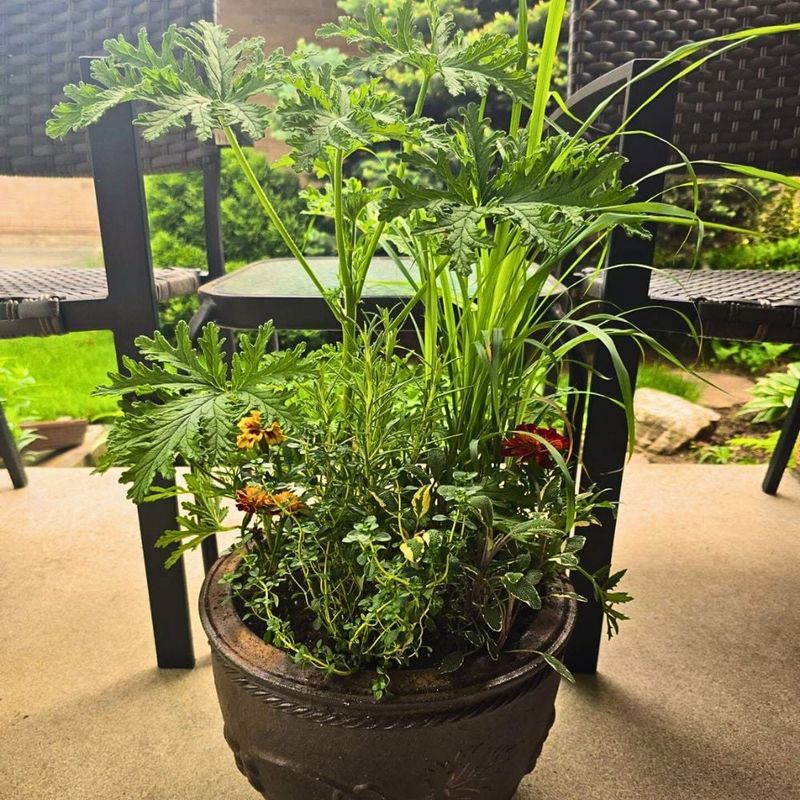
Short answer: research does not show that it does. In the 1996 study, people near citrosa plants did not get significantly fewer bites than untreated subjects.
The PubMed record for that field evaluation describes the result plainly.
A much newer test looked at real ornamental plants, not just isolated oils. The 2026 Journal of Medical Entomology study ran for 16 weeks in Sacramento and tested citronella-scented geranium along with prostrate rosemary in urban and rural settings.
Neither plant showed evidence of repelling mosquitoes in the field. That included geranium plants that were intact and ones that had been mechanically damaged, which is a stand-in for crushed or bruised leaves.
There is an honest limit here. The 2026 work covered one season in one place.
It does not test every plant, every mosquito species, every climate, or every way of growing a plant, so it cannot speak for a Texas patio in every case.
Still, two studies nearly three decades apart landed in the same spot for this plant. Taken together, they give you no good reason to count on a potted geranium as your patio shield.
If your evening plans depend on fewer bites, plan on other tools.
Citronella oil and a potted plant are different claims
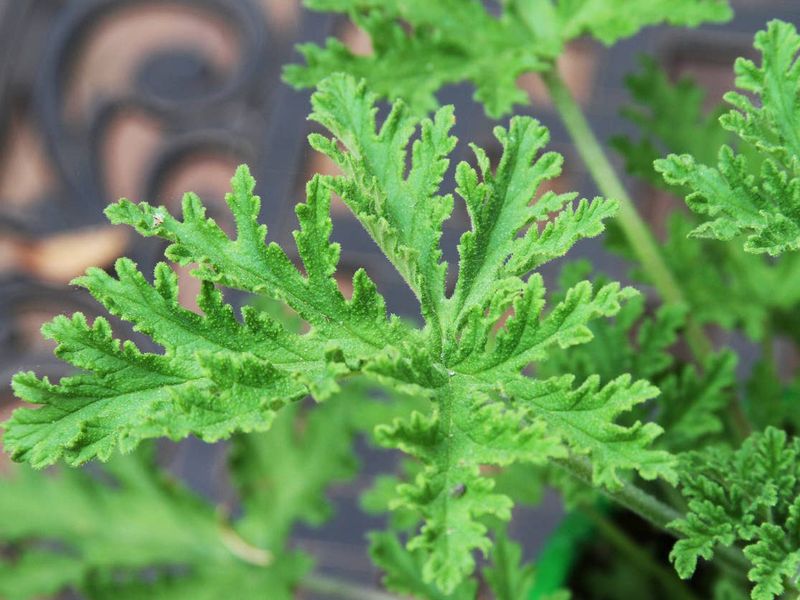
Three different things hide behind the word citronella. Citronella grass is a tall clumping grass, and its oil shows up in some candles and sprays.
The scented geranium is another species. A formulated repellent is a product that has been made, tested, and labeled for use on skin.
Here is why that matters. A concentrated or formulated ingredient can work when it is applied properly, yet a living plant sitting in a pot is not the same delivery system.
UF/IFAS Extension makes this point in its review of mosquito-repelling plant myths, noting that plants sitting in the garden are not much help as passive protection.
You may hear advice to crush leaves and rub them on your skin. Skip that as a plan.
CDC guidance says the effectiveness of non-EPA-registered repellents, including some natural products, is not known, and it recommends registered products used as labeled. Iowa State Extension takes a similarly cautious view of plants placed nearby.
If a product contains oil of lemon eucalyptus or PMD, CDC advises against using it on children under 3. Read the label first, every time.
Austin’s local mosquito season can extend into fall
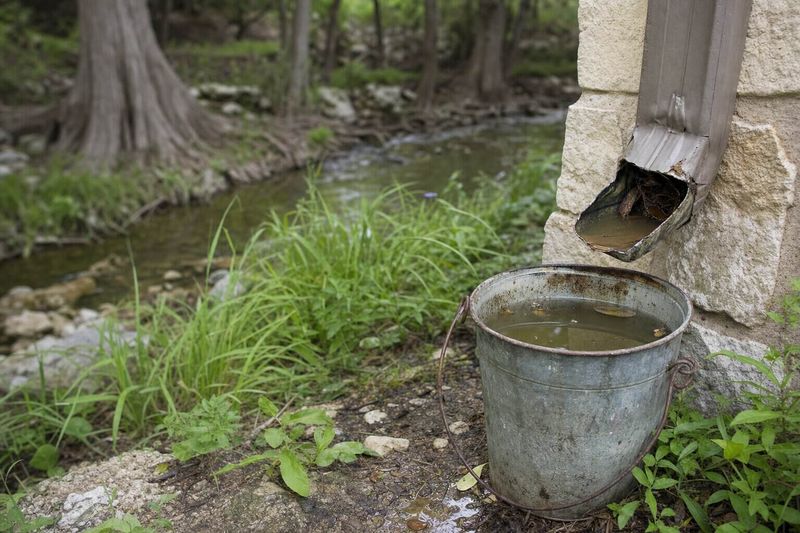
Anyone who has tried to grill in Austin in October knows that summer does not always leave on schedule. Austin Public Health describes the local mosquito season as running from May through November.
That description is about Austin, not a rule for every Central Texas town, and it is not a promise that mosquitoes will be active every day or that the season will look the same each year.
The city’s health department also explains that warmer, wetter conditions from spring into fall support mosquito breeding. You can read that in Austin Public Health’s mosquito season announcement.
After a big rain, puddles, clogged gutters, and full saucers can all turn into nurseries.
A long warm fall is one reason patio evenings in Austin can still come with bites. It is context for when to pay attention, nothing more.
It does not show that a plant can control mosquitoes, so the calendar is a cue for practical habits, not for buying another pot.
Start patio mosquito control with standing water
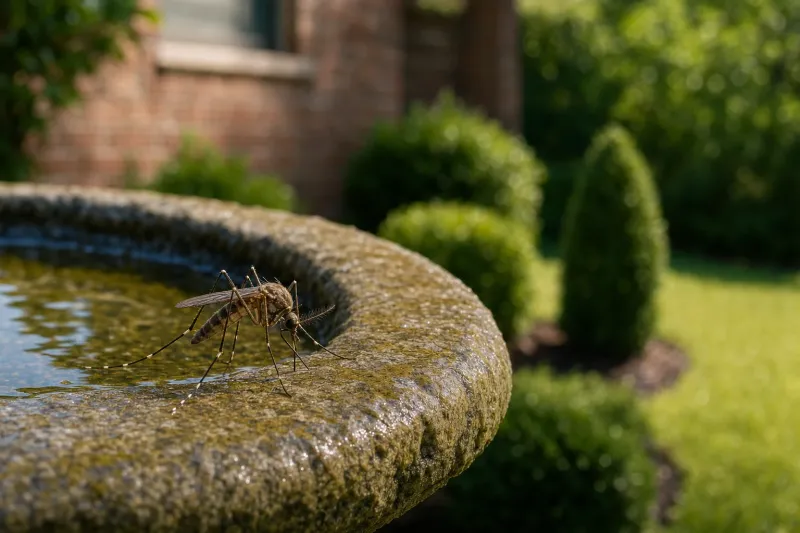
Mosquitoes need water to breed, so the most useful chore is also the simplest. Once a week, walk the yard and empty and scrub anything that holds water.
Turn over, cover, or throw away buckets, toys, and other containers, and do not forget flowerpot saucers and birdbaths. CDC’s home mosquito control advice lays out this routine.
Scrubbing matters because eggs can stick to container walls. A quick rinse may leave them behind.
Try a fixed day, such as Sunday morning, so it becomes a habit.
Some water cannot be dumped or covered, like a rain barrel with no screen or a pond feature. In appropriate standing water like that, CDC says larvicides may be used, and you should follow the product label directions closely.
Be realistic about results. Cleaning up your yard can reduce breeding sites, but it may not wipe out the problem.
Texas AgriLife Extension also recommends reducing standing water around homes, and notes that some mosquitoes can travel beyond a homeowner’s property. Neighbors’ yards and nearby ditches may still send bites your way, which is why personal protection still matters.
Use labeled bite protection when you sit outside
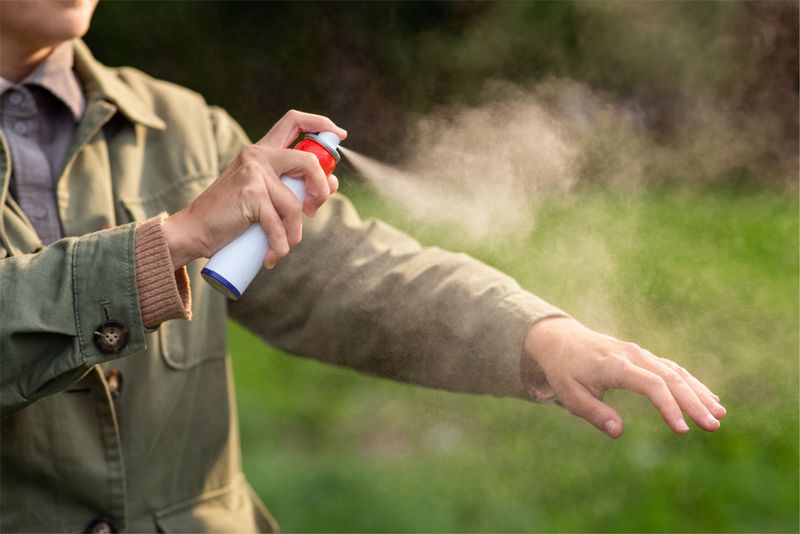
When the goal is fewer bites, put protection on the person, not in a pot. CDC recommends EPA-registered repellents, and it lists active ingredients including DEET, picaridin, IR3535, oil of lemon eucalyptus, PMD, and 2-undecanone.
Look for one of those names on the label and for the EPA registration.
Then use the product the way the label says. That covers how much to apply, how often to reapply, and where not to spray.
Labels also carry age limits, and CDC advises against oil of lemon eucalyptus or PMD products on children under 3.
Clothing helps too. Long sleeves and long pants cover skin that mosquitoes would otherwise reach, and lighter fabrics are comfortable in Texas warmth.
Treat clothing as one layer, not a shield.
No single product or outfit guarantees a bite-free evening. Pair repellent and clothing with your weekly water routine, and keep your expectations realistic on damp, warm nights.
If you sit outside at dusk, a little prep beats hoping the plants will handle it.
Choose the plant for the garden, not for protection
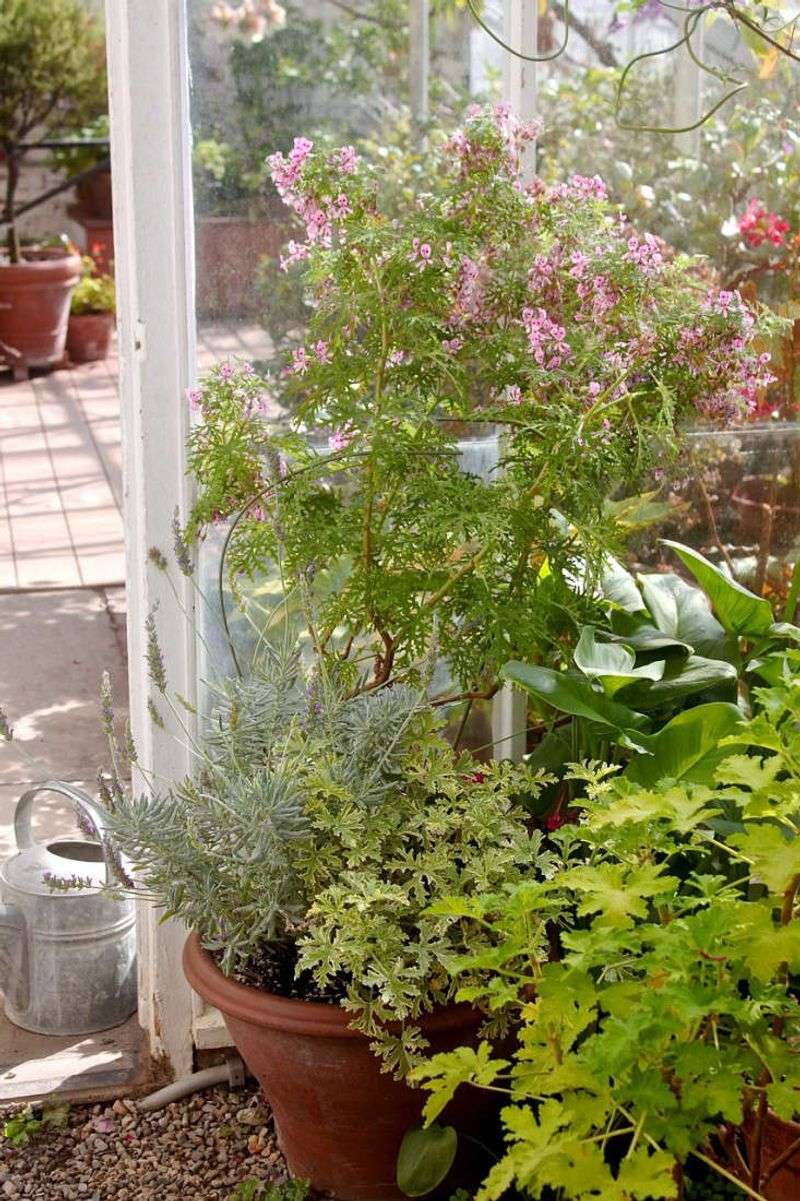
There are good reasons to grow a scented geranium. The foliage is lacy and fragrant, it looks handsome in a container, and it is easy to tuck next to a seating area.
If you like it, buy it.
Just give it a garden job, not a security job. Count on your weekly water checks and labeled repellent for the work of keeping bites down.
Plant it for the smell of lemon on your fingers, then reach for repellent when the sun drops.