
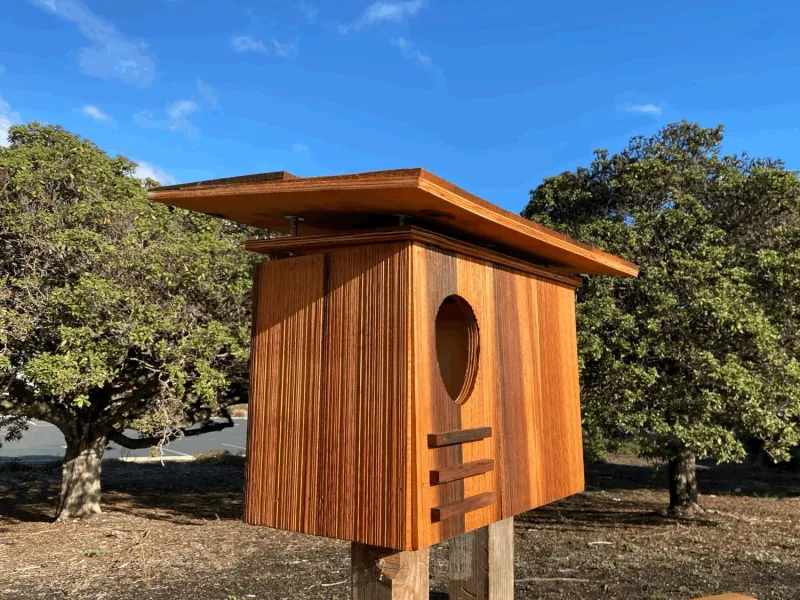
Barn owls hunt quietly at night, and rodents are a big part of their menu. That makes a nest box tempting for Central Texas homeowners who are tired of rats and mice around the yard.
A box can be a nice way to welcome a remarkable neighbor, but it is not a magic fix. Here is how to plan one the smart way, and what to do at home while you wait.
A barn owl box is not a rat-removal guarantee
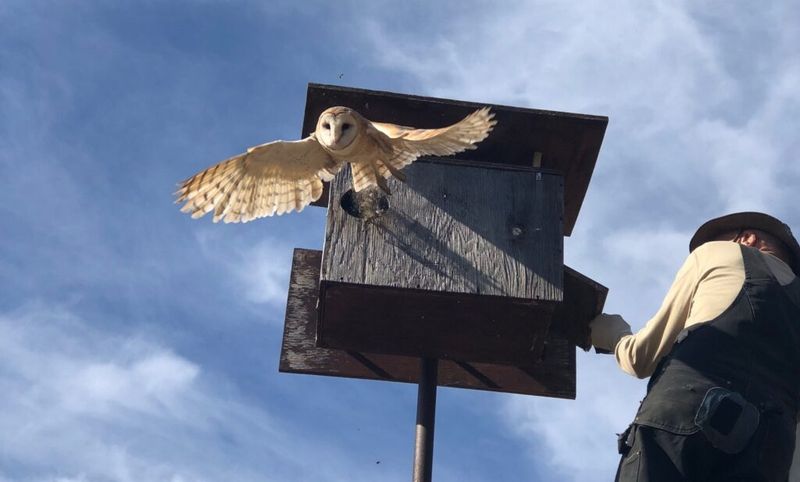
Barn owls eat rodents, and that is the whole reason people hang boxes for them. Researchers have tested the idea in farm country, and some results look promising.
A 2026 study at six California vineyards reported 38 to 52 percent lower rodent abundance across the range of owl hunting pressure it observed.
Results are mixed, though. A separate Napa Valley vineyard study found reduced gopher activity but no significant box-related effect on mouse numbers.
Both studies took place on farms, not in suburban yards, so they show what might happen in some settings rather than what will happen beside your patio.
Local evidence adds another wrinkle. A North-Central Texas diet study found that hispid cotton rats were the most common prey in the pellets it sampled.
Cotton rats are field animals. They are not the Norway or roof rats that move into attics and garages, so that finding shows owls eat rodents in Texas, not that they clear out household rats.
A box may support owls where the habitat and prey suit them. It cannot make owls show up, and it cannot promise fewer rodents near your house.
Think of it as a wildlife project with a possible side benefit, and plan your rodent control separately.
Open habitat makes a yard more suitable
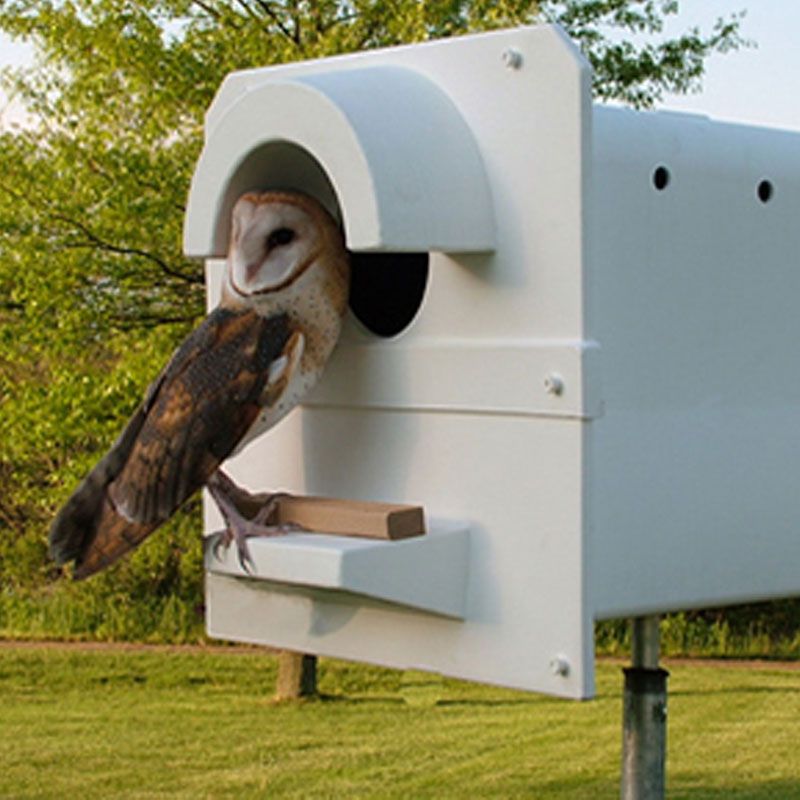
Before you buy or build anything, take a slow walk around your property and look at what surrounds it. Cornell’s NestWatch guidance says barn owls prefer open habitats such as agricultural fields.
That is a useful clue for deciding whether your yard is a fit.
Ask yourself a few plain questions. Is there open ground nearby, like pasture, hayfields, wide fence rows, or rough grassland?
Do you see signs of small rodents in those open areas, such as runways in the grass or burrow holes? Owls need places to hunt and animals to hunt, so both matter.
A tight subdivision lot with fences on every side and no open land nearby is a harder case. Nobody has published a minimum yard size, and a suburban or urban site is never a sure thing.
If your yard sits on the edge of fields or a large open green space, the odds look better.
Use what you find to make the call. If open habitat is close by, a box is a reasonable experiment.
If your yard is boxed in by houses and pavement, you may get more value from spending your effort on sealing and sanitation, and perhaps a different wildlife project such as native plantings for birds.
Mount the box high and away from household activity
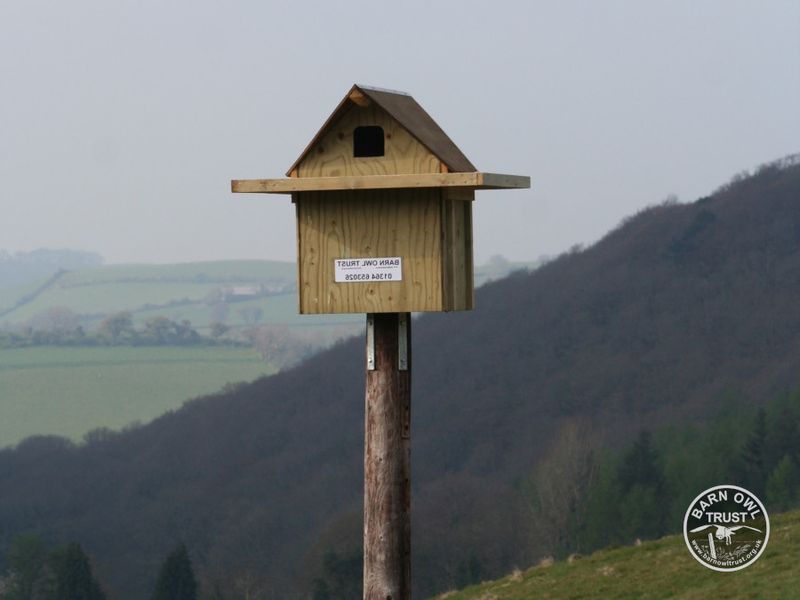
Height is the first spec to get right. NestWatch recommends mounting a barn owl box 8 to 25 feet above the ground.
Plan for a sturdy ladder and a helper, because a box this size is awkward to lift.
The entrance hole should be 4½ inches. Cornell says the box can be attached to a building, pole, post, or tree.
A freestanding pole or a barn-style outbuilding wall gives you solid support, while a tree trunk works if it is strong and the entrance stays clear of branches.
Now think about the people in your house. Hungry young owls can be noisy, with raspy hissing and screeching that carries at night.
Put the box well away from bedroom windows, patios, and pool areas, ideally toward the far edge of the property facing open ground.
Point the entrance toward open space so owls have a clear flight path in and out. Make sure the mount is firm, since a box loaded with owlets and nesting material gets heavy.
Even a perfect setup does not guarantee a tenant, so keep your expectations modest and your installation safe.
Fall is a chance to prepare, not a guaranteed nesting window
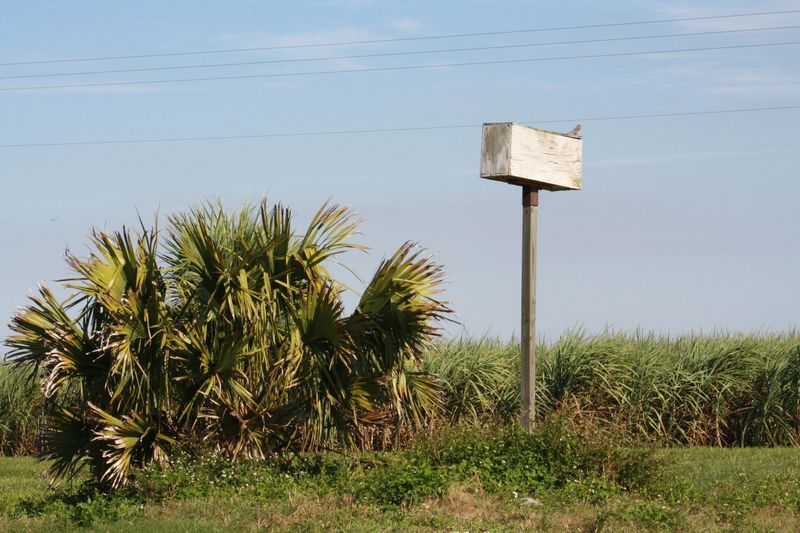
Fall is a good season to get ready, since Central Texas weather is finally kinder to outdoor work. Building the box, choosing the site, and setting the pole can all happen before the hottest months return.
Nothing in the research shows fall is the one right time to install a box, and putting it up early does not guarantee owls will move in.
Be careful with cleaning advice. Cornell’s barn owl page says December is generally a good time to clean a box.
That is maintenance timing, not a recommendation for when to install one.
Barn owls are also not tied to a tight calendar. Indiana’s wildlife guide notes they can nest year-round in the United States, so a box could be in use when you least expect it.
You may also run across a late September or October timeline online. Flower Mound’s owl house page is about Eastern Screech-Owls, which use much smaller boxes, so do not apply that schedule to barn owls.
Treat fall as a head start and stay flexible.
Protect owls from poison and disturbance
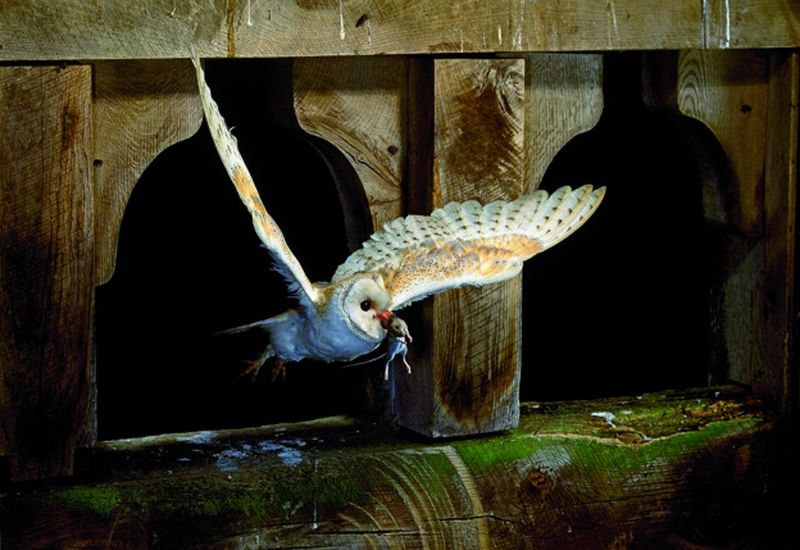
If you want owls around, rethink rodent poison. Owls and other predators can be poisoned when they eat rodents that have taken bait, and the EPA warns about this secondary risk.
A poisoned mouse can wander around for days before an owl catches it.
Texas has local evidence of exposure. In a 2023 Texas study, 2 of 7 barn owl liver samples tested positive for anticoagulant rodenticides.
The sample was small, so it cannot tell us how common poisoning is, but it is a good reason to choose traps and exclusion over bait.
The other rule is to leave the box alone once it might be in use. Because barn owls can nest outside a narrow season, as Indiana’s guide points out, do not open, inspect, clean, or handle anything in a box that could be occupied.
Watch from a distance and keep pets and kids back.
Barn owls are protected under the Migratory Bird Treaty Act. If an active box causes a real problem, such as a damaged mount or an injured bird, contact a qualified wildlife rehabilitator or your state wildlife agency for guidance before you touch anything.
Keep household rodent control in your hands
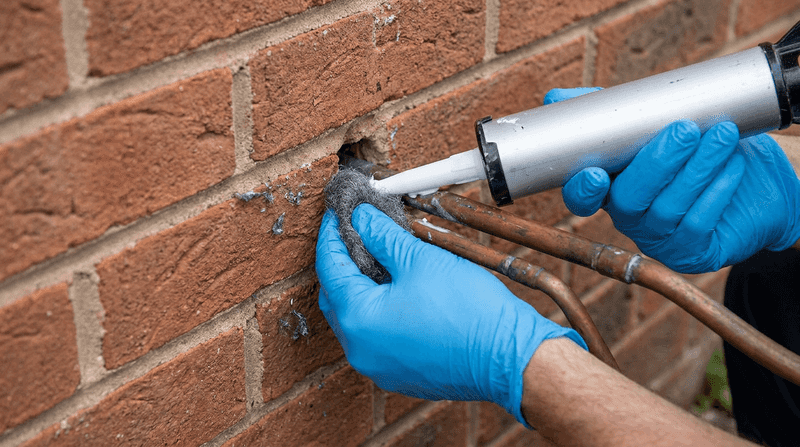
Whatever owls do, rats and mice get into houses through gaps, and you control those. CDC guidance puts sealing entry holes first.
Walk the outside of your home and plug openings around pipes, vents, garage doors, and the foundation.
Next, take away the reasons rodents visit. Keep garbage in containers with tight lids, store pet food and birdseed in sealed bins, and pick up fallen fruit and pecans.
Clear brush piles, woodpiles stacked against walls, and dense clutter where rodents can hide.
If rodents are already inside, an owl will not solve it. Use exclusion plus appropriate direct control indoors, and pick methods that will not put poison into the food chain.
Put the box up if your property suits it, and seal the house this week. Owls work nights, but the walls are your job.