
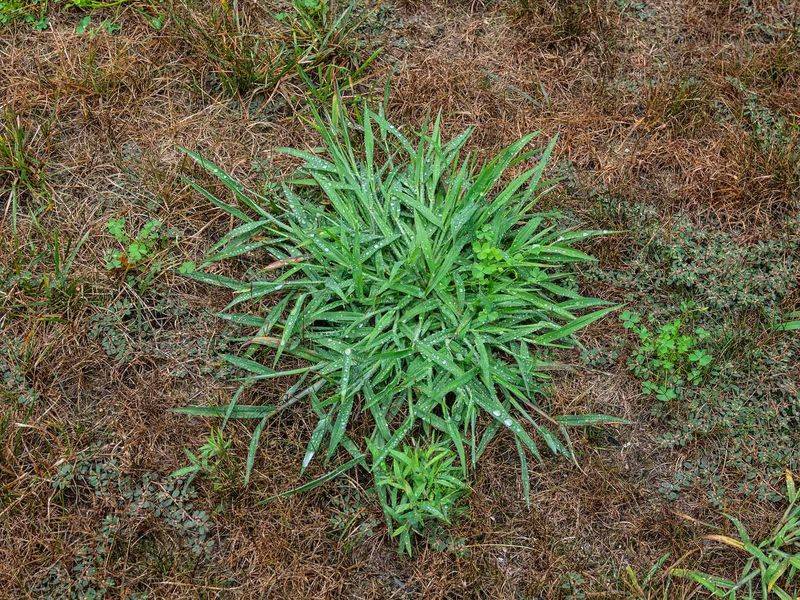
Every summer, crabgrass seems to come back no matter what you do, and the frustration is real. A quick search might tell you that pouring vinegar on it will kill it right down to the root, but that claim does not hold up.
Understanding why crabgrass keeps returning, and what actually works against it, can save your lawn and your time this season.
Crabgrass returns from seed, not a hidden root that vinegar can remove
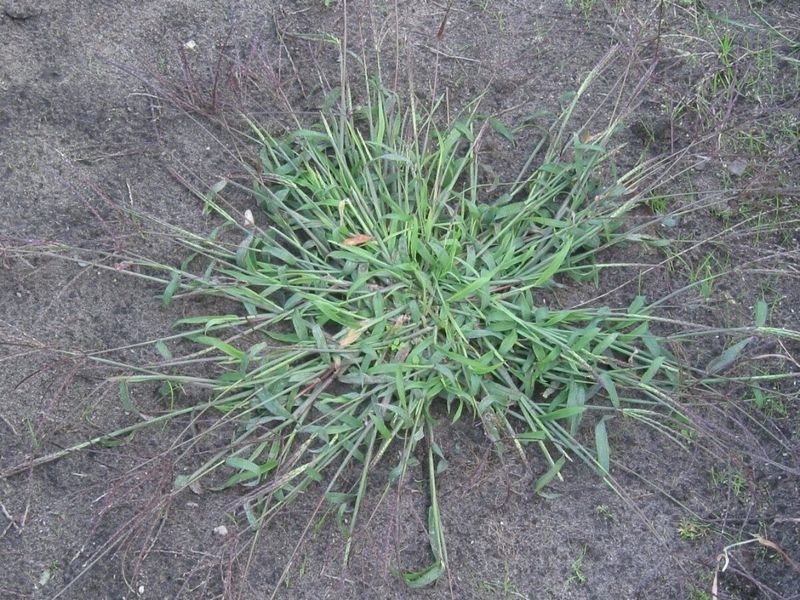
Most people assume that if they kill the crabgrass they can see, the problem is solved. The trouble is that crabgrass generally behaves as a warm-season annual, meaning the plant sprouts, grows through summer, sets seed, and then dies when temperatures drop in fall.
By the time it dies, it may have already dropped hundreds of seeds into the soil around it.
Those seeds can sit in the ground through winter and germinate again the following spring when conditions warm up. Burning or pulling the visible plant does nothing to the seeds already in the soil, which is why the same spots tend to fill right back in the next season.
UF/IFAS guidance on weedy grasses confirms that this seed-driven cycle is the primary reason crabgrass keeps reappearing year after year.
Southern lawns face a particular challenge because warm temperatures extend the growing window, giving crabgrass more time to produce seed before a frost arrives. EDIS publication EP141 from UF/IFAS notes that certain crabgrass species found in Florida and other Gulf Coast states may also persist longer than a single season, complicating the picture further.
The seedbank in your soil, not a surviving root system, is what drives the annual comeback.
Acetic acid burns contacted foliage instead of poisoning established roots
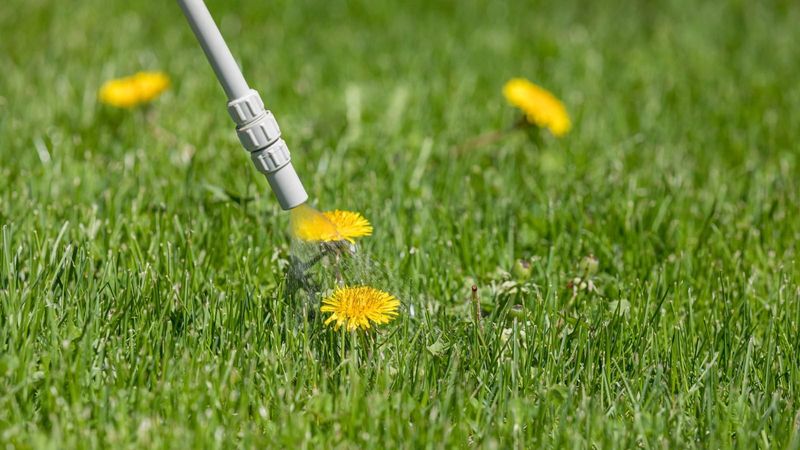
Acetic acid, the active compound in vinegar, works by damaging the outer tissue of whatever plant surface it contacts. When a leaf or stem is sprayed, the acid disrupts the cell membranes and the plant tissue browns and dies back.
That process is entirely local to the contacted surface; acetic acid does not travel through the plant into the stem or root system the way a systemic herbicide does.
Because the action stays at the surface, the National Pesticide Information Center classifies acetic acid as a nonselective contact herbicide rather than a systemic one. A plant with an established root system can often push out new growth after its leaves are burned, especially if the roots were never affected.
Young, actively growing crabgrass seedlings are the most vulnerable because they have limited root reserves to draw on.
Mature crabgrass, drought-hardened crabgrass, or plants that have already set seed are much harder to knock back with a contact spray. University of Maryland Extension explains that even when top growth dies, regrowth is possible if the root system remains intact.
Foliage burn and root elimination are two very different outcomes, and acetic acid generally only delivers the first one. Acetic acid also has no meaningful residual activity in soil, so seeds that germinate after you spray are completely unaffected.
Field evidence shows partial control, not a reliable vinegar cure
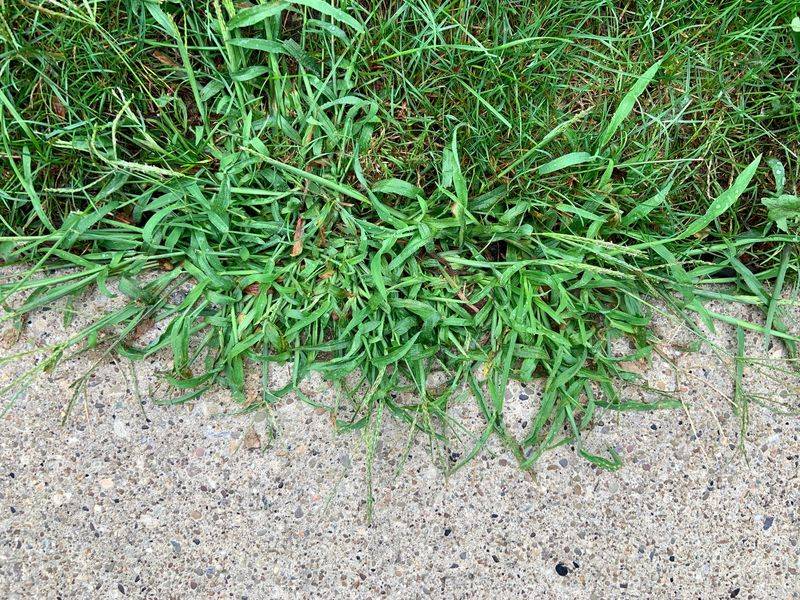
The most frequently cited research behind vinegar-as-herbicide claims comes from a USDA-ARS field study that tested acetic acid at concentrations well above what sits in a kitchen cabinet. That USDA-ARS study used a 20% acetic acid solution applied at a very high spray volume, and it still only achieved 28% to 45% control of total grass and crabgrass seven days after treatment.
Those numbers describe partial foliage knockdown, not elimination.
Two details about that study matter a lot before drawing any conclusions about home use. First, the weeds treated were very young, which is when contact herbicides perform at their best.
Second, the experiment was conducted under controlled conditions, not across a living home lawn where desirable turf grass is also present. Oregon State University Extension cautions against generalizing results from isolated plot research to broadcast treatment across an established lawn.
Acetic acid also leaves no meaningful residue in the soil after it breaks down, so any crabgrass seed that germinates a week or two after your spray faces no barrier at all. The seeds that escaped the spray, and the ones already in the ground before you sprayed, will keep coming.
Partial foliage kill of young weeds under ideal conditions is not the same as a reliable, repeatable cure for a recurring seasonal infestation.
A nonselective spray can damage the lawn you want to preserve
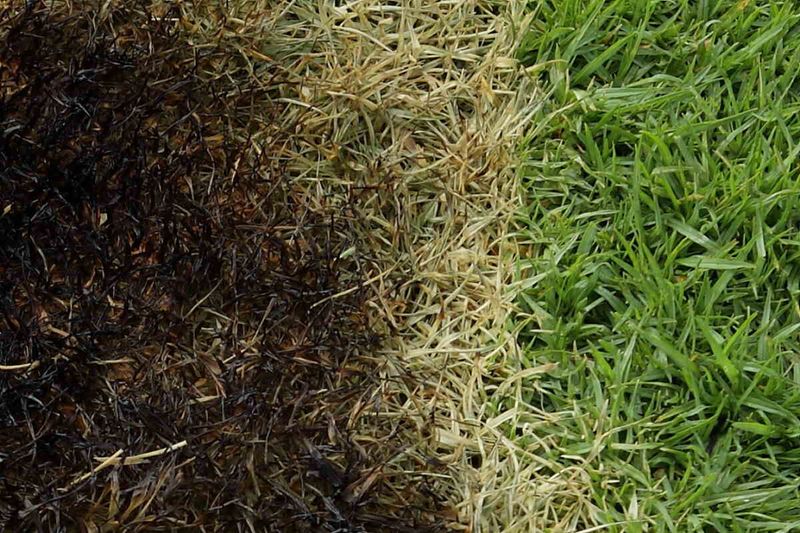
Spraying a contact herbicide in an open driveway crack or a bare flower bed is a very different situation from spraying it across a lawn. In a lawn, your desirable turf grass is right next to the weed you are targeting, and acetic acid does not distinguish between them.
Any overspray, drift in a light breeze, or contact with adjacent blades can brown out the grass you want to keep.
The concentration of the product also changes the risk level significantly. Household white vinegar typically contains about 4% to 6% acetic acid, while herbicidal vinegar products are commonly 20% or higher.
NPIC guidance on vinegar as a pesticide notes that concentrated acetic acid can cause severe skin burns and serious eye injury, including the potential for permanent eye damage, so stronger products require appropriate protective equipment and careful handling. If you choose to use a registered acetic-acid product, apply it only where the label permits, follow all label directions, wear the required protective gear, and avoid applying on windy days.
Homemade mixtures that add salt and dish soap to vinegar present additional problems. Oklahoma State University Extension warns that homemade pesticide recipes lack standardized application rates and tested safety data.
Salt can accumulate in the soil over time and interfere with the growth of future plants, including the lawn grass you are trying to protect. NPIC’s home-remedy guidance reinforces that these mixtures are not a substitute for a registered, labeled product.
Dense turf leaves fewer openings for crabgrass seedlings
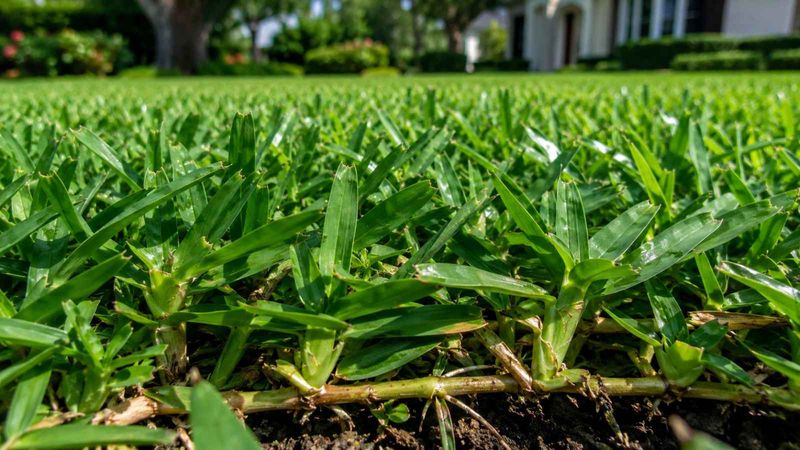
Crabgrass is an opportunist. It germinates most successfully where sunlight reaches the soil surface, which happens in thin spots, bare patches, compacted areas, and places where the lawn has been mowed too short.
A dense, healthy stand of turf physically shades the soil and crowds out seedlings before they get a foothold.
Mowing height is one of the most practical levers available. Penn State Extension’s crabgrass guidance recommends maintaining the mowing height appropriate for your specific turf species and avoiding scalping, which strips away leaf surface and opens the canopy to weed seedlings.
For many warm-season Southern grasses, that means staying at or above the lower end of the recommended range for the variety.
Watering practices matter just as much. Deep, infrequent irrigation encourages the desirable turf to root deeply, making it more competitive and stress-tolerant.
Frequent, shallow watering keeps the surface moist in a way that favors shallow-rooted weed seedlings. University of Illinois Extension also points to compaction and bare areas as the spots where crabgrass establishes most easily, recommending core aeration for compacted soils and prompt reseeding or sodding of dead patches.
None of these steps remove seeds already in the seedbank, but they consistently reduce the number of new plants that successfully establish each season.
Preemergence herbicides prevent the next flush before it starts
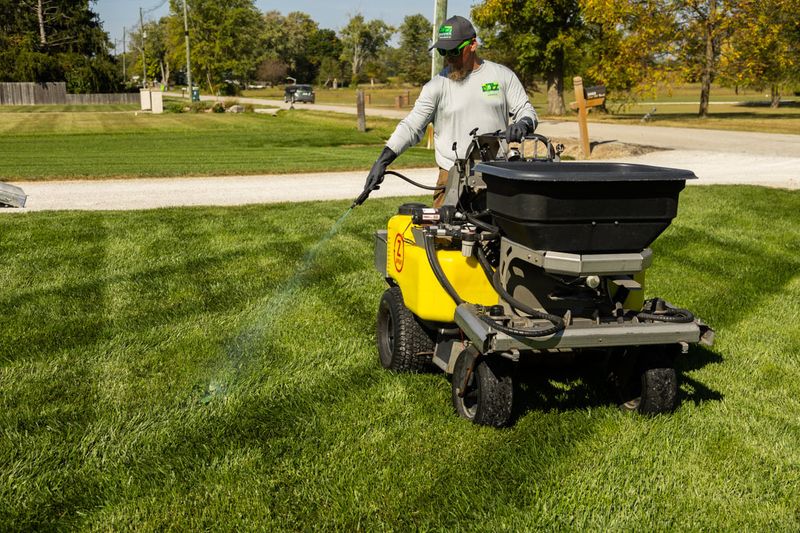
For homeowners dealing with crabgrass that comes back season after season, a correctly timed preemergence herbicide is generally more dependable than any postemergence spray, acid or otherwise. Preemergence products work by creating a chemical barrier in the soil that disrupts germination before a seedling can establish.
By the time you can see crabgrass growing, a preemergence treatment is already too late for that flush.
Extension services commonly list dithiopyr, pendimethalin, and prodiamine as active ingredients found in preemergence products used for crabgrass prevention. Penn State Extension presents these as examples rather than universal recommendations, because the right choice depends on your specific turfgrass species, your site, and what the product label permits for your situation.
Always verify that a product is labeled for your turf type before purchasing.
Two limitations are worth understanding before you rely on a preemergence product. First, UF/IFAS crabgrass guidance notes that preemergence products do not control crabgrass that is already growing, so existing plants need a separate management approach.
Second, UF/IFAS publication EP575 notes that these products may lose effectiveness after roughly 6 to 10 weeks depending on conditions, and they can interfere with new grass seed or sod. Any repeat application must follow the label’s stated interval and annual maximum limits.
Regional timing and turf species determine the safe choice
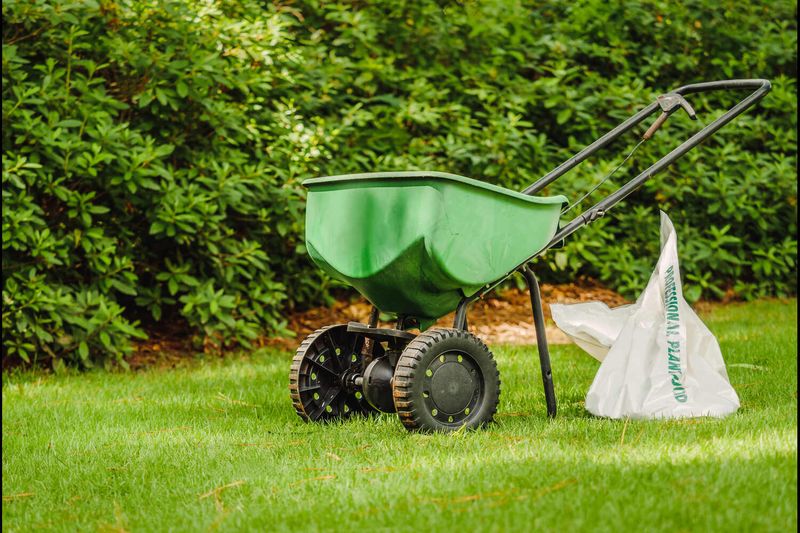
Timing a preemergence herbicide correctly depends on local conditions, not a single national calendar date. Crabgrass germinates when soil temperatures at about 2 inches deep consistently reach approximately 55 degrees Fahrenheit, and that threshold arrives at very different times across the South.
Applying too early risks losing effectiveness before the main germination flush; applying too late means seeds are already sprouting.
UF/IFAS guidance on crabgrass provides general Florida reference points: early February in South Florida, mid-February in Central Florida, and early March in North Florida. For Texas, Texas A&M AgriLife Extension’s lawn management calendar puts approximate crabgrass germination timing at mid-February in South Texas, early March in North and Central Texas, and mid-March in the Panhandle.
These are regional illustrations, not fixed application dates; local soil temperatures and your product label should always take priority.
Turf identification is equally important before selecting any herbicide. Texas A&M specifically warns that quinclorac can significantly injure St. Augustinegrass, a common lawn grass throughout the South.
UF/IFAS publication EP141 provides separate product guidance for bermudagrass, St. Augustinegrass, centipede, bahia, zoysia, and other Florida turfgrasses because tolerance varies by species. Knowing exactly what grass you have before you buy a product is not optional; it is the step that prevents treating a crabgrass problem while accidentally damaging the lawn underneath it.
The practical fix combines turf repair with seasonal prevention
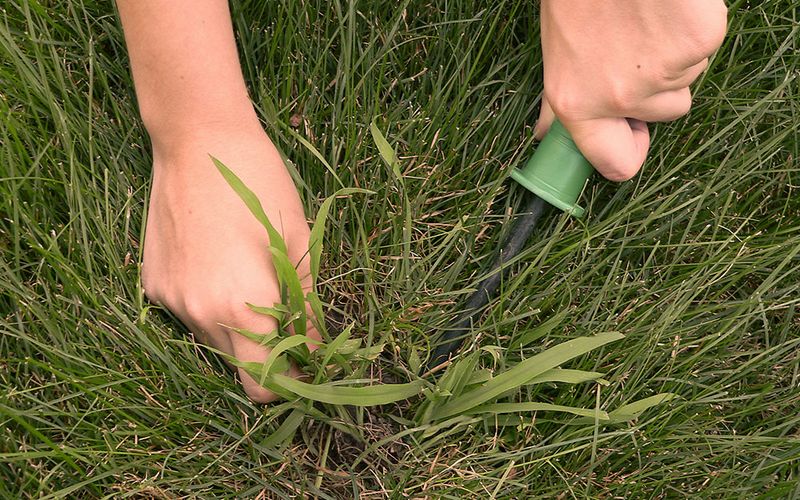
The most honest answer to recurring crabgrass is also the least glamorous one: no single spray fixes a seedbank that has been building for years. Pouring household vinegar on an established lawn will not kill roots, will not prevent new seedlings, and risks burning the turf you are trying to protect.
Save acetic acid products for isolated non-turf areas where the label permits use, wear the required protective equipment, and do not expect carryover protection into the following weeks.
For the lawn itself, the practical path forward has two parts. Penn State Extension’s turfgrass weed guidance and UF/IFAS publication EP575 both point to the same integrated approach: repair bare and compacted areas so desirable turf can fill in, maintain mowing and irrigation practices that favor thick turf over weed seedlings, and apply a correctly timed, label-compliant preemergence herbicide before germination when chemical control is appropriate for your lawn type and site.
An acidic spray may scorch what it touches. NPIC’s vinegar FAQ is clear that it does not address why crabgrass keeps appearing in the first place.
Prevention and a healthier lawn answer that question; a bottle of vinegar does not. The real fix is less dramatic and more durable than the shortcut promises suggest.