
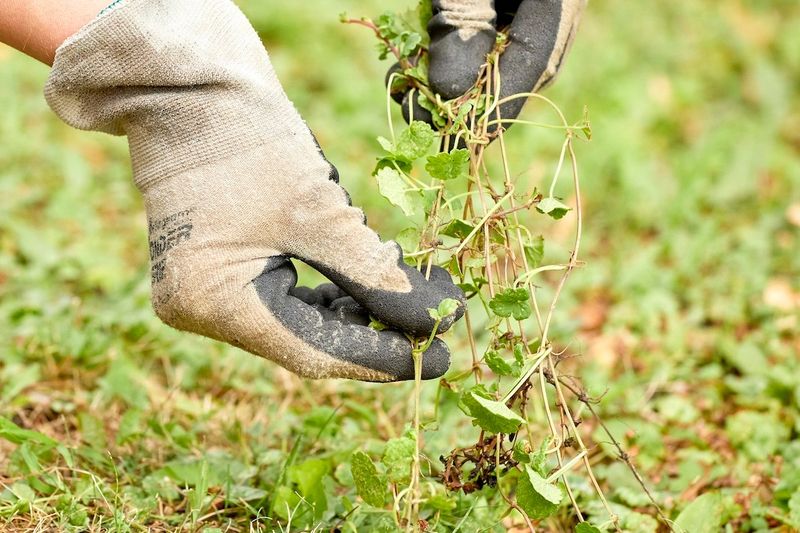
Creeping Charlie has a way of making homeowners feel like they’re losing a war they should be winning. You pull it, it comes back.
You pull it again, and within a few weeks, the same patch looks untouched. The reason it keeps returning is rooted in how the plant actually grows, and once you understand that, the fix becomes a lot more manageable.
Confirm that the plant is creeping Charlie
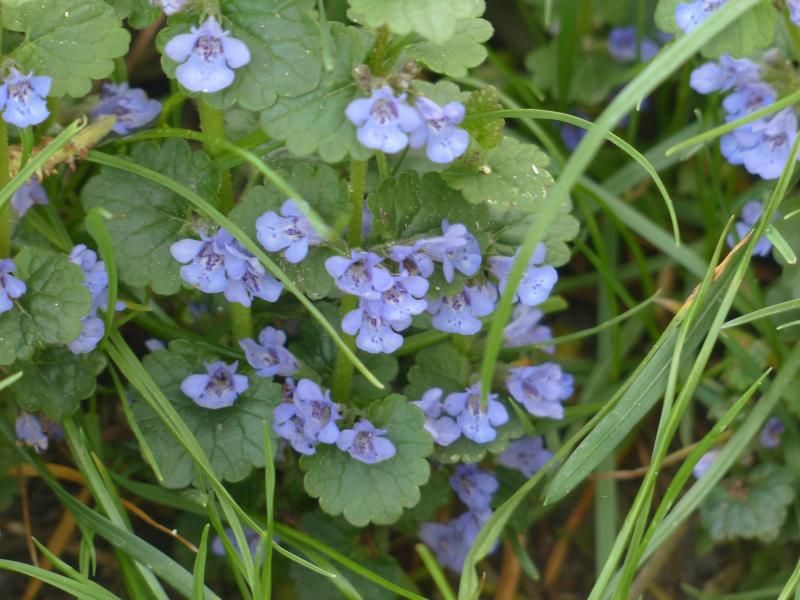
Before pulling a single stem, take a close look at what you are actually dealing with. Creeping Charlie, known botanically as Glechoma hederacea, has a very specific set of features that make it identifiable once you know what to look for.
University of Minnesota Extension describes the leaves as rounded to kidney-shaped with scalloped edges, arranged in opposite pairs along the stem. The stems themselves are square in cross-section, a reliable detail you can feel by rolling a stem between your fingers.
Crush a leaf and you will notice a minty or slightly musky odor. During bloom, small blue-purple tubular flowers appear along the stems.
The USDA NRCS plant guide confirms these traits and notes the plant was introduced from Europe and Asia. Its weedy or invasive status varies by region, so checking with your local county Extension office for state-specific guidance is worthwhile.
Ground ivy is a perennial, meaning it does not die off after one season. USDA Forest Service records show that flowering in Florida can stretch from spring through fall, while Texas sees the main bloom from April through June, so the timing of what you observe in your yard will vary.
Confirm the identification before you disturb the bed or lawn, because the right removal approach depends on knowing exactly what plant you are managing.
Understand why casual pulling does not last
Most people grab the leafy tops of creeping Charlie and pull, and it feels satisfying in the moment. A few weeks later, the same area is green again, and the frustration starts to feel personal.
The explanation is straightforward once you see how this plant actually moves.
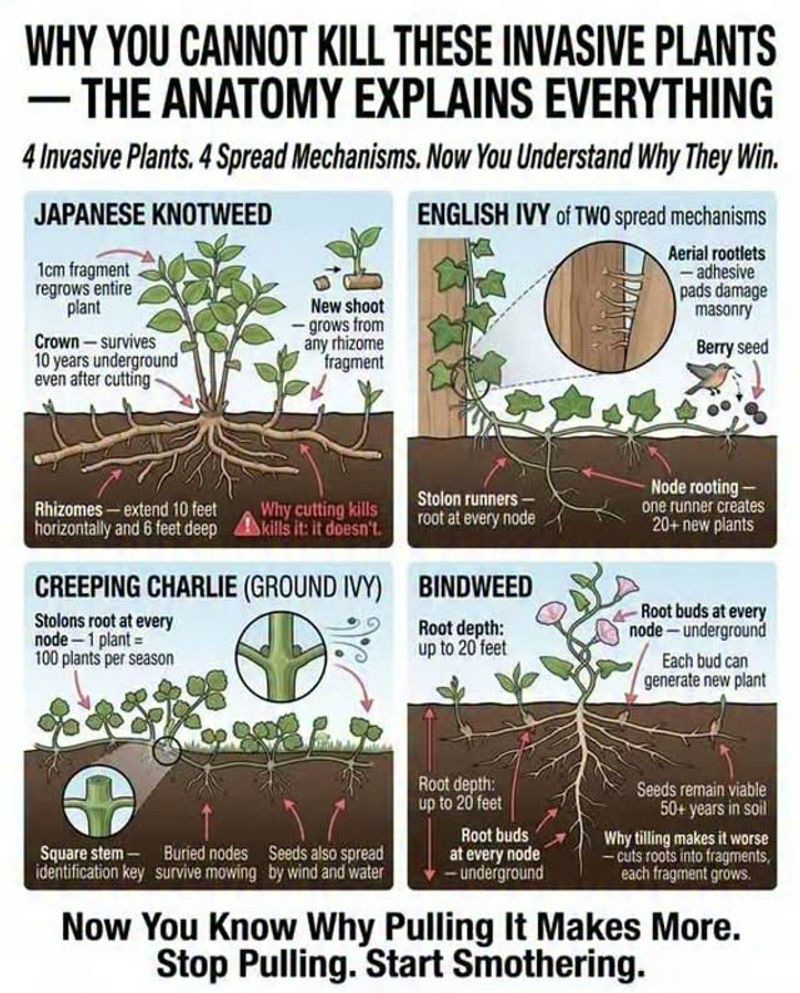
Creeping Charlie spreads through above-ground stems called stolons that creep horizontally across the soil surface. As a stolon travels, it roots at points along its length called nodes.
When someone pulls only the visible leafy tops, the rooted nodes that were already anchored in the soil stay put. Each of those rooted sections can continue growing as though nothing happened.
University of Minnesota Extension explains that this creeping and rooting habit is what makes the plant so persistent after a surface-level cleanup.
University of Wisconsin-Madison Extension adds another layer to the problem: detached stem pieces left in contact with moist soil can re-root on their own. So even the stems you successfully pull and then drop back onto the bed can become new plants.
Illinois Extension reinforces that the plant’s persistence comes from these rooting nodes and stem segments rather than from a single deep taproot. Casual pulling addresses the part you can see while leaving behind the parts that regrow.
Choose the right scale before you start
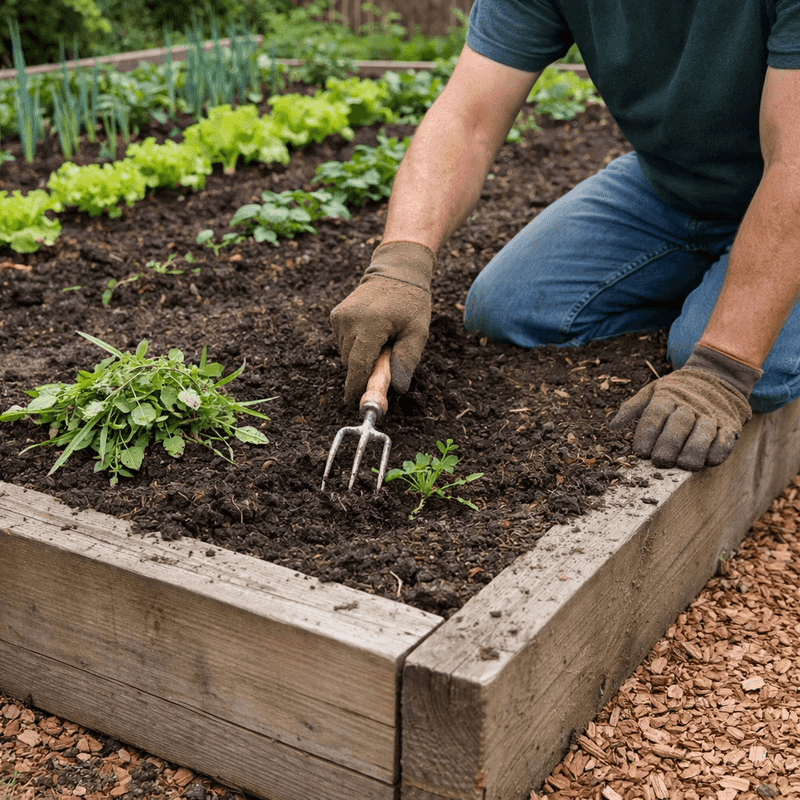
Knowing what kind of removal job you are facing changes everything about how you plan your weekend. Hand removal is a realistic option for small planting beds and isolated patches where you can see and follow individual runners from one end to the other.
A garden bed with a defined edge, a strip along a walkway, or a corner of the yard where the plant has just started spreading are all manageable candidates for the approach described in the next sections.
A lawn-wide infestation is a different situation entirely. Creeping Charlie stolons weave through desirable grass blades and root at multiple points along the way, making it nearly impossible to trace and remove individual runners without damaging the surrounding turf.
University of Minnesota Extension and Penn State Chester County Master Gardeners both note that hand removal is most practical in beds and small patches rather than throughout a lawn.
Soil moisture matters a great deal for how well this works. Work after a rain event or lightly irrigate the area the evening before so the soil is damp but not waterlogged.
Wisconsin Extension supports working in moist soil because it releases roots more readily, which means fewer rooted nodes left behind when you lift a stolon. A weekend can start the process, but expect to return to the same spot more than once before the patch is under control.
Trace each stolon and remove its rooted nodes
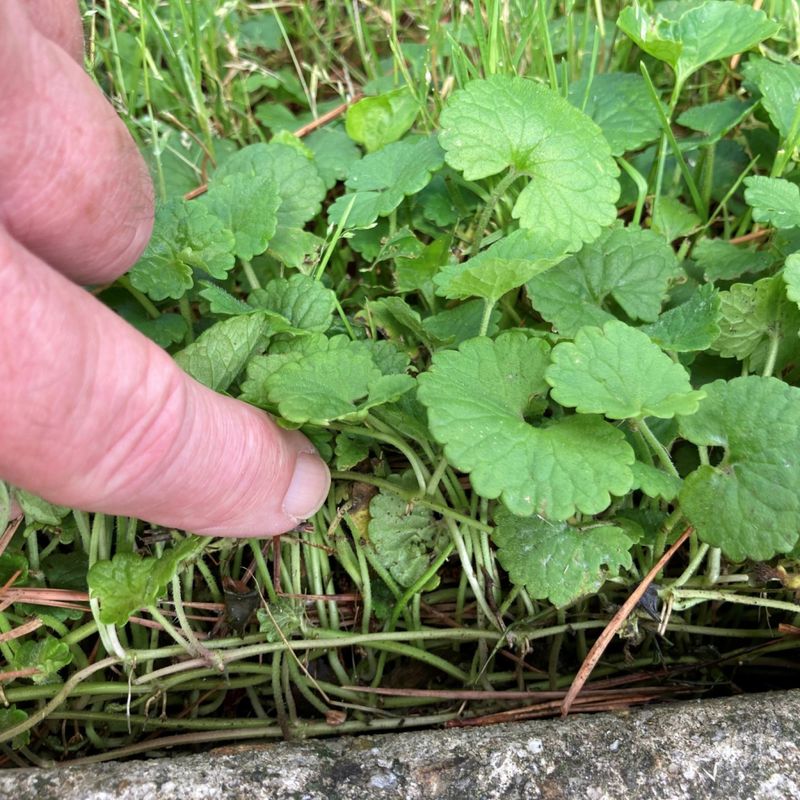
The actual removal work starts at the stem, not the leaves. Rather than grabbing a handful of foliage, find where a stolon begins and start tracing it across the soil surface.
Runners often travel several feet before reaching a leafy cluster, and there may be multiple rooted nodes along the way that are easy to miss if you only focus on the green parts you can see from standing height.
Once you have identified a runner, lift it gently and use a hand fork or narrow trowel to loosen the soil at each point where it has rooted. Work slowly and dig out the rooted node, the crown at that junction, and any visible roots attached to it.
Wisconsin Extension emphasizes the importance of removing as much of the plant as possible, including the rooted sections, rather than snapping stems at the surface. University of Minnesota Extension similarly stresses that thorough removal of roots and nodes is what separates a useful pass from one that just delays regrowth.
After lifting a stolon, probe the surrounding soil a few inches in each direction. Connected sections can run under mulch or leaf litter and are easy to overlook.
Penn State Master Gardener guidance recommends inspecting the surrounding area carefully for connected or detached pieces. Speed is not the goal here.
A slow, methodical pass that removes each rooted node will outperform a fast sweep that leaves half the anchored sections in the ground.
Remove detached stems from the site
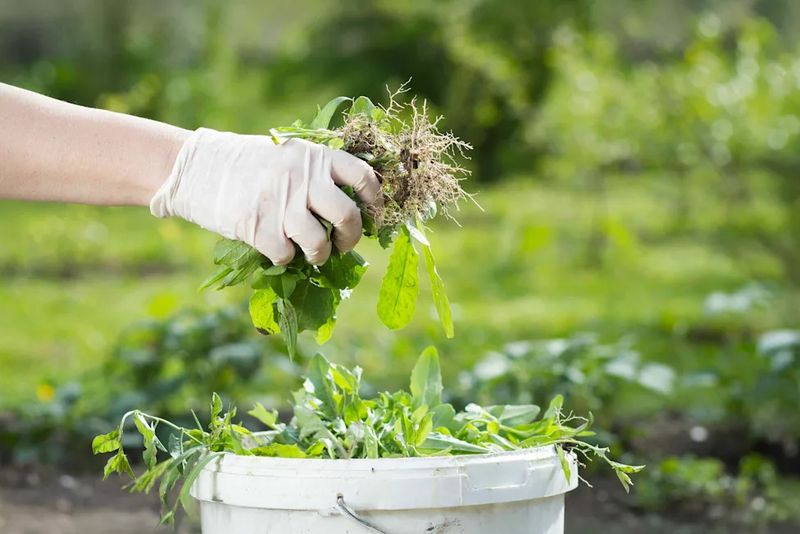
Pulling creeping Charlie out of the ground is only half of the job. What you do with the pulled material determines whether your work holds or whether you are accidentally planting a new crop of the same weed.
Wisconsin Extension warns explicitly that pulled creeping Charlie stems can re-root if left in contact with soil. That means a pile of pulled runners sitting on a bare bed is not harmless debris waiting to dry out.
It is potential planting material. Collect every detached stolon and stem piece as you work, and place them directly into a bucket or yard waste bag rather than dropping them back onto the cleared area.
Ordinary home compost piles may not reach temperatures high enough to destroy viable stem pieces, so the safest approach is to bag the material for yard waste pickup rather than adding it to a pile that may not heat sufficiently. University of Minnesota Extension supports removing plant material from the site entirely.
Include visible roots in your cleanup as well. While there is no established evidence that every small root fragment can independently regenerate the plant, thorough cleanup reduces the number of viable pieces you leave behind and gives your cleared area the best possible start before regrowth monitoring begins.
Recheck the patch and suppress new growth
One thorough removal session is a strong start, but plan for follow-up visits. Creeping Charlie is persistent, and some rooted nodes or viable stem pieces will almost certainly remain after even a careful first pass.
The goal shifts from elimination to management, and that means returning to the same area regularly to catch new growth before it gets a foothold.
University of Minnesota Extension and Wisconsin Extension both describe repeated mechanical removal as the strongest chemical-free approach for managing this weed. Check the cleared patch every week or two and remove any new stems before they have a chance to root at additional nodes.
Young regrowth is much easier to remove than established runners, so catching it early makes each follow-up session shorter and less labor-intensive.
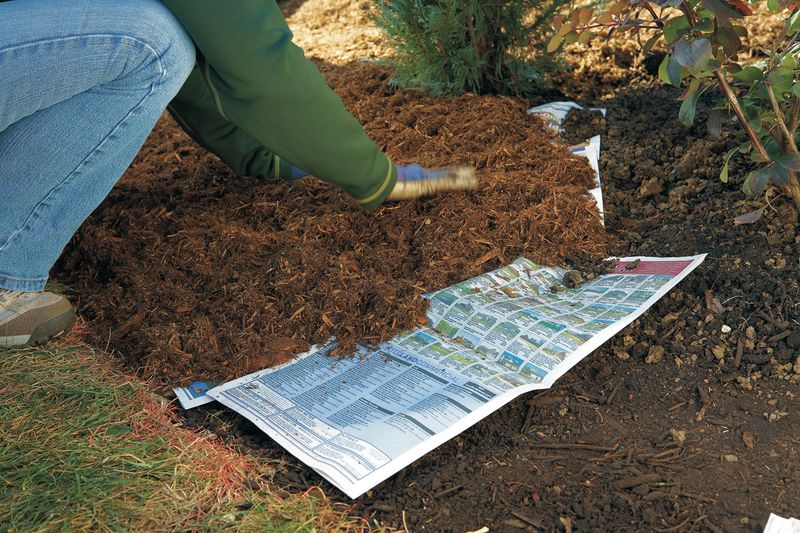
After the initial removal, a layer of mulch over the cleared bed can help suppress surviving pieces and reduce exposed soil where new stems might root. Penn State Extension notes that cultural practices can support management but are not a guaranteed cure on their own.
Treat mulching as a follow-up suppression measure after thorough removal, not as a substitute for it. Wisconsin Extension’s gardening guidance also mentions covering cleared areas with cardboard before establishing competing plants as one option to consider after the bulk of the plant has been removed.
Neither approach comes with a guaranteed outcome, but both can reduce how quickly the area reinfests between your inspection visits.
Correct the site conditions that favor reinvasion
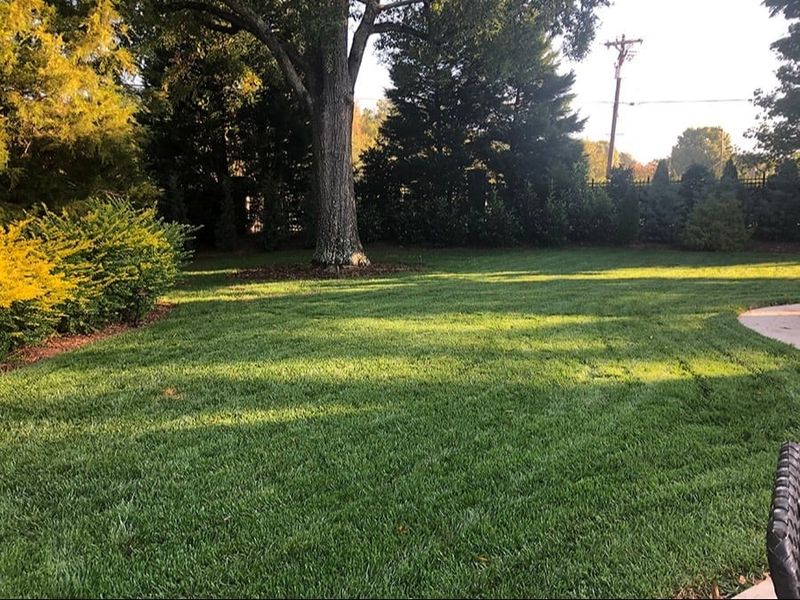
Creeping Charlie does not pick just any spot at random. It thrives in conditions that many Southern yards provide in abundance: damp soil, heavy shade, and thin or struggling turf.
Addressing those conditions will not eliminate an established infestation on its own, but it can reduce the competitive advantage the weed holds and make your removal work last longer between regrowth episodes.
Where drainage is poor and soil stays wet after rain, improving grading or reducing irrigation frequency can help. Wisconsin Extension identifies excess moisture and shade as primary site factors that favor ground ivy.
UF/IFAS Extension guidance on weeds as soil indicators supports the same principle: weeds that favor wet, shaded conditions are often a signal that the site itself is poorly matched to the plants being grown there. For Florida readers specifically, UF/IFAS notes that most turfgrasses need at least six hours of direct sunlight daily for healthy growth, so a heavily shaded lawn is already fighting an uphill battle before creeping Charlie enters the picture.
USDA Forest Service species records document ground ivy’s preference for moist, partially shaded habitats, which aligns with the site correction approach. Penn State Extension points out that cultural practices alone may not suppress an established infestation, but selecting turf or plants better suited to shady or damp conditions can shift the balance over time.
For Southern yards, this means choosing shade-tolerant turf varieties where appropriate, rather than importing lawn timing or variety recommendations written for cool-season Midwestern lawns.
Use a different strategy for heavily infested lawns
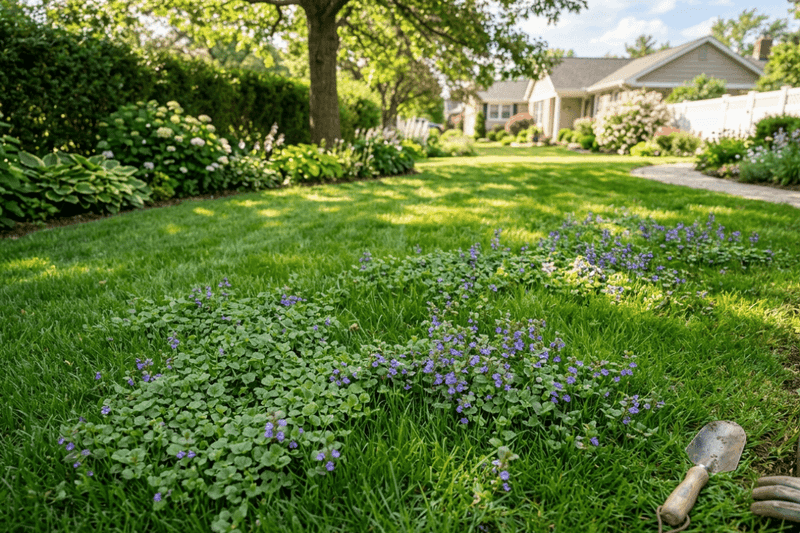
A small garden bed and a heavily infested lawn are not the same problem, and they do not call for the same solution. When creeping Charlie has woven its stolons through an extended area of turf, tracing and pulling individual runners becomes impractical.
The grass itself makes the runners hard to follow, and the sheer volume of rooted nodes across a large area means that a runner-by-runner approach will not keep pace with regrowth.
Illinois Extension’s lawn management guidance and Wisconsin Extension both acknowledge that for a small but heavily infested lawn patch, physically removing the affected vegetation and repairing the lawn may be more effective than attempting hand removal through turf. This is a significant undertaking, not a casual afternoon project, but it can reset the area more thoroughly than repeated partial pulling.
Penn State Extension notes that cultural practices alone are often insufficient for an established lawn infestation.
Dethatching and aggressive soil disturbance are not a safe shortcut here. Wisconsin Extension warns that dethatching can chop stems and nodes into pieces and spread them, potentially worsening the infestation while also damaging desirable grass.
For a persistently shaded lawn area where grass struggles year after year, replacing the turf with a compatible shade-tolerant ground cover or a mulched planting bed may be a more realistic long-term answer than trying to maintain grass in a location that does not suit it.
Some homeowners have heard that borax offers a chemical-free lawn fix. Iowa State University Extension does not recommend borax because effectiveness varies with soil conditions and questions about persistence and collateral effects remain unresolved.
Similarly, Penn State Extension cautions broadly that household mixtures including salt, bleach, and vinegar can injure desirable plants, damage soil, harm beneficial organisms, and carry no tested application rates or appropriate product labels. These are general safety and legal-label concerns, not findings specific to creeping Charlie testing, but they are reason enough to skip the kitchen-cabinet shortcuts.
Consistent mechanical removal and honest site assessment will always outlast the appeal of a one-time fix that the evidence simply does not support.