
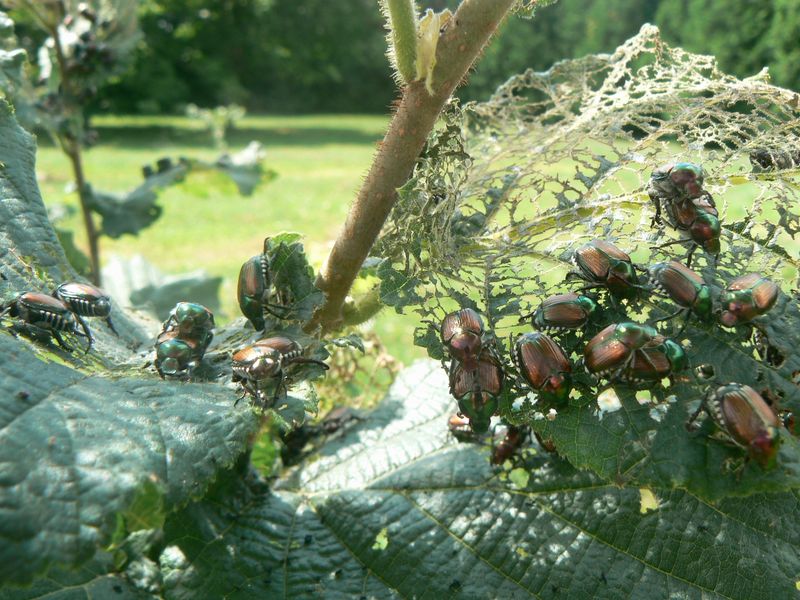
Japanese beetles tore through North Carolina yards this past summer, skeletonizing rose leaves, chewing up fruit trees, and leaving brown patches in lawns. Now that the season is winding down, many homeowners want to know what to clean up before winter to keep the beetles from coming back as strong next year.
The honest answer is more useful than a simple checklist: some cleanup steps genuinely help, but others have not been shown to reduce next summer’s beetle pressure at all. Knowing the difference saves you work and sets you up for smarter management when the beetles return.
Fall cleanup is not a proven Japanese beetle prevention method
A lot of well-meaning garden advice tells you to rake, cut back, and clean up every corner of your yard this fall to stop Japanese beetles from coming back. That advice overpromises.
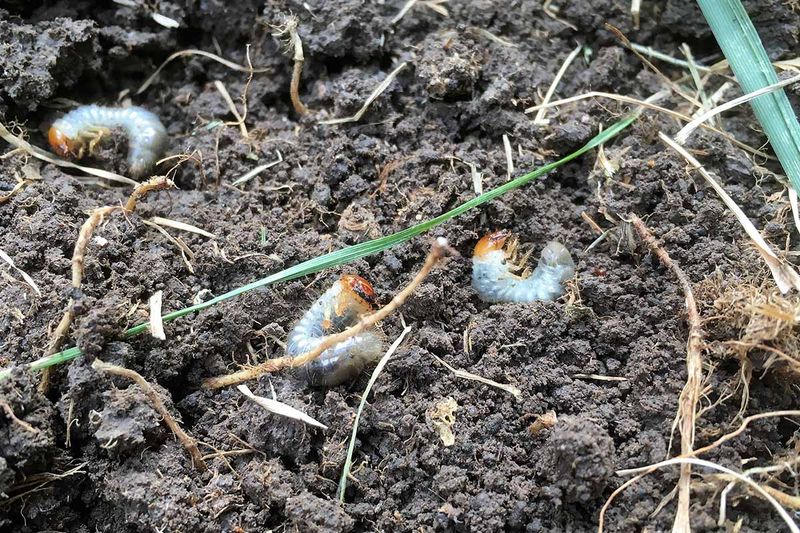
University of Minnesota Extension guidance on Japanese beetles makes clear that the beetles overwinter as grubs underground in soil, not in leaf piles, dead foliage, or the ordinary debris you rake off a lawn. Removing those materials is reasonable garden hygiene, but it does not reach the grubs.
In North Carolina, Japanese beetles generally complete one generation per year. Adults emerge and feed above ground roughly from late spring through midsummer.
Females drop into moist turf to lay eggs two to four inches deep, and the resulting larvae feed on grass roots through the fall before overwintering in the soil. NC State Extension’s turf arthropod guide places adult control in the May-through-July window and larval management from June through October, a schedule that reflects where the beetles actually are during each part of the year.
None of that biology puts the overwintering population in your leaf litter. Ordinary fall leaf cleanup has not been demonstrated as a dependable way to reduce how many beetles emerge next summer.
That distinction matters because it points you toward the cleanup steps that actually do something useful right now.
What fall sanitation can do is remove current attractants, help you spot turf problems while they are still visible, and give you a clearer baseline for monitoring next season. NC State Extension’s Japanese beetle publication describes the pest’s above-ground feeding habits and the range of plants it targets.
Understanding what draws adults to your yard is the starting point for better-timed management, even if the timing for that management belongs mostly in the next growing season.
Remove the attractants that still matter now
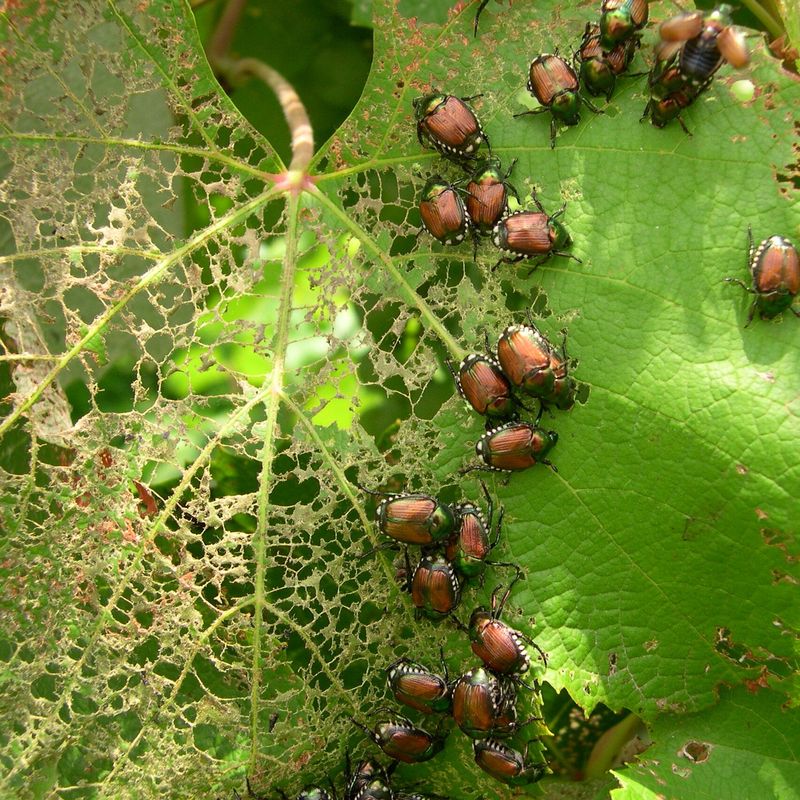
Fallen fruit is worth picking up promptly wherever Japanese beetles have been active on your property. The National Pesticide Information Center’s Japanese beetle resource lists removal of fallen or diseased fruit as a practical sanitation step because rotting fruit can attract adult beetles during the active feeding season.
If adults are still present in your yard, that attraction is still working against you.
Collect dropped apples, peaches, plums, figs, and any other damaged fruit from beneath trees and shrubs. Bag it or compost it away from the immediate garden area rather than leaving it to ferment on the ground.
The goal here is reducing a current draw, not a promise that next year’s population will be smaller as a result.
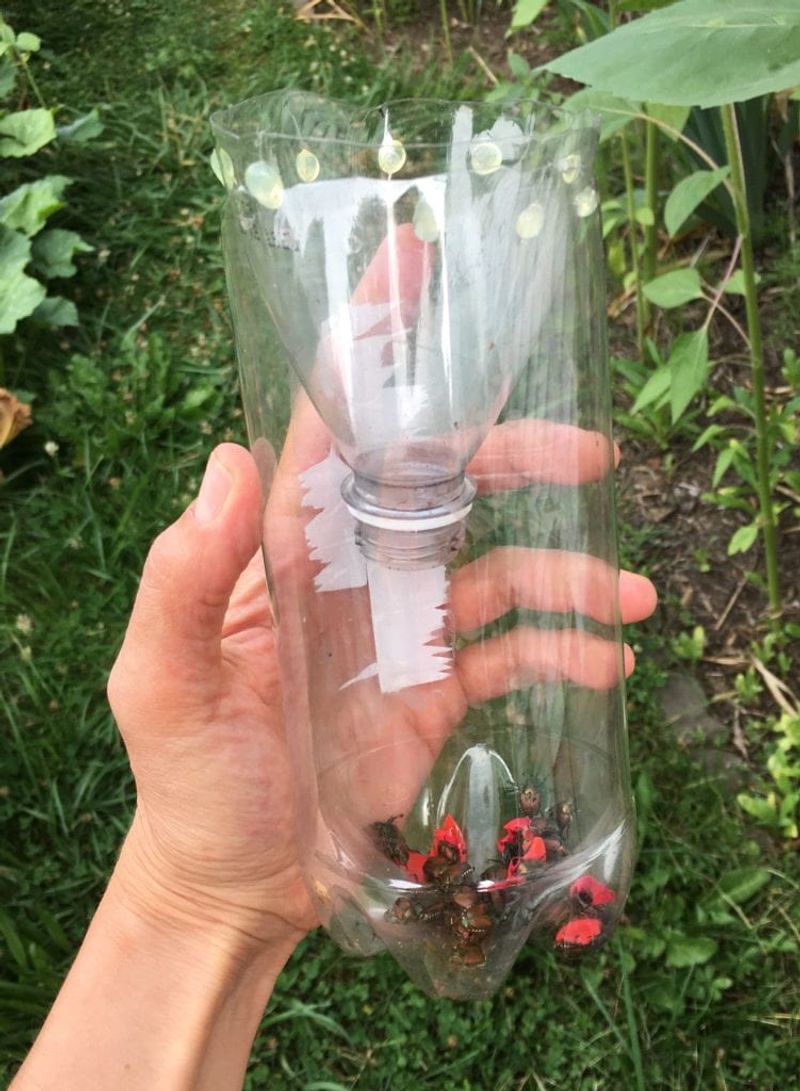
Any adults still feeding can be knocked into a container of soapy water during cooler morning or evening hours, when the beetles move more slowly. Minnesota Extension notes that hand-picking is practical for small yards or individual plants and that removing actively feeding adults may reduce the attraction signal that draws additional beetles to the same plant.
Research on plant volatile compounds, including a study on herbivory-induced aggregation kairomones, confirms that feeding damage and the odors it releases can recruit more beetles to a plant during the same season. Removing the beetles themselves interrupts that cycle more directly than removing leaves after the fact.
Hold off on cutting back beetle-damaged foliage unless normal plant-care timing calls for it. Leaves that look ragged still carry out photosynthesis, and removing healthy tissue just because beetles chewed it has not been shown to prevent next year’s beetles from arriving.
Excessive pruning can stress plants unnecessarily, so keep the pruning shears for situations where the plant actually needs them.
Inspect suspicious turf before choosing a treatment
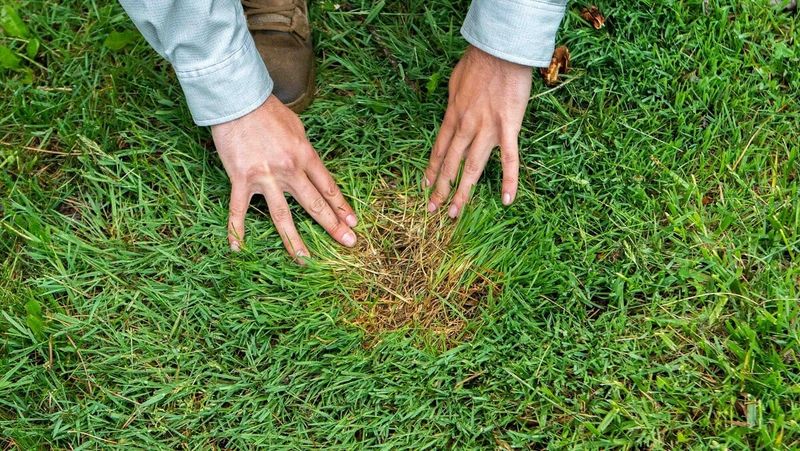
Yellowing or browning turf patches in late summer and early fall are worth investigating, but the investigation comes before any treatment decision. Pull back the grass in the affected area and check the roots and the top few inches of soil for white, C-shaped grubs.
What you find may or may not be Japanese beetle larvae, and that distinction matters before you do anything else.
NC State Extension’s white grubs in turf publication explains that North Carolina lawns host several scarab species, and a white, C-shaped grub is not automatically a Japanese beetle. Species identification requires examining the raster pattern, the arrangement of spines on the underside of the grub’s last abdominal segment.
If you are not confident in the identification, your local Cooperative Extension office can help or point you to someone who can.
Count the grubs you find in a defined area, typically a one-square-foot section cut to a few inches deep. Record the number and note whether the turf in that patch is showing visible injury: does the grass pull up easily because the roots are gone, or is it still rooted and simply drought-stressed?
NC State’s Japanese beetle publication describes how adults feed on foliage, flowers, and fruit while grubs target grass roots underground. Those are two separate problems that call for different responses.
A lawn inspection tells you whether you have a turf-damage problem worth addressing. What it does not tell you is whether treating the lawn will protect your roses, fruit trees, or other ornamental plants from adult beetles next summer.
Minnesota Extension is direct on this point: adults can fly in from surrounding properties, so grub control in one lawn often has little effect on the adult beetles feeding on landscape plants. Knowing that going in keeps expectations realistic.
Treat grubs only when the lawn has a justified problem
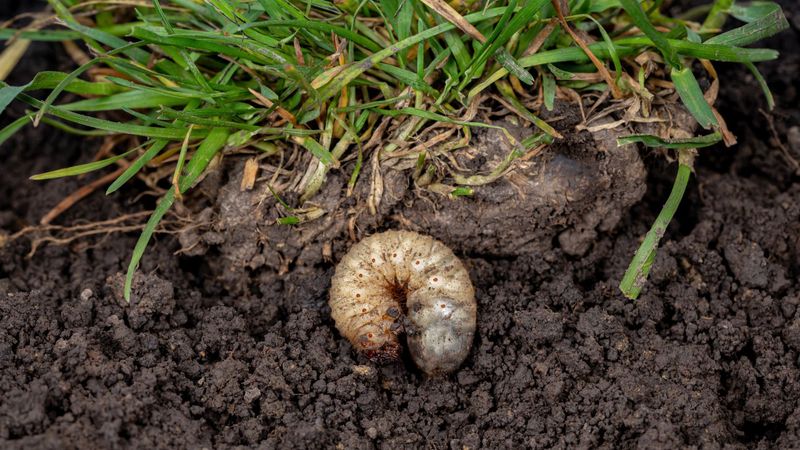
Grub treatment is a turf-protection decision, not an automatic step after a bad beetle summer. The NC State turfgrass pest management manual offers a general reference point of about five or more grubs per square foot as a threshold for considering insecticide treatment, but that number is a starting point, not a fixed rule that applies everywhere.
Turf type changes the calculation. Tall fescue and centipedegrass have different root systems and stress tolerances, so the same grub density can cause more visible injury in one than in the other.
Grub species matters too, because some are more damaging at lower densities. Site stress from drought, shade, compaction, or poor fertility can lower a lawn’s ability to tolerate root feeding, making injury appear at densities that a healthier lawn might handle without browning.
Minnesota Extension notes that healthy turf can tolerate grub densities up to around 10 per square foot under some conditions, which underscores why visible injury and site conditions belong in the decision alongside a raw count.
When grub density and observed turf damage together justify treatment, acting can protect or help restore the affected lawn and may reduce how many beetles emerge from that specific area next summer. That is a real benefit worth pursuing if the conditions warrant it.
NC State’s white grubs resource walks through identification and management options in more detail.
Minnesota Extension cautions that treating one lawn often does little to reduce adult beetles on ornamental plants because adults fly in from neighboring lawns, pastures, and untreated turf. A treated lawn may produce fewer beetles locally, but the adults arriving from outside the property are beyond your reach.
Frame grub management as lawn care with a possible local benefit, not as a shield for your entire yard.
Do not force a poorly timed late-fall rescue
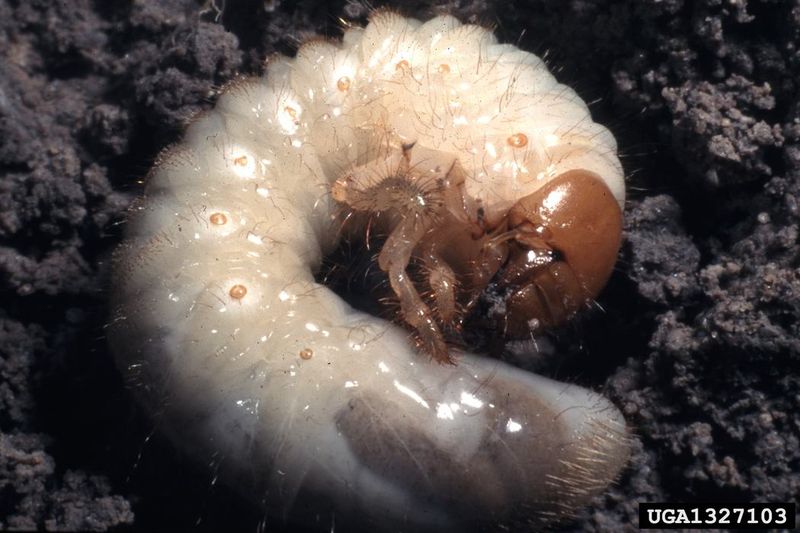
Finding grubs in late September or October can feel urgent, but the timing of any treatment matters as much as the decision to treat. Minnesota Extension explains that grubs move deeper into the soil as temperatures drop in fall.
Once they have moved beyond the top few inches, most insecticide applications reach them less effectively, which means a late-fall rescue treatment may accomplish far less than the same product applied at the right time earlier in the season.
Spring treatment is generally not a better alternative. By the time soil warms enough for reliable product activity in spring, the grubs are mature, harder to control, and close to pupating.
Treating mature grubs in spring carries lower odds of success and does not address the adults that will emerge and fly to your plants regardless.
The better path is to note the problem now, schedule a more targeted response for the appropriate window next season, and avoid applying products outside the timing conditions where they work. NC State’s turf arthropod guide places the larval management window from June through October, with the earlier part of that window being more effective for most products targeting young grubs that are still feeding near the surface.
The NC State turfgrass pest management manual identifies product-specific timing requirements that should guide any treatment choice. Current product labels and local extension guidance take priority over any general schedule because active ingredient, formulation, and site conditions all affect whether a treatment is likely to work.
If you missed the ideal window this year, plan to monitor early next season and act when grubs are young, near the surface, and the product label supports treatment.
Use the next summer’s egg-laying period for targeted prevention
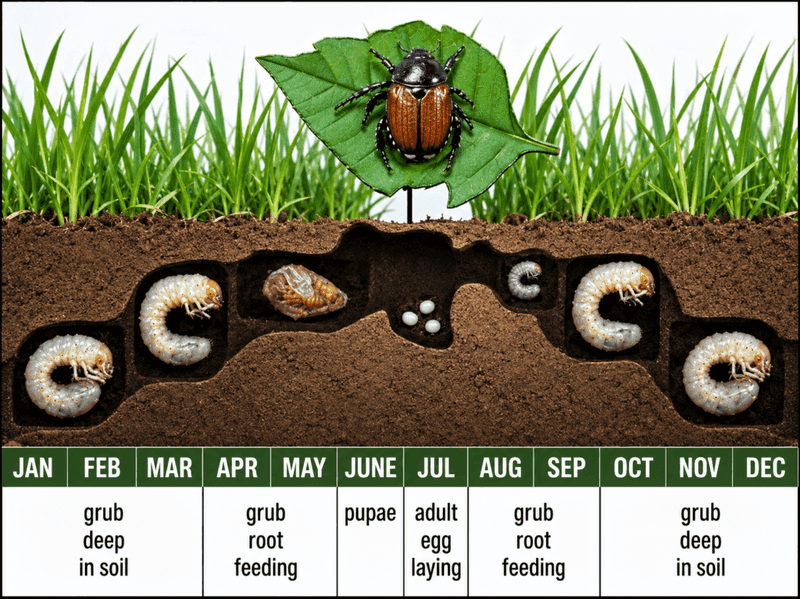
Rather than counting on fall debris removal to reduce next year’s beetles, shift your attention to a tactic the evidence actually supports: managing turf irrigation during the summer egg-laying period. Adult female Japanese beetles prefer moist soil for laying eggs, and drier conditions during that window can reduce how many eggs survive to become grubs.
Minnesota Extension identifies reduced irrigation during the egg-laying period as a management option when soil and turf conditions allow.
In North Carolina, egg-laying generally coincides with the adult activity window from late spring through midsummer. NC State’s turf arthropod guide places adult emergence and activity from May through July, which aligns with the period when females are actively searching for egg-laying sites.
Allowing turf to dry slightly during this period, if the grass type and summer heat allow it without causing serious injury, may make your lawn less hospitable for egg-laying.
This tactic requires judgment. Deliberately stressing valuable landscape plants or allowing severe drought injury to turf is not the goal.
Some grass types, particularly cool-season fescues during a hot North Carolina summer, are already under stress and cannot tolerate additional drought without damage. Manage irrigation according to what your specific turf and ornamental plants need, and use the reduced-irrigation strategy only where it is feasible without causing harm.
Even when applied thoughtfully, this approach may affect local breeding conditions in your turf without preventing adult beetles from arriving from surrounding properties. Adults fly considerable distances, so neighbors’ lawns, nearby pastures, and untreated areas will continue to supply beetles regardless of what happens in your soil.
Think of irrigation management as one useful piece of a broader plan rather than a standalone solution.
Skip traps and protect pollinators if treatment becomes necessary
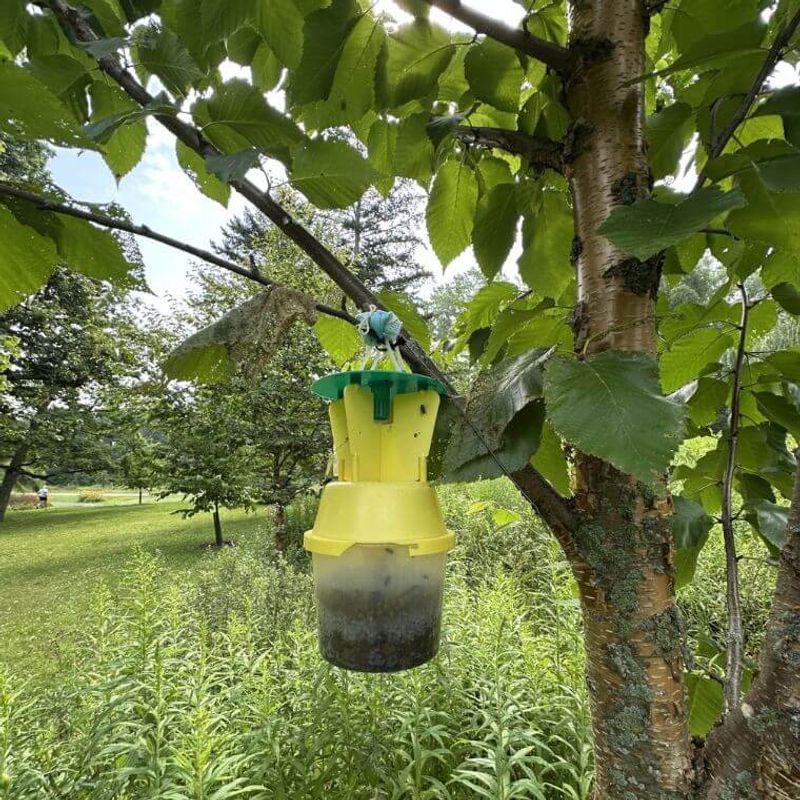
Japanese beetle traps are widely available and look like a straightforward solution, but they are generally a poor choice for home landscapes. NC State Extension’s Japanese beetle publication cautions that traps can attract more beetles toward a yard or nearby plants than they actually capture.
The lure used in most traps is highly attractive to beetles from a wide area, and a trap placed in or near the garden may pull in beetles that would not otherwise have concentrated there. If you use traps at all, place them well away from ornamental plants and fruit trees, and check them frequently.
When other options have been exhausted and a pesticide becomes justified, the process starts with confirmed identification and a threshold-based decision, not a general spray. Choose a product with a label that specifically covers Japanese beetles on the plant and site you are treating.
Read the entire label and follow it exactly, including application rates, pre-harvest intervals for edible plants, and any restrictions on treated surfaces.
EPA pollinator-protection guidance identifies bloom-time restrictions and time-of-day application limits as standard measures for reducing harm to bees and other beneficial insects. Avoid applying any insecticide to plants that are actively flowering or where pollinators are foraging.
Early morning or evening applications reduce the chance of direct contact with foraging bees. Minimize drift by not spraying on windy days, and prevent runoff that could carry product into water or neighboring areas.
Products marketed as natural or botanical are not automatically safe for non-target organisms. Minnesota Extension reports that commercial milky spore products have not shown consistent benefit in recent university trials, and all pesticide products, regardless of origin, should be used according to their labels.
Hand removal, sanitation, and targeted measures belong ahead of routine broad spraying in any management plan.
Turn this fall’s inspection into a better plan for next year
Fall is a reasonable time to take stock, even if it is not the season for most Japanese beetle control actions. Start by collecting any remaining fallen or diseased fruit from around trees and shrubs.
The National Pesticide Information Center confirms that prompt fruit removal reduces a current attractant for adult beetles. That step has a clear purpose without overpromising what it will do for next year.
Walk the lawn and mark any patches where turf looked thin, yellowed, or pulled up easily this season. Note the locations and sketch or photograph them.
NC State’s white grubs resource can help you revisit those spots next summer with proper identification in mind rather than treating blindly this fall. Leave healthy foliage on plants unless normal pruning timing calls for removal; ragged-looking leaves still support the plant, and cutting them off has not been shown to reduce beetle numbers the following year.
Record what you saw this season: which plants took the heaviest feeding, where turf damage appeared, and roughly when adults were most active. That record becomes your monitoring guide for next summer, when the better-timed management windows for both adults and egg-laying actually open.
Adults can still fly in from neighboring properties no matter how thorough your fall work is, so the goal is sharper eyes and better timing, not a beetle-free guarantee. A yard that is well-scouted and managed at the right moments will always outperform one treated at the wrong time with the wrong expectations.