
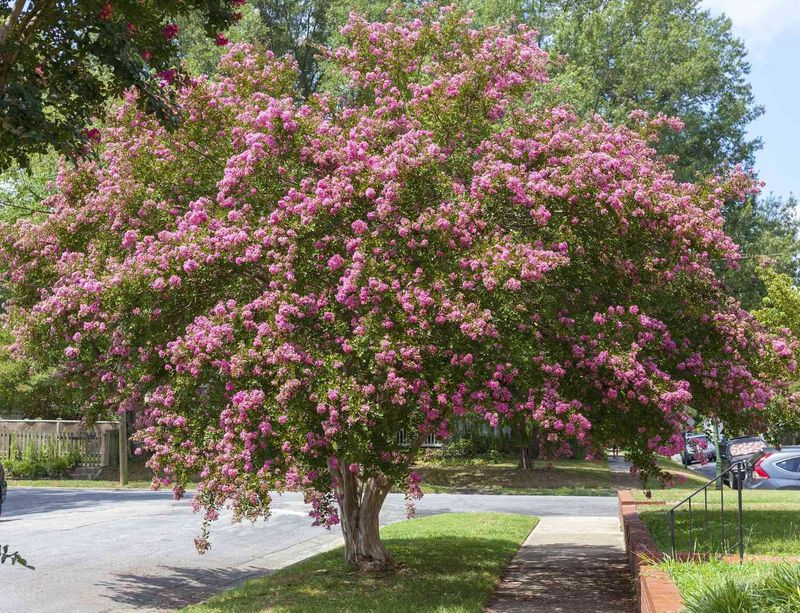
Late August is a good moment to take a close look at your crape myrtles and decide whether a small, optional task might squeeze a few more weeks of color out of the season. Removing faded flower clusters, a practice called deadheading, can sometimes encourage another round of blooms before fall arrives.
But skipping it will not hurt a healthy tree, and no single August deadline determines how well your crape myrtle performs next year. What follows is a plain-language guide to what deadheading actually does, how to do it safely, and what matters more for long-term tree health in Central Texas heat.
Deadheading may encourage one more flush of flowers
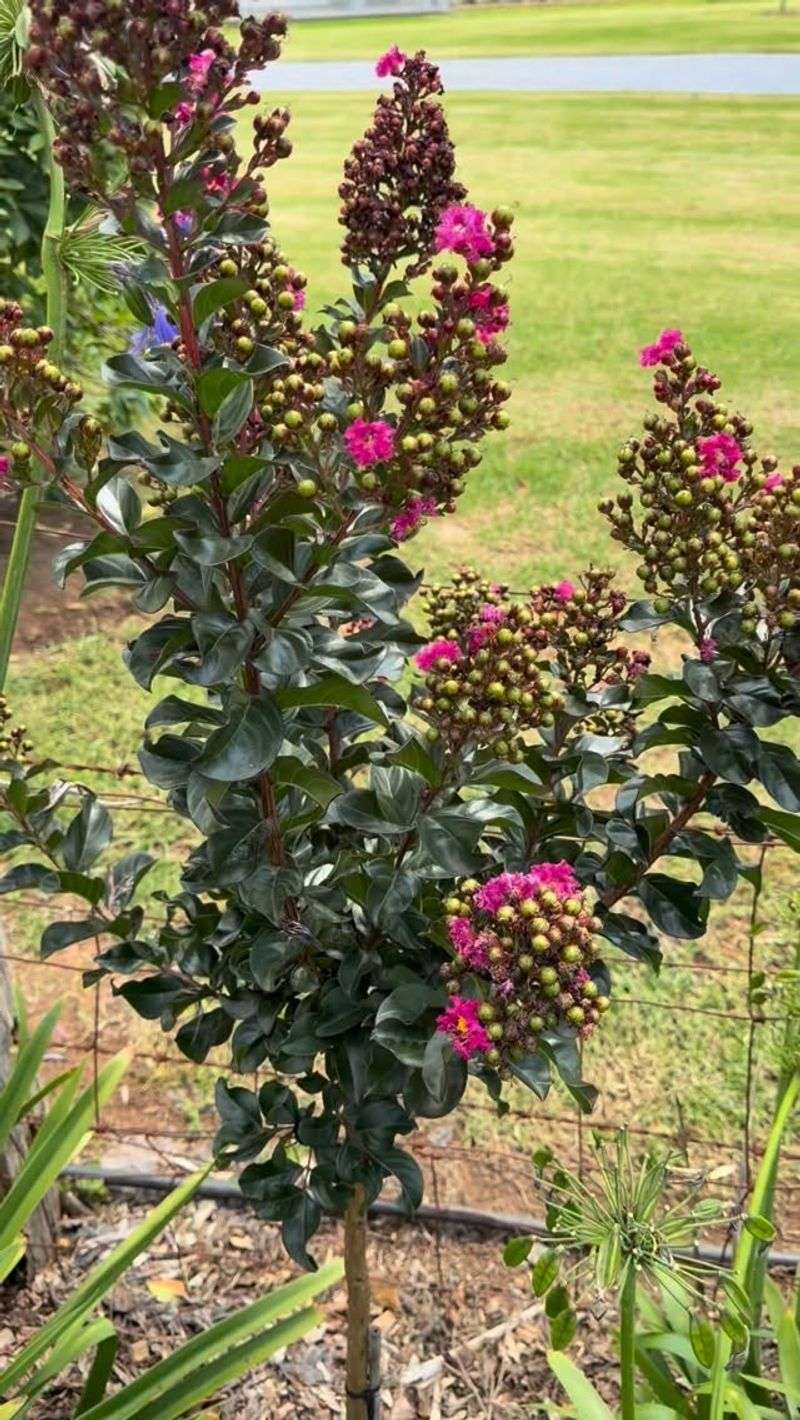
Crape myrtles bloom on new growth, which means the tree pushes out fresh shoots each season that eventually produce flower clusters. Once those clusters fade and begin forming seed pods, the tree’s energy shifts toward ripening those seeds.
Removing the spent clusters at that point gives the plant a chance to redirect some of that effort into producing new shoots, which may develop into a second round of flowers before the growing season winds down.
That word “may” carries real weight here. University of Georgia Cooperative Extension guidance on crape myrtle culture explains that removing faded flowers or developing seed clusters can stimulate new growth and another late-summer bloom on some cultivars, but the result is not guaranteed.
Weather, sunlight, moisture, the tree’s overall health, and how much warm growing time remains all shape whether a second flush actually appears.
Deadheading is optional bloom management, not a required health intervention. Leaving spent clusters on the tree does not damage it, does not invite disease, and does not cause the tree to perform poorly the following year.
A healthy crape myrtle that goes untouched in late August will still leaf out and flower normally next season. The documented benefit of deadheading is a possible extension of the current flowering season, nothing more and nothing less.
Cultivar selection also matters. Trees that begin blooming early in summer have a longer window to respond to deadheading before temperatures cool and growth slows.
Trees that start blooming later, around mid-July or after, may not have enough warm season left to produce a meaningful second flush even if you remove every spent cluster promptly. Knowing your cultivar’s general bloom timing helps set realistic expectations before you reach for the pruners.
Check whether your tree still has time to respond
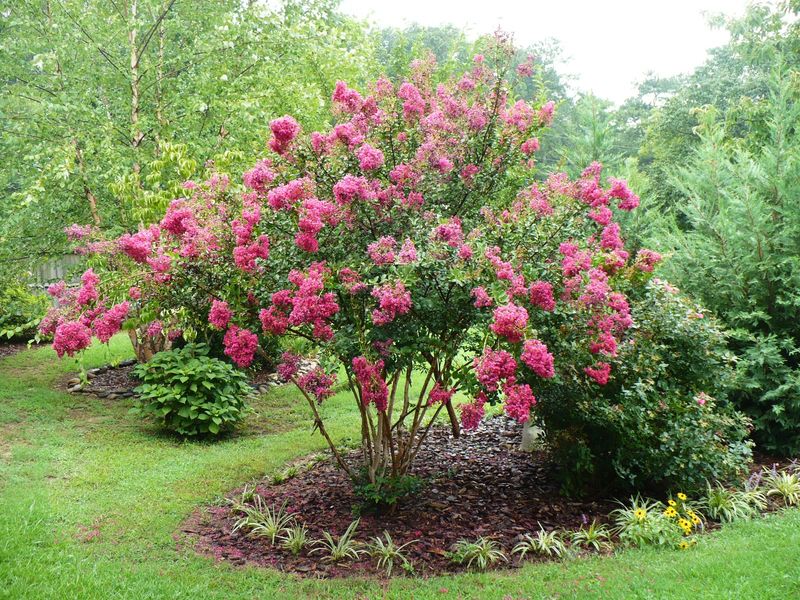
Before picking up any pruners, spend a minute reading the tree itself. The clusters should have clearly finished flowering, meaning the petals have dropped and the branch tips show either dry, papery remnants or small green seed pods forming.
Cutting too early, while flowers are still opening, shortens the bloom you already have rather than extending it.
Next, look at whether the tree is still actively growing. Fresh, light-green shoot tips are a good sign that the tree has the energy to push new growth after a cut.
A tree that looks stressed, has yellowing leaves, or shows no new tip growth may not respond well to deadheading, and watering and soil-moisture checks become a higher priority than flower management in that situation.
Timing relative to the season matters as well. Late August functions as a practical cue because Central Texas still has several weeks of warm growing weather ahead, but it is not an evidence-based universal cutoff.
Extension guidance on crape myrtle culture supports deadheading after flowers fade rather than tying the task to a fixed calendar date. A cultivar that blooms late into July or August may simply not have enough remaining warm season to complete another bloom cycle, regardless of when you make the cut.
Sunlight exposure and moisture also play a role. Trees growing in full sun with adequate soil moisture are better positioned to respond than those in partial shade or drought stress.
If your tree is in a spot that gets afternoon shade or the soil has been dry for weeks, temper your expectations for rebloom and focus first on the soil-moisture steps covered later in this article. The deadheading decision works best when it follows an honest assessment of what the tree can actually do right now.
Remove only the spent flower cluster
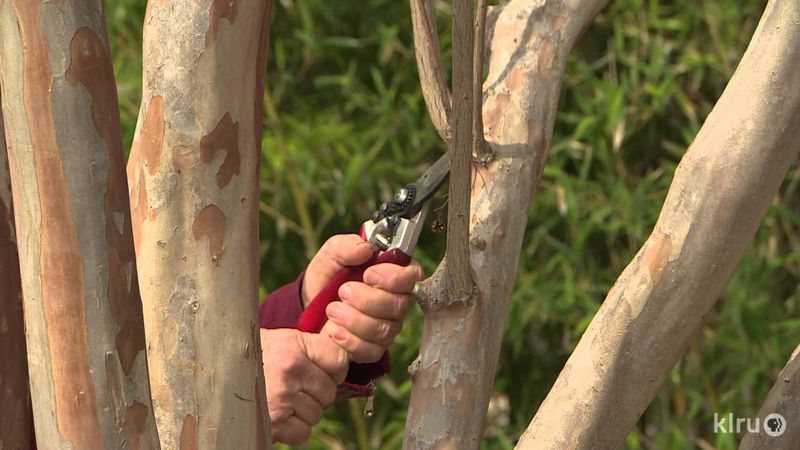
The cut itself is straightforward once you know exactly where to make it. Locate the faded flower cluster or developing seed cluster at the tip of a branch, then follow the stem down until you reach the first leaf joint, lateral bud, or small side shoot below the spent bloom.
Make your cut just above that point, angling it slightly so water runs off rather than pooling on the cut surface. That small side shoot or bud below the cut is where new growth, and potentially new flowers, will emerge.
Use clean, sharp bypass hand pruners for any cluster you can reach comfortably from the ground. Dull blades crush rather than cut, leaving ragged tissue that takes longer to heal.
Wipe the blades with a diluted bleach solution or rubbing alcohol before moving between trees to avoid spreading any fungal or bacterial issues from one plant to another. Extension guidance on crape myrtle culture specifically recommends removing only faded clusters or seed clusters and cutting back to a leaf joint, lateral bud, or side shoot, leaving all major limbs intact.
Stop there. The goal is to remove the spent tip, not to shorten the branch, reshape the canopy, or reduce the tree’s height.
Major limbs, the trunk, and structural branches are not part of this task. If you find yourself reaching for a saw or considering a cut thicker than your thumb, pause and reconsider whether that work belongs in late summer at all.
Clusters on high branches that require a ladder or awkward overhead reaching are best left alone or handled by a professional. Austin’s tree-health guidance recommends professional help for structural pruning and any work that presents a safety concern.
A few unreachable clusters left in place will not meaningfully change the tree’s response to deadheading lower down, and a fall from a ladder is a far worse outcome than skipping those top-most seed pods.
Save major pruning for the dormant season
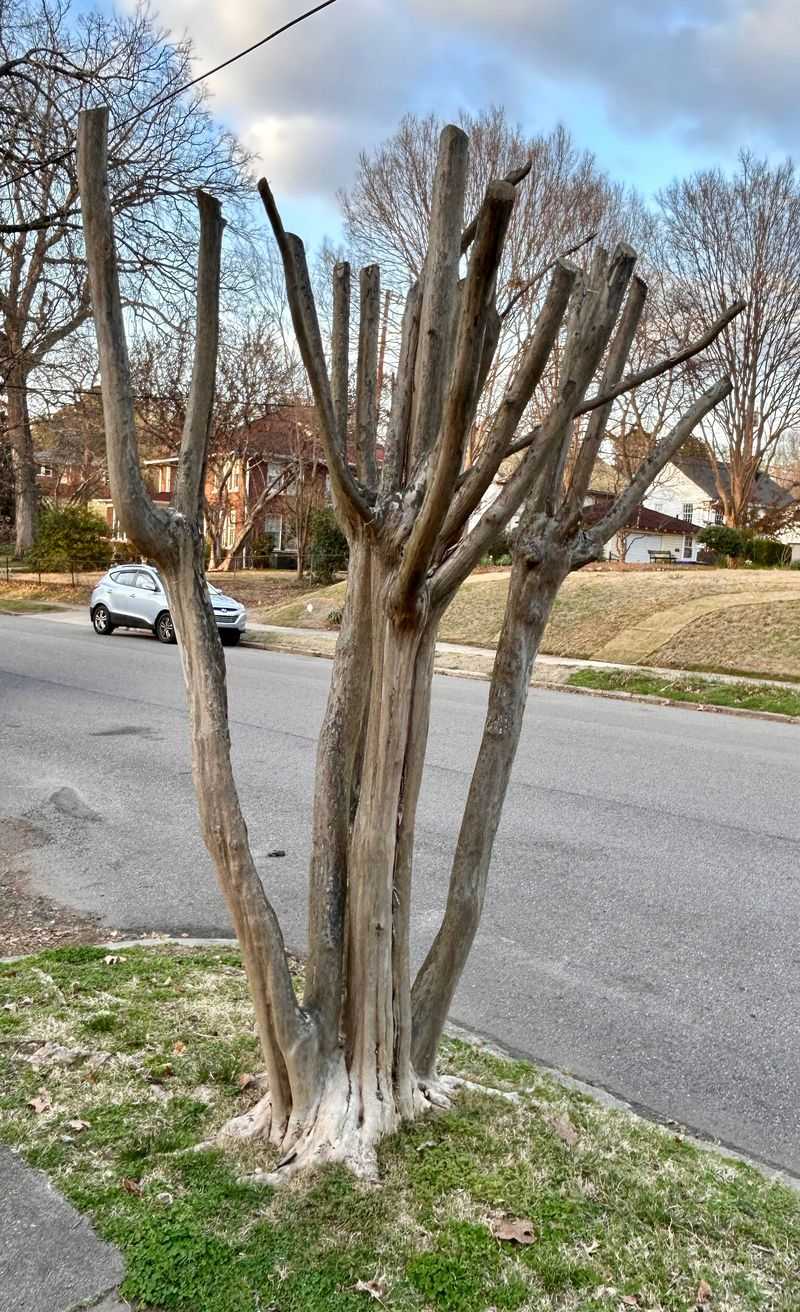
Deadheading sometimes tempts gardeners to keep cutting, and that is where real problems can start. Removing a spent flower cluster is a minor tip cut.
Shortening major limbs, reducing the canopy’s overall height, or cutting back to thick trunk stubs is structural pruning, and those are entirely different tasks that carry different consequences in late summer.
Normal structural pruning for crape myrtles generally belongs in late winter or early spring, before new growth begins. University of Georgia Extension guidance on crape myrtle culture confirms that the correct pruning window is late winter or early spring, and that late-season structural cuts can stimulate tender new growth at a time when the plant has little capacity to harden it before cooler weather arrives.
Oklahoma State University Extension garden tips reinforce the point, advising against heavy late-summer pruning that pushes soft new growth at an unfavorable time.
Topping, which means cutting the main trunks or major limbs back to stubs, is a practice that Extension sources explicitly reject as a flowering strategy. Crape myrtles do not need topping to bloom abundantly.
The tree flowers on new growth it produces naturally each season, and a properly sized cultivar in the right location will flower reliably without any structural reduction.
Heavy topping creates a set of well-documented problems. The regrowth that sprouts from large stubs tends to be weakly attached, growing rapidly but lacking the structural connection of naturally developed branches.
That regrowth is more prone to breaking in storms. Topping also distorts the tree’s natural form, increases the number of suckers sprouting from the base and roots, and can actually reduce the total number of flower clusters by replacing a broad, well-developed canopy with a cluster of crowded, competing shoots.
If a crape myrtle has been topped repeatedly and looks like a collection of knobby fists at the branch tips, the remedy is not more topping but a gradual restoration plan started in late winter.
During drought, address dry soil first
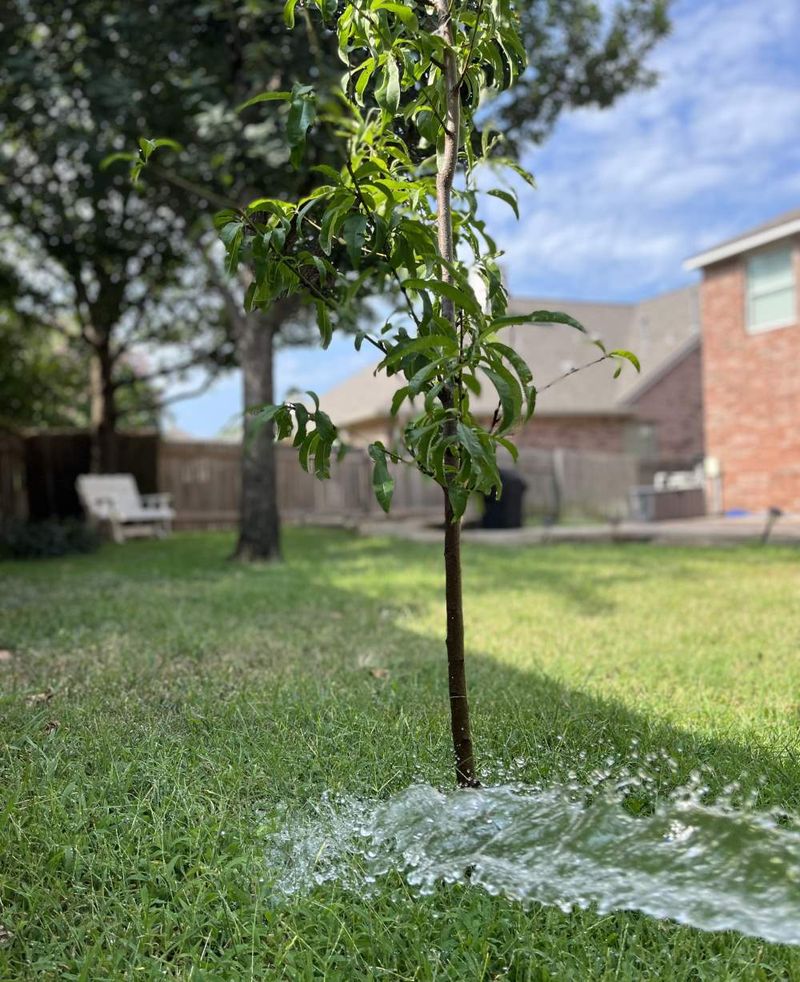
Central Texas summers routinely deliver weeks of triple-digit heat with little or no rainfall, and that combination stresses trees in ways that no amount of deadheading can address. When soil stays dry for an extended period, crape myrtles become more vulnerable to pest pressure and disease, and the tree’s ability to push new growth and flowers drops significantly.
Checking soil moisture and watering deeply during prolonged dry spells addresses a more direct, documented tree-health risk, while deadheading mainly offers a chance for more current-season flowers.
Austin’s tree-health guidance notes that drought-stressed trees are more vulnerable to pests and disease, and recommends watering deeply and infrequently rather than relying on brief lawn irrigation cycles that wet only the top inch or two of soil. The goal is to move water slowly through the root zone, which extends outward well beyond the tree’s canopy edge, not to flood the base of the trunk.
How often to water depends on your specific situation. Austin guidance on helping thirsty trees suggests that most trees benefit from watering when they have received less than about 1 inch of rain over a week, but soil type, tree age, drainage, and site conditions all change that calculation.
Shallow, rocky, or sandy soils dry out faster than deeper clay soils. Newly planted and young trees need more frequent attention than established trees, which have deeper root systems capable of accessing moisture further down.
Check the soil before watering rather than following a rigid calendar. Push a screwdriver or a finger a few inches into the ground in the root zone.
If the soil feels dry and crumbly at that depth, it is time to water. If it still feels cool and slightly damp, give it another day or two.
Apply water slowly across the root zone using a soaker hose, drip line, or hose set to a trickle, and keep it running long enough to wet the soil several inches deep.
Mulch helps hold that moisture in place. Roughly 2 to 4 inches of wood-chip or shredded mulch spread across the root zone slows evaporation and moderates soil temperature.
Keep the mulch several inches away from the trunk itself, because mulch piled against bark can trap moisture against the wood and contribute to decay over time. That small gap between the mulch ring and the trunk is an easy detail to get right and worth maintaining each time you refresh the layer.
Skip automatic fertilizer and monitor common problems
Late August is not the moment to reach for a bag of fertilizer and scatter it around the root zone hoping for more flowers. Texas A&M’s Earth-Kind guidance on fertilizing woody ornamentals generally advises avoiding fertilizer from August until late fall.
The reasoning is practical: late-season fertilizer can push a flush of soft new growth that does not have time to harden before cooler temperatures arrive, leaving tender tissue more exposed to cold injury. Soil testing and a close look at the plant’s actual condition should guide any fertilizer decision, not a calendar date or a desire for more blooms.
A limited exception exists for parts of South Texas where freeze damage is minimal, but Central Texas gardeners should treat late-summer fertilizing as a step to skip unless a soil test and local expert guidance point specifically toward a deficiency.
While you are out in the yard, use the visit as a chance to look the tree over for a few common problems. Powdery mildew shows up as a white or gray powdery coating on leaves, usually in spots with poor air circulation.
Texas A&M AgriLife Extension’s guidance on powdery mildew on crape myrtles points to good air circulation, mildew-resistant cultivar selection, and sucker removal as practical management considerations. Aphids cluster on new shoot tips and can be knocked off with a firm spray of water in many cases.
Neither problem automatically calls for a pesticide application in late August.
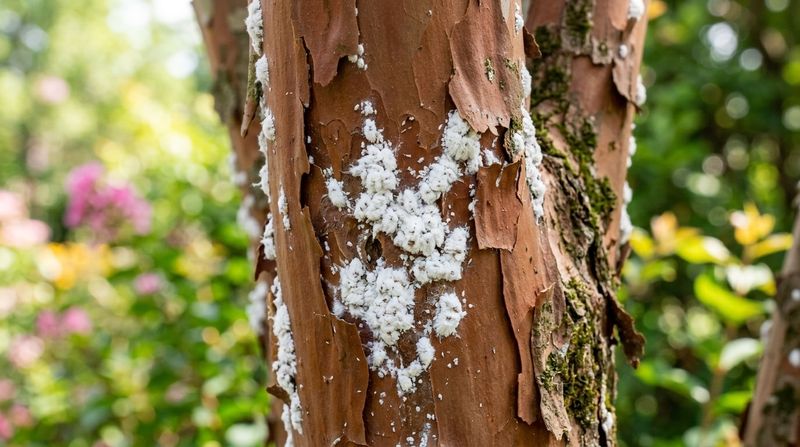
Crape-myrtle bark scale deserves a closer look if you notice white, waxy deposits clustered near branch crotches or at the base of smaller limbs, often accompanied by black sooty mold on the bark and leaves below. Texas A&M AgriLife Extension’s bark scale fact sheet identifies this pest as a serious ornamental concern that produces honeydew, which feeds the sooty mold.
However, a late-August pesticide application is not a reliable rescue measure. Texas sources identify May and mid-May as the more effective treatment timing for the next cycle.
Any treatment decision requires confirming the pest’s identity, reading and following the current product label, protecting pollinators, and checking local regulations before applying anything.
Choose the task that matches your goal
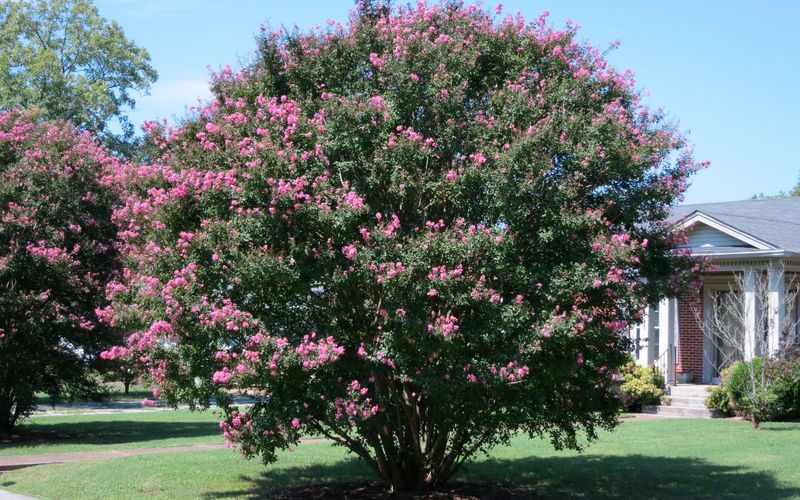
Two different goals call for two different actions right now. If you want to try for more flowers before fall, and your tree has clearly finished blooming, still shows active growth, and has several weeks of warm weather ahead, go ahead and remove the reachable spent clusters with clean hand pruners.
Cut just above a leaf joint or lateral bud, leave all major limbs alone, and stay on the ground. Extension guidance on crape myrtle culture supports this as an optional step toward possible rebloom, not a guaranteed result or a health requirement.
If your goal is to keep the tree healthy through a dry stretch, check the soil moisture in the root zone first. Austin’s tree-health resources are clear that drought-stressed trees face real, documented risks, and that deep, infrequent watering across the root zone addresses those risks more directly than any flower-management task.
No August deadline determines how well a healthy crape myrtle performs next year. Major pruning waits for late winter.
Fertilizer waits for soil-test results and cooler months. A crape myrtle that gets the right amount of water at the right time, and is left structurally intact, is already set up for a strong season ahead.