
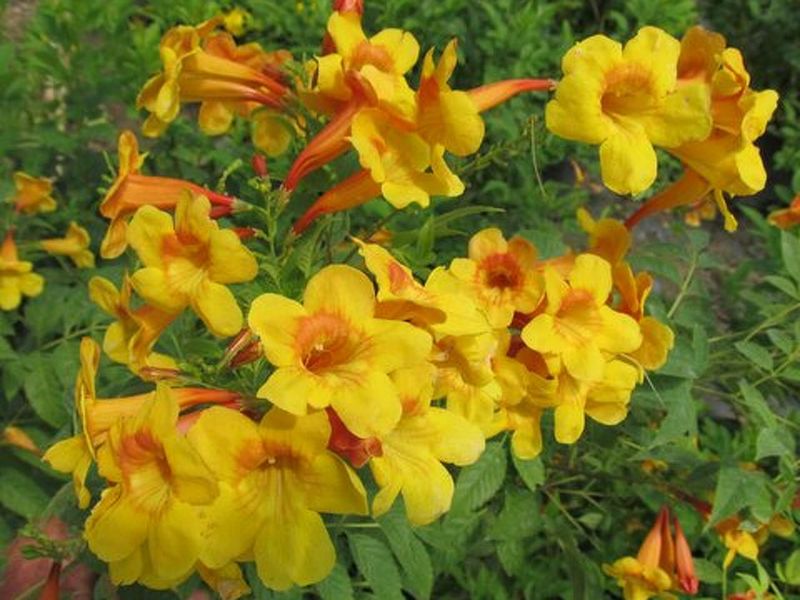
Every summer, Texas yards light up with the electric yellow flowers of Esperanza, and then, right around the hottest weeks, those blooms start fading and long seed pods take their place. What you do at that moment can make a real difference in how long your plant keeps flowering. Removing those spent clusters and developing pods is a simple task that may help encourage another flush of blooms, and in warm parts of Texas, that can mean color stretching well into fall. The catch is that no single midsummer cleanup guarantees flowers through November, because results depend on your cultivar, your site, and when your first freeze arrives.
Start with selective deadheading when flowers fade
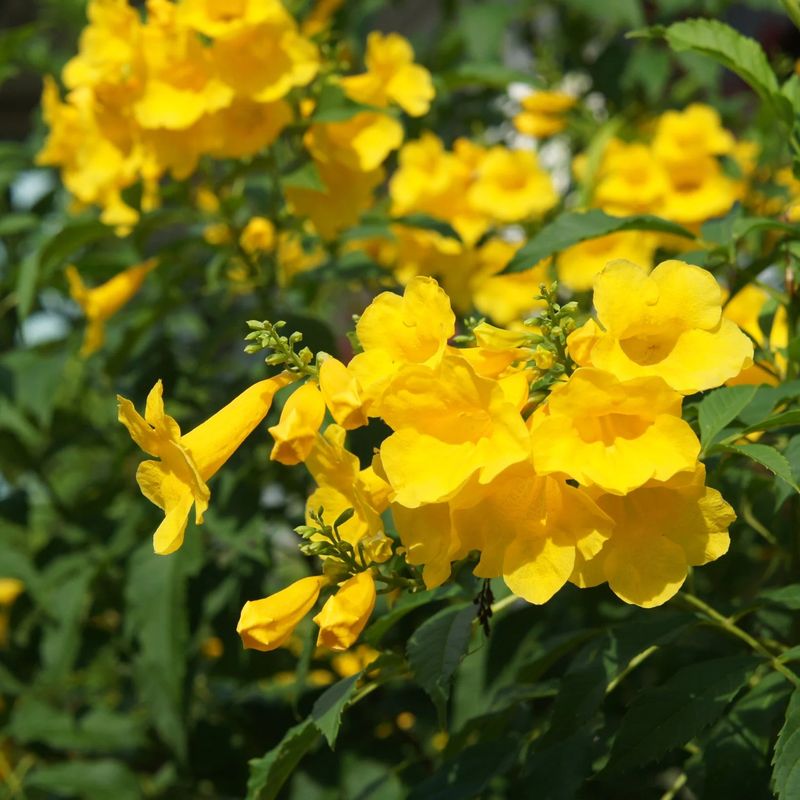
Esperanza, known botanically as Tecoma stans and commonly called yellow bells, is one of the hardest-working flowering shrubs in Texas landscapes. Texas A&M’s range plants guide identifies yellow bells as a perennial shrub or small tree found across Texas, especially in South and West Texas, with a strong preference for full sun and well-drained soils. Knowing exactly which plant you have matters, because the name “Esperanza” covers a range of forms and cultivars that can differ in size, cold hardiness, and bloom timing.
The midsummer task that can help maintain flowering is straightforward: inspect your plant regularly once peak bloom begins to wind down, and remove faded flower clusters along with the elongated, bean-like seed pods forming behind them. Leave all the healthy green stems and leaves exactly where they are. You are not reshaping the shrub or cutting it back hard; you are doing a light, targeted cleanup focused only on spent reproductive material.
Texas A&M guidance on Gold Star Esperanza specifically connects removing fruit after flowering with renewed blooming, which gives this practice real horticultural backing. That said, the right time to act is whenever you see flowers fading and pods beginning to develop, not a fixed calendar date. Midsummer is a reasonable window for most of Texas, but the plant tells you when it is ready.
Remove spent clusters and pods, not productive stems
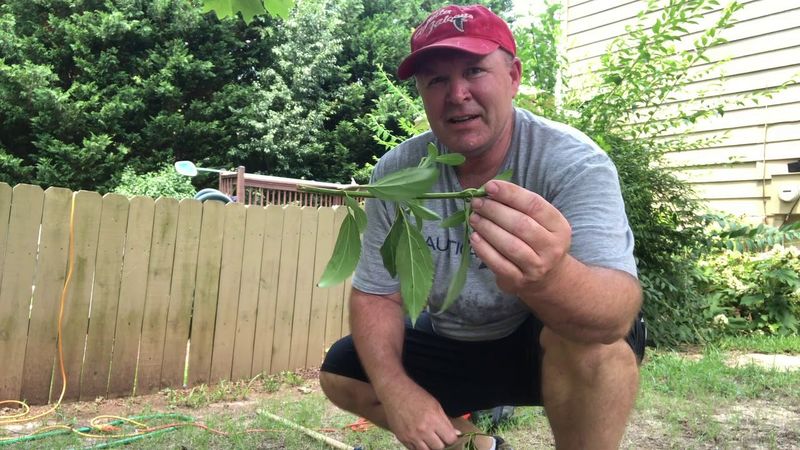
Grab a pair of clean, sharp hand pruners or snips before you start. Dull or dirty tools can crush stems and introduce disease, so wipe the blades with rubbing alcohol if you have been working on other plants. Then trace each faded flower cluster back to where it meets a healthy green stem and snip it off cleanly, taking the developing pod with it if one has already started forming behind the bloom.
The pods on Esperanza are hard to miss. They look like slender, green bean pods, sometimes several inches long, and they hang in clusters where the flowers were. Those pods are actively drawing energy as the plant works to mature seeds inside them. Removing them while they are still green and undeveloped is the point of the exercise, since a pod that has already turned brown and dry has largely completed its job.
What you should not do is strip away large amounts of healthy, leafy growth just to tidy the shape of the shrub during peak flowering season. Texas A&M Earth-Kind pruning guidance explains that timing and technique matter: plants that flower on new growth are generally pruned in late winter or early spring to stimulate new shoots, while midsummer intervention should be far more conservative. A hard summer cutback on a flowering Esperanza risks removing productive growth and temporarily reducing blooms rather than extending them. Keep the cleanup light, keep the green stems, and let the plant redirect its energy toward new flower buds rather than seed production.
Deadheading may support another flush
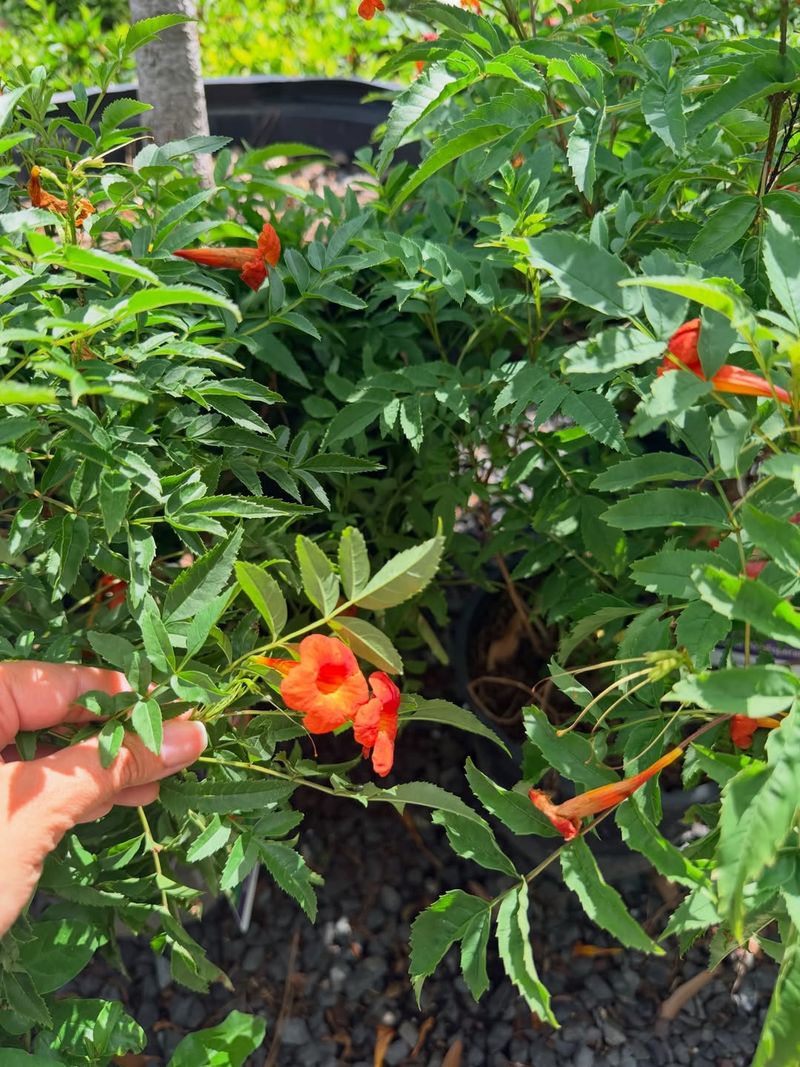
Plants that produce flowers are ultimately working toward one biological goal: making seeds. When a flower fades and a seed pod begins developing, the plant is already shifting resources toward that process. Removing the spent flower and the young pod before it matures may interrupt that shift and free up some of the plant’s energy for producing new flower buds instead.
Extension guidance on deadheading explains that removing spent flowers can reduce seed production and encourage additional blooms in many garden plants. The same guidance notes that some continuous-blooming plants will keep flowering even without regular deadheading, so the practice is useful but not always the deciding factor. For Esperanza, which Texas A&M associates with rebloom after fruit removal, the technique has direct support rather than being purely theoretical.
Still, framing this as a guaranteed trigger overstates what the evidence actually shows. Deadheading is a maintenance practice that removes a competing demand on the plant’s resources, and it may tip the balance toward more flowers under favorable conditions. It is not a switch that forces rebloom regardless of sunlight, water, soil quality, or plant health. Think of it as removing an obstacle rather than hitting an accelerator.
A well-sited, well-watered Esperanza that receives regular light cleanup during midsummer has a better chance of staying in active flower production than one left to direct all its energy into maturing a full crop of seed pods.
Full sun and drainage determine the plant’s potential
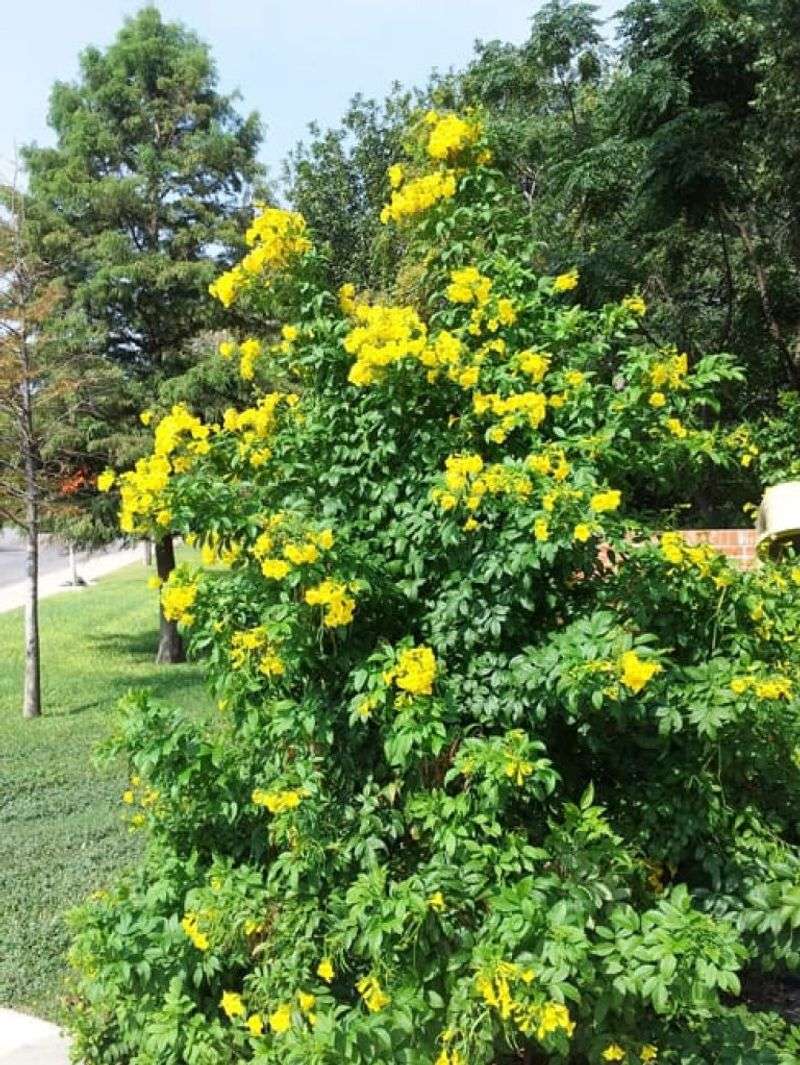
Deadheading a plant growing in the wrong spot will not unlock its full flowering potential. Before expecting midsummer cleanup to extend your bloom season, check two non-negotiable baseline conditions: sun exposure and soil drainage. Texas A&M’s yellow bells profile is clear that the species prefers full sun, and every major Texas source echoes that preference.
“Full sun” in a Texas August is not the same as full sun in a milder climate. It means six or more hours of direct, unfiltered sunlight per day, often in triple-digit heat that would stress most ornamental shrubs. Esperanza is built for exactly those conditions. A plant receiving significant afternoon shade, especially in the Central or South Texas heat, will typically produce fewer flowers and may not respond as well to any midsummer maintenance you perform.
If your Esperanza is under a tree canopy or shaded by a structure for a good portion of the day, that is a site problem no amount of deadheading can fix.
Soil drainage is equally critical. Bexar County Texas A&M guidance and the broader Texas Superstar program both describe Esperanza as heat- and drought-tolerant once established but intolerant of persistently wet or poorly drained soils. Heavy clay soils common in parts of North and Central Texas can hold water around the roots longer than the plant wants, especially after summer storms. Raised beds, amended planting areas, or naturally rocky or sandy soils give the roots the drainage they need to stay healthy through the season.
A plant sitting in soggy ground is already under stress, and a midsummer cleanup will not compensate for that.
Water according to the site, not the calendar
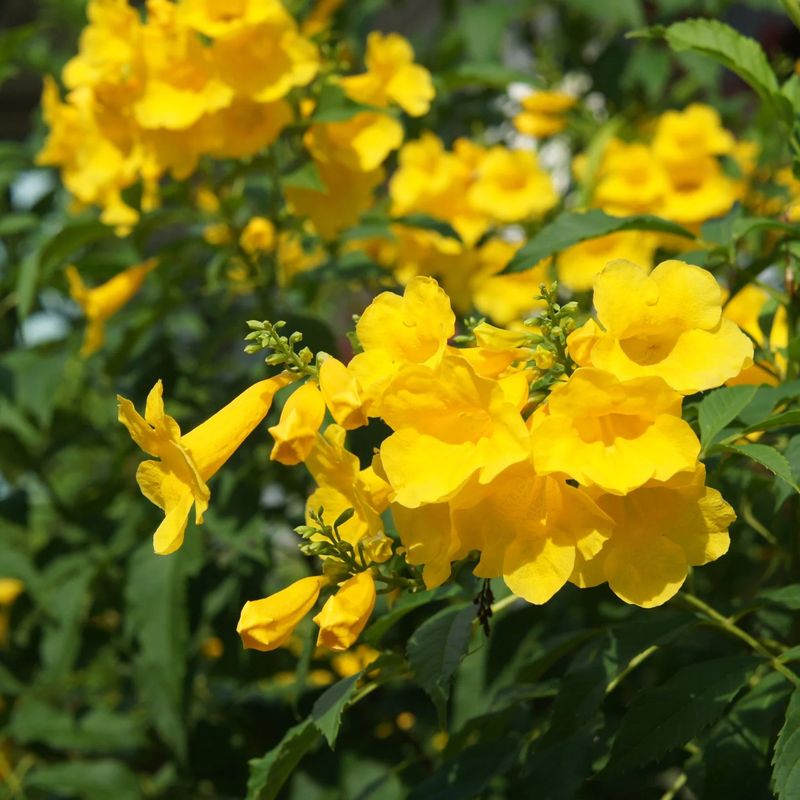
Irrigation advice for Texas gardeners has to start with one firm rule: check your local water utility’s current restrictions before setting any schedule. The Texas Water Development Board confirms that drought restrictions are managed locally by water suppliers and utilities, which means what is allowed in San Antonio may differ from what is permitted in Dallas or El Paso. Generalized watering schedules cannot override those local rules.
Within whatever schedule your utility allows, the goal for an established Esperanza is thorough, infrequent watering rather than frequent shallow sprinkles. Texas Water Development Board water-wise irrigation guidance recommends watering deeply to encourage roots to grow downward, irrigating in the early morning to reduce evaporation, and applying mulch to retain soil moisture between waterings. Those practices apply well to Esperanza, which develops a deep root system as it matures and becomes more capable of handling gaps between rain events.
For the cultivar Gold Star specifically, Texas A&M’s Gold Star Esperanza profile notes that weekly watering during the hottest periods may be needed to promote blooms when rainfall is insufficient. That guidance applies to this particular cultivar under specific conditions, not to every Esperanza in every Texas yard. Container-grown plants, newly established specimens, and plants in sandy or fast-draining soils will dry out faster than mature plants in the ground. Adjust based on what you observe: wilting in the early morning, not just midday heat stress, is a more reliable signal that water is actually needed.
One thing to skip entirely is reaching for heavy fertilizer as a quick way to push more flowers. The Texas Water Development Board recommends moderate fertilization and warns that excess fertilizer increases water demand and can contribute to runoff. A plant in good soil with adequate sun and appropriate watering does not need a fertilizer push to bloom; it needs the right conditions maintained consistently.
November flowers depend on cultivar, region, and frost
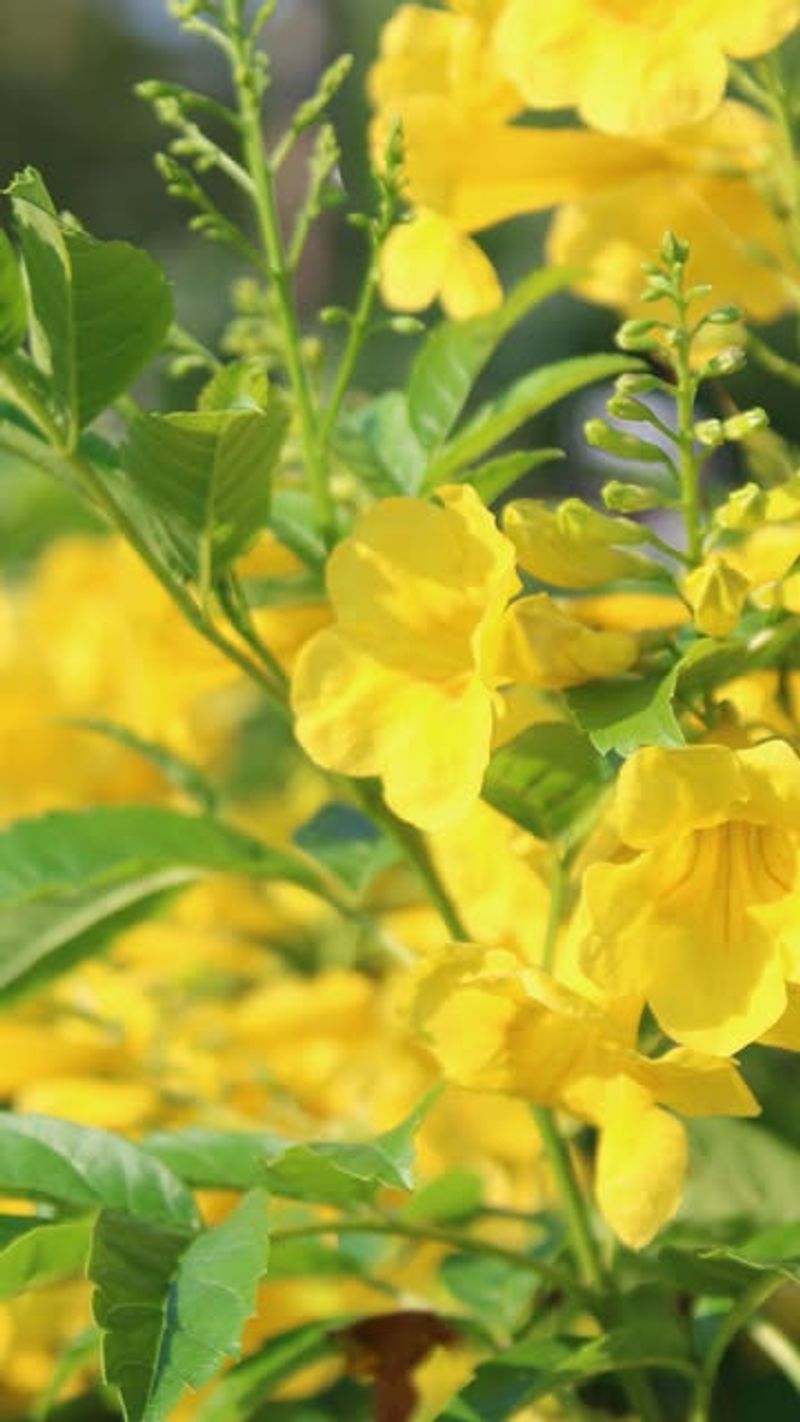
The possibility of Esperanza flowers lasting into November is real in parts of Texas, but it is not automatic, and it is not produced by midsummer deadheading alone. Texas Superstar’s Gold Star Esperanza page documents the cultivar’s bloom period as early summer through frost, which genuinely can extend into November in warm, frost-free or late-frost areas. Gold Star is rated for Zone 9, which covers the Gulf Coast and South Texas, where hard freezes arrive later or sometimes not at all in a given year.
North Texas gardeners are working with a different set of conditions. In colder parts of the state, Esperanza may die back to the ground after a hard freeze, regrow from the roots the following spring, and spend the early part of summer regrowing before it reaches blooming size again. A plant that spent winter recovering and spring regrowing may not reach peak flower production until later in summer, which can shift the entire bloom window. November flowers are less likely in those areas, though a mild fall can always extend the season unexpectedly.
The name “Esperanza” also covers more than one plant. Native Plant Society of Texas materials distinguish narrow-leaved native forms from broader-leaved tropical types and named cultivars, each with different cold tolerance and bloom characteristics. A large, untamed specimen growing in a South Texas hedgerow behaves differently from a compact Gold Star in a San Antonio container. Applying one plant’s performance expectations to another leads to disappointment.
Gardeners who want to save seed should hold back from removing every pod. North Carolina Extension’s yellow trumpetbush profile notes that seed pods are collected in late summer or fall after they have turned brown. Leave a few pods to mature fully if propagation is your goal, and focus your cleanup on the younger, still-green pods that have not yet reached that stage.
Use a light cleanup now and save hard pruning for later
Putting this all together into a practical routine is straightforward. First, confirm what type of Esperanza you have if possible: a named cultivar like Gold Star behaves differently from an unknown seedling or a large native form, and knowing your plant helps set realistic expectations for the season. Then, starting whenever midsummer flowers begin fading and green pods appear, work through the plant with clean snips and remove those spent clusters and young pods. Leave every healthy green stem exactly where it is.
Pair that cleanup with a site check. Confirm the plant is getting full sun and that water is draining away from the root zone rather than pooling. Adjust your irrigation to match actual soil moisture, recent rainfall, your plant’s establishment status, and whatever schedule your local utility currently allows. Texas Water Development Board water-wise guidance is a reliable starting point for building those habits.
The goal of all of this is to support continued flowering through the season, not to force blooms onto a specific calendar date.
Post-freeze pruning is a completely separate job that belongs months from now. Austin’s plant guide recommends cutting cold-damaged Esperanza back to roughly 6 to 8 inches, but only after the damage is clear and before new spring growth begins. Cutting too early after a freeze can remove tissue that might still recover. Midsummer deadheading and post-freeze cleanup are different tasks with different timing, different tools, and different goals.
The plant that gets the right care at the right time, a light touch now and a proper reset after cold damage if needed, is the one most likely to reward you with a long, colorful season.