

Before you grab the rake this November, take a quick look at the leaf piles and soft soil in your yard. An eastern box turtle could be tucked under that cover for the cold months, though no one can say whether your yard has one.
A few small habits can keep a routine chore from becoming a surprise for a hidden animal. Here is how to clean up with a little extra care.
November Does Not Put Every Box Turtle to Sleep
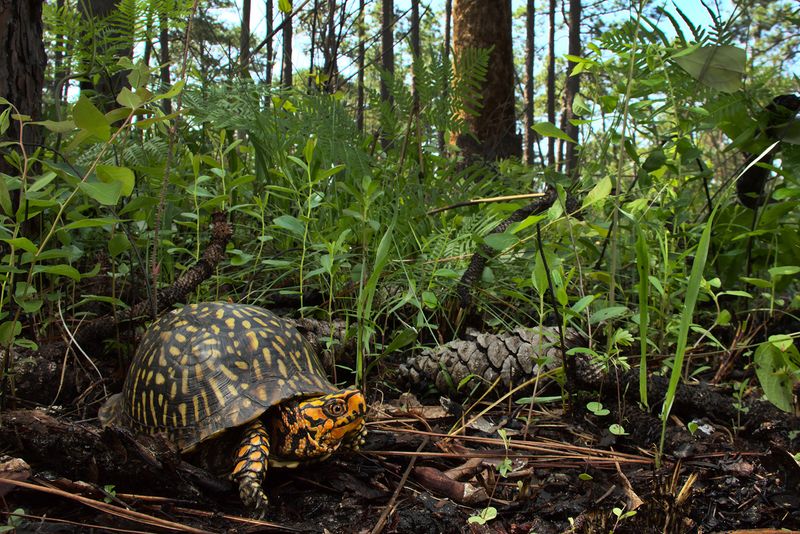
Eastern box turtles live all across North Carolina, and NC Wildlife says they use many settings, including neighborhoods. The state parks reptile reference also lists suburban backyards among their habitats.
Still, a habitat is only a possibility. Nobody can tell from a map whether a turtle lives in your particular yard.
Winter is when box turtles typically go dormant in soil or leaf litter. The word “sleeping” is a handy shortcut, but the better term is brumation, a cold-season slowdown that is not the same as one long, unbroken nap.
Turtles may stir during warm spells, so a mild day in the middle of winter could bring one out.
November works well as a reminder, but it is not a switch that flips on a set date. A species profile from NC Wildlife notes that first frost usually ends the active season, and that box turtles have been seen in every month of the year.
The sources also give no single dormancy schedule for the mountains, the Piedmont, and the coastal plain, so a fixed calendar would be a guess.
So what should you take from all this? Treat fall cleanup as a time to look first, without assuming a turtle is there and without assuming every turtle is already tucked in.
A habit of checking costs only a minute or two.
Where a Turtle Could Be Sheltering
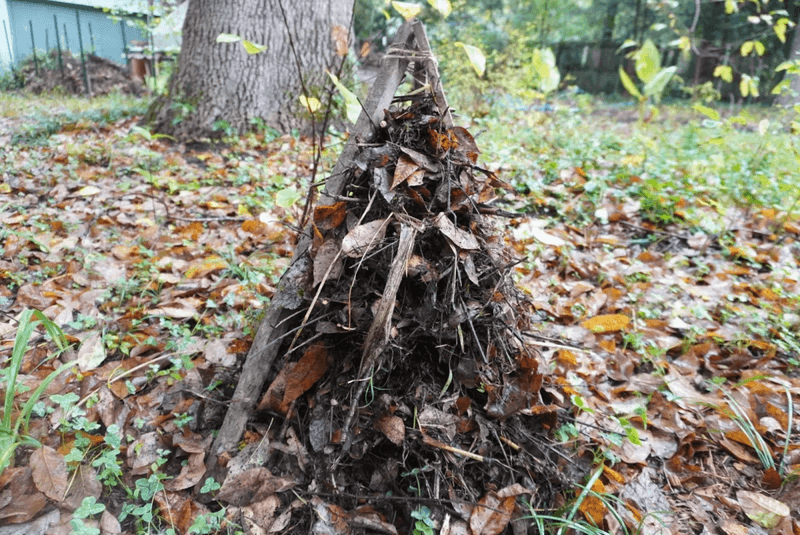
Cold-weather cover for a box turtle can be surprisingly ordinary. According to the U.S.
Forest Service, box turtles use leaf litter, soft soil, brush, and woody debris for shelter and overwintering. A turtle may settle just below the soil surface, which is why loose ground deserves a second look.
Picture where those materials show up at home. Think of the leaf layer under a shrub, the mulched edge of a flower bed, a brush pile behind the shed, or a rotting stump near the fence line.
Each one is possible cover, though none is proof that an animal is inside.
The state parks reptile reference describes hardwood forests as the primary habitat, with fields and other settings used as opportunities arise. A yard that backs up to woods, a creek, or an overgrown lot may be more appealing than a bare, fenced lawn.
Even then, the answer is only maybe.
None of this means you have to let your whole property go wild. A tidy front lawn and a looser back corner can happily share a lot.
Keeping a few quiet, sheltered spots gives wildlife some cover while the rest of the yard stays usable.
Yard Work Could Disturb Hidden Wildlife
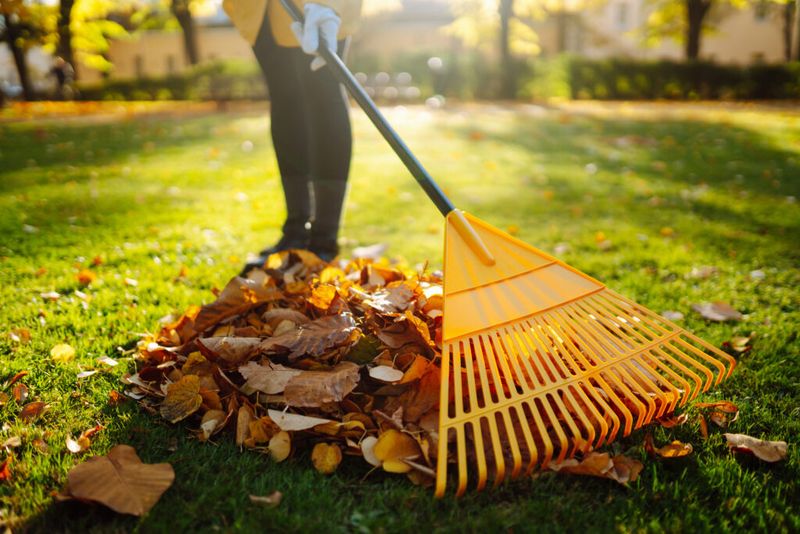
Put the two ideas together and the concern becomes clear. If a turtle is sheltering in leaves or shallow soil, raking, digging, or tilling in that spot could disturb it.
That is a reasonable possibility, not a prediction.
Nobody has measured how often ordinary home-yard work turns up a box turtle. The research does not quantify it, and no single chore can be pinned as a proven cause of injury.
A gentle approach is simply cheap insurance.
Timing matters too. Because box turtles have been seen in every month of the year, a turtle in your yard might be dormant or might be moving on a warm day.
Either way, shallow overwintering spots make a slower, more watchful start worthwhile.
Try a simple routine before you begin. Walk the area and scan the ground.
Peel back the top of a leaf pile by hand, and work from one edge to the other rather than plunging in. Pause if you see something that looks like a rounded, domed shell.
Ten quiet minutes can be enough to look over a bed or brush pile, and it may spare an animal a rough surprise.
Clear the Yard More Gently
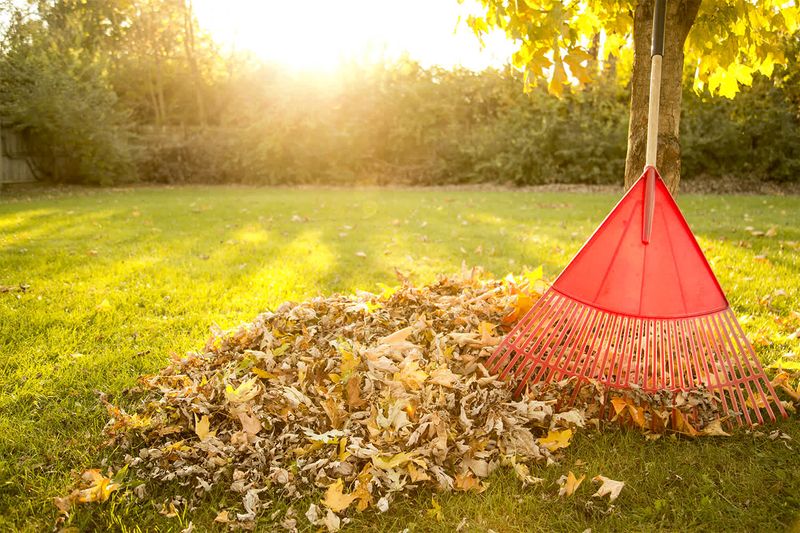
Plenty of fall chores can be done with a lighter touch. If leaves need to move, a hand rake is a kinder choice than heavy machinery.
The U.S. Fish and Wildlife Service says raking is less harmful to wildlife living in leaves than tools such as leaf blowers.
That is general wildlife guidance, and it does not promise that a rake will protect a turtle.
Instead of bagging every leaf, shift some off the turf and into beds or under trees. A National Wildlife Federation tip sheet suggests this approach and mentions a leaf layer of about 3 to 5 inches.
Treat that number as general wildlife-gardening advice, not a depth that box turtles need.
Your lawn still comes first, so keep grass clear where it needs light. Leaves tucked into beds can also break down and feed the soil, which helps the garden too.
Leave a few woody features as well, such as a modest brush pile or a fallen limb in a back corner. Box turtles use brush and woody debris for shelter, so those spots may offer useful cover.
Pick the places that make sense for your property. A little cover in the right spot is a practical compromise, and it will not guarantee anything.
What to Do If You Find a Turtle
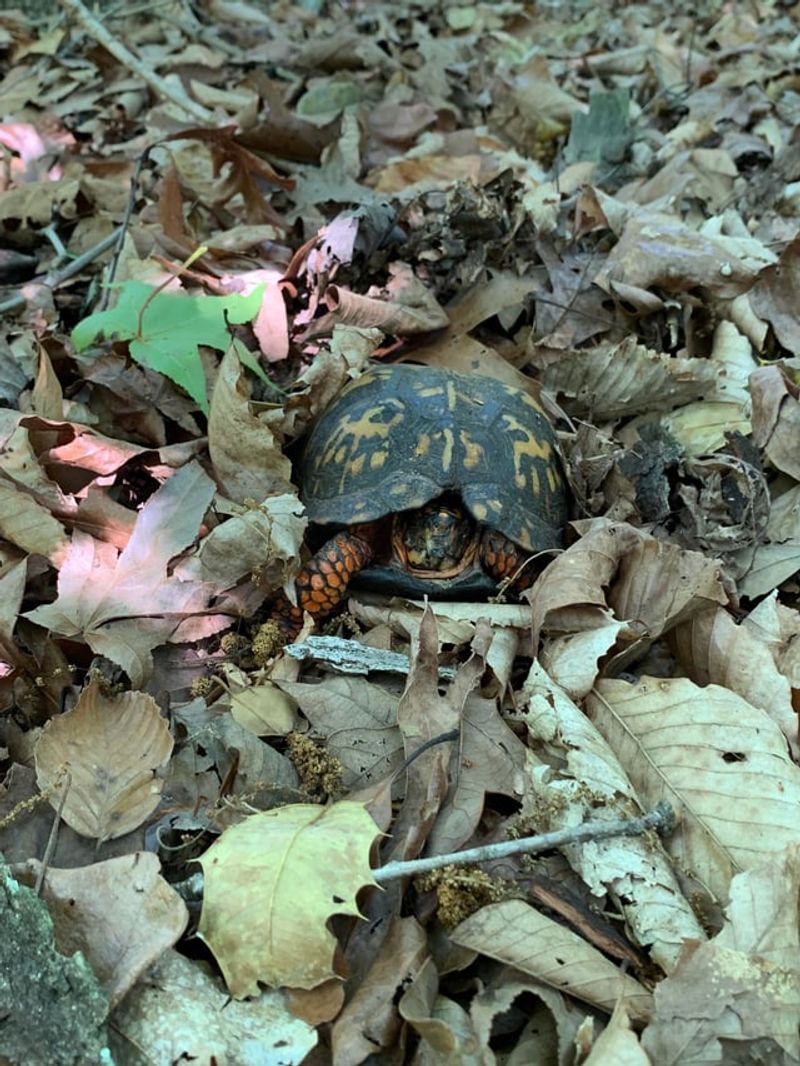
If a turtle turns up, stay calm and stop what you are doing. Take a moment to look at the animal and the spot around it.
A turtle that is simply sitting in cover usually needs nothing from you.
Do not take it home or carry it somewhere else. NC Wildlife advises against relocating box turtles because of their homing behavior, so a drop-off at a park or woods is not a favor.
If one is in immediate danger, such as in the path of a mower or on a busy road, move it the shortest distance possible, ideally under 50 feet.
An injured turtle is a different case. Contact a licensed reptile rehabilitator for guidance, and keep the animal quiet and safe while you make the call.
As for the law, the wording is specific. NC Wildlife says the species has no open season and cannot be hunted or trapped, and that taking, possessing, purchasing, or selling five or more is unlawful, while possessing fewer than five is not recommended.
That is not the same as saying that seeing or briefly touching a turtle is illegal.
Finally, wash your hands. The CDC warns that people can pick up Salmonella from turtles or their environment and then spread it by touching their mouth or food.
Soap and water after any contact is a simple precaution.
Make the Next Cleanup More Careful
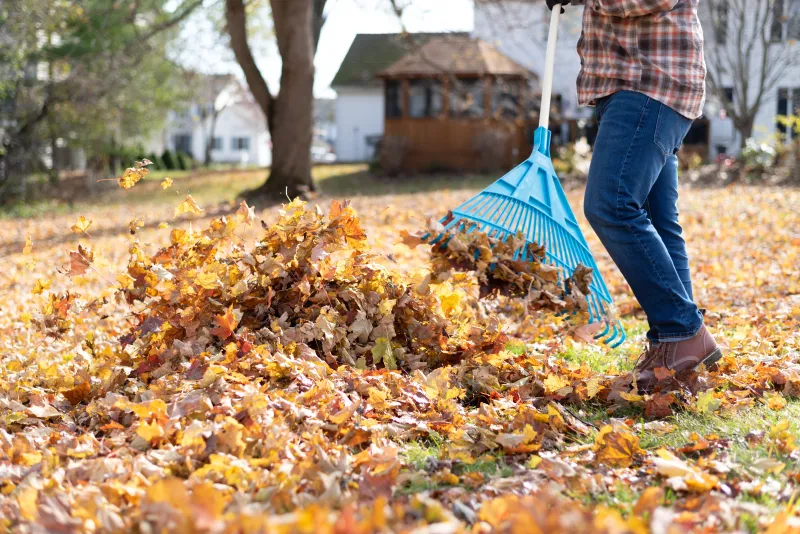
A careful cleanup comes down to three habits. Look before you disturb leaves or soil, pick gentler tools such as a hand rake where practical, and leave a bit of suitable cover in a quiet corner.
These are precautions, not proof that a turtle is there, and they cannot prevent every surprise.
If one does appear, follow NC Wildlife guidance and keep it close to where you found it. Sometimes the best yard work is the kind that leaves a little room for whatever lives there.