
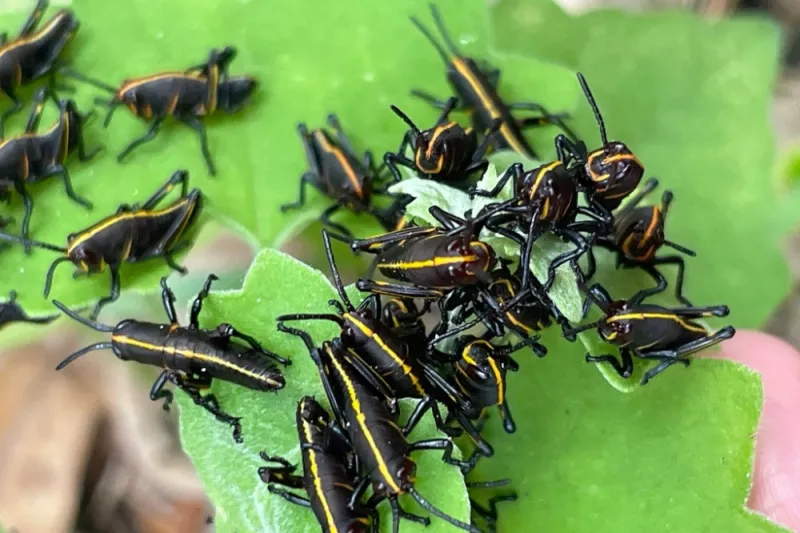
Those chunky black grasshoppers with bright stripes that show up in Florida yards each spring have a hidden start. They begin as eggs tucked underground the season before.
Fall egg-laying does happen in parts of Florida, but the timing is not the same everywhere. Here is how the cycle works and what you can realistically do about it.
Fall can be part of the egg-laying window, not a statewide deadline
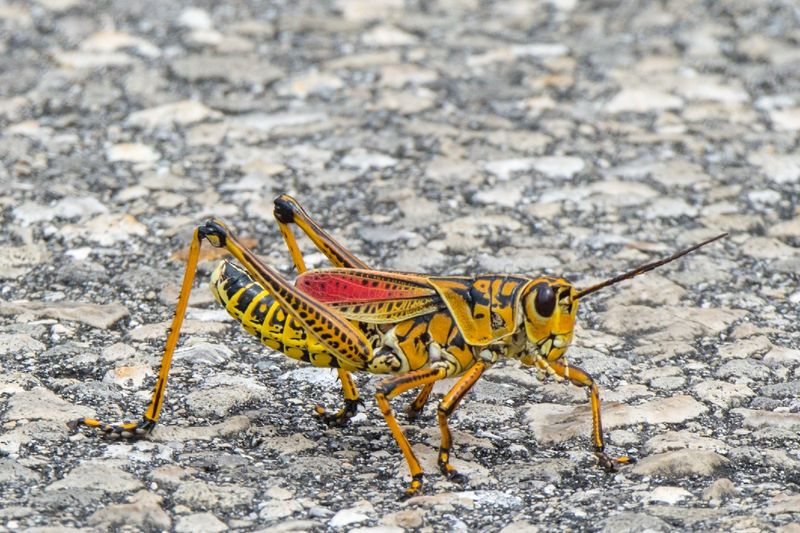
Eastern lubbers follow a simple yearly loop. Females lay egg pods underground, the eggs spend the cooler months in the soil, and nymphs emerge in spring.
That is the part you can count on.
The calendar is where things get fuzzy. UF/IFAS describes egg-laying timing as highly variable, so it is not accurate to say that every female in Florida is laying the eggs for this spring’s hatch right now.
Some are, in some places, and others are on a different schedule.
Region matters a lot. In northern Florida and along the Gulf Coast, adults can stick around through October or November, and numbers there peak in July and August.
That leaves a fall window for egg-laying in those areas.
Southern Florida runs on a looser clock. Nymphs or adults can be present for much of the year, so you may see insects at different life stages at once.
A neighbor’s yard in Pensacola and yours in Miami are probably not at the same point.
Individual females differ too. Not every egg hatches on one schedule, and not every yard will end up with a big group of nymphs.
Think of fall as one possible stretch of the egg-laying season, not a statewide deadline.
Where lubbers bury their egg pods
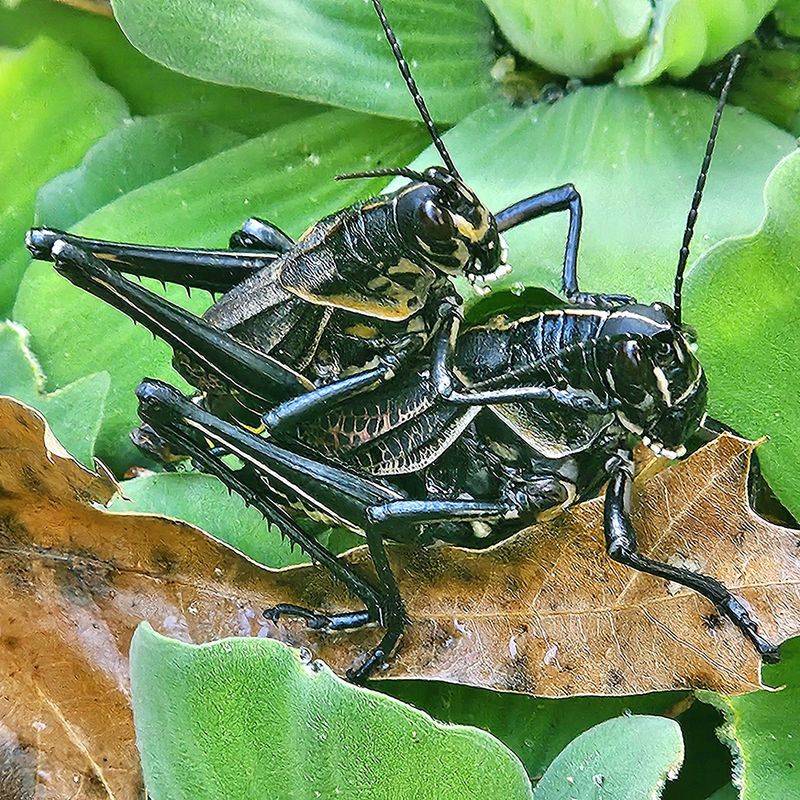
Lubber egg pods are not sitting out in the open. Females push their abdomens into the soil and bury each pod about 1.2 to 2 inches deep.
A pod holds roughly 25 to 50 eggs and is sealed with a frothy plug, according to the UF/IFAS species account.
Females are also picky. They favor open, sunny sites with suitable soil.
They tend to avoid very moist, compact lowland soils and very dry, sandy upland soils.
So the answer to “which bed?” is not “any bed.” A shady, soggy corner or a dry, loose sand patch is a less likely spot than a sunny, open area with workable soil, such as a sunny edge along a lawn or roadside.
Put those details together and you can see why pods are easy to miss. They are small, covered with soil, and spread across places that look like ordinary dirt.
Nothing on the surface tells you a pod is below.
This is background, not a reason to start digging up your yard. Random excavation can disturb roots and soil without turning up a single pod.
Why digging up pods is not a dependable prevention plan
Here is the straight answer. If you did find a pod and break it up, you would remove its eggs.
But the UF/IFAS guidance reviewed does not list pod-hunting as a standard control, and nothing there shows homeowners can find pods reliably or that destroying them cuts spring numbers.
Several things work against the idea. Pods are buried and hidden, and egg-laying timing varies, so you cannot be sure when or where to look.
A female can also lay more than one pod, and UF/IFAS reports 1 to 3 pods per female under field conditions.
Then there is movement. Young lubbers can disperse from where they hatch, so nymphs in your yard may not have come from a pod in your yard, and a pod in your yard may send nymphs next door.
Say you found and destroyed one pod. Another could be a few feet away, or on a neighbor’s lot, and you would never know.
That is why no one can honestly promise that breaking up one spot prevents next spring’s problem.
Your time is better spent on what you can actually see, which is the nymphs and adults above ground.
Spring nymphs can emerge in groups near food
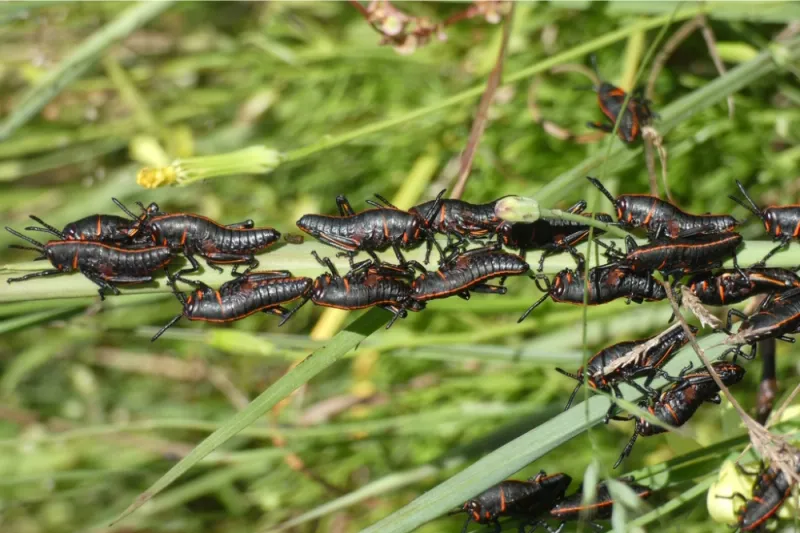
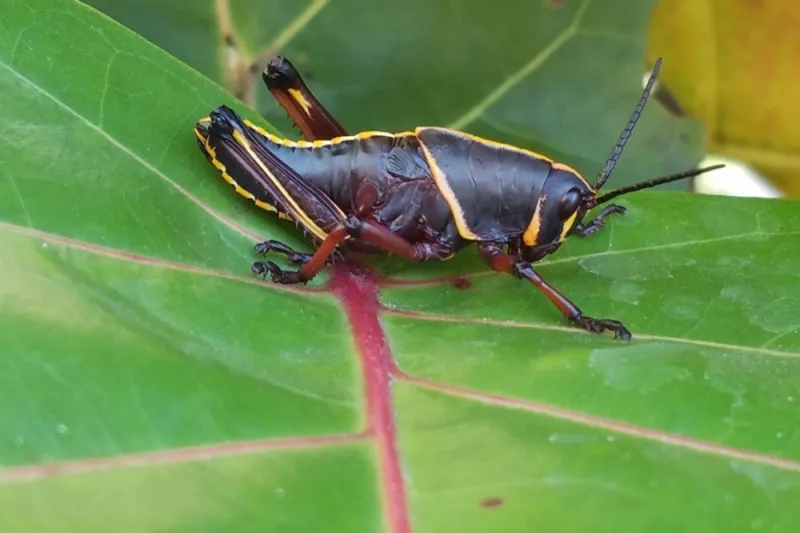
Come spring, the young lubbers are called nymphs. Most are black with a yellow, orange, or red stripe, though not every one looks the same, so do not expect a perfect black-and-orange pattern on each.
Newly hatched nymphs can emerge in groups, and UF/IFAS describes young lubbers as gregarious. They tend to gather near food, so you may spot a hatchling cluster munching on a favorite plant.
Gardeners sometimes call this a swarm, but that word suggests migrating locusts, and lubbers do not behave that way. They are slow, heavy-bodied walkers that crawl rather than fly in clouds.
Not every yard sees a big group. Some gardens get a few stragglers and others get a crowded patch, depending on where pods were laid and how nymphs spread out.
The best clue is a small crowd of dark, wingless insects on tender new growth. That is your cue to start scouting.
Manage visible lubbers with scouting and targeted action
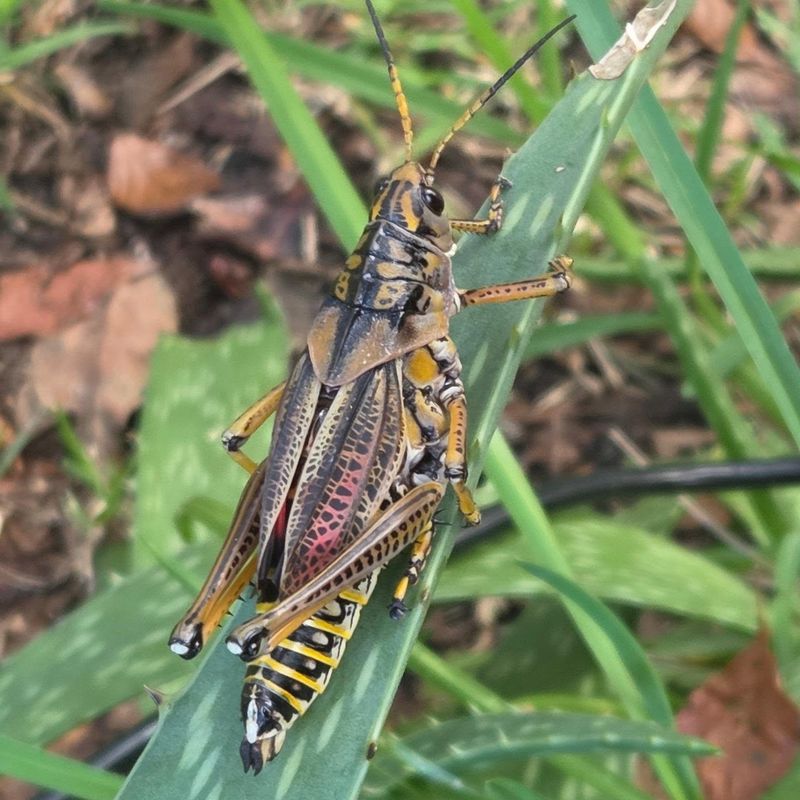
Start by walking your beds regularly in spring and looking for nymphs. Catching a small group early is much easier than dealing with large adults later.
UF/IFAS Gardening Solutions supports this kind of integrated approach.
You can hand-pick lubbers, or shake or dislodge them from plants. One UF/IFAS expert suggests wearing gloves and dropping the insects into soapy water, then putting them in a sealed bag for disposal.
These are options, not guarantees of getting rid of every one.
Lubbers can produce defensive toxic secretions, and vertebrates can be harmed after eating them. Keep pets and kids from chewing on them, and note that no pet-specific protocol was in the reviewed sources.
Plant choice and mowing can help. Consider less-preferred host plants in spots where lubbers cause trouble, and mow border vegetation where they gather.
As for sprays, UF/IFAS says insecticides are generally unnecessary and often ineffective, especially on adults. If you still consider one, follow the label closely, since insecticides can harm bees and aquatic organisms.
Skip routine blanket spraying.
Plan for scouting, not a guaranteed pod hunt
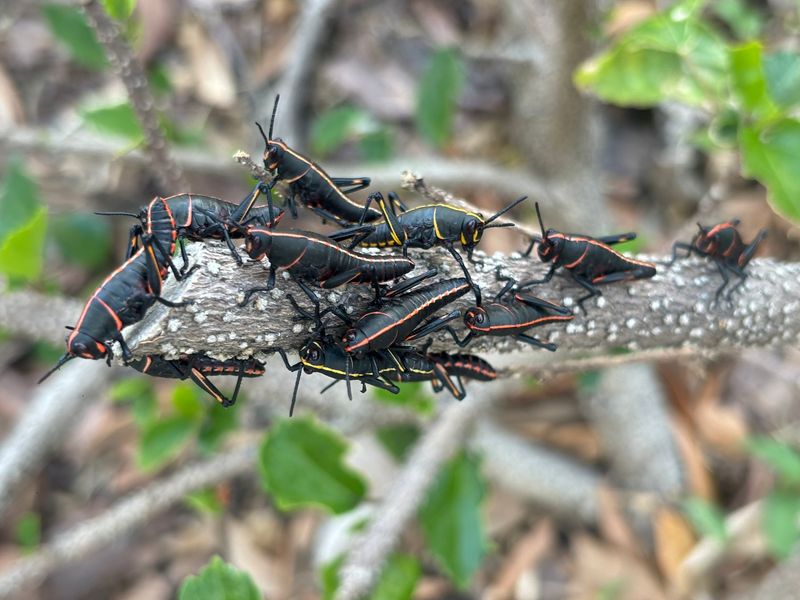
Lubbers hatch in spring because their eggs sat underground through the cooler months, and some of those eggs were laid in fall in parts of Florida. You do not need to find the buried pods to act on that knowledge.
What you can do is watch your plants each spring and respond when you spot nymphs. Destroying one pod, even if you found it, would not guarantee a quiet season.
A garden walk with gloves beats a shovel hunt every time.