
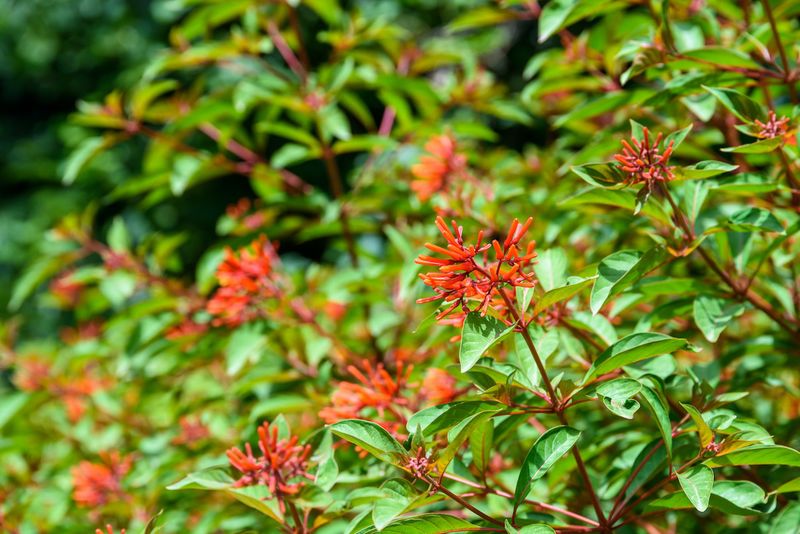
As Texas nights cool off, the orange-red flowers on a firebush can still be glowing in the garden. Those tubular blooms hold nectar that hummingbirds may stop by for during fall.
A few simple choices now can protect the flowers already on the plant. Here is what to do, what to skip, and what the weather decides for you.
Firebush may offer hummingbirds nectar in fall
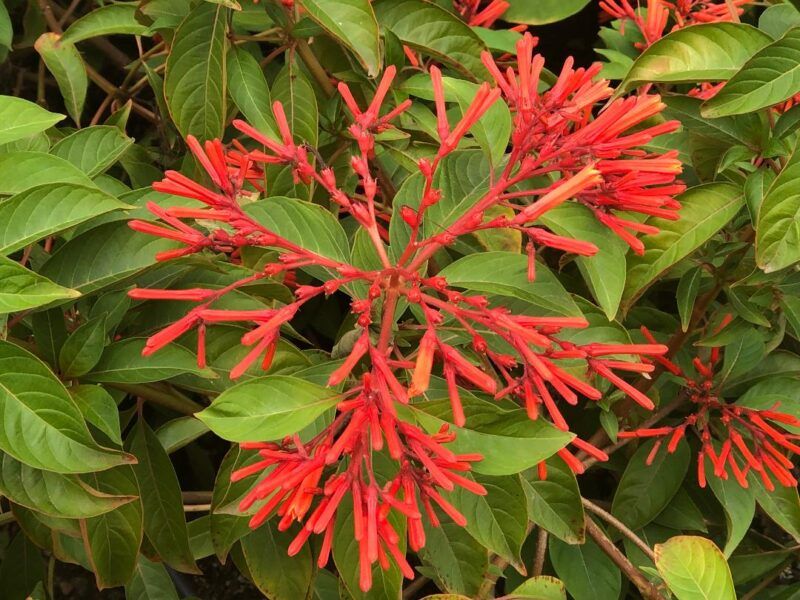
Firebush, known to botanists as Hamelia patens, is a shrub with clusters of orange-red tubular flowers. That flower shape suits hummingbirds, and UF/IFAS plant profile information lists the blooms as a nectar source the birds visit.
Butterflies like the flowers too, which is a nice bonus.
Fall is when this matters most. UF/IFAS guidance on firebush describes flowering that can run into fall in suitable conditions.
That wording is worth reading carefully. Bloom length depends on your local weather, and no care step can promise flowers through a fixed date.
Texas relevance is also specific. UF/IFAS identifies firebush as native to Florida, so it should not be called a Texas native.
It is grown in Texas, though, and Austin’s Watershed Protection plant guide includes it. That points to warmer parts of the state with mild winters.
Keep in mind that one shrub will not draw hummingbirds to every yard, and it is not their only food. Think of it as one more nectar option while it is in bloom.
If you bought a plant sold as dwarf firebush, it may be H. patens var. glabra, a related non-native with lighter flowers.
Leave flowering stems untrimmed
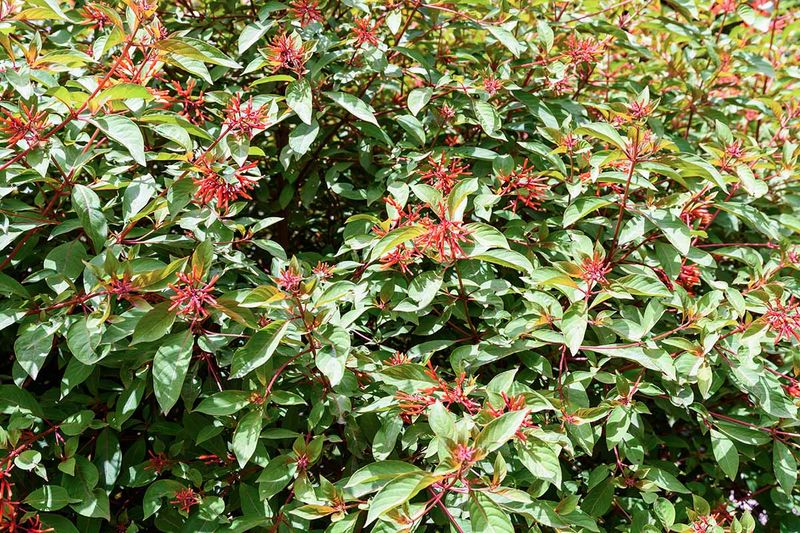
Put the shears away while flowers are open. Every stem you clip can carry buds and blooms that hummingbirds would use, so a tidy-up now simply removes the nectar you hoped to protect.
The caution is backed by UF/IFAS firebush guidance, and the UF/IFAS plant profile adds that pruning too hard or too often may reduce blooming. So shearing is not a trick for more flowers.
It can work against you.
A stray branch that blocks a walkway can be handled with a light touch. Remove only what you must, and leave the flowering tips alone.
A lopsided shrub in October is a fair price for a working nectar plant.
None of this means firebush should never be pruned. The right moment comes after cold damage, covered in a later section.
Until then, treat the plant as a feeding station and let it keep its flowers.
Water according to soil conditions
Skip the calendar and check the soil. Push a finger a few inches down near the root zone.
If it is dry and the shrub looks stressed during a dry spell, give it a deep drink. If it is damp, wait.
Age of the plant changes the rules. UF/IFAS guidance calls for regular watering while firebush is getting established.
Once it is established, the same source notes tolerance of heat and some drought, as does the UF/IFAS plant profile.
That means a newly planted shrub needs closer attention than a mature one. A mature plant that has gone dry for a couple of weeks may still benefit from a soak, especially if flowers are wilting or dropping.
Fall rain, cooler air, and shorter days all lower the demand for water. Adjust as conditions shift, and follow any local watering restrictions your city has in place.
A layer of mulch can help hold moisture in the soil.
Sun helps flowering; extra fertilizer is no shortcut
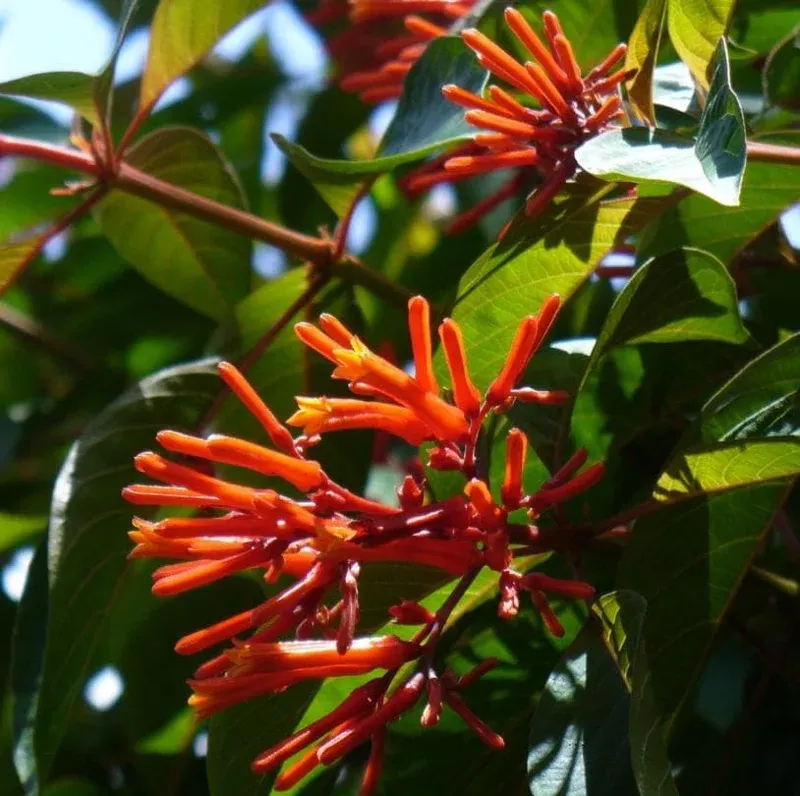
Location sets the stage for flowers. Firebush blooms best in full sun, and UF/IFAS guidance says it tolerates partial shade.
If yours sits in a shadier spot, expect fewer flowers, and remember that sun is something to plan for next season rather than fix now.
Fertilizer is a different story. The UF/IFAS plant profile recommends fertilizing sparingly.
The sources reviewed do not support adding fertilizer now to stretch the bloom or boost hummingbird visits.
So leave the bag in the shed this fall. Extra feeding will not override a cold snap, and it is not a proven way to keep flowers coming.
Neither sun nor fertilizer guarantees flowers until frost. They are background conditions.
What happens next depends largely on the weather.
Cold timing varies across Texas
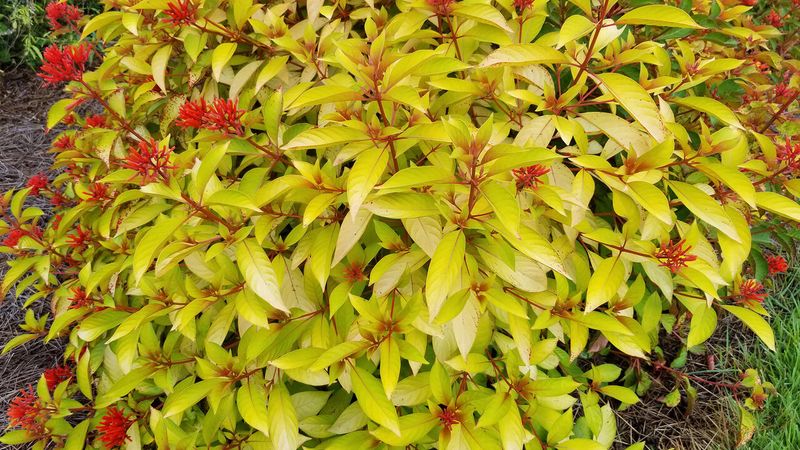
Texas is big, and so is the gap in cold dates. Frost, freeze, and hard freeze are not the same thing.
Frost is ice forming on surfaces on a cold, clear night, while a freeze means air temperatures at or below 32 degrees, and a hard freeze is a deeper, longer cold.
Regional examples show the spread. National Weather Service Tallahassee information puts that area’s average first frost around November 10.
In contrast, National Weather Service Amarillo data shows the Texas Panhandle can see a first freeze in mid-October. Neither date applies to your yard by default.
In mild fall weather, firebush may keep flowering. The UF/IFAS plant profile notes that a freeze can damage the top growth, and cold can end the bloom.
Your best tool is your local forecast. Watch for overnight lows, and know what your area calls a frost advisory or freeze warning.
Prune after cold damage, not while the plant is flowering
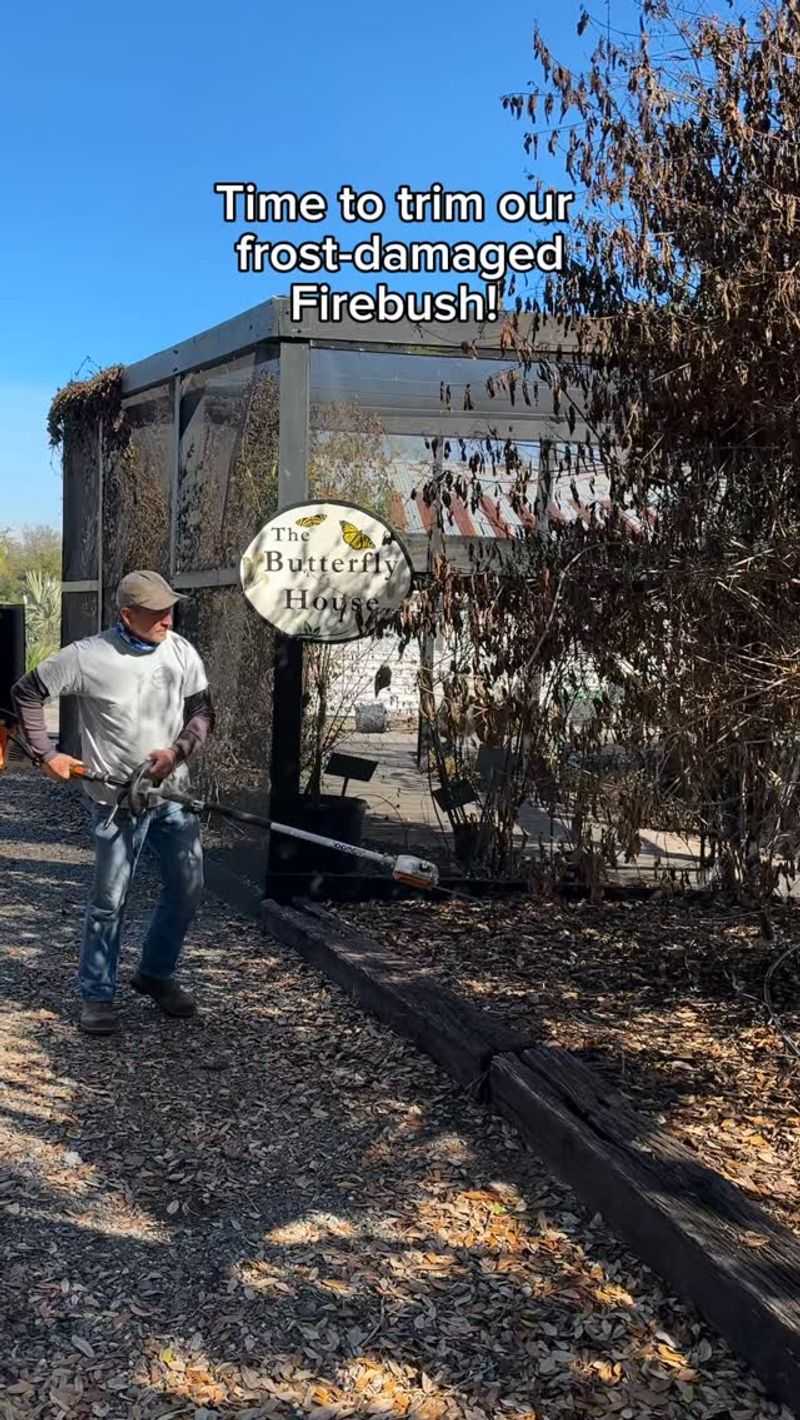
In freeze-prone areas, firebush can die back to the ground and regrow from its roots. Brown, limp stems after a hard freeze do not always mean the plant is lost.
Give it time before you decide.
Timing for cutting back is regional advice. Austin’s plant guide suggests pruning after the first hard freeze and before spring growth.
A UF/IFAS North Florida article advises waiting until late winter to early spring.
Both point the same way: wait for cold damage, then prune. The UF/IFAS firebush guide also describes regrowth from the roots.
A practical clue is new green growth near the base. Cut just above it, and remove dead wood.
Do not cut back a plant that is still flowering.
Protect the blooms you have
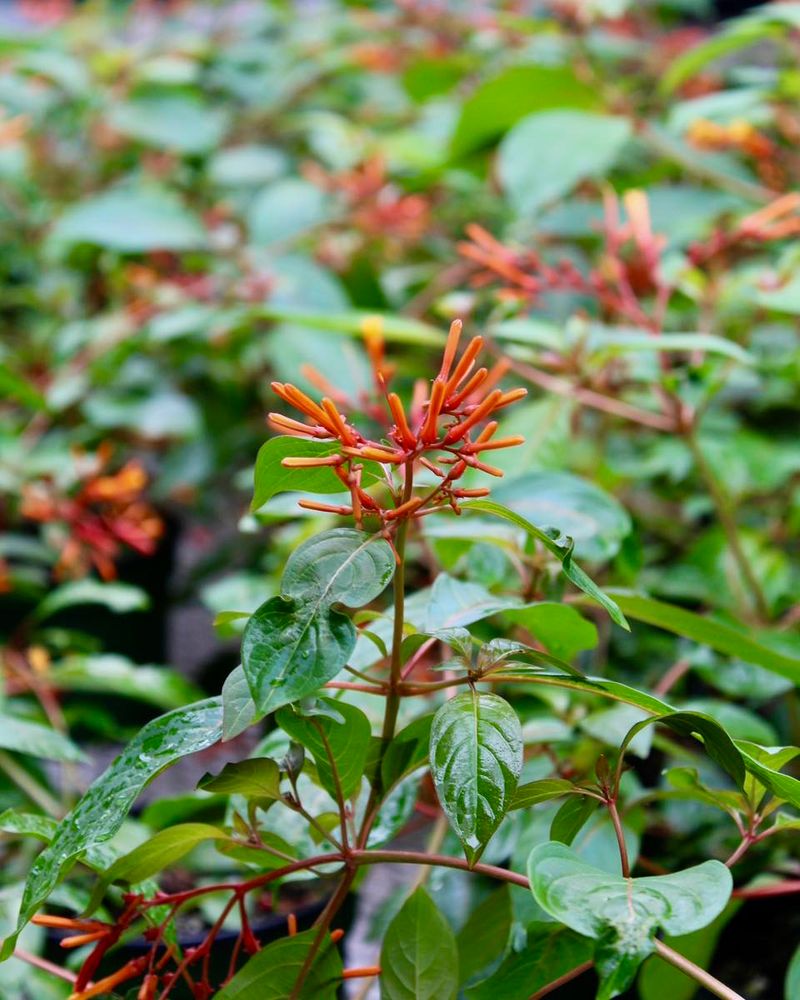
Leave flowering stems alone, water by soil conditions, skip extra fertilizer, and let local cold conditions tell you how long the show lasts. These steps protect a possible fall nectar window, as described in UF/IFAS guidance, but cannot guarantee blooms or visits by a set date.
The weather writes the last page.