
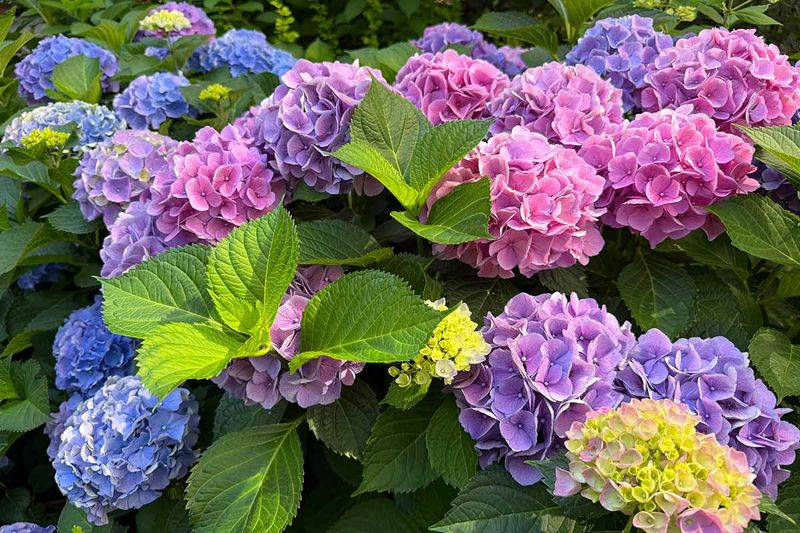
Pink one year and blue the next? Some hydrangeas really can change color, and the soil under them plays a big part.
Fall is when many Southern gardeners start thinking about next summer’s blooms. Before you buy any amendment, it helps to know which plants respond, what a soil test can tell you, and where Florida and Texas yards need extra care.
Start by identifying the hydrangea
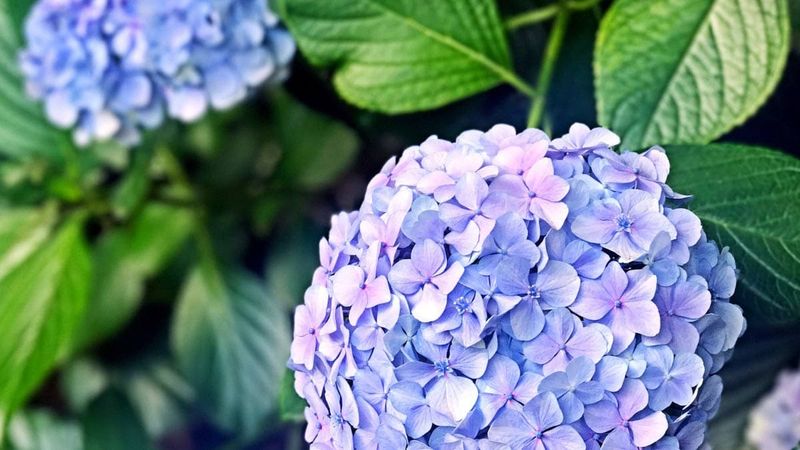
Before touching the soil, figure out what you are growing. Bigleaf (Hydrangea macrophylla) and mountain (H. serrata) hydrangeas are the main types whose flower color can shift with soil conditions, as noted in Maryland Extension guidance.
Oakleaf, panicle, and smooth hydrangeas do not reliably change color with soil pH. The same goes for white-flowered selections, which have no blue or pink pigment to shift.
Iowa State Extension describes these other species as not color-changing in the same way.
Check the plant tag, a photo of the leaves, or the nursery receipt. Big, rounded or flat-topped blooms on a shrub with broad, glossy leaves often point to bigleaf or mountain types.
If you cannot tell, ask your county Extension office.
This quick step can save you money and frustration. It also keeps you from chasing a color result your plant may never deliver.
Even among susceptible plants, the outcome depends on the cultivar and the soil, as UF/IFAS Extension points out.
Soil pH affects color through aluminum availability
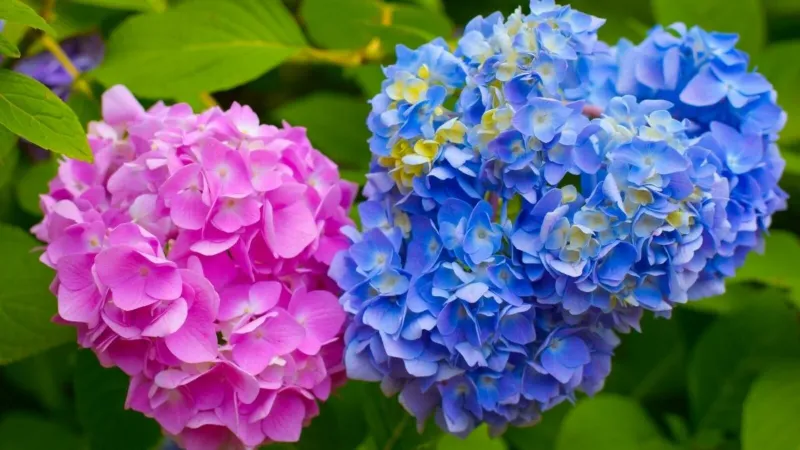
Soil acidity does not paint the petals. What pH really does is change how much aluminum a hydrangea can take up from the soil.
In acidic soil, more aluminum is available, and in higher-pH soil, less is.
Aluminum matters because it joins with the flower’s natural pigment to form a complex tied to blue color, as described in a Japan Academy study of sepal color. Without enough aluminum, the same susceptible plant tends to lean pink.
Purple often shows up in between.
Notice that this describes a shift among pink, purple, and blue. It does not mean more acid brings deeper or richer color, and it does not make blooms bigger or better.
Maryland Extension gives approximate ranges: about pH 5.0 to 5.5 for blue-leaning flowers and about 6.0 to 6.5 for pink-leaning ones. Treat those numbers as general guidance.
Cultivars and soils vary, so they are not guaranteed settings.
Test the soil before choosing an amendment
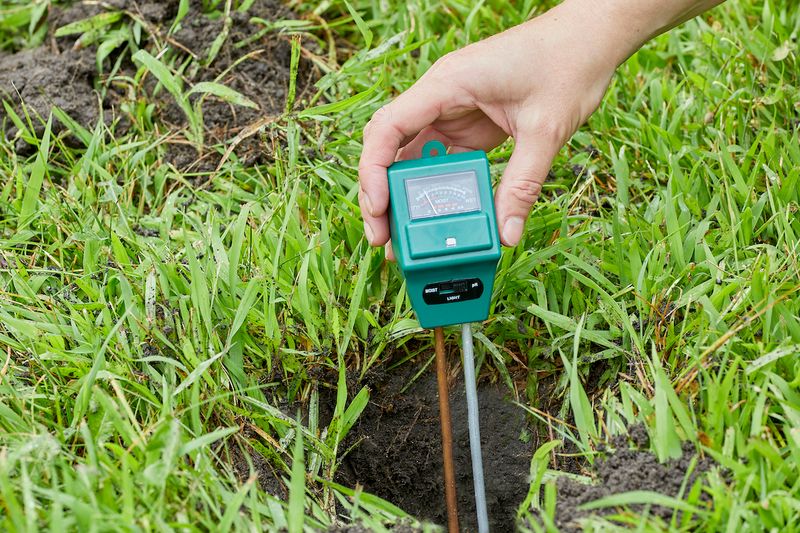
A soil test turns guessing into a plan. It shows your current pH, and it helps you judge whether an adjustment makes sense before you spend money on sulfur or aluminum sulfate.
Your county Extension office can explain how to collect and send a sample.
Pink blooms alone do not prove the soil needs treatment. Many yards already sit in a range that suits the plant, and a color you dislike is not a soil problem by itself.
Maryland Extension recommends testing when flower color is not what you want. Also keep in mind that changing pH can be difficult or only temporary, a point made in UF/IFAS soil pH guidance.
Take samples from the root zone, not from a spot you recently fertilized. Keep the result handy, because it guides the timing and safety choices in the next sections.
Fall is not a universal amendment deadline
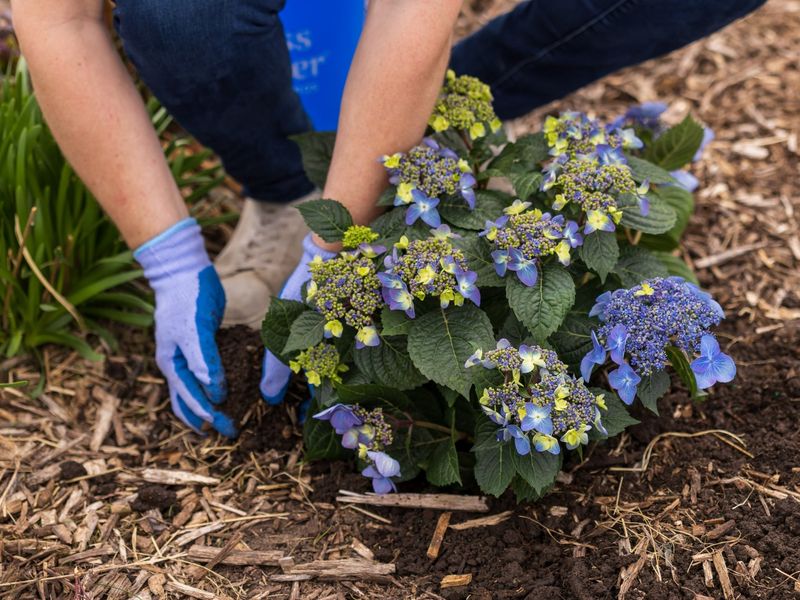
Nobody has one correct date for every yard. Timing depends on your region and on the product you use, so fall is a good time to plan but not always the time to apply.
Sulfur works only after soil microbes convert it, and that slows when soil is cold. Maryland Extension notes that fall and winter applications there will not change pH while that process is inactive, though other guidance supports autumn preparation in some settings.
University of Georgia Extension says sulfur may take a year to give a noticeable color change, and it lists aluminum sulfate drenches for March, April, and May.
In Florida, UF/IFAS suggests amending shortly before leaves or flower buds develop, around late February or early March. Use your soil test and local Extension advice to choose your window.
Use amendments carefully and skip unreliable shortcuts
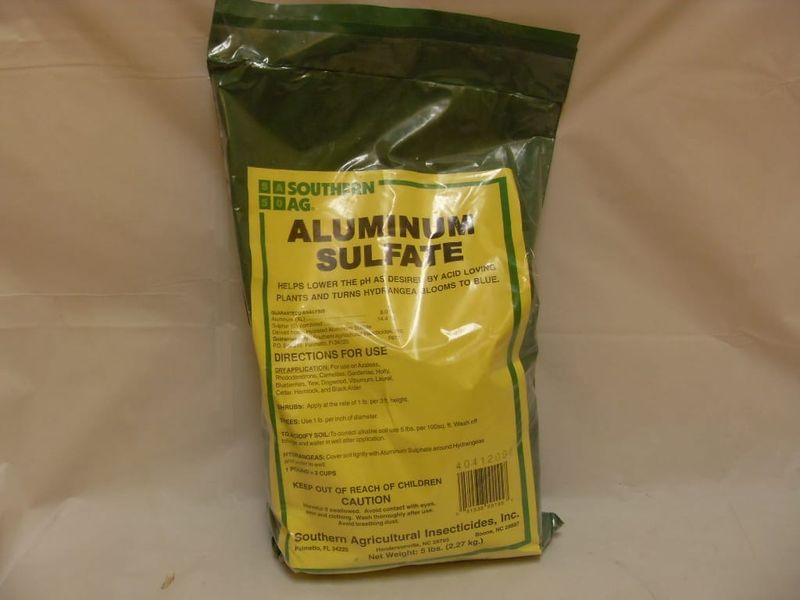
Your safest rule is simple: follow the soil-test recommendation and the product label. Skip made-up rates, because more is not better here.
Too much aluminum sulfate can burn roots, and Maryland Extension warns about overapplication. Heavy acidifying treatments can also stress the shrub in general.
University of Georgia Extension adds that liquid treatments should not touch the leaves. Water the drench onto the soil around the plant and rinse any splashes off the foliage.
Coffee grounds are a popular home remedy, but they are not a dependable way to acidify soil or turn blooms blue. Ask Extension says coffee grounds do not make soil more acidic.
Save them for the compost pile.
If a treatment seems to be stressing the plant, stop and recheck the soil rather than adding more.
Alkaline soils can limit changes in Florida and Texas
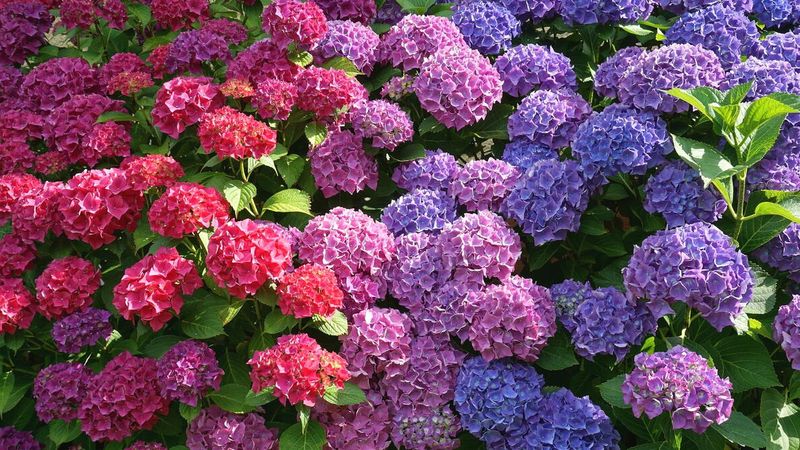
Not every yard in Florida or Texas is the same, but many have soil that pushes back. Where soil is alkaline and rich in calcium, lowering pH can be hard, temporary, or impractical.
Texas A&M AgriLife Extension says lowering pH is very difficult in many alkaline soils in South, West, and North Texas, especially where irrigation water contains calcium carbonate. Your water may keep undoing your work.
UF/IFAS notes that permanently lowering pH may be impossible in soils formed from limestone or marl, and it recommends plants suited to those conditions. Its general landscape advice is not to adjust pH when it falls between 5.5 and 7.0.
That is broad guidance, not a hydrangea-specific rule.
Get a soil test for your own site. If the numbers look tough, consider pink-leaning bigleafs, containers with purchased potting mix, or hydrangea types that do well in your soil without color tinkering.
A color adjustment cannot replace lost flower buds
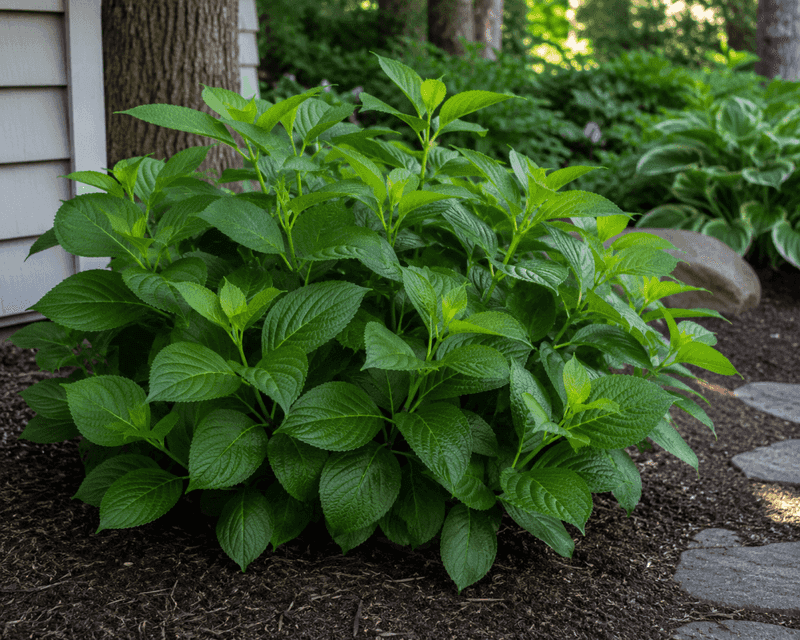
Color and bloom count are two separate things. Soil can influence which shade a susceptible hydrangea shows, but it cannot grow flowers that are not there.
Bigleaf hydrangeas set next season’s buds in late summer, so pruning then or later can remove potential flowers, as University of Georgia Extension explains. Frost injury and other problems can also cut down blooming, and Maryland Extension covers several of these causes.
If your shrub bloomed poorly, check pruning dates and winter damage before blaming soil. An amendment will not bring back buds that are gone.
A realistic plan looks like this: identify your hydrangea, test the soil, follow local and label guidance, and allow a season or more for a possible color shift. Bigger, richer blooms are not part of the promise.
Sometimes the most rewarding hydrangea is simply the one left unpruned and well watered.