
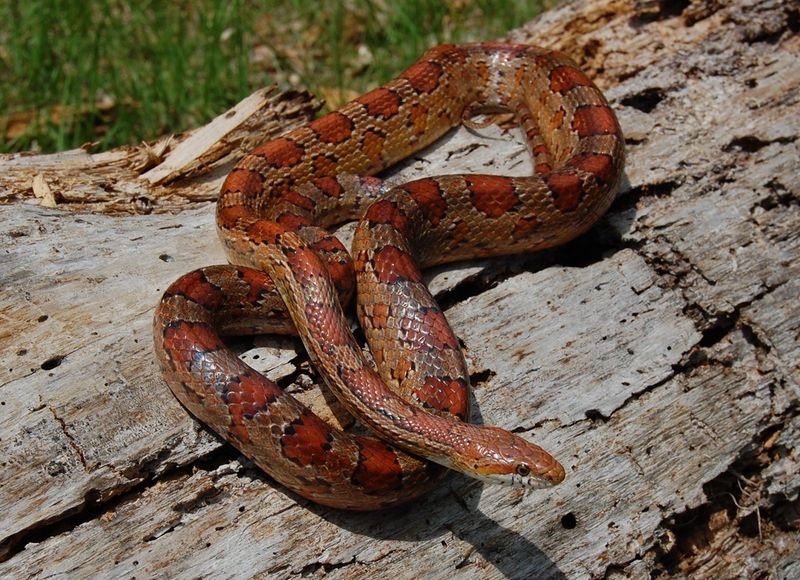
You open the shed door and spot a snake with bold blotches stretched along the wall. Your heart jumps, and your first thought might be that it is dangerous.
In Florida, though, a patterned snake by the shed is often a native neighbor that wants nothing to do with you. Here is how to respond safely and what the sighting does and does not tell you about your yard.
Could that patterned snake be a copperhead?
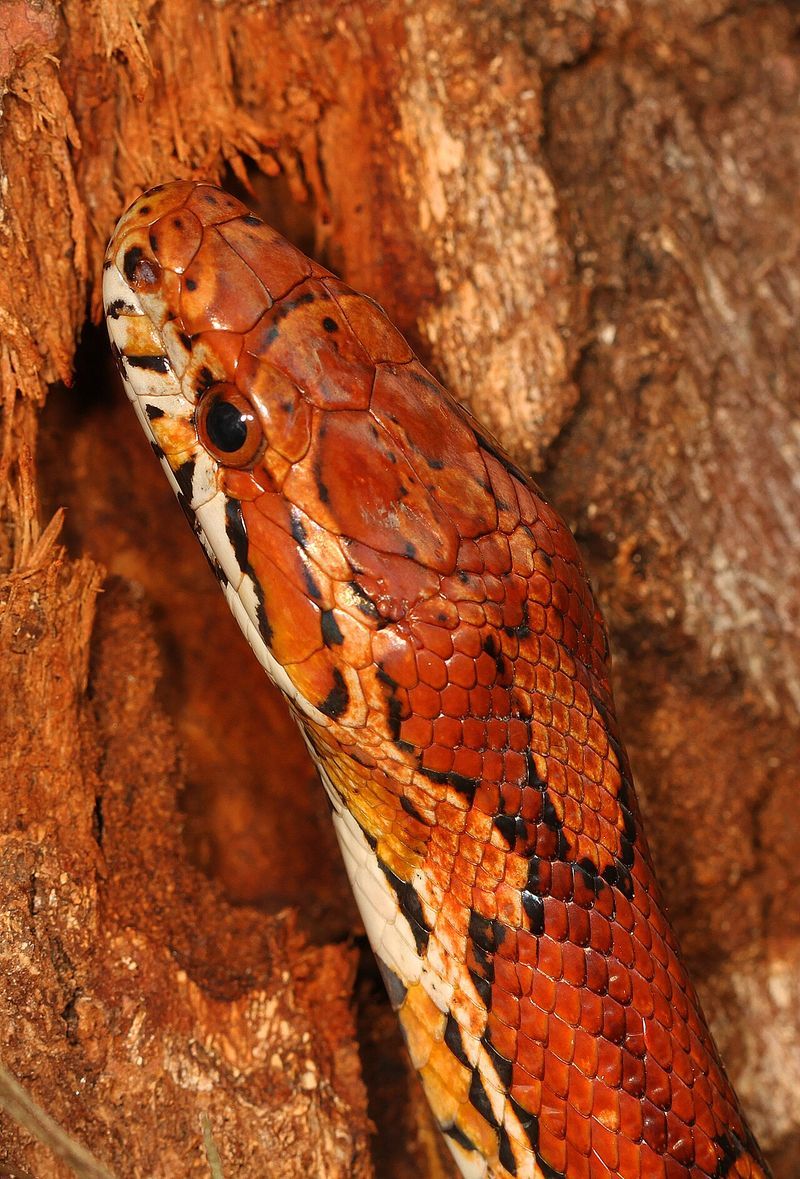
Picture a hot afternoon in your Florida backyard. You reach for a rake and notice a blotchy snake near the shed door, and the word copperhead flashes through your mind.
That worry is understandable, but a little geography helps put it in context.
Copperheads are confirmed only in a limited part of the Panhandle. Red cornsnakes, on the other hand, live throughout mainland Florida, according to the Florida Museum of Natural History.
So if you live in the peninsula or most of the state, a copperhead is very unlikely.
Range is only a clue, though. It does not make a visual identification safe, and it should never be the reason you step closer for a better look.
Color is not a reliable guide either, since several Florida snakes carry blotches in orange, red, or brown.
Head shape is another shortcut that fails. The Florida Museum warns that head shape is unreliable, and getting close enough to study it puts you within striking range.
UF/IFAS Extension also points out that Florida has harmless snakes that can be mistaken for venomous ones.
The practical move is simple. Stay several steps back, keep kids and pets inside or away, and watch the snake for a minute or two.
Most snakes will move along on their own once they feel left alone.
Florida’s red cornsnake is a native, nonvenomous neighbor
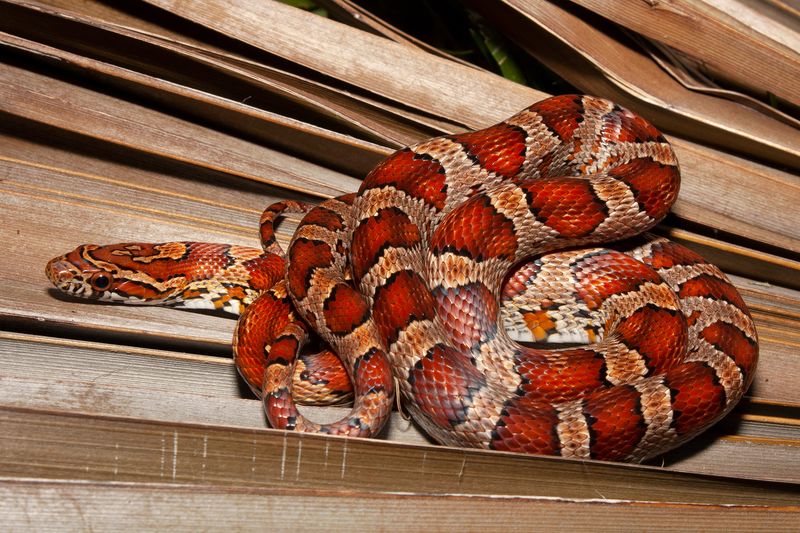
Red cornsnakes are part of Florida’s native wildlife, and they turn up in woods, fields, and neighborhoods across the mainland. They are nonvenomous, which means they do not carry the venom that makes some other snakes a medical concern.
The Florida Museum describes them as nonvenomous and found throughout the mainland.
A typical one has orange-brown coloring with dark-bordered blotches in orange, red, or brown running down its back. That description is useful background, yet it cannot confirm what you are looking at.
Patterns vary, lighting changes colors, and a quick glance is easy to get wrong.
Here is the part that trips people up. Nonvenomous does not mean safe to pick up.
A cornsnake may bite if it is handled or cornered, and a frightened snake will defend itself with the only tool it has.
There is a big difference between appreciating wildlife and handling it. Appreciating looks like standing back, enjoying the sight, and letting the animal go about its day.
Handling means grabbing, pinning, or carrying, and that is how bites happen.
If you want to enjoy native snakes, a photo from a distance is a great keepsake. Zoom in with your phone rather than your hands, and the snake gets to keep its calm.
Rodents are only part of a corn snake’s menu
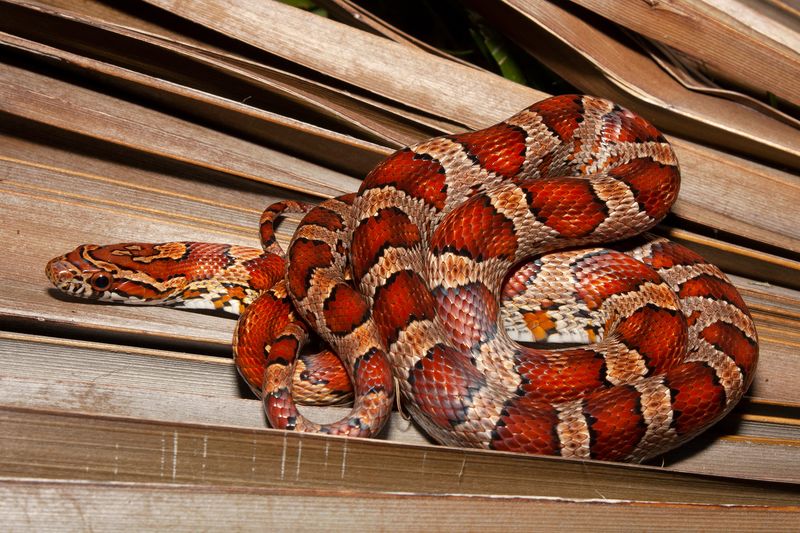
Ask around and you will hear that corn snakes are the ultimate rat catchers. There is some truth in it, since rodents are among their prey.
The full story is wider, though.
According to the Florida Museum, red cornsnakes also eat lizards, frogs, birds, and eggs. That is a real menu, and a snake takes whatever it can find and catch.
Because the diet is so mixed, you cannot assume a given snake is mainly eating rats or mice. One that lives near your shed might feast on anoles along the fence line, or raid a nest box.
A rodent meal is possible, but nothing about seeing the snake tells you how often it happens.
This also means one snake is not a pest control plan. Rodents can breed quickly, and a single snake simply cannot be counted on to keep up with an infestation in or around your house.
If you are hearing scratching in the walls or finding droppings, the snake is not the fix.
Think of the snake as one small part of the neighborhood food web. It deserves some respect for what it does, but your own habits will matter far more when it comes to rodents.
What does a snake near the shed actually tell you?
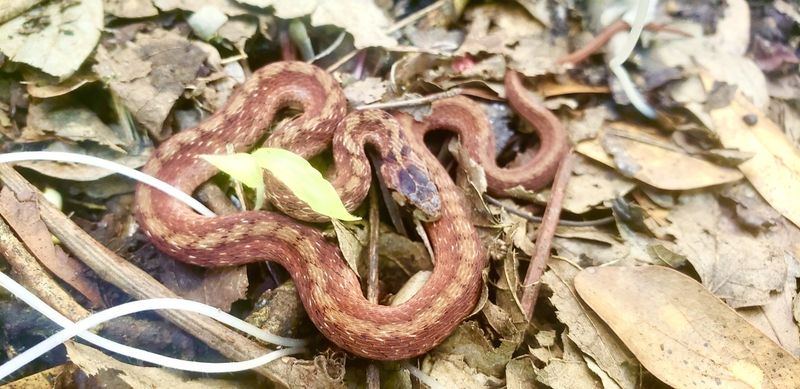
Seeing a snake feels like a message about your yard. It is tempting to read it as a sign that your landscape is thriving or that mice are on the decline.
Neither idea holds up.
A sighting shows one thing: a snake is using that spot right now. It might be passing through, sheltering from heat, or hunting.
It is not a test of yard health, and it does not prove rodents have dropped off.
There are some general patterns worth knowing. The Florida Fish and Wildlife Conservation Commission says snakes near homes or outbuildings may indicate rodents are around.
UF/IFAS Extension adds that ratsnakes may be found in sheds when rodents are present.
Notice what those statements say. They describe common situations, not the reason this particular cornsnake is by your shed.
It could be hunting mice, but it could also be after a lizard or simply resting in a warm, sheltered corner.
So use the sighting as a nudge to look around. Check the shed for droppings, chewed material, or nesting debris, and look at what is stored there.
If you find rodent signs, that is a problem to solve directly, whatever the snake is doing.
If you find none, that is useful information too. Either way, the snake is a visitor, not a verdict on your yard.
Leave the snake alone and make space
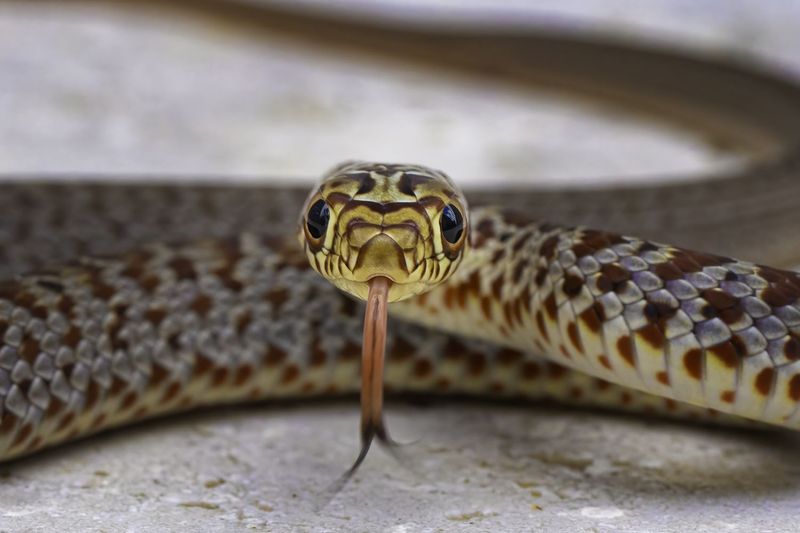
When you first spot the snake, freeze for a second and take a breath. Your best move is to step back and watch from a distance.
Snakes are not looking for a fight, and most will leave once they feel safe.
Do not pick it up, poke it, or try to kill it. Even a nonvenomous snake may bite when handled or cornered, and harming it is not a safe way to figure out what it is.
UF/IFAS Extension advises against capturing, harassing, or harming snakes.
If you are not sure what kind of snake it is, treat it with caution. Keep people and pets away from the area, and bring dogs inside or onto a leash.
Children are curious, so it helps to give them a clear rule to stay back.
Need a hand? Contact a qualified wildlife professional who can identify the snake and advise on what to do.
The Florida Fish and Wildlife Conservation Commission offers guidance on living with snakes, and it is a good place to start.
Resist the urge to catch it just to confirm what it is. A photo from a safe distance can help an expert identify it without anyone getting close.
Then give it room, and it will usually be gone by the time you return.
Reduce rodent attractants without stripping the yard
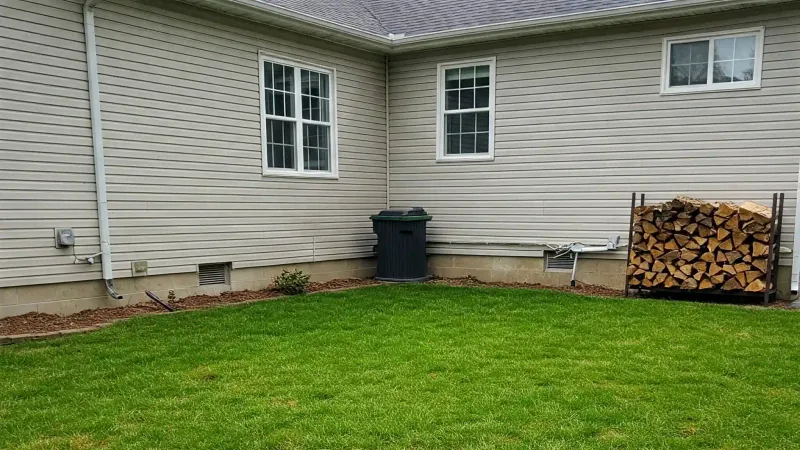
If rodents are what worry you, go after them directly. The good news is that the steps are simple and mostly cheap.
UF/IFAS Extension has clear recommendations for this.
Start with food. Keep your own food, bird seed, and pet food in closed containers rather than open bags.
A sealed bin in the shed is a small change that takes away an easy meal.
Next, keep an eye out for rodent signs. Look for droppings, gnaw marks, shredded nesting material, and greasy rub marks along walls.
Checking every week or so lets you catch trouble early.
Then look at where you stack things. Brush piles and firewood should sit away from buildings and children’s play areas.
Piles tucked against the shed give rodents shelter close to their food.
You do not need to clear everything, though. UF/IFAS advises against removing all brush and vegetation, because these can provide wildlife habitat.
Florida yards with native plants help birds, pollinators, and many other creatures, so trim with a purpose rather than strip the place bare.
None of this guarantees snakes will stay away. These steps are about making your property less appealing to rodents, and any snake visits are a separate matter.
Welcome the wildlife, but judge rodent problems directly
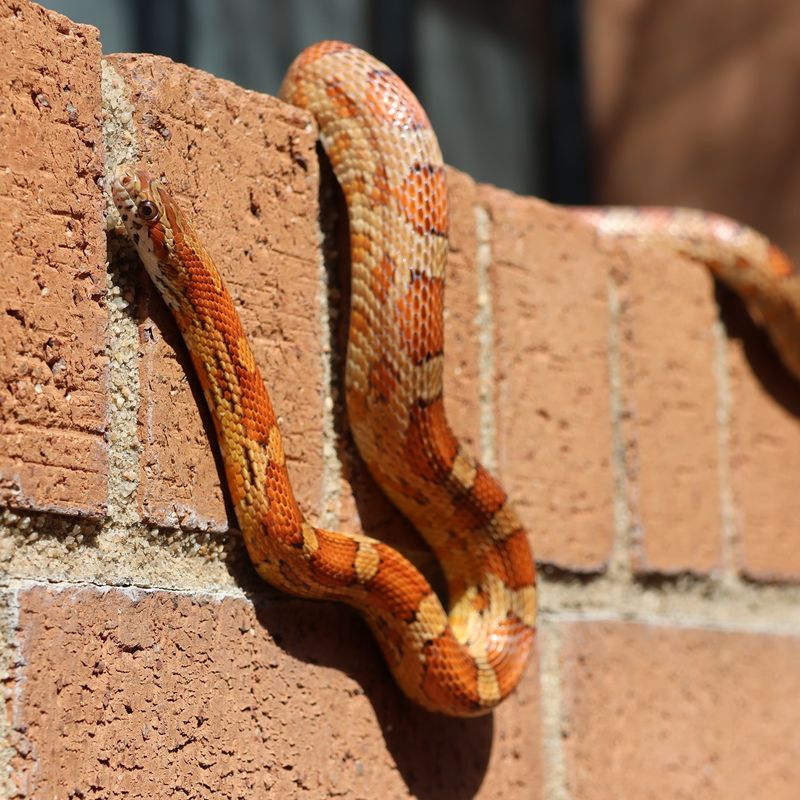
A confirmed red cornsnake is a native Florida animal, and it is fine to appreciate it from afar. Still, its presence is not proof of a healthy yard, and it does not mean fewer rodents.
The Florida Museum notes that its diet is varied.
If you are unsure about the snake, leave it alone and call a qualified wildlife professional. For rodents, follow the UF/IFAS steps rather than counting on a snake to do the work.
The snake will move on, and your shed will still be yours to keep tidy.