
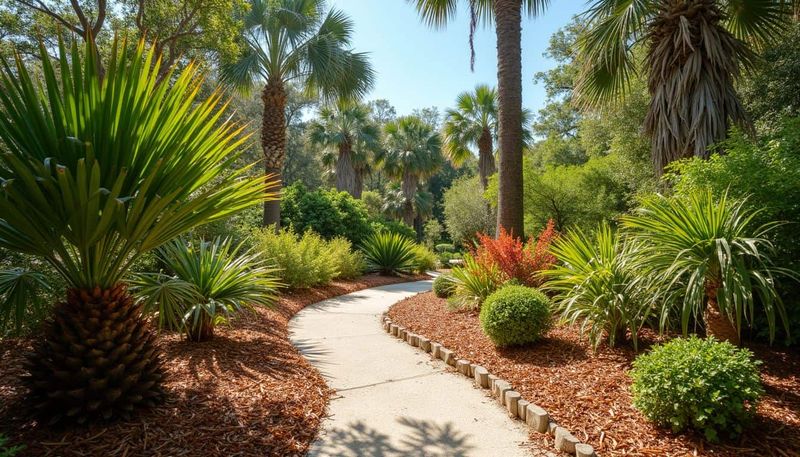
Thinking about trading some of your St. Augustine for a yard that needs less water and mowing? Florida has a law that limits how far a homeowners association can go in blocking that kind of change.
But the law is narrower than many headlines make it sound. Here is what it covers, and how to plan a lawn swap that an HOA board can review with confidence.
What Florida’s landscaping protection actually covers
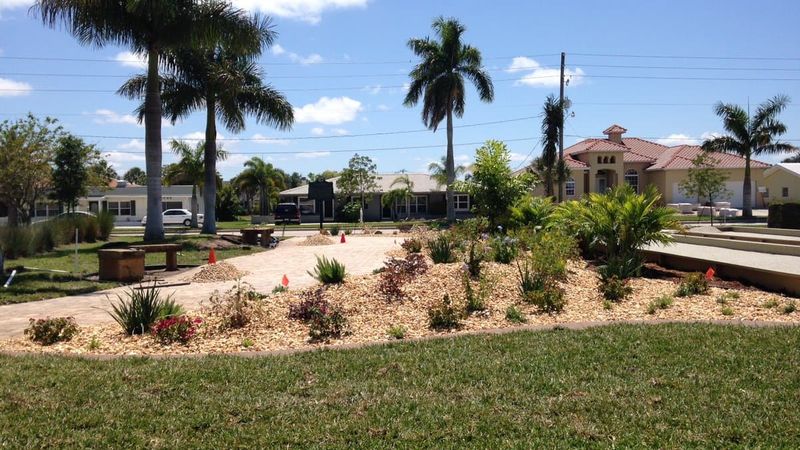
Florida law gives homeowners a real tool here, but it has limits. Under Florida Statute 720.3075(4)(b), HOA governing documents may not prohibit, or be enforced to prohibit, an owner from implementing Florida-Friendly Landscaping.
The key words are Florida-Friendly Landscaping. The protection attaches to landscaping that qualifies, not to any change a homeowner happens to prefer.
So what counts? Section 373.185 describes Florida-Friendly Landscaping as quality landscaping that conserves water, protects the environment, adapts to local conditions, and is drought tolerant.
That is a standard based on how a yard performs, and your design has to meet it.
Notice what the statute does not say. It does not give you a right to remove every blade of turf, and it does not set a lawn-to-bed ratio.
It also does not say that any plant labeled native is automatically covered.
Think of the law as a shield against blanket bans on water-wise yards, not a free pass around everything else. Your association may still have a review process, design expectations, and maintenance standards.
Whether a particular rule or penalty conflicts with the statute depends on the facts and your governing documents, so a headline promise that an HOA can never fine you is too broad to rely on.
Native plants are not the whole standard
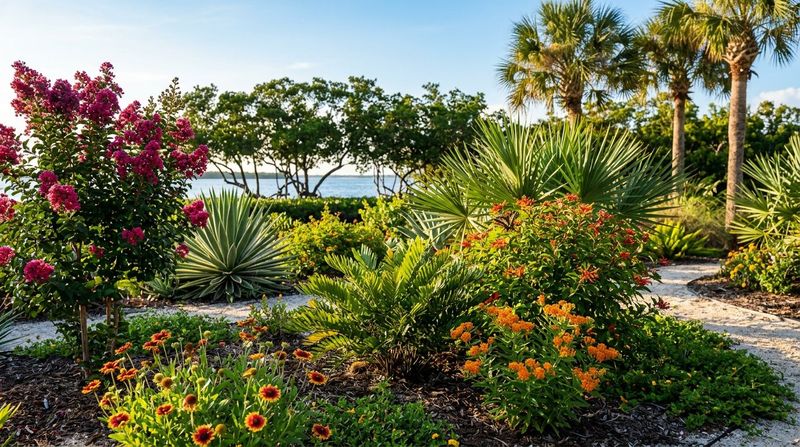
Many people hear Florida-Friendly and picture a native-only yard. The legal standard is broader.
As the statutory definition reads, it focuses on water conservation, environmental protection, local adaptation, and drought tolerance rather than a plant origin list.
UF/IFAS explains this through nine principles: right plant, right place; watering efficiently; fertilizing appropriately; mulching; attracting wildlife; managing yard pests responsibly; recycling yard waste; reducing stormwater runoff; and protecting the waterfront. In its legislation Q&A, UF/IFAS notes that native and nonnative plants can both fit, and that turfgrass can qualify when it suits the site and is maintained well.
That means a native plant in the wrong spot, such as a moisture lover on a dry sandy slope, may fail the test. Meanwhile, a suitable nonnative plant can belong in a Florida-Friendly design.
Native status alone does not prove a plant suits your yard.
For your plan, this changes the question. Instead of asking whether every plant is native, ask whether the whole design follows the nine principles and works with your light, soil, and moisture.
A design built that way is easier to explain to a review board.
Check the review rules before removing turf
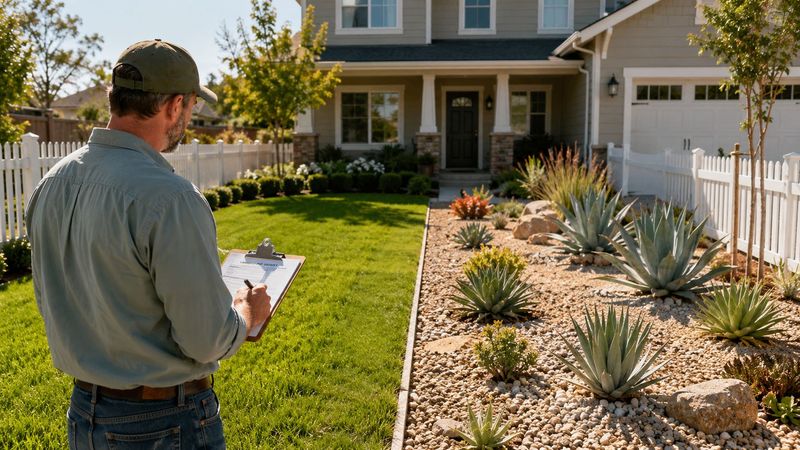
Before you buy a single plant or rent a sod cutter, read your covenants and find the architectural-review procedure. Many associations require approval for landscape changes.
According to UF/IFAS guidance, homeowners must still seek approval when their association requires it, and design and appearance rules can matter.
Start by gathering the declaration, any architectural guidelines, and the application form. Note deadlines, what drawings are required, and who decides.
If something is unclear, ask the manager or board in writing so you have a record.
UF/IFAS Extension also offers community association resources that can help you frame your request in horticultural terms. Their materials are a useful starting point for talking with a board.
Also check for water-management-district restrictions that apply where you live, since irrigation and landscape practices can be regulated locally. UF/IFAS steps for converting a typical landscape are a handy checklist for planning the sequence of work.
Submitting a clear plan is smart, but it does not guarantee approval. Treat it as the first step in a conversation, not a finish line.
Make a phased layout easy to review
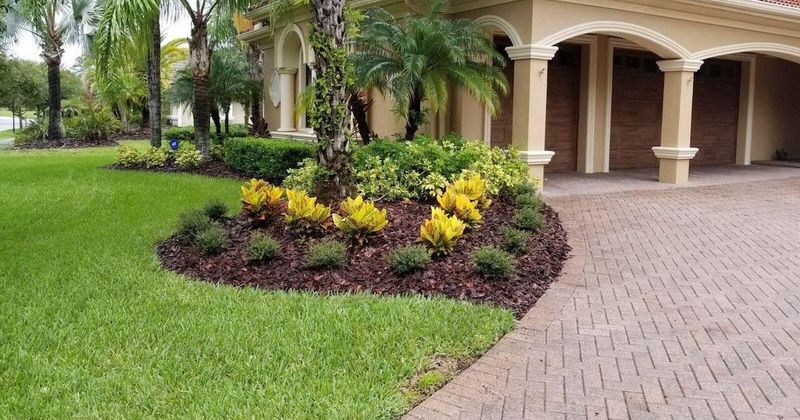
A board is more likely to understand a proposal that looks familiar and is easy to measure. UF/IFAS strategies for working with an HOA suggest keeping a visible, mowed turf strip and traditional foundation beds at first, then enlarging beds and shrinking turf over time.
Phasing gives neighbors and reviewers time to see the new plantings fill in. Phase one might widen the beds around the house.
Later phases could extend them toward the lawn as plants mature.
Crisp edges help too. Defined bed lines or simple paths make the design look intentional rather than overgrown.
Edging also keeps turf and bed plants from mixing.
Include a scaled plan that shows plant locations and quantities. List the square footage of turf, beds, and hardscape so the board can see exactly what changes.
Numbers remove guesswork.
These are design strategies, not legal requirements. They do not guarantee approval, and the statute sets no state lawn-to-bed ratio.
Your association’s own rules may set limits you need to follow.
Choose plants for the yard, not just the label
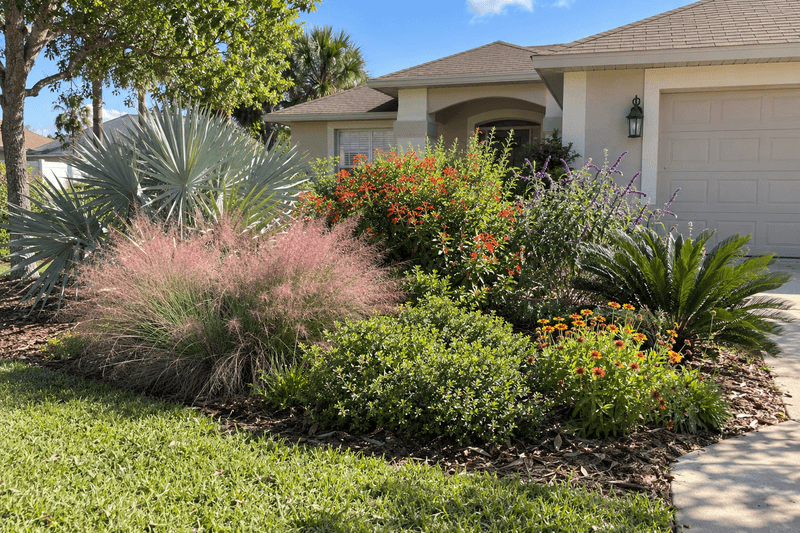
A plant tag can tell you a lot, but your yard has the final word. Start by noting your Florida region, how many hours of sun each area gets, how fast the soil drains, and where water collects after rain.
The UF/IFAS Florida-Friendly plant guide walks through matching plants and design to site conditions.
Native does not automatically mean a good fit. A native that prefers wet feet may struggle in dry sand, and a native needing shade will scorch in an open front yard.
Some nonnative plants can also be suitable choices when they are well adapted and not invasive.
Before buying, check current invasive-plant assessments for your part of the state. A plant that looks water-efficient can still be a poor choice if it spreads into natural areas.
Your local UF/IFAS Extension office can help you confirm what applies in your county.
The UF/IFAS conversion steps also encourage planning around existing site features. Group plants with similar needs so watering stays simple.
A Florida-Friendly listing or a native label does not promise HOA approval. It simply shows you picked with care.
Maintenance is part of the Florida-Friendly plan
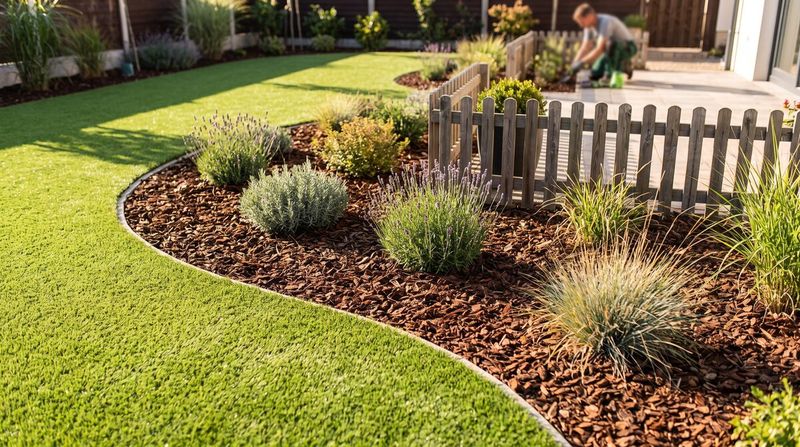
Swapping plants is only half the job. UF/IFAS guidance says nuisance, poorly maintained, or unkempt landscapes are not considered Florida-Friendly.
An overgrown bed full of weeds will not meet the standard, even if every plant was well chosen.
Maintenance ties directly to the principles behind the statutory definition. Water efficiently, mulch beds, fertilize only as needed, prune thoughtfully, recycle yard waste, and manage pests responsibly.
Regular touch-ups keep the yard looking cared for, which also helps neighbors and board members feel good about the change.
Be careful with shortcuts. A yard covered only in rock, gravel, artificial turf, or mulch is not automatically Florida-Friendly or protected, and UF/IFAS notes an association may restrict such landscapes.
A simple routine helps: check irrigation, refresh mulch, pull weeds, and trim plants away from walks and driveways. During establishment, plan a bit more attention until roots settle in.
If the HOA objects, separate the design question from the legal one

A denial letter or threatened fine is not the final word on either question you face. One is a design question: does your plan qualify as Florida-Friendly?
The other is a legal one: does the association’s action conflict with the statute? Neither is settled just because someone sent a notice.
Start by reading the written decision closely. Note the reasons given, then compare them with your governing documents and the plan you submitted.
Sometimes an objection is about missing details, plant spacing, or upkeep, and a revised submission can resolve it.
For horticultural questions, UF/IFAS can help. Its legislation Q&A and community association resources offer technical guidance, but UF/IFAS does not decide legal disputes between owners and HOAs.
If the dispute is legal, consult a Florida attorney familiar with community-association law. No article can predict how a specific case will turn out.
The practical sequence stays simple: check the requirements, document and submit your design when required, and maintain the finished landscape. A yard that is planned, measured, and cared for makes the strongest case for itself.