
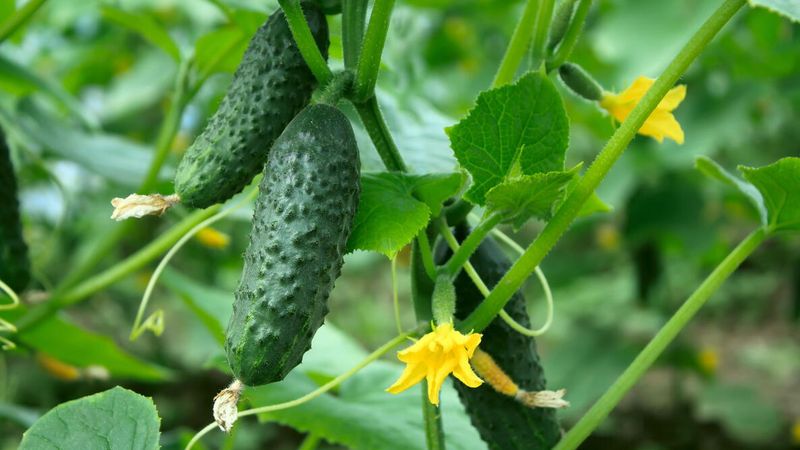
August is when a lot of North Carolina cucumber vines seem to hit a wall, and gardeners are left wondering what went wrong. One of the most common and fixable reasons is simple: mature cucumbers left hiding under the leaves can slow or halt new fruit production.
Getting into the habit of picking frequently and checking beneath the foliage can make a real difference when the vine is otherwise healthy. That said, heat, dry spells, pollination gaps, and late-season diseases can each stall a crop on their own, so knowing what to look for matters just as much as knowing what to pick.
Frequent picking can protect the next cucumber set
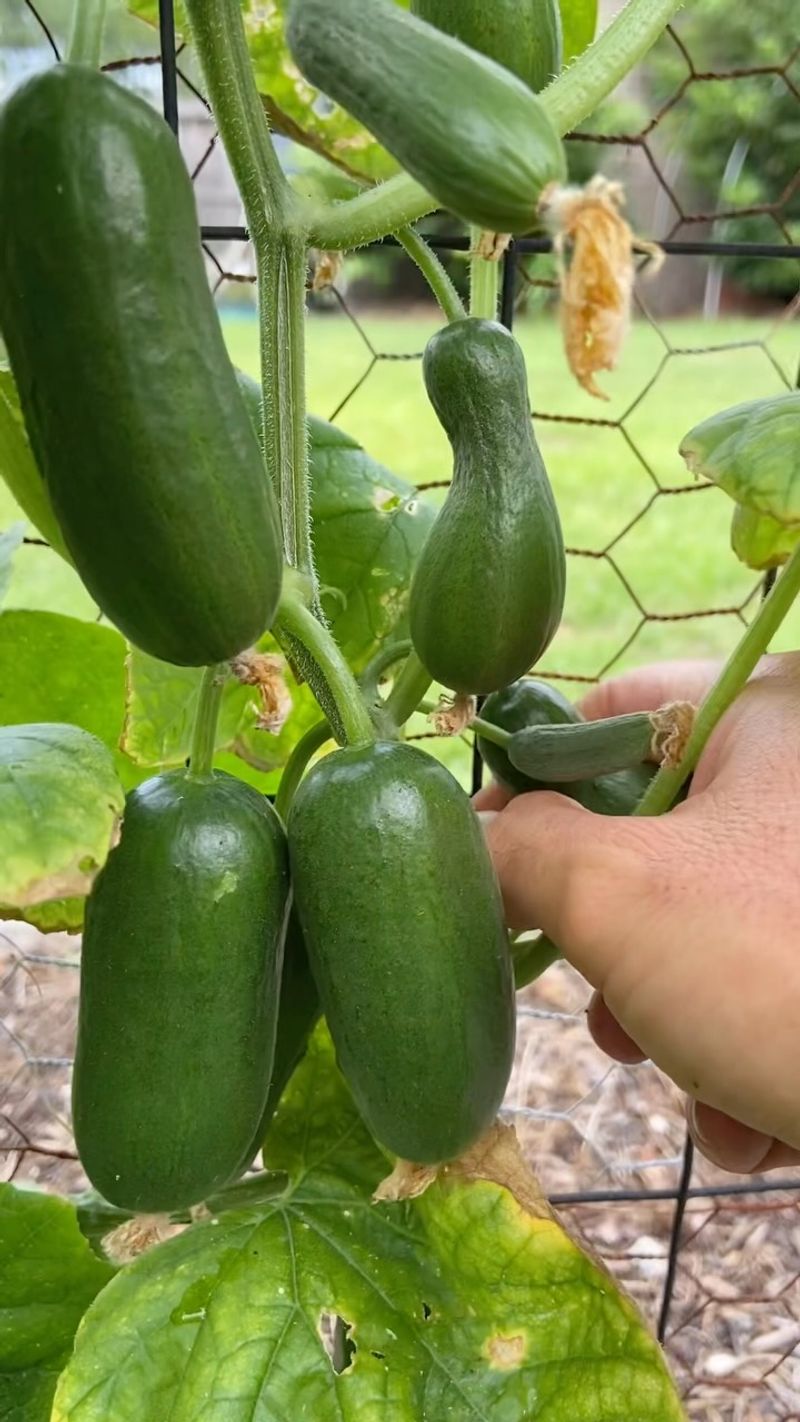
Mature cucumbers left on the vine send a signal that can reduce or stop the plant from setting new fruit. NC State Extension’s vegetable gardening handbook notes that mature cucumbers remaining on the vine stop production of new fruits, and recommends picking four to five times per week to keep that cycle moving.
When you keep up with harvest, the plant stays focused on producing rather than maturing existing seed.
Frequent picking is the strongest first step when an otherwise healthy vine appears to slow down in August. NC State Extension Gardener news on cucumbers echoes this, emphasizing that regular removal of ready fruit is central to sustained production.
Still, it is worth being clear: harvesting more often will not correct every reason a crop stalls.
Heat stress, inconsistent watering, poor pollination, bacterial wilt spread by cucumber beetles, and late-season foliar diseases can each independently reduce or stop production. University of Illinois Extension cucumber guidance lists several of these as separate causes of crop slowdown.
If you pick frequently and the vine still fails to set new fruit, the cause is likely somewhere else, and the sections below will help you narrow it down.
Late summer in North Carolina – whether you garden in the Piedmont, the Coastal Plain, or the mountains – brings its own combination of heat, humidity, and disease pressure. None of that automatically means the season is over.
Start with the harvest routine this week, then use what you observe on the vine to decide whether a different problem needs attention.
Search under the leaves, then harvest by maturity
Cucumber vines develop a thick canopy fast, and fruit can grow to full size or beyond before you ever notice it. Checking plants daily or at least every other day during peak production gives you the best chance of catching cucumbers before they turn yellow, swell, or develop hard seeds.
University of Illinois Extension recommends checking plants every day or two because cucumbers mature so rapidly in warm weather.
When you inspect the vine, use both hands to gently lift and separate leaves rather than just scanning from the top. Hidden fruit is common near the base of the plant where leaves overlap and light barely reaches.
A cucumber that has been concealed under foliage is not automatically ready to pick – what matters is whether it has reached a mature size and condition for its type, not simply that it was out of sight.
Harvest size varies by variety. Small pickling cucumbers are typically ready at about 2 to 3 inches, dill pickles at roughly 5 to 6 inches, and slicing cucumbers at 6 to 8 inches.
NC State Extension’s gardening handbook advises picking before seeds become hard and before the fruit turns yellow. Any cucumber that is already yellowing, swollen, or noticeably seedy when you squeeze it should come off the vine right away, regardless of where it was hiding.
How you remove the fruit matters too. NC State Extension Gardener recommends cutting cucumbers from the vine with a knife or pruning shears rather than pulling or twisting.
Yanking hard on a stem can tear the vine, stress the plant, and create entry points for disease. A clean cut takes two seconds and protects the rest of the plant.
Keep moisture steady without wetting the foliage
Cucumbers have shallow root systems, which makes them more sensitive to uneven watering than many other garden vegetables. NC State Extension Gardener connects inconsistent moisture with fruit that turns out bitter, misshapen, or poorly sized.
During flowering, fruit set, and active fruit development, reasonably even soil moisture gives the plant the best conditions to keep producing.
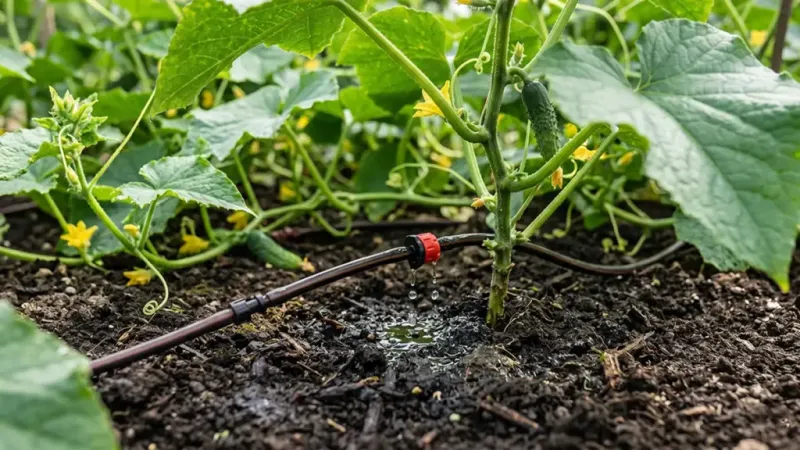
Utah State University Extension’s cucurbit irrigation guide recommends watering deeply at the root zone rather than applying frequent shallow drinks that only wet the top inch of soil. Delivering water at the base of the plant, through drip lines or a soaker hose, keeps roots consistently supplied without repeatedly wetting the leaves and stems.
USU’s vegetable water research supports deep, infrequent watering as the better approach for most vegetable crops.
Overhead watering – sprinklers or a hose sprayed across the top of the plant – might seem like a quick way to cool the vine on a hot August afternoon, but it carries real downsides for a late-summer crop. Prolonged leaf wetness creates favorable conditions for foliar diseases.
NC State’s anthracnose resource and their downy mildew guide both note that wet foliage supports spore spread and infection. Water at the soil line, not the canopy, and do it in the morning so any incidental splash dries quickly.
Flowers and tiny fruits can expose a pollination problem
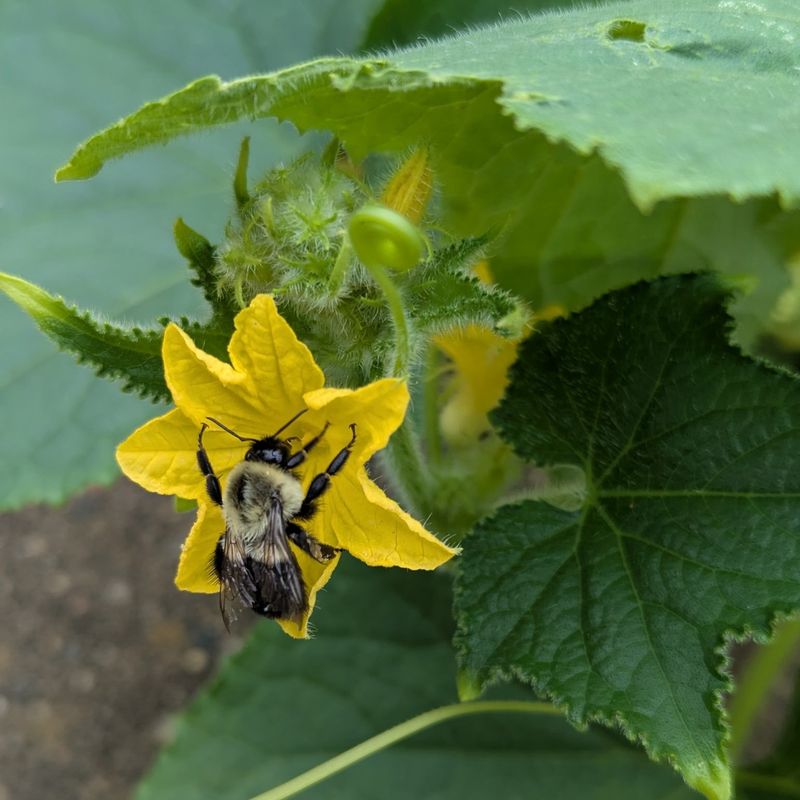
A vine covered in flowers but producing almost no fruit – or setting tiny fruits that shrivel and drop before they develop – is telling you something different than a vine loaded with oversized cucumbers. That pattern points toward pollination rather than harvest timing.
Penn State Extension’s cucumber pollination guide explains that most open-field cucumber varieties depend on insect visitors to transfer pollen from male to female flowers, and that insufficient pollination leads to reduced fruit set, misshapen fruit, or aborted tiny fruits.
Late summer weather in North Carolina can make pollination less reliable. University of Minnesota Extension’s vining vegetable guide notes that pollinators tend to be less active during very hot, rainy, or otherwise unfavorable weather, which means fewer flower visits happen exactly when summer heat peaks.
If you notice flowers opening early in the morning but bees are rarely present, that timing gap can reduce fruit set even on a healthy vine.
Some greenhouse and specialty cucumber varieties are parthenocarpic, meaning they can set fruit without bee pollination at all. Minnesota Extension’s pollination requirements resource and University of Georgia Extension both distinguish parthenocarpic types from standard open-field varieties.
Knowing which type you planted matters before you decide what to do next.
Routine hand-pollination is generally not necessary for standard varieties grown in open gardens where bees are present. A more useful step is to avoid anything that discourages pollinators.
EPA pollinator protection guidance and EPA label compliance resources are clear that insecticide applications on blooming plants can harm the bees you need for fruit set. If you feel a spray is necessary for pest control, check the product label carefully for pollinator protections and timing restrictions before applying anything while flowers are open.
Heat can pause fruit set even when the vine looks healthy
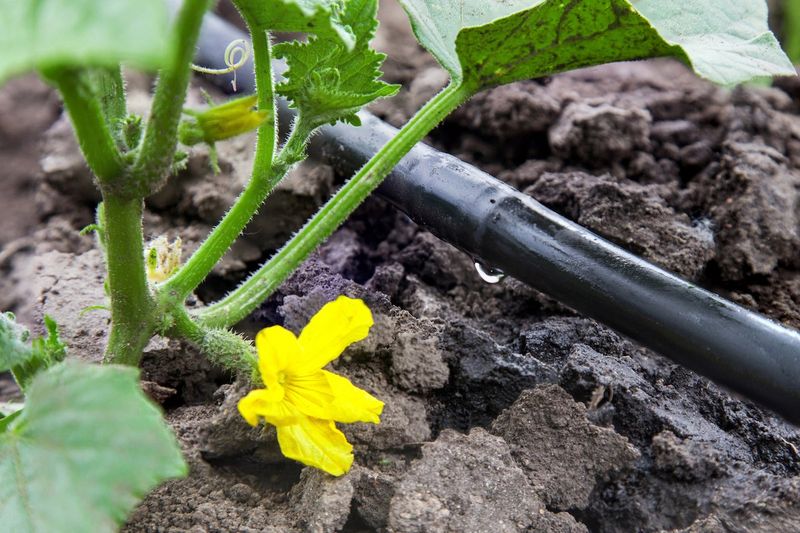
A cucumber plant can look perfectly green and vigorous in August and still stop setting fruit. One reason that gets overlooked is high temperature, particularly hot nights.
University of Minnesota Extension’s vining vegetable guide reports that temperatures in the 90s, especially when nights stay warm, can cause cucumber flowers and small developing fruits to abort before they have a chance to size up.
When that happens, the vine is not diseased, the soil is not necessarily wrong, and the harvest schedule may be perfectly fine. The plant is simply responding to heat stress by dropping flowers and small fruits rather than investing energy in them.
Fruit set often resumes on its own once temperatures moderate, which can happen as August gives way to September in many parts of North Carolina.
Recognizing a heat pause matters because it keeps you from chasing the wrong fix. Increasing fertilizer, watering overhead, or pulling the plant in response to what is actually a temporary weather-related slowdown would be the wrong move.
The practical response is to keep the vine watered at the root zone, continue harvesting any mature fruit that is present, and watch for new flower and fruit development as temperatures shift. A brief pause during the hottest stretch of summer does not mean the season is over.
Leaf and stem symptoms are clues, not diagnoses
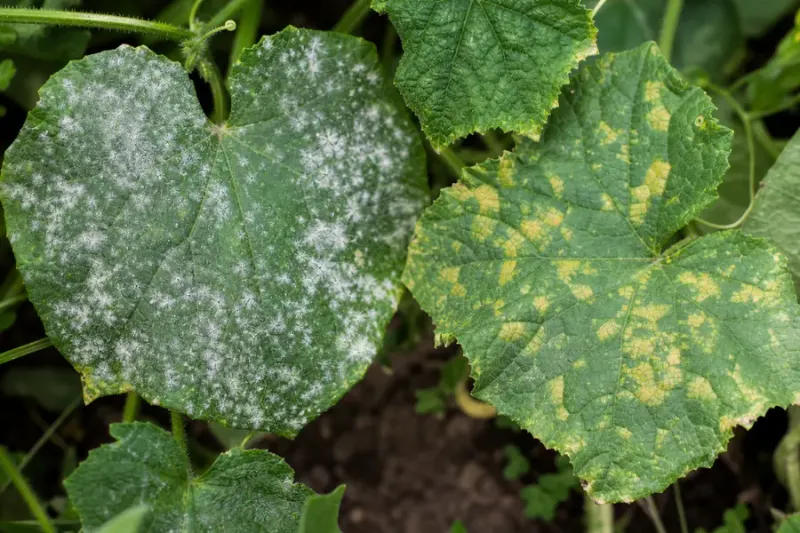
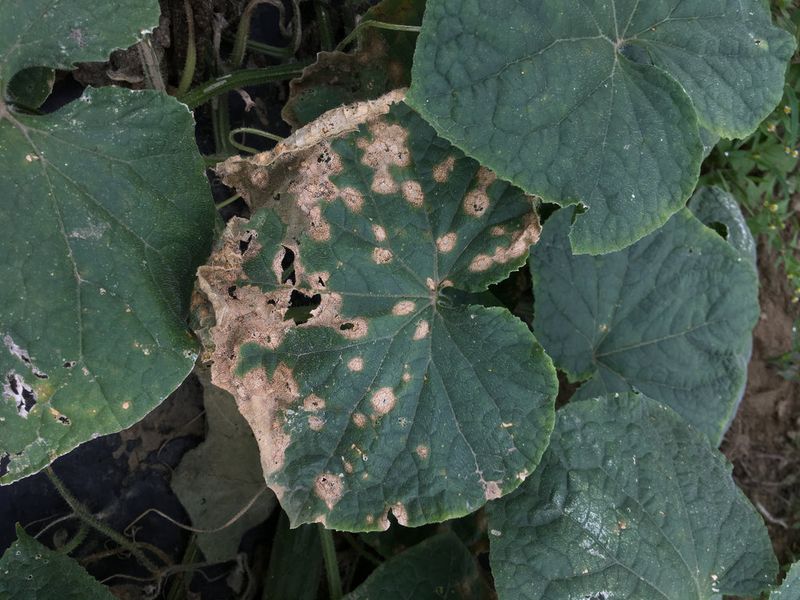
While you are moving through the vine to harvest, take a few extra seconds to look at the leaves and stems rather than just the fruit. White powdery growth on leaf surfaces, angular yellow or brown lesions, gummy or discolored patches on stems, rapid leaf loss, or sudden wilting are all signs that something beyond a harvest backlog may be affecting the plant.
None of those symptoms alone identifies a specific disease, and acting on a guess without confirming the cause can make things worse rather than better.
North Carolina’s late-summer combination of heat, humidity, and rain creates conditions where several cucurbit diseases can develop or spread quickly. NC State’s powdery mildew resource describes the chalky white coating that appears on leaf surfaces, while NC State’s downy mildew guide covers the angular yellow lesions that can spread rapidly under humid conditions.
NC State’s anthracnose resource and their gummy stem blight guide describe two additional problems that can cause lesions and dieback under late-summer conditions.
Wilting is worth treating with particular caution as a clue. A plant that droops in the afternoon heat and recovers by morning may simply be responding to temperature and moisture stress.
One that wilts rapidly and does not recover even with adequate water may be dealing with a vascular problem, root stress, or disease. NC State’s diseases and disorders handbook chapter and University of Illinois Extension both note that wilting has multiple possible causes and should be investigated rather than assumed.
General advice to water more or apply a fungicide is not safe or useful without first knowing what you are dealing with. Different diseases have different management approaches, and some fungicide products are only appropriate for certain pathogens.
Identify the problem first using NC State Extension resources, then choose a response that fits the confirmed issue and follow all product-label directions.
Rapid wilt requires a different response
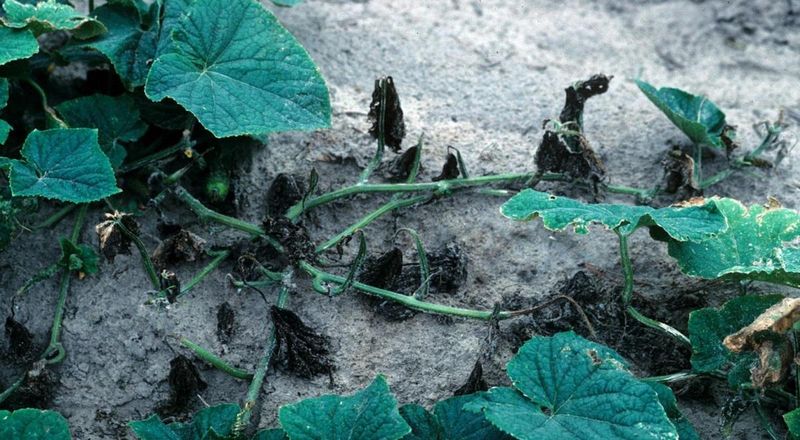
A vine that collapses quickly – wilting across multiple stems within a day or two without obvious drought stress – deserves a different kind of attention than a slow production slowdown. One possibility is bacterial wilt, a disease spread by cucumber beetles that infects the plant’s vascular system and prevents water from moving normally through the stems.
NC State Extension’s cucurbit pest resource documents the cucumber beetle as a key vector for bacterial wilt in North Carolina gardens.
Wilting alone does not confirm bacterial wilt – heat, drought, root damage, and other stresses can produce similar symptoms – so it is worth ruling out simpler causes first. Check soil moisture, look for physical damage at the base of the stem, and see whether the plant partially recovers after a cool night.
If the wilt is rapid, progressive, and unresponsive to watering, bacterial wilt becomes a more likely explanation.
Harvesting more frequently and watering consistently will not cure a plant infected with bacterial wilt. University of Illinois Extension notes that once bacterial wilt takes hold, removing the infected plant is generally the practical response.
Leaving a wilted, infected plant in place does not help, and cucumber beetles can continue feeding on it and spreading the pathogen to nearby vines. Confirm the situation as best you can before pulling the plant, but do not count on a harvest intervention to turn it around.
Use a harvest-first checklist, then follow the evidence
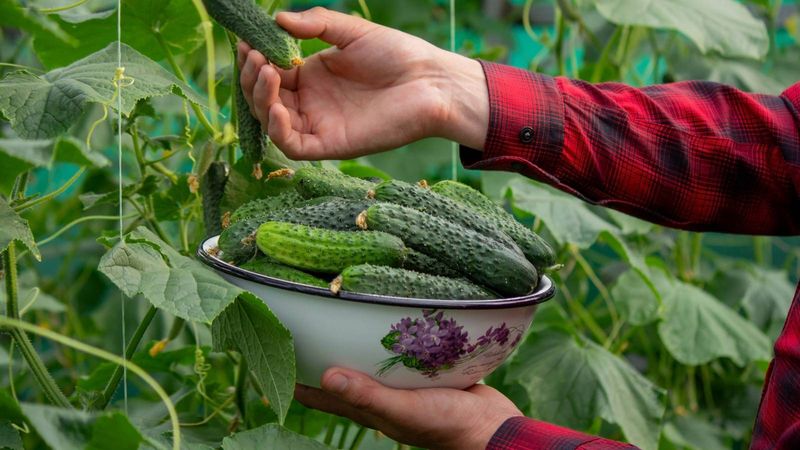
When a cucumber vine slows down in August, start here: walk the entire vine, lift the leaves, and harvest every cucumber that is mature, oversized, yellowing, swollen, or seedy. Use pruning shears or a knife rather than pulling.
Come back the next day and do it again. NC State Extension and NC State Extension Gardener both support four to five picks per week as the standard for a productive vine, with daily or every-other-day checks during peak season.
After you harvest, check soil moisture and water at the root zone if the top few inches are dry. Then look at the flowers and small fruits for signs of pollination problems, and scan the leaves and stems for any unusual spots, growth, or wilting.
University of Minnesota Extension documents heat-related flower abortion as a separate cause of slowdown, so note the overnight temperatures too.
Frequent picking is the best-supported first move when mature fruit is the limiting factor. But if the vine has no oversized fruit to remove, flowers are aborting, leaves show lesions, or a plant wilts without recovering, the cause lies elsewhere.
NC State’s cucurbit pest resource and University of Illinois Extension point to insects, disease, and environmental stress as independent causes that need their own responses. A productive late-summer cucumber garden rewards the gardener who keeps checking – not just for ripe fruit, but for what the whole plant is trying to say.