
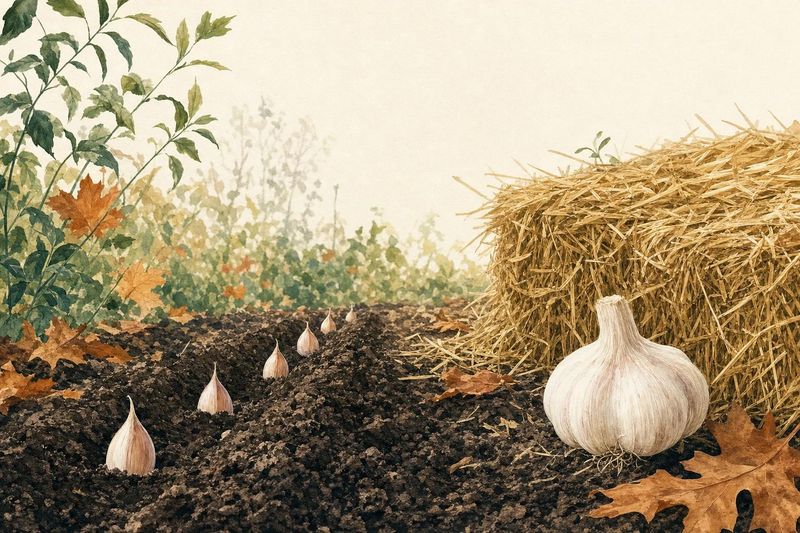
You pull up your garlic after months of care, and instead of a plump bulb packed with cloves, you find one smooth round ball. It looks a bit like a small onion, and it can feel like a lot of wasted effort.
Cold weather does play a part in how garlic forms cloves, but it is only one piece of the puzzle. Here is how to sort out what may have gone wrong and what to try next in Texas and Florida beds.
A single-round bulb does not prove chilling was the missing step
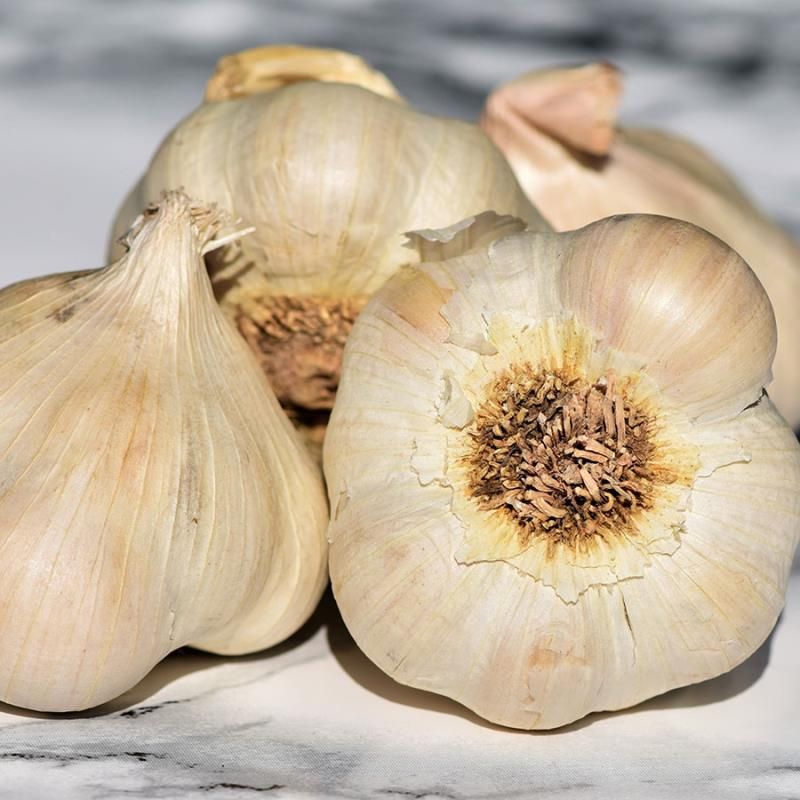
Few things are more puzzling than digging up garlic and finding one smooth round bulb with no cloves inside. Plenty of Southern gardeners have been there, and many wonder if skipping a spell in the refrigerator was the mistake.
Maybe, but it is not a safe conclusion. Cold exposure can help garlic form cloves, yet it is not the only factor involved.
Oregon State University Extension describes bulb development as depending on enough plant growth, a period of cold, and then growth under long days. It also notes that the way temperature and day length interact differs from one garlic genotype to another.
Research on chilling cloves before planting shows the same kind of variety. A 2015 trial by Wu and colleagues tested different chilling treatments and saw different results depending on the temperature and length of the chill.
So a round bulb is a clue, not a verdict. The goal here is to explain what cold does, check the other factors in your garden, and decide whether a fridge chill is worth trying at all.
Cold is one signal in garlic bulb development
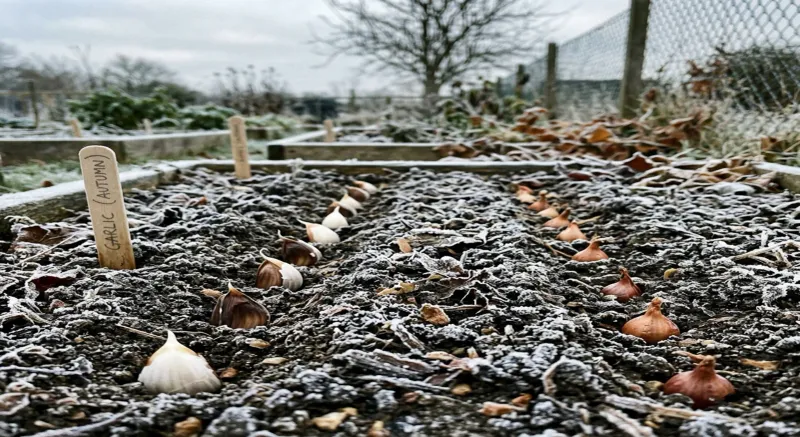
Gardeners call it vernalization, and the idea is simple. Some plants need a stretch of cool weather to switch from one stage of growth to the next.
For garlic, that cool spell can help trigger the split into separate cloves.
Cold is only one signal, though. Oregon State University Extension points to three parts: plants that have grown enough, a cold period, and then long days as spring moves along.
Skip or shortchange one of these, and the bulb may not develop the way you expect.
The mix also changes by garlic type. The same extension source says the link between temperature and day length varies by genotype, so a treatment that suits one variety may do little for another.
A softneck grown in Florida and a hardneck grown farther north are not playing by the same rules.
Older production guidance shows how long the cold talk has been around. A Texas A&M garlic guide mentions temperatures below 40°F for 6 to 8 weeks for vernalization.
That is a production-scale benchmark, not a rule for every home-garden variety.
Grocery-store garlic adds uncertainty
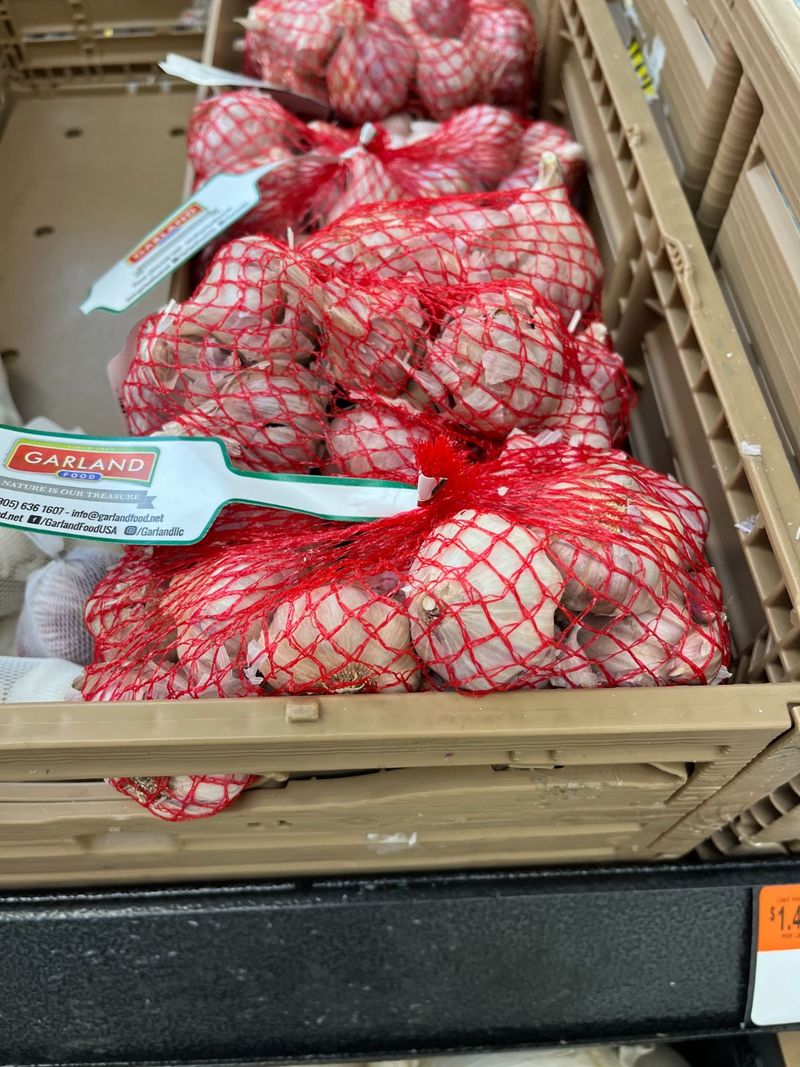
Tossing a few cloves from the kitchen into the garden bed is tempting. Sometimes it works fine.
The trouble is that you rarely know much about where that bulb came from.
Extension sources raise a few possible concerns. Iowa State University Extension says retail garlic may be poorly adapted to local conditions, may have been treated to keep it from sprouting, or may carry disease.
University of Maryland Extension raises similar cautions for home growers. Those warnings are tied to the regions those sources cover, and they do not mean every supermarket bulb is treated or will fail.
Here is where chilling gets overrated. A stretch in the refrigerator does not tell you whether a bulb is suited to your area, and it cannot clean out a disease.
It also cannot promise that cloves will divide.
If you do try a grocery bulb, treat it as an experiment. Plant a few cloves, keep notes, and compare them with garlic bought from a source that knows your region.
Texas and Florida follow different planting calendars
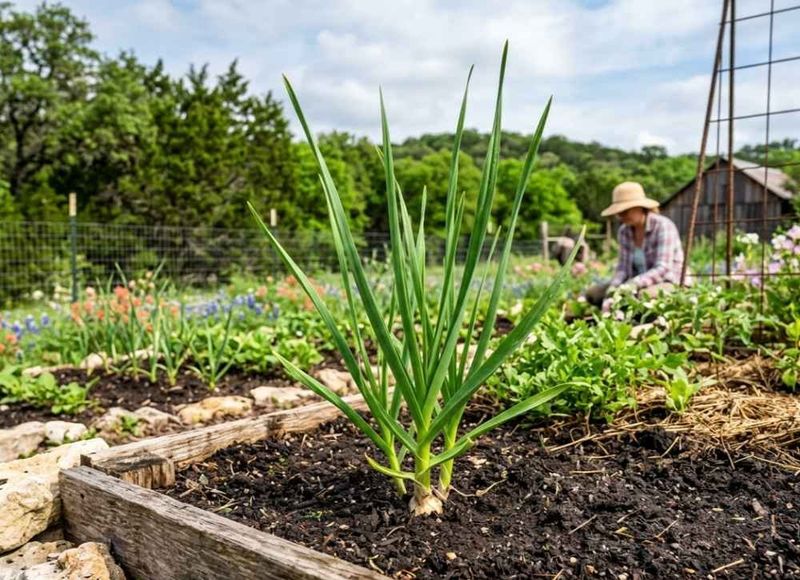
Planting date matters before any fridge talk begins, and Texas and Florida do not share a calendar. Texas is huge, and its climate swings from the Panhandle to the Gulf Coast.
The Texas A&M AgriLife fall vegetable guide lists garlic planting dates by region, with months ranging across July, August, October, November, and December. That means no single month works as statewide advice.
Check the listing for your own region first.
Florida has its own guidance. UF/IFAS Gardening Solutions recommends planting from late fall through early winter.
Another page, UF/IFAS on fall herbs, gives October through January as a suggested window.
Notice what these calendars do not say. Neither one tells every gardener to refrigerate cloves first.
They point to fall and early winter planting, and your local extension office can tell you how that fits your zone.
Chilling trials do not establish one refrigerator recipe
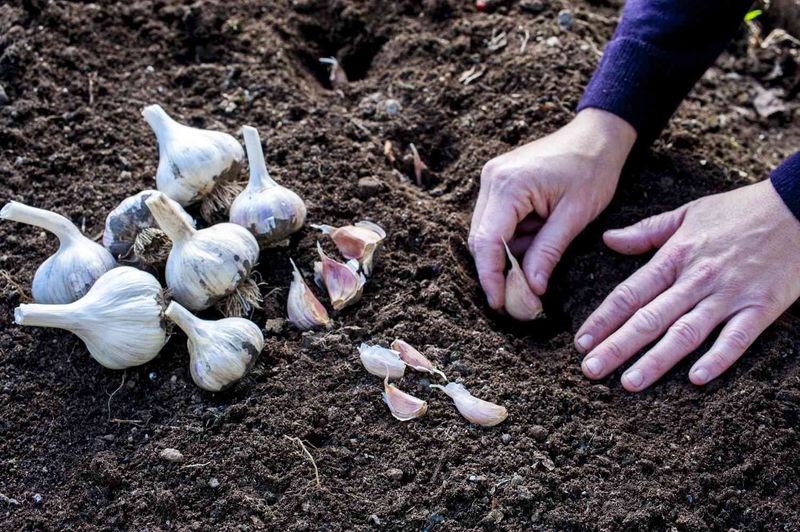
If you search for how long to chill garlic, you will find numbers. The catch is that those numbers come from specific tests, not from a rule that fits every garden.
In the 2015 trial by Wu and colleagues, one cultivar responded well to 5°C (41°F) for 20 days. Other temperatures and durations gave varying results.
Longer chilling in that trial was linked to lower yield and lower average bulb weight, so more cold time was not automatically better.
A separate study, Bandara and colleagues on pre-plant chilling and cloving, found that the effective chilling duration varied by cultivar and growing setting.
You may also run into the Texas A&M garlic guide, which cites below 40°F for 6 to 8 weeks. That is older production guidance.
It does not prove that every home-garden variety needs that exact treatment in a home refrigerator.
The practical takeaway is to tie any chilling plan to a named variety or a local extension recommendation, not to a number you saw once.
Choose region-matched planting stock before reaching for the fridge
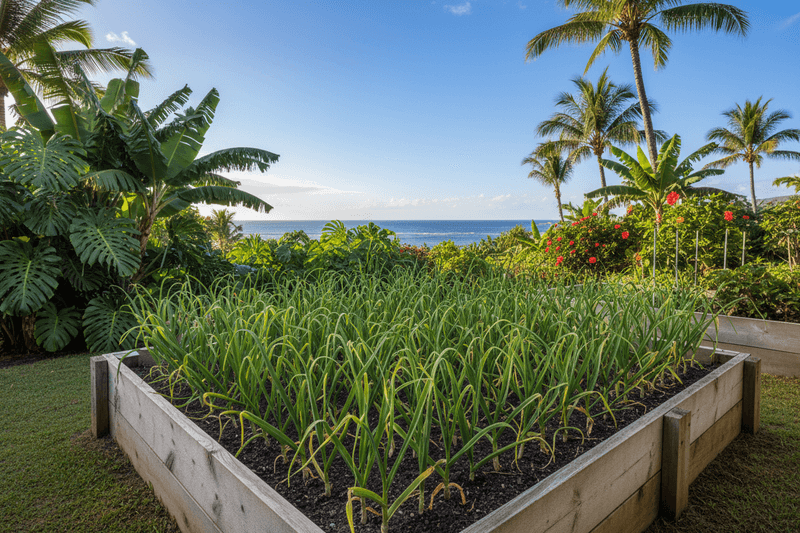
Start with what you can control most easily: the planting stock and the planting date. Garlic sold or recommended for your area has a better chance of matching your seasons than a random bulb of unknown origin.
For Florida, UF/IFAS recommends the softneck varieties Artichoke and Creole. Texas gardeners have no single statewide pick to follow.
Use the region-by-region dates in the Texas A&M AgriLife fall guide, then ask your county extension office or a local nursery which varieties do well nearby.
Chilling comes after that, and only if reliable advice supports it for your chosen variety. Trials like Wu and colleagues and Bandara and colleagues show that results differ by cultivar and setting, so match any chill to a specific recommendation.
Neither regional stock nor a fridge chill can guarantee a particular bulb. Garlic keeps a few surprises for every gardener, and a round bulb is just a good reason to take better notes next season.