
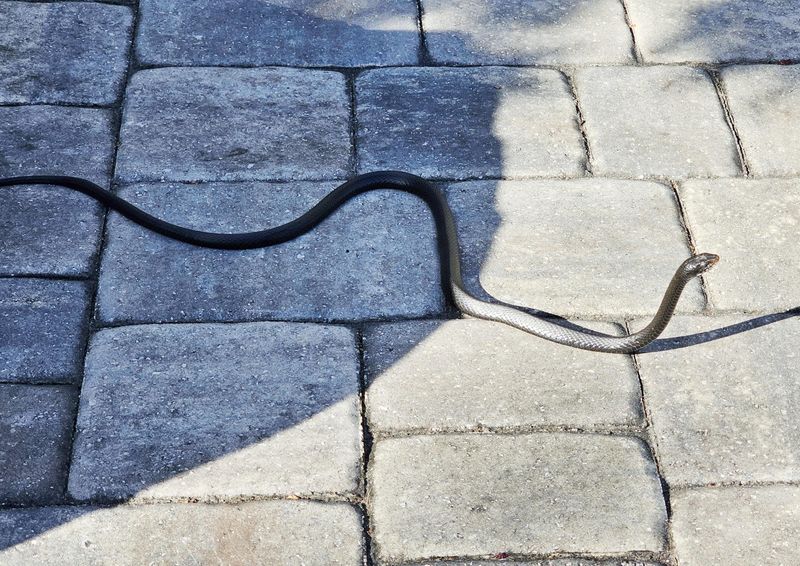
A slim black snake streaks across the lawn, and your heart jumps. Odds are good you just met a Florida black racer, a native snake that lives in many neighborhoods.
It may snack on a few rodents, though that is only part of its story. Here is what the snake really does, how to tell it apart from look-alikes, and how to handle the encounter safely.
A racer may eat rodents, but it is no rodent patrol
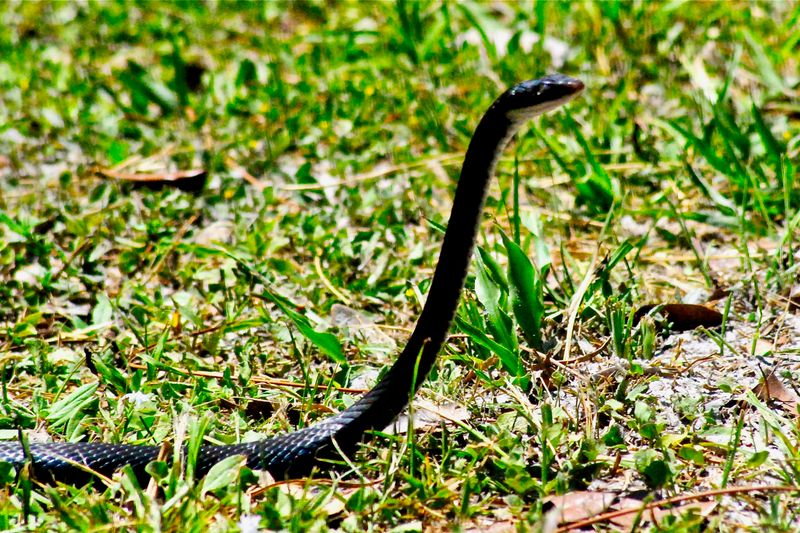
Few Florida snakes get a warmer welcome from gardeners than the black racer, and part of that reputation is deserved. Racers are opportunistic predators, which means they eat whatever suitable prey they come across.
Small mammals, including rodents, are on that menu, so a racer may take a mouse or young rat now and then.
The full picture is broader, though. According to the Florida Museum’s racer species guide, frogs, lizards, and small snakes make up most of the reported diet in Florida.
Rodents are one item among many, not the main course.
That difference matters when you picture what a racer does for your yard. A snake that eats a wide range of prey will not specialize in the mice nibbling at your garage or the rats in your attic.
One racer passing through is not a pest-control service, and it cannot be counted on to clear out an infestation.
Think of it as a small bonus instead of a plan. Racers are a natural part of Florida’s wildlife, and each one adds a little predation pressure on frogs, lizards, and sometimes rodents.
If rodents are already a problem at your house, you will still need to deal with food sources, entry points, and, if needed, a licensed pest professional.
So the honest answer to the shock of seeing a fast black snake is mixed. It is a native predator doing what native predators do, and it deserves some respect.
It is just not a guaranteed helper with a job description.
What a racer’s presence does—and does not—tell you
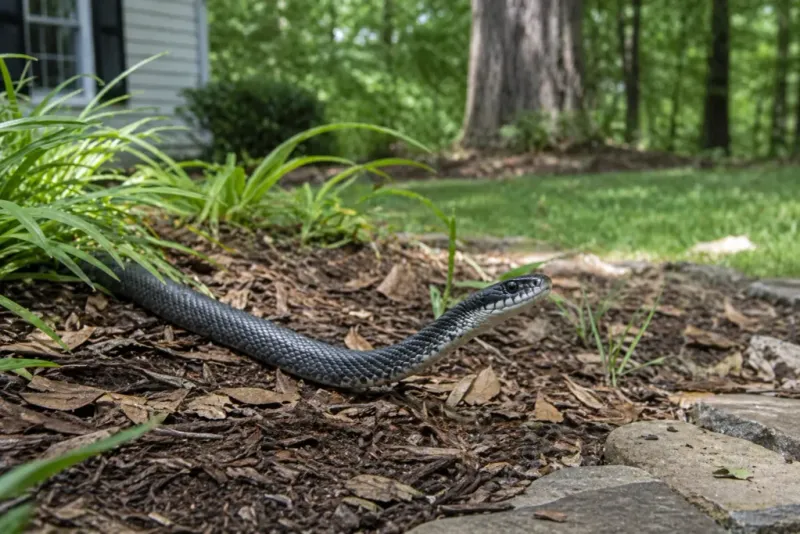
Spotting a racer feels like a verdict on your yard, but it is closer to a coin toss of timing. Racers live in a wide range of habitats, and they are common in suburban and residential areas across Florida.
Your lawn is simply one of many places they travel.
That means a sighting does not prove your garden is thriving or full of diverse wildlife. A snake crossing from one lot to the next looks the same as one that lives under your shrubs.
All you can say for sure is that a snake used or passed through the space that day.
The same goes for rodents. Because racers eat mostly frogs, lizards, and small snakes, seeing one does not mean mice or rats are nearby.
Some general snake advice from wildlife agencies notes that frequent sightings around buildings can point to rodents, but that is a rule of thumb for snakes overall, not a reading you can take from a single racer.
A better habit is to treat the sighting as a nudge to look around. Check for brush piles, spilled birdseed, and clutter near the foundation.
Those are things you can actually fix, and they tell you far more about your yard than one fast snake does.
You can still enjoy the moment. Watching a racer glide through the grass is a small reminder that Florida yards are shared space, even when the visitor is only passing by.
A black coat is not enough to identify a racer
Picture a typical adult Florida racer. It is slender, with a smooth black or bluish-black body and often a pale chin or throat.
That description is a good starting point, but it is only a starting point.
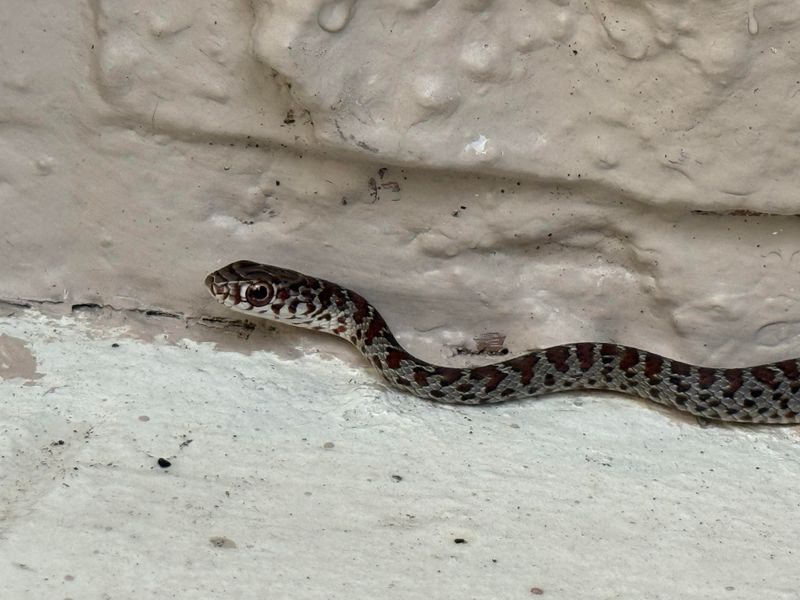
Young racers look very different. Juveniles are gray with reddish-brown blotches, so a small one may not seem like the same animal at all.
The Florida Museum’s identification guide describes both stages, and it is a handy page to bookmark.
Color and speed are poor shortcuts. Plenty of Florida snakes look dark in shade, and many move quickly when startled.
Florida also has venomous species, so guessing from a quick glimpse is a gamble you do not need to take.
Instead, notice what you can safely see from a distance. Look at body shape, how the head and neck look, any pattern along the back, and the color of the chin.
A phone photo taken from a respectful distance is often enough to compare against a reliable guide later.
If you cannot say with confidence what the snake is, leave it alone. Walk the kids and pets away, and ask a qualified professional or use a trusted Florida identification resource.
These tips apply to Florida snakes, and species and local guidance can differ in other parts of the South.
Give the snake room, even if it is nonvenomous
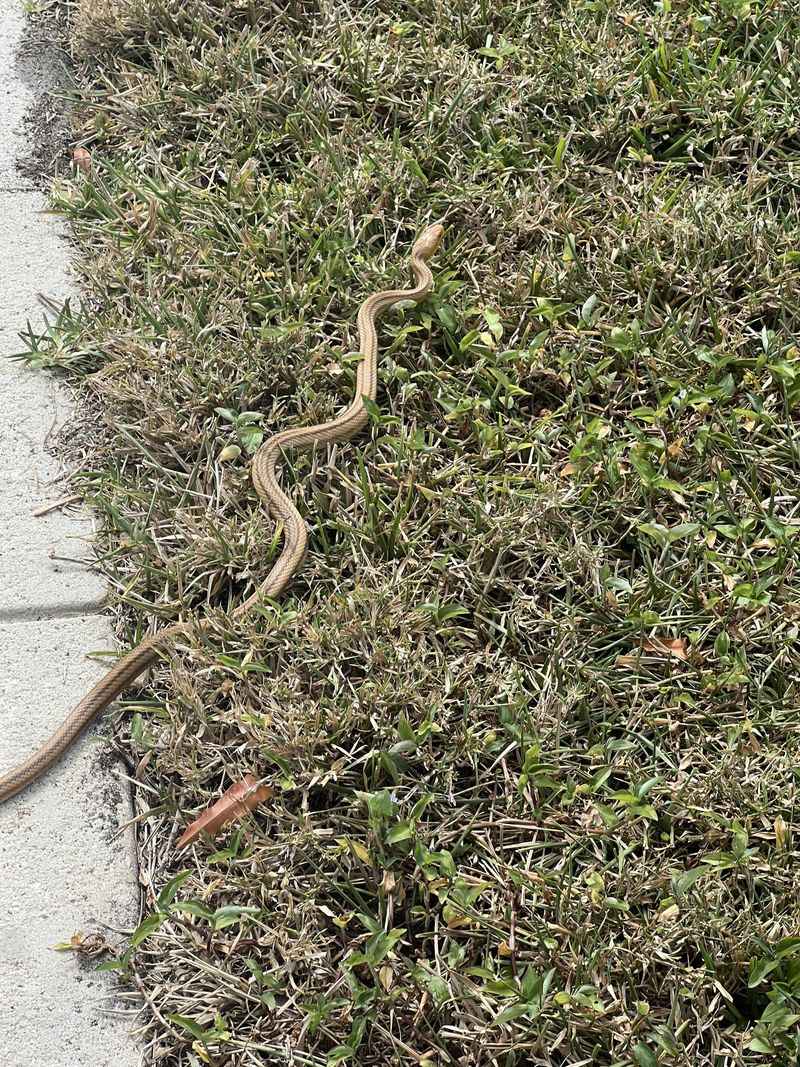
When a racer notices you, it usually takes off. Racers commonly flee when approached, which is why they seem like blurs.
That speed is a defense, and it works best when the snake has a clear escape route.
Take that route away and the story changes. A racer may strike or bite if it is cornered, grabbed, or pinned, according to the Florida Museum.
Nonvenomous does not mean safe to pick up, so skip the shovel, the bucket, and the bare hands.
The best response is the boring one. Stand back, watch, and let the snake go on its way.
Keep children and pets inside or well away until it is gone.
On killing snakes, the Florida Fish and Wildlife Conservation Commission generally advises against it. The one limited exception is the unlikely case of a venomous snake posing an immediate danger to people or pets.
Even then, distance is your first tool.
If you think a snake could be venomous, or it is somewhere that creates a safety concern, such as a doorway or a play area, do not approach it. Contact a qualified professional, such as a licensed wildlife trapper, as suggested in UF/IFAS gardening guidance.
Taking a few quiet minutes to call is far safer than a rushed attempt to handle it.
Reduce food sources and hiding places around the house
If you would like fewer snake encounters, work on what draws wildlife in. Start with food.
Spilled birdseed and pet-food scraps can attract rodents, as the Florida Fish and Wildlife Conservation Commission points out, and rodents can in turn attract snakes.
Sweep up seed under feeders every few days, and consider a tray that catches hulls. Feed pets on a schedule and bring bowls indoors afterward.
Store birdseed and pet food in lidded containers, not open bags in the garage.
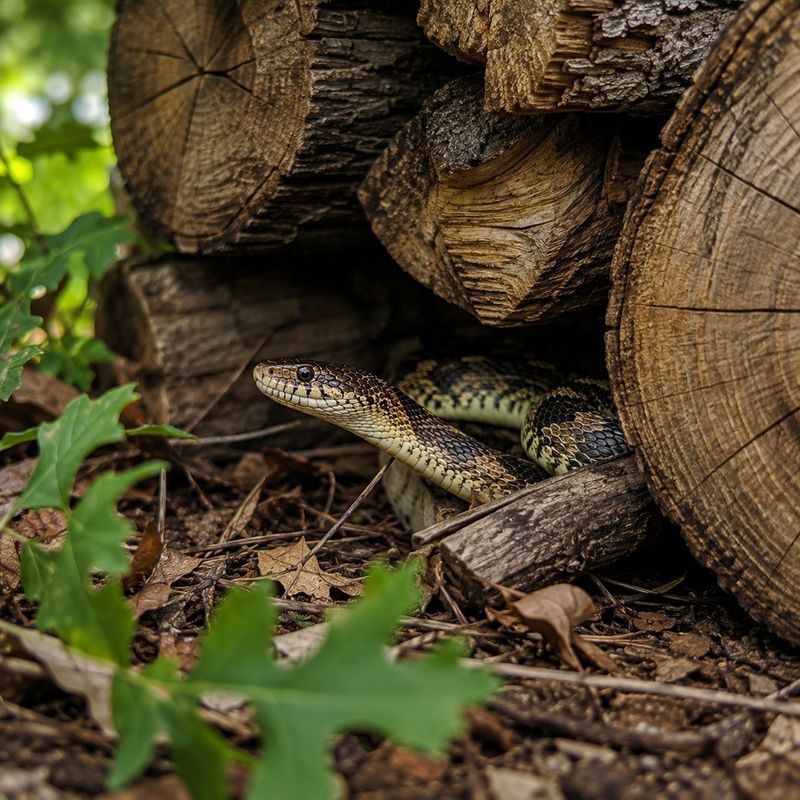
Next, look at cover. Snakes like low, dark places where they feel safe.
Clearing debris, brush, and clutter is a core step in UF/IFAS guidance on unwanted wildlife.
Walk your property with fresh eyes. Haul off old boards, loose lumber, and stacks of pots.
Keep woodpiles and compost bins away from the house, and trim dense shrubs and tall grass near walls and walkways.
You may be tempted to buy a snake repellent. Hold off, because UF/IFAS Extension notes that chemical repellents have not been proven effective.
Money spent on lidded bins and a weekend of cleanup goes much further.
No yard can be made snake-proof, and these steps will not promise an end to sightings. They do cut down on rodents and hiding spots, which makes your space less inviting.
Florida’s frequent storms leave plenty of debris, so a quick check after each big blow is a smart routine.
A native predator, not a guarantee
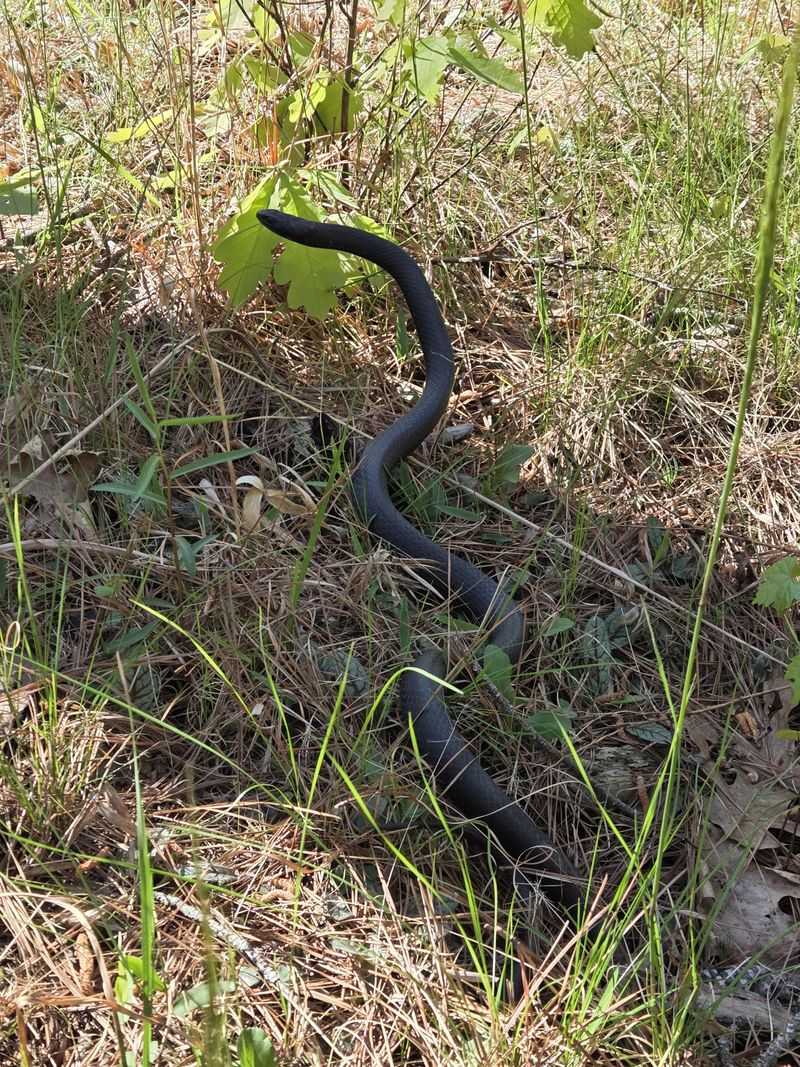
A correctly identified racer may eat some rodents, yet it is neither a dependable pest-control fix nor a score for your yard’s health. It also will not guard your property or keep venomous snakes away.
Watch from a distance, and tidy up food and cover if you want fewer run-ins.
Florida’s wildlife shares the neighborhood whether we plan for it or not. The racer that races past your hose is just doing its own rounds, and your best move is to let it finish them.