
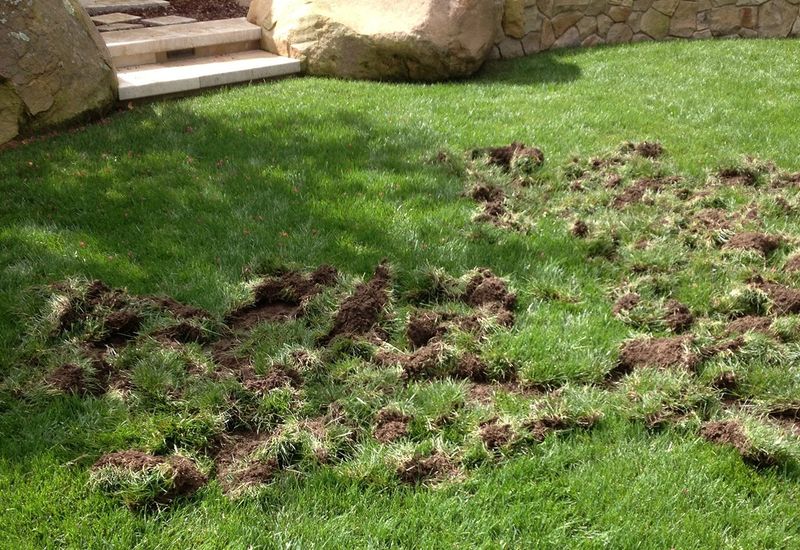
You step outside in the morning and find fresh patches of turf flipped back like little rugs. Something came looking for food, but the holes alone do not say who it was or what it wanted.
In parts of California, fall is a time when lawn damage like this gets noticed more often. A few simple checks can help you figure out the visitor, look under the grass, and choose a calm, wildlife-friendly response.
Repeated digging is a clue, not a diagnosis
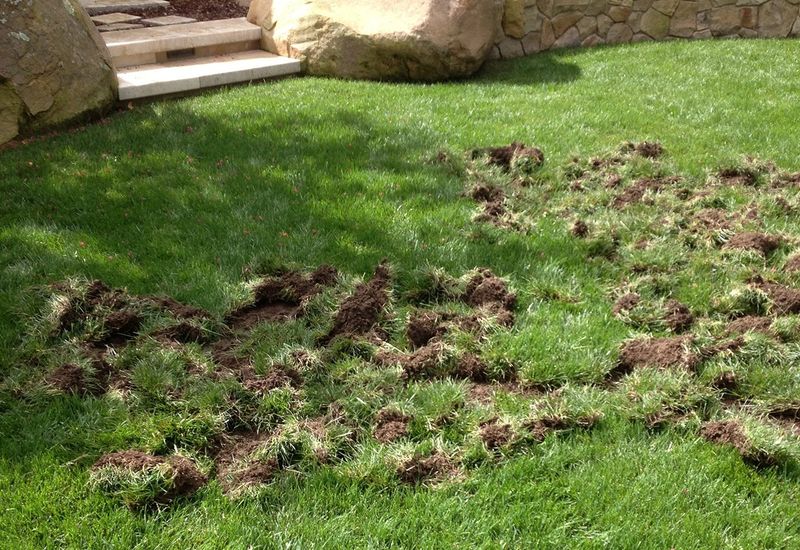
Torn-up turf tells you that an animal went looking for something to eat. It does not tell you which animal, and it does not prove what the food was.
Raccoons are a common suspect, and they are mostly nocturnal in California, according to the California Department of Fish and Wildlife. Still, being active at night is not proof of anything on its own.
Skunks also dig in lawns, and their damage can look much like a raccoon’s. Small cone-shaped pits or rolled-back flaps of sod could come from either one.
Other wildlife may poke around too, so the pattern of holes is a hint rather than an answer. Not every lawn gets visited, and not every fall brings digging, so there is no need to assume the worst.
The best first step is to identify the visitor before you choose a response. Look for clear tracks in soft soil or damp dirt near the damage.
A raccoon track looks a bit like a small human hand, with five long toes. A skunk track shows five toes with visible claws and a more compact shape.
UC Master Gardeners of El Dorado County also point out that several animals can wreck a lawn, which is why checking matters.
A wildlife camera is another easy option. Aim it at the freshest dug spot for a few nights and see who shows up.
Knowing the animal keeps you from chasing the wrong fix, and it helps you protect wildlife that is simply doing what comes naturally.
Grubs are one possible food source
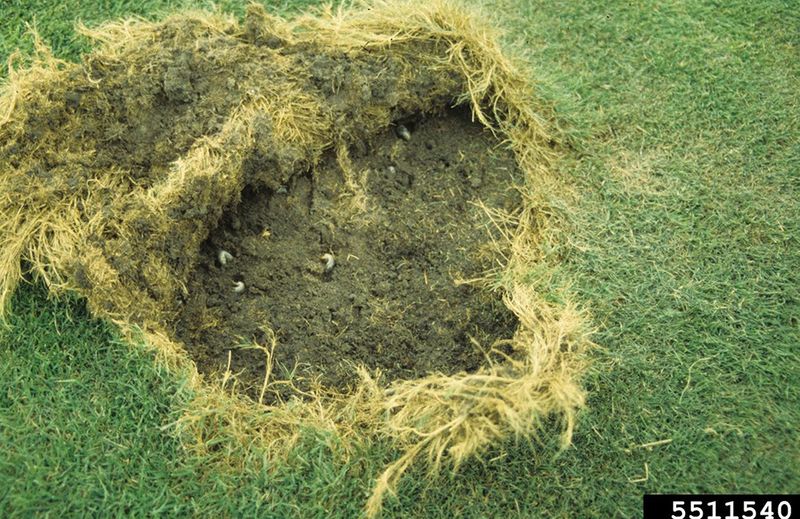
Soil under a lawn is a pantry for hungry wildlife. When white grubs are plentiful, raccoons and other animals that hunt for prey may dig for them, as UC IPM’s page on masked chafers explains.
Damage from masked chafer grubs is often easiest to spot in late summer or early fall. That timing varies with where you live and with local conditions, so a coastal yard and an inland valley yard may follow different calendars.
Grubs are only one explanation. Animals may be after earthworms, and a damp lawn can bring plenty of those to the surface zone.
Other lawn damage can also look like animal digging, so the grub idea is a hypothesis that needs checking. Many California lawns never have a grub problem at all.
Here is a twist that surprises people. UC notes that raccoons may keep returning to places where they once found food, even when pests are no longer abundant.
Digging can continue after the food supply has shrunk, simply out of habit. You can read more about turf pests in UC’s lawn insects guidance, and about the animals themselves in UC’s raccoon page.
That means wiping out grubs may not end the visits. Treat grubs as one clue among several, and look beneath the surface before deciding what is actually going on.
Check the turf before treating for grubs
A quick check can save you from using products you do not need. Pick a spot at the edge of the damaged area, where the grass is still alive.
Cut a square about one foot on each side, using a spade or sturdy knife, and fold it back.
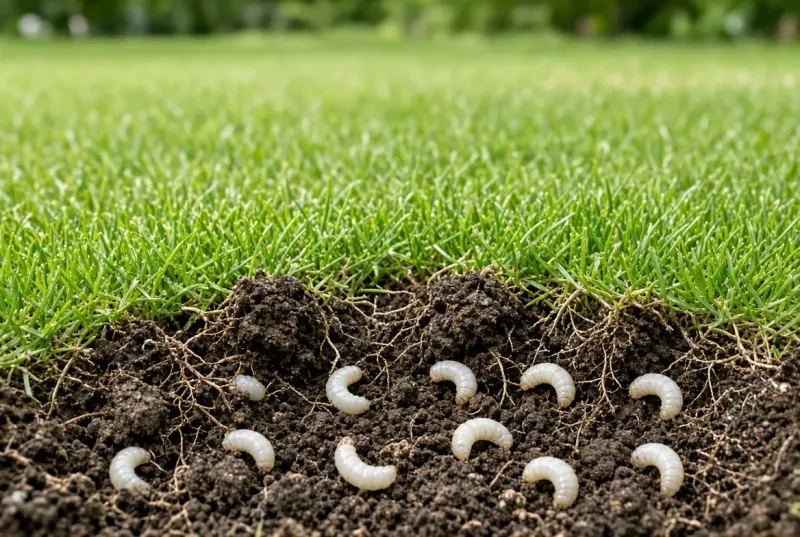
Crumble the soil and look closely around the roots. You are searching for plump, C-shaped white grubs with tan heads.
Count them, then press the turf back in place and water it gently. Repeat in a few other spots, since grubs are often patchy.
UC guidance in its lawn insects page gives about six white grubs per square foot as the point where curative treatment may be needed. Up to six can usually be tolerated in ordinary turf.
Finding a few grubs is normal, and it is no reason to reach for a bottle. The number is a guide for when treatment might be worth considering, never a cue for automatic or preventive spraying each fall.
If your counts fall below that level, skip the insecticide and keep monitoring. If they run higher, UC’s monitoring and treatment guidance can help you decide whether action is warranted and what to choose.
Treat only when monitoring says it makes sense, not simply because an animal is digging.
There is a good reason for the restraint. Broad-spectrum insecticides can harm beneficial organisms and water quality, including the helpful insects and soil life your yard depends on.
Checking first keeps your lawn, and the wildlife around it, safer.
Reduce easy food around the home
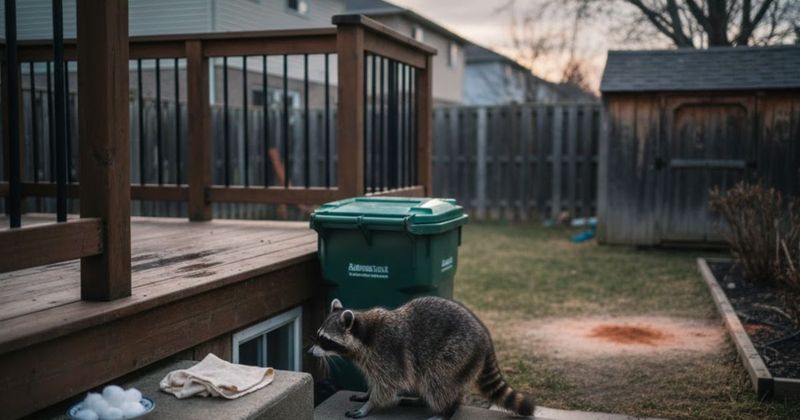
Before a single hole gets patched, take a stroll around the yard at dusk and ask what an animal might find tasty. Raccoons eat a varied diet, and easy meals close to the house can keep them coming back.
Cutting those meals is a gentle step that does not depend on whether grubs are in your lawn.
Start with the trash. Use cans with tight, secure lids, and store them in a garage or side area if you can.
Outdoor pet food is another big draw, so bring bowls inside before nightfall. Pick up fallen fruit and nuts from under trees as often as you can, since a lemon or walnut on the ground is a free snack.
Never feed raccoons on purpose, even a little. Handouts teach them to expect food at your place and make visits more likely.
UC IPM’s raccoon guidance lists these habitat changes as a first move, while cautioning that they may not solve every problem.
That caution is worth keeping in mind. These steps lower the number of reasons to stop by, yet an animal that already knows your yard may still check it.
Think of them as steady, low-impact groundwork rather than a quick cure. They cost little, harm nothing, and also help keep opossums, rats, and other uninvited guests away from your patio.
Use deterrents with realistic expectations

Fencing is the one tool that can truly keep animals out of a specific spot, such as a vegetable bed or a small lawn section. The catch is that ordinary fences often fall short with raccoons, which can climb over them or dig underneath.
A barrier needs to be built with that in mind, and even then results can vary.
Motion-activated lights, sounds, and sprinklers are popular because they are easy to set up. They may startle a visitor for a short time.
UC IPM’s raccoon page notes that raccoons can get used to these devices, so a gadget that works on Monday may be ignored by the following week.
You will also see plenty of sprays, granules, and kitchen-cabinet tricks promoted online. UC IPM reports that commercial repellents and common home remedies have not been effective for raccoons.
That is why this article does not recommend them, and why it is smart to be wary of anything promising a sure result.
If you try a device, treat it as an experiment. Rotate its position, watch your wildlife camera, and note whether the digging actually changes.
Pair it with the food-reduction steps from earlier, and keep your expectations modest. No single deterrent is a guaranteed fix, and a calm, layered approach is kinder to wildlife and easier on your budget.
Get help safely if the damage persists

If the digging keeps going despite your best efforts, it is time to bring in help. Contact the California Department of Fish and Wildlife, your local animal services office, or a qualified wildlife professional.
They can assess the situation, confirm the animal, and explain legal options for removal when removal is truly needed.
Resist the urge to trap an animal and drive it somewhere else. CDFW’s nuisance wildlife guidance makes clear that California requires authorization to release wildlife elsewhere.
Relocation can also be hard on the animal, and it is not a do-it-yourself project. UC’s raccoon guidance likewise points readers toward proper channels for persistent problems.
While you work around the yard, keep an eye out for raccoon feces, which may be piled in one spot called a latrine. Do not touch them bare-handed, and avoid stirring up or breathing dust.
CDC guidance recommends gloves and careful cleanup, and it advises an N95 respirator when cleaning in confined spaces such as attics or garages. If the mess is large or indoors, a professional can handle it.
Lawns recover. A patched, reseeded patch can look good again within a season, while a healthy relationship with the wildlife next door lasts far longer.