
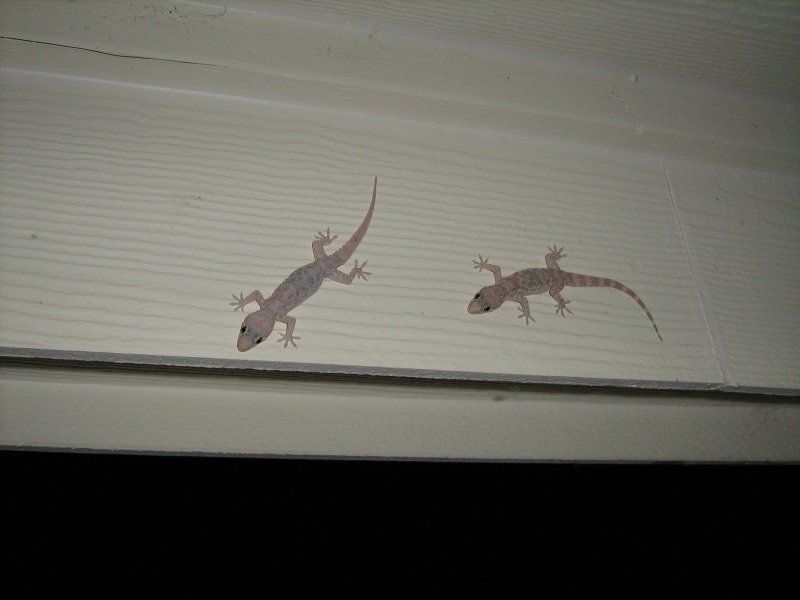
If you live in Central Texas and have spotted a small, pale lizard clinging to your porch wall at night, you have almost certainly met a house gecko. These little reptiles are drawn to the same exterior lights that pull in moths, crickets, and yes, cockroaches, which means they can occasionally snag an insect you would rather not have near your door.
Welcoming them outdoors is easy enough, but it helps to understand what they can and cannot realistically do for your roach problem. The honest answer is that geckos may eat some insects near your porch, yet keeping roaches out of the house still comes down to sealing gaps and cleaning up the conditions that invite pests inside.
What You Are Likely Seeing on a Central Texas Porch
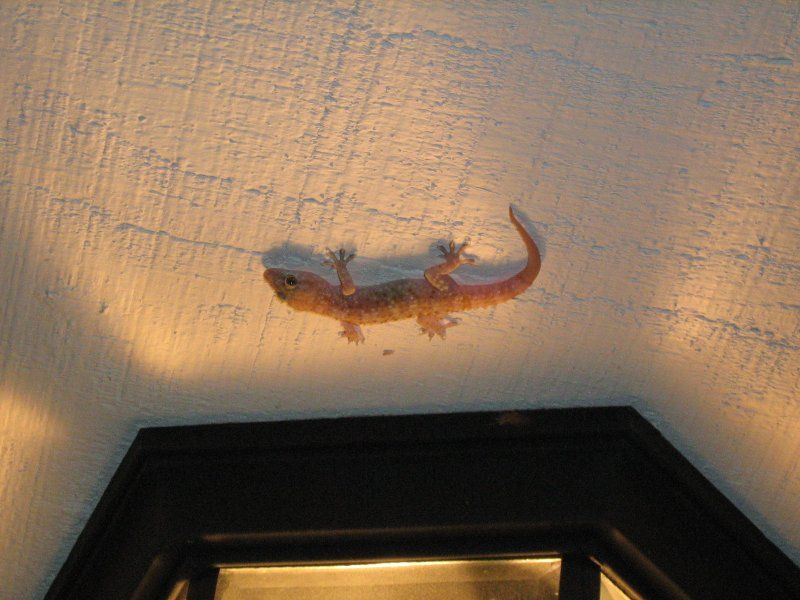
That small lizard frozen near your porch bulb is almost certainly a Mediterranean house gecko (Hemidactylus turcicusH. frenatus), and possibly a common house gecko () if you live closer to South Texas. Neither species is native to Central Texas.
Texas A&M AgriLife Extension identifies both as introduced species that have established urban populations in warm Texas cities, including communities across the Hill Country and the I-35 corridor.
Telling them apart is straightforward once you know what to look for. Mediterranean house geckos are typically light cream or tan with darker mottling and rows of raised tubercles that give the skin a bumpy, slightly rough look.
Common house geckos tend toward a pinkish-gray coloring and have a comparatively smoother body. Both species are small, rarely exceeding four or five inches from nose to tail tip, and both are almost entirely nocturnal.
After dark, these geckos position themselves on vertical surfaces near exterior lights and wait for insects to arrive. Their diet is broad and opportunistic, covering moths, crickets, spiders, and cockroaches.
Seeing one on your wall does not mean your porch is roach-free, though. A gecko may catch individual insects in the area, but documented gecko feeding behavior shows these animals eat whatever prey appears, with no preference or specialization that would target roaches above other insects.
Porch gecko activity is a modest incidental benefit, not a pest-control program.
Use the Porch You Have Rather Than Chasing More Geckos
The most practical step a homeowner can take is also the simplest: keep an existing exterior light positioned near a vertical wall where insects naturally gather. House geckos commonly station themselves on that lit surface and pick off prey as it arrives.
Research on Mediterranean gecko microhabitat selection found that ambient light level and proximity to a sheltered refuge were meaningful factors in where these animals choose to hunt, which is why a lighted wall beside a sound crack or crevice is a more grounded setup than any purchased gecko house or specific plant arrangement.
That said, retaining your current porch light is not a reliable method for increasing the number of geckos on your property. Whether geckos use a particular porch depends on local gecko populations, building design, climate, available prey, nearby predators, and shelter options.
A strategy that works on a humid Gulf Coast porch may produce fewer visible geckos in a drier inland Central Texas location. Frame the light as a condition that may support gecko activity, not as a guaranteed recruitment tool.
One genuine trade-off deserves mention. University of Florida IFAS Extension guidance on exterior lighting notes that outdoor lights attract a wide range of insects, which can increase insect activity near doors and windows.
Adding extra fixtures or leaving lights on all night to “attract more geckos” is not supported by the evidence and could pull more insects toward your home’s entry points. Work with the light you already have rather than expanding the lighting footprint.
Offer Clean Shelter Without Creating Roach Harborage
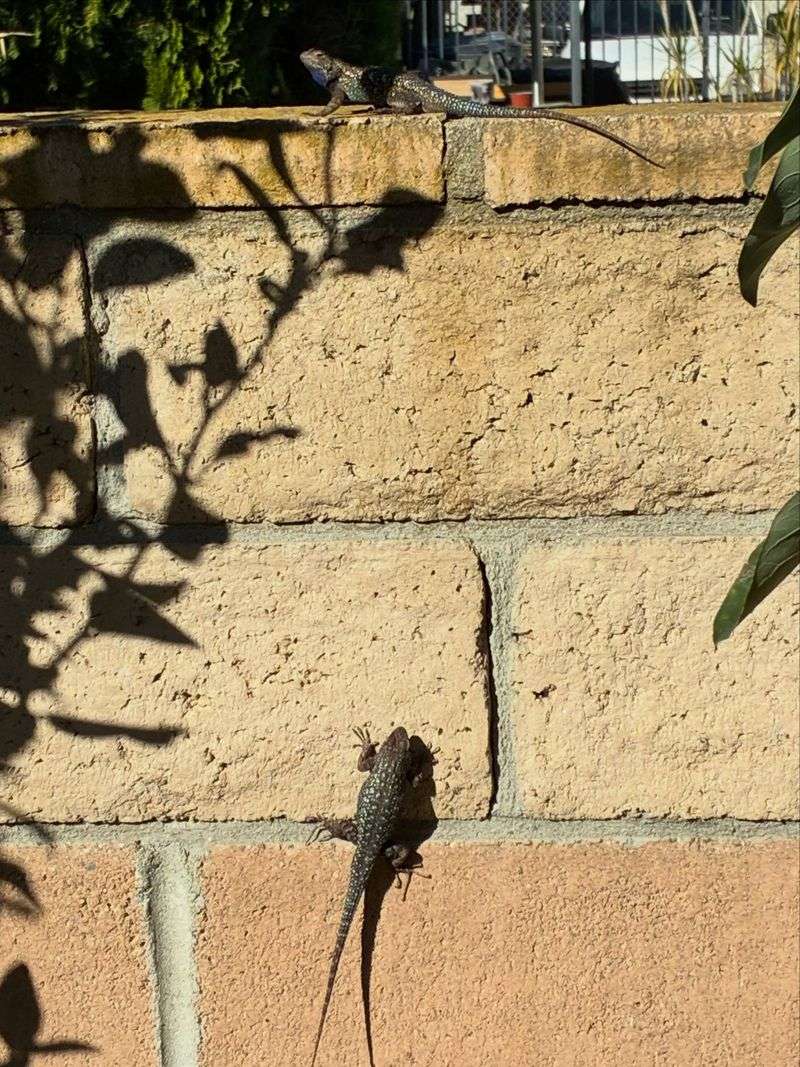
House geckos spend their daylight hours tucked into protected spaces. Cracks between masonry, gaps at building edges, spaces behind shutters, and similar tight refuges all serve as daytime hiding spots.
Knowing that, a homeowner might feel tempted to pile up materials near the porch to create more hiding places. That approach tends to backfire, because the same clutter that might attract a gecko almost certainly creates far better conditions for cockroaches.
A smarter approach is to audit what is already on the exterior of your home. A few sound, dry crevices in the masonry or at a soffited edge are reasonable to leave in place.
Those tight, dry spaces are what Texas A&M’s house gecko guidance describes as typical gecko refuge, and they do not require any construction or modification on your part. The goal is to notice and preserve the usable spots already present, not to manufacture new ones.
At the same time, remove anything near the foundation that holds moisture or provides hiding space for roaches. Cardboard boxes, scrap lumber, stacked pots, damp leaf litter, and bags of soil are all classic cockroach harborage.
Eliminating that material does double duty: it reduces the conditions roaches need to shelter and breed near your home, and it keeps the outdoor area clean enough that the dry crevices you do leave in place stand out as gecko-appropriate rather than pest-appropriate. Microhabitat research reinforces that geckos favor dry, tight refuges close to their hunting light, so a tidy foundation with a few sound gaps is a more useful setup than a cluttered one.
Keep Porch Wildlife Outside the House

Tolerating geckos outdoors is a reasonable choice for many Central Texas homeowners. Letting them move inside is a different matter.
House geckos that get into living spaces can leave small dark droppings on walls, window sills, curtains, carpets, and upholstered furniture. The droppings can stain fabric and are an inconvenience most people would rather avoid, even if the gecko itself is harmless to handle.
Fortunately, the same exclusion work that keeps roaches out also keeps geckos where they belong. Texas A&M recommends replacing worn weather stripping and sealing gaps around doors, windows, soffits, plumbing penetrations, and electrical conduit entries as the primary way to prevent house geckos from entering a home.
A door that closes with no visible gap at the threshold is doing the same job whether you are trying to exclude a gecko or a cockroach.
Walk the perimeter of your home with a flashlight after dark and look for lit gaps where interior light leaks out. Any opening wide enough to admit a pencil is wide enough for a small gecko or a juvenile cockroach.
Foam backer rod, caulk rated for exterior use, and door sweeps are inexpensive fixes that close those pathways. The underlying principle is that your porch can function as gecko habitat while your interior remains sealed against both reptiles and insects.
These goals are compatible, and the exclusion work you do for one reinforces the other.
Skip Shortcuts That Do Not Build a Safe Porch Strategy
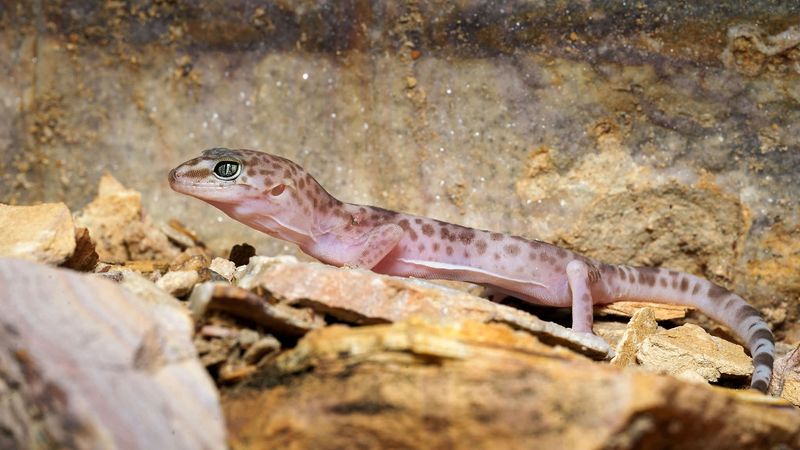
A few common ideas circulate online about how to get more geckos onto a porch, and most of them are either unsupported or counterproductive. Putting out food scraps, water dishes, or live cockroaches to attract geckos is not backed by extension guidance, and it risks drawing in other pests or sustaining the very insects you want fewer of.
Wild geckos locate their own prey without help, and creating an artificial food supply near the house works against the sanitation principles that reduce roach pressure.
Releasing purchased geckos or relocating animals from another location onto your porch carries similar problems. Moving reptiles can create animal welfare issues and may introduce animals that are not adapted to your local conditions.
EPA guidance on smart pest control consistently emphasizes reducing conditions that support pests rather than introducing new animals to manage them. Stocking a porch with captive geckos is not an integrated pest management practice.
Glue boards are another shortcut to avoid. Texas A&M notes explicitly that glue boards catch and kill geckos and do not allow for humane release.
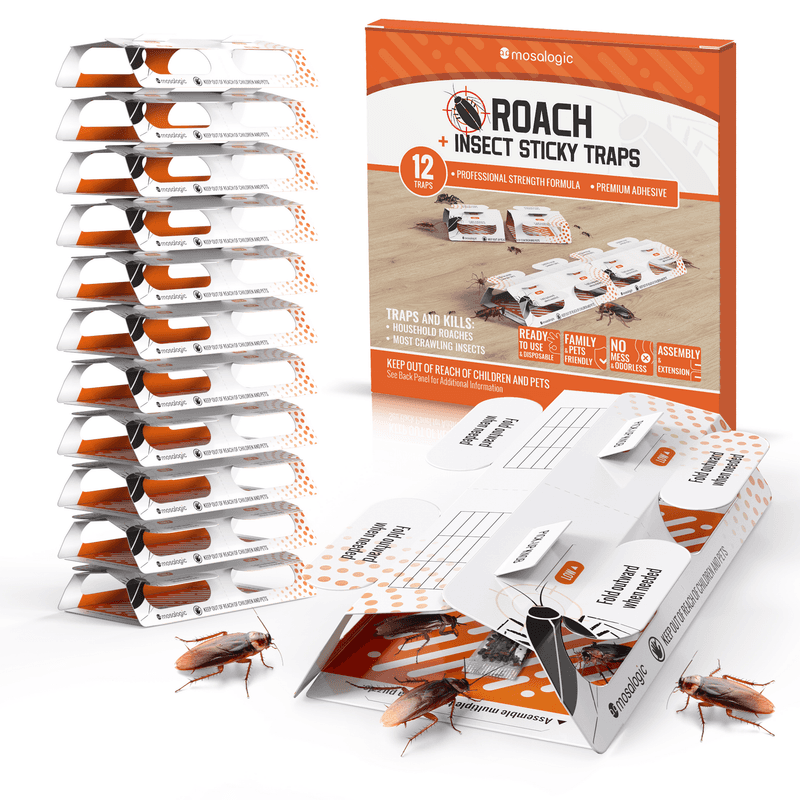
If you are using sticky traps outdoors to monitor for roaches, place them in areas where geckos are unlikely to walk across them, such as inside a cabinet or along a wall behind a stored item rather than in an open floor position.
Broad insecticide applications around the porch can also undermine the gecko setup by reducing the insect prey geckos depend on. Any pesticide used outdoors must be applied strictly according to its label, with attention to effects on wildlife, pets, and children.
Reducing the insect population with a spray while simultaneously hoping for more gecko activity is working against yourself.
Use Cockroach IPM to Protect the Indoor Boundary
Geckos may eat a roach near the porch light on any given night, but that activity does not address the conditions that bring roaches into your house. For that, you need a straightforward integrated pest management plan that targets the entry points and indoor conditions roaches actually use.
Start with the structure itself. Seal gaps around plumbing under sinks, around electrical boxes, along baseboards, and at the points where pipes enter walls.
Add door sweeps to any exterior door that shows daylight at the threshold. Check window screens for tears and replace damaged ones.
UC Cooperative Extension’s cockroach IPM guidance places exclusion at the top of the control hierarchy because it stops roaches before they establish inside, which is far easier than eliminating an active indoor population.
Sanitation and moisture control come next. Store dry food in sealed containers rather than cardboard boxes, which roaches can both hide in and eat.
Remove trash on a regular schedule and keep the bin away from the house exterior. Fix dripping faucets and slow drains promptly, because cockroaches are strongly attracted to moisture.
Wipe down the area behind the stove and refrigerator periodically, since grease and food debris in those spots can sustain a roach population even when the rest of the kitchen looks clean.
Monitoring with sticky traps tells you where activity is concentrated and whether a treatment is working. Place traps along walls in the kitchen, under the sink, and near the water heater.
University of Minnesota Extension recommends checking traps weekly and recording catch numbers so you can track whether pressure is rising or falling. When treatment is needed, appropriately placed bait stations or gel baits fit an IPM approach better than broadcast sprays, foggers, or bombs.
Gels placed in cracks and crevices near roach activity get eaten directly, while foggers push roaches into walls without reliably eliminating them. Always read the full pesticide label before applying any product and follow it exactly.
Treat Geckos as a Porch Bonus, Not a Roach Barrier
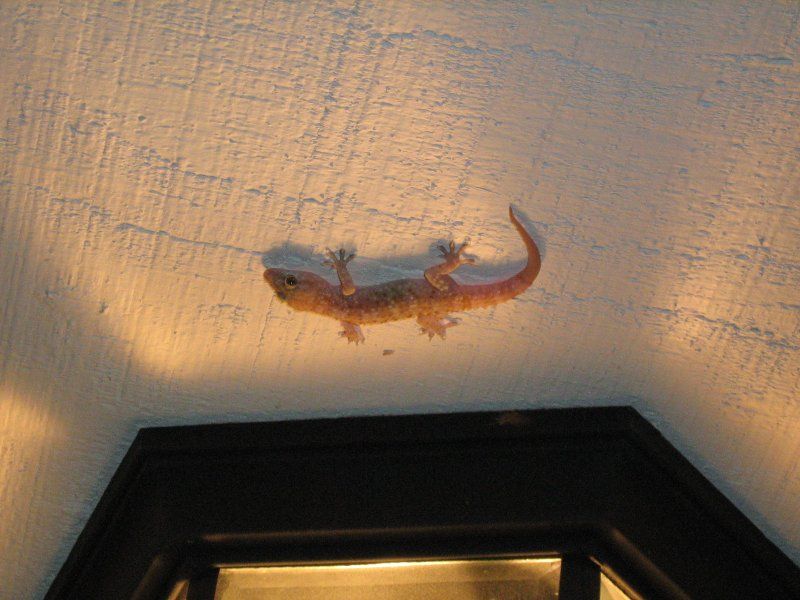
A gecko hunting near your porch light may catch a cockroach or two over the course of a warm Texas evening. That is a genuine, if modest, side benefit of having these animals around.
What the cited evidence does not show is that a porch gecko population prevents roaches from entering your home or substitutes for the exclusion and sanitation work that actually addresses indoor infestations.
Local conditions shape whether geckos use your porch at all. Climate, building materials, nearby predators, available shelter, and the local gecko population all factor in.
The Texas Invasive Species Institute notes that Mediterranean house geckos are established in urban Texas, but abundance varies by location, and a setup that draws geckos in one neighborhood may see none in another a few miles away. Their ecological effects on native species in Texas also remain incompletely documented, so describing them as definitively harmless or definitively damaging overstates what the science currently shows.
For homeowners who enjoy seeing geckos, the right setup is a clean porch with an existing exterior light near a vertical wall, a few dry sound crevices left intact, and no clutter or debris near the foundation. Keep that zone outdoors by sealing gaps into the house.
Then direct your actual pest-control effort toward the measures that address roaches reliably: exclusion, sanitation, moisture control, sticky-trap monitoring, and targeted baits. A gecko on your wall is a satisfying sight on a summer night; a sealed threshold and a clean kitchen are what keep roaches on the outside of it.