
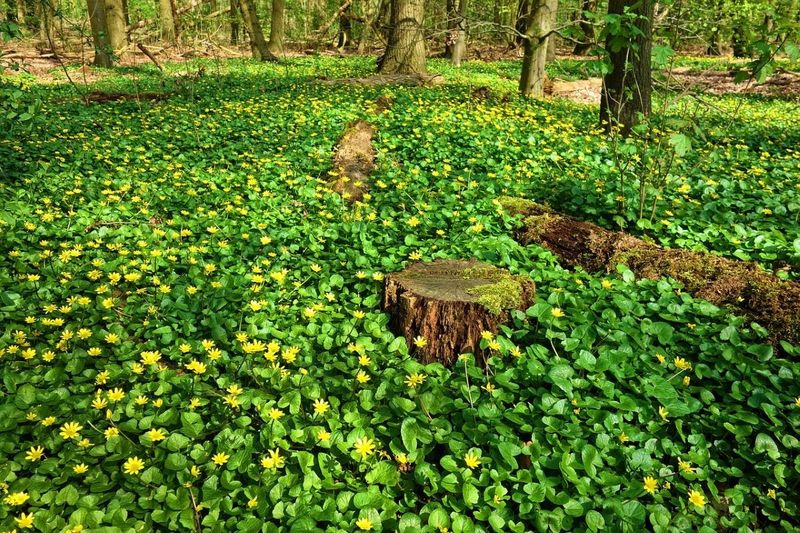
The shady strip beside the house is often the spot nobody wants to plant or walk through. A native groundcover called green-and-gold can fill that space with low green leaves and yellow spring flowers.
But no plant has been shown to chase ticks away, and that matters if you are hoping for a quick fix. Here is what green-and-gold can really do for a North Carolina side yard, and which steps help with ticks.
A groundcover cannot promise a tick-free side yard
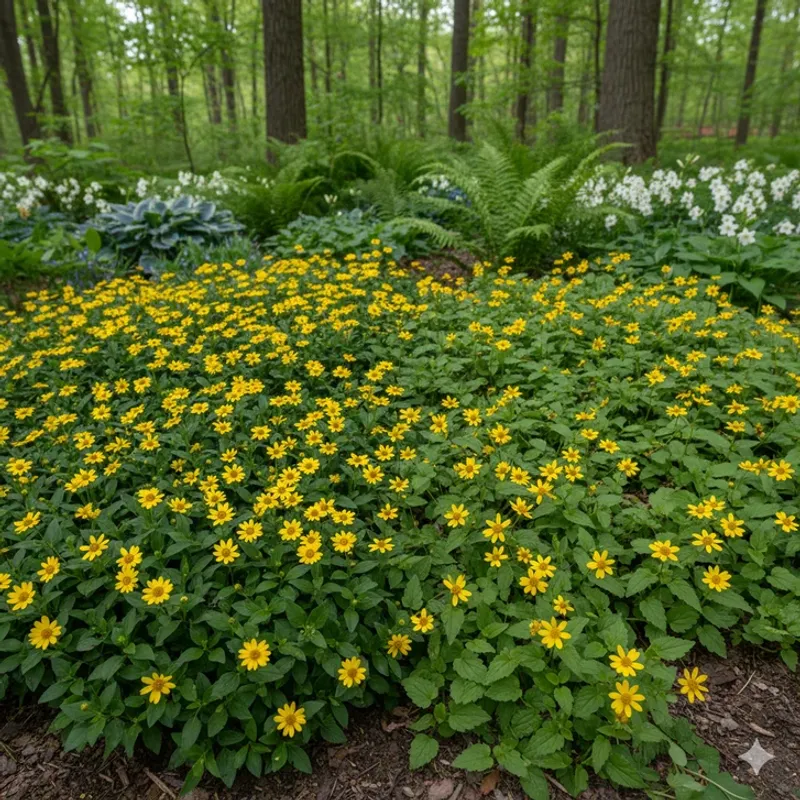
Plenty of garden claims promise that one plant will keep ticks away. For a living groundcover growing in your yard, that promise has no proof behind it.
University of Maryland Extension says it is not aware of scientific studies showing that particular landscape plants repel ticks, and it notes that ticks can be found beneath groundcover.
Some of the confusion comes from lab work. Researchers have tested oils and compounds pulled out of plants, and some of those extracts affect ticks.
That is a very different thing from a plant simply growing in a bed. A concentrated extract in a lab does not tell you what a mat of leaves does in a side yard.
So the realistic goal here is two-part. First, pick a groundcover that fits your shade, soil, and look.
Second, treat tick exposure as its own job. CDC guidance offers yard measures and personal precautions that may reduce your exposure, though none of them are guarantees.
A shady side yard is not automatically a problem spot, and it will not become a tick-free zone because of one planting. Think of the plant as a gardening decision and the tick steps as a separate set of habits.
The sections ahead cover both, starting with a native option that does well in shade.
What green-and-gold offers in the shade
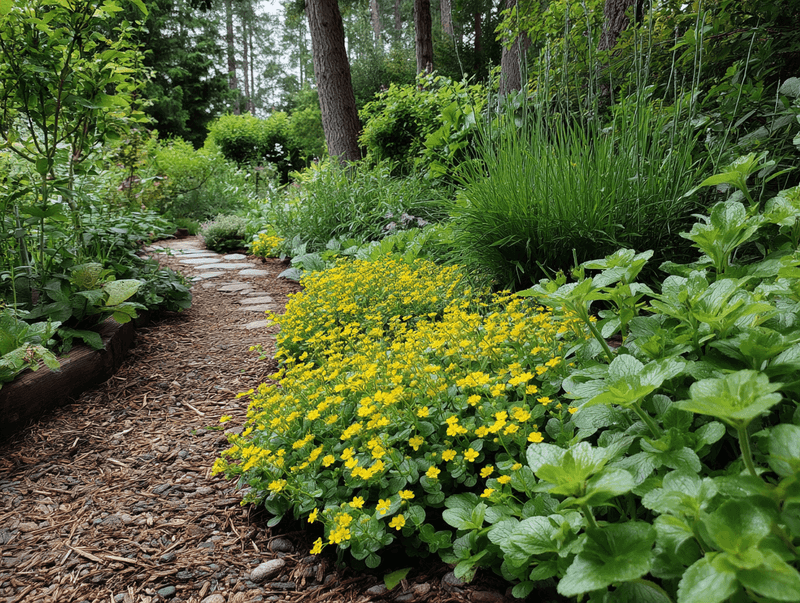
Green-and-gold (Chrysogonum virginianum) is a low, native groundcover that handles part to full shade. According to NC State Extension, it forms a mat of foliage typically up to about 2 inches tall.
Yellow flowers rise above the leaves, which gives a dim corner some color.
The plant is native to woodland areas from Pennsylvania to South Carolina, and it grows in all three North Carolina regions: mountains, Piedmont, and coastal plain. That means you can look for it whether your yard is in Asheville, Raleigh, or near the coast.
It prefers moist, well-drained soil, so a side yard where water pools after every storm may not suit it.
Wildlife gets something out of it too. NC State Extension lists bees, butterflies, and songbirds among its wildlife value.
For a homeowner who wants a native planting that supports local creatures, that is a real plus.
Those traits make it a sensible fit for a shaded strip: low growth, shade tolerance, and a native pedigree. They are gardening reasons, though.
Its love of moist, shaded ground says nothing about ticks, so choose it because it fits the spot and looks good there.
A slower option for a smaller shady area
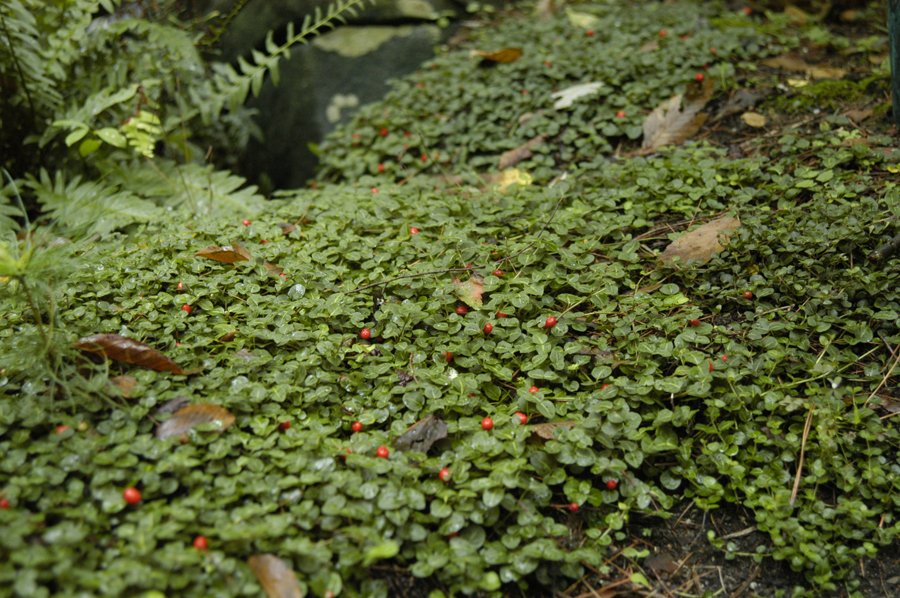
Partridgeberry (Mitchella repens) is another North Carolina native that grows in shade and part shade. It is a creeping evergreen, so its small, rounded leaves stay green through winter.
If your side yard has a patch that needs year-round color, it deserves a look.
Patience is the catch. NC State Extension says it grows slowly and may be better for smaller areas than for covering a large space.
A narrow bed by a downspout, a spot at the base of a tree, or a short stretch beside a path would be a better match than a long side-yard run.
That slow pace has a practical upside and downside. You will not be cutting it back every few weeks, but you will wait longer for it to fill in.
Plan on tucking in a few plants and letting them spread over time, rather than expecting a quick carpet.
Treat partridgeberry as a planting alternative and nothing more. There is no evidence that it repels ticks, so the decision comes down to size of the area, how fast you want coverage, and the look you prefer.
Some yards may do well with green-and-gold in the larger stretch and partridgeberry in a small corner.
Manage the yard around the planting
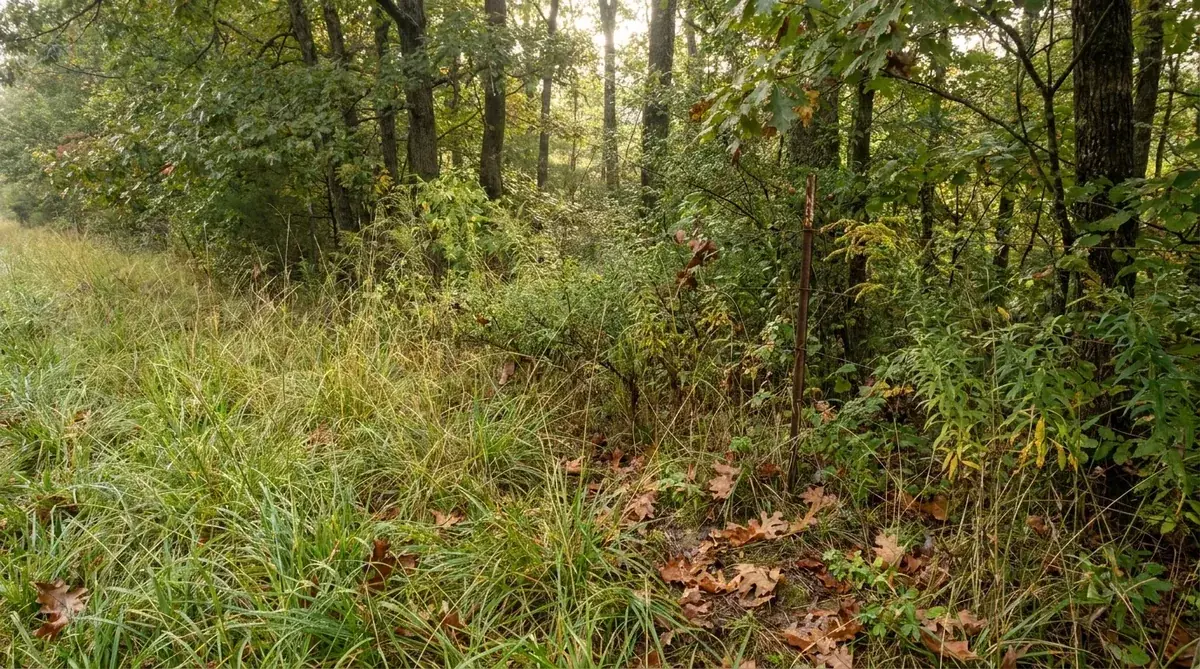
Tick exposure depends on more than what you plant. CDC guidance lists yard steps that may reduce exposure to blacklegged ticks.
They include clearing leaf litter, tall grass, and brush near homes and lawn edges, and keeping grass mowed.
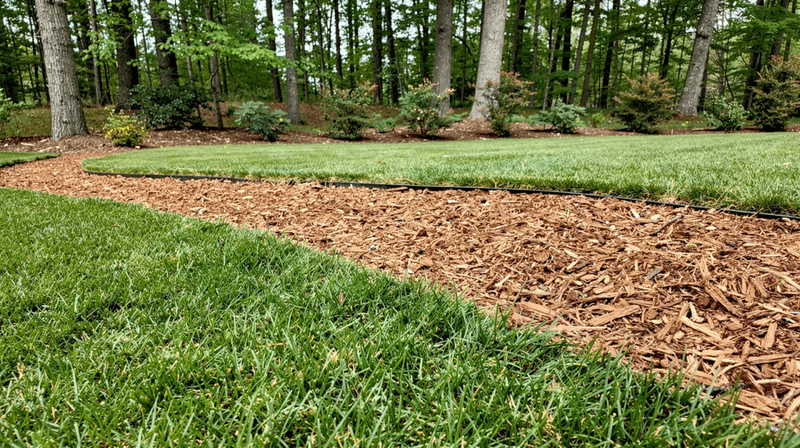
CDC also suggests considering a 3-foot-wide barrier of wood chips or gravel between the lawn and wooded areas. The idea is to create a drier, more open strip between spots where ticks may be and the places where your family spends time.
On a side yard that backs up to woods, that edge is a practical place to start.
Notice what this advice is and is not. It targets blacklegged ticks, and CDC describes the measures as things that can help reduce them, not wipe them out or stop every bite.
It does not say that any particular groundcover repels ticks, and it does not promise a tick-free yard.
North Carolina has several tick species, and the NC State tick guide is a useful way to learn which ones you might meet. Do not assume advice written for one species covers all of them.
A sensible plan keeps your planting bed tidy and your lawn edge open. Rake leaves out of the zone near the house, trim back brush, and keep the groundcover bed from creeping into places where people walk.
Then think of these chores as helping to lower exposure, not as a shield.
What the yard studies do—and do not—show
Landscaping advice sounds tidy, but the research is more mixed. A 2024 study of 42 residential properties in Connecticut found the highest blacklegged-tick nymph densities in forested areas near lawn edges where leaf litter or understory plants were present.
Yet it found no significant drop in nymph density where leaf litter was removed, lawns were left unmowed, or wood-chip barriers were installed.
That was a Connecticut study, not a North Carolina trial. It does not tell us how those measures would work in a Piedmont subdivision or a mountain cove.
What it does tell us is that raking, mowing, and mulch edges should not be sold as guaranteed ways to cut tick numbers or prevent infections.
A second study looked at recreational greenspaces in north-central Florida. Ticks and microorganisms were most common in natural, forest-surrounded habitats.
Still, researchers also detected ticks and pathogens in manicured groundcover.
That Florida work did not test green-and-gold, and it did not study residential side yards. Even so, it argues against calling any neat, planted groundcover tick-free.
A well-kept bed can still hold ticks.
The takeaway for your yard is modest. Keep the CDC-style chores if they suit your property, but do not count on them alone.
They are one layer among several.
Keep personal and pet precautions in the plan

Whatever you plant, your own habits do the most dependable work. CDC recommends EPA-registered repellents used according to the label directions.
It also recommends checking yourself for ticks after time outdoors, and that includes time spent in your own yard.
Pets deserve the same attention. CDC notes that pets can carry ticks indoors, so a quick check of your dog or cat after outdoor time helps keep them from hitching a ride onto the couch or into the bed.
Run your hands over ears, armpits, and between the toes.
Season matters less than many people think. CDC says exposure can occur year-round, though ticks are most active during warmer months.
A mild January afternoon in the Piedmont or on the coast is no reason to skip the check.
This is also why landscaping cannot stand in for protection. As the University of Maryland Extension response points out, ticks can still turn up beneath groundcover, so a planting does not remove the need to look.
Choose green-and-gold or partridgeberry for how they fit your shade, soil, and wildlife goals. Then keep the repellent and the tick checks on your routine.
A pretty bed is a good reason to go outside, and a quick check is how you come back in.