
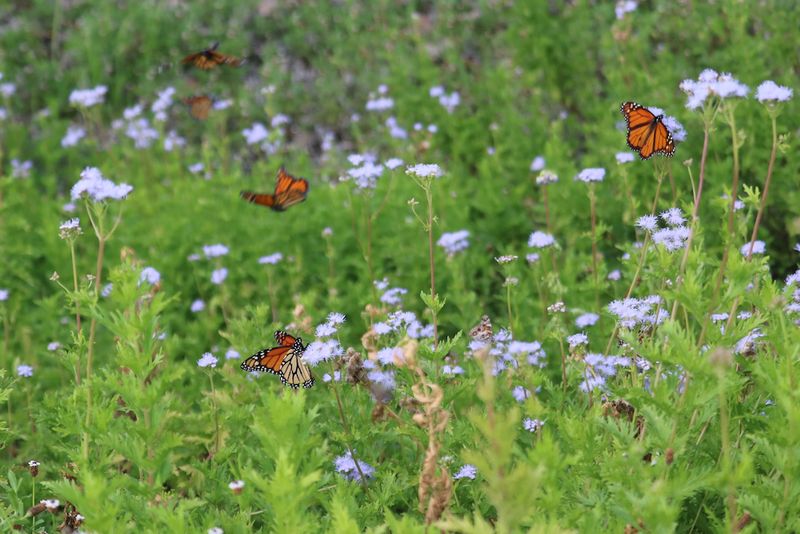
Every fall, adult monarch butterflies move through Texas on their way south, and they need nectar to fuel the journey. Gregg’s mistflower is a Texas-native perennial that blooms from summer into fall, right when those travelers are passing through.
Its clusters of blue to purple flowers can attract monarchs, queens, and other adult butterflies looking for a late-season meal. If you have a sunny to partly shaded spot in your Texas yard, this plant is worth knowing by name.
Meet Gregg’s Mistflower, a Texas Fall Nectar Plant
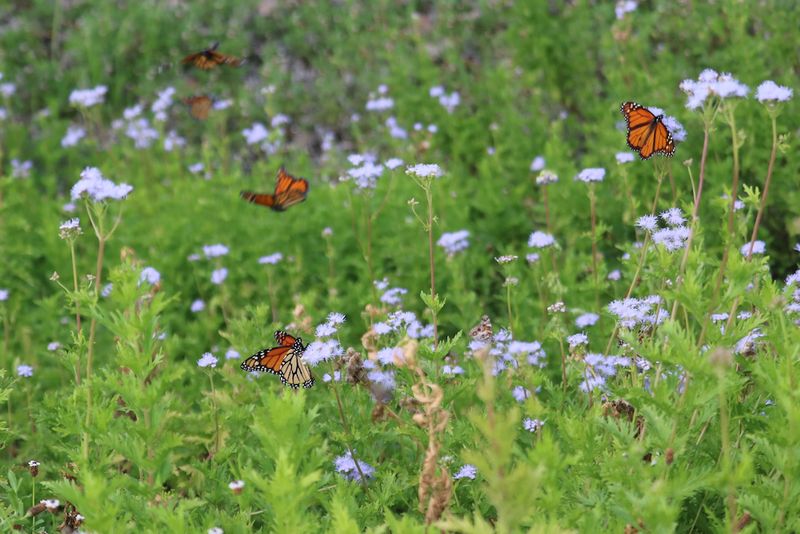
Gregg’s mistflower goes by several names, and knowing them all will save you time at the nursery. You may see it labeled as palm-leaf mistflower, palm-leaf thoroughwort, or by its scientific name, Conoclinium greggii.
Flora of North America treats it under the name Conoclinium dissectum and lists Gregg’s mistflower as a synonym, so searching either name in plant databases or extension resources will help you track it down.
The plant is native to Texas and adjacent parts of the Southwest and northern Mexico, including Arizona and New Mexico. That regional identity matters: Gregg’s mistflower is not a Florida native, and it is not appropriate for every Southern garden without checking local nursery or extension guidance first.
Its native range is its strongest credential for Texas gardeners working with Texas soils, heat, and seasonal water limits.
What you get in the garden is a low-growing perennial with deeply lobed, palm-shaped leaves and rounded clusters of small flowers in shades of blue, lavender, and purple. Texas Parks and Wildlife describes those pale-purple flower clusters as a magnet for monarchs and other butterflies, which gives the plant a vivid, wildlife-friendly presence during the weeks when fall color in Texas can be hard to come by.
The accurate promise here is a strong late-season nectar source, not a guaranteed butterfly spectacle. Gregg’s mistflower can attract migrating adult monarchs and other butterflies, but visits will depend on weather, location, plant size, and what else is blooming nearby.
North Carolina Extension’s plant profile confirms the plant’s appeal to pollinators while also noting its spreading habit, which means it rewards gardeners who plan ahead rather than those looking for a set-it-and-forget-it solution.
Why Its Fall Bloom Helps Migrating Monarchs
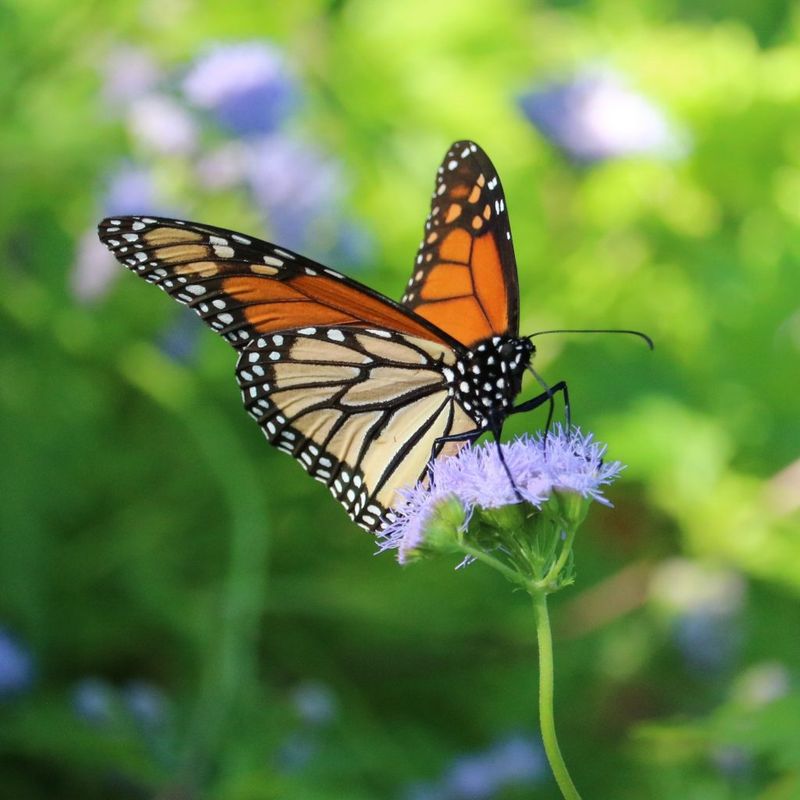
Timing is everything for a migrating monarch. These butterflies travel from the northern United States and Canada to overwintering sites in central Mexico each fall, and they need reliable nectar sources along the way to keep flying.
Gregg’s mistflower earns its place in a Texas pollinator garden largely because of when it blooms.
The USDA Southern Great Plains monarch plant guide lists Gregg’s mistflower with a bloom window that can stretch from March through November and specifically notes that its flowers coincide with fall monarch migration. That overlap is the plant’s most important wildlife credential: adult monarchs moving south through Texas in late summer and fall may encounter it in bloom and stop to feed.
Adult monarchs fueling a long migration need carbohydrate-rich nectar, and a plant that holds its flowers through October or November gives them a late-season option when many other garden plants have already finished. Texas A&M AgriLife includes Gregg’s mistflower among native fall nectar plants that can support monarchs during migration, framing it as one piece of a larger habitat rather than a standalone solution.
Queen butterflies, which are closely related to monarchs and share much of the same Texas range, may also visit Gregg’s mistflower for nectar. Queens are year-round or near-year-round residents across much of South and Central Texas rather than long-distance migrants, so their presence in the garden follows a different pattern than the fall monarch passage.
Other adult butterflies, including swallowtails and skippers, are also known to visit the flowers. Planting Gregg’s mistflower gives a Texas yard a better chance of hosting any of these visitors during the weeks when the bloom is at its peak, though no single plant can promise a predictable or large-scale arrival.
The Flowers Feed Adult Butterflies, Not Monarch Caterpillars
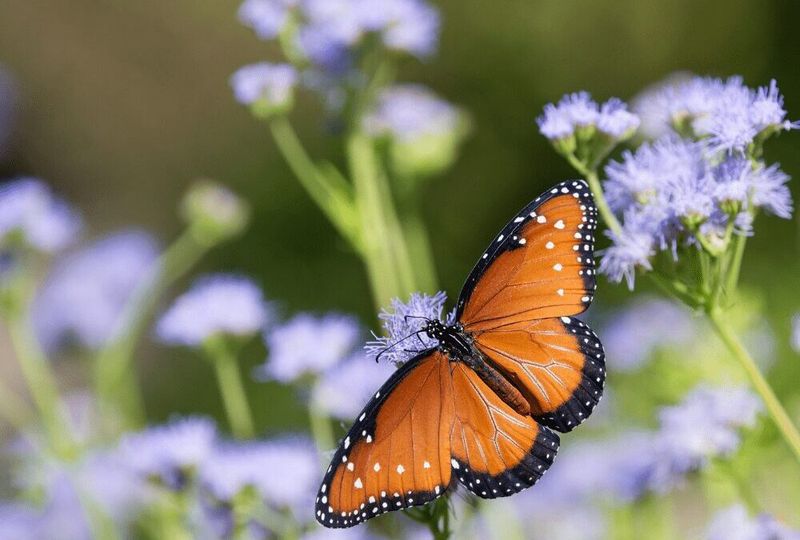
One of the most useful things a gardener can understand about Gregg’s mistflower is what job it actually does in the yard. The plant supplies nectar for adult butterflies, monarchs, queens, and many others that land on the flowers to feed.
That is a real and valuable role, but it is a different role from what milkweed provides.
Texas A&M’s monarch butterfly field guide makes the distinction clear: monarch eggs and larvae develop on milkweed, which is the only plant monarch caterpillars can eat. Monarch Joint Venture explains that milkweed is essential because it is both the food source and the egg-laying site for reproducing monarchs.
Gregg’s mistflower cannot substitute for milkweed, and treating it as a host plant would give gardeners a misleading picture of what the plant does.
Think of the two plants as filling separate positions on a team. Milkweed handles the reproductive side: it is where female monarchs lay eggs and where caterpillars grow through their larval stages.
Gregg’s mistflower handles the adult fueling side: it gives butterflies that have already developed and taken flight a place to refuel on nectar. Monarch Joint Venture’s nectar-versus-milkweed FAQ notes that both resources matter and that a garden with only one of them is an incomplete habitat.
For a Texas homeowner, the practical takeaway is straightforward. Plant Gregg’s mistflower for the late-season nectar show it genuinely delivers, and pair it with regionally appropriate milkweed so that your yard can support the full butterfly life cycle.
Each plant does its own job well; neither one covers the other’s territory.
Choose the Right Spot in a Texas Yard
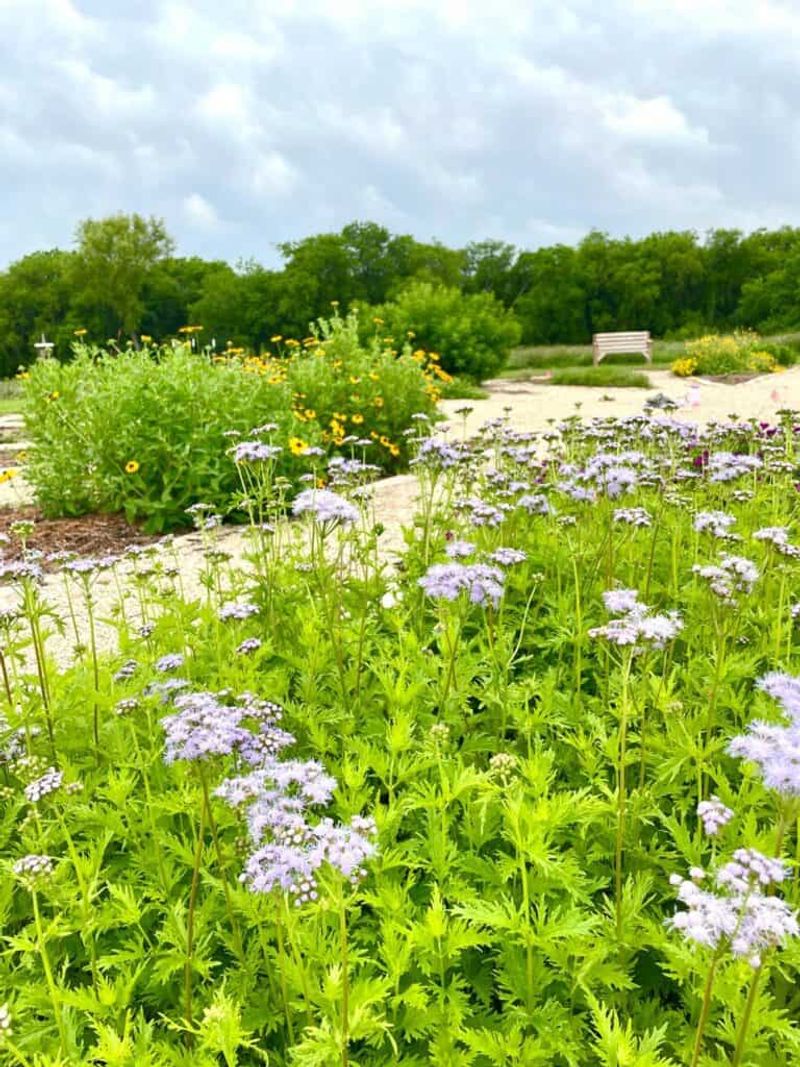
Placement decisions for Gregg’s mistflower come down to three factors: light, drainage, and room to spread. Get those right and the plant can thrive through a Texas fall with relatively little intervention.
Get them wrong and you may end up with a struggling clump or an unexpectedly aggressive patch.
The City of Austin’s plant guide recommends full sun to partial shade, which gives most Texas homeowners a workable range. A spot that gets direct morning sun and some afternoon shade in the hottest months tends to suit the plant well, especially in Central and South Texas where summer afternoon heat is relentless.
Avoid low spots where water pools after rain, since good drainage is important for long-term health.
On size, the NC Extension plant profile describes the plant as roughly 1 to 2 feet tall with a spread that can reach 2 feet or more. That footprint fits a pollinator bed, a border in front of taller natives, or a naturalized strip along a fence line.
Because the plant spreads by underground rhizomes, give it a defined space from the start rather than tucking it between plants you want to protect from encroachment.
Geography within Texas matters too. Flora of North America’s range data places Gregg’s mistflower in Arizona, New Mexico, Texas, and northern Mexico, making it a particularly relevant choice for Central, South, and West Texas landscapes.
Gardeners in other parts of the state or in neighboring Southern states should check with a local native plant nursery or county extension office before assuming it will perform the same way. The plant’s native-range advantage is real, but it is not a universal fit for every soil type, microclimate, or region.
Plant in Fall and Manage Water and Spread
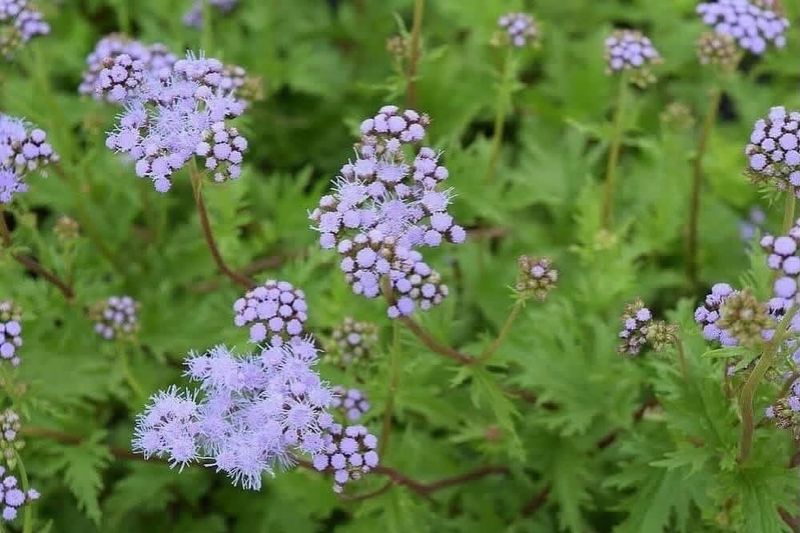
Fall is a genuinely practical planting window for Gregg’s mistflower in Texas, and the timing is not just convenient; it is strategic. Texas Parks and Wildlife recommends planting native perennials in fall so the root system can establish during the cooler months before summer heat arrives.
A plant that goes in the ground in October or November has several months to anchor itself before it faces its first triple-digit Texas summer.
Texas A&M AgriLife similarly recommends getting fall-blooming perennials established well ahead of the stressful summer season, which reinforces fall planting as the smarter choice over spring for plants like this one. Water the plant regularly during its first few weeks in the ground to help the roots settle in, and keep an eye on it during any stretch of extreme heat or drought even after the first season.
Once established, published guidance describes Gregg’s mistflower as tolerating dry to medium moisture conditions. That tolerance makes it a reasonable choice for gardeners managing water restrictions, but it is not a no-water plant.
During a prolonged Texas drought or an unusually hot summer, supplemental watering may still be necessary to keep the plant healthy and flowering. Calling it drought-proof would set the wrong expectation.
The spread issue deserves honest attention. The Austin plant guide and Texas A&M AgriLife Extension’s native plant resources both note that Gregg’s mistflower spreads by rhizomes and can become aggressive in favorable conditions.
In a loose, well-watered bed it may push well beyond its original footprint within a season or two. Containing it with a buried edging barrier, pulling new growth at the margins each spring, or dividing the clump every few years will keep it from crowding out neighboring plants.
Treating it as a well-mannered perennial without any management plan is a mistake many first-time growers make.
Build a Larger Habitat Around One Plant
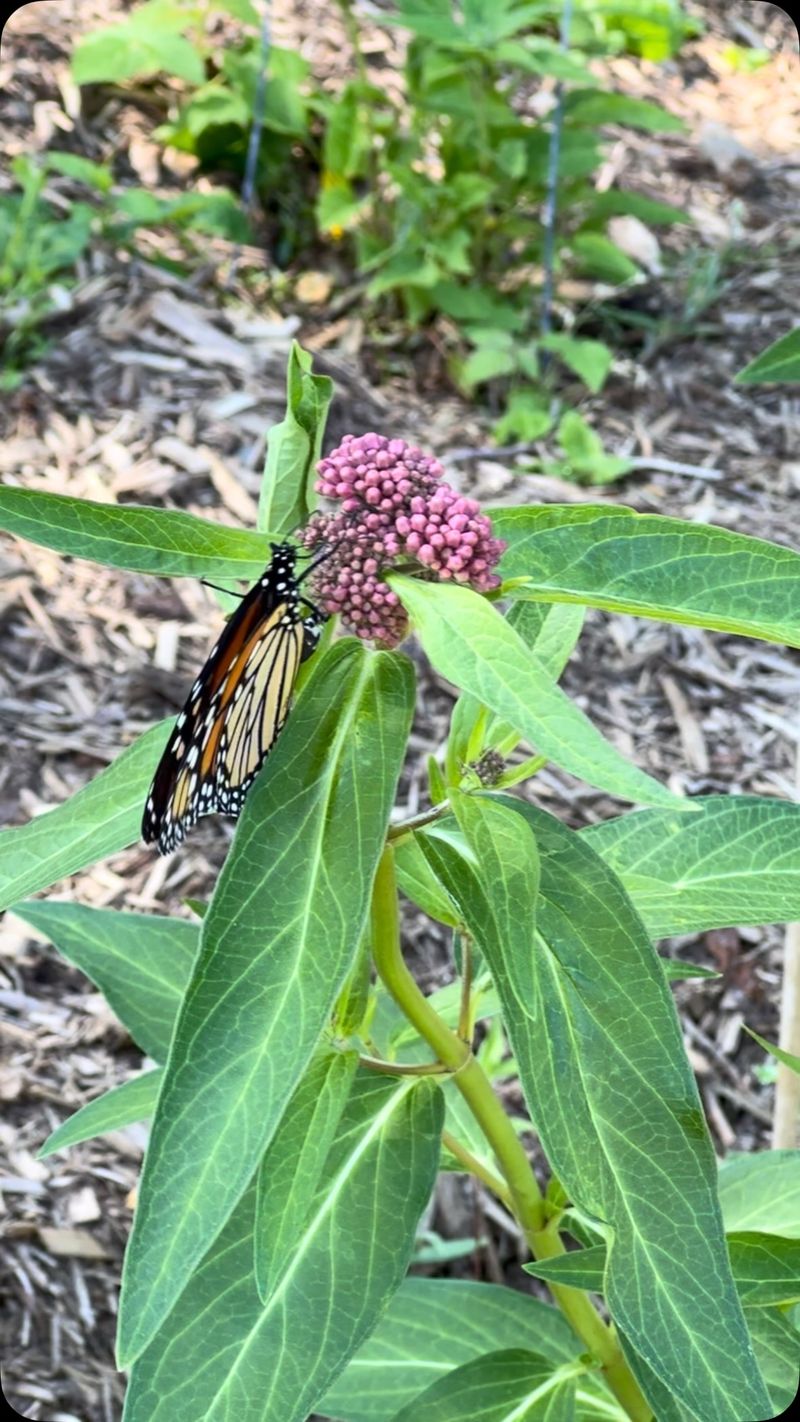
Gregg’s mistflower is a strong individual performer, but its wildlife value multiplies when it is part of a larger, thoughtfully assembled planting. A single species in bloom for one season leaves gaps in the yard’s ability to support butterflies across their full life cycle and through multiple months of the year.
Monarch Joint Venture’s nectar-and-milkweed guidance is clear that both resources are necessary: milkweed for monarch reproduction and nectar plants for adult fueling. Their milkweed FAQ recommends choosing milkweed species that are native to your region, which for Texas typically means antelope horn milkweed, green milkweed, or other locally appropriate species rather than tropical milkweed, which carries its own set of management considerations.
Pairing Gregg’s mistflower with one or two regionally appropriate milkweeds gives your yard both the nectar stop and the reproductive habitat that monarchs need.
Extending the bloom season with other native plants fills the gaps before and after Gregg’s mistflower peaks. Spring-blooming natives like native salvias or prairie verbena, and summer performers like black-eyed Susan or native coneflowers, can keep adult butterflies and other pollinators returning to the yard across a longer window.
Monarch Joint Venture’s roadside habitat guidance reinforces that diverse, multi-season plantings outperform single-species patches for supporting migrating monarchs at the landscape scale.
Pesticide choices deserve the same planning attention as plant selection. EPA guidance on protecting monarchs from pesticides advises avoiding broad-spectrum applications around blooming plants.
If a pest problem genuinely requires treatment, identify the pest first, choose the least-harmful product available, follow the label instructions exactly, and avoid spraying flowers, active pollinators, or areas where drift could reach the bloom. EPA pollinator-protection tools and strategies offer additional practical steps for reducing chemical exposure in a butterfly-friendly yard.
Gregg’s mistflower is one useful piece of a habitat, and protecting that habitat from avoidable pesticide exposure matters as much as choosing the right plants.
Set a Realistic Expectation for Fall Visits
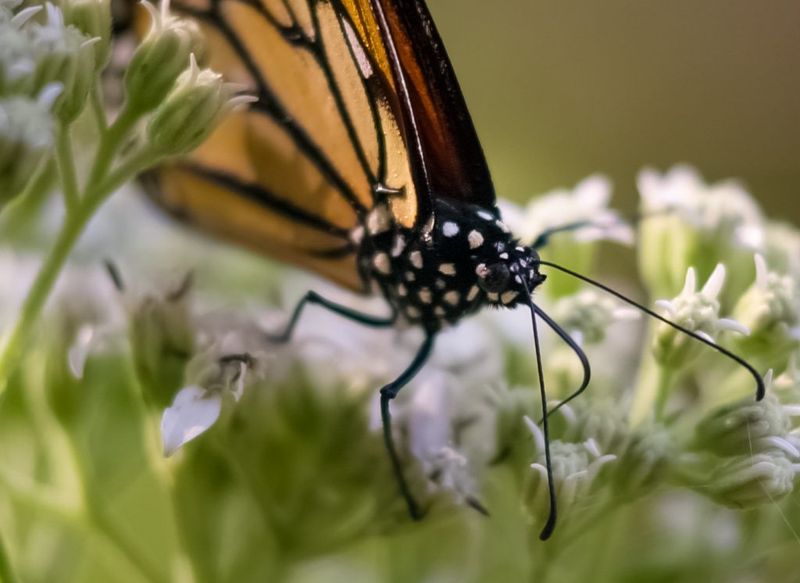
What you can reasonably expect from Gregg’s mistflower in a Texas fall is a flowering perennial whose bloom period overlaps documented southbound monarch migration through the state. The Southern Great Plains monarch plant guide supports that overlap as a documented pattern, not a seasonal guarantee.
Adult monarchs passing through your area may stop and nectar on the flowers. Queens and other adult butterflies may do the same at different points in the season.
How many butterflies actually show up will vary. Monarch Joint Venture’s habitat research notes that butterfly abundance depends on weather, migration timing, location, plant size, surrounding nectar availability, and pesticide exposure in and around the yard.
Some falls will bring several monarchs in a single afternoon; others may pass with only a handful of visits. A yard in a heavily developed area with few other nectar sources may see more activity than one surrounded by competing flowers.
The action step is straightforward. Find a suitable fall planting site with good drainage and full to partial sun, put Gregg’s mistflower in the ground before the first real cold, as Texas Parks and Wildlife recommends for native perennials, and treat it as one component of a pesticide-conscious, multi-species habitat rather than a standalone solution.
The plant earns its place not by promising a spectacle, but by reliably offering something adult butterflies genuinely need during one of the most important weeks of their year.