
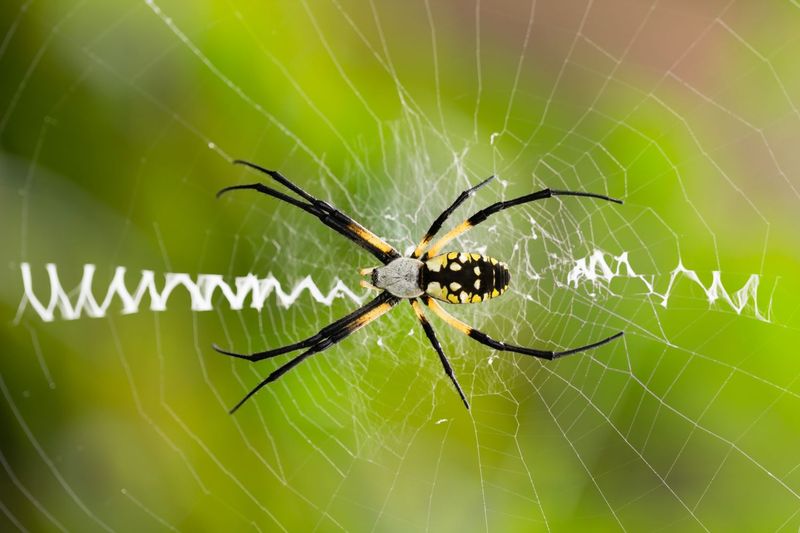
Walk through your vegetable beds on a calm morning and you might spot a delicate web stretched between tomato cages or along a fence post. Many California gardeners brush these away without a second thought, not realizing they could be clearing out a harmless predator that occasionally catches the insects making their plants miserable.
Garden spiders are real contributors to a healthy backyard ecosystem, though they work best as one part of a broader pest-management plan rather than a guaranteed solution on their own.
Support Garden Spiders Without Expecting a Pest-Free Bed
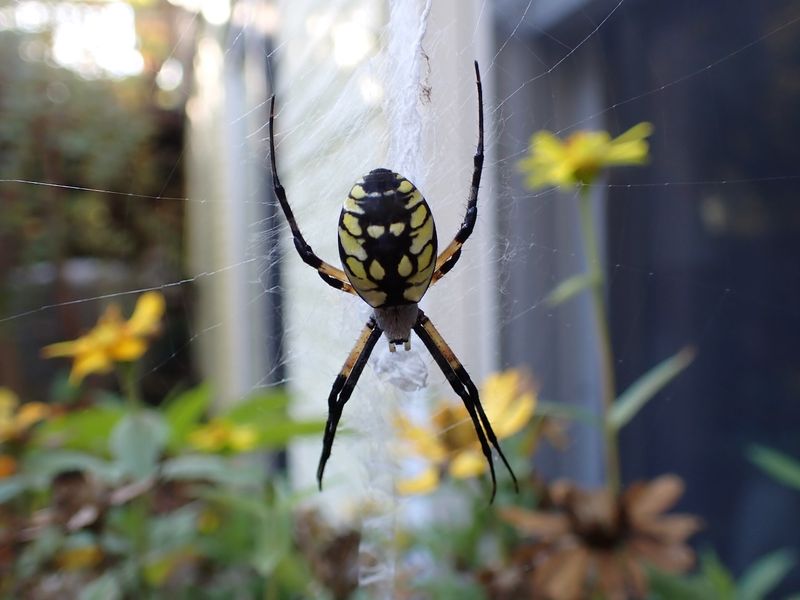
Spiders have earned a place in California vegetable gardens, but keeping realistic expectations matters as much as keeping the spiders themselves. UC IPM lists spiders among the beneficial predators that eat insects and other arthropods in home landscapes, placing them in the same community as lady beetles, lacewings, and parasitic wasps.
That recognition is meaningful, but it does not mean a single web in the corner of your raised bed will eliminate every pest you see.
Leaving a harmless web in a low-traffic part of the garden is a reasonable choice. A web stretched along a fence rail, tucked between pepper plants, or anchored to a tomato cage away from your main harvest path costs you nothing and may occasionally intercept an insect that would otherwise land on your crops.
UC IPM recommends recognizing spiders’ beneficial role in gardens and avoiding unnecessary removal when the spider poses no safety concern.
The practical limit is equally important to understand. Spiders are generalist predators, meaning they eat whatever happens to enter their range, not specifically the pest you want controlled.
UC IPM’s guidance on biological control frames natural enemies as one layer of an integrated pest-management system rather than a replacement for monitoring, cultural practices, or targeted treatments when pests reach damaging levels. Spiders fit that description precisely: a useful supporting presence, not a standalone pest-control service.
Learn Which Spiders Work Above and Below the Leaves
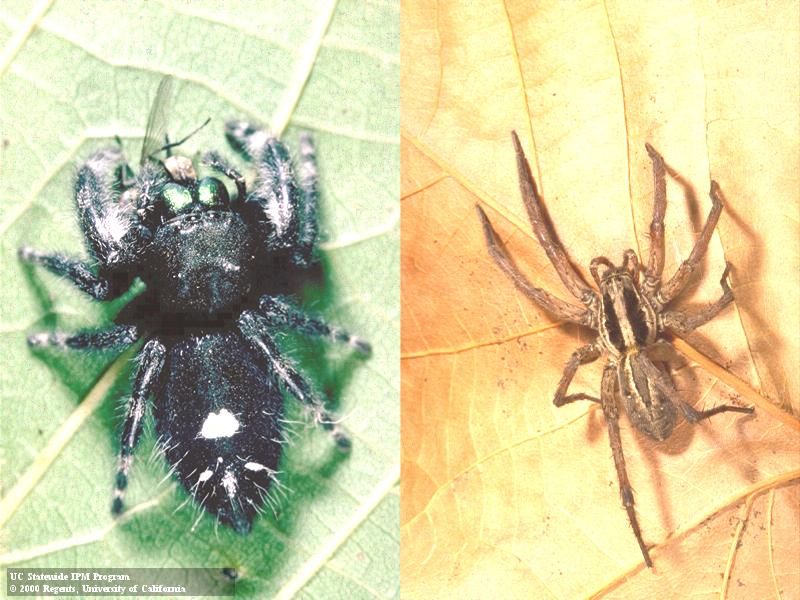
Not every spider you see in the garden hunts the same way, and the ones without visible webs are just as active as the ones with them. California gardens host several distinct groups, and UC IPM’s common garden spider guide describes orb weavers as builders of the familiar circular webs, where they wait for flying, falling, or windblown insects to become entangled.
Orb weavers are the spiders most people picture when they imagine a garden web, but they represent only one hunting strategy among many.
Jumping spiders hunt entirely differently. They stalk prey with sharp eyesight during daylight hours and pounce when close enough, so they rarely build a structure you would notice.
Wolf spiders work at ground level, moving through mulch, soil, and leaf litter to chase down insects rather than trapping them. Judging a spider’s value only by whether it has a visible web means overlooking two of the garden’s more active hunters.
One important distinction protects plants as well as spiders. Webbing on leaves, especially on the undersides, is not always a sign of a beneficial spider at work.
UC IPM explains that spider mites are tiny plant-feeding arachnids that live in colonies and produce fine, dusty webbing while causing stippling, yellowing, and bronzing on foliage. If you see webbing on the plant itself rather than between structures or stems, use a hand lens to check for pinpoint-sized mites and the characteristic stippled damage they leave behind.
UC IPM notes that beneficial spider webs are typically anchored between fixed points rather than coating leaf surfaces, which is a quick visual clue that can help you tell the two apart.
Spiders May Eat Aphids, but They Do Not Guarantee Control
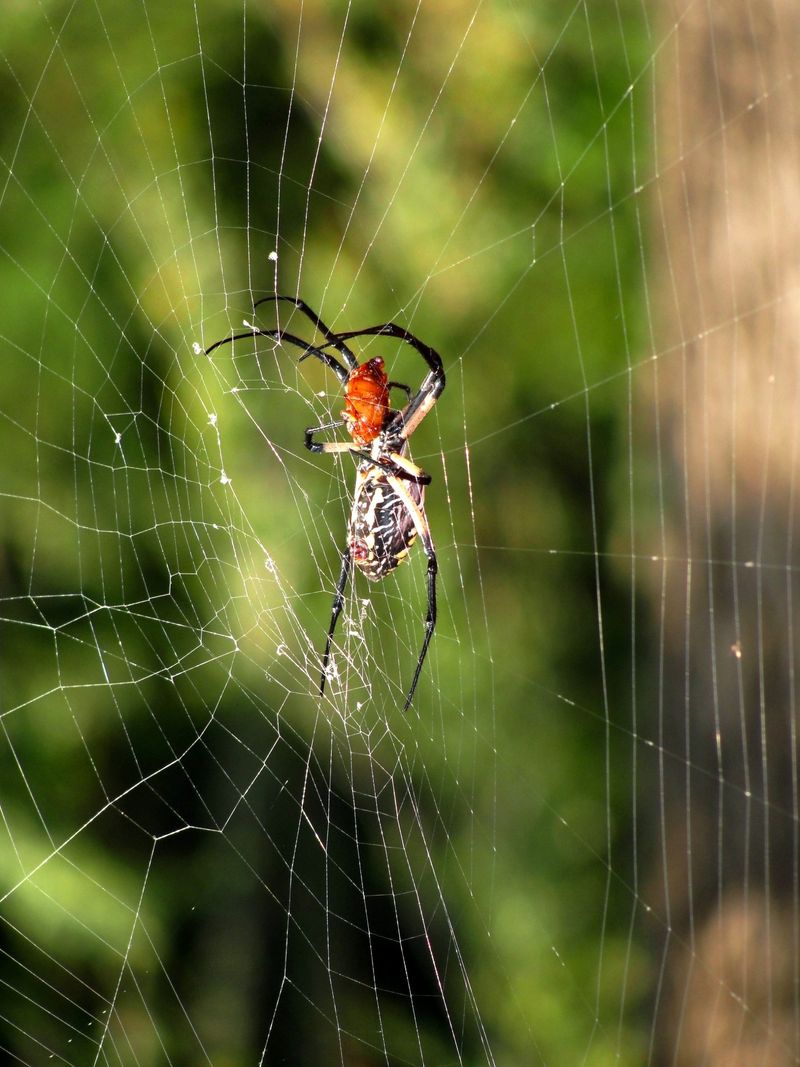
Field research has confirmed that spiders do eat aphids under certain conditions, but the path from that finding to reliable backyard control is not a straight line. A study on linyphiid spiders detected aphid proteins in web-building spiders sampled from crop settings and found that these small sheet-web spiders consumed aphids, supporting the idea that spiders can contribute to aphid suppression.
That is a meaningful finding worth knowing, even if it comes with limits.
The main limit is how aphids move. Aphids that are settled on leaf undersides or curled inside new growth may never encounter a web.
Spiders intercept aphids primarily when they take flight, get dislodged by wind, or fall from plants during dispersal. A colony firmly established on a seedling may grow for days without a single individual drifting close enough to a web to be caught.
Spiders also share aphid-predation duties with a broader community of natural enemies. UC IPM identifies lady beetles, lacewings, syrphid-fly larvae, and parasitic wasps as natural enemies that may actually be more important than spiders for aphid suppression in a particular garden, depending on which species are present and what conditions favor them.
UC IPM’s biological-control guidance reinforces that the full natural-enemy community, not any single predator, provides the most consistent suppression.
Plant condition and aphid life stage also shape how serious an infestation becomes. Sturdy, well-watered plants with no excess nitrogen often tolerate low aphid numbers without visible harm, while seedlings and plants showing curled or distorted leaves face greater risk.
Temperature swings, the presence of ants shepherding aphid colonies, and overall infestation size all influence whether natural enemies keep pace or fall behind. Spiders are a welcome part of that picture, not the whole frame.
Use Water Management, Not Spider Webs, to Reduce Mosquitoes
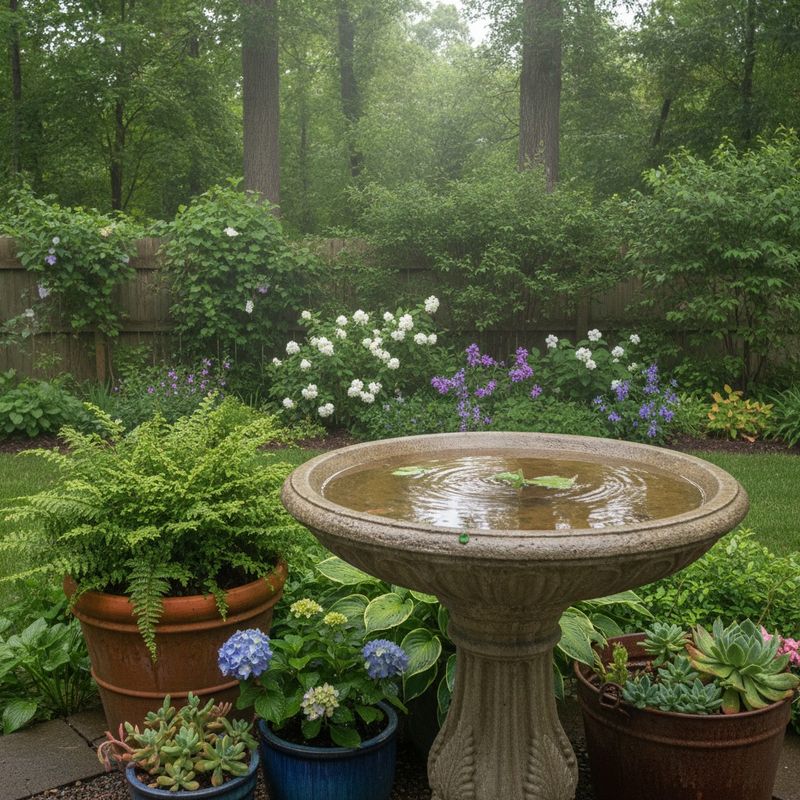
Spiders can and do eat mosquitoes. Field experiments on forest mosquitoes recorded predation by web-building spiders, and separate research documented a spider species that selectively targeted blood-fed female mosquitoes as prey.
Those findings are genuinely interesting, but they involve specific spider species, controlled prey densities, or experimental conditions that do not reflect what an ordinary backyard spider population will do on a warm California evening.
Mosquito abundance around a home is driven almost entirely by where they breed, not by how many spiders are present. A container holding as little as a bottle cap’s worth of water can support a new generation of mosquitoes within a week.
No web in a tomato bed will offset a neglected bucket, a clogged gutter, or a birdbath that goes unchanged for ten days.
UC IPM’s mosquito guidance places standing-water removal at the top of the control hierarchy. Empty unused pots and containers, turn them upside down or store them under cover when not in use, and change birdbath and pet-dish water at least once a week.
Ornamental ponds and rain barrels with no drainage should be treated with Bti, a biological larvicide that targets mosquito larvae specifically, or stocked with mosquito-eating fish in appropriate isolated settings where they will not escape to natural waterways.
Spiders belong in your garden plan, but they belong in the section labeled “possible supporting benefit” rather than “primary mosquito control.” Protecting a few webs near the vegetable bed while leaving a forgotten wheelbarrow full of rainwater nearby will not produce a noticeable change in biting pressure. Drain the water first, then let the spiders handle whatever else they manage to catch.
Protect the Wider Natural-Enemy Community
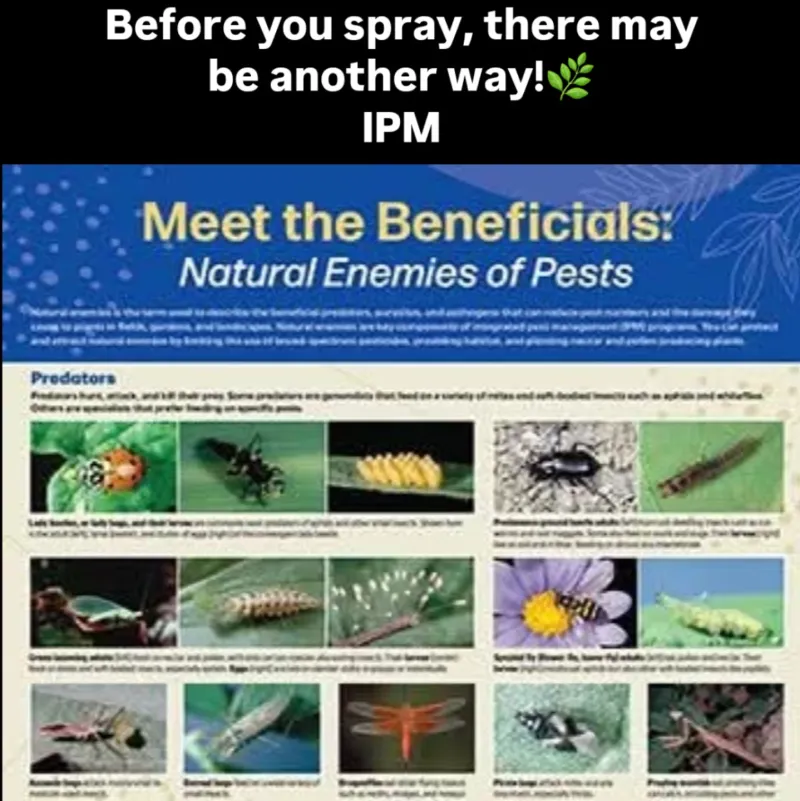
Keeping spiders around is largely a matter of not killing them. The single most effective step most California gardeners can take is reducing unnecessary pesticide use, particularly products with broad-spectrum or persistent activity that move through plant tissue or soil and affect insects indiscriminately.
UC IPM’s biological-control guidance recommends nonchemical controls first, selective products only when a pest reaches intolerable levels, and timing any necessary treatment to minimize contact with beneficial species.
UC IPM’s guidance on protecting natural enemies and pollinators adds practical detail: avoid applying pesticides when plants are flowering, choose products with shorter residual activity when treatment is unavoidable, and consider spot treatments rather than blanket sprays. A single broad-spectrum application can set back the resident spider, lady beetle, and lacewing population for weeks, which often lets pest populations rebound faster than they would have without any intervention.
Flowering plants can contribute to a healthier natural-enemy community, though the connection to spiders specifically is indirect. UC IPM describes insectary plants as supporting many natural enemies by supplying nectar, pollen, shelter, and alternate prey – benefits that matter most for parasitoid wasps and predatory insects that require floral resources as adults.
Spiders are predators that do not feed on nectar, so planting flowers will not directly lure spiders to your beds. What it does do is build a denser, more diverse community of beneficial insects that creates more prey opportunities and a more resilient garden overall.
Outdoor lighting is worth reconsidering when spiders near doors or windows become a nuisance. UC IPM notes that moving lights away from structures and entry points reduces the insect concentration that attracts spiders to high-contact areas, which is a simpler fix than spraying the perimeter.
Manage Aphids with Monitoring and Low-Impact Controls
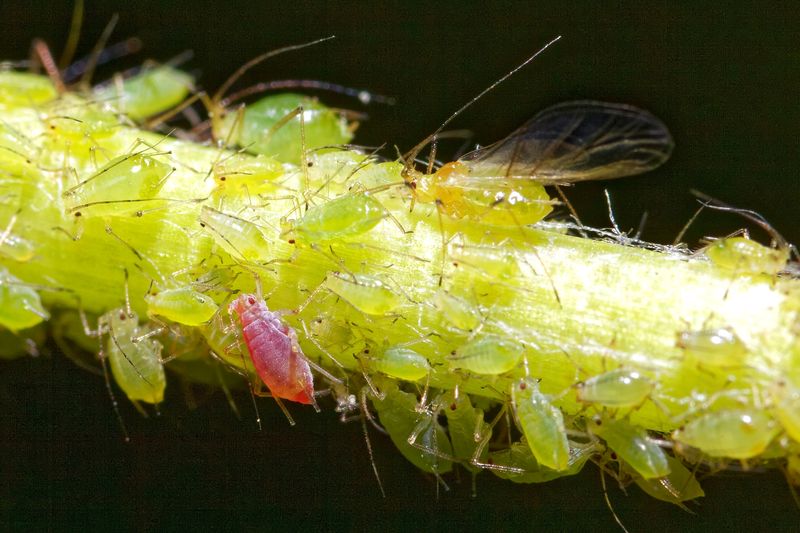
Aphid management works best when it starts with observation rather than action. Checking plants twice a week during warm months gives you a clear picture of whether a population is growing, holding steady, or already being worked over by natural enemies.
UC IPM’s aphid guidance notes that most established plants tolerate low to moderate aphid numbers without significant harm, so the goal of monitoring is to catch a genuine problem early rather than to trigger a response at the first sighting.
Seedlings and plants already showing curled leaves, distorted growth, or yellowing tips need closer attention, because young or stressed plants have less capacity to outgrow aphid feeding. For those plants, a strong stream of water directed at infested stems and leaf undersides is often the most immediate and least disruptive option.
The aphids knocked off rarely find their way back, and the treatment leaves natural enemies entirely unharmed.
Pruning out heavily infested growing tips removes a large portion of the population in one cut and can slow the spread to adjacent plants. Avoiding excess nitrogen fertilizer also helps, since lush, soft new growth is exactly what aphid colonies prefer.
UC IPM’s biological-control overview points out that ants actively protect aphid colonies from predators and parasitoids by chasing them away, so managing ant access to infested plants, using a sticky barrier around stems or a physical barrier at the base, can make a real difference to how well the broader natural-enemy community performs.
When a pest population genuinely reaches an intolerable level despite these steps, a targeted treatment such as insecticidal soap applied directly to aphid colonies can reduce numbers without the long residual activity that harms spiders and other beneficials. UC IPM recommends spot treatments over broad sprays precisely to preserve the natural-enemy community the gardener has been working to support.
Keep Webs Away from People, Structures, and Fire Hazards
Selective preservation is the operative word when it comes to spider webs around a California home. A web tucked between raised-bed boards away from your harvest path is a reasonable thing to leave alone.
A web inside the garage door frame, across a walkway, near a child’s play area, or directly above a frequently used entry point is a different situation entirely.
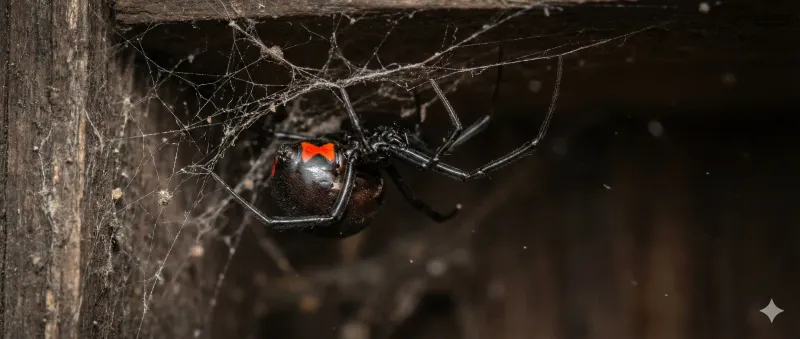
UC IPM recommends removing or relocating spiders in garages, sheds, entryways, and other high-contact areas and suggests wearing gloves when moving clutter or stored items where undisturbed, dry, sheltered conditions exist. Those conditions describe exactly where black widows are most likely to be found.
UC IPM’s widow spider guide identifies female black widows as the principal California spider capable of causing serious injury, and notes their preference for woodpiles, debris piles, cluttered storage areas, and protected crevices. The advice is simple: identify before you handle, and wear gloves in any spot that fits that description.
Creating habitat for spiders by stacking wood, piling garden debris, or allowing dense vegetation against the house is not a safe trade-off in California. Those conditions can shelter black widows and directly conflict with wildfire-safety requirements that apply to most California homeowners.
CAL FIRE’s defensible-space guidance requires that the first five feet around any structure be kept ember-resistant, free of combustible debris and dead plant material, and maintained to slow fire spread. California’s defensible-space zone requirements extend that fuel-reduction obligation farther from the structure, requiring maintained spacing and cleared vegetation in the surrounding zones as well.
Fire-season safety and wildlife-friendly gardening are not opposites, but they require different rules in different parts of the property. Keep spider habitat in the open garden, away from structures, and maintain the ember-resistant zone without compromise.
Let Spiders Add Predation to an Integrated Garden Plan
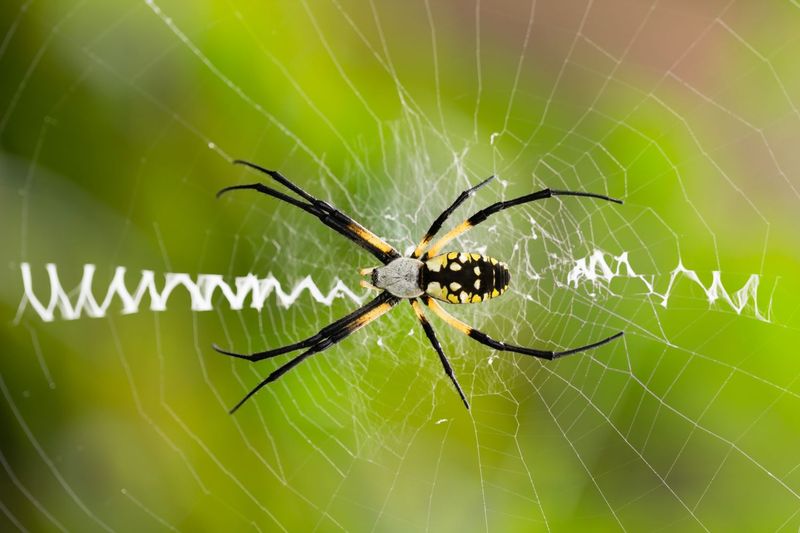
A practical decision rule for California gardeners comes down to location and safety. Preserve harmless spiders and their webs where they do not interfere with harvesting, foot traffic, household safety, or fire-zone requirements.
Remove or relocate webs in high-contact areas without guilt, because selective management is exactly what responsible stewardship looks like.
UC IPM’s biological-control framework supports this approach: protect the broader natural-enemy community by limiting unnecessary pesticides, use monitoring and low-impact controls to manage aphids before they reach damaging levels, and treat standing water as the first-line response to mosquito concerns rather than relying on web placement.
UC IPM describes spiders as beneficial predators that contribute to natural pest suppression, and that framing is the right one to carry into the garden. Spiders offer a possible supporting benefit, not a promise of reliable control, and a garden that supports them alongside lady beetles, parasitic wasps, and other natural enemies is more resilient than one that depends on any single species.
The best thing a spider in your vegetable bed can do is be part of a system that is already working well.