
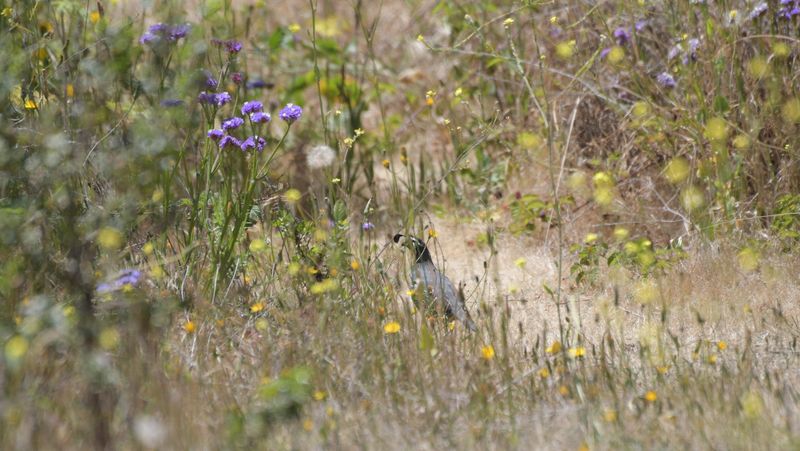
California quail are one of the most recognizable birds in the state, with their bobbing topknot feathers and habit of scurrying through brush in small family groups. If your yard sits within their range, a few thoughtful changes to your landscape can make your property genuinely useful to them.
Quail may visit more often, and under the right conditions, a pair might even nest nearby. The payoff is real biodiversity in your own backyard, though the results depend far more on the birds than on any checklist you follow.
Can California quail use your yard?
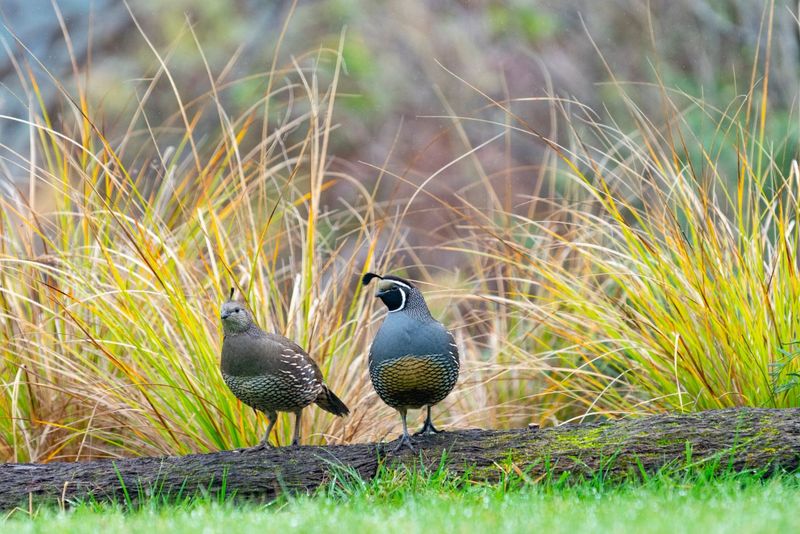
California quail are permanent residents of the state that gave them their name. Cornell Lab of Ornithology’s California Quail life history places them primarily in coastal sagebrush, chaparral, foothills, shrublands, and open woodland edges across California and portions of the adjacent West.
That geographic fact matters before anything else: if quail are not already present in your neighborhood or the surrounding landscape, landscaping changes alone will not bring them in from somewhere else.
The first practical step is simply watching and listening. Check local birding apps or neighborhood nature platforms to see whether California quail have been reported within a mile or two of your address.
If they have, your yard is potentially on their radar already, and habitat improvements give them a reason to stay longer or return more often.
Setting realistic goals shapes every decision that follows. Making your yard more usable to quail, and possibly suitable for nesting, is an honest and achievable aim.
Counting on quail to clear your weed seeds or eliminate garden bugs is not. Quail do eat seeds, including some annual weed seeds, and they consume invertebrates such as beetles and caterpillars, but no research establishes that a backyard flock will meaningfully reduce your weed bank or replace ordinary pest management.
One more correction worth making early: California quail are not quiet birds. They produce a sharp, loud burst of wingbeats when startled into flight, so the experience of hosting them is lively rather than serene.
The genuine benefit is supporting a distinctive California ground bird and adding real biodiversity to your yard. That is worth pursuing on its own terms, with clear eyes about what quail will and will not do.
Build a habitat mosaic instead of a thicket
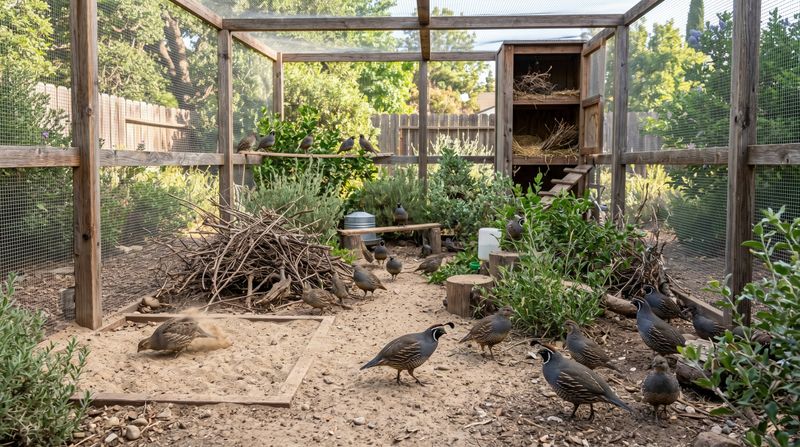
Quail do not thrive in a yard that is either a solid wall of dense brush or a clipped, sterile lawn. What they actually use is a mosaic: patches of low, protective cover sitting close to open ground where they can scratch and forage.
Understanding that structure is the most useful design principle you can apply.
CDFW’s California Wildlife Habitat Relationships life history account describes quail as feeding primarily on the ground or in low vegetation, and CDFW’s hunting guide notes that quail seldom venture more than roughly 50 to 100 feet from protective cover to feed. That distance is your layout target.
Food-producing plants and open foraging patches should never be isolated from shrubby cover by a wide stretch of open lawn or pavement. Keeping the two elements connected is what makes a yard genuinely functional for quail rather than merely decorative.
In practice, this means arranging low, dense perennial shrubs along a fence line, a slope edge, or a property border, then allowing a more open zone of sparse grasses or bare-soil patches to extend outward from that cover. The open area is where quail will actually spend much of their time scratching for seeds, grit, and small invertebrates.
A completely manicured lawn offers nothing useful; a completely impenetrable thicket offers cover but no foraging space.
Perches matter too. Quail use fence posts, low branches, and rocks as lookout points before dropping to the ground.
Leaving a few elevated spots near cover gives birds a place to survey the area before committing to an open foraging run. Taller shrubs or a low fence rail along the edge of the cover zone serve this function well without requiring any additional planting.
Think of the yard as having distinct functional zones that are close enough for a quail to move between quickly. That connected, varied structure is more important than any single plant species or decorative feature.
Plant food-producing edges for natural foraging
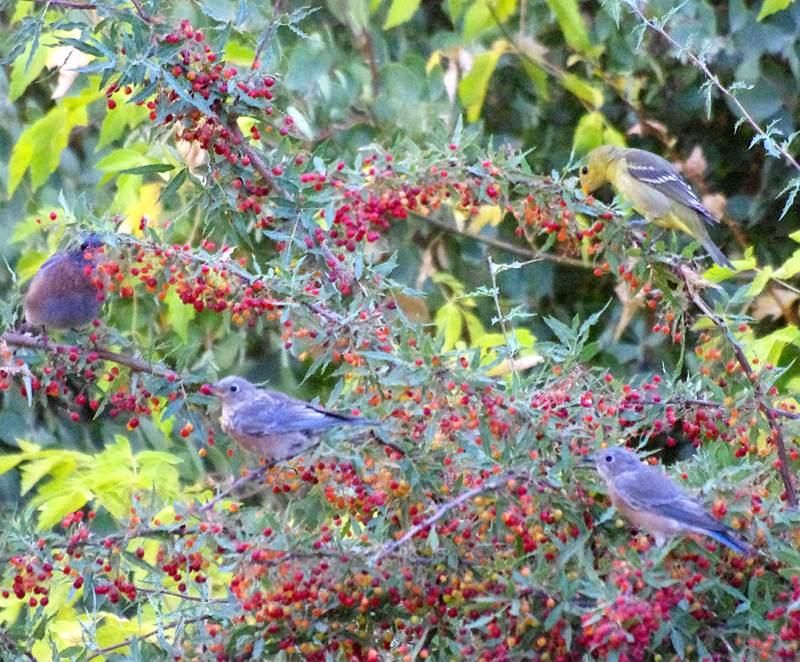
Specific plant choices make a meaningful difference, and California wildlife authorities have identified a practical starting list. CDFW’s California Outdoors Q&A on quail names deerweed, brittlebush, redberry, Pacific blackberry, lotus, lupine, clover, filaree, and chickweed as examples of plants that provide food and attract quail to a yard.
These species supply seeds, fruits, and green vegetation at different times of year, which is more valuable than a monoculture of a single plant that only produces during one season.
Selection should always be filtered through local conditions. A plant that thrives in a coastal garden near San Francisco may struggle or spread aggressively in an inland Southern California yard.
Check with your county’s cooperative extension office or a local native plant nursery to confirm which of these species are appropriate for your climate zone, soil type, and water budget. Invasive plants should never be introduced even if they might attract wildlife, and any planting near a fire-prone area needs to comply with local vegetation management rules.
Natural litter and seed heads are part of the food supply. Allowing some spent flower stalks and seed heads to remain standing through fall and early winter gives foraging birds more to work with.
A completely raked and tidied landscape removes much of what makes a yard useful to ground-feeding birds. That said, tolerating useful food plants is not the same as abandoning weed control.
Annual invasive grasses, regulated noxious weeds, and fire-hazard vegetation still need to be managed according to local ordinances.
One expectation needs to be set plainly: quail eating some weed seeds does not mean they will clear your weed problem. CDFW’s life history account documents seed consumption as a central part of the diet, but no source establishes that backyard quail reduce weed germination or replace mowing, mulching, or hand-weeding.
Treat seed consumption as a modest biodiversity benefit, not a landscaping shortcut.
Protect potential ground-nesting areas
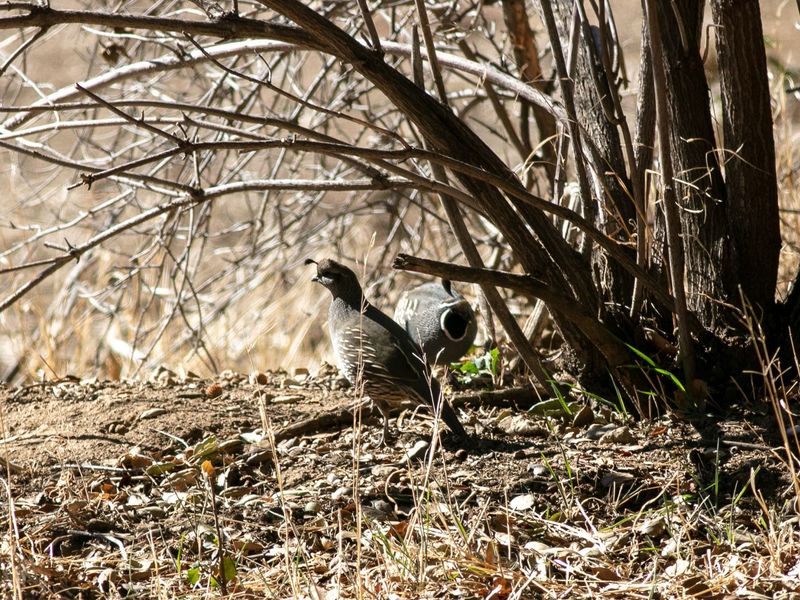
Ground nests are the most vulnerable part of a quail’s life cycle, and how a homeowner manages the yard during nesting season matters as much as what they plant. Cornell Lab’s life history account describes California quail nests as shallow depressions on the ground, typically concealed beneath grasses, shrubs, rocks, or other low cover.
The nest itself is easy to miss, which means it is also easy to accidentally destroy during routine yard work.
Preserving a section of low, undisturbed cover during the breeding season, generally late winter through early summer in California, is the most direct step a homeowner can take. Avoid aggressive trimming, leaf blowing, or soil disturbance in shrubby border areas during that window.
California’s Nesting Bird Management Plan guidance identifies ground nests as sensitive to heavy equipment, vibration, and human disturbance, and CDFW advises people not to remove or disturb suspected ground nests.
If you discover what looks like a quail nest, leave it completely alone. Do not move it to a more convenient spot, cover it with a container, or handle the eggs.
Any intervention is likely to cause abandonment and may violate state and federal wildlife protections. The right action is simply to give the area a wide berth until the chicks have fledged.
Dogs and cats require direct management near potential nesting areas. Both can destroy a ground nest or injure flightless chicks in seconds.
If a bird has been contacted by a cat or dog, do not attempt to treat or release it yourself. CDFW’s Native Wildlife Rehabilitation guidance directs people to contact a permitted wildlife rehabilitator in those situations.
Even with all of this in place, nesting is not guaranteed. Local population levels, surrounding habitat quality, predator pressure, food availability, and moisture all influence whether quail nest in a given yard.
A protected opportunity is worth creating; expecting it to be used on your schedule is not realistic.
Offer moisture without creating a disease hotspot
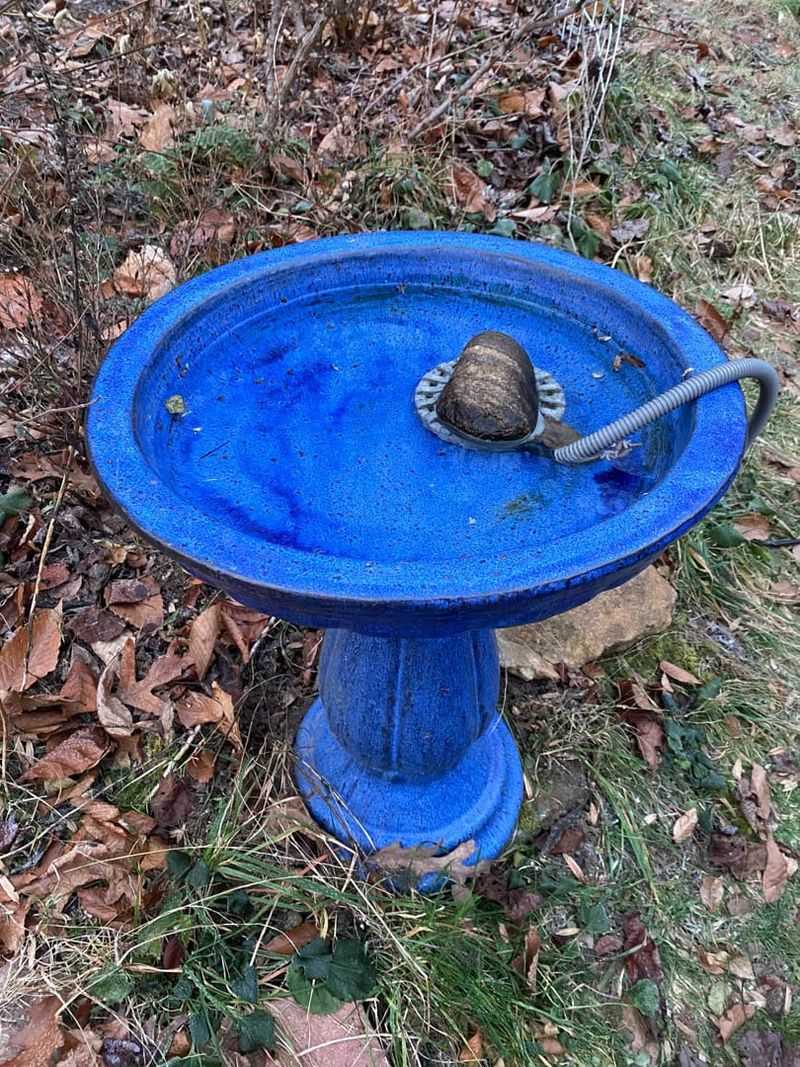
Water access is a real factor for California quail in many parts of the state, but how you provide it matters as much as whether you do. CDFW’s Guide to Hunting Quail in California notes that quail in many areas depend on surface water sources, while some coastal populations may obtain adequate moisture from dew and succulent vegetation.
If your property is in an inland valley or foothill area with dry summers, a water source can make a meaningful difference. If you are gardening in a cooler coastal zone, quail may visit without it.
When providing water, keep the container shallow, no more than an inch or two deep, and place it within a few feet of shrubby escape cover so birds can retreat quickly if a predator appears. Clean it thoroughly every two to three days.
Standing water that is not refreshed regularly becomes a breeding site for mosquitoes and a surface for bacterial growth that can sicken birds.
CDFW’s Wildlife Health Lab recommends natural landscaping over artificial feeding and watering stations as a general principle, because crowding at any fixed resource point can accelerate disease transmission among birds, attract rodents, and create conflicts with other wildlife. A single shallow water source that is well-maintained and positioned near cover is a reasonable option; a permanent, heavily visited bird station with multiple feeders and a large bath is a different situation with higher risks.
Natural landscaping that retains some moisture through mulched soil and drought-adapted plants is the lower-risk alternative. It does not create a congregation point, and it supports the broader habitat rather than a single spot.
Treat artificial water as a supplemental option suited to specific site conditions, not as a default first step.
Reduce cats, dogs, pesticides, and other everyday risks
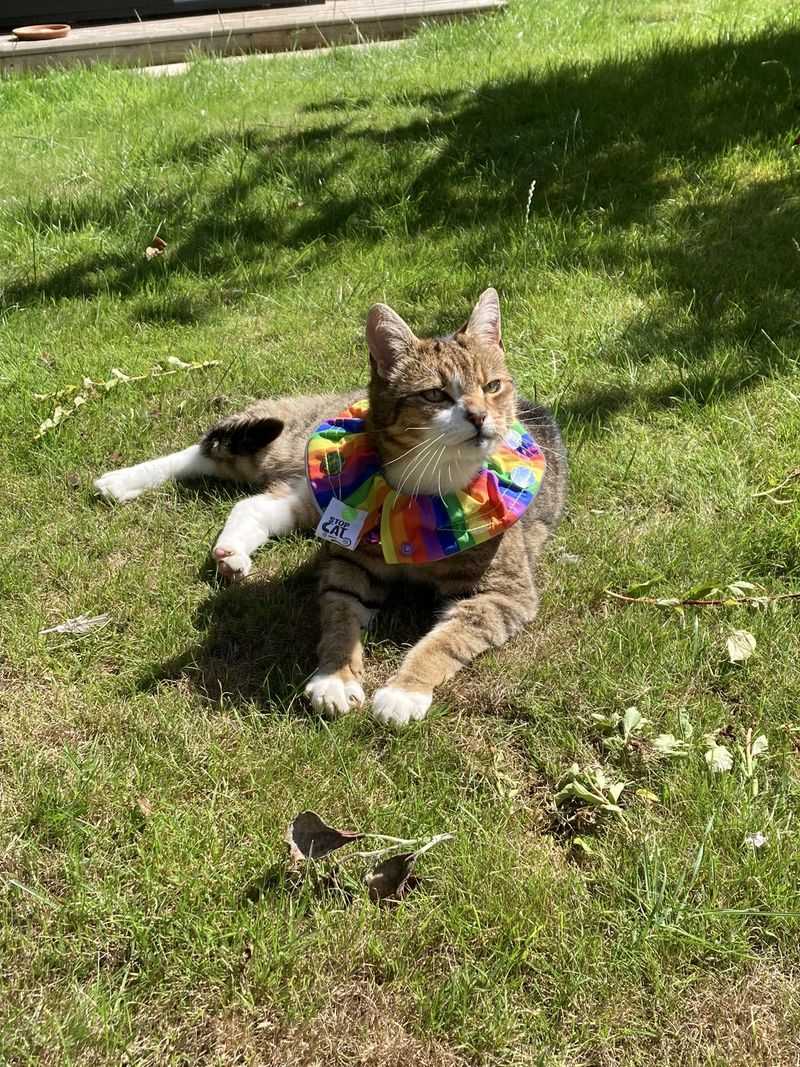
Habitat plantings and water sources will not help quail much if the yard remains a gauntlet of everyday hazards. Cats are the most significant and most controllable risk.
Cornell Lab’s FAQ on outdoor cats and birds identifies free-ranging cats as a major source of bird mortality in the United States, and ground-nesting birds like quail are especially exposed because chicks cannot fly for the first several weeks of their lives. Keeping cats indoors or preventing them from accessing shrubby cover and likely nesting areas is the single most effective step most homeowners can take.
Dogs require active supervision rather than permanent exclusion, but they should not be allowed to run unsupervised through areas with low cover during nesting season. A dog flushing a sitting hen off her nest, or injuring a chick that cannot yet fly, can end a nesting attempt instantly.
If your dog contacts a quail at any age, do not attempt to treat the bird at home. CDFW’s wildlife rehabilitation guidance directs people to contact a permitted rehabilitator, because even a bird that appears uninjured after a cat or dog encounter may have internal injuries or bacterial contamination from the contact.
Pesticide reduction deserves equal attention. Quail chicks depend heavily on invertebrates for protein in their first weeks, and adults consume beetles, caterpillars, mites, millipedes, and snails as part of a mostly plant-based diet.
Broad-spectrum insecticide applications can eliminate that invertebrate food supply and directly poison birds that ingest treated insects or vegetation. EPA guidance on reducing pesticide impacts on wildlife recommends using pesticides only when necessary, treating only affected areas, following label directions precisely, and prioritizing mechanical controls and integrated pest management before reaching for a chemical solution.
Preserving natural forage does not require tolerating a pest outbreak or using pesticides to protect quail-attracting plants. The two goals are compatible when pest management is targeted, minimal, and label-compliant.
Keep quail habitat compatible with wildfire safety
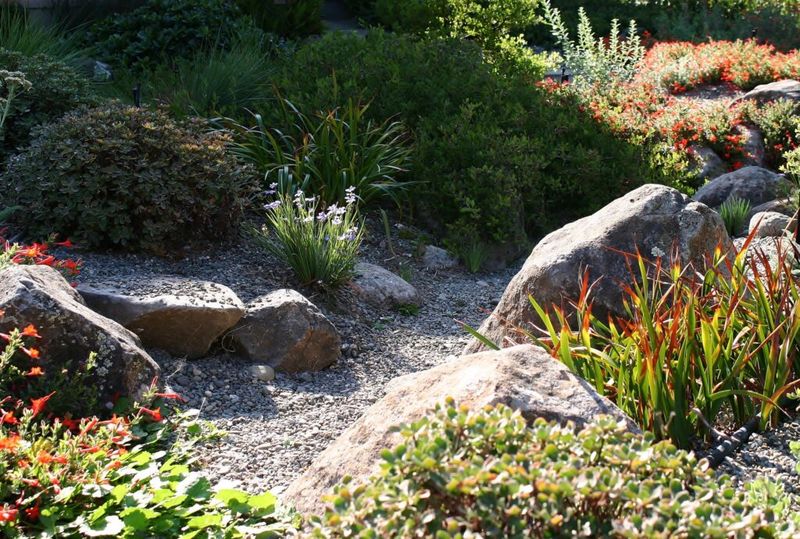
Dense, low shrubs and brush piles are exactly what California quail use for cover, and they are also exactly what CAL FIRE wants you to manage carefully near your home. That conflict is real, and it needs a direct answer rather than a reassurance that wildlife goals and fire safety can always coexist without trade-offs.
CAL FIRE’s defensible space guidance requires homeowners in State Responsibility Areas to maintain clearance zones around structures, removing or reducing combustible vegetation within specified distances. Those rules vary by slope, county, and local fire-zone designation, so the exact distances that apply to your property depend on your specific location and should be confirmed with your local fire agency or county.
The article’s habitat advice does not override those requirements, and no wildlife goal does either.
The practical solution is zoning. Place defensible-space compliance first, and then design habitat features in the portions of the yard that fall outside required clearance areas.
A property with a cleared zone near the house and appropriately spaced shrubs further out can still offer useful quail habitat. The key word is spacing: quail cover does not require an unbroken wall of vegetation.
Grouped shrubs with open gaps between them provide cover and foraging space while reducing the continuous fuel load that fire agencies are concerned about.
Brush piles, a common wildlife-habitat recommendation in other regions, should be approached cautiously in California. A pile of dry brush near a structure is a fire risk and may also attract rodents.
If you use any brush material for cover, keep it small, keep it away from buildings and fences, and check whether local rules permit it in your fire zone.
CDFW’s quail habitat guidance recommends brush species for cover alongside native forbs for food, and both can be incorporated into a yard that also meets fire-safety requirements when placement is thoughtful. Fire safety is the non-negotiable constraint; habitat design works within it.
Set the right expectation: support visits, not a cleanup crew
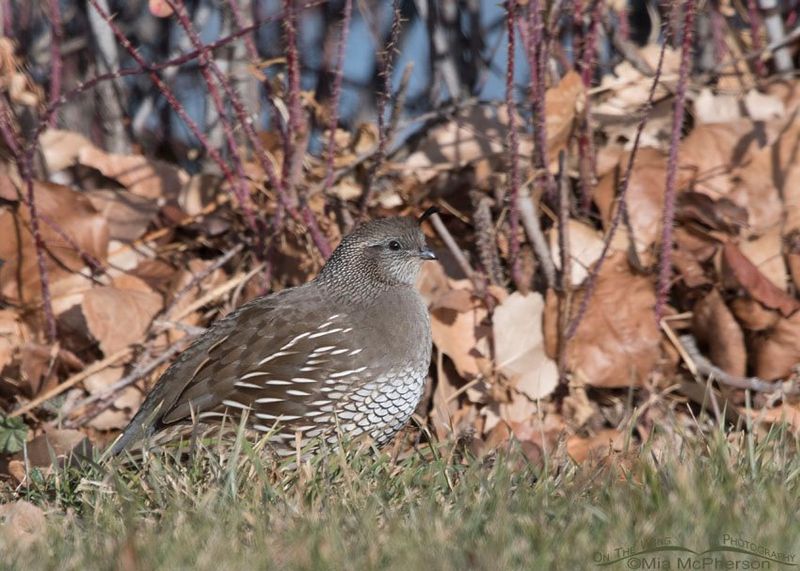
A yard that combines nearby low cover, open foraging space, suitable food plants, and managed moisture gives California quail a reason to use it. When those elements work together, visits become more frequent, and the conditions for potential nesting improve.
That is the realistic outcome this kind of project can support.
Quail will consume some seeds, including seeds from annual weeds, and they will eat invertebrates they encounter while foraging. CDFW’s life history account and CDFW’s quail hunting guide both document this as part of the species’ diet, but neither source supports the idea that quail will clear your weed bank, eliminate garden pests, or replace any form of routine yard maintenance.
Treat those moments of consumption as a small biodiversity bonus, not a service.
Quail are also not quiet. California State Capitol Museum’s profile of the state bird notes that the species can produce a startling burst of sound when flushed.
The experience of sharing your yard with quail is active and occasionally loud, which is part of what makes it worthwhile. Build the habitat, reduce the hazards, and let the birds decide the rest on their own terms.