
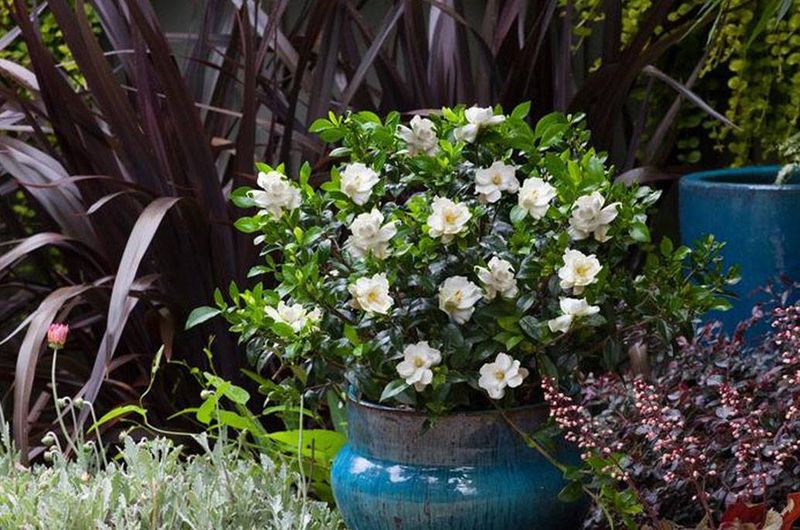
Gardenias are one of the most rewarding plants you can grow on a Texas porch, but summer in Central Texas can push them to their limit fast. The real danger is not always what you can see on the leaves – it is what happens inside a small, sun-baked pot sitting on a hot concrete surface.
Getting the setup right before the worst heat arrives gives your gardenia a much better shot at making it through. These seven steps walk you through the most important ways to reduce heat-related root stress and keep your plant as healthy as possible all season long.
The container can become a heat trap
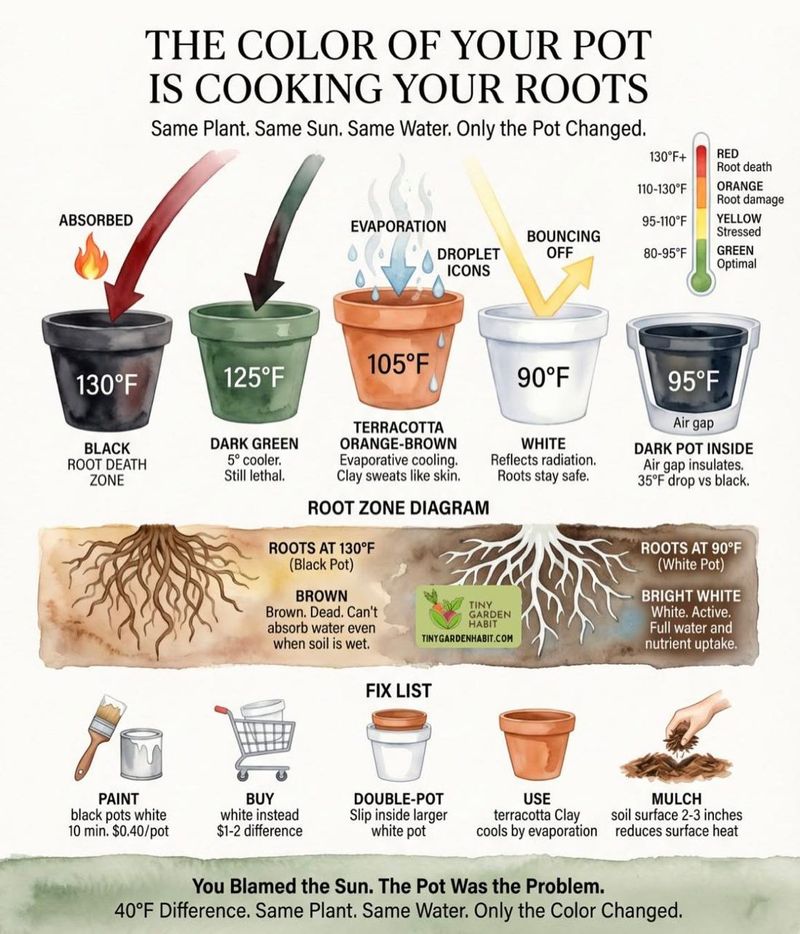
Most gardeners focus on the leaves and flowers when something goes wrong with a gardenia, but the root zone inside a small container can quietly become the most dangerous spot on your patio long before the foliage shows any trouble. A compact, dark-colored pot absorbs heat from direct sunlight and from the surface it sits on – concrete, brick, and stone can all radiate additional heat back into the container walls.
NC State Extension’s container gardening handbook notes that dark containers absorb more heat, raise potting-media temperatures, and can burn fragile roots during summer.
The confined space inside a pot does not cool down the way open ground does. NC Cooperative Extension research on container heat reports that dark pots in full sun can produce growing-media temperatures 20 to 30 degrees Fahrenheit higher than the surrounding air temperature.
That figure comes from general container research, not a gardenia-specific study, so it should be read as a warning about the conditions that are possible rather than a precise threshold at which gardenia roots will fail.
What makes this especially tricky is that roots can be stressed or damaged before a single leaf turns brown. By the time you see scorched leaf edges, wilting, or yellowing, the root zone may have already been under strain for hours or longer.
The same visual symptoms – browning, wilt, bud drop – can also come from drought, saturated media, poor drainage, salt buildup, or root disease, so heat is not automatically the cause every time a gardenia looks bad.
The practical takeaway is that protecting the root zone from intense afternoon heat is one of the most useful things you can do for a potted gardenia in Central Texas. University of Kentucky Extension guidance on reducing heat stress to container-grown plants reinforces this approach, describing overheated container media as an often-missed source of plant stress.
Addressing the container itself – its color, position, and the surface it rests on – is where a solid summer strategy begins.
Give the foliage morning light and the pot afternoon protection
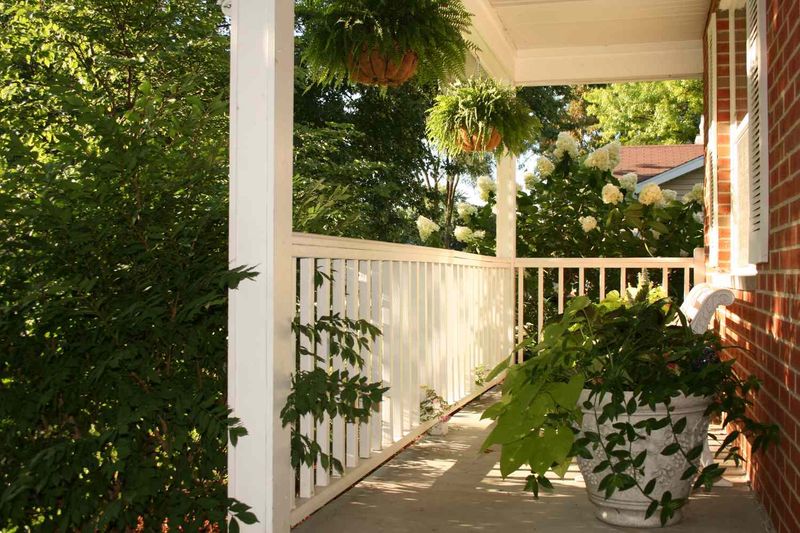
Placement is the single most controllable factor in a Central Texas gardenia’s summer survival, and the goal is a split arrangement: bright morning sun for the foliage, then relief from direct heat once temperatures climb past midday. Clemson Cooperative Extension’s gardenia factsheet recommends morning sun with afternoon shade as the preferred exposure in hot conditions, and that guidance lines up well with what most Central Texas patios and porches can offer.
A spot that receives unobstructed eastern light until around 11 a.m. or noon, then falls into the shade of a patio roof, a pergola, a low wall, or a neighboring structure, gives the plant useful photosynthesis time without subjecting the pot to the most punishing heat of the day. The key distinction is that you are trying to shade the container, not necessarily the entire plant.
University of Arizona Cooperative Extension guidance on container gardening in desert climates specifically recommends keeping the container in shade while allowing the foliage access to light, which can be achieved by tucking the base of the pot behind a wall or planter while the canopy sits in bright filtered light.
Moving a gardenia into dense, all-day shade to escape the heat is not a reliable fix. Too little light can reduce flowering, produce weak leggy growth, and make the plant more vulnerable to other stresses.
The target is afternoon protection, not darkness.
Cultivar matters here, too. UF/IFAS Extension’s gardenias overview notes that gardenias can perform in full sun, partial shade, or shifting shade depending on the variety and local conditions.
Humidity, reflected heat from walls or pavement, your watering capacity, and how well acclimated your particular plant is will all influence whether morning sun plus afternoon shelter is enough or whether you need to pull the pot further back. Start with the morning-sun-and-afternoon-protection setup and observe how your plant responds over the first few weeks of serious summer heat.
Build a container that manages heat, moisture, and drainage
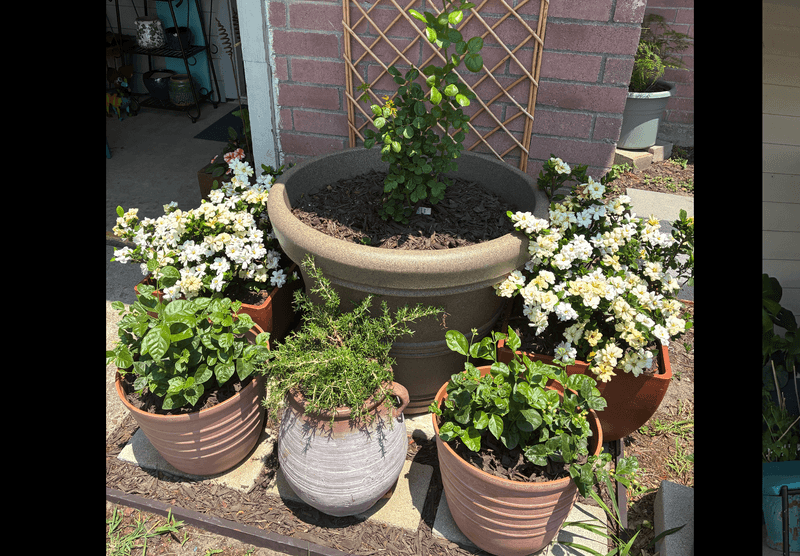
Before the next heat wave arrives, look at the container itself. A pot that is too small dries out rapidly and gives roots almost no buffer against temperature swings.
A pot that is too large, however, leaves excess potting media sitting wet around a small root system, which raises the risk of root rot and poor aeration. When sizing up, aim for a modest increase rather than jumping to the largest container you can find.
UGA Extension guidance on repotting container plants recommends going up by just a few inches in diameter rather than overpotting, because excess unused media stays wet longer than roots can safely tolerate.
Drainage holes are non-negotiable. Roots need oxygen, and a pot that cannot shed excess water will suffocate them faster than heat alone.
Check that the holes are fully open and not blocked by compacted media or a saucer sitting flush against the bottom of the pot. NC State Extension’s container handbook also warns against adding a gravel layer beneath the potting mix to improve drainage – research shows this creates a perched water table that keeps the mix above the gravel wetter, not drier.
A porous commercial potting mix with unobstructed drainage holes is the right combination.
For gardenias specifically, the potting media needs to be acidic. UF/IFAS Extension gives an appropriate pH range of 5.0 to 6.5, and Clemson Extension notes that gardenias prefer conditions below pH 6.0 with consistent moisture and good drainage.
A mix formulated for azaleas or acid-loving plants is a reasonable starting point.
Container color and material can also reduce heat stress before you ever move the pot. Dark plastic containers absorb the most heat; a light-colored outer container or a double-potting arrangement – where the planted inner pot sits inside a larger, lighter decorative pot with an air gap between them – buffers both temperature and moisture swings.
University of Arizona Cooperative Extension recommends keeping the container in shade and using materials that reduce heat absorption. If you use a double-pot system, make sure the inner pot never sits in water that has collected in the bottom of the outer container – that standing water creates the same oxygen-deprivation problem as a pot without drainage.
Water by the root ball, not by the calendar
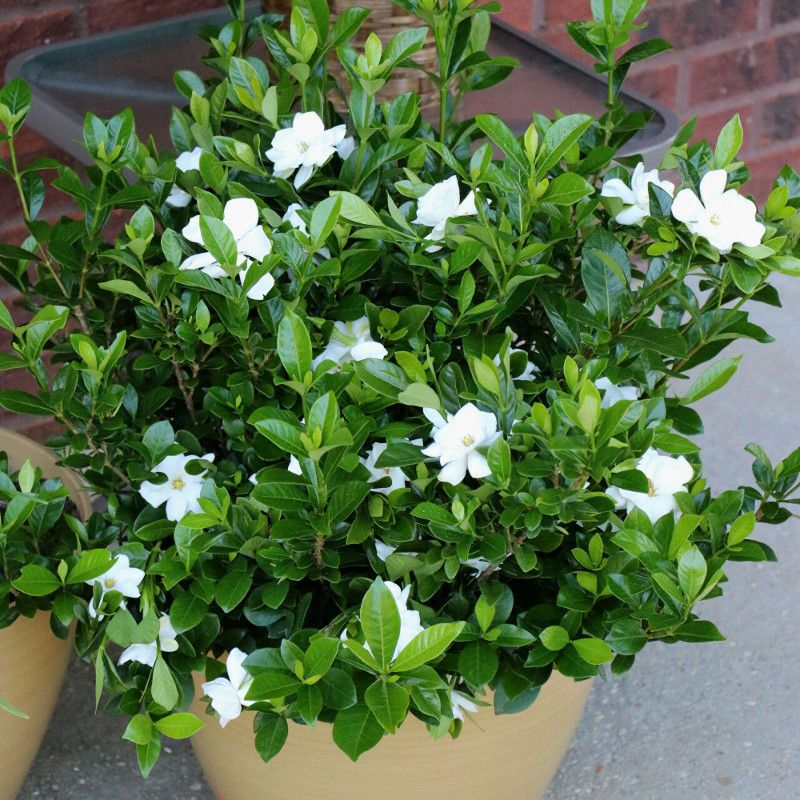
A fixed daily watering schedule sounds reliable, but it can actually work against a potted gardenia in Central Texas summer conditions. A small pot in a windy, exposed spot may need water twice in one day, while a larger pot in a partly shaded corner might still be moist from yesterday.
The right approach is to check the media first. Push a finger an inch or two into the potting mix near the edge of the pot – if it feels dry at that depth, water thoroughly.
If it still feels moist, wait and check again later.
Texas A&M AgriLife Extension’s irrigation management guidance notes that watering frequency for container plants depends on species, pot size, media, temperature, humidity, and wind – not just a default daily rule. During the hottest stretches of a Central Texas summer, frequent checks become especially important because conditions can change quickly between morning and afternoon.
When the media does need water, apply it until you see it running freely from the drainage holes. That confirms the entire root ball has been wetted rather than just the top layer.
Penn State Extension’s guidance on summer watering recommends checking moisture with a finger and watering thoroughly until drainage occurs. After watering, empty any saucer or catch basin so the pot is not sitting in standing water, which cuts off oxygen to the roots.
Morning is the preferred time to water because the plant gets moisture before the hottest part of the day and any wet foliage has time to dry. University of Minnesota Extension notes that containers may need daily or even twice-daily watering during hot, dry weather – but that frequency should still be guided by what the media actually needs, not a rigid rule.
If your plant is critically dry in the afternoon, water it then rather than waiting for morning.
One practical detail worth checking during a heat wave: water that has been sitting in a garden hose in direct sun can become hot enough to stress roots. UC Agriculture and Natural Resources warns about this specifically and recommends letting hose water run until it cools before applying it to the root zone.
Gardenias also benefit from soil-level watering. Clemson Extension recommends drip or soil-directed irrigation because keeping water off the foliage and flowers reduces the risk of leaf-spot disease, not because water droplets reliably burn leaves in sunlight – that common belief is not well supported by evidence.
Read brown leaves, wilt, and bud drop as clues
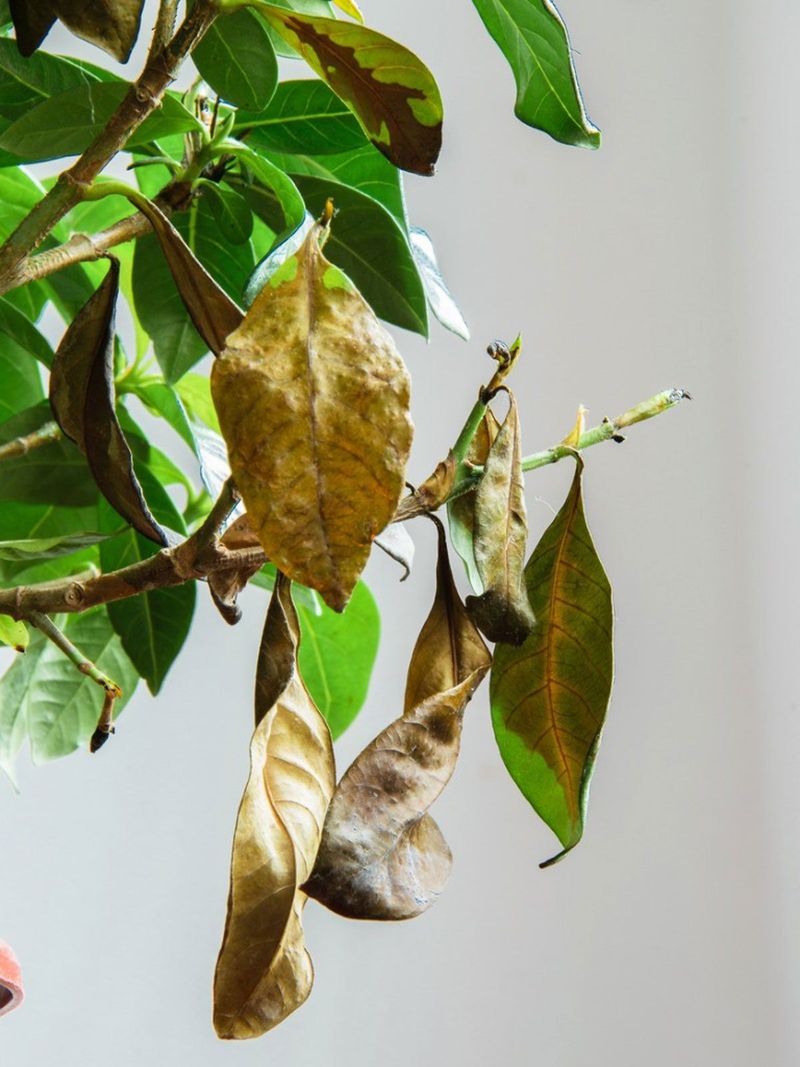
Brown leaf edges, wilting, yellowing, and dropped buds are distress signals, but none of them point to a single cause on their own. Before you reach for the hose or a fertilizer bag, spend a few minutes gathering information about what is actually happening in the pot.
The remedy depends entirely on the correct diagnosis, and getting it wrong can make things worse.
Start with the media moisture. Dry, pulling-away-from-the-pot-wall media combined with a plant that has been sitting in direct afternoon sun is consistent with drought stress.
Wet or soggy media in a plant that is wilting is a different problem entirely – it suggests that roots may be suffocating from poor aeration, damaged by root rot, or impaired by salt buildup, none of which benefit from more water. Texas A&M AgriLife Extension specifically lists root-system damage and excessive soluble salts as causes of plants wilting despite having adequate water in the soil.
Leaf scorch – browning that starts at the leaf margins and moves inward – does not confirm that roots were overheated. Penn State Extension’s leaf scorch guidance explains that scorch occurs when water does not reach leaf margins adequately, which can happen because of drought, root damage from any cause, compaction, salt injury, or other problems.
Overheated roots are one possible contributor, not the only one.
Bud drop is its own category. Clemson Extension lists high temperatures, low humidity, overwatering, underwatering, and insufficient light as separate possible causes of bud drop in gardenias.
A plant that drops its buds during a heat wave is not necessarily dying – it may simply be shedding reproductive load under stress, which is a survival response.
Yellow leaves add another layer of complexity. UF/IFAS Extension notes that yellowing in gardenias can result from high soil pH, poor drainage, root disease, nematodes, or salt stress – not just a nutrient shortage.
Before assuming the plant needs fertilizer, check the media pH, examine drainage, consider the irrigation water source, and look at whether new growth is present. New green growth anywhere on the plant is a useful sign that the root system still has some function.
Inspect stems by scratching lightly with a fingernail – green tissue beneath means that section is still alive.
Reduce stress before you repot or fertilize
When a gardenia looks bad in midsummer, the instinct to act immediately is understandable, but the first actions matter a great deal. The priority is removing the source of stress, not adding new ones.
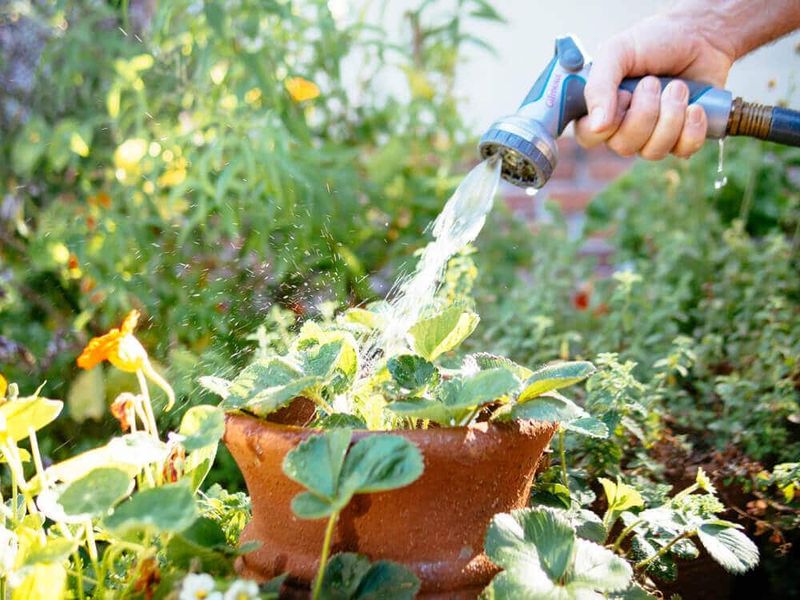
If the pot is sitting in direct afternoon sun on a hot surface, move it or shade it first. If the media is genuinely dry, rehydrate the root ball thoroughly with water that has cooled to ambient temperature – not ice water or water that has been sitting in a sun-heated hose.
UC Agriculture and Natural Resources cautions specifically against applying overheated hose water to stressed container plants, and the same logic applies in reverse: abrupt chilling with ice is not a safe remedy for an overheated root ball.
If the pot has standing water in a saucer or blocked drainage holes, correct that before anything else. Trapped water in a stressed plant compounds root problems quickly.
Check whether the potting media has become hydrophobic – extremely dry media sometimes repels water rather than absorbing it, so you may need to water slowly in small amounts, allow it to absorb, and repeat until the whole root ball is genuinely moist.
Hold fertilizer while the plant is dehydrated or severely stressed. Texas A&M AgriLife Extension’s greenhouse irrigation guidance notes that fertilizer salts interact with potting media and can further injure already-stressed roots.
Yellow leaves alone are not a reason to fertilize – address pH, drainage, and root health first.
Also consider the irrigation water source. UF/IFAS Extension warns that gardenias do not tolerate high-salt water, including water from some softeners, reclaimed systems, or salt-affected wells.
Salt accumulation mimics drought and root damage symptoms and is easy to overlook as a cause.
Repotting is not the first response to a heat-stressed gardenia. Clemson Extension identifies gardenias as sensitive to root disturbance, and repotting adds significant stress on top of whatever the plant is already managing.
Reserve it for situations where the pot is clearly root-bound, the drainage has completely failed, or the media has broken down. UGA Extension’s repotting guidance reinforces a conservative approach: move up only one modest size increment and handle roots as gently as possible when repotting is genuinely necessary.
Protect the pot, then investigate the plant
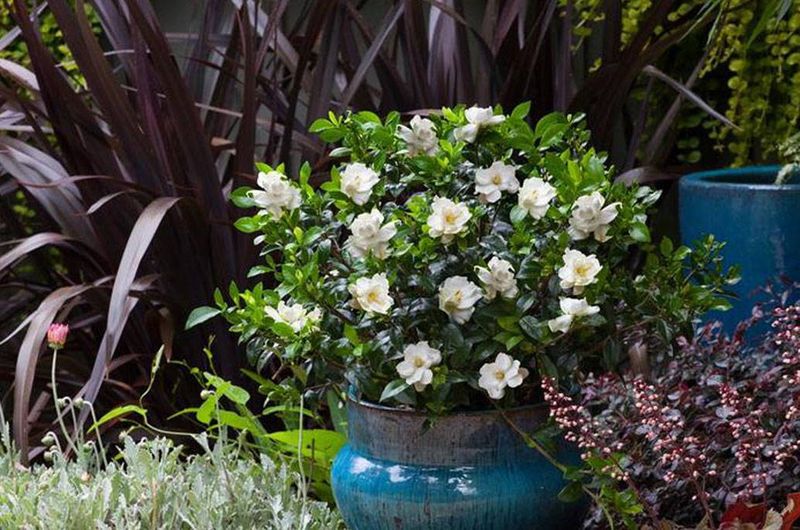
Pulling a potted gardenia through a Central Texas summer is a realistic goal, but it requires getting a few things right before the heat peaks. Provide morning sun and afternoon protection, shade or insulate the container so the root zone does not absorb punishing afternoon heat, use acidic well-drained potting media with unobstructed drainage, and check moisture frequently enough to water the full root ball whenever it genuinely needs it.
Clemson Extension, NC State Extension, and Texas A&M AgriLife Extension all support these fundamentals as the core of a sound summer container strategy.
When something looks wrong, investigate before you treat. Brown leaves, wilt, and dropped buds do not confirm that heat damaged the roots – those same symptoms can come from drought, saturated media, salt injury, root disease, or several other causes.
Check moisture, drainage, water quality, and stem condition before drawing a conclusion.
A gardenia that has lost leaves or buds to summer stress is not necessarily lost. Recovery depends on whether the roots and stems are still viable and on whether you have corrected the actual source of the problem.
A plant that holds green stems and pushes new growth after conditions improve has more in reserve than its battered foliage suggests.