
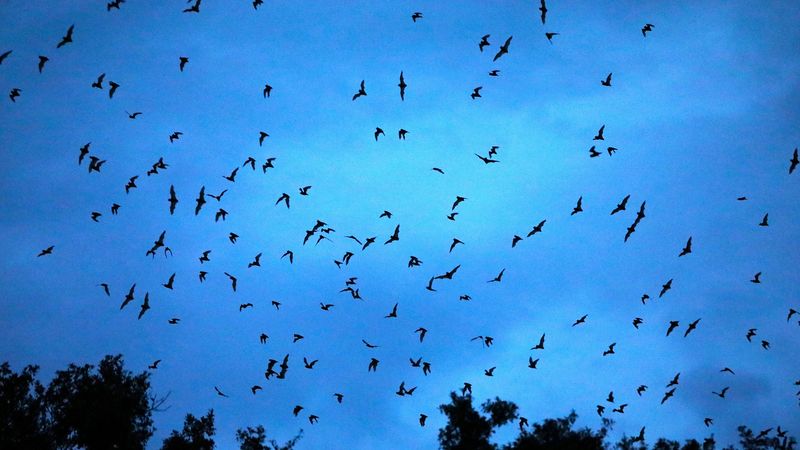
Florida evenings can feel like a battle against mosquitoes the moment you step outside, and native bats are one piece of the puzzle that many homeowners overlook. The state is home to more than a dozen bat species that forage on insects at dusk, and a yard that meets their basic needs can become a regular hunting ground.
Making that happen takes more than hanging a small box on a fence post – it calls for a few concrete changes to how your yard is set up, maintained, and lit at night.
Make the mosquito claim honest before changing the yard
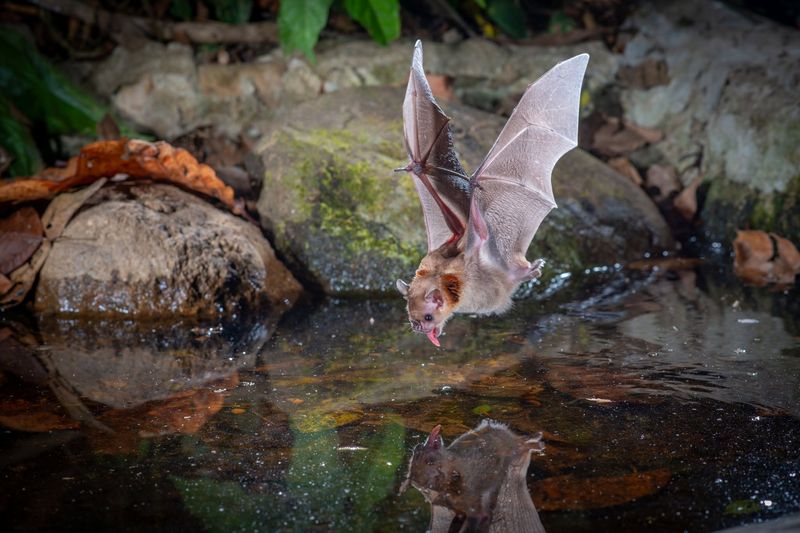
Florida has more than 13 bat species, and yes, several of them eat mosquitoes. The southeastern bat, in particular, is known to forage near water and has been documented consuming mosquito-sized insects during its nightly runs.
A 2022 study on bat diets in the southeastern United States confirmed that some Florida-associated species do consume endemic mosquito vectors, including species capable of carrying arboviruses.
That said, mosquitoes typically make up only a fraction of what any given bat eats on a given night. UF/IFAS research on insect pest management by bats is direct on this point: most bats consume relatively small quantities of mosquitoes, and they are unlikely to control a large mosquito population on their own.
Broad estimates of mosquito-sized insects consumed per hour – sometimes cited at several hundred – refer to all small flying insects, not mosquitoes specifically.
What species a bat eats also shifts with habitat, season, temperature, and time since sunset. A bat working the edge of a pond may be chasing midges, moths, or beetles just as readily as mosquitoes.
Homeowners who plant native vegetation, install a proper bat house, and reduce artificial lighting are doing real habitat work, but they are improving conditions for bats, not engineering a mosquito-free yard.
Every suggestion in this guide should be understood that way. Bats are a worthwhile part of a yard ecology, and supporting them is genuinely useful.
They simply cannot replace source reduction, repellents, or other direct mosquito controls, and treating them as a guaranteed fix sets up a frustrating outcome. The goal here is an honest habitat plan, not a promise.
Preserve safe natural roosting places
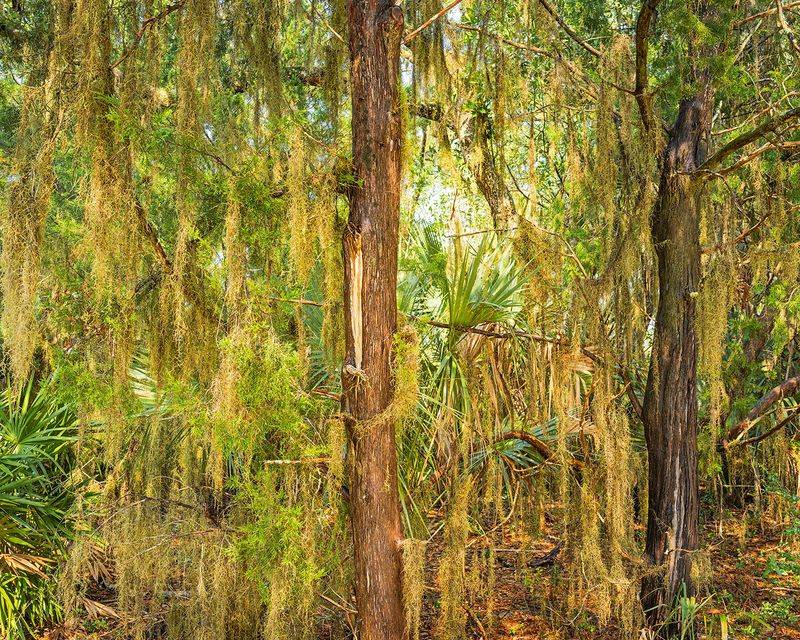
Before buying a single piece of equipment, walk your yard and look at what is already there. Florida bats use a wide range of natural features as roosts: tree cavities, spaces under peeling bark, dead palm fronds that curl inward and hold heat, clumps of Spanish moss, and even the gaps under loose roof tiles or behind shutters on older buildings.
FWC’s bat species profiles confirm that Florida bats rely on this variety of shelter types across the state.
The practical move is to resist the urge to clean everything up. A dead palm frond that looks untidy to you may be sheltering a small colony of evening bats or tri-colored bats.
A hollow in an aging oak does not need to be filled unless the tree itself is structurally dangerous. UF/IFAS guidance on bat conservation in Florida notes that removing every cavity tree, dead snag, or palm remnant reduces the roosting options available to local bat populations.
That does not mean keeping a tree that is likely to fall on a structure or a person. A certified arborist can assess whether a cavity tree is genuinely hazardous or simply old and textured.
When a dangerous tree must come down, consider leaving a tall snag if the remaining portion is stable – a standing dead trunk with cavities still functions as roost habitat without the full fall risk.
Spanish moss is worth a specific mention because it gets removed routinely during yard cleanups. A moderate amount on healthy trees poses no threat to the tree and can provide cover for smaller bat species.
Removing it wholesale eliminates potential roost microhabitats that cost nothing to maintain.
Choose a substantial Florida-appropriate bat house
Small decorative bat boxes sold at garden centers are not the same as functional bat houses, and the difference matters. Many of those products are too narrow, too shallow, or built from smooth wood that bats cannot grip.
UF/IFAS is clear that many commercially available houses are too small or poorly constructed to attract Florida bats, and a house that fails on those dimensions will simply sit empty.
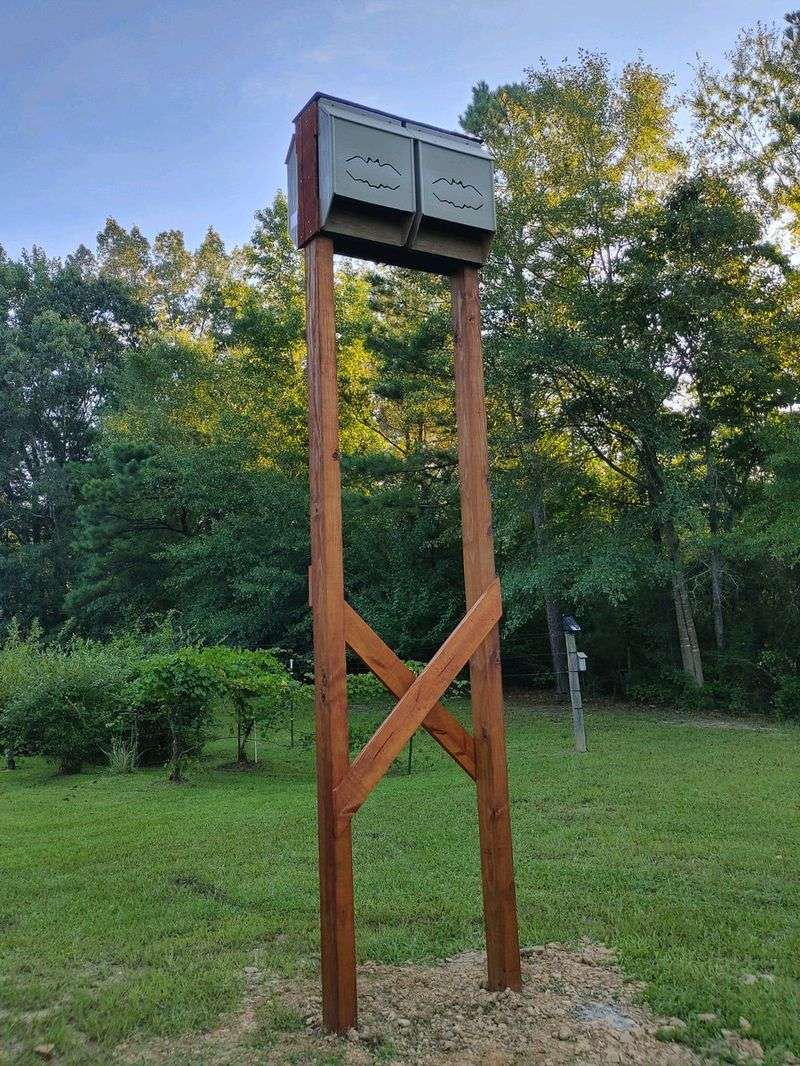
A Florida-appropriate bat house should have multiple chambers, rough or grooved interior surfaces so bats can cling without slipping, and an open bottom that allows bats to drop into flight. UF/IFAS guidance on effective bat houses for Florida covers chamber depth, interior texture, wood thickness, and caulking to prevent drafts, all of which affect whether a house stays within a usable temperature range.
The UF/IFAS Gardening Solutions bat house page and Bat Conservation International’s bat house guidelines both offer construction details and certified design standards worth consulting before purchasing or building.
Bigger is generally better when it comes to bat houses intended for colony use. A house with at least four chambers and enough vertical space for bats to move between warmer and cooler zones gives a colony room to thermoregulate, which is especially relevant in Florida’s climate where summer heat can push roost temperatures to extremes.
One expectation to set clearly: a bat house supplements natural habitat rather than replacing it. Even a well-built house in a good location may sit empty for months or years.
Some bat species do not use artificial roosts at all, and no house design can guarantee that bats will choose it over a nearby tree cavity or building gap. The house improves the opportunity; it does not control the outcome.
Place the house to improve its likelihood of use
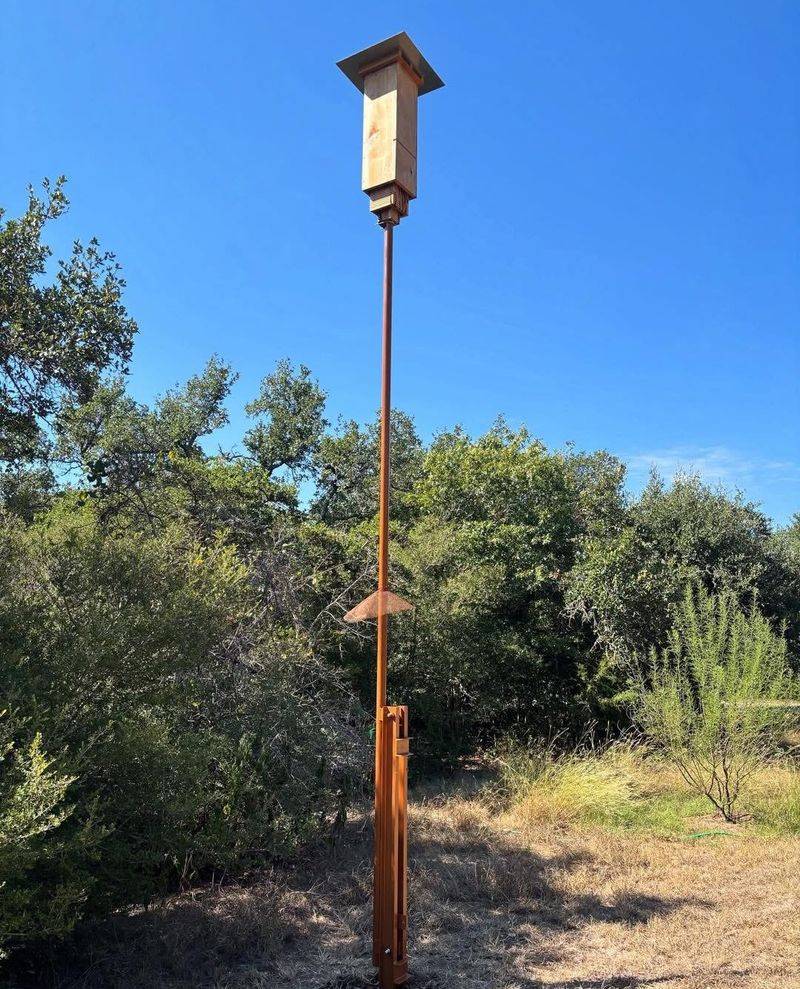
Getting the location right matters at least as much as the house design itself. UF/IFAS bat house siting guidance recommends mounting the house at least 12 feet above the ground, with higher often being better for reducing predator access and increasing the bat’s ability to drop into flight on exit.
A pole or the side of a building are the preferred mounting options over a tree, because tree-mounted houses are frequently shaded by foliage and give squirrels, raccoons, and rat snakes an easy climbing route.
The flight path below and around the house should be open. Bats need clear airspace to exit the roost and accelerate without obstruction.
Keeping the house at least 20 feet from branches, rooflines, or any structure a predator could use as a perch reduces the risk of ambush at the roost entrance. FWC’s bat FAQ reinforces that patience is required even when siting is correct, since occupancy can take months to years.
Temperature is a Florida-specific siting challenge that often gets overlooked. Bats generally prefer roost interiors in roughly the 80 to 100 degree Fahrenheit range, warm enough to support pup development but not so hot that adults abandon the roost.
In northern Florida, dark paint and full southern exposure may be appropriate to capture enough sun. In central and especially south Florida, the same setup can overheat the house through summer, so a lighter exterior color, afternoon shade from a structure rather than a tree, and adequate ventilation slots become more important.
Proximity to feeding habitat also matters. Houses within about a quarter mile of a river, stream, pond, or lake tend to see better use rates than houses placed in the middle of a dry, open suburban lot.
Woods-to-open-space edges near water give bats diverse foraging opportunities close to the roost, which makes the location more attractive. These conditions improve the odds, but no placement combination guarantees a resident colony.
Support the insects bats actually eat
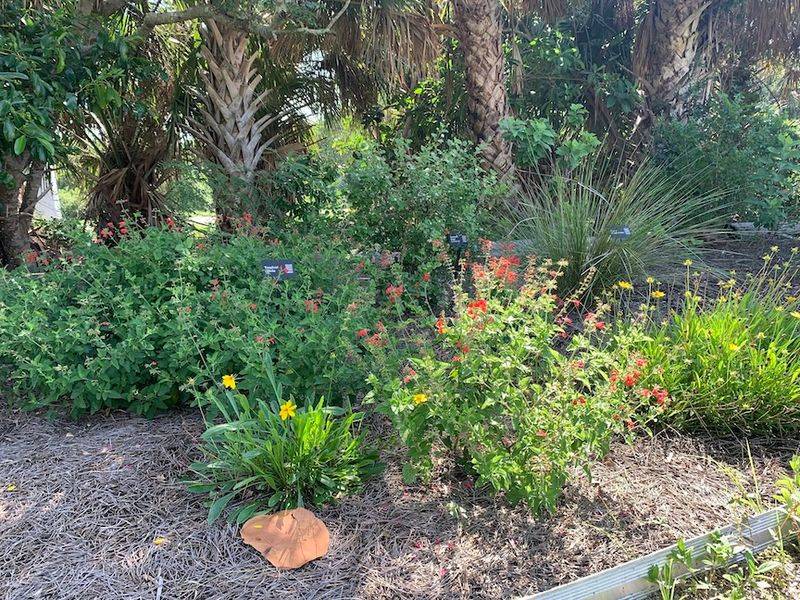
A yard set up for bats needs insects, and the way to have insects is to give them something to live on. Native Florida plants support a much broader range of native insects than ornamental exotics do, and those native insects – moths, beetles, midges, crane flies, and others – make up the bulk of what local bats actually consume.
UF/IFAS conservation guidance for Florida bats recommends native vegetation specifically as a way to support the insect prey base bats depend on.
Plants like firebush, beautyberry, wild coffee, and native oaks support caterpillars and adult insects at multiple life stages, and flowering natives attract moths and beetles after dark when bats are active. Bat Conservation International’s bat garden recommendations point toward native plantings as prey habitat rather than as bat-attraction devices in themselves.
No plant will cause bats to settle in your yard, and none should be presented as a mosquito repellent. Plants are the foundation of the food web bats are hunting through.
Pesticide decisions carry real weight here. Broad-spectrum insecticide applications, including routine yard spraying, can reduce the insect prey base that bats and other wildlife depend on and may expose non-target species to harm.
EPA guidance on reducing pesticide impacts on wildlife recommends targeted applications, label compliance, and avoiding treatment during peak insect activity periods when possible. If mosquito spraying is necessary, choosing targeted treatments over blanket applications reduces collateral impact on the insects bats are there to eat.
Lighting is the other variable in this section. Bat Conservation International’s backyard guidance recommends minimizing light pollution, directing essential lights downward, and avoiding intense illumination near bat houses or likely flight corridors.
Some bat species avoid brightly lit areas entirely. Switching a floodlight to a downward-directed fixture or putting porch lights on a timer will not summon bats on its own, but reducing unnecessary nighttime light removes a barrier that can keep bats from using otherwise suitable habitat.
UF/IFAS Gardening Solutions also notes that avoiding light near bat houses improves the roost environment.
Offer open water without creating a mosquito nursery
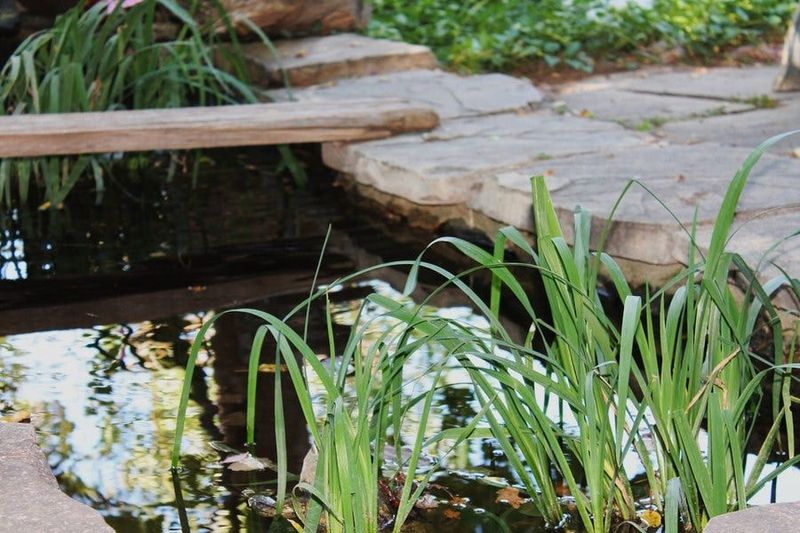
Open water is one of the strongest draws for bat activity in a yard. Several Florida bat species drink on the wing, skimming the surface of flat, accessible water, and aquatic insects like midges and mayflies that emerge near ponds or slow-moving streams are a reliable food source.
UF/IFAS Gardening Solutions on bat benefits identifies water access as a meaningful habitat element for Florida bats.
The catch is that water attracts mosquitoes just as readily as it attracts bats. A pond with a gently sloping edge and some water movement is very different from a bucket of rainwater sitting under a porch.
UF/IFAS bat house guidance recommends siting bat houses near accessible water, but that recommendation assumes the water is managed, not stagnant.
Every water feature in a Florida yard needs a maintenance plan. Birdbaths should be emptied, scrubbed, and refilled every three to four days during warm months – more frequently in peak summer – to break the mosquito larva development cycle.
Bromeliads collect water in their central cups and can become prolific mosquito nurseries; flushing those cups on the same schedule or treating them with a larval control product is a practical step. UF/IFAS integrated mosquito management guidance covers bromeliad and container maintenance in Florida-specific detail.
Rain barrels should be tightly screened at every opening. CDC mosquito control guidance recommends weekly emptying and scrubbing of any container that holds standing water.
A pond can be a genuine asset for bat habitat if it has some surface area, accessible edges, and either natural predators like fish or a mosquito larvicide approved for use in water features. Adding water without managing it trades one problem for another.
Add direct mosquito management to the habitat plan
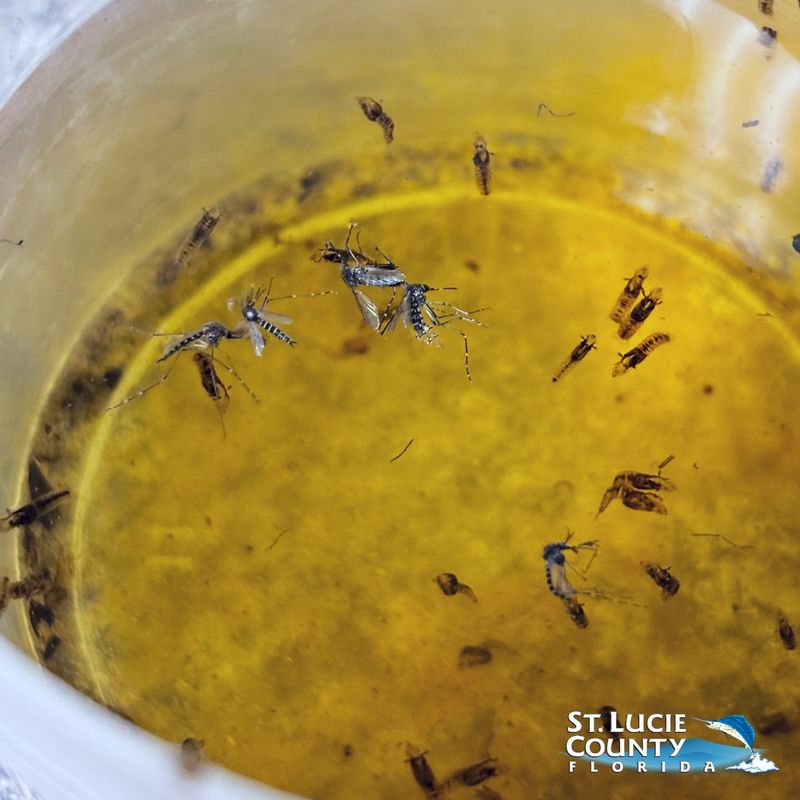
Bat habitat improvements do not replace the hands-on mosquito management that actually moves the needle on bites. After any significant rainfall, the most useful thing a Florida homeowner can do is walk the yard and look for water that has collected in containers, low spots, or debris.
Buckets, old tires, plastic toys, saucers under planters, clogged gutters, tarps with pockets, and anything else that holds even a small amount of water can produce hundreds of mosquitoes within a week.
CDC mosquito control guidance recommends emptying, scrubbing, covering, or discarding water-holding items on a weekly basis. UF/IFAS integrated pest management guidance for Florida neighborhoods echoes that recommendation and adds Florida-specific attention to bromeliads, rain barrels, and ornamental containers that are especially common in the state’s landscaping.
Visible bats foraging at dusk also do not protect against every mosquito. Florida has multiple species with very different activity patterns.
UF/IFAS documentation on the Asian tiger mosquito notes that this species bites primarily during the day, with peaks in the early morning and late afternoon, well outside the window when bats are active. Southern house mosquitoes tend to be more nocturnal, but even then, bats are hunting across a broad range of insects and are not targeting any single mosquito species.
Personal protection remains an essential layer of defense alongside source reduction. EPA-registered repellents, long sleeves and pants during high-activity periods, screened windows and doors, and avoiding outdoor activity during peak mosquito times all reduce exposure in ways that habitat changes alone cannot match.
Combining bat-friendly yard improvements with consistent source reduction and personal protection gives you the most complete approach available to a homeowner working without professional mosquito control.
Expect uncertainty and handle bat conflicts safely
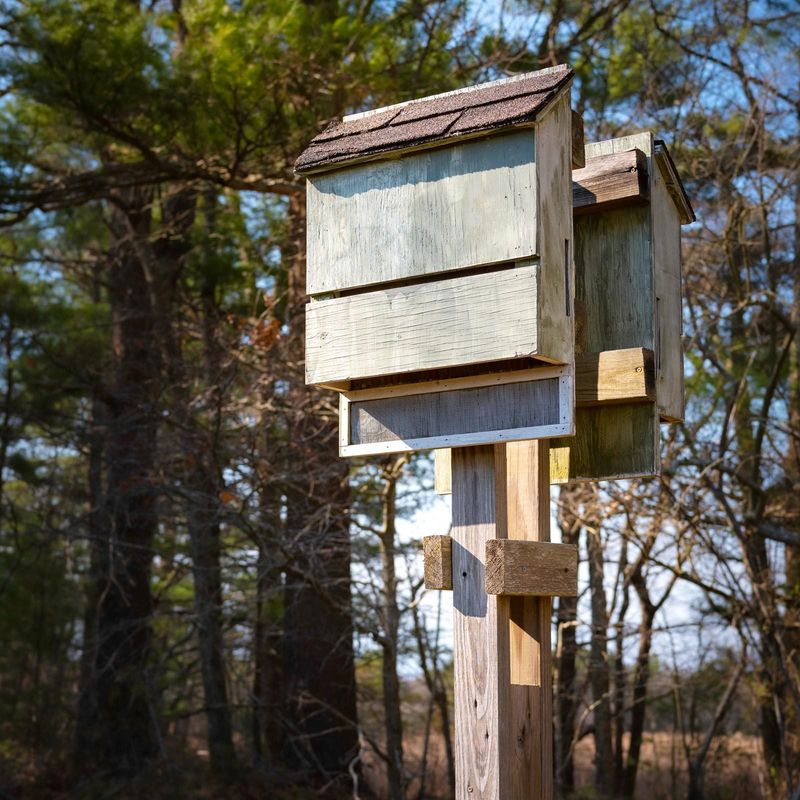
A correctly built and well-placed bat house may sit completely empty for the first year, or longer. FWC’s bat FAQ is straightforward about this: bats may take months or years to move into a house even when the design and location meet every recommended standard.
Some species do not use artificial roosts under any circumstances. The habitat improvements in this guide raise the likelihood of bat activity in your yard; they do not promise a resident colony or a measurable reduction in mosquito pressure.
If bats do show up, watch from a respectful distance and leave them alone. CDC guidance on rabies prevention from bats is unambiguous: bat bites can be so small that they go unnoticed, and direct contact with a bat, including contact with a bat found on the ground, on a pet, or inside a home, requires prompt guidance from a healthcare provider or local public health department.
Never pick up, relocate, or handle a bat with bare hands under any circumstances.
A bat found inside the house is a different situation from bats roosting in an outdoor bat house, and it carries public health implications if human or pet exposure cannot be ruled out. Do not simply open a window and assume the problem is resolved before checking with public health guidance on whether anyone in the home may have been exposed.
FWC’s maternity season announcement states that Florida’s bat maternity season runs from April 16 through August 14, and bats may not legally be excluded or removed from buildings during that period without applicable authorization or a permit. This restriction applies specifically to exclusion from structures, not to installing a bat house, preserving natural roost features, or other outdoor habitat work.
If bats are roosting inside a building and you need them removed, consult FWC guidance and confirm current rules and any permit requirements before taking action. A yard full of bat-friendly habitat is a good outcome; the bats that take advantage of it are worth appreciating from a few feet away.