
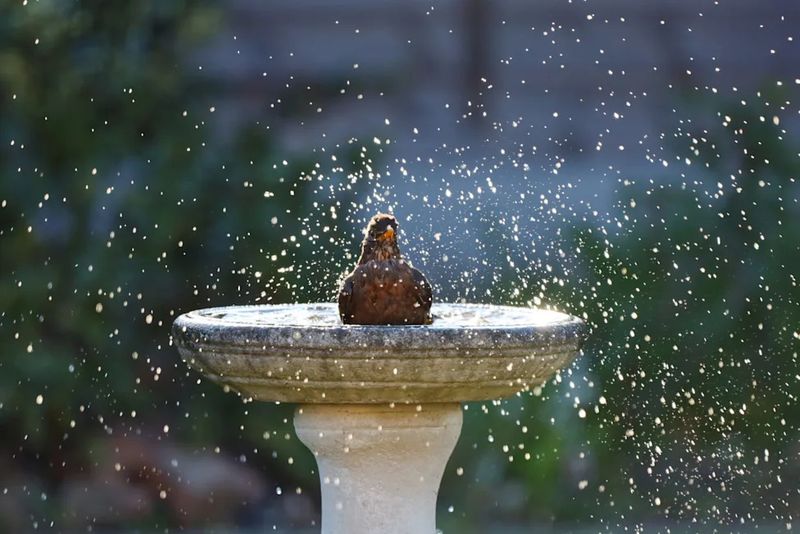
When a heat wave rolls through California and temperatures push past 100 degrees, the birds visiting your yard face serious risks that most gardeners never think about. Small birds can lose dangerous amounts of water just by breathing in extreme heat, and the typical suburban yard often offers very little to help them. The good news is that a few thoughtful changes to your outdoor space can reduce some of that risk, even if no yard setup can promise a bird will survive every hot day.
What extreme heat does to birds
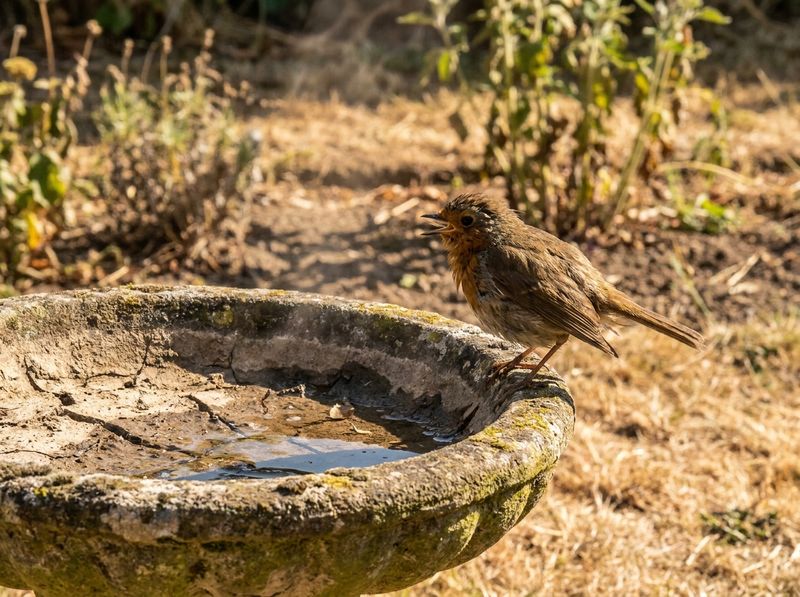
Birds regulate body temperature very differently from mammals, and heat waves expose a critical weakness in that system. When air temperatures climb, birds lose water through a process called evaporative cooling, essentially panting and sweating through their respiratory system to keep their core temperature from rising to dangerous levels. The faster a bird has to cool itself, the faster it burns through its water reserves.
Research on desert passerines in the southwestern U.S. found that evaporative water loss increases sharply as temperatures rise, and that smaller birds face a steeper challenge because they lose water faster relative to their body mass. A house finch or a bushtit, both common California backyard visitors, carries far less water in reserve than a crow or a mockingbird. Under sustained heat, that difference can become critical.
A separate study on catastrophic avian mortality during extreme heat events modeled how quickly dehydration risk escalates when temperatures stay high, particularly overnight when birds cannot cool down. These studies draw heavily on desert and southwestern bird populations, and they do not establish a single temperature threshold that applies to every California backyard species. What they do confirm is the mechanism: extreme heat increases physiological stress and dehydration risk, and that risk rises faster in smaller birds.
The practical takeaway for California homeowners is that seed in a feeder is not the central heat-wave response. Audubon guidance on helping birds during heat points toward shade, cover, and access to water as the more relevant resources. None of these features guarantee that a bird visiting your yard will survive a specific heat event, but they address the actual physiological problem: a bird that can find shade and reduce its cooling workload has more time and more water to work with.
Create layered shade and cover
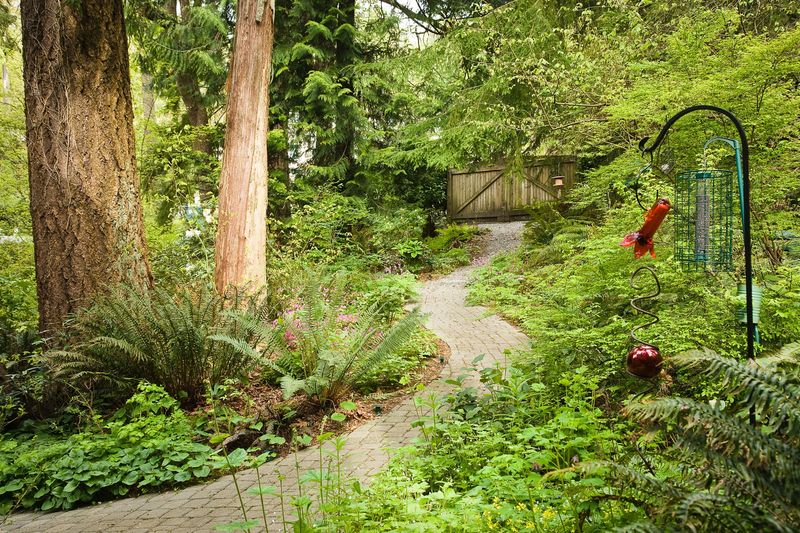
A yard with one lawn, one bird feeder, and one ornamental tree offers birds almost nowhere to hide from the sun. Layered habitat, meaning a mix of tall trees, mid-level shrubs, low-growing plants, and ground cover, creates a range of shaded microhabitats where birds can rest, roost, and reduce their heat exposure at different times of day.
Audubon recommends shade and sheltered areas as a primary way to support birds during heat. A mature tree with a broad canopy can drop the temperature beneath it by several degrees compared to open sun. Dense shrubs offer cooler air near ground level and give smaller birds a place to hunker down out of direct sunlight and away from aerial predators. Not every bird species uses the same layer: some prefer the canopy, others the shrubby middle story, and ground-feeding birds like towhees and sparrows depend on low cover and leaf litter.
California Native Plant Society habitat gardening guidance describes this layered structure as a foundation for supporting wildlife, not just birds. Leaf litter on the ground holds moisture, harbors insects, and gives ground-feeding species something to scratch through. A brush pile or a dead limb left in place can serve as a perch, a foraging site, or an escape route. These features cost little to maintain and provide value across seasons, not just during heat events.
The goal is strategic placement, not maximum density. UC Master Gardener guidance on bird-friendly native plants notes that the arrangement of plants matters as much as the species chosen. Shade works best when it falls where birds actually rest, such as near water, near feeding areas, or along flight paths between cover patches. Dense vegetation in the wrong location, or left unmanaged, can create fire risk rather than habitat value, which is a concern addressed in a later section on fire safety.
Use California plants for food as well as shelter
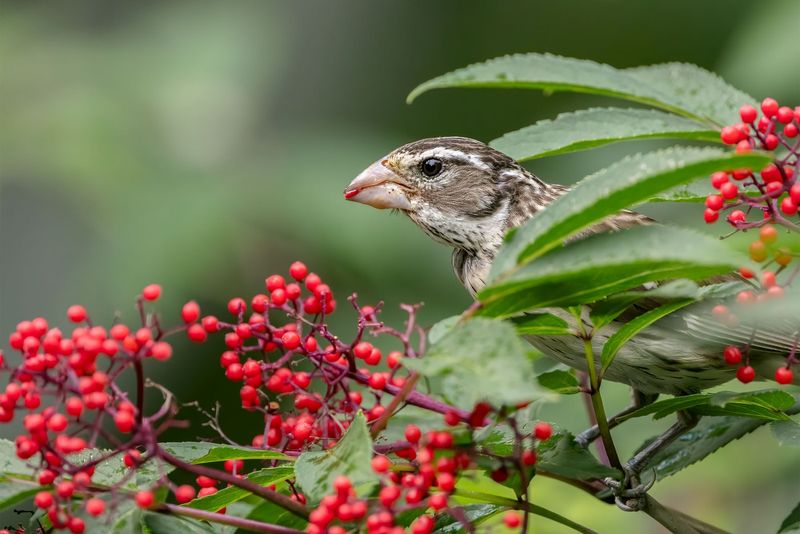
A yard planted with California natives can do more than block the sun. Native trees, shrubs, flowering plants, and groundcovers produce seeds, berries, nuts, nectar, and, critically, insects at different times of year. That last item matters more than most gardeners realize: UC Master Gardener guidance on bird-friendly gardens notes that most land birds feed insects to their chicks, even species that eat seeds as adults. A yard without native insect habitat is a yard that cannot support breeding birds.
CNPS habitat gardening resources emphasize that a mix of plant layers, rather than a single attractive species or a generic lawn, produces the most consistent food supply across seasons. A toyon offers berries in fall and winter. A native oak supports hundreds of insect species. A coffeeberry or elderberry fills in gaps that ornamental plants rarely cover.
The combination, not any single plant, is what builds a functional food web.
Choosing the right plants for your specific location matters more than following a statewide list. UC Master Gardener resources for bird-friendly native planting and UC ANR guidance on planting California natives both point to the importance of matching plant choices to your county, elevation, slope, and local climate. A plant that thrives on the coast may struggle in the Central Valley, and a species suited to the foothills may not survive a low-desert summer.
Calscape, the California Native Plant Society’s searchable plant database, lets you filter by zip code and site conditions to find species that fit your actual yard rather than a generic California template. One important note: native status does not eliminate the need for care. Many natives need supplemental water during establishment, and all of them benefit from thoughtful placement relative to fire-safety requirements. A locally appropriate native plant garden is a long-term habitat investment, not an instant fix for heat-wave stress.
Decide whether a birdbath fits your risk tolerance
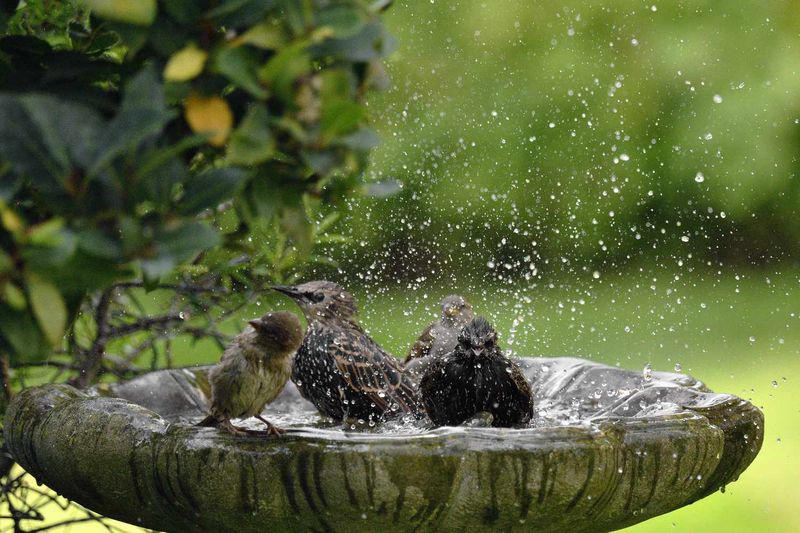
Water access during extreme heat seems like an obvious addition to any bird-friendly yard, and for individual birds it genuinely can help. A bird that can drink or bathe during a hot afternoon has a better chance of staying hydrated than one that cannot find water nearby. That much is supported by the same physiological research that explains why heat is dangerous in the first place.
The complication is that California’s wildlife-health authorities see birdbaths from a different angle. CDFW’s Wildlife Health Lab recommends against providing artificial food or water to wild birds because shared sources concentrate birds and can facilitate disease transmission. This is not a hypothetical concern. California has documented outbreaks of avian trichomonosis in mourning doves and band-tailed pigeons spread through shared water sources.
The department’s position is that the disease risk to bird populations from shared artificial water can outweigh the benefit to individual birds.
Audubon and UC Master Gardeners take a more permissive approach, offering practical guidance for homeowners who choose to maintain a birdbath, with an emphasis on rigorous cleaning and placement. These two positions, CDFW’s caution and Cornell and UC’s maintenance guidance, reflect different priorities rather than one side being wrong. CDFW is weighing statewide population-level risk; Cornell and UC are advising individual homeowners who have already decided to offer water.
The honest answer for California homeowners is that a birdbath is an optional, conditional choice rather than a universal recommendation. If you live in an area where CDFW has issued active disease alerts, or if you cannot realistically commit to frequent cleaning, the safer choice may be to focus on habitat and shade instead. A yard with layered vegetation and native food plants supports birds whether or not a bath is present. Water is a useful addition only when it can be managed carefully and consistently.
Maintain optional water with strict hygiene
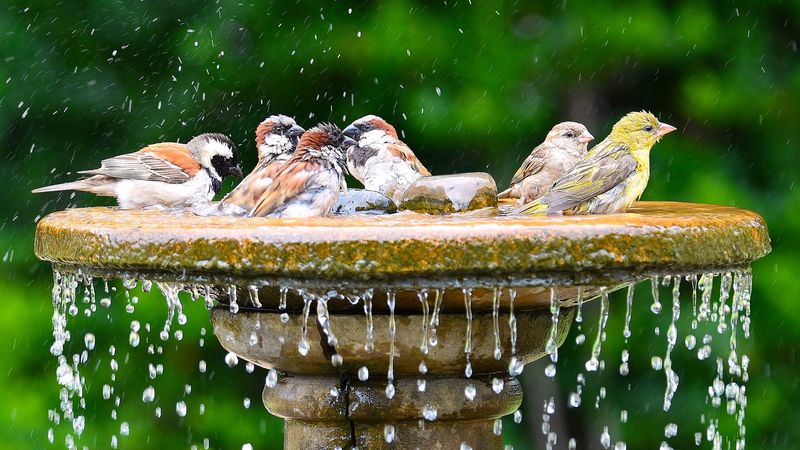
For homeowners who decide a birdbath fits their situation, setup and maintenance details matter more than the bath itself. UC Master Gardener guidance recommends keeping water depth between roughly 1 and 3 inches, which is shallow enough for small birds to stand and bathe without struggling. Stones, pebbles, or a stick placed in the basin give birds safe footing and a perch, especially for species that are cautious about water depth.
Placement matters for both bird comfort and contamination control. Position the bath in partial shade to slow evaporation and keep water cooler on hot days, but set it near, not directly beneath, a shrub or tree. Water placed directly under dense vegetation collects droppings and organic debris quickly, which accelerates bacterial and algae growth. A few feet of clearance keeps the bath cleaner longer and still allows birds to move easily between water and cover.
Cornell Lab guidance on providing water for birds and Cornell’s birdbath algae guidance both emphasize frequent water changes as the single most important maintenance step. During warm weather or heavy bird traffic, change the water daily. At minimum, empty, scrub, rinse, and refill the basin every one to three days. Algae, sediment, or droppings visible in the basin are a signal to clean immediately regardless of schedule.
A dripper, mister, or small pump that keeps water moving can make a bath more attractive to birds and reduces the chance of stagnant water becoming a mosquito-breeding site. Moving water is genuinely an improvement over still water for those specific concerns. It does not, however, eliminate the need for regular scrubbing and refilling, and it does not remove the disease-transmission risk that CDFW’s Wildlife Health Lab identifies as the core problem with shared artificial water sources. Circulating water is a helpful addition to a rigorous cleaning routine, not a substitute for one.
Respond safely when birds show signs of illness
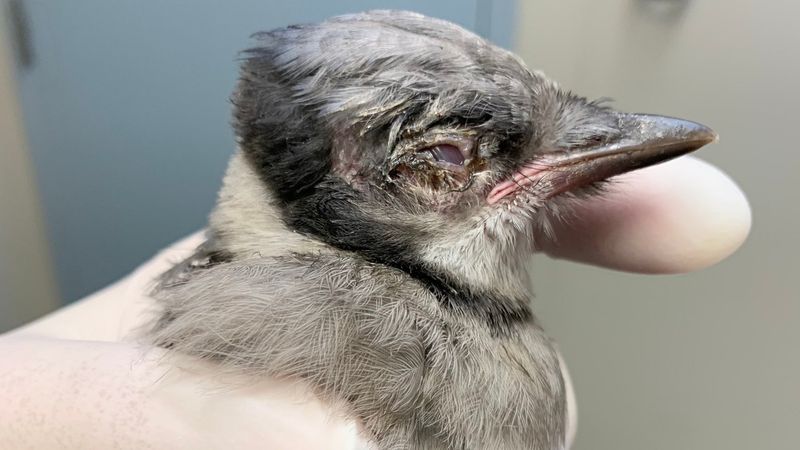
Shared water and feeders can turn a helpful feature into a disease vector when birds crowd together. CDFW’s Wildlife Health Lab identifies several pathogens that spread through congregating birds, including salmonellosis, mycoplasmosis, and avian trichomonosis. These diseases pass from bird to bird through contaminated water, shared food surfaces, and close contact, all of which increase when artificial food or water draws large numbers of birds to a single spot.
California has documented this pattern in real outbreaks. A historical CDFW announcement on band-tailed pigeon deaths linked mortality events to avian trichomonosis spread through shared water sources, and Cornell Wildlife Health Lab’s avian trichomonosis resource describes how the parasite passes easily through contaminated water that multiple birds use in sequence. These archived announcements describe past events rather than current outbreak status; check CDFW’s current Wildlife Health Lab pages for up-to-date disease advisories in your region.
If you see a sick or dead bird near your bath or feeder, the first step is to remove both the water and any food immediately. Do not handle a visibly sick wild bird with bare hands. Do not attempt an improvised rescue or try to nurse the bird back to health yourself. CDFW guidance on avian influenza and related advisories consistently direct the public to contact a licensed wildlife rehabilitator or a CDFW regional office before collecting or moving sick or dead birds.
Your local public-health department can also advise on handling dead birds safely, particularly when multiple deaths occur in a short period.
Adding more seed or water during a heat wave in hopes of helping a struggling bird is likely to do the opposite. Concentrating more birds around a potentially contaminated source increases exposure for every bird that visits. The safest response to signs of illness near artificial food or water is to take those sources down, clean and store the equipment, and seek current guidance from the appropriate authority before putting anything back out.
Adapt habitat to local wildfire rules
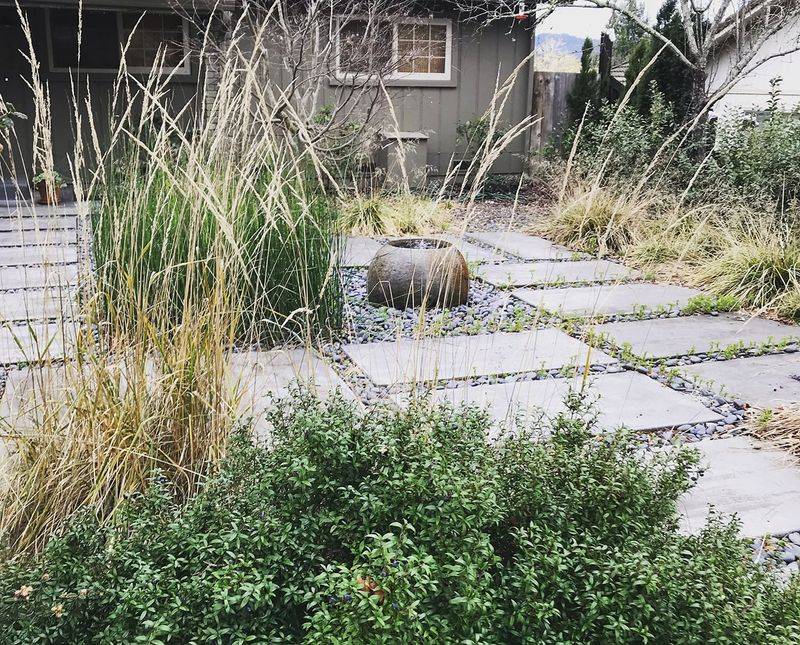
Layered vegetation sounds like more plants, closer together, and that combination can conflict directly with fire-safety requirements in large parts of California. A continuous wall of shrubs connecting to a tree canopy, which connects to a structure, is exactly what defensible-space rules are designed to prevent. Planning bird habitat and planning fire safety have to happen together, not in separate conversations.
CAL FIRE’s defensible space guidance outlines requirements for removing dead or dry plant material, maintaining horizontal separation between shrubs so fire cannot travel laterally without interruption, and keeping vertical separation between low shrubs and tree canopies so flames cannot ladder upward. These are statewide baseline requirements, but your actual legal obligations may be stricter. Local fire authorities, county fire departments, and fire-safe councils in high-hazard zones sometimes impose additional rules that go beyond the CAL FIRE baseline. The only way to know what applies to your property is to check with your local jurisdiction and, if relevant, your fire-hazard severity zone designation.
California’s climatic diversity makes a single spacing formula impossible to apply across the state. A coastal garden in Marin County, a foothill property in the Sierra Nevada foothills, a Central Valley yard, and a high-desert lot near Palmdale all face different fire-risk profiles, different seasonal conditions, and potentially different legal requirements. The plants that work well in one setting may be a liability in another.
CNPS habitat gardening guidance and Calscape’s location-based plant search can help you find species appropriate to your specific site, but neither replaces a review of your local fire-safety rules. Native plants are not automatically fire-safe simply because they are native. Dry or dead material accumulates in native plantings just as in any other garden, and established plants still need periodic clearance of dead wood and litter. The goal is habitat that is maintained, strategically spaced, and legally compliant, not habitat that is simply planted and left to grow.
Use a heat-support plan, not a survival guarantee
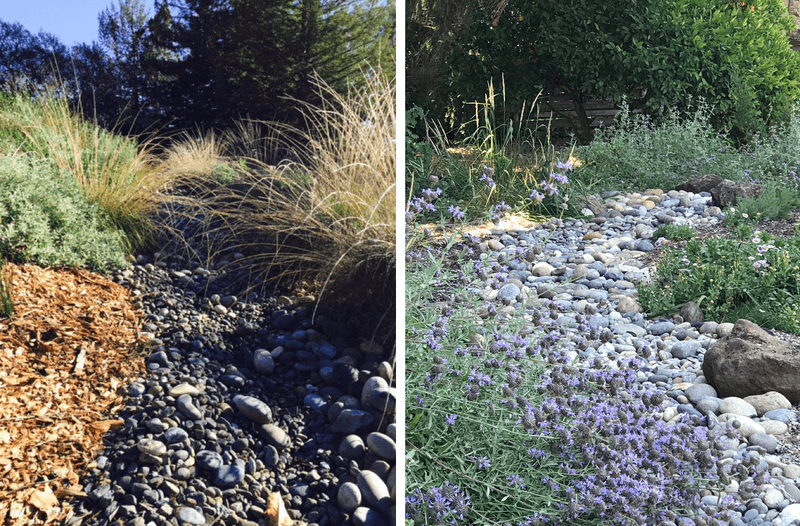
A practical starting sequence for California homeowners looks like this: build locally appropriate shade and food-producing habitat first, check that its placement meets your fire-safety and defensible-space requirements, then decide whether you can realistically manage artificial water under current disease guidance. That order matters because habitat works across every season and every weather event, while a birdbath only helps if it is maintained well enough not to cause harm.
CNPS habitat guidance, CDFW’s wildlife-health recommendations, and CAL FIRE’s defensible space requirements all point in the same general direction: choices that reduce risk in one area should not create new risk in another. Shade and food-producing plants support birds without the disease-transmission concerns that come with artificial water. Water, managed carefully, can add to that support. Neither replaces the other, and neither guarantees a bird’s survival during a specific heat event.
Audubon’s heat guidance frames the goal well: reduce exposure and provide resources, without overpromising what any yard can deliver. What a well-planned California yard actually offers is not a guarantee, but a better set of odds, and for birds navigating a brutal summer, that is worth building.