
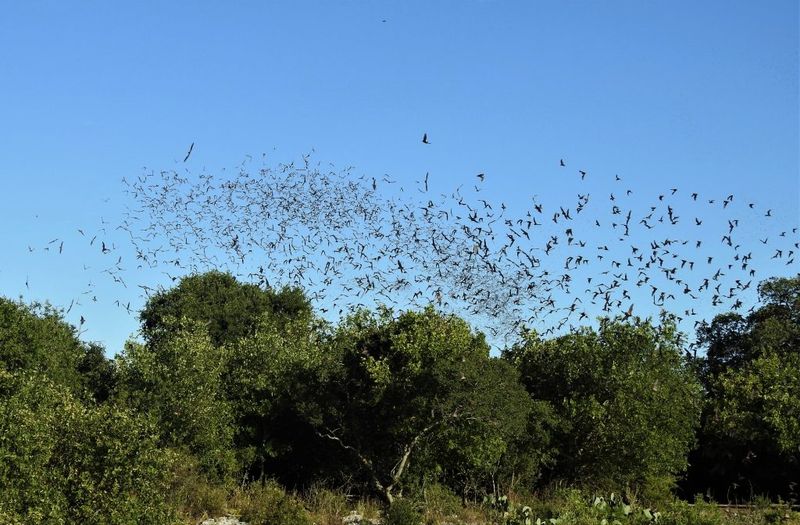
Central Texas summers are long, hot, and full of mosquitoes, and plenty of homeowners have heard that putting up a bat house will fix that problem. The truth is more complicated and more interesting.
Bats are genuine wildlife allies worth supporting, but the path to fewer mosquitoes on your patio runs through source reduction, barriers, and repellents, not just a wooden box on a pole.
Central Texas supports bats, but not every yard
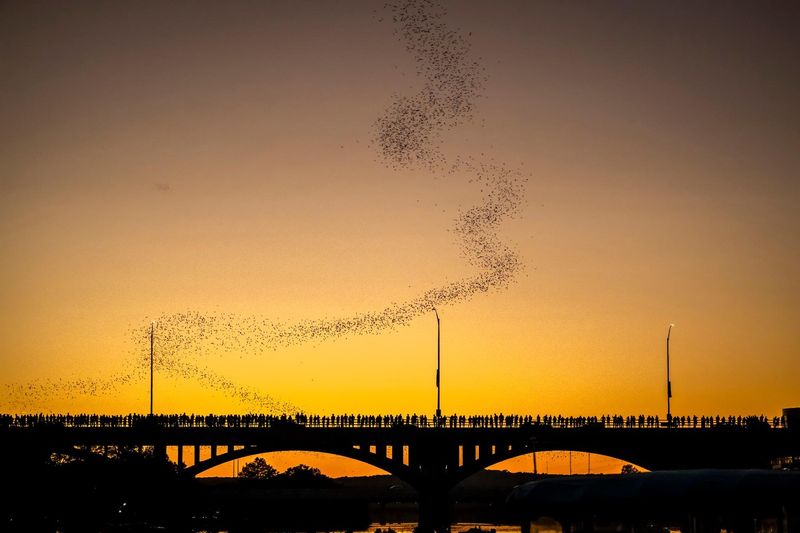
Every spring, millions of Brazilian free-tailed bats return to Central Texas from their wintering grounds in Mexico. They pack into caves, highway bridges, and building crevices, and around dusk they pour out in long, swirling columns to hunt flying insects.
Texas Parks and Wildlife documents their prey as moths, beetles, flying ants, June bugs, and other flying insects, not just mosquitoes. The spectacle at spots like the Congress Avenue Bridge in Austin is genuinely one of the more remarkable wildlife events in North America.
What that spectacle does not guarantee is that those same bats will ever cross your backyard fence or move into a box you hang on your shed. Free-tailed bats are high-flying, fast-moving animals that roost in large colonies in specific structures.
A standard backyard bat house may attract a different species entirely, or it may sit empty for years. Bat Conservation International is candid that species, site quality, design, and regional bat populations all shape whether any house gets used.
There is also a common claim worth examining honestly. Mosquito DNA does appear in bat guano studies, and a U.S.
Forest Service dietary study found mosquito prey in roughly 72 percent of little brown bat samples and 33 percent of big brown bat samples. Detecting mosquitoes in guano, though, is not the same as demonstrating that bats reduce mosquito numbers around a home or lower the chances of getting bitten on your porch.
Researchers are careful to say that evidence for bats as meaningful household mosquito-control agents remains limited.
The honest goal here is habitat support. A well-placed bat house is a contribution to native wildlife, and it may eventually attract bats that forage nearby.
Treating it as a mosquito-elimination device sets up a frustrating summer.
Choose a bat house built for Central Texas heat
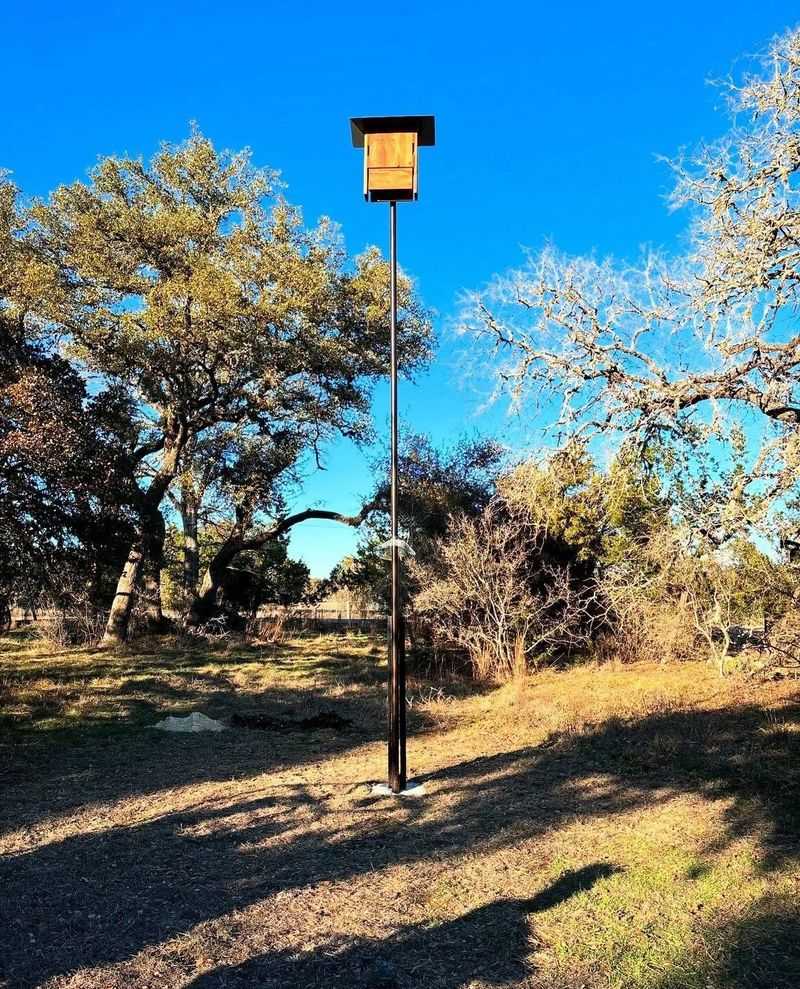
Central Texas summers routinely push past 100 degrees Fahrenheit, and a poorly designed bat house can become a heat trap that bats avoid or, in extreme cases, one that harms them. The box you choose or build matters more here than it would in a cooler climate, so construction details deserve real attention before you spend money or weekend time.
Bat Conservation International’s bat house guidelines consistently point to a few features that improve suitability. The interior surfaces need to be rough and grippable so bats can cling without slipping.
Smooth metal and smooth plastic interiors simply do not work. Leave the interior unfinished and unpainted.
Seal exterior seams tightly to stabilize the internal temperature and to keep out drafts and rain. Add ventilation slots sized appropriately for a hot climate, because a house with no airflow in August can become dangerous.
Multi-chamber designs and taller houses outperform small, single-chamber boxes in occupancy data. The reason is straightforward: more chambers give bats the ability to shift between warmer and cooler zones as temperatures change through the day and season.
A bat that finds the top chamber too hot at noon may move to a lower, slightly cooler chamber rather than abandoning the house entirely. Small nursery boxes with only one compartment offer no such flexibility.
For exterior color, a lighter shade makes sense in the Austin and San Antonio area, where afternoon sun is intense. BCI suggests considering two houses positioned nearby with different sun exposures and temperature profiles rather than betting everything on one box in one spot.
That pairing gives any bats that arrive more options and improves the odds that at least one structure stays within a usable temperature range through the hottest weeks of summer.
Mount the house along a clear flight path
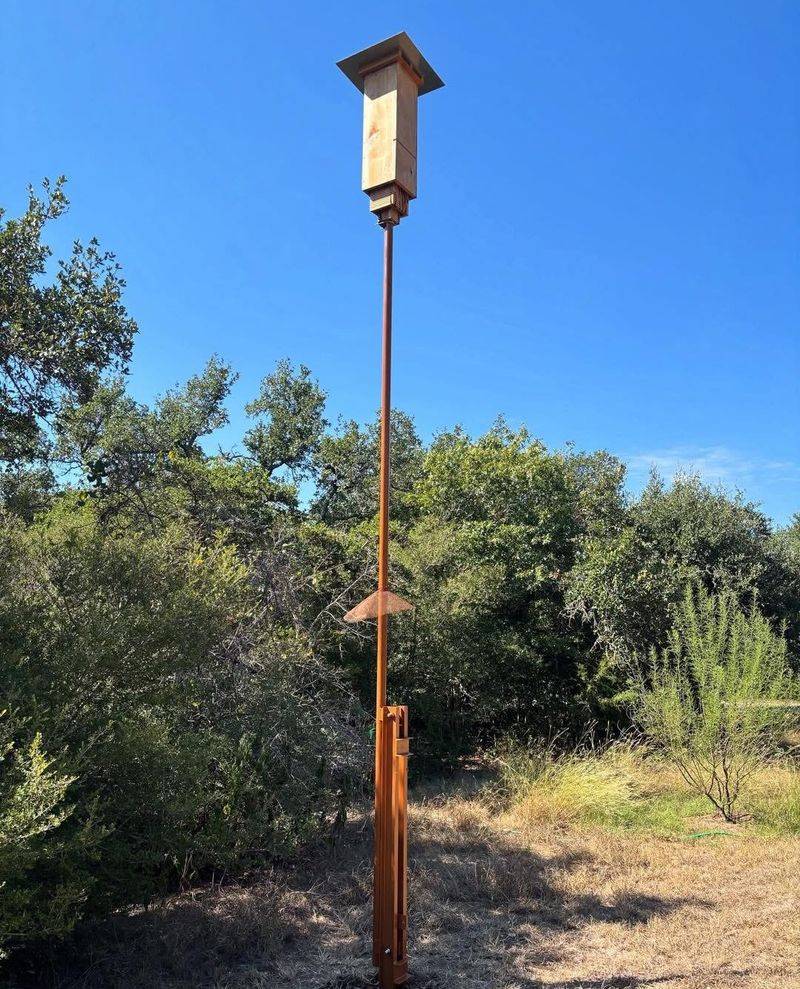
Where you put a bat house matters as much as what you put up. Bats need a clear, unobstructed approach, enough height to feel safe from ground predators, and a site that stays warm without cooking them.
Getting those three things right takes a few deliberate decisions before you pick up a drill.
Mount the house on a building or pole rather than in a tree whenever a building or pole is available. Trees create clutter that bats have to navigate, and branches give raccoons, rat snakes, and other predators a direct route to the entrance.
BCI placement guidance calls for at least 12 feet of clear, unobstructed space below the exit slot, and going higher than that is generally better. The house should also sit away from roof overhangs, gutters, nearby branches, and anything else that blocks the approach or gives a predator a perch.
Morning sun is your friend in Central Texas, but brutal afternoon sun is not. An east-facing wall or east-facing pole mount gets the house warm in the morning and lets it cool somewhat before the hottest part of the afternoon.
BCI recommends roughly seven hours of solar exposure per day as a target for Southern climates, while also acknowledging that shade structures may be needed if afternoon temperatures become extreme.
Nearby water can improve a site’s appeal. Texas Parks and Wildlife guidance has suggested placing houses within roughly a quarter mile of water, while BCI gives a broader preference for sites within about one mile of a major water source.
Treat both figures as approximate siting targets rather than promises of occupancy. A creek, stock tank, or managed pond nearby improves the habitat picture, but it does not guarantee that any bat will ever investigate your house.
Improve the surrounding habitat, not just the structure

A bat house is one piece of a larger puzzle. Bats need places to forage, drink, and rest, and a yard that supports those needs is more likely to see bat activity than one that just has a box on a pole surrounded by bare turf and landscape lights blazing all night.
Keep suitable trees where it is safe to do so. Mature oaks, pecans, and other large native trees provide roosting cover, support the insects bats eat, and give the yard structural complexity that benefits many species.
Diverse native plantings, including grasses and flowering plants that attract beetles, moths, and flying ants, keep a steady supply of the prey insects that make a yard worth foraging over. BCI emphasizes that protecting and enhancing the surrounding habitat matters more than the box alone.
Limit unnecessary insecticide use, especially broad-spectrum sprays applied around the yard perimeter. Mosquito fogging services that target adult insects indiscriminately can knock down the moth and beetle populations that bats rely on.
If mosquito treatments are necessary, targeted larvicides applied to specific water sources are far less disruptive to the insect food web than broadcast adult sprays.
Water features can support bat habitat, but they require careful management. TPWD guidance notes that water nearby can be a positive habitat factor, but stagnant or poorly maintained water is also where mosquitoes breed.
Any pond, birdbath, or water feature you add must be maintained to prevent larval mosquito development. Moving water, regular water changes, and appropriate larvicides in permanent water bodies keep the feature useful for bats without creating a mosquito nursery twenty feet from your back door.
Let bats find the house on their own
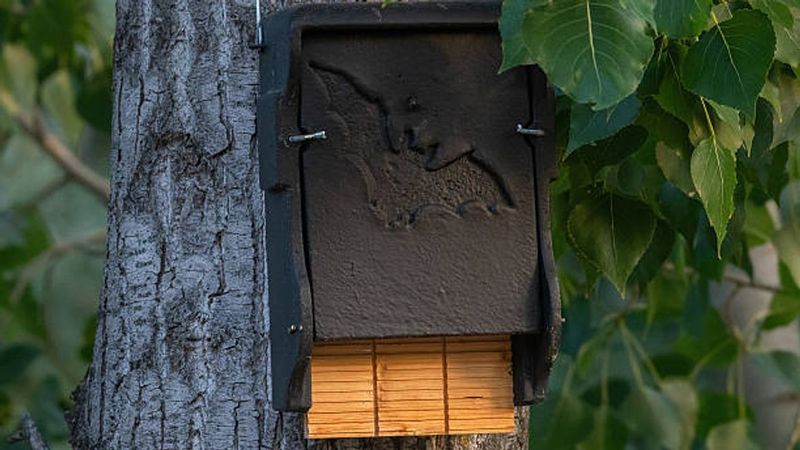
Patience is the most underrated part of a bat house project. Many homeowners put up a box in April and check it anxiously every evening through June, then declare it a failure by July.
That timeline is far too short.
BCI reports that some successfully occupied houses took as long as five years to attract their first residents. Older survey data found that most occupied houses were used within two years, but occupancy varied substantially by location, installation quality, and local bat populations.
A house sitting in a yard without nearby foraging habitat or suitable roosting species in the area may never attract bats, regardless of how well it is built.
Do not try to speed up the process by baiting the house with guano, feeding bats, or attempting to capture and relocate a colony. Texas wildlife guidance is clear that attractants do not reliably bring bats to a new structure, and bats should find the house on their own terms.
Feeding wild bats is unsafe and does not work the way it does with backyard birds. Capturing, purchasing, or relocating bats is restricted under Texas law and creates serious rabies-exposure risk.
Define success on realistic terms. A bat house that remains empty still represents a genuine habitat contribution, and it keeps the option open for any bats that eventually explore the area.
A house that attracts a small colony of cave myotis or evening bats, species that do use backyard boxes in Texas, is a real win for native wildlife. Neither outcome should be measured by whether your patio feels less buggy by August, because that connection is too uncertain to count on.
Control mosquitoes at their source
Whatever happens with your bat house, your patio mosquito problem needs its own solution. Bats may or may not show up, and even a resident colony cannot be counted on to clear mosquitoes from ground level where you are sitting.
The tools that reliably reduce mosquito pressure around a home are well established, and most of them cost very little.
Start with source reduction, and do it every week without skipping. Texas A&M AgriLife Extension notes that common Texas mosquitoes can develop in standing water in roughly seven days or longer and often stay within 200 to 300 yards of their breeding site.
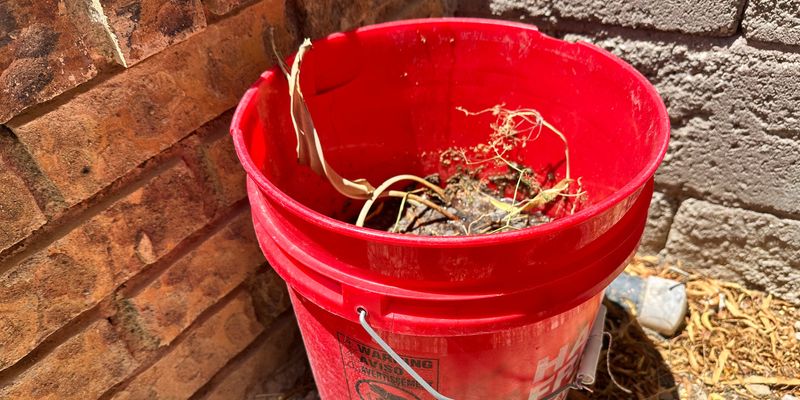
That means the mosquitoes biting you at your table probably hatched somewhere within a few hundred yards, often in a container you walk past every day. Buckets, tires, toys, plant saucers, clogged gutters, and tarps that collect rainwater are all productive breeding sites.
CDC’s household mosquito guidance is direct: once a week, empty, scrub, turn over, cover, or discard anything that holds water. Scrubbing matters because mosquito eggs can stick to container walls and survive even after the water is dumped.
For water you cannot drain or cover, such as a permanent rain barrel, ornamental pond, or low-lying area that stays wet, use an EPA-registered larvicide according to its label. Mosquito dunks and bits containing Bacillus thuringiensis israelensis (Bti) are widely available homeowner options for small permanent water bodies.
Personal protection fills the gap when source reduction is not enough. CDC recommends EPA-registered repellents including DEET, picaridin, IR3535, oil of lemon eucalyptus (OLE/PMD), and 2-undecanone, applied as directed.
Loose-fitting long clothing adds a physical barrier during peak mosquito hours. Intact window and door screens keep mosquitoes out of the house itself.
Together, these steps form the kind of integrated mosquito management approach that EPA describes as the framework for actual household mosquito control, and none of it depends on whether bats ever move into your yard.
Handle bat encounters and exclusions safely
Bats are protected native wildlife in Texas, and the rules around them matter both for the animals and for your health. Knowing what to do when you encounter a bat, whether it is using your house or turning up somewhere unexpected, keeps you, your family, and your pets safer.
Never touch a bat with bare hands, under any circumstances. Rabies is the central concern, and a bat bite can be small enough to go unnoticed.
CDC guidance on bat rabies is explicit: anyone who may have had direct contact with a bat, including waking up in a room where a bat was present or any situation where a bite cannot be ruled out, should contact a healthcare provider or public-health department promptly. Do not wait to see if symptoms develop.
A bat found indoors when human or pet exposure may have occurred should not simply be released before you have spoken with public-health authorities.
Texas Parks and Wildlife regulations protect bats from hunting, killing, possession, purchase, and sale. There is also a specific seasonal caution for buildings: TPWD advises against excluding bats from structures between May 1 and August 15.
During that window, maternity colonies are raising flightless young. Sealing entry points while pups are inside traps them and results in deaths inside the structure, which creates a different and worse problem.
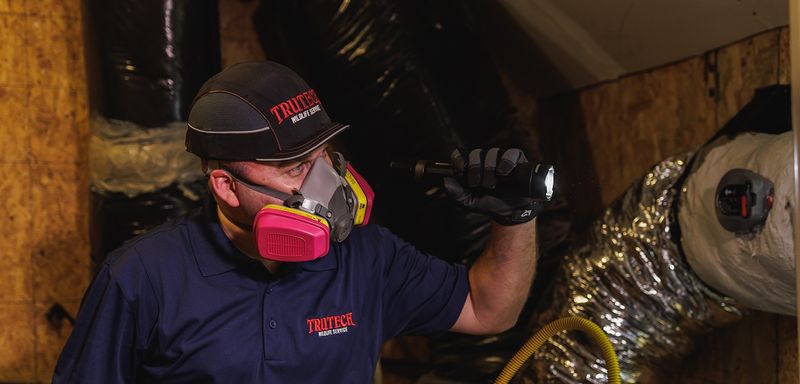
If bats have moved into your attic, walls, or another part of your home rather than your bat house, that is a situation for a qualified wildlife professional or your local public-health department, not a DIY project. Exclusion work done outside the May 1 to August 15 window, by someone experienced with bat biology and the relevant regulations, is the appropriate path.
Your outdoor bat house is a voluntary invitation, and that is a very different situation from bats occupying a living space.
Treat the bat house as habitat support, not mosquito control
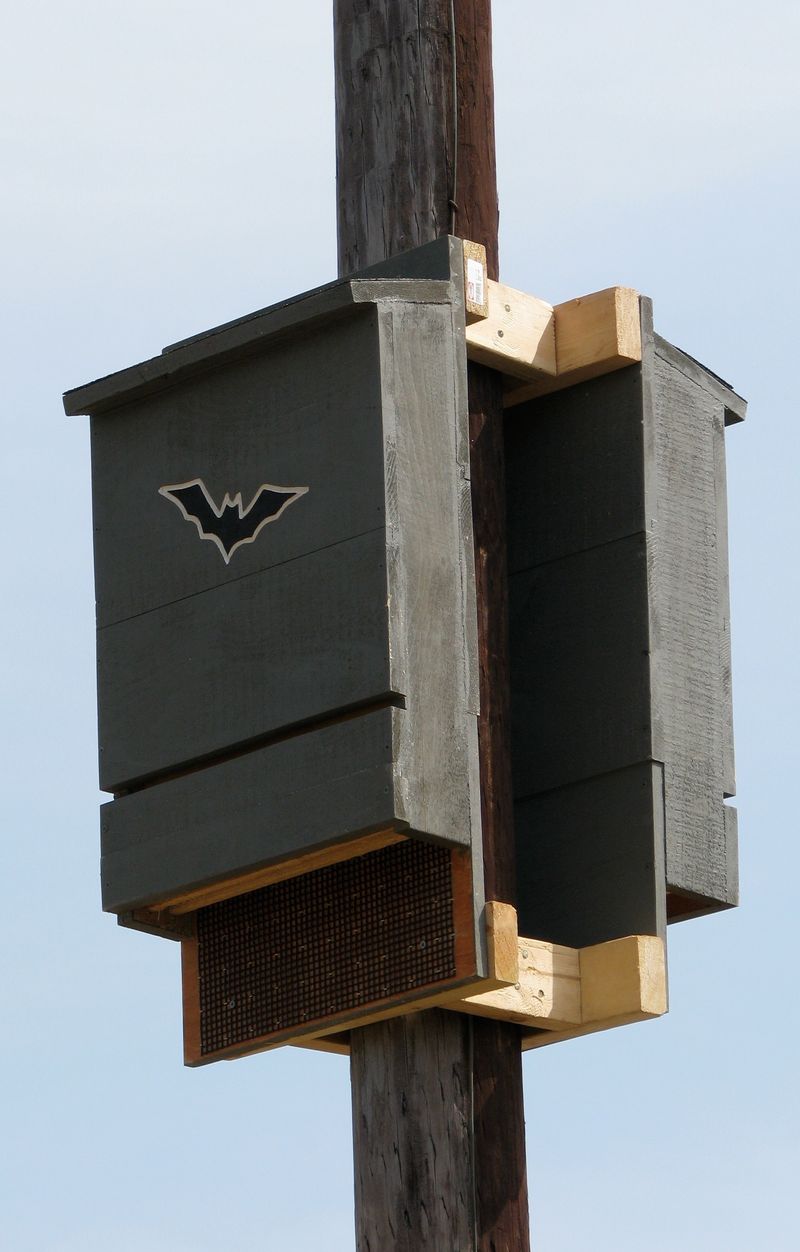
A bat house project in Central Texas is worth doing, but it works best when you go in with clear expectations. Choose a multi-chamber design with rough interior surfaces, sealed seams, and a lighter exterior color suited to Southern heat.
Mount it on a building or pole at least 12 feet off the ground, facing east for morning warmth, with open flight space below and no branches or clutter nearby. Protect the surrounding habitat by keeping native trees, limiting broad insecticide use, and managing any water features so they do not breed mosquitoes.
Then wait. BCI’s occupancy data makes clear that the house may stay empty for a year, two years, or longer.
That is not a sign of failure. It is the normal pace of wildlife habitat work.
Keep the two outcomes separate in your mind. The bat house may, over time, support native bats that forage in your area.
Research confirms that bats do eat mosquitoes, but detecting mosquitoes in bat diets is not the same as a measurable reduction in the mosquitoes biting you on your porch. For that, source reduction, larvicides where appropriate, screens, and an integrated mosquito management approach are the tools with evidence behind them.
The bat house adds something real to your yard’s wildlife value; your mosquito plan is what makes August evenings on the patio bearable.