
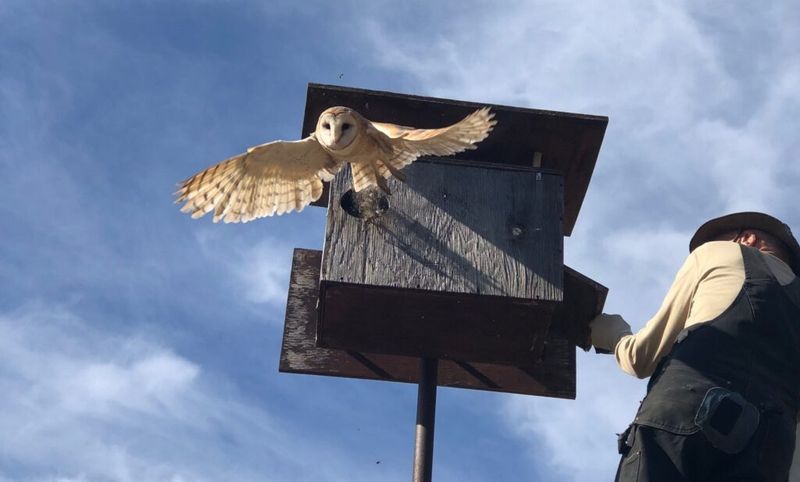
Fresh mounds of dirt appearing overnight in your vegetable beds are a sign that pocket gophers have moved in, and the damage they cause to roots and irrigation lines can happen fast. Barn owls are natural hunters of small mammals, including gophers, and California gardeners can take real steps to make their property more welcoming to these birds.
A nest box is one of the most practical things you can add, but it works best as part of a bigger plan, not as a replacement for hands-on gopher control.
Confirm that pocket gophers—not another burrowing pest—are damaging the bed
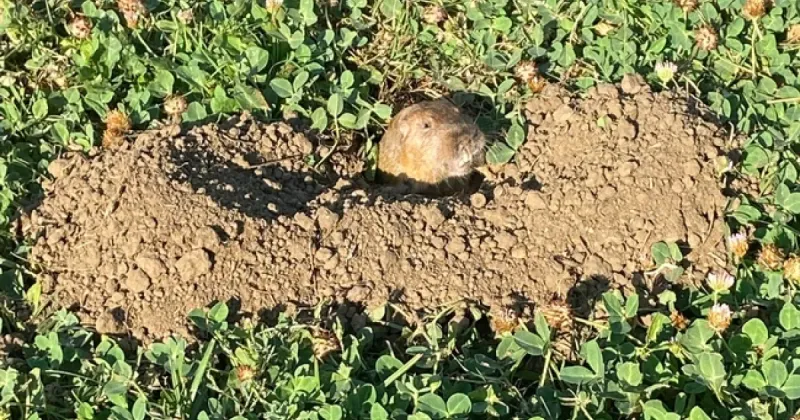
Mounds appearing in your vegetable bed could come from several different animals, and getting the identification right matters before you choose any control method or consider attracting owls. Pocket gophers are the culprit to look for when you see fan-shaped or half-moon mounds with a plugged, off-center opening.
UC IPM’s pocket gopher guide describes these mounds as a key field sign, because the gopher pushes soil out to one side while digging and then plugs the hole before retreating underground.
The animal itself is rarely visible. Pocket gophers spend almost all of their time in sealed burrow systems, coming to the surface only briefly.
Their fur-lined cheek pouches, used to carry food, give them their common name, and a single gopher can chew through plant roots and irrigation tubing surprisingly quickly.
Other burrowing animals leave different signs. Moles create raised ridges or symmetrical mounds and rarely eat plant roots, since they primarily hunt earthworms and grubs.
Voles leave surface runways in grass and tend to gnaw stems at ground level. Ground squirrels dig open burrow entrances without the distinctive plugged mound, and rats tend to favor structures and debris piles rather than open garden soil.
Each of these pests requires a different management approach, so confirming what you have before acting saves both time and money.
Barn owls are skilled nighttime hunters that take small mammals, and gophers are genuinely part of their diet. Cornell Lab’s barn owl life history confirms that the species hunts primarily at night and relies on hearing as much as sight to locate prey.
An owl will not respond to every fresh mound, and it cannot confine its hunting to one raised bed. Correct identification of the pest is the starting point for any management plan, including one that involves barn owl habitat support.
A nest box can support the patrol, but it cannot replace gopher control
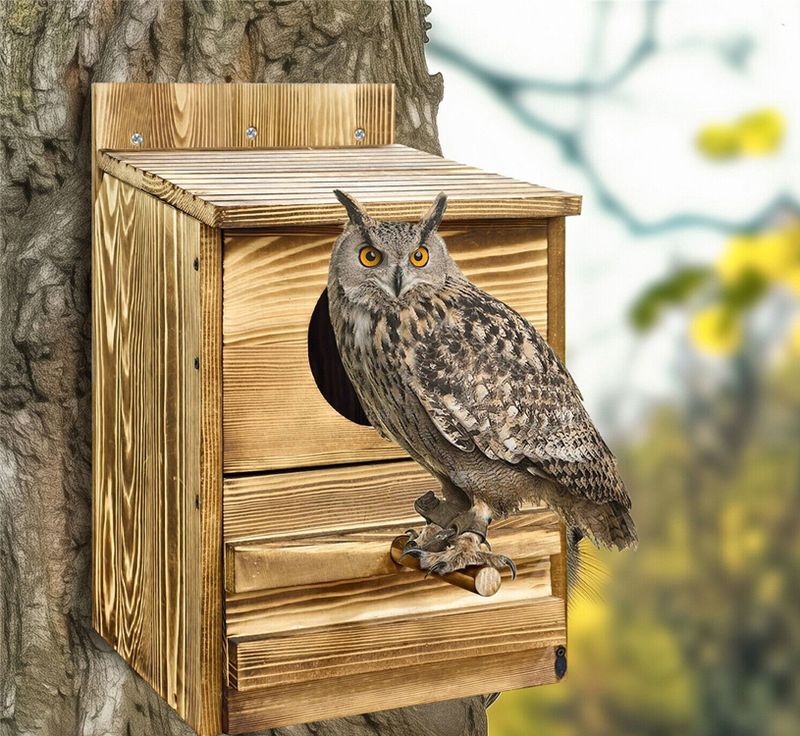
Barn owls do eat pocket gophers. They also take voles, mice, and other small mammals that show up in gardens, so having them hunting nearby is a genuine benefit.
A nest box can fill a real gap in the landscape by providing nesting or roosting space where natural cavities, old barns, and hollow trees have become scarce. Cornell NestWatch’s barn owl profile confirms that nest boxes are an appropriate substitute where natural sites are limited, and that barn owls will use boxes mounted on buildings, poles, posts, or trees.
Supporting owls is not the same as controlling a residential gopher population, though. A California study of vineyards and orchards examined whether barn owl nest boxes could serve as biological control for gophers.
That UC eScholarship research found that only 40 percent of boxes were occupied within six months, that barn owls commonly preyed on gophers and voles, but that there was little evidence boxes alone controlled gopher numbers. Only 23 percent of growers with occupied boxes believed the owls were effective for gopher control, and the study’s authors recommended using the approach alongside other control methods rather than as a standalone solution.
Newer research suggests the picture is not entirely discouraging. A recent study published in PMC found that barn owls can exert top-down effects on rodent pest populations, though the authors note that evidence remains mixed and that effects may involve changes in prey behavior as well as changes in abundance.
What that means practically is that owls may contribute to long-term pressure on local rodent populations, but no study supports expecting a nest box to clear an active infestation from a home vegetable garden.
The most honest way to frame a barn owl box is as one component of wildlife-friendly integrated management. UC IPM specifically cautions that owl boxes are unlikely to reduce gopher numbers enough to prevent plant and irrigation damage.
A box can support owls that are already working your landscape, and over time that presence may help. Trapping and physical exclusion remain the tools for addressing damage that is happening right now.
Check whether your California property offers suitable owl habitat
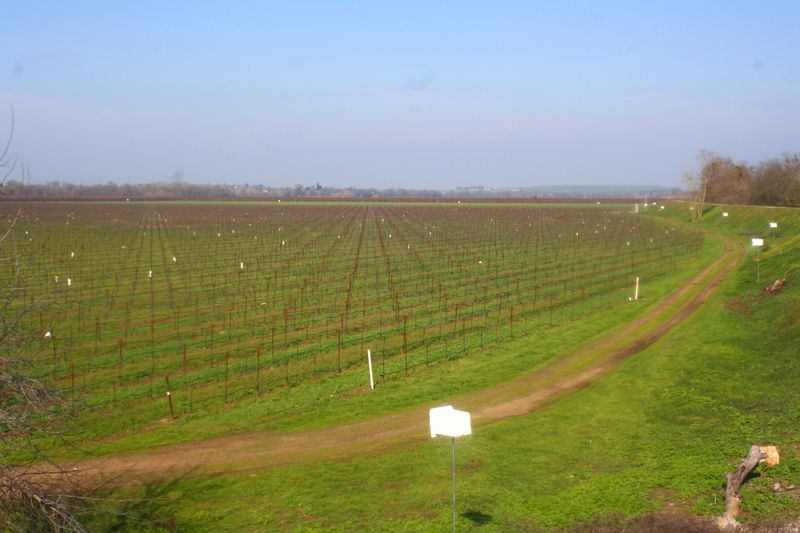
Before purchasing materials or picking a mounting spot, take a realistic look at what your property and its surroundings actually offer a barn owl. Cornell Lab’s life history account describes barn owls as birds of open country, favoring fields, grasslands, agricultural areas, deserts, marshes, and some suburban edges.
A property that backs up to pasture, orchards, low scrub, or open parkland is far more likely to attract a hunting owl than one surrounded by dense woodland or heavily developed blocks with little ground cover.
Consider what the owl would encounter within a reasonable flight radius. Barn owls can range widely at night, but they tend to concentrate hunting effort in open areas where small mammals are exposed and accessible.
If the nearest open foraging ground is several blocks away or separated by a busy road, the landscape itself may be a limiting factor that a nest box cannot overcome. A box can provide a place to sleep or raise young, but it cannot manufacture hunting habitat that does not exist.
Practical site concerns matter alongside habitat suitability. NestWatch guidance notes that boxes should be kept away from busy roads and power lines, both of which pose collision risks for low-flying owls.
Climbing predators such as raccoons can reach poorly protected boxes, and a box mounted too close to the house may create noise issues since nestlings call loudly at night. Droppings below an active box can accumulate, so placement away from patios and walkways is a reasonable practical consideration.
Occupancy is never guaranteed, and the California vineyard and orchard research reinforces that point. Even with good placement in agricultural landscapes, a significant share of boxes went unoccupied.
A box on a property with suitable open habitat nearby is a reasonable investment in local owl support. A box on a shaded, hemmed-in lot surrounded by development is a longer shot, and that is worth knowing before you build or buy.
Install a tested box where an owl can use it safely
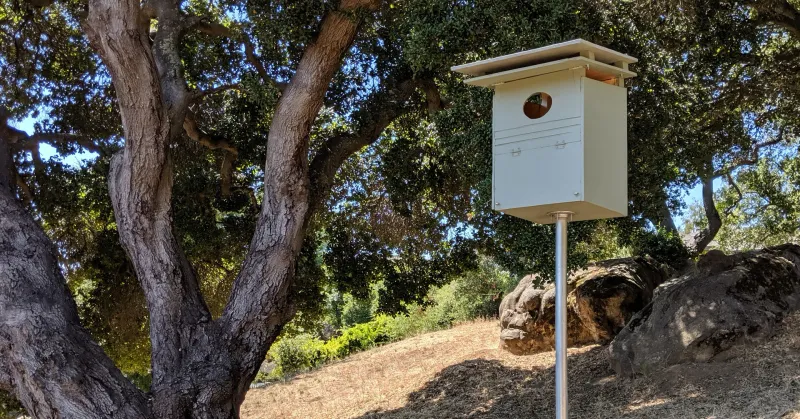
Using a tested barn owl box design matters more than building something from scratch. Barn owls are particular about cavity size, and a box that is too small, too shallow, or too hot may never attract a bird even in good habitat.
Cornell NestWatch’s barn owl specifications list an entrance hole of approximately 4.5 inches, an internal depth of 16 inches, and interior dimensions of roughly 12 and three-eighths by 22 and three-quarters inches. Purchase or build to a proven plan rather than estimating dimensions.
Mounting height and location involve a balance between general guidance and California-specific recommendations. NestWatch’s general range for barn owl boxes is 8 to 25 feet above ground, with roughly 100 feet of separation between boxes if you install more than one.
NestWatch nest box placement guidance also notes that timing matters: putting a box up well before the local breeding season gives owls time to discover and accept it.
California Department of Pesticide Regulation guidance narrows the height recommendation to about 10 to 12 feet in open areas, which is a practical range for pole-mounted boxes that are also easier to inspect and maintain. California DPR also recommends providing afternoon shade or a sunshade attachment to keep the interior from overheating during warm months, turning the entrance away from prevailing winds, and adding a predator baffle to the pole or post below the box.
Raccoons and other climbers can reach boxes without a baffle, so this step protects any investment in installation.
Boxes can be mounted on buildings, poles, posts, or trees depending on what the site offers. Open placement away from dense canopy tends to work better in California, where afternoon heat and predator pressure are real concerns.
As for timing, California DPR recommends summer or fall installation so a box is in place and weathered before nesting begins. That timing is specific to California’s conditions; readers in other states should check local extension guidance for the appropriate installation window in their region.
Whatever your location, installing early gives owls the best chance to find the box before the season starts.
Make the yard safer for the owls you hope to attract
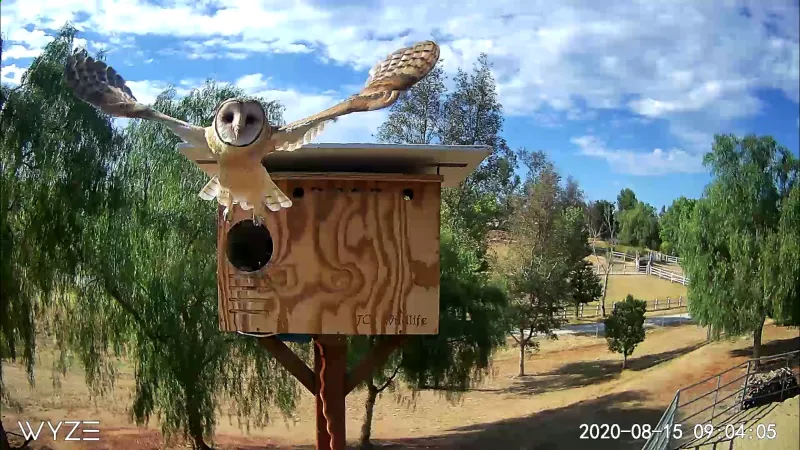
One of the most consequential things a California homeowner can do for barn owls has nothing to do with the box itself. Outdoor rodenticides, particularly second-generation anticoagulants, pose a serious secondary poisoning risk to any predator that eats a contaminated rodent.
EPA’s rodenticide safety review explains that predators and scavengers can be harmed after eating poisoned rodents, and that residues from second-generation anticoagulants can remain in carcasses at concentrations that may greatly exceed lethal doses for raptors.
California DPR specifically advises discontinuing outdoor rodenticides before installing owl boxes, and UC IPM provides current guidance on which products are restricted for residential use in California. Rodenticide regulations change, so rather than relying on a fixed product list, California readers should check current UC IPM and California DPR guidance for up-to-date information on what is legal and what poses the greatest risk to wildlife in their area.
Box placement away from the house is another practical step. NestWatch notes that hungry barn owl nestlings can be quite loud at night, which can be disruptive if the box is close to a bedroom window.
Adults may also abandon a nest if they are disturbed during early nesting, so a location that minimizes foot traffic near the box during spring is worth planning for. Do not add food, bait, nesting animals, or supplemental materials to the box to try to attract birds faster.
Barn owls create their own nest base from regurgitated pellets, and Cornell says supplemental nesting material is generally unnecessary, though a shallow layer of wood shavings can be used if desired.
Annual cleaning keeps the box functional, but it should only happen when the box is confirmed to be unoccupied. California DPR recommends cleaning between mid-August and November, which is a California-specific window based on regional nesting timing.
Wear gloves and a dust mask when removing debris and pellets, as decomposing material can carry pathogens. Never open or disturb a box that contains eggs, nestlings, or a roosting adult, and never attempt cleaning during the breeding season.
Protect the vegetable bed while the box does its slower work
Fresh gopher mounds next to your vegetable plants are a sign that waiting for an owl is not a viable short-term strategy. A single pocket gopher can sever roots, collapse irrigation lines, and pull entire plants underground in a matter of days.
UC IPM’s California pocket gopher guidance is direct on this point: homeowners should not wait for an owl to arrive before taking effective action, and it recommends trapping and physical exclusion as the primary tools for gardens.
Trapping is the most reliable immediate method for active infestations. UC IPM recommends locating the main burrow by probing the soil near a fresh mound, then placing traps in pairs facing each other inside the tunnel so a gopher moving in either direction will encounter a trap.
The opening should be covered to block light, since gophers tend to avoid light-filled tunnels. Check traps at least once a day, reset them if they have been tripped without catching anything, and continue until no new mounds appear for several days.
Persistence matters because a single gopher can have several active tunnel branches.
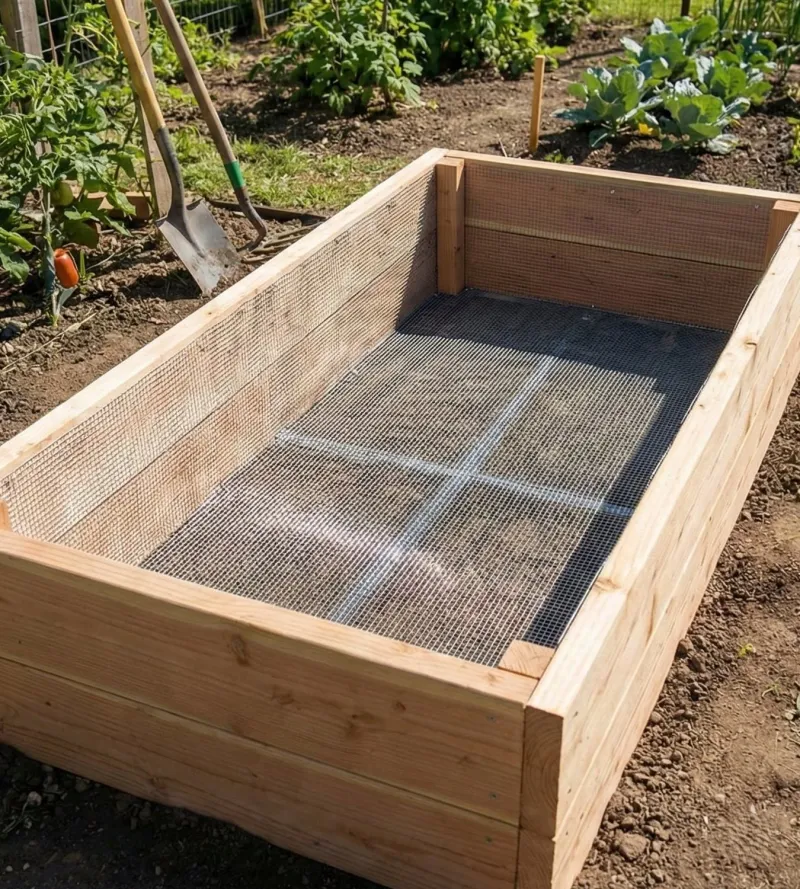
Physical exclusion addresses the longer-term vulnerability of raised beds. Lining the bottom of a raised bed with hardware cloth or similar wire mesh before filling it with soil creates a barrier that gophers cannot chew through easily.
The mesh should have openings no larger than one inch to be effective, and it should extend up the sides of the bed several inches to block lateral entry. Individual plants in the ground can be protected with wire baskets placed around the root zone at planting time.
These measures require upfront effort but can protect beds for years without ongoing intervention.
The California vineyard and orchard research on barn owl boxes found that boxes alone produced little evidence of effective gopher control, reinforcing why trapping and exclusion carry the immediate load. A nest box contributes to the habitat conditions that may support owl activity over time, and that long-term hunting pressure is a genuine benefit.
But the vegetable bed needs protection today, and traps and mesh deliver that protection on a schedule you can control.
Treat the nest box as a long-term invitation, not a guarantee
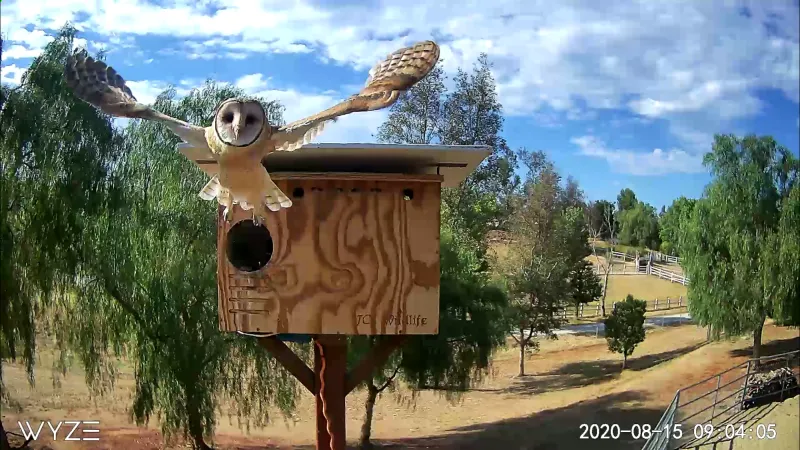
A well-placed, properly maintained nest box does something genuinely useful: it adds a nesting or roosting option where one may not have existed before. NestWatch confirms that boxes are appropriate where natural cavities and old structures are scarce, and that barn owls will use them in suitable open landscapes.
What a box cannot do is force owls to arrive, stay, or hunt exclusively in one backyard. Occupancy depends on habitat quality, prey availability, competition, and factors outside any homeowner’s control.
UC IPM’s guidance is clear that owl boxes are unlikely to reduce gopher numbers enough to prevent plant and irrigation damage on their own, which means the box works best alongside trapping, bed exclusion, and a commitment to avoiding outdoor rodenticides where owls may hunt. Checking current California DPR and UC IPM resources keeps your approach aligned with up-to-date local rules, since pesticide regulations in California do change.
The practical payoff of combining these steps is straightforward: your vegetable beds get the protection they need right now from traps and hardware cloth, while the nest box extends an open invitation to barn owls that are already moving through the landscape. The California research found that boxes can and do get used, even if occupancy is not guaranteed.
A yard that offers safe nesting space, low rodenticide exposure, and open foraging ground is a yard that works with the local ecology rather than against it, and that is a reasonable thing to build toward even before the first owl shows up.