
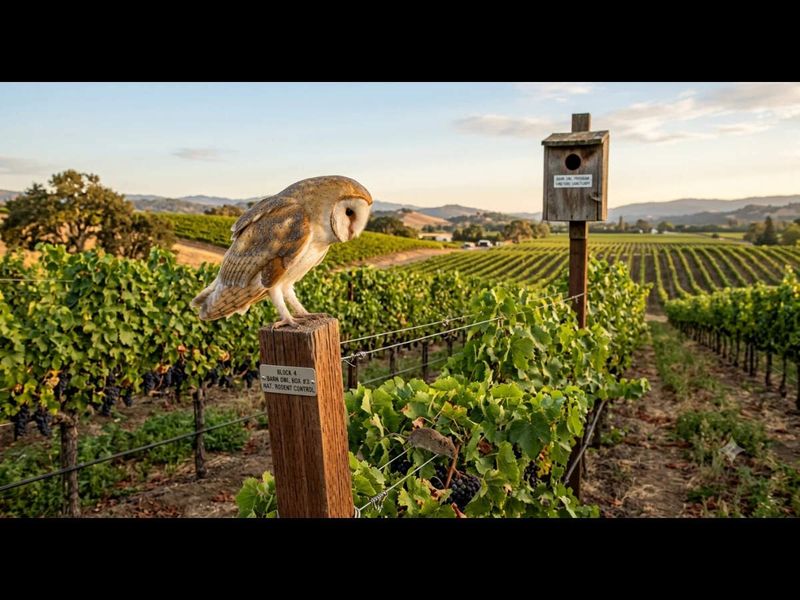
Barn owls have hunted California yards and fields for centuries, and a well-placed nest box can give them a reason to stay close to yours. Most homeowners who put up a box focus on height or direction, but one placement detail – afternoon shade – turns out to matter more than many expect.
Research from a multi-year study found that boxes in shaded spots were used far more often than those baking in full sun. Getting that detail right won’t guarantee an owl moves in, but it puts the odds meaningfully in your favor.
Afternoon shade is a prudent first placement improvement
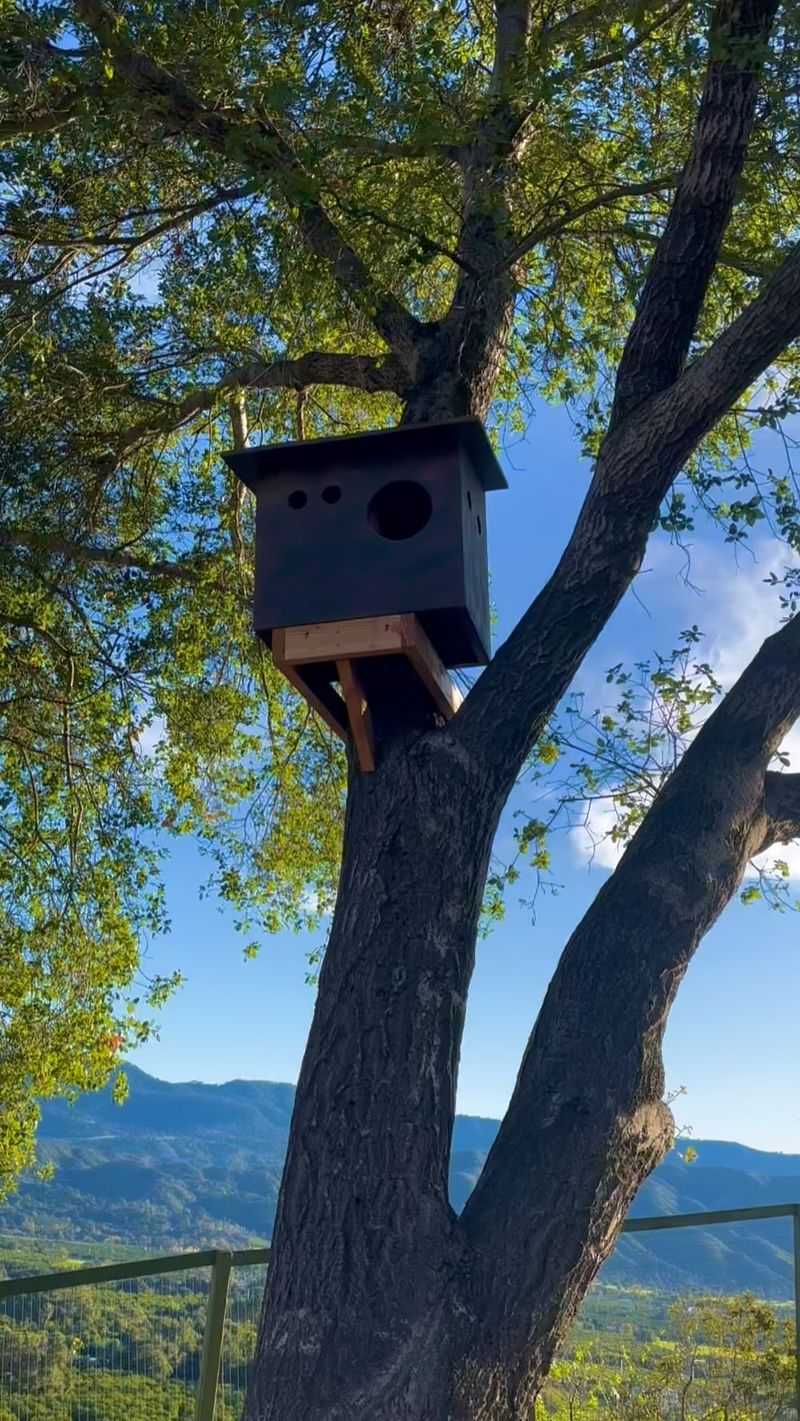
Shade may be the single most overlooked detail when California homeowners put up a barn-owl box. A multi-year barn-owl placement study found occupancy rates of roughly 60% for boxes mounted on trees, about 48% for boxes on shaded poles, and only around 29% for boxes on poles left in full sun.
The researchers linked part of that pattern to lower interior temperatures in shaded boxes, which can matter a great deal during California’s long, hot summers when chicks are developing inside.
Those percentages come from one study conducted outside California, so they are not a California-specific forecast for your yard. Tree placement, box construction, surrounding landscape, and local prey availability all interact with shade to influence whether owls actually use a box.
Treat the shade finding as a well-supported placement improvement that improves the odds of occupancy – not as a guaranteed switch that will produce an owl on demand.
Practically speaking, the goal is to shield the box from intense afternoon sun, which typically comes from the west and southwest in California. Mounting the box on a mature tree naturally provides that protection and also keeps the structure stable.
If a tree is not available, attaching a purpose-built sunshade to a pole-mounted box is a reasonable alternative. California Department of Pesticide Regulation guidance specifically recommends providing afternoon shade or a sunshade as part of a well-designed installation.
One important distinction: shade addresses thermal comfort and may encourage occupancy, but it does not protect against climbing predators. That is a separate problem addressed by a metal baffle, covered in a later section.
Focusing on shade first gives you a prudent starting point grounded in the clearest available evidence, while recognizing that other factors still determine whether a box becomes a productive nest site.
Choose an open site that gives owls room to hunt
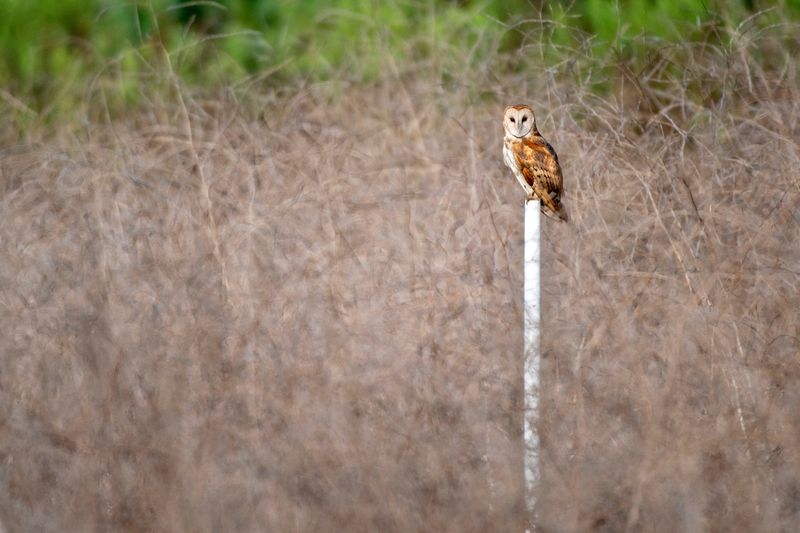
Shade alone will not make a box appealing if the surrounding landscape gives owls nowhere to hunt. Barn owls are open-country foragers.
They fly low over fields, meadows, orchard rows, and unmowed edges, listening for the rustle of small rodents below. A box wedged between dense buildings, surrounded by pavement, or tucked into a closed woodland canopy sits in the wrong kind of neighborhood for a species built to quarter open ground.
A California vineyard study on barn-owl nest box selection found that owls preferred boxes in landscapes with more grassland and uncultivated habitat nearby. That finding aligns with what wildlife biologists observe more broadly: boxes in or near open hunting areas get used more reliably than boxes isolated in dense residential blocks.
If your property borders a field, a creek corridor, a school athletic field, or even a large unmowed lot, you are working with a meaningful advantage.
California DPR guidance recommends mounting the box 10 to 12 feet high, placing it in an open and relatively quiet area, and orienting the entrance away from prevailing winds. Height matters because it gives owls a clear, unobstructed approach and reduces the chance that ground-level disturbances will discourage use.
Wind orientation protects chicks from chilling during cooler nights and wet weather.
Avoid positioning the box directly over a single garden bed with the expectation that owls will patrol that exact patch. Barn owls hunt across a wide range and will go where prey is available, not necessarily where the box sits.
UC Cooperative Extension’s barn-owl nest box network guidance notes that nest sites can be a limiting factor in human-dominated landscapes, meaning a well-placed box in a suitable area genuinely helps – but the hunting habitat around it still sets the ceiling on how useful the box can be.
Build in drainage, ventilation, and predator-risk reduction
A box that is poorly built or carelessly mounted can harm the birds it is meant to help. Getting the physical details right before installation is far easier than correcting them later, especially once a pair has claimed the site.
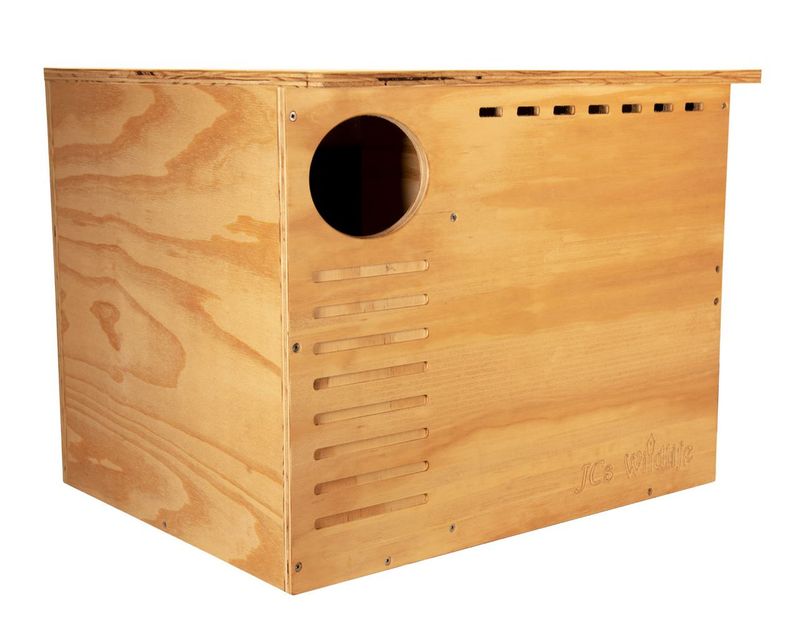
The UC ANR California barn-owl nest box plan specifies a five-inch entrance hole, ventilation gaps near the top of the box, drainage holes in the floor, and interior grooves or a rough surface below the entrance hole so owlets can grip the inside wall as they develop. Each of those details reflects how barn owls actually use a nest cavity.
Ventilation works alongside shade to manage interior temperature. A shaded box with no airflow can still overheat during a California heat wave, so both features matter.
Drainage prevents moisture from accumulating under pellets and nesting debris, which can foster bacteria and parasites that stress chicks. The interior grooves may seem minor, but young owls that cannot grip the inside wall can fall before they are ready to fledge.
UC Davis guidance on building an owl box recommends using a large, durable box and mounting it on a tall post or tree with the box at least five feet from any branch, ledge, or structure that could give a predator a jumping-off point. That separation reduces opportunities for raccoons, opossums, and climbing snakes to reach the entrance, though it does not eliminate the risk entirely.
A metal baffle installed below the box on the mounting pole addresses the climbing-predator problem more directly. California DPR installation guidance recommends a metal baffle as a standard component of a responsible setup.
Keep the baffle and the shade solution mentally separate: the baffle helps deter climbing predators, while shade helps manage heat and may improve occupancy. Both are worth including, and neither substitutes for the other.
Set realistic expectations for outdoor rodent control
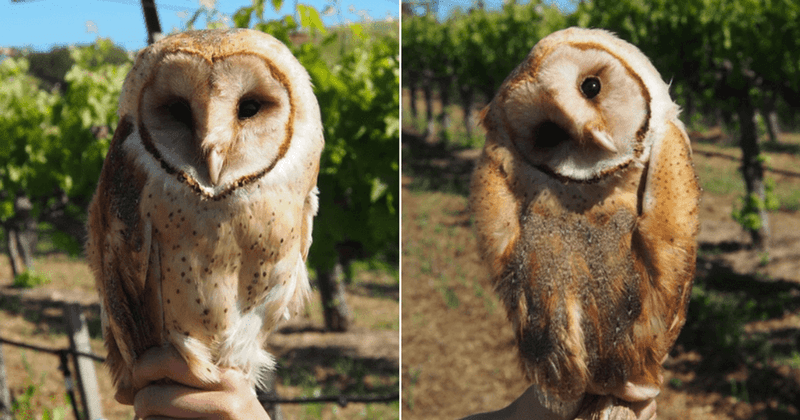
Barn owls do eat mice, rats, voles, and pocket gophers, and California research has found measurable reductions in rodent activity where owls are present. A 2026 Napa Valley study conducted across six vineyards found that barn owls reduced aboveground rodent abundance by approximately 38% to 52% under the observed range of owl pressure, and also increased rodents’ perceived predation risk by 16% to 38%.
Those are meaningful numbers in an agricultural context.
That vineyard setting, however, is not a suburban backyard. The six study vineyards had open hunting habitat, established owl populations, and landscape conditions that supported sustained predation pressure.
A single occupied box in a compact residential lot surrounded by fences, buildings, and pavement operates under very different constraints. An occupied box does not guarantee measurable rodent reduction, and an unoccupied box provides no control service at all.
Several practical limits apply regardless of how well the box is positioned. UC IPM notes that predators generally leave residual prey populations and that rodents can rebound quickly because of their reproductive potential.
A barn owl family may reduce some outdoor rodent activity during the breeding season, but it will not eliminate the population, and it will not reach rodents living inside walls, roofs, crawlspaces, sheds, or other enclosed structures.
UC ANR’s barn-owl biological control overview cautions that nest-box networks may work better in larger open habitats and that their ability to reduce certain prey populations remains unproven in some settings. Published estimates suggesting a barn-owl family may consume roughly 1,000 to 3,000 rodents per year describe a potential range under favorable conditions, not a guaranteed reduction in your yard’s specific rodent pressure.
The honest framing is that an owl pair in a suitable California yard may help with some outdoor rodent activity – a useful contribution, but not a complete solution.
Pair the box with exclusion, sanitation, and careful control
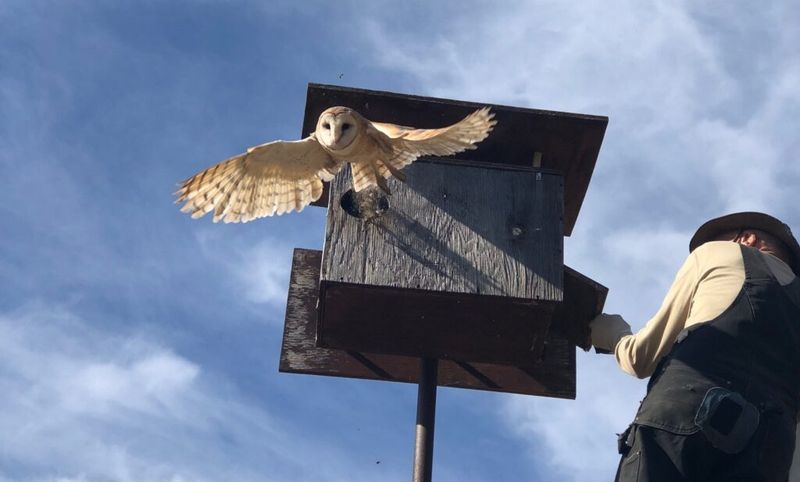
A barn-owl box works best as one piece of a broader rodent-management approach, not as a reason to abandon everything else. Rodenticide use is one of the most urgent reasons to think carefully about what other tools you keep in place.
California Department of Fish and Wildlife wildlife-health guidance documents how rodenticides can move up the food chain, exposing barn owls, hawks, and other predators through contaminated prey. An owl hunting near a yard where rodenticides are regularly used faces real toxicological risk.
UC Davis guidance on raptors and rodenticides reinforces that point and recommends habitat modification as a first line of defense. Practical steps include sealing entry points around foundations, vents, and utility penetrations, and removing food sources that draw rodents in the first place.
Pet food left outside overnight, fallen fruit, accessible birdseed, chicken feed, compost without a secure lid, and debris piles all invite rodent activity that no owl can fully offset.
Sanitation and exclusion reduce the conditions that sustain rodent populations at the source. UC IPM’s integrated pest management framework treats those steps as foundational, with targeted control – snap traps, live traps, or other lawful methods – used selectively when populations require it.
Installing a nest box does not justify skipping those measures, and it does not protect the owls that might use it if rodenticides remain in play nearby.
One boundary worth stating clearly: never attempt to bait or feed rodents to attract owls. Concentrating prey artificially can increase disease risk, attract additional pests, and create conditions that undermine the very habitat quality that makes a yard suitable for barn owls.
The goal is to make the yard a reasonable hunting ground by reducing unnecessary food subsidies, not to manufacture a prey supply.
Schedule maintenance before nesting begins
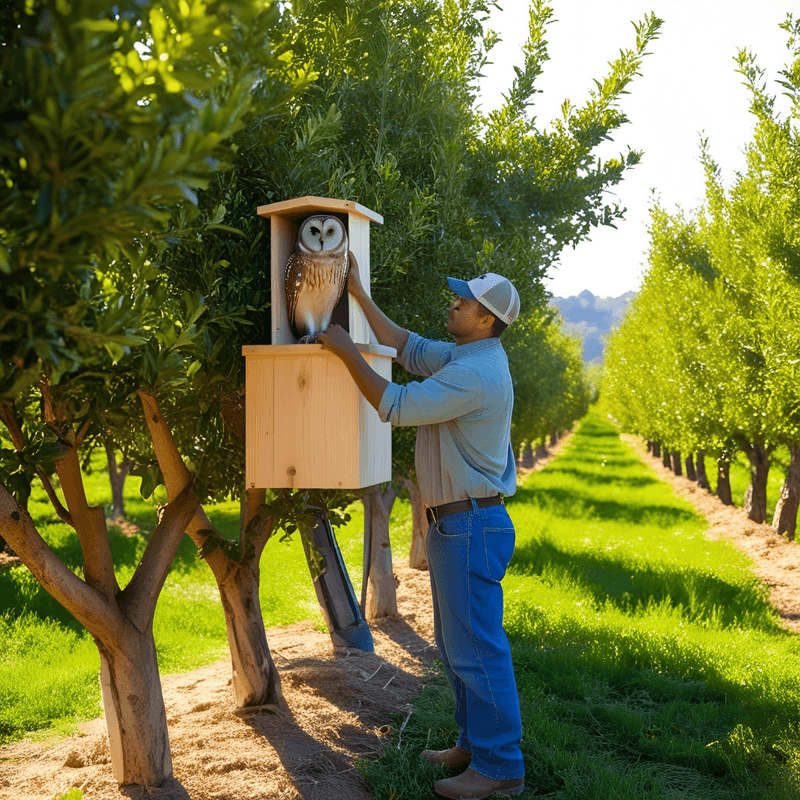
California barn owls can begin breeding earlier than many homeowners expect. Analysis of more than 22,000 nestling banding records found a statewide median egg-laying date of February 20, meaning some pairs are already incubating eggs before winter is officially over.
That timeline makes fall – roughly September through November in California – the most practical window for cleaning, inspecting, and repairing a box without risking disturbance to an active nest.
The fall window is a California-specific recommendation based on statewide breeding data. It should not be treated as a universal schedule for other regions, and even within California, individual pairs may vary.
If you are unsure whether a box is active, observe it from a distance before opening it. A box with feathers, fresh pellets, or audible sounds from inside should be left completely alone until you are certain it is empty.
Federal law reinforces that caution. The U.S.
Fish and Wildlife Service states that active nests containing eggs, chicks, or dependent young may not be destroyed or disturbed without authorization under the Migratory Bird Treaty Act. Barn owls are listed among the birds protected under 50 CFR 10.13.
Opening a box at the wrong time is not just ecologically harmful – it can carry legal consequences.
When you do clean a box during the appropriate window, avoid dry sweeping. CDC guidance on histoplasmosis prevention recommends wetting accumulated bird droppings and debris before removal rather than disturbing them dry, which can aerosolize particles that carry fungal spores.
CDC personal protective equipment guidance recommends gloves and appropriate respiratory protection, particularly for larger accumulations. Dampen the material with water, bag it securely, and wash your hands and any exposed skin thoroughly afterward.
Improve the box without overpromising the result
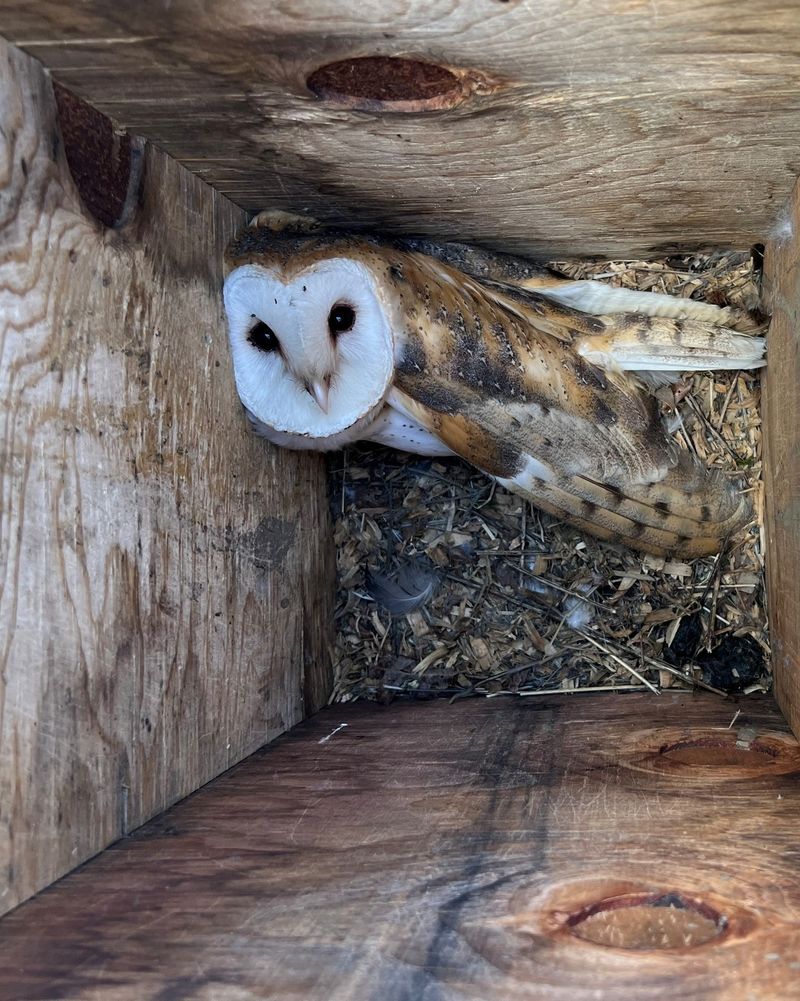
Getting a barn-owl box right is a sequence of small, verifiable decisions rather than one dramatic gesture. Start by checking whether your existing or planned box location receives intense afternoon sun.
If it does, moving the box to a tree or adding a sunshade is a prudent improvement backed by occupancy data from a multi-year barn-owl placement study. From there, confirm that the box sits 10 to 12 feet high, that the entrance faces away from prevailing winds, and that no branch or ledge within five feet gives a predator an easy approach.
Next, check for a metal baffle on the mounting pole and remove any rodent food sources – fallen fruit, accessible pet food, open seed containers, debris piles – that sustain the very populations you are hoping to reduce. California DPR installation guidance treats these steps as a package, not a menu of optional extras.
Before adding or keeping any vegetation cover for hunting habitat, check your local defensible-space and fire-safety requirements. California wildlife health guidance consistently frames habitat support and rodenticide reduction as complementary goals, but fire-zone rules take priority over any landscaping improvement in fire-prone areas.
The honest goal here is to provide safe, thermally reasonable nesting habitat where suitable hunting space already exists – not to guarantee an owl presence or to promise that every rodent in the yard disappears. A barn owl that finds your box useful is a genuine asset; the box itself is simply an open invitation.