
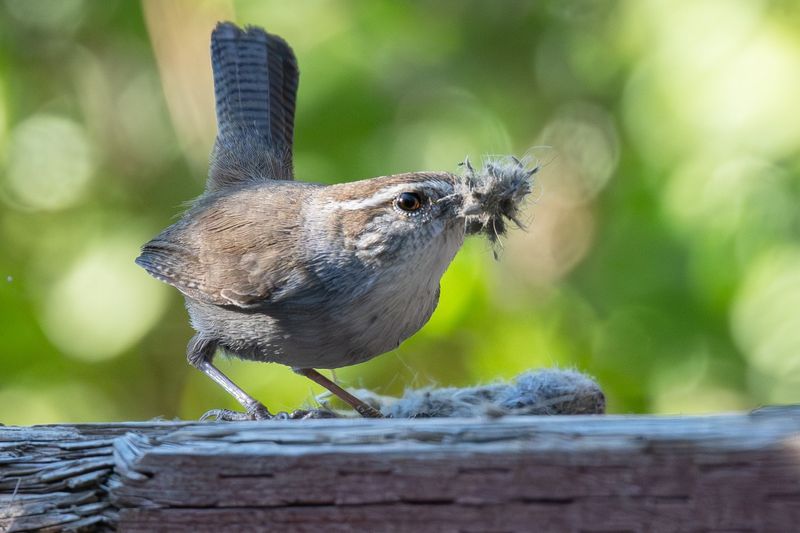
A small, quick-moving bird with a cocked tail and a loud song may already be working through the shrubs at the edge of your California yard. Bewick’s Wrens are common across much of the state, and they eat a wide variety of insects, including caterpillars, especially when feeding nestlings.
Homeowners who tidy every corner of the yard may be accidentally removing the brushy cover and nesting spots these birds rely on. Supporting them is less about adding feeders and more about rethinking what a well-kept yard really needs to keep.
Bewick’s Wrens already fit many California gardens
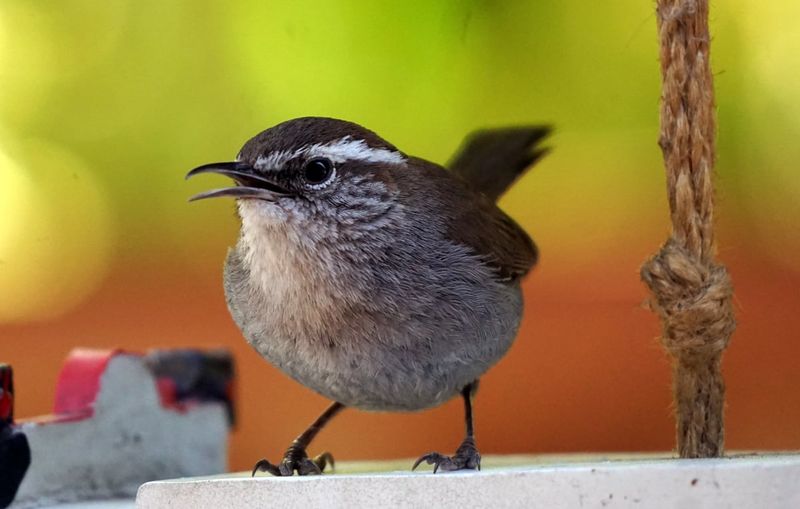
Bewick’s Wrens show up in backyards across much of California without much invitation. According to the California Department of Fish and Wildlife habitat profile for the species, they are common residents in chaparral, scrub, riparian areas, woodland borders, and suburban plantings with brushy understory.
That last habitat type is worth paying attention to, because a vegetable garden surrounded by some dense low shrubs is closer to their preferred territory than a wide-open lawn.
Their diet is broad. Cornell Lab of Ornithology’s Bewick’s Wren life history lists insect eggs, larvae, pupae, and adults, along with beetles, wasps, grasshoppers, crickets, flies, spiders, and caterpillars as regular prey.
Caterpillars are especially important when adults are feeding nestlings, which means the weeks when your vegetable plants are also putting on the most growth can coincide with a wren pair’s most active foraging period.
The honest qualifier is this: while wrens may consume caterpillars they encounter around garden vegetation, the evidence does not show that they specifically target vegetable pests or that a single bird or pair can be counted on to reduce a measurable pest load. The UC IPM leaf-feeding caterpillars guide makes clear that natural enemies can help, but results depend on many factors, and no reviewed source establishes a Bewick’s Wren-specific reduction in caterpillar damage on California vegetables.
What the evidence does support is treating Bewick’s Wrens as one possible contributor to a broader natural-enemy community. Keeping that in view helps set realistic expectations while still giving the bird a fair reason to stay.
Dense, low cover can provide foraging habitat
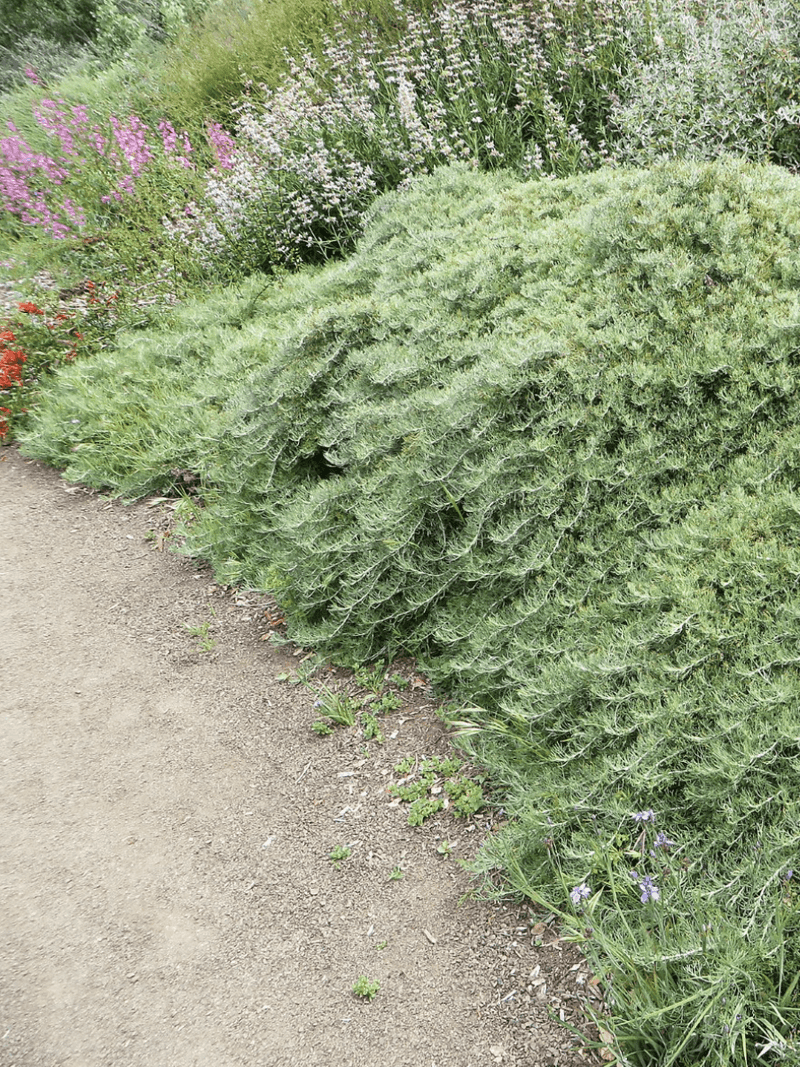
Bewick’s Wrens are not open-yard birds. They forage low, typically within about four feet of the ground, moving through dense tangles of vegetation where insects hide in bark crevices, leaf litter, and folded leaves.
Open lawns, bare soil, and neatly clipped hedges offer almost none of that foraging structure.
The California Wildlife Habitat Relationships profile describes the species as favoring dry brush, scrub, thickets, mixed shrublands, and places with a well-developed brushy understory. A yard that includes even a modest patch of dense, multi-layered shrubs near the garden edge can offer the kind of foraging structure the bird uses, though adding that structure does not guarantee wrens will appear or use a particular property.
Broader research does suggest that birds, as a group, can play a role in managing caterpillar populations under some conditions. A 2012 study on tritrophic interactions at the community level found evidence that bird predation can influence insect herbivore pressure, and research on forest heterogeneity and caterpillar control showed that structural diversity in vegetation affects how efficiently bird communities suppress caterpillars.
Those findings apply to bird communities broadly, not to Bewick’s Wrens alone, and results varied with habitat type, plant species, and pest density.
The practical takeaway is that a yard with some structural diversity in its plantings may support foraging conditions that Bewick’s Wrens and other beneficial birds can use. That is a reasonable design goal for a California homeowner, even without a guaranteed pest-control outcome attached to it.
A spotless yard can erase useful cover and nest opportunities
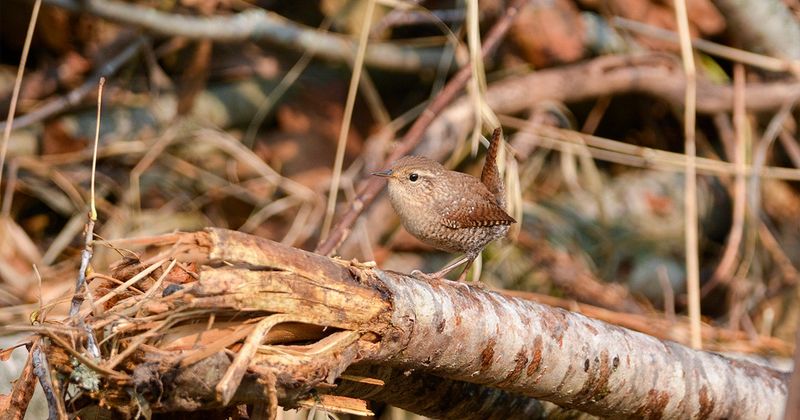
Most California homeowners tidy their yards with good intentions, but repeated removal of every shrub thicket, brush pile, cavity, and protected ledge can quietly reduce the options a Bewick’s Wren has for foraging and nesting. The sources reviewed do not document a controlled study showing that routine cleanup causes wrens to leave a California yard, but the habitat features they depend on are the same ones that disappear first during a thorough cleanup.
Foraging and nesting needs overlap but are not the same thing. A wren may hunt insects through low shrubs while nesting somewhere entirely different, such as a rock crevice, an abandoned woodpecker hole, a gap in an outbuilding wall, a protected ledge, or a brush pile.
The NestWatch Bewick’s Wren focal species profile lists all of those site types as reported nest locations, which means a yard can support nesting through several different features, not just one.
According to the Cornell Lab life history page, the species also uses cavities in fences, nest boxes, and other human structures, which points to something useful: the cover that supports wrens does not have to look wild to function. A few dense shrubs, a safely placed brush pile away from structures, or an intact gap in a fence post can serve the same purpose as a natural thicket.
The goal is not to stop managing vegetation. California fire safety and water-wise landscaping both require active choices about what stays and what goes.
The decision worth making deliberately is which features to keep, rather than removing everything by default.
The best habitat patch is intentional and fire-safe
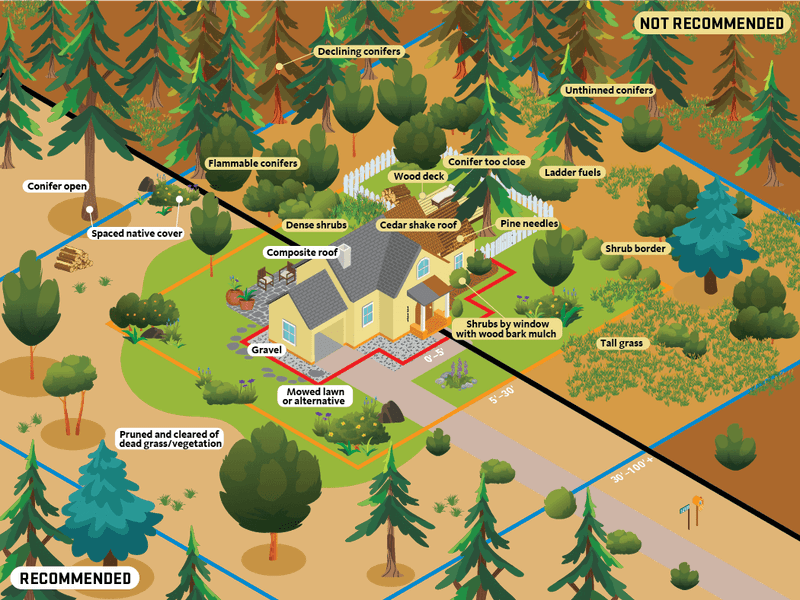
Keeping some brushy cover for foraging birds does not mean turning a yard into a fire hazard. The two goals are compatible when the habitat is designed with California’s fire environment in mind from the start.
CAL FIRE’s defensible space guidance requires removing or reducing combustible vegetation near structures, especially within the first five feet around a building, and maintaining separation between grasses, shrubs, and trees in the surrounding zones.
A small, intentional habitat patch placed away from the house and separated from adjacent plants by adequate clearance can still offer meaningful foraging structure. Cornell’s Bewick’s Wren overview specifically mentions native shrubs such as willow, mesquite, elderberry, and chaparral plants as habitat features worth considering, and the life history page adds brush piles as a potential yard improvement.
Any brush pile should be positioned well away from the home and never placed where it conflicts with local defensible-space requirements or Board of Forestry zone regulations.
Plant selection matters as much as placement. The Calscape planting guide can help homeowners identify native or regionally appropriate species suited to their specific California climate zone and site conditions, rather than copying a generic statewide list.
Coastal homeowners, inland valley residents, and those in fire-prone hillside communities have different options available, and matching plants to the local site reduces water use and maintenance while supporting the insects that birds like wrens depend on.
UC Cooperative Extension notes that gardening for birds often means supporting caterpillars first, since native plants host the insect life that songbirds need to raise young. A habitat patch built from locally appropriate plants is doing double duty: it can provide cover for foraging and supply the insects that make foraging worthwhile, all while staying within safe landscaping boundaries.
A nest box can add a cavity, but it cannot summon a wren
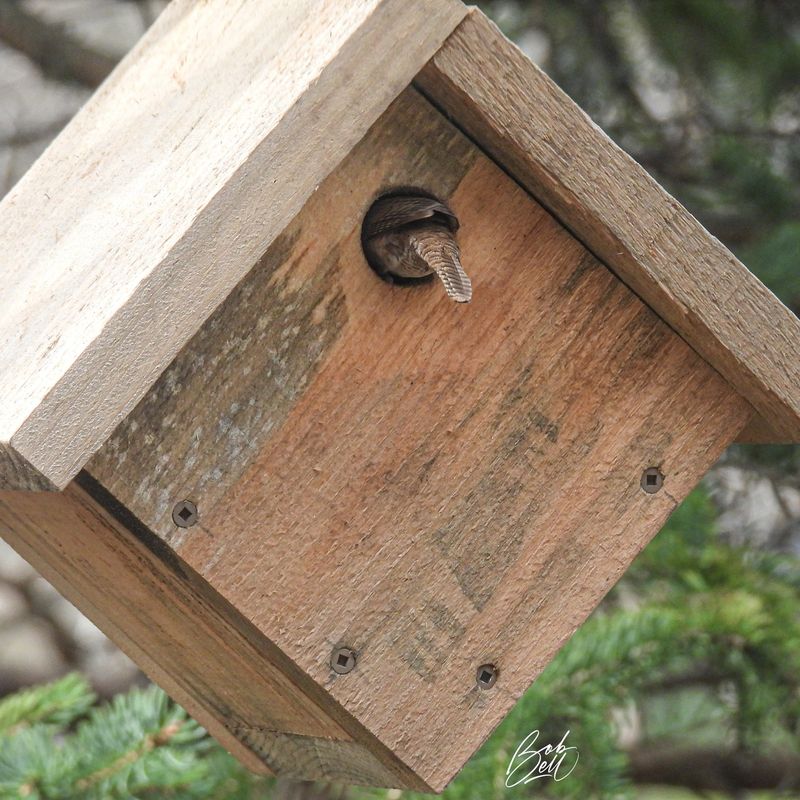
Yards that have lost most of their natural cavities, old woodpecker holes, and protected ledges have fewer nesting options to offer. A correctly sized nest box can fill that gap as a supplement, though it is not a guarantee that Bewick’s Wrens will find it, inspect it, or choose it over competing sites.
The NestWatch nest-box specifications for Bewick’s Wren call for a 1 1/8-inch entrance hole, approximately 8 inches of interior depth, a 5 1/2-by-5 1/2-inch floor, and placement between 3 and 6 feet above ground near shrub or woodland-edge cover. Those dimensions matter because a larger entrance hole can invite competitors that the wren cannot displace.
Competition is a real consideration. Cornell’s Bewick’s Wren life history notes that House Wrens may usurp Bewick’s Wren nest sites in parts of the range, and the NestWatch focal species profile confirms that other cavity nesters can take over a box before a Bewick’s Wren claims it.
Offering a box is a reasonable step, but treating it as a certain solution sets the wrong expectation.
One legal boundary applies to any nest, box or natural. The U.S.
Fish and Wildlife Service states that most bird nests are protected under the Migratory Bird Treaty Act, and USFWS depredation guidance makes clear that destroying a nest containing eggs, chicks, or dependent young is illegal. If a wren or any other bird is actively nesting in a box, fence gap, or shrub you planned to remove, postpone that work until the nest is empty and the young have left.
When the situation is unclear, contact a licensed wildlife rehabilitator or your local California Department of Fish and Wildlife regional office for guidance before acting.
Let integrated pest management decide when caterpillars need action
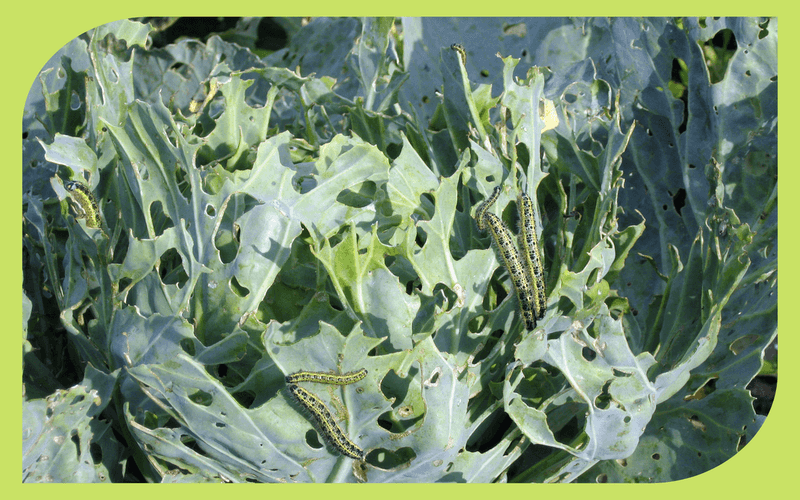
Not every chewed leaf in a California vegetable garden calls for a spray bottle. Many plants can tolerate a surprising amount of leaf damage without a meaningful reduction in yield, and natural enemies, including birds, predatory insects, and parasitic wasps, may bring a mild infestation under control on their own if given time and a yard that supports them.
The UC IPM leaf-feeding caterpillars guide recommends monitoring damage first, identifying the caterpillar when possible, and reserving treatment for situations where damage is genuinely unacceptable. The practical escalation path looks like this: look for caterpillars and egg masses by hand, pick them off and drop them into soapy water, prune leaves that are rolled or webbed by caterpillars feeding inside, and let natural enemies work before reaching for any product.
If damage crosses a threshold where action is needed, Bacillus thuringiensis kurstaki, known as Btk, is a reasonable targeted option. The UC IPM quick-tip sheet on leaf-feeding caterpillars explains that Btk works only when caterpillars eat treated plant surfaces, that it performs best on small, young caterpillars, and that it breaks down relatively quickly in sunlight, which limits its residue and its effect on non-target insects.
Supporting Bewick’s Wrens and other natural enemies works best as a complement to an IPM approach, not a replacement for it. A wren foraging through the shrubs near your vegetable beds may consume some caterpillars along the way, but relying on that as the sole response to a real infestation is not a sound pest management plan.
The UC IPM biological control and natural enemies resource frames birds and beneficial insects as part of a larger system, one that works best when chemical disruption is kept to a minimum and monitoring stays consistent.
Support the wider garden food web

Broad-spectrum insecticides do not distinguish between the caterpillar eating your kale and the parasitic wasp that was about to lay eggs inside it. Spraying when a pest appears can set back the natural-enemy community that was already building a response, which sometimes makes the next outbreak worse rather than better.
The UC IPM caterpillar guide warns that broad-spectrum insecticides can kill beneficial insects along with pests and specifically notes that spinosad, often marketed as a low-impact option, can negatively affect some beneficial species. That caveat is especially relevant for gardeners who also maintain a butterfly or pollinator section of their yard.
Caterpillars on milkweed, passionvine, or other host plants are not vegetable pests; they are the larval stage of butterflies and moths worth protecting, and spraying to remove them undermines the same food web that supports insect-eating birds.
UC Cooperative Extension points out that caterpillars in the garden are not automatically a problem and that a yard with some tolerance for insect life is a more functional habitat overall. Paired with that, UCCE guidance on gardening for birds recommends reducing or eliminating pesticide use, leaving some natural debris where safe, and using California-native plants suited to the site as a way to support the insect communities that songbirds depend on.
Choosing native plants, reducing unnecessary spraying, and tolerating acceptable leaf damage are practices that may support a broader food web capable of providing resources for insectivores like Bewick’s Wrens. They are not a proven species-specific protection plan, but they move the yard in a direction that benefits a wide range of organisms that help keep pest populations in check.
Give the wren a place to forage, not a job it cannot guarantee
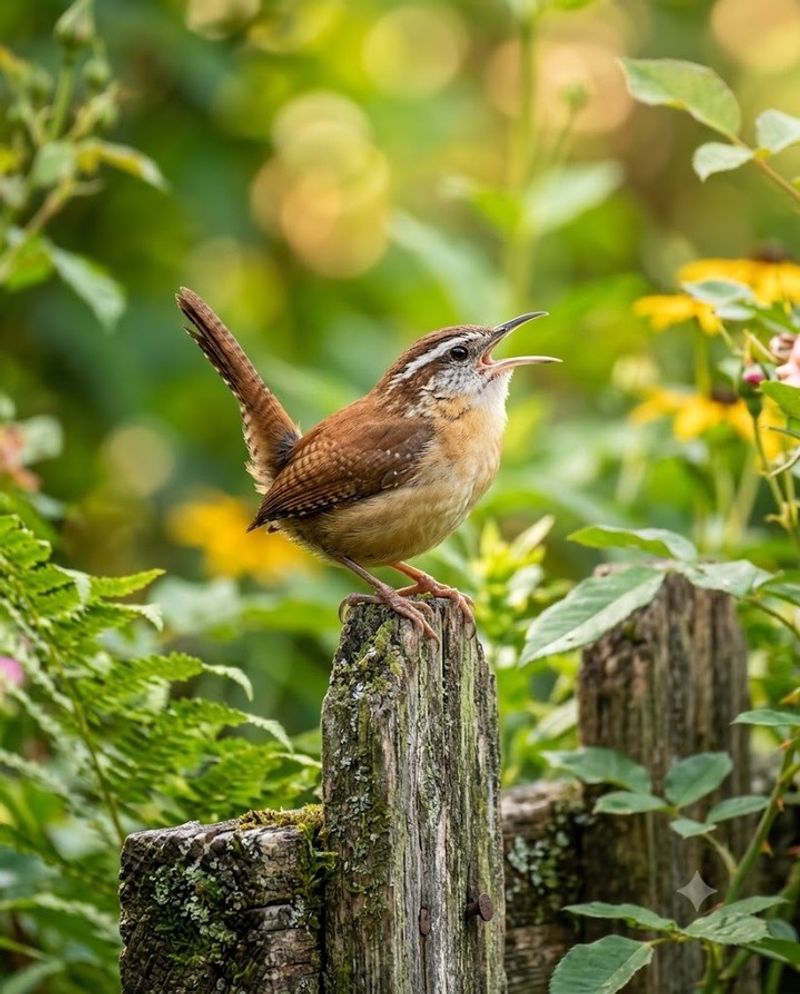
Pulling together a practical plan does not require a major yard overhaul. A few targeted decisions can make a California garden more useful to Bewick’s Wrens and the broader natural-enemy community at the same time.
Keep or add a small patch of dense, structurally varied shrubs near the vegetable garden, using plants suited to your specific California climate zone and site. Place any habitat patch and brush pile well away from structures, following CAL FIRE defensible-space requirements for your property.
Use the Calscape planting guide or a local native plant nursery to match species to your conditions rather than copying a generic list. Offer a correctly sized nest box if natural cavities are scarce, but expect competition from other cavity nesters and no guarantees on occupancy.
Monitor caterpillar damage before acting, handpick when practical, and avoid broad-spectrum insecticides that can harm the beneficial insects already working in your garden. The UC IPM caterpillar guide and the California Wildlife Habitat Relationships profile both support the same underlying idea: habitat diversity and reduced chemical pressure benefit the organisms that regulate pest populations.
Bewick’s Wrens may contribute to that network as one foraging member of a larger community. A yard designed with their needs in mind also tends to be a better yard for the full range of creatures that make natural pest management possible, which turns out to be a more durable outcome than any single species could deliver on its own.