
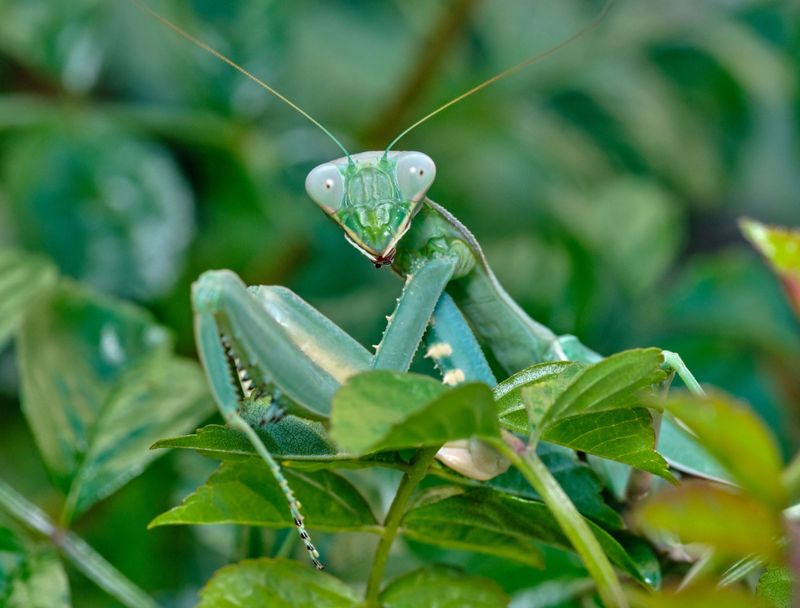
Spot a praying mantis perched on your tomato plant and your first instinct might be to scoop it up or spray the whole bed, but that reaction could cost you a useful garden ally. Mantises are real predators that can take down aphids, caterpillars, grasshoppers, and other insects that damage California vegetable gardens throughout the warm season.
The catch is that they are not the tidy, reliable pest-control crew many gardening articles promise, and understanding that difference changes how you protect them and your crops.
A mantis in the vegetable bed is usually worth leaving alone
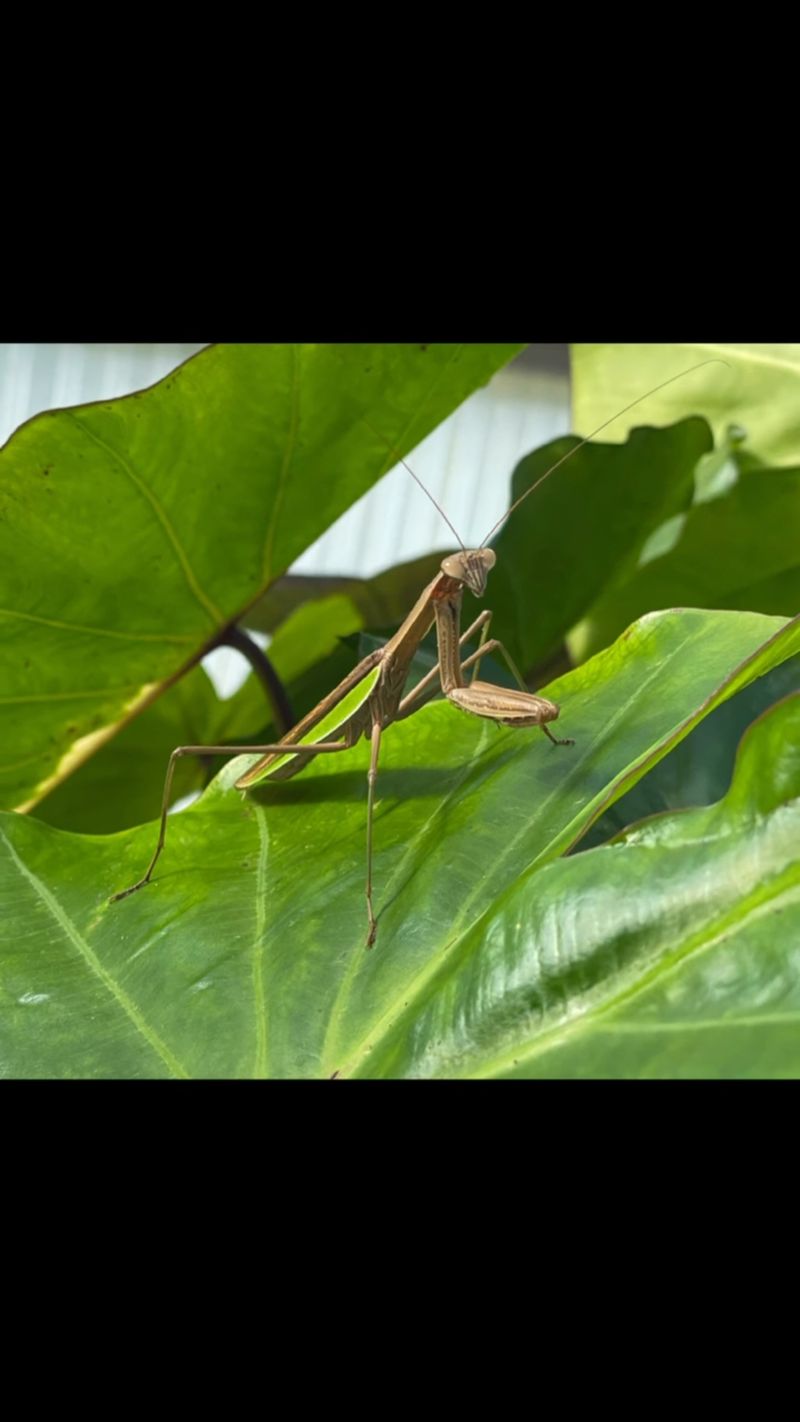
Finding a praying mantis on your pepper plants or squash vines is genuinely good news, but the right response is simpler than most gardeners think: leave it alone. Crushing it, moving it to another part of the yard, or reaching for the spray bottle are all unnecessary reactions that can eliminate a predator that arrived on its own and costs you nothing to keep.
Mantises may eat aphids, caterpillars, flies, grasshoppers, and almost any other medium-sized insect they can catch. UC IPM’s mantid profile confirms that their prey list is broad, which is exactly why they can show up in a vegetable bed and start hunting within hours of arrival.
That broad appetite, though, is also what makes them a complicated ally.
A naturally occurring mantis will not reliably clear aphids or caterpillars from a vegetable bed. Texas A&M’s entomology resource on praying mantises puts it plainly: mantises are not effective controls for aphids, mites, or caterpillars.
Utah State Extension’s beneficial insect guide echoes that assessment, noting that mantises consume relatively few insects and do not focus on pests.
The practical lesson is a straightforward two-part rule. Protect the mantis by leaving it in place and skipping unnecessary chemical applications on the plant it occupies.
At the same time, keep monitoring your crop for actual pest damage, because a single mantis hunting in one corner of the bed is not a substitute for the pest-management attention your vegetables still need.
How a mantis hunts—and why that limits its pest-control value
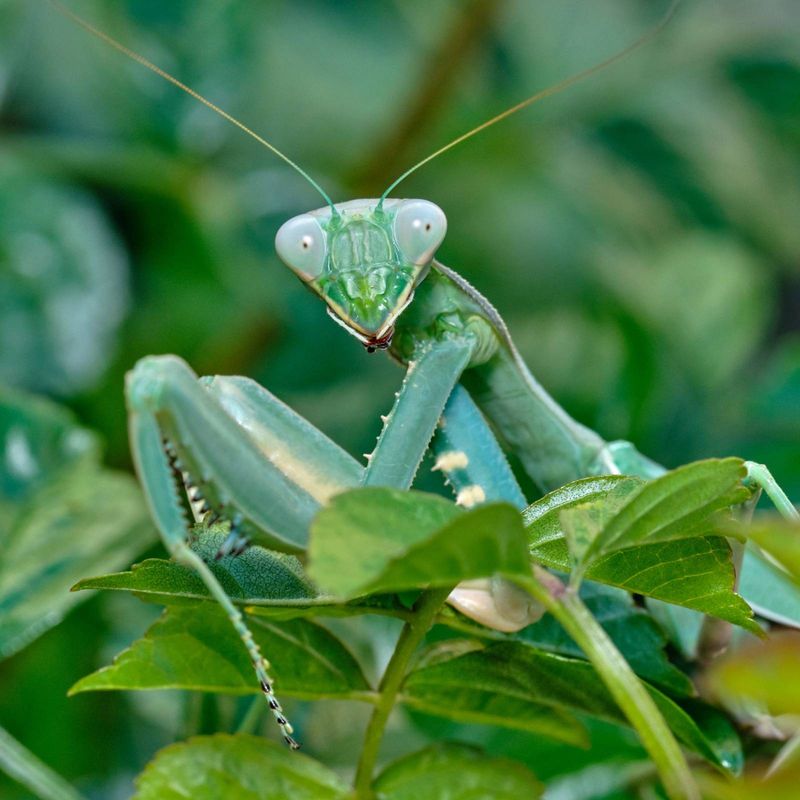
Patience is the mantis’s entire strategy. Rather than patrolling a bed the way a lady beetle might, a mantis picks a spot on a stem or leaf, goes almost completely still, and waits for an insect to wander close enough to grab.
That ambush style works well for catching active insects, but it means the mantis only encounters prey that happens to move within striking range.
Aphids, by contrast, cluster by the dozens or hundreds on new growth and reproduce rapidly. A mantis sitting on one branch might catch a few aphids that crawl past it, but the colony on the opposite side of the plant keeps multiplying undisturbed.
UC IPM’s biological control overview explains that effective natural enemies for aphids tend to be specialists, such as parasitoid wasps and syrphid fly larvae, that actively search for colonies rather than waiting for prey to arrive.
The mantis’s prey range makes the situation more complicated. It will take whatever active insect comes within reach, including honeybees visiting squash blossoms, syrphid flies hovering near aphid colonies, and butterflies nectaring on nearby flowers.
Watching a mantis catch a caterpillar is genuinely interesting, but it only shows that the mantis can capture that one insect. It does not mean the mantis will reduce the caterpillar population enough to protect the crop.
UC IPM states clearly that mantises provide little or no practical benefit as biological pest-control releases, precisely because they consume relatively few insects and show no preference for the pests that cause the most crop damage. Keeping that distinction in mind helps you appreciate the mantis for what it actually is: a fascinating generalist predator that belongs in a healthy garden community, not a targeted pest-suppression tool.
California mantises follow a seasonal cycle
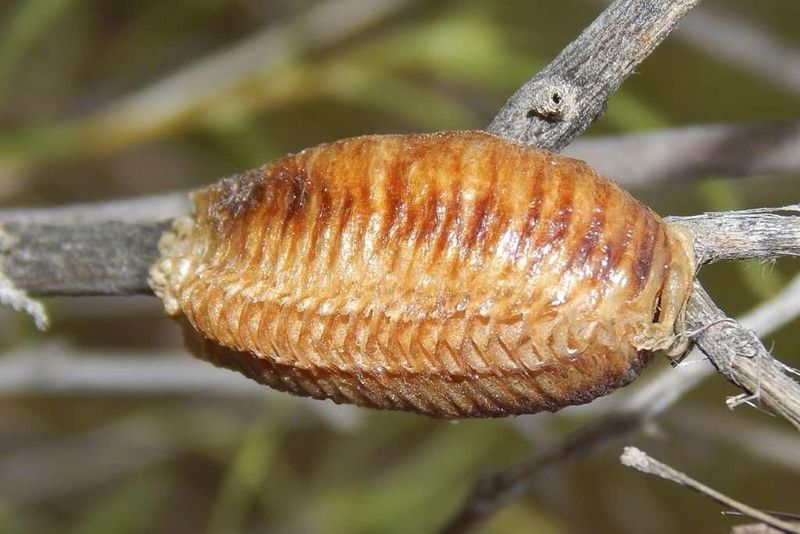
Egg cases, called oothecae, are how California mantises survive winter. Females deposit them on plant stems, fences, and woody debris in late summer and fall, and the eggs remain dormant through the cool, wet months that characterize California winters across most of the state.
Hatching begins in late winter or early spring, when temperatures warm enough to trigger development.
UC IPM’s mantid resource notes that California mantises typically complete one generation per year. Nymphs emerge in spring looking like tiny adults, grow through the summer by feeding on progressively larger prey, and reach adulthood by late summer.
Adults mate in late summer and fall, females lay their egg cases, and then both sexes die before winter. The cycle repeats the following spring.
One thing worth knowing before you assume the egg case in your garden belongs to a native species: California has at least nine mantis species, and not all of them are native. Native species include the California mantid, the bordered mantid, and several smaller species in the genus Litaneutria.
But Chinese, European, Mediterranean, and South African mantises are also established in the state, and telling species apart from a casual glance or a phone photo is genuinely difficult.
A mantis or egg case in your yard does not confirm that you have a native insect. That uncertainty does not change the basic advice, which is to leave a naturally occurring mantis alone, but it does matter if you are thinking about purchasing and releasing egg cases as a pest-control measure, a topic the next sections address directly.
Protect a mantis with simple, low-risk choices
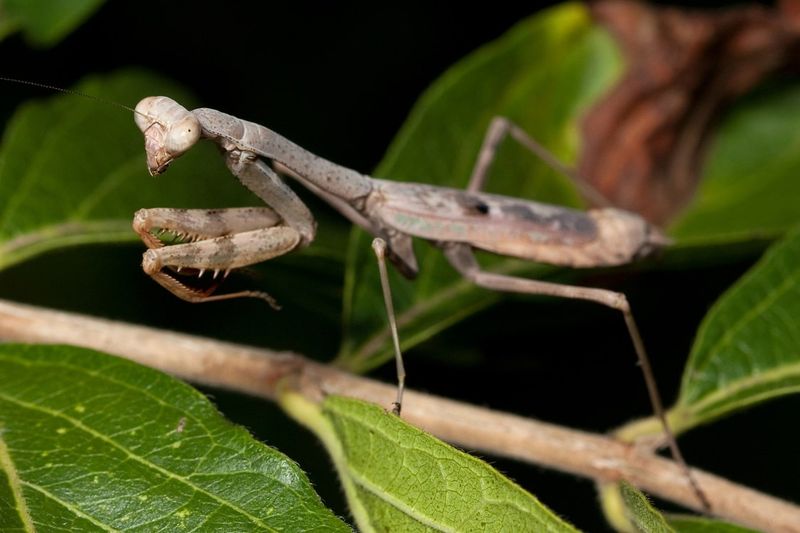
Protecting a mantis that has settled into your vegetable garden requires almost no effort. Leave it where it is.
Mantises are capable hunters that will move on their own when prey becomes scarce, and relocating one to a different part of the yard is more likely to disorient it than help it. If you need to work around the plant it is on, move slowly and let it step aside rather than grabbing it.
The bigger threat to a garden mantis is not an accidental bump but a broad-spectrum insecticide applied to the surrounding plants. Carbamates, organophosphates, pyrethroids, and some systemic insecticides can kill mantises along with the pests they are meant to control.
UC IPM’s guide to protecting natural enemies and pollinators identifies these chemical classes as capable of harming both natural enemies and pollinators, sometimes for days or weeks after application. Avoiding routine, calendar-driven sprays protects not just the mantis but also the lady beetles, lacewings, parasitoid wasps, and other insects doing useful work in your garden.
Conservation does not mean tolerating serious crop damage while hoping the mantis handles it. UC IPM’s pesticide hazard mitigation guidance recommends identifying the pest first, using nonchemical controls where practical, and then choosing the least disruptive labeled treatment if the situation still warrants it.
Spot treatments on a specific infested stem are far less damaging to the surrounding insect community than spraying an entire bed.
The low-risk path forward is straightforward: identify what is actually damaging your crop, reach for water, pruning shears, or a targeted product only when needed, and leave the mantis to do whatever hunting it chooses on its own schedule.
Why buying an egg case will not solve a pest outbreak
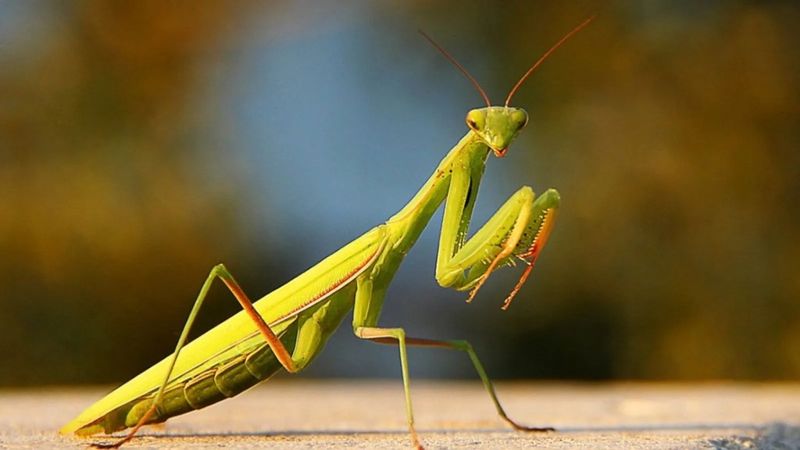
Garden centers and online retailers sell mantis egg cases every spring, often marketed as a natural, chemical-free way to control aphids and caterpillars. The pitch is appealing, but the reality does not match it.
The cases sold commercially in California almost always belong to introduced species, most commonly the Chinese mantis or the European mantis, rather than any of the native California species. UC ANR’s Real Dirt blog post on mantises in the garden addresses this directly, noting that the egg cases widely available for purchase are not native to California.
UC IPM’s mantid profile goes further, stating that mantises are not recommended as effective biological-control releases because they eat too few insects and show no preference for pest species over beneficial ones.
Releasing a batch of hatchlings into a vegetable bed sounds like a targeted intervention, but the nymphs disperse quickly and will eat whatever active insect they encounter, including syrphid flies hovering near aphid colonies, parasitoid wasps searching for caterpillar eggs, and any other beneficial insect that moves within reach. You are not deploying a pest-control crew; you are releasing generalist predators into a space that already has a working insect community.
The contrast with a naturally occurring mantis is meaningful. A mantis that arrived on its own found your garden suitable, has been hunting there on its own terms, and costs you nothing to keep.
A purchased egg case introduces an introduced species in numbers that may temporarily disrupt your garden’s existing balance of natural enemies without providing measurable pest suppression in return.
Use aphid IPM when the crop still needs help
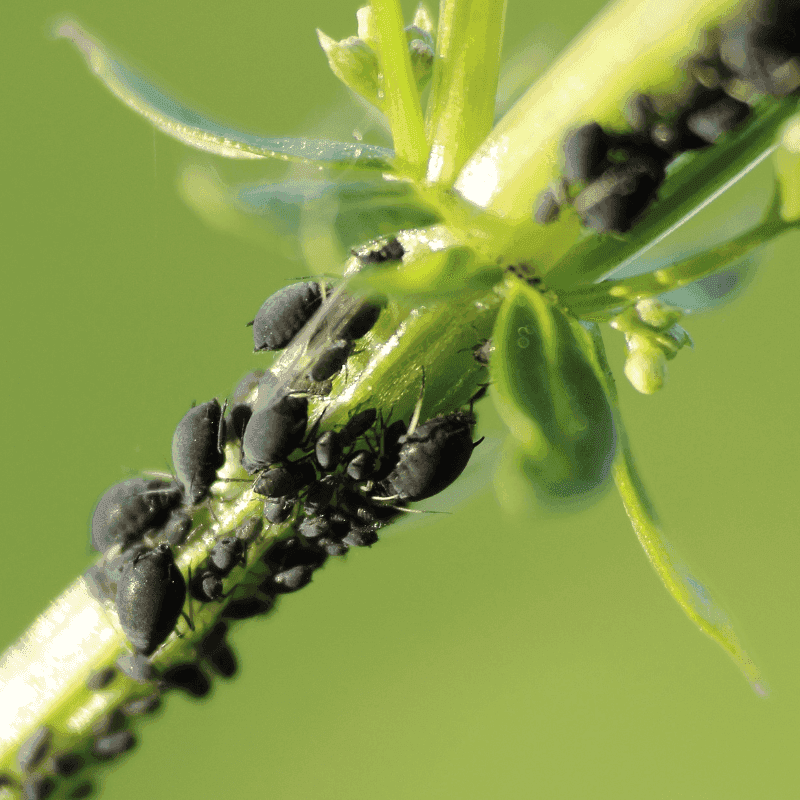
Aphids are one of the most common reasons California vegetable gardeners start thinking about mantises in the first place. The problem is that aphids reproduce far faster than any single predator can consume them.
A colony can double in days under favorable conditions, and in coastal California some species remain active for much of the year. Inland and desert gardens get a break when summer heat spikes above the range aphids tolerate, but that relief is temporary and regional.
UC IPM’s aphid management guide recommends inspecting plants at least twice weekly during periods of rapid growth, paying particular attention to new growth and the undersides of leaves where colonies establish first. Catching a small infestation early gives you far more options than discovering a heavy one after the damage is done.
A strong stream of water from a garden hose knocks aphids off stems and leaves effectively. Most aphids that land on the soil do not make it back to the plant.
For localized infestations on a single stem or leaf cluster, pruning that section and disposing of it in the trash removes a large portion of the colony immediately. If those steps are not enough, insecticidal soap or horticultural oil can be effective, but both require thorough coverage of all plant surfaces, including leaf undersides.
Do not apply either product to water-stressed plants, and avoid applications when temperatures exceed 90 degrees Fahrenheit. Both products can affect natural enemies that are contacted during the spray, so target only the infested area.
Ants are an underappreciated part of the aphid problem. Many ant species collect honeydew from aphid colonies and actively protect those colonies from lady beetles, lacewings, and parasitoid wasps.
UC IPM’s ant management resource describes several options for reducing ant access, including sticky trunk barriers, pruning branches that create alternate routes to the plant, and properly placed ant baits. Use trunk barriers carefully on young trees or thin-barked species to avoid injury.
Reducing ant activity often allows naturally occurring biological control agents such as parasitoid wasps and syrphid larvae to reach and suppress aphid colonies on their own.
Build a broader community of natural enemies
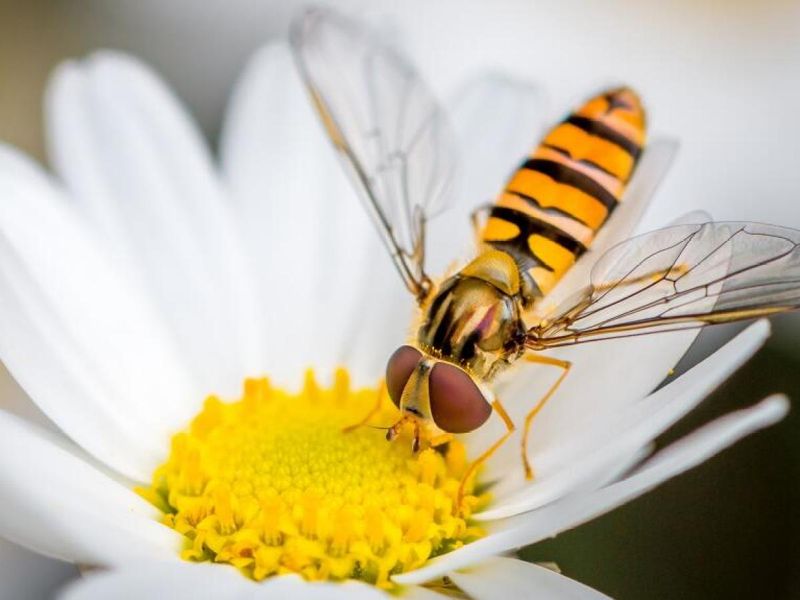
A mantis hunting alone in a vegetable bed is working with whatever insects cross its path. A garden that supports a broader community of natural enemies, including lady beetles, lacewings, syrphid flies, and parasitoid wasps, is doing something more reliable: creating multiple overlapping pressures on pest populations across the entire growing season.
Flowering plants are one of the most practical ways to support that community. UC IPM’s insectary plant resource explains that plants providing nectar, pollen, shelter, and alternate prey can attract and sustain lady beetles, lacewings, syrphid larvae, and parasitoid wasps.
Good California choices include sweet alyssum, dill, fennel, yarrow, and native buckwheats, which bloom over long periods and suit the dry-summer climate well. Planting these near or among vegetable beds gives beneficial insects a reason to stay in the area rather than moving on when a particular crop is not in bloom.
One honest qualification: insectary plants support the beneficial insect community generally. They do not guarantee that a mantis will focus on your aphids or that any single natural enemy will suppress a named pest to acceptable levels.
UC IPM’s biological control overview frames conservation of natural enemies as one component of integrated pest management, not a replacement for monitoring and targeted action when pest pressure exceeds what the garden community can handle on its own.
The most useful shift in thinking is from managing individual pests with individual solutions to managing the garden as a system. Reducing routine broad-spectrum insecticide use protects the entire natural enemy community, including the mantis, far more effectively than any single habitat addition.
Skip the calendar spray, add a few flowering plants to the edges of your beds, and let the insects that arrive do the work they are suited for.
Let the mantis stay, but let evidence guide pest management
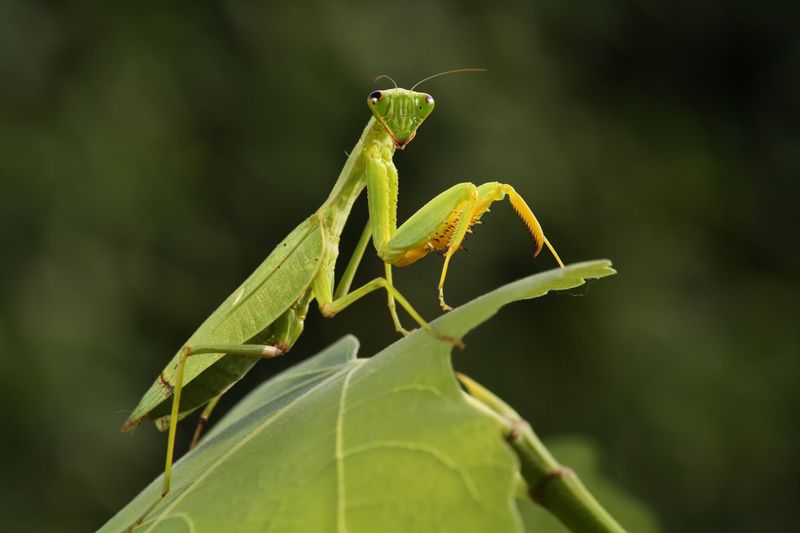
The simplest summary of everything above: when a mantis shows up in your vegetable garden, leave it alone. Do not crush it, do not relocate it unnecessarily, and do not spray the plant it occupies with a broad-spectrum insecticide.
A naturally occurring mantis is a welcome member of the garden’s insect community, and protecting it costs almost nothing.
At the same time, keep monitoring your crops on your own schedule. Check new growth and leaf undersides at least twice a week during the growing season, identify what is actually causing damage, and respond with the least disruptive effective measure when pest pressure warrants it.
A mantis hunting in the garden does not change that responsibility. Protecting natural enemies and pollinators and managing a real pest outbreak are not in conflict; they just require using the right tool for each situation.
UC IPM describes mantises as generalist predators of limited value as intentional biological-control agents, which is an honest assessment that makes them no less interesting to have around. A mantis perched on your tomato cage, perfectly still, watching everything that moves, is doing exactly what it evolved to do in a California summer garden.