
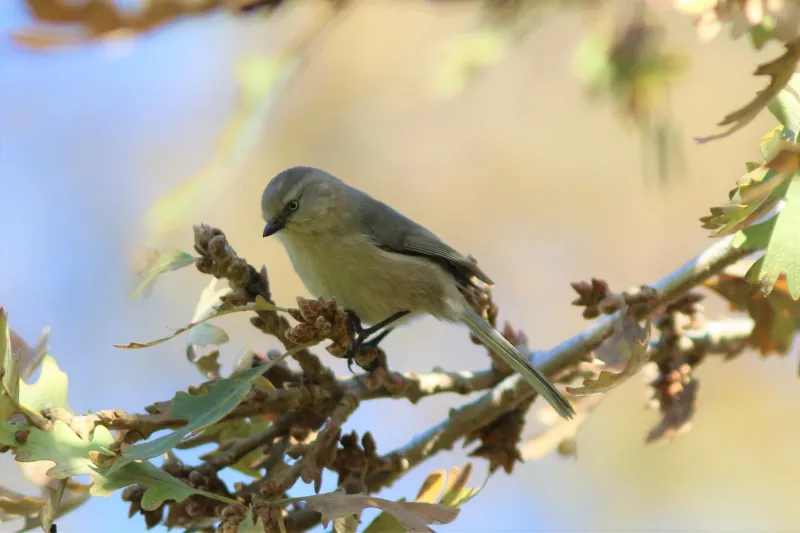
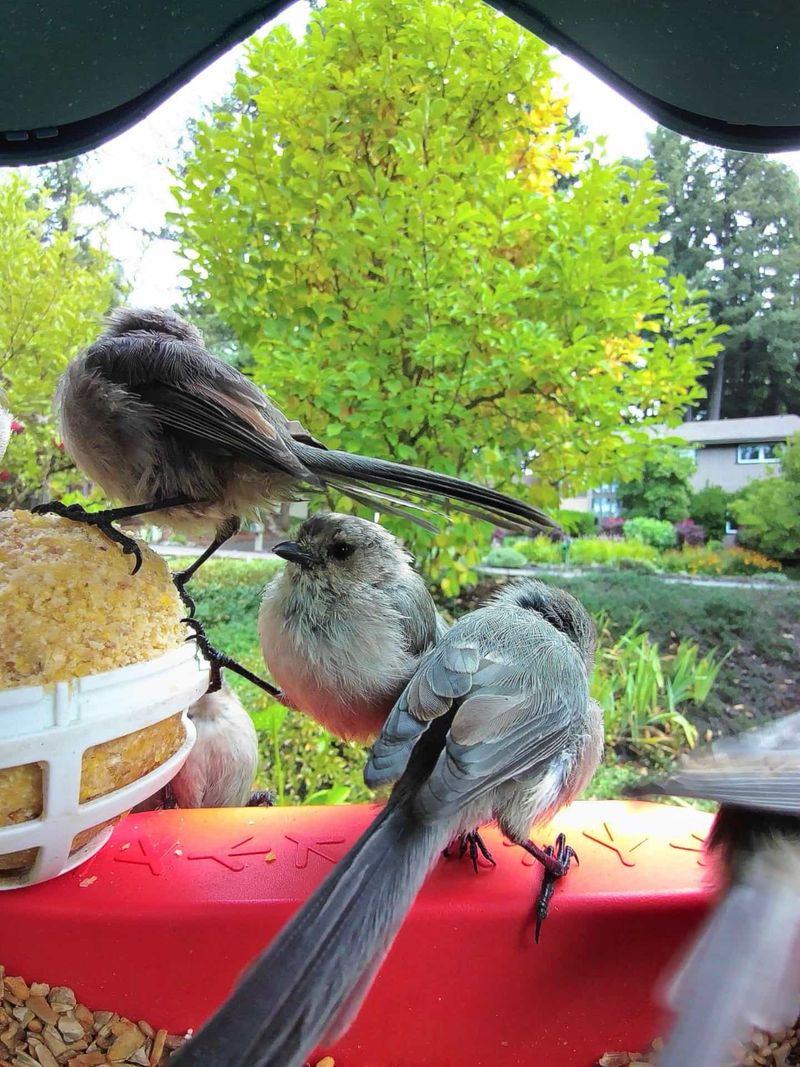
A small, restless flock moves through your garden shrubs like a wave, picking at leaves and twigs before vanishing just as quickly as it appeared. That flock may be California Bushtits, a tiny bird that forages on insects and spiders throughout much of the state, including suburban yards.
Most homeowners never notice them, which means they also never realize they could be making choices that either support or undermine these helpful little visitors. Understanding what Bushtits actually do, and what they cannot reliably promise, can help you tend your yard in a way that works with natural pest pressure instead of against it.
That small flock may be Bushtits
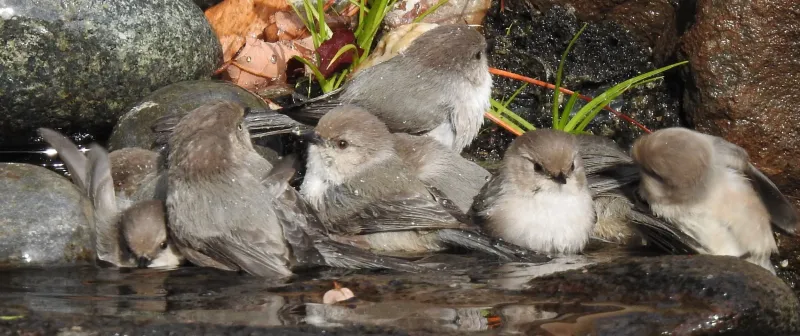
Noticing a tight little cluster of birds moving through your shrubs all at once is one of the more reliable hints that you might be watching Bushtits. These birds are tiny, even by songbird standards, measuring roughly four inches from bill to tail.
Their plumage is plain gray-brown overall, with a small, rounded head and a longish tail that gives them a slightly top-heavy look when they hang upside down to inspect a leaf. Males have dark eyes; females in most California populations show pale or yellowish eyes, which is a useful field mark when you can get a close look.
Bushtits are year-round residents in much of California, turning up in open woodland, chaparral, riparian corridors, parks, residential neighborhoods, and shrublands. The California Department of Fish and Wildlife life-history account describes them as common in a wide range of vegetated habitats across the state, though their distribution is not uniform everywhere.
Coastal foothills, inland valleys, and suburban edges all support them where suitable shrub cover exists.
Flocking is central to how these birds live. Outside of nesting season, Bushtits travel in groups that can number from a handful of birds to several dozen, and the whole group tends to move through vegetation together rather than spreading out independently.
That collective movement is part of what makes them easy to miss and then suddenly very obvious when they arrive.
Keep in mind that other small, social birds also move through California shrubs in flocks, so flocking behavior and shrub use alone are not enough to confirm an identification. Cornell Lab of Ornithology’s Bushtit overview notes the species’ distinctive tiny size and plain coloration, but a confident ID benefits from watching the birds’ foraging style, listening for their soft, high-pitched contact calls, and checking a field guide before drawing conclusions.
A flock visiting your yard may be using it as one stop within a much wider feeding range rather than patrolling your shrubs exclusively.
What Bushtits pick from leaves and twigs
Watch a Bushtit for more than a few seconds and you will see its characteristic feeding style: the bird moves constantly, clinging to a twig, flipping to the underside of a leaf, probing a branch junction, then moving on. This technique is called foliage gleaning, and it is well suited to finding small invertebrates that shelter on or beneath plant surfaces.
The birds work through a shrub methodically before the whole flock drifts to the next plant.
Cornell Lab of Ornithology’s Bushtit life-history page lists scale insects among the prey this species takes, along with plant bugs, beetles, caterpillars, wasps, ants, and spiders. That is a broad and varied diet, which reflects the bird’s generalist approach to foraging rather than a targeted strategy aimed at any single pest.
Spiders make up a meaningful share of what Bushtits eat, which is worth noting because spiders themselves are predators of small insects.
The California Department of Fish and Wildlife life-history account describes the diet broadly as mostly insects and spiders and characterizes the feeding style as foliage and twig gleaning, consistent with what field observers report. Neither source quantifies how many individual pests a bird removes per day or per shrub visit, and neither establishes aphids as a major or measured prey item for this species.
Aphids are possible prey given the bird’s habit of working leaf surfaces where aphids congregate, but describing them as a primary or confirmed target goes beyond what the available sources actually document. Scale insects, by contrast, are specifically named.
Even so, eating some scale insects during general foraging is different from seeking them out as a food source or removing them at a rate that measurably reduces a population. The distinction matters when you are deciding how much pest-management work to expect from a passing flock.
Their contribution is possible, not guaranteed pest control
Hoping that a Bushtit flock will solve a pest problem is understandable, but the gap between eating some insects and reliably controlling a pest population is wider than it might appear. A 2023 meta-analysis of avian pest regulation found that birds can reduce pest abundance or damage in some agricultural and forest systems, but effects varied considerably by bird species, pest type, crop, habitat, and season.
No single finding from that broader research applies directly to Bushtits foraging through a residential shrub bed.
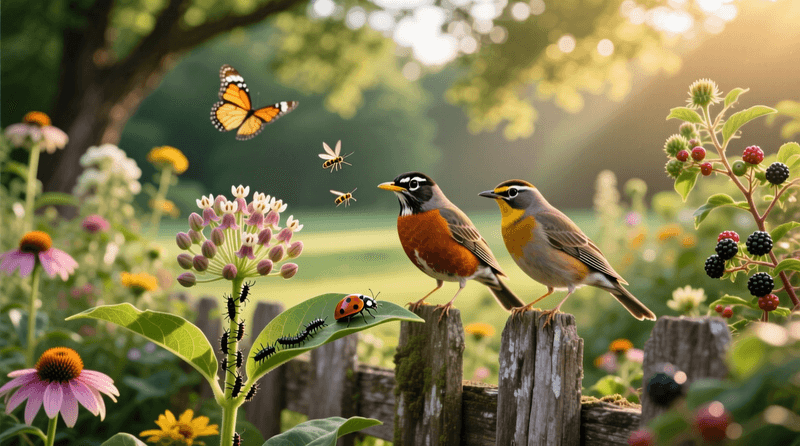
Part of the reason effects vary so much is that pest control is rarely the work of one predator. Research on aphid predation by natural enemies shows that aphid suppression tends to involve a community of predators, including lady beetles, lacewing larvae, parasitoid wasps, and syrphid fly larvae, rather than a single species acting alone.
Generalist predators, which Bushtits are, may be less consistent in their effect on any one pest than specialized aphid predators that track prey populations more closely.
The flock’s movement patterns also limit what any single yard can expect. The California Department of Fish and Wildlife account notes that one Santa Barbara study recorded an average flock home range of roughly 18 hectares, or about 45 acres.
A residential yard covers a fraction of that area, meaning any given shrub is likely one stop among many rather than a patch the birds monitor and defend.
Practically speaking, a Bushtit visit is a welcome sign of a yard that supports insect-eating birds, and the birds may remove some pests during their stop. But a shrub with a growing aphid colony or a heavy armored-scale infestation will not become pest-free because a flock passed through.
Serious or expanding infestations still require monitoring, accurate identification, and a response based on what the pest actually is and what stage of its life cycle it has reached. Supporting Bushtits and managing pests when necessary are not in conflict; they are both parts of a realistic yard-care approach.
Give Bushtits dense, layered habitat
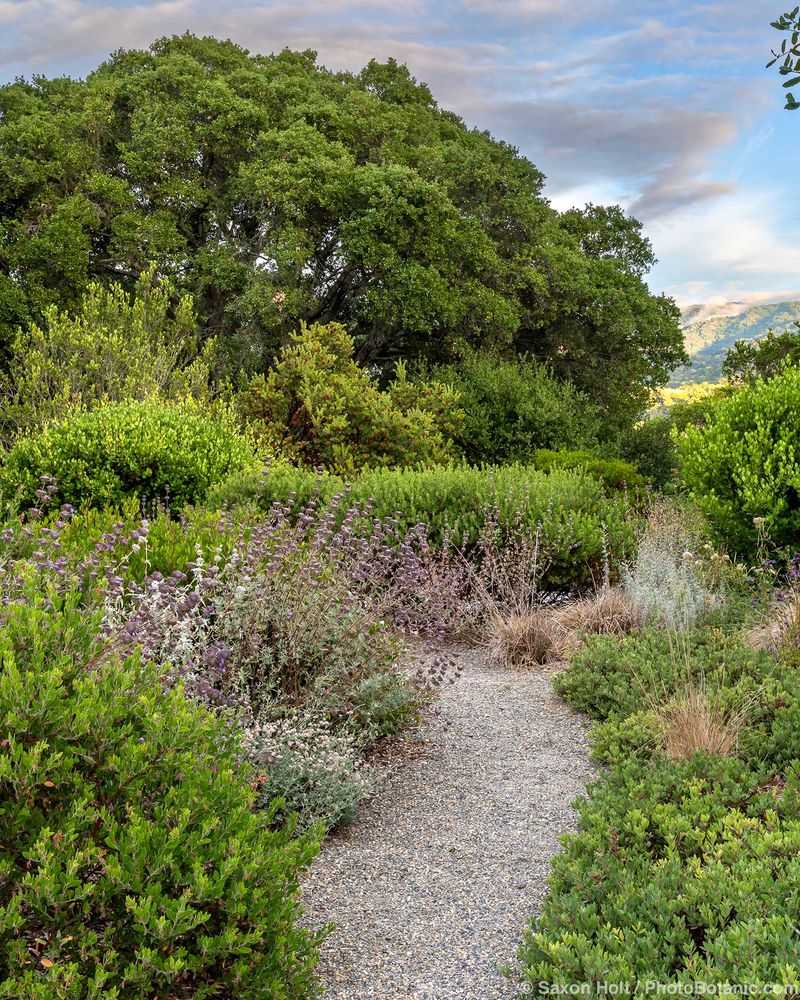
Bushtits do not need a special feeder or a particular food offering. What draws them in and keeps them returning is structure: a yard with enough shrub density and plant variety to provide cover, perching surfaces, foraging opportunities, and nesting material all in the same space.
A single ornamental shrub planted in open lawn gives a bird very little reason to linger, while a layered planting with groundcover, mid-height shrubs, and small trees creates the kind of complex habitat that supports not just Bushtits but a broader community of insect-eating birds and the invertebrates they depend on.
California Native Plant Society guidance on bird-friendly gardening recommends layered shrub cover and highlights plants such as toyon, elderberry, sumac, holly-leaf cherry, monkeyflower, penstemons, and native sages as options that support birds with food, shelter, and nesting resources. These plants tend to support more insect diversity than many non-native ornamentals, which in turn supports more of the food Bushtits need, especially during breeding season when parents must feed protein-rich invertebrates to nestlings.
Audubon’s plant guidance for bird-friendly yards reinforces the connection between native plant diversity and bird use, noting that native species often host more caterpillars and other insects than non-natives do. That insect abundance is the real draw for a foraging bird, not the plant itself.
Plant selection still requires honest attention to site conditions. California’s Mediterranean climate, long dry summers, periodic drought, and local water-use restrictions all affect which plants will thrive without excessive irrigation.
Cornell Land Trust bird conservation guidance emphasizes matching plant choices to local conditions rather than installing species that will struggle and require intensive care. For homeowners in fire-prone areas or hillside communities, defensible-space requirements and fire-safe plant spacing should take precedence over maximizing shrub density.
A habitat planting that fits the site and meets local fire and water rules will serve birds far better long-term than one that requires constant rescue irrigation or creates a fire hazard. Being realistic about what your specific yard can support is the starting point for any lasting habitat improvement.
Reduce sprays that remove the birds’ food
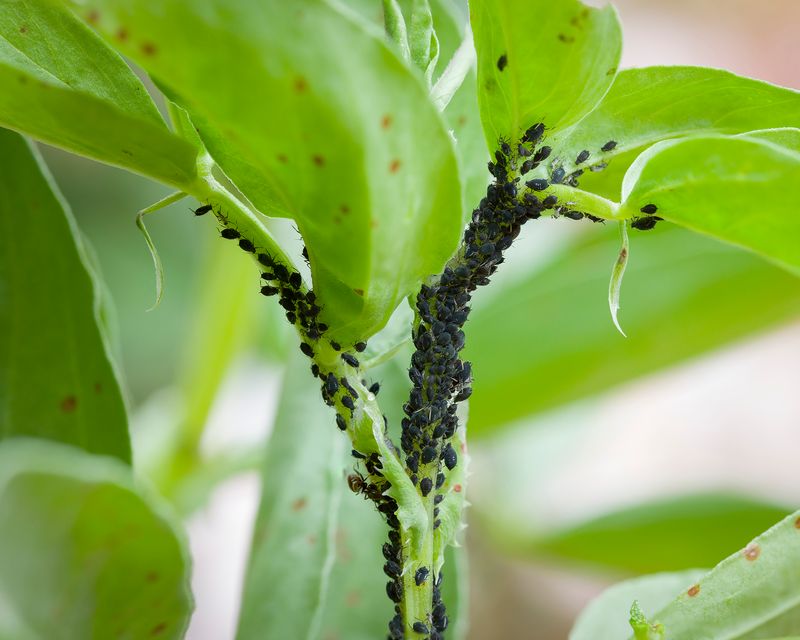
Routine pesticide applications can quietly dismantle the insect community that Bushtits depend on for food. Broad-spectrum insecticides do not distinguish between pest species and the beetles, spiders, wasps, and other invertebrates that Bushtits eat throughout the day.
A yard treated on a regular schedule may look pest-free at first glance while actually offering very little for an insect-eating bird to find.
UC IPM’s aphid guidance notes that most established, healthy plants can tolerate light to moderate aphid pressure without lasting harm, and that broad-spectrum insecticides used against aphids can kill the natural enemies that would otherwise help keep populations in check. When those natural enemies are removed, aphid populations can actually rebound faster once the pesticide effect fades.
Inspecting for lady beetles, lacewing eggs, and parasitized aphids before reaching for a spray is a practical first step that costs nothing and preserves the predator community.
Cornell Land Trust’s bird-friendly land management guidance recommends reducing or eliminating insecticide use where practical, specifically because insectivorous birds like Bushtits rely on a consistent supply of invertebrates, especially during the breeding season when feeding nestlings requires high-protein prey.
None of this means ignoring a pest problem that is genuinely damaging a plant or spreading to others. Audubon’s yard bird-friendly guidance supports a balanced approach: protect the insects that birds need by avoiding unnecessary treatments, but address real problems with targeted methods rather than blanket spraying.
The goal is a yard where routine chemical use is the exception rather than the default, not a yard where every pest sighting goes unaddressed. Tolerating some insect activity is not neglect; for a bird-friendly space, it is often the correct choice.
Identify aphids and scale before intervening
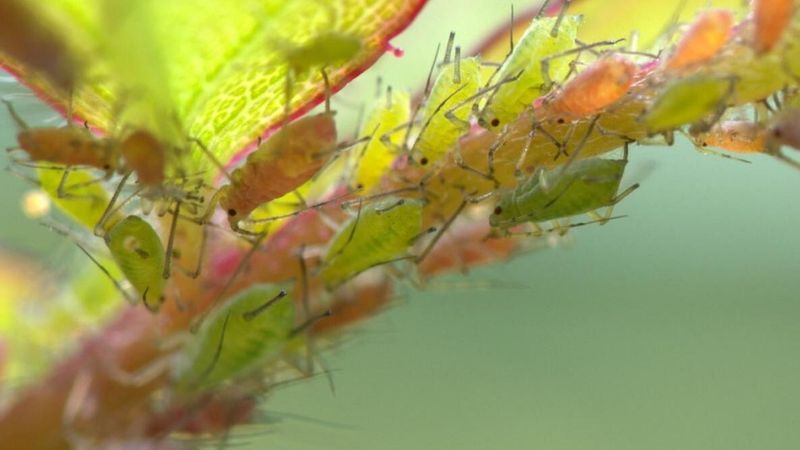
Before treating any pest, confirm what you are actually dealing with. Aphids and scale insects are both common on California landscape shrubs, but they look different, behave differently, and respond to different management approaches.
Treating the wrong pest at the wrong time can harm beneficial insects, stress the plant, and accomplish nothing useful.
For aphids, start by checking how severe the infestation is and whether natural enemies are already present. UC IPM’s aphid management guidance recommends pruning out heavily infested shoot tips where practical, knocking aphids off sturdy plants with a firm stream of water, and controlling ant activity where ants are protecting aphid colonies from predators.
If treatment is needed, contact options such as insecticidal soap or horticultural oil should be applied according to label directions, with thorough coverage of infested surfaces. Avoid applying these products to drought-stressed plants or during periods of excessive heat, as both conditions increase the risk of plant injury.
Homemade dish-soap mixtures are not a safe substitute; concentrations are unpredictable, and some formulations can damage foliage.
Scale insects require a different approach because the group is large and diverse. UC IPM’s scale management guidance explains that armored scales spend much of their lives protected beneath a hard covering that contact pesticides cannot easily penetrate, while soft scales and crawler-stage juveniles are more exposed and more vulnerable to treatment.
Identifying the scale species and its current life stage before treating determines whether a horticultural-oil application will be effective and when to time it. Dormant-season oil applications work well for some species; for others, timing to the crawler emergence is critical.
Any pesticide product, including those labeled as organic, must be used according to its label. EPA guidance on pesticide safety is clear that label directions are legally binding and exist to protect people, plants, pollinators, and wildlife.
Systemic insecticides that move through plant tissue can affect insects that feed on treated plants, including the arthropods Bushtits depend on, so they are a poor fit for a yard where you are also trying to support insect-eating birds.
Check for a hanging nest before yard work
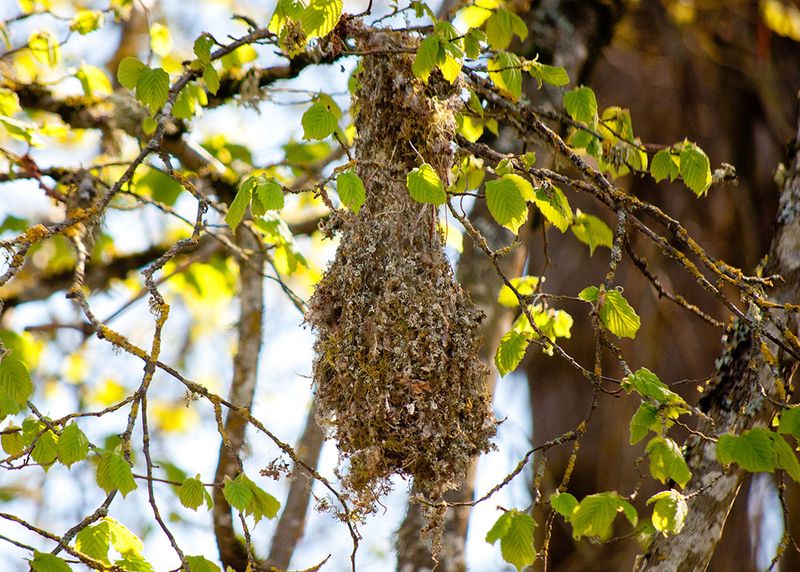
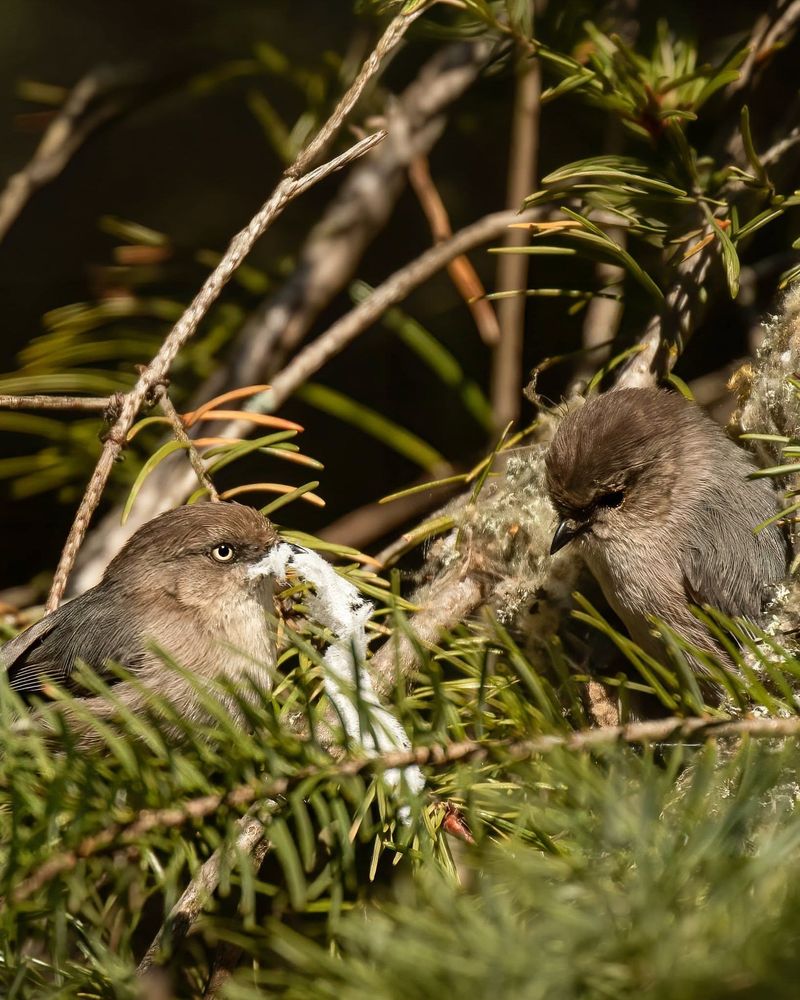
Bushtits build one of the more distinctive nests found in California gardens: a long, hanging pouch woven from spider silk, plant fibers, moss, and lichen. The finished structure can stretch six inches or more in length and sways gently in a breeze, often blending into surrounding foliage well enough that homeowners prune right past one without realizing it is there.
Cornell Lab of Ornithology documents Bushtit nesting sites ranging from roughly 3 to 100 feet above ground, placed in trees or shrubs, which means nests can appear at heights easily reached by pruning shears or a spray wand.
The California Department of Fish and Wildlife account notes that nests are often built in trees or shrubs, consistent with the suburban settings where homeowners are most likely to encounter them. Bushtits can begin nesting as early as February in warmer parts of California, so the window when an active nest might be present in your yard is longer than many people expect.
Before pruning a dense shrub or applying any spray, take a few minutes to look carefully into the canopy. A hanging pouch shape, even a partially built one, is reason to pause.
The U.S. Fish and Wildlife Service explains that active bird nests, eggs, and dependent young are protected under the Migratory Bird Treaty Act, which means disturbing or destroying an active nest can carry legal consequences regardless of whether the disturbance was intentional.
If you find an active nest, postpone any nonessential pruning or spraying until the nest is no longer in use and the young birds are no longer dependent on it. For urgent work that genuinely cannot wait, such as a safety hazard or a severe pest problem threatening the plant, contact your local wildlife agency or a licensed wildlife professional for guidance on how to proceed within the law.
Checking first takes very little time and avoids a problem that is much harder to undo.
Make Bushtits one part of a balanced yard
Putting Bushtits in their proper place in a yard-care plan is straightforward: they are a welcome, insect-eating visitor that may occasionally remove some scale insects or other small arthropods from your shrubs, but they are not a pest-control program on their own. Keeping that distinction clear makes every other decision easier.
Identify the birds carefully before assuming a flock is Bushtits. Retain or add layered shrub cover that gives them foraging surfaces, cover, and nesting opportunities.
Tolerate manageable insect activity rather than reaching for a spray by default, and inspect for natural enemies before concluding that treatment is needed. When a pest problem does warrant action, choose the most targeted option that fits the pest, the plant, and the site conditions, and follow the product label precisely.
A yard managed this way will support Bushtits, a broader community of natural enemies, and healthier plants over time. The birds will not guarantee pest-free shrubs, but a yard that welcomes them is already a more balanced place, and that is a reasonable goal in itself.