
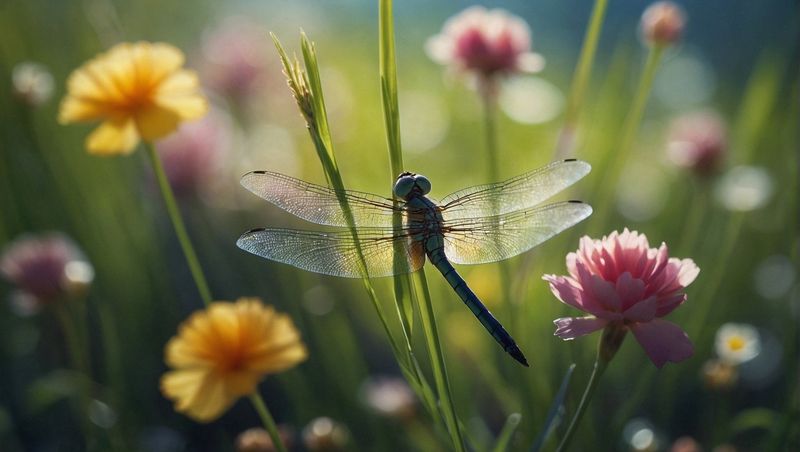
Dragonflies are one of the more satisfying things to watch in a California yard, and they do eat mosquitoes. The catch is that having dragonflies nearby does not reliably clear out the mosquitoes breeding in your yard or protect you from mosquito-borne illness.
What they can do is play a real, if modest, role as part of a broader predator community, and there are a few practical steps that help them stick around without making your mosquito problem worse.
Dragonflies may help with mosquitoes—but the title overstates their impact
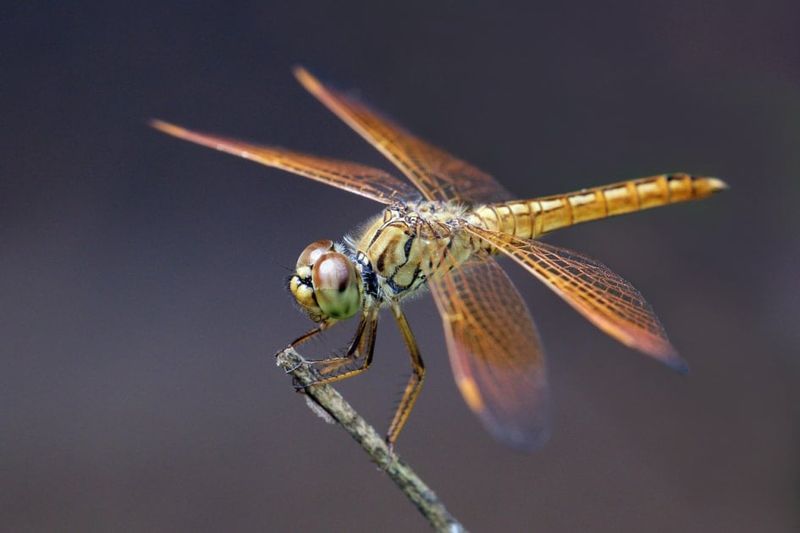
Calling dragonflies a quiet mosquito-control force sounds appealing, but the honest version is a little more complicated. Dragonflies are genuine mosquito predators at both stages of their life: aquatic nymphs prey on mosquito larvae in the water, and adult dragonflies catch flying insects, including some mosquitoes, on the wing.
That predation is real and documented, but a major review of dragonfly ecology and ecosystem services makes clear that individual hunting does not translate into reliable, yard-wide mosquito reduction.
The gap between “dragonflies eat mosquitoes” and “dragonflies control your yard’s mosquitoes” is significant. A single dragonfly may catch dozens of insects in a day, but the mosquitoes biting you on a summer evening can emerge from dozens of different sources, including neighboring properties, storm drains, and street gutters that no backyard dragonfly can reach.
Research on aquatic invertebrate predators and mosquito biocontrol consistently shows that predation effects vary widely depending on conditions, and that no single predator species has been shown to control mosquito populations at a typical landscape scale.
Dragonflies are also not a shield against mosquito-borne illness. CDC guidance on West Nile virus surveillance and control relies on source reduction, larviciding, surveillance, repellents, and coordinated vector-control programs, not backyard predators.
UC IPM’s mosquito guidance for California homeowners similarly emphasizes eliminating standing water as the most dependable homeowner action.
The practical goal here is not to replace dragonflies with skepticism. Supporting them as one part of a broader predator community is worthwhile, and the steps that help them are largely the same steps that keep your yard healthier overall.
The key is pairing that support with proven mosquito management rather than treating dragonflies as a substitute for it.
Dragonfly nymphs can prey on mosquito larvae in water
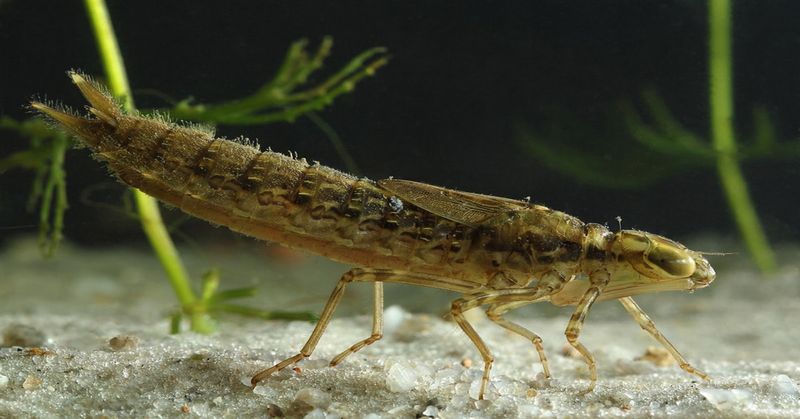
Dragonflies spend most of their lives underwater. After eggs hatch in a pond or wetland, the nymphs live and hunt beneath the surface for months or even years depending on the species.
During that time, they are active predators, and mosquito larvae are among the prey they encounter. Virginia Tech Extension’s guide to pond wildlife describes dragonfly and damselfly nymphs as important aquatic predators that consume a range of invertebrates, including mosquito larvae.
Adult dragonflies are a different story. Once they emerge and take to the air, they become generalist hunters that catch whatever flying prey happens to be available.
Mosquitoes are certainly on that menu, but so are midges, gnats, small moths, and other soft-bodied insects. Adults do not preferentially target mosquitoes over other prey, and their hunting range extends well beyond any single yard.
Nymph predation may be more directly relevant to mosquito management in some settings because larvae are concentrated in a defined water body and are easier to target than flying adults. Even so, outcomes vary considerably.
CDC guidance on larval source management notes that the effectiveness of aquatic predators depends on mosquito species, predator density, habitat structure, water quality, and competing prey. A pond with abundant alternative prey may support fewer interactions between nymphs and mosquito larvae than a simpler water body.
One more distinction worth keeping in mind: dragonfly nymphs are not selective in the way a pesticide label is. They eat what they can catch, which includes other aquatic invertebrates that are not mosquitoes.
Treating them as a precise biological tool overstates what they do. Treating them as a useful part of a functioning aquatic ecosystem is closer to accurate.
Protect dragonflies by avoiding unnecessary broad-spectrum sprays near water
The single clearest thing most California homeowners can do to help dragonflies costs nothing and requires no new equipment: stop applying broad-spectrum insecticides near ponds, drainage areas, and any part of the yard where water collects or flows. That one change removes the most common source of harm to aquatic invertebrates in suburban landscapes.
UC IPM’s guidance on keeping California water clean specifically warns that pyrethroid insecticides, including bifenthrin, cypermethrin, and permethrin, are highly toxic to aquatic animals. These products are widely sold for general yard pest control and mosquito adulticide applications, and they are not selective.
A spray applied to a lawn or fence line can reach a pond through runoff, irrigation overflow, or even foot traffic. Once pyrethroids enter a water body, they can kill aquatic invertebrates, reduce the prey populations that dragonfly nymphs depend on, and affect other non-target species downstream.
Broad-spectrum products also undermine the ecological balance that makes a yard hospitable to beneficial insects in the first place. The dragonfly ecosystem-services review notes that dragonflies occupy a position in the food web that depends on a functioning invertebrate community, both as prey and as competition.
Wiping out that community with a broad-spectrum spray does not just harm dragonflies directly; it removes the ecological conditions they need.
None of this means all pesticide use is equally harmful. Targeted applications of the right product, in the right location, at the right time, carry a different risk profile than broadcasting a pyrethroid across an entire yard.
Reading labels carefully, avoiding applications before rain, keeping products away from drainage paths, and choosing the least-toxic option that addresses the actual problem are the practical steps that protect water quality without requiring homeowners to abandon pest management entirely.
If mosquitoes are the target, the section below on Bti explains why that product is a far better fit near water than any broad-spectrum spray.
A well-designed pond can provide dragonfly breeding habitat
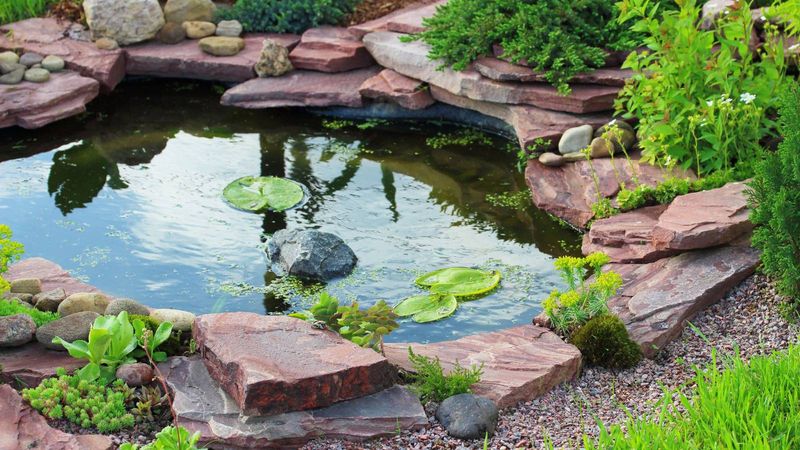
A pond does not need to be large or elaborate to support dragonflies. What matters is the combination of features that allow nymphs to develop safely and adults to hunt, perch, and eventually lay eggs.
Xerces Society’s backyard pond guidelines describe a set of design priorities that apply well to California suburban yards: shallow margins that allow nymphs to climb out during emergence, submerged or emergent aquatic vegetation for cover and oviposition, open sunny areas where adults can warm up and hunt, and sticks, rocks, or woody debris at the water’s edge that give emerging nymphs a surface to grip.
Depth variation matters. A pond with a gradual slope from very shallow at the edges to deeper at the center gives nymphs protected areas and helps moderate water temperature.
Emergent plants such as rushes, sedges, and native water iris provide structure above and below the waterline. The Xerces pond habitat PDF recommends avoiding fish, or keeping fish populations minimal, because fish readily consume dragonfly and damselfly nymphs.
That fish-free recommendation deserves a plain-language note: fish can also eat mosquito larvae. Removing fish to protect dragonfly nymphs does not automatically prevent mosquito production, and in some cases it removes another layer of larval predation.
The pond still needs active monitoring and management regardless of whether fish are present. UC Oaks research on California vernal pool habitats illustrates how aquatic predator communities are interconnected, with no single species controlling outcomes.
Perch sites for adults are easy to add and often overlooked. Tall stakes, bamboo poles, or native shrub branches placed near the water give adults a resting spot from which they can survey the area and return to hunt.
Virginia Tech’s pond wildlife guide notes that dragonflies are highly territorial and return repeatedly to preferred perches, so placing several around a pond increases the chance that adults will use the space consistently.
Keep a dragonfly pond from becoming a mosquito nursery

A pond built to attract dragonflies can just as easily become a productive mosquito breeding site if it is left unmanaged. Stagnant water, accumulated debris, and neglected containers nearby are all the conditions mosquitoes need.
The goal is to keep the habitat functional for dragonfly nymphs while preventing the still, shallow, warm water conditions that favor mosquito larvae.
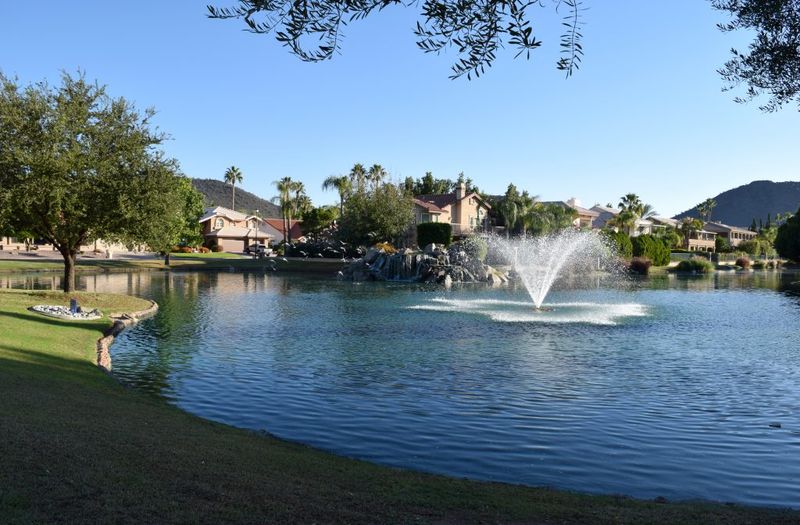
Aeration helps. A small fountain, bubbler, or recirculating pump creates surface movement that disrupts the calm water film mosquito larvae depend on for breathing.
Virginia Tech’s pond wildlife guide notes that moving water reduces mosquito production without requiring the entire pond to be turbulent. Protected margins with emergent vegetation can remain relatively calm while the open water zone stays active, which preserves habitat structure for nymphs while reducing mosquito-friendly conditions in the main body of the pond.
CDC guidance on home mosquito control recommends checking all water sources at least once a week and emptying, scrubbing, covering, or turning over anything that holds water. For a pond, the weekly check means looking for mosquito larvae or pupae near the surface, removing floating debris, and clearing any plant material that has died back and created sheltered pockets of still water.
When water cannot be drained or covered, a labeled larvicide is the appropriate next step. EPA information on Bti for mosquito control explains that Bacillus thuringiensis israelensis targets mosquito, black fly, and fungus gnat larvae specifically and does not affect other insect types such as honey bees.
Bti dunks or granules applied according to the product label are a practical option for ponds and water features that cannot be emptied. UC IPM’s California mosquito page lists Bti as one of the recommended options for treating standing water that cannot be eliminated.
Source reduction still does the dependable work across the yard
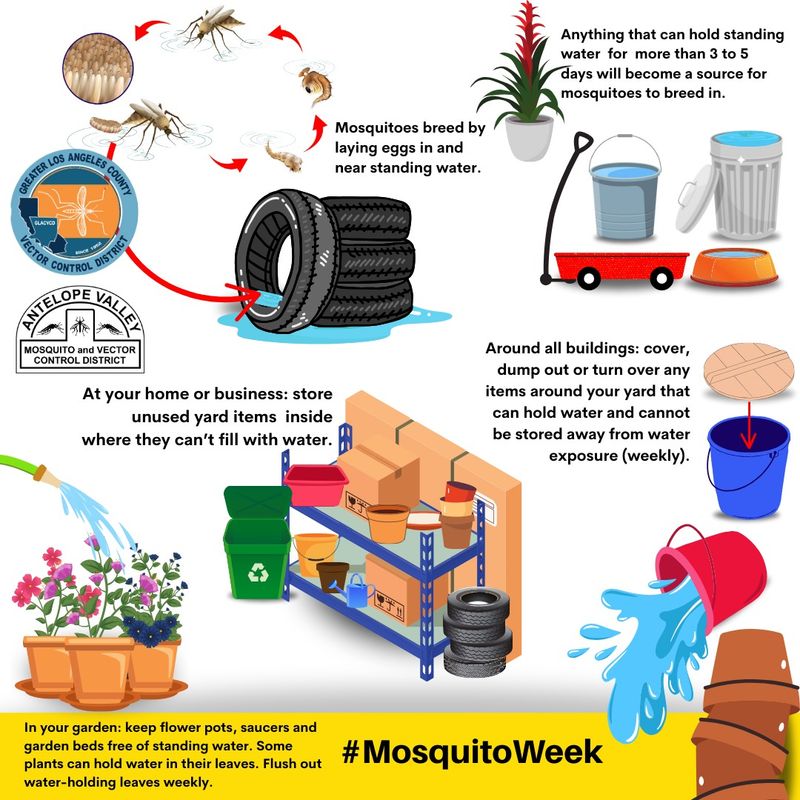
Dragonflies patrol the air above your yard, but they cannot address what is breeding in a forgotten bucket behind the shed or a flowerpot saucer that filled during the last irrigation cycle. Source reduction, the practice of finding and eliminating every place water sits and stagnates, remains the most dependable mosquito-control step available to homeowners.
No amount of dragonfly-friendly habitat replaces it.
CDC’s home mosquito-control guidance lists the most common backyard breeding sites: flowerpot saucers, toys left outside, buckets, old tires, birdbaths, trash containers, clogged gutters, and tarps that collect rainwater. Any container holding even a small amount of still water for more than a week can support mosquito development.
The fix for most of these is simple: empty them, scrub the sides to remove egg rafts, and either store them dry or turn them over between uses.
There is also a geographic reality that dragonflies cannot overcome. UC IPM notes that adult mosquitoes can travel significant distances from their breeding sites, meaning the mosquitoes landing on you in the evening may have developed in a neighbor’s yard, a nearby drainage channel, or a vacant lot down the street.
A yard full of dragonflies cannot intercept that flight path reliably.
Treating dragonfly habitat as one ecological layer in a broader plan is the right framing. That layer adds real value, but it works alongside weekly inspections and source removal, not instead of them.
A yard that eliminates unnecessary standing water, avoids broad-spectrum sprays near water, and supports a healthy insect community is genuinely better positioned, even if it is never mosquito-free.
Decide whether a pond fits California’s water and maintenance realities
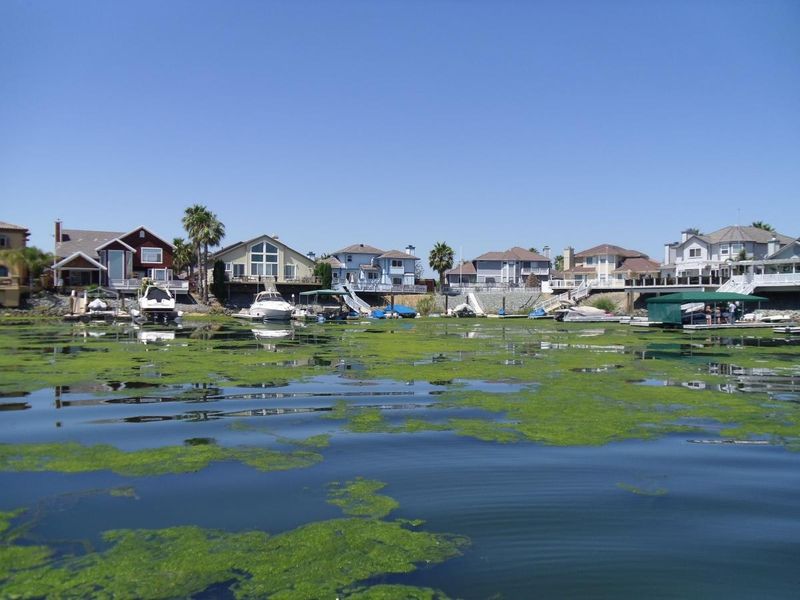
A pond can be a genuinely valuable addition to a California yard, but it is not the right choice for every property or every homeowner. Before committing to a water feature, a few California-specific realities are worth thinking through honestly.
Water use is the first consideration. California’s dry summers mean a pond loses water to evaporation at a meaningful rate, and many counties have seasonal water restrictions that affect how freely a homeowner can top off a water feature.
UC ANR’s garden notes on summer care for California native plants highlight how water management during the dry season requires active planning, not passive maintenance. A pond that is allowed to drop too low becomes a warm, concentrated, stagnant pool, which is exactly the condition that favors mosquitoes over dragonflies.
Invasive aquatic plants are a separate but serious concern. California State Parks’ aquatic weed identification resource identifies ornamental plants such as fanwort and parrotfeather as invasive species that spread from backyard ponds into California waterways.
Choosing aquatic plants carefully, using only species appropriate for your local conditions, and consulting your county’s UC Cooperative Extension office before purchasing pond plants are important steps. Never move aquatic plants, animals, or water between ponds, as this is one of the primary pathways for spreading both invasive species and aquatic pathogens.
Xerces Society’s pond guidelines also advise against purchasing dragonfly nymphs online or collecting them from wild habitats. Wild nymph collection can harm local populations, and purchased nymphs may carry pathogens or be inappropriate species for your region.
Dragonflies will colonize suitable habitat on their own when conditions are right, though their arrival depends on regional populations, nearby water, weather, and season rather than any single yard feature.
A pond that a homeowner can maintain consistently, keep filled without straining water resources, and inspect weekly is a reasonable project. One that will sit stagnant through a dry August is a mosquito habitat, not a dragonfly sanctuary.
UC IPM’s water quality guidance applies here too: a well-maintained feature protects California waterways, while a neglected one adds to the problem.
Support the predator community, then manage every breeding site
Pulling together everything above into a practical sequence makes the path forward clear. Skip unnecessary broad-spectrum sprays near any water in your yard.
If a pond fits your property and your maintenance capacity, build or maintain it with shallow edges, native aquatic vegetation, perch sites, and no fish. Check the pond and every other water-holding container once a week.
Drain, cover, or scrub what you can, and apply a labeled Bti product to any standing water that cannot be eliminated.
UC IPM’s water-clean guidance and CDC’s home mosquito-control recommendations both point toward the same conclusion: source reduction and targeted larviciding are the reliable tools. Dragonflies, birds, bats, and other predators add real ecological value, but they work best when the habitat around them is actively managed rather than left to chance.
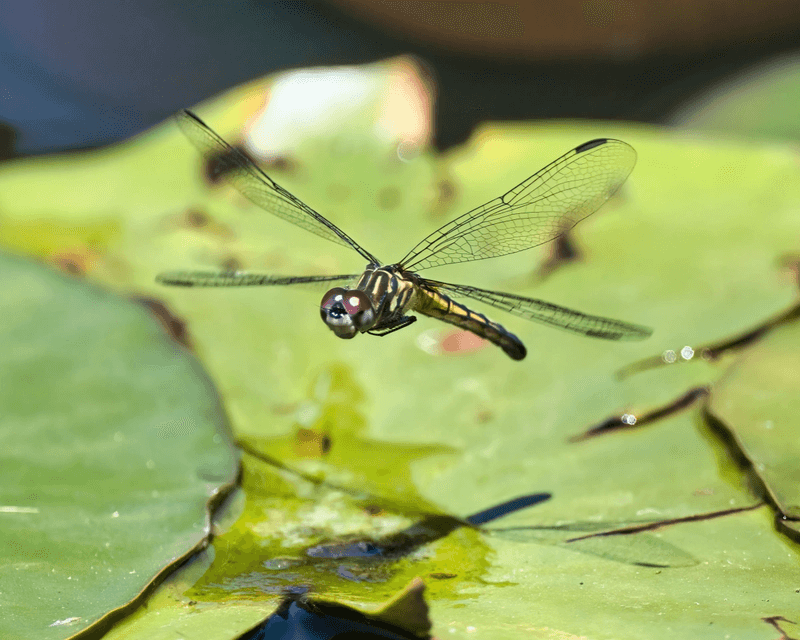
A yard that follows UC IPM’s California mosquito management steps and also supports a healthy aquatic insect community is doing more than most. The dragonflies you see patrolling on a warm afternoon are a sign that the ecosystem is functioning, not a guarantee that the mosquitoes are handled.
That distinction is what keeps the whole plan honest.