
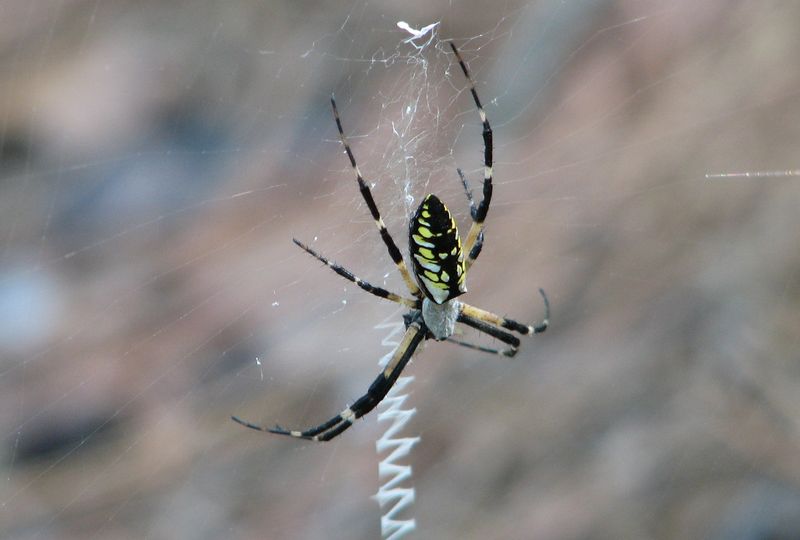
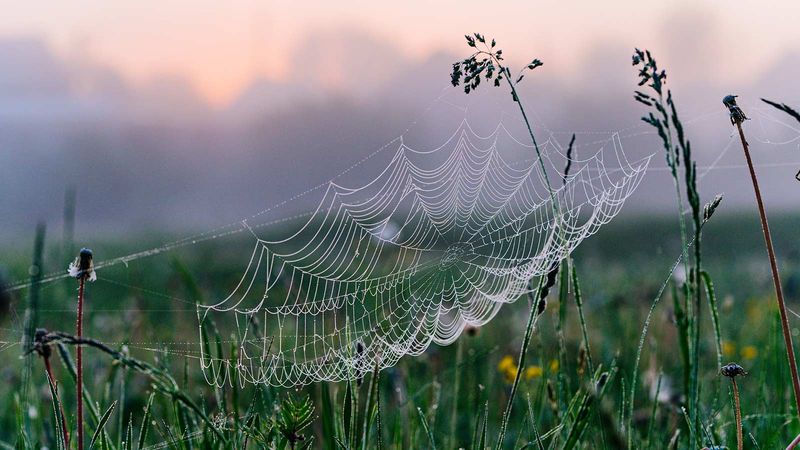
Most California homeowners grab a broom the moment they spot a large circular web stretched between the fence and the rosemary bush. That reflex costs you a free, working pest trap.
Orb-weaver spiders quietly catch mosquitoes, gnats, aphids, and other insects that fly or drift into their webs, and they do it without a single trip to the hardware store. Learning when to leave a web alone, and when it genuinely needs to go, is one of the simplest yard upgrades you can make.
California Orb-Weavers Are Garden Allies, Not Automatic Pests
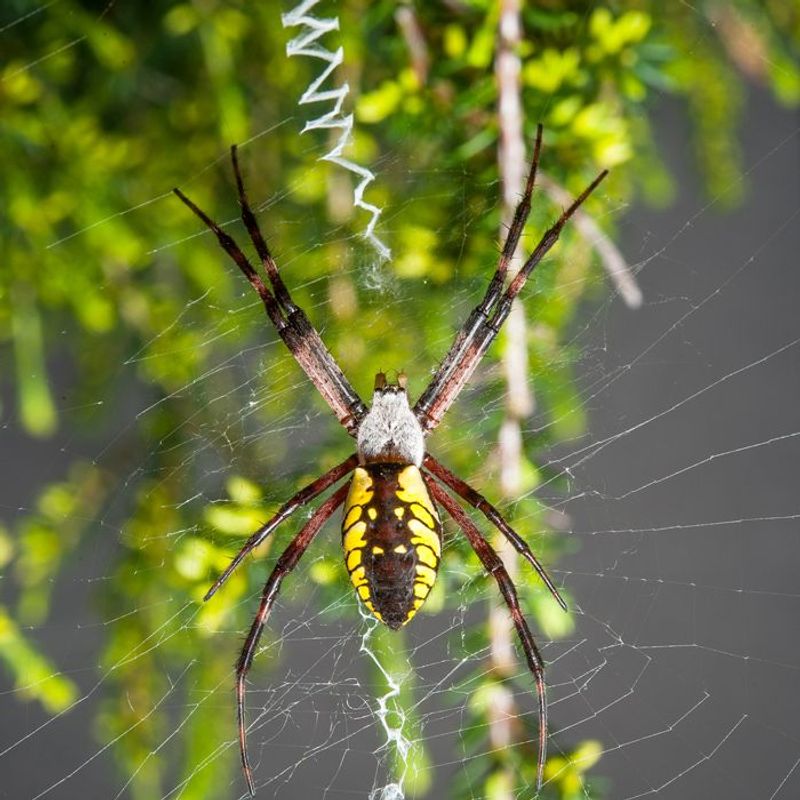
Knock down enough webs in a California garden and you start to notice the aphids and mosquitoes are still there. The web-builder you removed was working for you.
UC IPM identifies orb-weavers as beneficial predators that wait in circular webs for insects and recommends protecting them because they prey on insects and other pests. That recommendation is worth taking seriously before the next broom sweep.
The term “garden spider” gets used loosely enough to mean almost anything with legs and a web. “Orb-weaver” is more precise: it refers to members of the family Araneidae, recognized by their classic circular, radiating web with spiral silk connecting the spokes. California gardens can host several species, including western spotted orb-weavers, banded garden spiders, and silver garden orb-weavers, among others.
A common name alone is not enough to pin down which species you are looking at, so “California orb-weaver” is the safer label unless a photographed specimen has been identified by an expert.
Preserving a well-placed web can contribute to natural pest management in your yard. That is a real, documented benefit.
It is not a promise that one spider will wipe out every aphid colony or eliminate every mosquito from a patio gathering. Orb-weavers capture insects that physically encounter their webs, and those encounters depend on web placement, insect movement, and a fair bit of chance.
None of that means you are required to live with webs across every doorway or above the kids’ swing set. The goal is to stop treating every orb-weaver as a problem by default and start making deliberate choices about which webs earn a spot in the yard.
UC IPM guidance on natural enemies consistently points toward protecting beneficial predators rather than removing them reflexively, and orb-weavers fit squarely in that category.
What Orb-Weavers Can and Cannot Catch
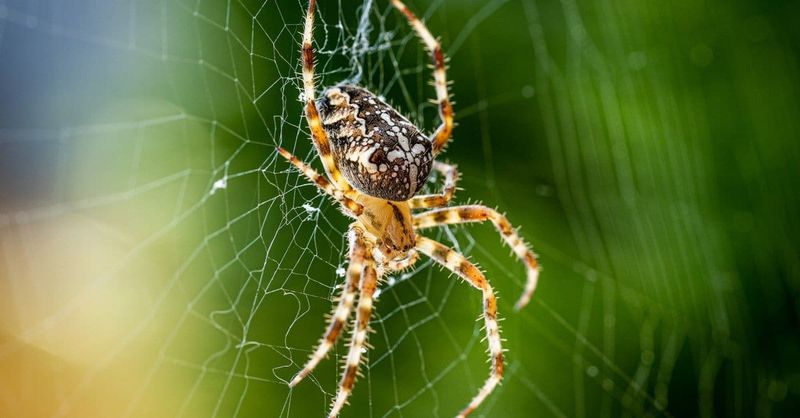
Orb-weavers are generalists. Their webs intercept whatever flies or drifts into the silk, which means the menu can include mosquitoes, gnats, small flies, moths, wasps, and yes, aphids.
UC Davis Bug Squad notes that these spiders are “not particular” about which insects get entangled, naming mosquitoes, gnats, moths, flies, and wasps among documented prey. That breadth is part of what makes them useful.
The strongest field evidence for aphid predation comes from a study of orb-weaving spiders in east Texas cotton fields, where aphids made up between 34.6% and 90% of the prey recorded for five orb-weaver species. That is a striking figure, and it confirms that aphids genuinely show up in orb-weaver diets in agricultural settings.
The study was conducted in Texas cotton, not California home gardens, so it does not measure what any particular backyard spider will catch or how many aphids it will remove from your rose bushes.
Mosquitoes and aphids also occupy different ecological spaces, and that matters for how you think about webs. Flying mosquitoes are mobile and may cross a web strung between structures.
Many aphids stay put on stems and the undersides of leaves, rarely venturing into open airspace where a web could intercept them. A web positioned among shrubs may catch some of both, but capture depends entirely on whether a given insect happens to encounter that particular web.
Prey analysis research on orb-weaving spiders also documents leafhoppers, beetles, hymenopterans, and other non-pest arthropods in their diets. Pollinators, parasitoid wasps, and other beneficial insects can end up in the silk just as easily as mosquitoes can.
Orb-weavers are not selective pest-control agents, and factoring that in gives you a more honest picture of what you are preserving when you leave a web in place.
Give Web-Building Spiders the Structure They Need
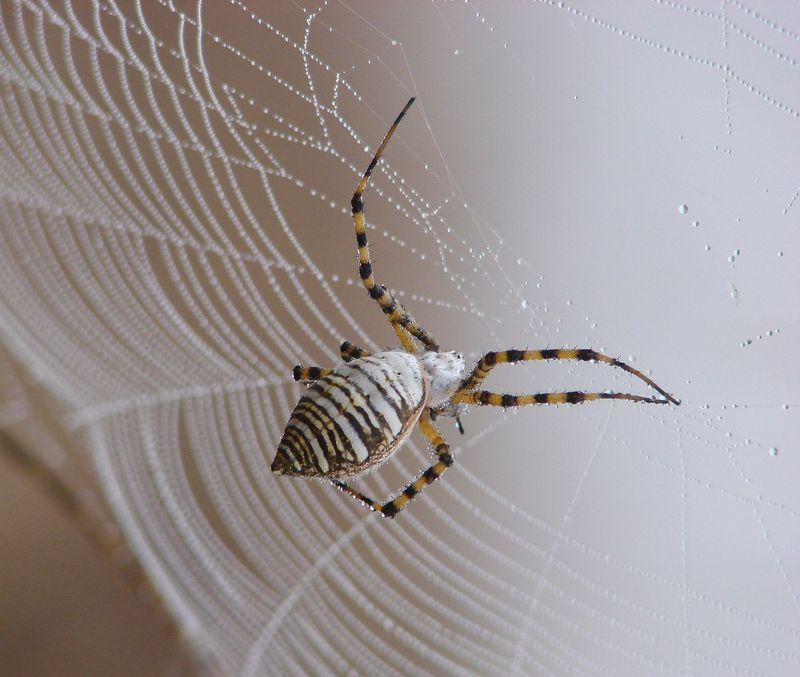
Orb-weavers do not need much from you beyond something solid to anchor their silk. UC Cooperative Extension materials describe orb spiders building webs wherever structural support is available, including outdoor lights, trees, bushes, tall grasses, and other fixtures.
Fences, trellises, poles, pergola posts, and the gaps between dense shrubs all qualify. If your yard already has any of these features, you are already providing habitat.
Keeping some native or drought-tolerant shrubs in low-traffic corners of the yard gives orb-weavers both anchor points and nearby insect activity to draw from. Tall ornamental grasses along a fence line, a trellis with climbing vines, or a row of unclipped native shrubs near the property edge can all serve this purpose without requiring any new purchases or major landscaping work.
The key is preserving a few zones where the vegetation is dense enough and the foot traffic low enough that a web can stay intact for more than a day.
Web location, orientation, and surrounding insect movement all influence which prey encounter a given web. Prey analysis research confirms that diet varies by species, season, and setting, which means no single placement reliably outperforms another across all yards and conditions.
Rather than optimizing for a specific spot, focus on having several suitable zones available so spiders can establish where conditions suit them.
UC IPM guidance on common garden spiders reinforces the value of supporting these predators as part of a broader habitat approach. Retaining leaf litter, avoiding excessive tidying in low-traffic corners, and leaving some vegetation unpruned through the warmer months all contribute to a yard that shelters orb-weavers without requiring you to sacrifice access or safety anywhere you actually use the space.
Protect Their Work by Reducing Unnecessary Sprays
Leaving a web in place and then spraying broad-spectrum insecticide nearby is roughly equivalent to installing a birdhouse and then running a leaf blower through it twice a week. UC IPM recommends encouraging natural enemies by avoiding pesticides that harm them, and orb-weavers rank among the natural enemies that routine broad-spectrum treatments put at risk.
Reducing unnecessary applications is one of the most direct ways to protect the beneficial predators already working in your yard.
The concern does not stop at outright killing a spider. A laboratory study on nonlethal pesticide effects found that exposure to spinosad disrupted web construction and reduced prey-capture activity in an orb-weaving spider even when the spider survived the exposure.
A spider that is alive but building malformed webs is not providing the same pest-management benefit as a spider operating normally. That study used laboratory conditions, and its results should not be extended to every pesticide, dose, or outdoor setting, but the principle stands: survival after a spray does not mean full function after a spray.
Avoiding routine or unnecessary broad-spectrum applications where possible is the practical takeaway. That is not a blanket ban on every pesticide treatment.
Targeted controls applied at the right time for a confirmed pest problem can still be justified, and when they are, following label directions is non-negotiable. The shift worth making is from default-spray-first to assess-first, so that pesticides are used because a specific pest problem warrants them rather than as a precautionary habit.
Thinking through the pest-control sequence in this order, assess the problem, try the least disruptive effective option, and use a pesticide only when simpler methods fall short, keeps orb-weavers functional and reduces the overall chemical load in the yard at the same time.
Use Separate IPM Steps for Aphids and Mosquitoes
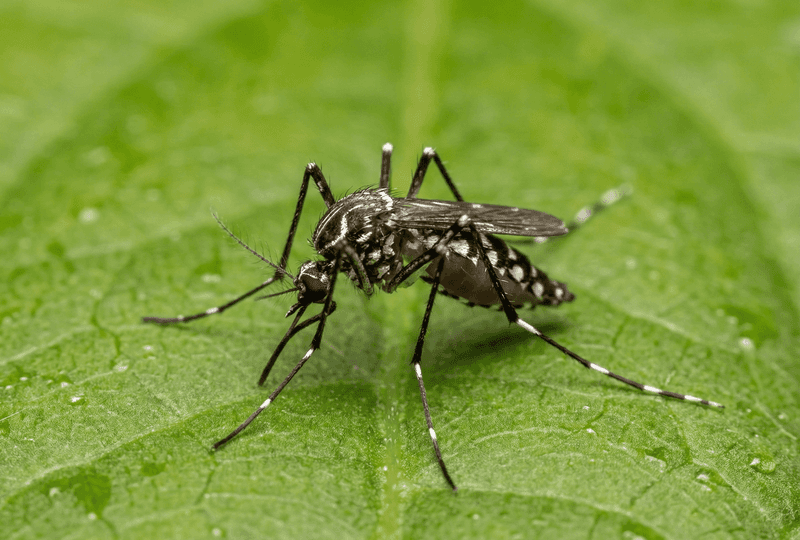
Orb-weavers can intercept some aphids and mosquitoes, but they cannot be counted on to solve either problem when populations get out of hand. Both pests need their own targeted response, and the least disruptive options are usually the most practical starting point.
For aphids, the first question is whether the infestation is actually damaging the plant. UC IPM notes that aphids often cause little damage to established plants and that nonchemical management is generally preferred.
On sturdy plants, a strong stream of water knocks aphids off stems and leaf undersides effectively. Avoiding excess nitrogen fertilizer also matters, because high-nitrogen growth produces the soft, tender shoots aphids prefer.
When populations are heavy enough to warrant more intervention, insecticidal soaps or horticultural oils are options, but they come with cautions: do not apply to drought-stressed plants, avoid treatment during very hot conditions, and always follow the label. California summers make those cautions especially relevant.
Mosquito control works on a different principle entirely. Adult mosquitoes may occasionally fly into a web, but the more dependable household intervention is eliminating the standing water where they breed.
Gutters that hold debris and moisture, buckets left out after rain, plant saucers, birdbaths that go unchanged, toys, tarps, and anything else that collects water for more than a few days can produce mosquitoes. Emptying, scrubbing, or covering those containers regularly removes the problem at its source.
For standing water that cannot be emptied, such as ornamental ponds or rain barrels, the EPA identifies Bti products as a labeled option for mosquito larvae in suitable standing water when used according to label directions. Bti targets larvae, not adult mosquitoes, and it does not replace screens, repellents, or public-health mosquito management programs in areas with disease risk.
Treating larvae where they breed is simply a more efficient point of control than trying to intercept adults after they have already emerged.
Remove Webs From High-Traffic Areas Without Blanket Sprays
Supporting orb-weavers does not mean accepting a web across the front door or over the path to the backyard gate. Some web locations are genuinely inconvenient or create safety concerns, and removing them is a reasonable response.
The goal is to make that removal targeted rather than reflexive, and to skip the pesticide can when a broom or garden hose will do the job.
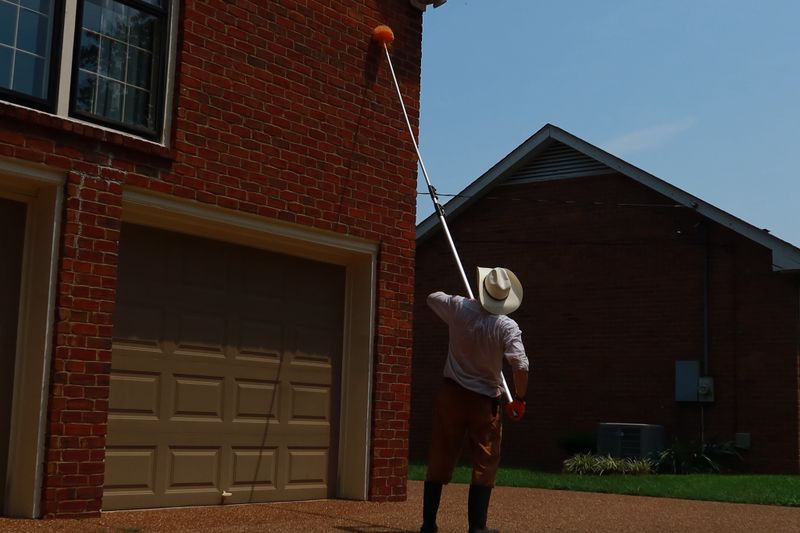
UC IPM recommends physical web removal and notes that pesticides are generally unnecessary for ordinary outdoor spiders. Doorways, walkways, children’s play areas, and frequently used outdoor seating are all reasonable places to clear a web when one appears.
A broom or a light spray from the hose takes the web down without introducing any chemicals to the area. Use whichever tool is handy and move on.
One thing worth being clear about: removing a web with a broom is not the same as relocating the spider. The spider may or may not remain in the area, and there is no reliable way to guarantee it rebuilds in a more convenient spot.
If relocating a spider to a specific location is the goal, that requires separately verified guidance rather than a simple web removal.
UC IPM guidance on common garden spiders notes that most orb-weavers are unlikely to bite unless handled or trapped against skin. That is reassuring context, but it does not mean every spider you encounter outdoors should be picked up or examined closely.
Unidentified spiders should not be handled. If a spider’s appearance is unfamiliar or the web shape does not match the large, orderly circular pattern typical of orb-weavers, leave it alone and observe from a distance before deciding how to respond.
Physical web removal, not a pesticide treatment, is the appropriate first step for any ordinary outdoor spider in a high-traffic spot.
Recognize the Limits—and the Safety Difference
Not every spider in a California yard is an orb-weaver, and not every large or colorful spider is harmless. Getting that distinction right matters for both safety and stewardship.
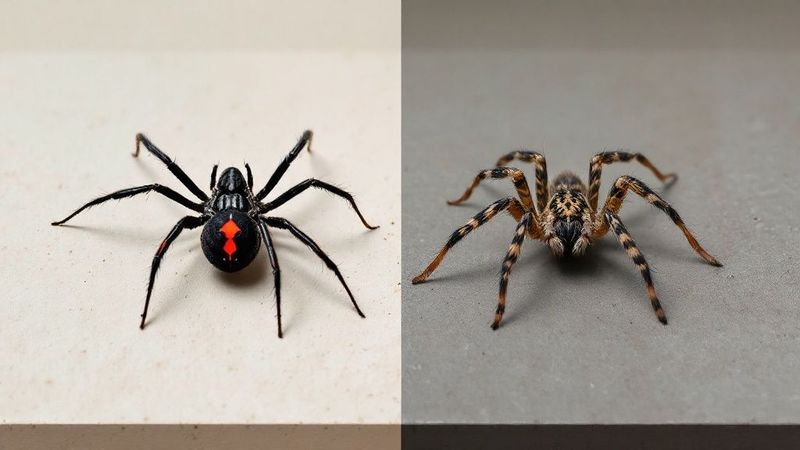
UC IPM identifies the black widow as California’s principal medically significant spider and describes it as typically occupying sheltered, dry, undisturbed places: woodpiles, garage corners, dense ground cover, and the undersides of outdoor furniture. Its web is irregular and tangled, not the large, symmetric, geometric structure that orb-weavers produce in vegetation and between outdoor structures.
Size and color are not reliable identifiers. A large, boldly patterned spider sitting in a geometric web among your shrubs is likely an orb-weaver.
A spider in a dark, sheltered corner with a messy, asymmetric web deserves more caution. When in doubt, do not handle it.
UC IPM guidance on common garden spiders makes clear that common name identification alone is not sufficient for precise species confirmation, and that caution around unidentified spiders is always warranted.
For yard management, a clear and workable framework looks like this: preserve webs that appear in low-traffic zones where the geometric orb pattern is visible and the location does not create a safety or access problem. Reduce routine broad-spectrum pesticide applications where you can.
Remove webs that block doorways or walkways with a broom or hose, not a spray can. Address aphids with the least disruptive effective method when plant damage warrants it, starting with water and avoiding excess nitrogen.
For mosquitoes, remove standing water first, and consider labeled Bti treatments for larvae in water that cannot be emptied. UC IPM aphid guidance and EPA mosquito resources both reinforce that spiders contribute to a healthy yard ecosystem without replacing any of these targeted controls.
The orb-weaver strung between your trellis posts is doing its part; the rest of the work still belongs to you.