
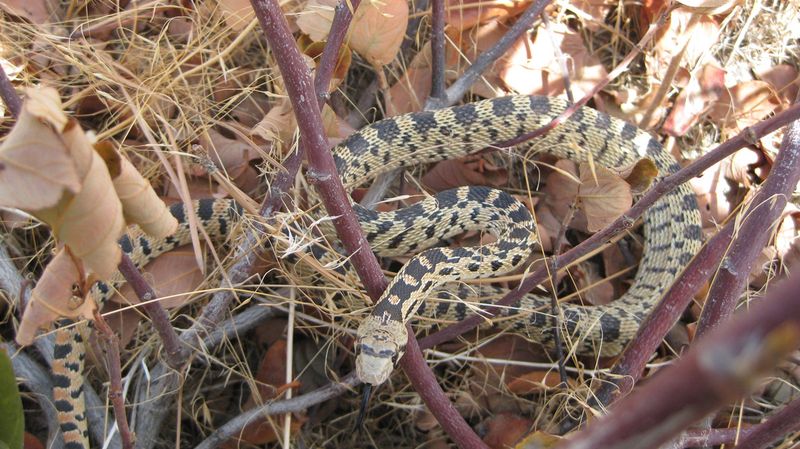
Most California homeowners who spot a large, hissing snake in the yard reach for a shovel, not a field guide. That instinct is understandable, but it may be costing you one of the most useful native predators your property can have.
California gopher snakes eat the pocket gophers, mice, and rats that tunnel through lawns and chew through roots, making them worth a second look before any drastic action. The catch is that one snake will not solve a serious rodent problem on its own, and understanding that distinction changes how you manage both the snake and the pests.
A gopher snake can help, but it will not clear your yard
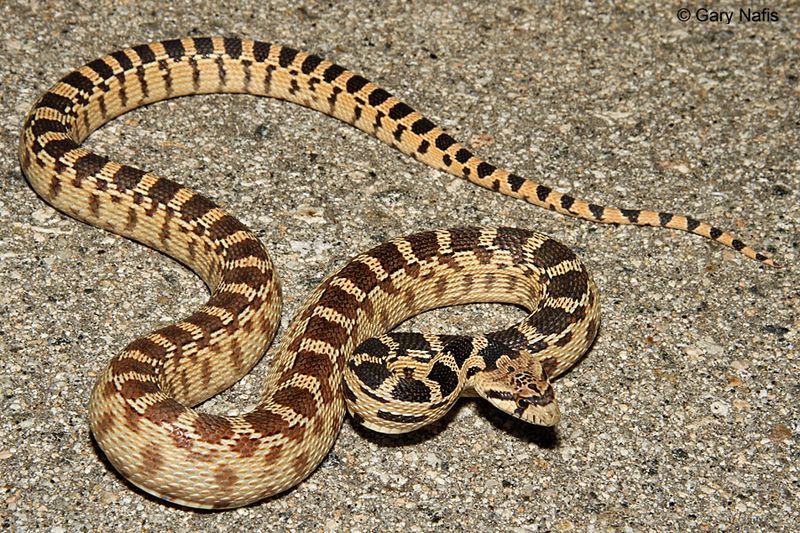
Spend enough time in a California yard and you will eventually cross paths with a thick-bodied snake wearing a pattern of brown blotches on a tan or yellowish background. That is almost certainly a gopher snake, one of the state’s native nonvenomous constrictors, and it belongs in the landscape far more than most people realize.
National Park Service documentation describes gopher snakes as common residents of open woodland, grassland, agricultural areas, and suburban yards, where they actively hunt small mammals by following scent trails into burrows and tight spaces most other predators cannot reach.
A naturally occurring snake like this deserves tolerance. It did not wander in from a pet store or a neighbor’s collection; it is part of the local ecosystem doing what it evolved to do.
The California Department of Fish and Wildlife recognizes gopher snakes as native wildlife, and killing one unnecessarily removes a predator that took years to establish a home range in your area.
Tolerance, however, is not the same as a guarantee. UC IPM guidance on pocket gophers states plainly that natural predators, including snakes, usually cannot reduce gopher populations enough to keep them below damaging levels, especially in small areas like residential yards.
A single snake may eat several rodents over a season and apply real predation pressure, but fresh mounds can still appear, plants can still get chewed, and the snake will move on when it chooses.
The practical takeaway for California homeowners is this: leave a correctly identified gopher snake alone, because it is a useful native predator that costs you nothing to keep. At the same time, build your rodent management plan around direct controls, and treat the snake as a welcome bonus rather than your primary solution.
What gopher snakes actually hunt underground
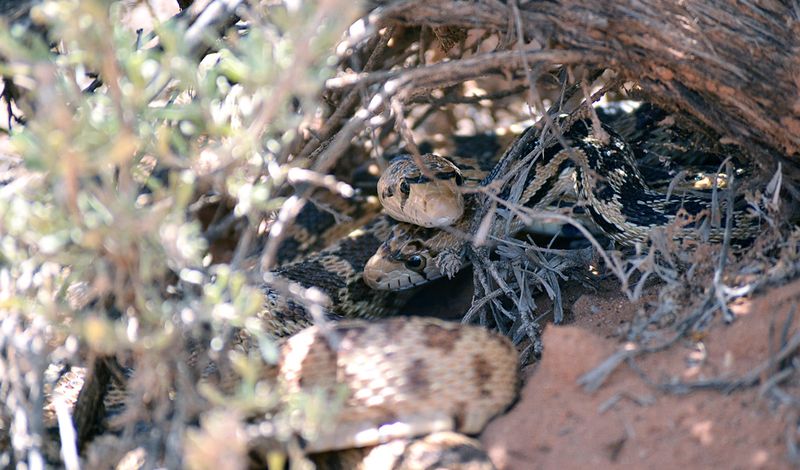
Pocket gophers are the prey most commonly associated with gopher snakes, and the name is not accidental. CaliforniaHerps documentation of the Pacific gopher snake confirms that small mammals, especially pocket gophers, moles, rabbits, and mice, make up the core of the diet.
The snake’s slender, muscular body is well suited to following prey directly into underground tunnels, which means it can reach rodents in places where traps and other controls are harder to place effectively.
The diet does not stop at gophers, though. NPS natural history records document gopher snakes also taking rats, birds, eggs, lizards, and insects, with prey selection shifting based on the snake’s size, the season, and what is locally available.
A younger, smaller snake tends to pursue lizards and large insects, while a mature adult is capable of taking rabbits and roof rats. This broad appetite makes the snake a generalist predator, not a specialized gopher exterminator.
That distinction matters for setting realistic expectations. Because a gopher snake hunts whatever prey it encounters underground or on the surface, its presence may reduce several kinds of pest activity at once, or it may spend a week eating birds’ eggs with no effect on your gopher mounds at all.
NPS accounts of Pacific gopher snake behavior note that the snake actively enters rodent burrows in search of prey, which is genuinely useful, but entering a burrow and eliminating a breeding population are very different outcomes.
Homeowners who understand this range of hunting behavior will not be surprised when gopher mounds reappear after a snake has been active in the yard. The snake is doing real ecological work; it just cannot outpace a reproducing rodent colony on its own, and it was never designed to.
How to respond when a snake resembles a rattlesnake
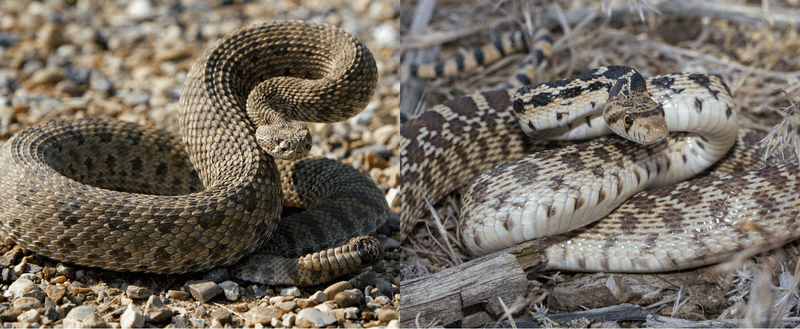
A gopher snake that feels cornered puts on a convincing show. NPS descriptions of gopher snake defensive behavior confirm that the snake may flatten its head into a wider shape, hiss loudly, inflate its body, and vibrate its tail rapidly against dry leaves or grass, producing a buzzing sound that is easy to mistake for a rattle.
The performance is effective enough that many experienced outdoors people have backed away from gopher snakes convinced they were looking at a rattlesnake.
The problem is that none of those visual cues are reliable identification tools when you are standing a few feet away from a defensive snake. Head shape alone is not safe to use: gopher snakes can flatten and widen their heads when threatened, which temporarily gives them the triangular profile often associated with pit vipers.
CDFW rattlesnake identification guidance cautions against relying on a brief sighting, a photograph taken at a distance, or a single physical feature to decide whether a snake is venomous. A coiled, partly hidden, or agitated snake is especially difficult to assess correctly.
The safest response is always the same regardless of what you think you are looking at: give the snake space and do not attempt to touch, catch, corner, or kill it. CDFW human-wildlife conflict guidance for snakes recommends keeping people and pets away from any unidentified snake and waiting for it to move on, which most snakes will do once the perceived threat is gone.
A wild gopher snake is nonvenomous, but any wild snake may bite defensively if grabbed or cornered, and a bite from a large gopher snake is not a minor inconvenience.
If a snake is inside a structure, near a doorway, or in a location where children or pets cannot safely avoid it, contact your local animal control agency, CDFW, or a qualified wildlife professional rather than attempting removal yourself. CDFW rattlesnake safety resources include regional contacts for situations where a snake cannot simply be left alone.
The goal in any encounter is distance first, identification second, and professional help whenever the situation goes beyond a brief sighting in an open area of the yard.
Set realistic expectations for natural rodent control
Protecting a gopher snake in your yard is a reasonable, ecologically sound choice. Expecting it to solve your rodent problem is a different matter entirely.
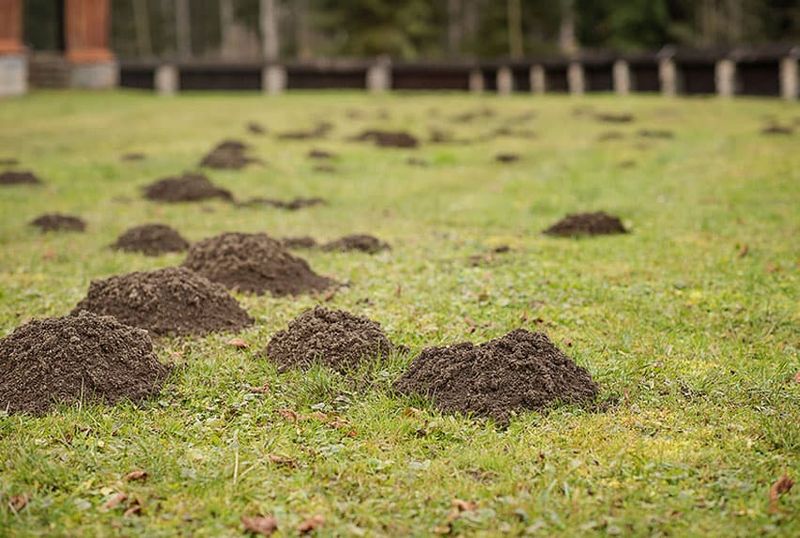
UC IPM’s pocket gopher management guidance is direct on this point: natural predators, including snakes, hawks, and owls, rarely reduce pocket gopher populations to the level needed to stop plant damage, particularly in the confined area of a residential yard. Pocket gophers reproduce quickly, and a single breeding pair can replace losses faster than most predators can hunt.
Fresh mounds appearing while a gopher snake is active in the yard are not a sign that the snake is failing or that something is wrong with your approach. They are a sign that the rodent population is large enough, or reproducing fast enough, that one predator cannot keep pace.
The snake may be removing individual animals regularly and still leave visible evidence of rodent activity throughout the season.
Sanitation measures address the food and shelter side of the problem directly, without depending on the snake’s hunting schedule. Securing garbage cans, storing pet food in sealed containers, cleaning up spilled birdseed promptly, and sealing gaps in sheds and fences all reduce the resources that support large rodent populations.
University of Arizona Cooperative Extension guidance on rodent management identifies these sanitation steps as foundational controls that reduce rodent pressure regardless of what predators are present.
Structural exclusion adds another layer. The National Park Service Rodent Exclusion Manual outlines methods for sealing building openings and entry points that rodents use to move between outdoor and indoor spaces.
Combining sanitation and exclusion does not train or reward the gopher snake; it simply removes conditions that allow rodent populations to grow faster than any predator can control them.
Why rodenticide can threaten the snakes you want to preserve
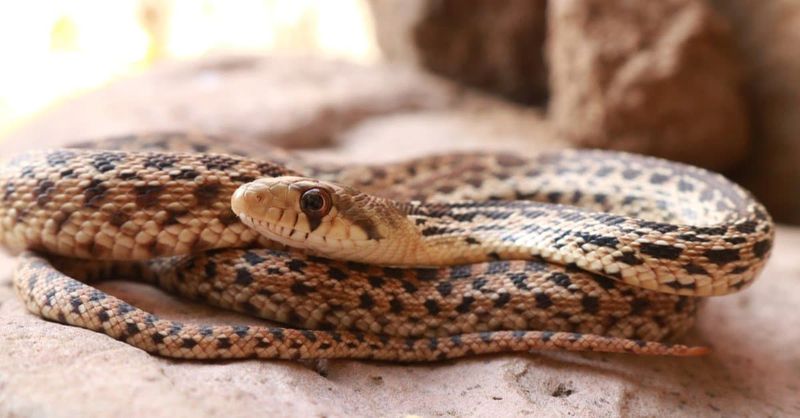
Rodent poison seems like a straightforward fix when gophers and rats are causing real damage, but it carries a risk most homeowners do not anticipate: the poisoned animal does not die immediately. It remains active in the burrow or yard for hours or days, and during that time it is easy prey for a hunting snake.
A gopher snake that catches and eats a rodent that has already consumed a rodenticide is exposed to the same compound through a process called secondary poisoning.
A published population model examining Great Basin gopher snakes found that consuming poisoned pocket gophers could produce substantial long-term harm at the population level. The modeled outcomes ranged from a 35.3% population reduction over 25 years in a low-density scenario to a 50% reduction in adult snakes in a high-density poisoning scenario.
These are modeled projections for a specific Great Basin population, not measurements taken in a California suburban yard, and they cannot predict the exact effect on any particular California snake or neighborhood. What they do establish is that the risk of serious, cumulative harm from secondary poisoning is plausible and worth taking seriously.
Never use rodent poison on the assumption that a gopher snake will safely consume the poisoned animal and be unaffected. That logic runs directly against what the available evidence suggests.
UC IPM’s pocket gopher pest note discusses registered control products and notes that product labels and current California regulations govern legal use, but legal availability is not the same as safety for nontarget wildlife.
UCANR urban landscape guidance on managing pocket gophers recommends reviewing label requirements carefully and considering the full range of nontarget animals, including snakes, raptors, and pets, before selecting a control method. If rodenticide use is unavoidable, tamper-resistant bait stations placed according to label directions reduce, though do not eliminate, the risk of secondary exposure to wildlife.
Protect plants with targeted gopher controls
When gophers are actively destroying plants, waiting for a snake to solve the problem is not a workable plan. The first step is confirming the pest: fresh pocket gopher mounds are dark, crescent-shaped, and asymmetrical, with a plugged exit hole off to one side.
Rat or mole activity looks different, and correctly identifying the culprit determines which control method will actually work.
UC IPM’s pest note on pocket gophers identifies exclusion and trapping as the most reliable integrated management tools for residential situations. Trapping is effective when done correctly: place traps in the main tunnel, not in a lateral branch, and check them frequently.
Gopher traps require some practice but produce results without introducing toxins into the yard’s food web.
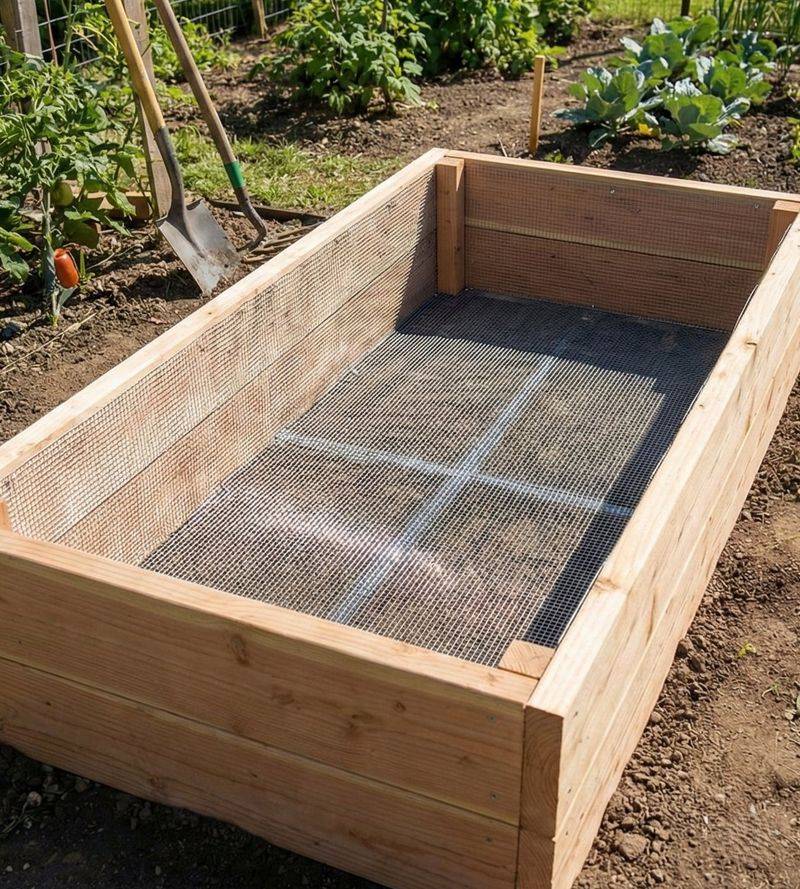
Physical exclusion protects high-value plants even when gophers are actively present. UC Master Gardeners of San Luis Obispo County recommend lining planting holes and raised beds with hardware cloth or aviary wire, buried roughly two feet deep, with the mesh folded outward at the bottom to prevent gophers from digging beneath it.
The exact dimensions depend on the plant size, root spread, and bed configuration, so adjust barrier measurements to fit each situation rather than using a single standard depth for everything.
UCANR’s urban landscape gopher guidance also notes that wire baskets work well for individual trees and shrubs planted in gopher-active soil, with the basket sized to allow several years of root growth before the roots extend beyond the protected zone. Pre-formed gopher baskets are sold at many California nurseries and garden centers, making this a practical option even for homeowners who are not comfortable with custom mesh fabrication.
These controls address the infestation directly and protect the plants you care about. UC IPM’s integrated approach to pocket gopher management is clear that exclusion and trapping are not methods for attracting or supporting gopher snakes; they are tools for limiting damage when a rodent population has grown beyond what natural predation can manage.
A gopher snake in the yard and a hardware cloth basket under your rose bed are not competing strategies – they address different parts of the same problem.
Support a naturally occurring snake without creating new risks
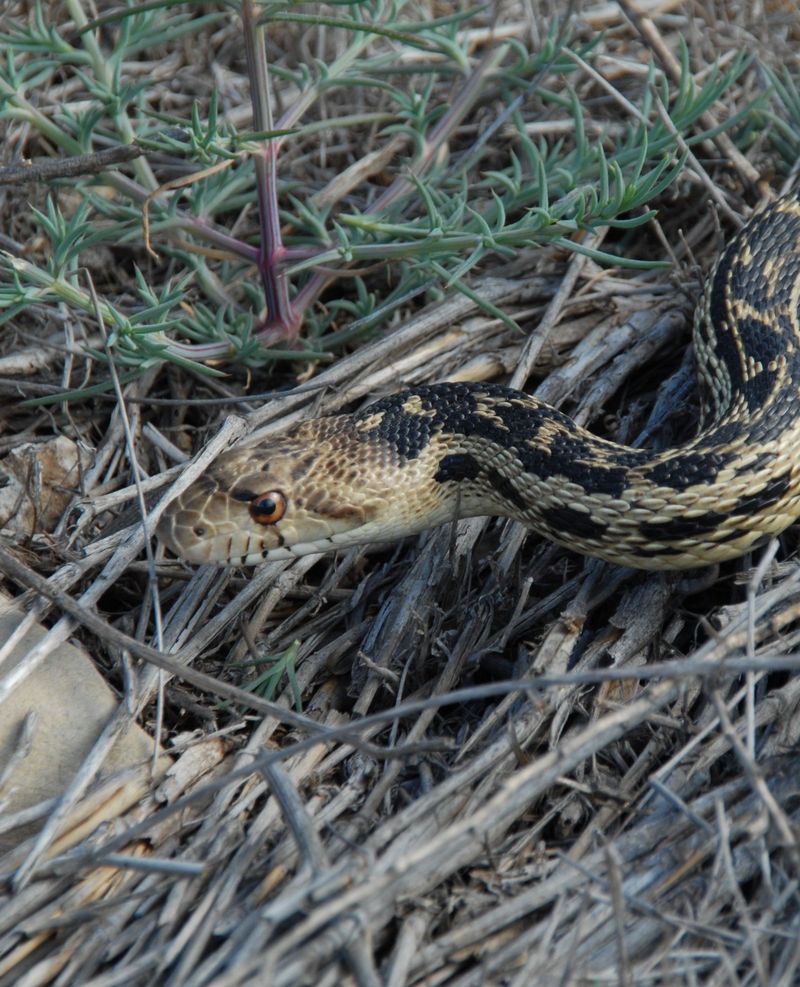
Genuine support for a gopher snake in your yard requires very little effort. The most useful thing you can do is leave it alone when it is not posing an immediate safety concern.
CDFW human-wildlife conflict guidance recommends giving wild snakes space and allowing them to move through the yard on their own schedule, which they will do without any encouragement from you. A gopher snake that finds suitable prey and cover in your yard may return seasonally; one that is disturbed repeatedly will simply establish its range elsewhere.
Several well-meaning actions can cause problems even when the intention is to help. Do not feed a wild gopher snake or offer live rodents to encourage it to stay; this creates dependency and can attract other wildlife you did not intend to invite.
Avoid building large, unmanaged brush piles, rock stacks, or wood debris near walkways, doors, or children’s play areas. UC IPM rattlesnake management guidance notes that heavy brush, rock piles, and lumber stacks provide cover not only for nonvenomous snakes but also for rattlesnakes and rodents, which creates the opposite of the safe coexistence you are trying to achieve.
Do not attempt to capture, transport, or relocate a gopher snake yourself, even if you believe you are moving it to a better location. CDFW scientific collecting permit requirements govern the taking and possession of native wildlife, and native reptile propagation and commercial possession also require separate permits under California rules.
Moving a snake without proper authorization can violate state law and may harm the animal by dropping it into unfamiliar territory with no established burrow access or prey knowledge.
When a snake is in a location that genuinely cannot be avoided, such as inside a garage or under a doorstep where young children play, contact your local animal control agency, CDFW, or a licensed wildlife professional. Tolerance protects a native predator that took years to find your yard; targeted exclusion and trapping protect the plants and spaces that matter most to you.
Both approaches working together accomplish more than either one alone – and the snake, for its part, just wants to hunt in peace.