
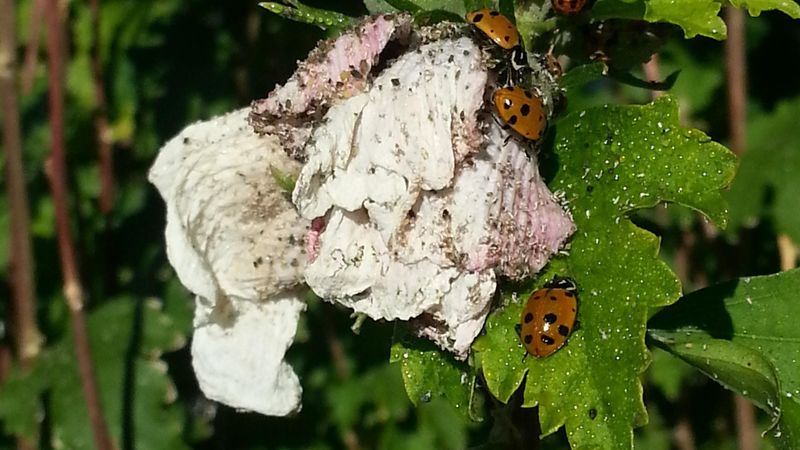
Every California rose grower knows the frustration of finding a new flush of growth coated in sticky, crowded aphids. What many gardeners miss is that a small, spotted beetle and its odd-looking larvae may already be working the same plant, quietly reducing that population without any help from a spray bottle.
Lady beetles are genuinely useful allies, but they work on their own schedule and their own terms. Understanding what they actually do, and what gets in their way, is the most practical thing you can do for your roses this season.
Lady beetles can help, but they will not guarantee a summer-long cleanup
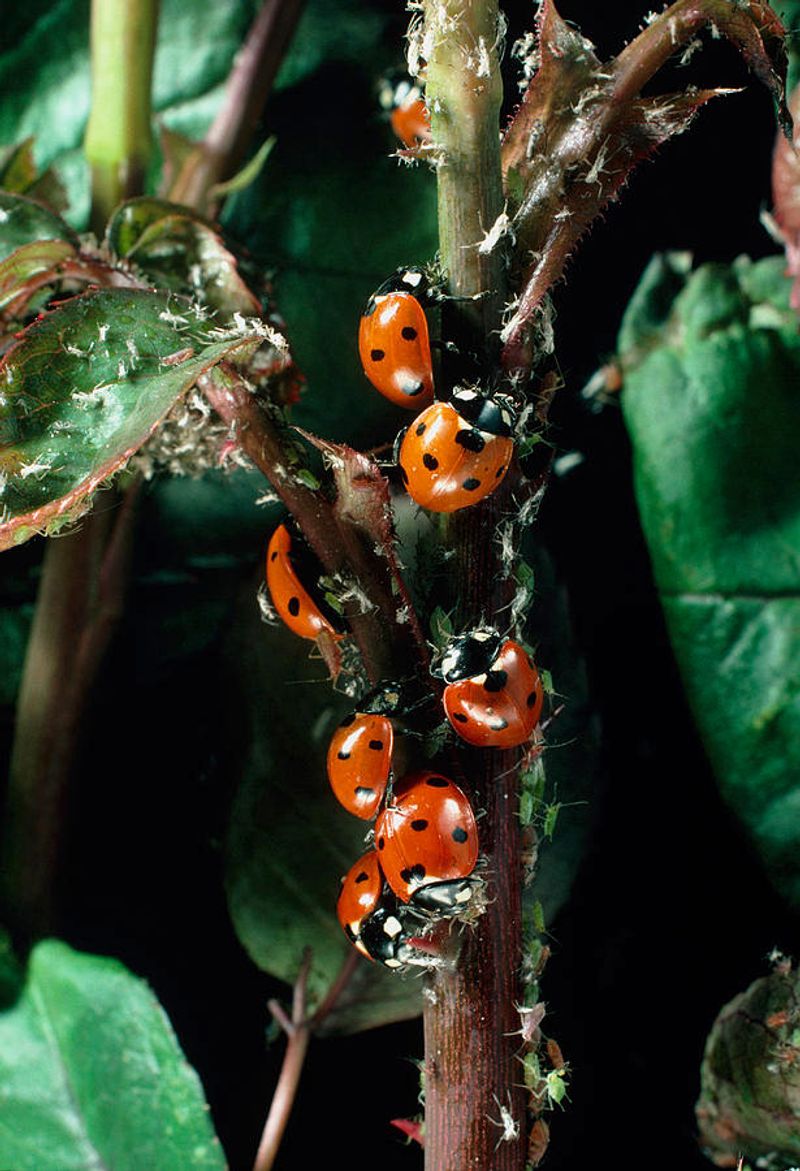
Aphids have a reputation for arriving overnight and multiplying faster than anything a gardener can reasonably manage. On California roses, that reputation is mostly earned in spring and early summer, when soft new growth gives aphids ideal conditions to reproduce.
UC IPM guidance on roses describes aphids as a major pest during this window, roughly six weeks in most California areas, with populations often declining naturally as temperatures climb into summer heat.
Lady beetles can become important aphid predators during that same period. They often appear as aphid populations rise, though the timing depends on local conditions, the season, and what else is happening in the garden.
Expecting a fixed sequence where beetles always arrive just in time to rescue a rose oversimplifies how biological control actually works.
What the evidence does support is that established roses commonly tolerate light to moderate aphid numbers without significant harm. A few aphids on an otherwise healthy plant is not a crisis.
Natural enemies, including lady beetles, lacewings, and parasitic wasps, may bring populations down on their own, and so may a stretch of hot, dry California weather.
Lady beetles are also mobile insects. Once aphid numbers drop on a particular plant, beetles move on to find more prey.
UC research on lady beetle dispersal makes clear that counting on one group of beetles to remain on your roses throughout the season is not realistic. The better approach is to watch both the aphid population and the natural enemies visiting the plant before reaching for any treatment, and to give biological control a reasonable chance to work.
Learn to recognize the larvae doing much of the hunting
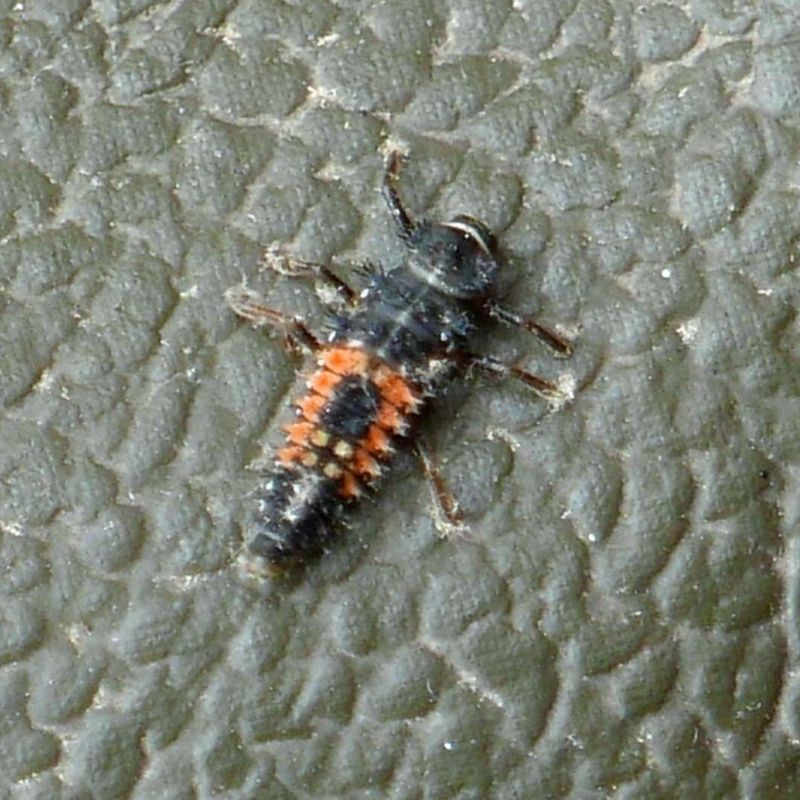
Most gardeners recognize the adult lady beetle immediately: round, red or orange, with black spots. Far fewer recognize the larva, and that gap in knowledge leads to a common mistake.
Lady beetle larvae look nothing like the adults. They are elongated, somewhat flattened, and dark gray or black with distinct orange or yellow markings along the sides.
At a quick glance, they can look alarming enough that a gardener might flick them off the plant or spray them along with the aphids.
That would be a costly error. Extension guidance on lady beetle biology notes that larvae are often more voracious aphid predators than the adults.
A single larva works through a rose shoot systematically, consuming aphids at a rate that can outpace the adult stage. Protecting larvae is one of the most concrete things a California rose grower can do to support biological control.
Before assuming any insect on your rose is a pest, look carefully. UC Master Gardeners of Santa Clara County encourage homeowners to learn the immature stages of beneficial insects before acting, because larvae are easily mistaken for pests by anyone who has not seen them before.
The phrase “California ladybugs” also deserves a closer look. California has roughly 150 lady beetle species, and not all of them behave the same way.
The convergent lady beetle is the species most commonly sold in garden centers for release. The multicolored Asian lady beetle, recognizable by the M-shaped marking near its head, is nonnative and has displaced some native species in parts of California.
Both eat aphids, but they are distinct insects with different histories. Identifying what is actually on your plant matters before drawing conclusions about native status or ecological impact.
Protect the natural enemies already visiting your roses
The single most effective thing a California rose grower can do for biological aphid control is also the simplest: stop using broad-spectrum insecticides. Carbaryl, pyrethroids, and similar products do not distinguish between a rose aphid and the lady beetle larva hunting it.
UC IPM’s overview of biological control and natural enemies is explicit that protecting naturally occurring predators is a cornerstone of effective, sustainable pest management. Once those predators are gone, aphid populations can rebound quickly, often faster than the beneficial insect community recovers.
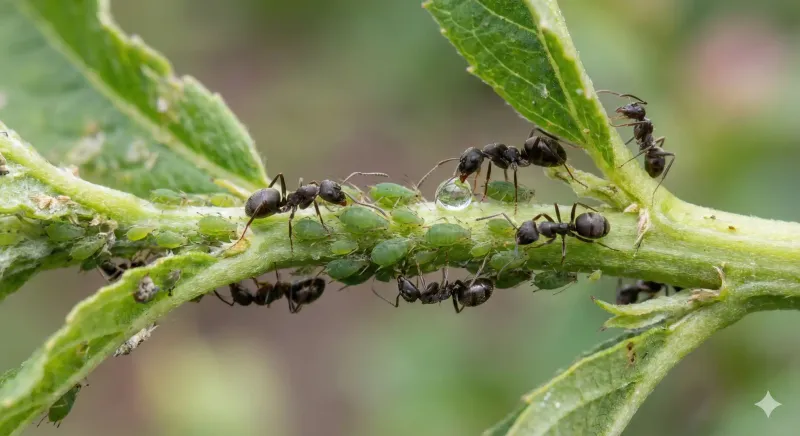
Ants are a less obvious but equally important problem. Certain ant species actively tend aphids, protecting them from predators and even moving them to new plant tissue to establish fresh feeding sites.
An ant trail running up a rose cane is a reliable sign that aphid populations may be getting extra protection they would not otherwise have. UC IPM aphid guidance recommends using sticky barriers, ant baits, or traps to keep ants off aphid-infested plants.
Any sticky material applied to the plant or its stake must be positioned so it does not contact bark directly, which can cause injury to the rose.
Blocking ants opens the door for lady beetles, lacewings, syrphid fly larvae, and parasitic wasps to reach the aphids without interference. These natural enemies work together, and removing the ant bodyguard service can shift the balance noticeably in a season or two.
Syrphid larvae deserve a specific mention because, like lady beetle larvae, they are often overlooked or mistaken for pests. They are small, pale, and worm-like, and they feed directly on aphid colonies.
Parasitic wasps leave behind bronze or tan mummified aphids, a sign the wasp community is already at work. Both are reasons to pause before spraying, because the natural enemy community on a California rose can be more active than it appears at first glance.
Inspect shoots and buds before deciding that aphids need treatment
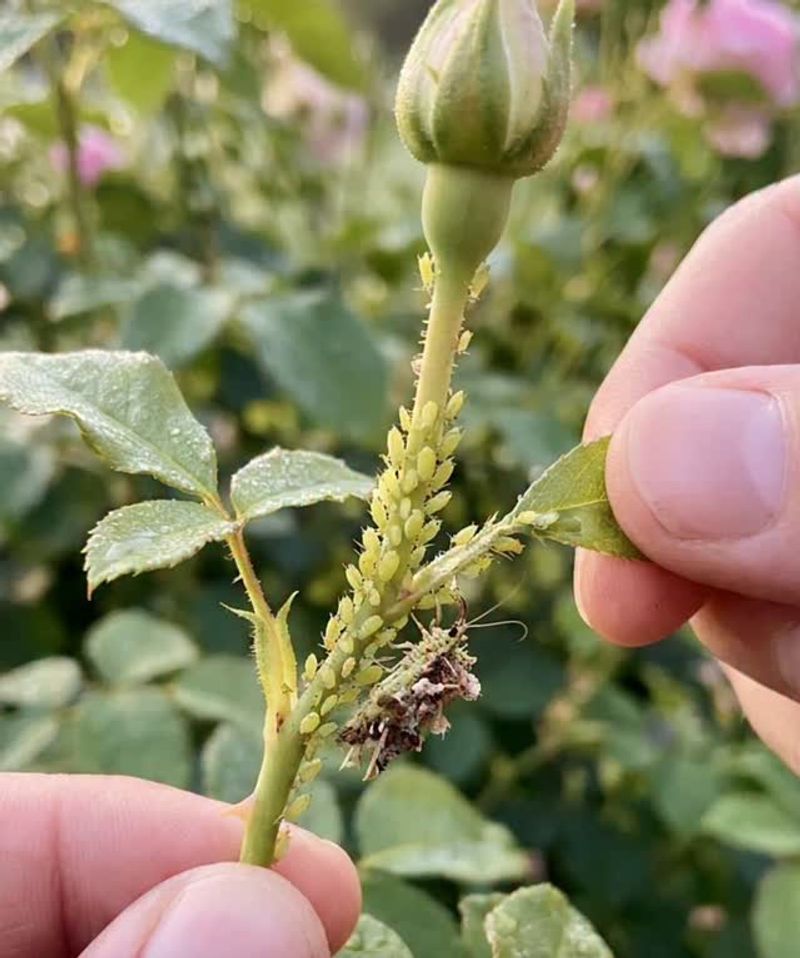
Reaching for a spray bottle the moment you see a few aphids skips the most important step: figuring out whether the infestation actually warrants treatment. A quick, systematic inspection tells you far more than a glance from standing height.
Check new shoot tips, flower buds, and the undersides of young leaves, where aphid colonies tend to concentrate first.
Honeydew is one of the clearest signals that an aphid population has grown large enough to matter. This sticky, sugary liquid coats leaves and stems below the feeding site, and sooty mold, a dark fungal growth, often follows.
UC IPM’s rose pest guide notes that high aphid populations can deform flower buds, reduce bloom size, and produce enough honeydew to encourage significant sooty mold development. Those are the signs that a population has moved past the tolerable range.
Curled or cupped leaves add a complication. Once leaf tissue distorts around a feeding colony, predators have a harder time reaching the aphids inside, and even a water spray becomes less effective.
Catching an infestation before leaves curl gives you more options and makes biological control more likely to succeed.
A practical decision rule: light aphid numbers on an otherwise healthy, established rose do not require immediate action. UC IPM aphid management guidance supports tolerating low to moderate populations when natural enemies are present or when hot weather is approaching.
But any distorted growth, stunted shoots, or significant bud damage is a signal to act, after confirming that aphids are actually the cause. Distorted rose growth can also result from herbicide drift, thrips, or other problems entirely, so identification before treatment prevents wasted effort and unnecessary chemical exposure.
Use water and balanced care before reaching for a pesticide
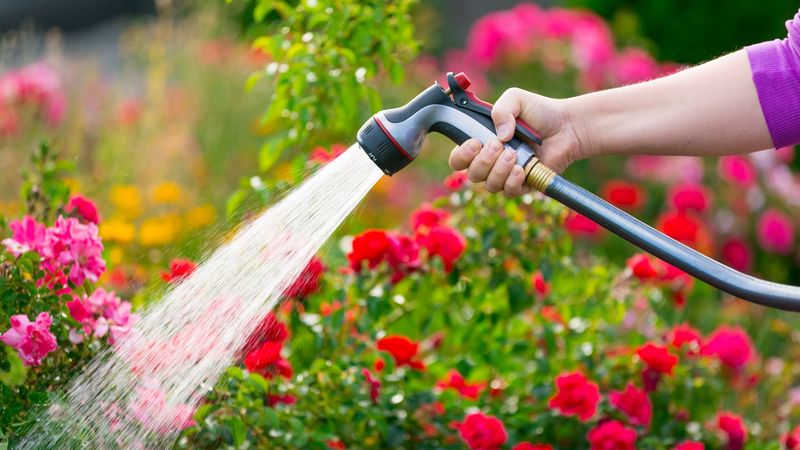
A strong stream of water is often the first and most effective response when aphids appear on roses that can tolerate the pressure. Targeting new shoot tips and the undersides of young leaves, where colonies concentrate, dislodges aphids and interrupts the feeding cycle without harming lady beetles, lacewings, or the other natural enemies working the plant.
Early morning is the best time to spray, giving foliage a chance to dry before temperatures climb and reducing the risk of fungal problems.
UC IPM’s rose pest management page lists water sprays as a recommended first-line measure for aphids, effective enough in many landscape situations to reduce populations without any chemical intervention. Use a nozzle that delivers a focused stream rather than a fine mist, and avoid directing full pressure at tender new growth or open flowers, which can bruise or break easily.
Fertilizer habits also play a significant role that many rose growers underestimate. Aphids are strongly attracted to the soft, fast-growing tissue that results from heavy nitrogen applications.
UC guidance on rose fertilization recommends appropriate cultural care and, when fertilizer is needed, choosing slow-release formulations that feed the plant steadily rather than triggering sudden flushes of growth.
Keeping roses healthy through consistent watering and good air circulation also reduces stress, and a less stressed plant handles a moderate aphid load better than one already struggling with drought or poor drainage. UC IPM aphid guidance reinforces that cultural practices, including avoiding excess nitrogen and maintaining plant health, are a legitimate part of aphid management that gardeners often skip in favor of faster chemical fixes.
These steps are slower but they do not set back the beneficial insect community you are trying to support.
Build a broader beneficial-insect habitat without promising retention
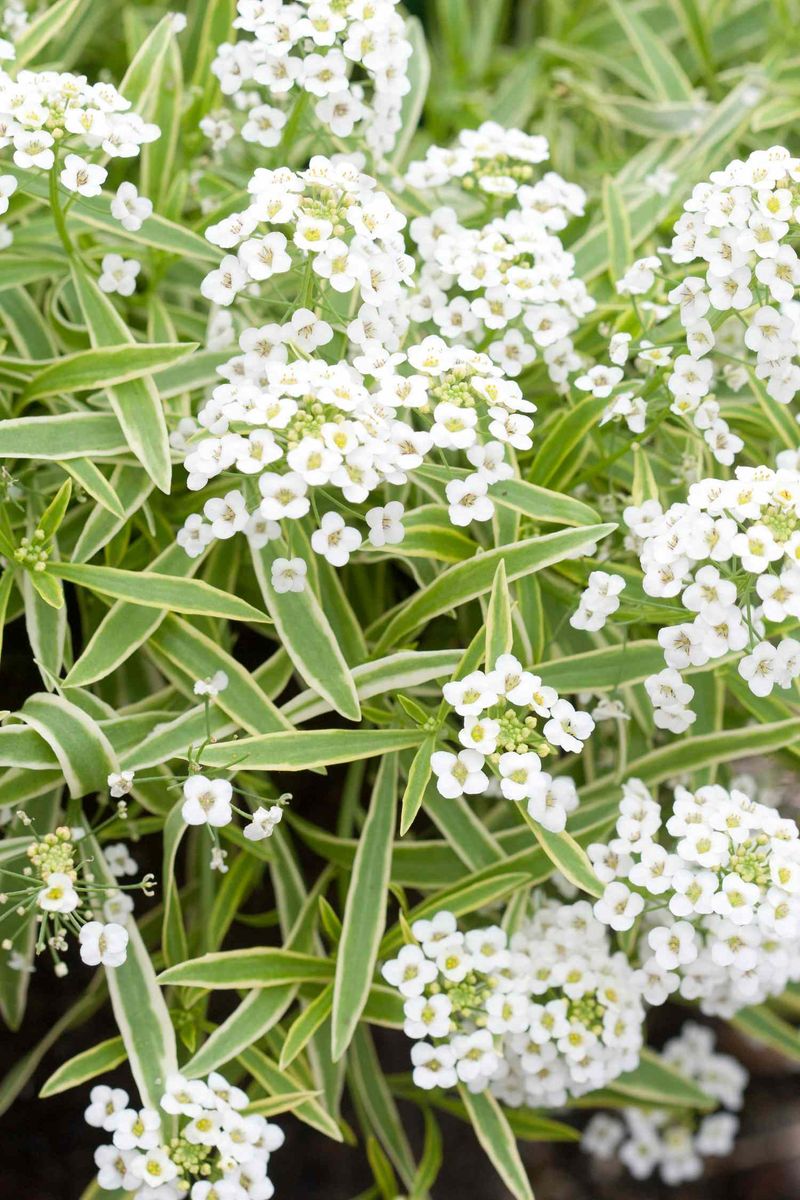
Adult lady beetles eat more than aphids. When prey populations are low, adults can also benefit from nectar and pollen to sustain themselves, especially during gaps between aphid outbreaks.
Extension research on lady beetle biology confirms that flowering plants offering accessible nectar and pollen can help support adults during lean periods. The key word is “support”: flowers do not anchor beetles to a particular rose or prevent them from dispersing when prey runs out.
UC IPM’s insectary plant resources identify a range of flowering plants that can feed and shelter natural enemies in California gardens. Flat or shallow flowers are especially useful because they give small beneficial insects easy access to pollen and nectar that deeper flowers can hide.
California-appropriate choices include sweet alyssum, yarrow, cosmos, calendula, dill, cilantro, and California poppy for annual or herbaceous options, and western redbud, flannel bush, and toyon for woody plants that double as habitat and food sources.
UC ANR’s Earth Day insectary plant feature and UC Cooperative Extension companion plant guidance for the Central Valley both emphasize matching plant choices to the specific California climate zone and the garden’s water budget. A coastal garden and an inland valley garden face very different conditions, and a plant that thrives in one may struggle or demand too much water in the other.
Shelter matters alongside flowers. Leaving some leaf litter, groundcover, or undisturbed edges near the rose bed gives beneficial insects places to overwinter, pupate, and take cover during hot afternoons.
A garden that offers both food and structure across the season is more likely to host a stable community of natural enemies than one that relies on a single rose variety or a single flowering annual.
Escalate carefully, and treat purchased beetles as a limited experiment
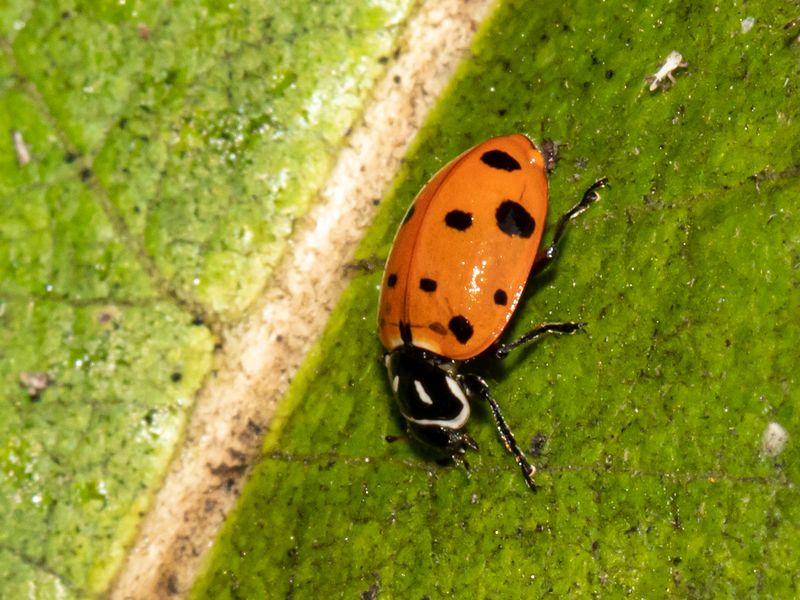
After monitoring, water sprays, ant management, and cultural adjustments, some aphid infestations still need direct treatment. When that point arrives, the selection of product matters as much as the timing.
UC IPM aphid management guidance generally favors insecticidal soaps and horticultural oils over broad-spectrum insecticides for aphid control on roses. These products work by direct contact with the pest, which means they require thorough coverage, including leaf undersides and the interior of dense shoot clusters, to be effective.
Contact materials leave little to no residual activity, so a single application may not resolve a heavy infestation. They also carry real risks: insecticidal soaps and horticultural oils can injure beneficial insects they contact directly, and they can damage plant tissue if applied during excessive heat, on drought-stressed roses, or at concentrations above what the label specifies.
EPA label guidance makes clear that the product label is a legally enforceable document, and application outside those directions is both ineffective and potentially harmful. Always read the current label before applying any pesticide, including products marketed as low-impact.
Purchased convergent lady beetles are a separate topic and deserve honest framing. UC IPM’s convergent lady beetle profile and UC research on purchased beetle releases both advise keeping beetles cool until release, lightly misting both the beetles and the target plant, and releasing them at dusk near the base of infested plants.
These steps can improve the odds of short-term retention, but they do not prevent dispersal.
Extension reporting on release studies notes that roughly 95 percent of purchased beetles flew away within 48 hours in research trials, with the remainder gone within days. For severe infestations on open landscape roses, a published field study on lady beetle release densities found that effective control required approximately 2,300 beetles per square meter.
That scale is impractical for most homeowners, and it underscores why purchased releases should be treated as a limited, supplemental experiment rather than a reliable or repeatable control strategy.
Aim for a resilient rose garden, not a permanent beetle workforce

Putting the whole approach together comes down to a clear sequence of decisions. Start by identifying what is actually on the plant before doing anything else.
Aphids, thrips, and herbicide drift can all cause distorted growth, and treating the wrong problem wastes time and harms the natural enemy community. Once aphids are confirmed, check whether the population is light enough to leave alone while natural enemies or summer heat do their work.
If the population is building, block ants first, then try water. UC IPM aphid guidance supports both steps as early interventions that protect beneficial insects while reducing aphid pressure.
Avoid excess nitrogen so the rose does not produce the kind of soft, fast growth that aphids prefer. Reserve selective contact treatments, applied carefully and according to label directions, for infestations that reach the point of genuine damage.
Throughout all of this, avoid broad-spectrum insecticides. UC IPM’s biological control overview consistently places protecting naturally occurring predators above purchasing and releasing beetles as the better-supported long-term strategy.
Lady beetles, lacewings, syrphid larvae, and parasitic wasps are already in most California gardens; they simply need a yard that does not eliminate them on contact.
Lady beetles may suppress aphids on your roses, and they are worth protecting for exactly that reason. The evidence on dispersal and retention makes clear they will leave when prey declines, which is not a failure – it is just how mobile predators work.
A garden that keeps welcoming them back, season after season, is a more durable solution than any single bag of beetles you can buy.