
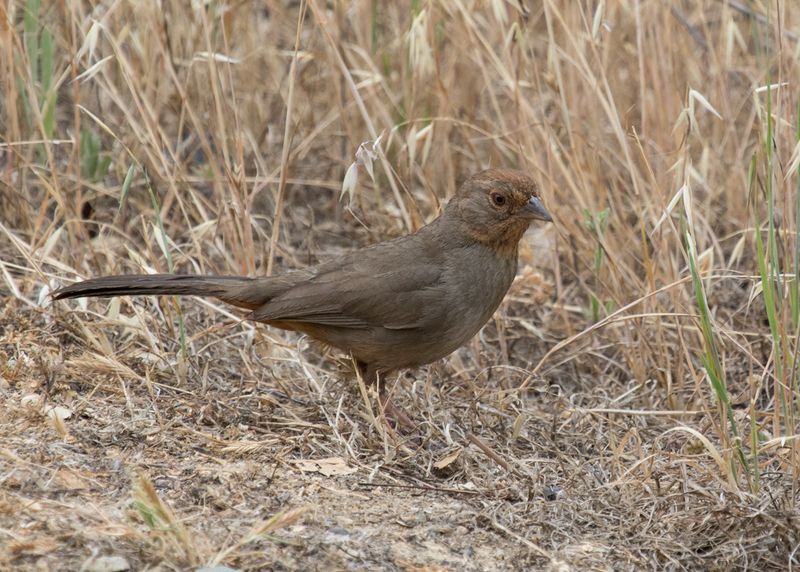
A small brown bird scratching quietly under your backyard shrubs might be doing more than looking for lunch. California Towhees are year-round residents across much of California, and their habit of digging through leaf litter can turn up weed seeds, insects, and other small invertebrates as they forage.
Most homeowners walk right past them without a second look, which means one of the most consistently present native birds in suburban yards rarely gets the credit it deserves. Supporting them is less about dramatic habitat overhauls and more about a few thoughtful choices that also make your yard healthier overall.
Meet the plain brown bird beneath California shrubs
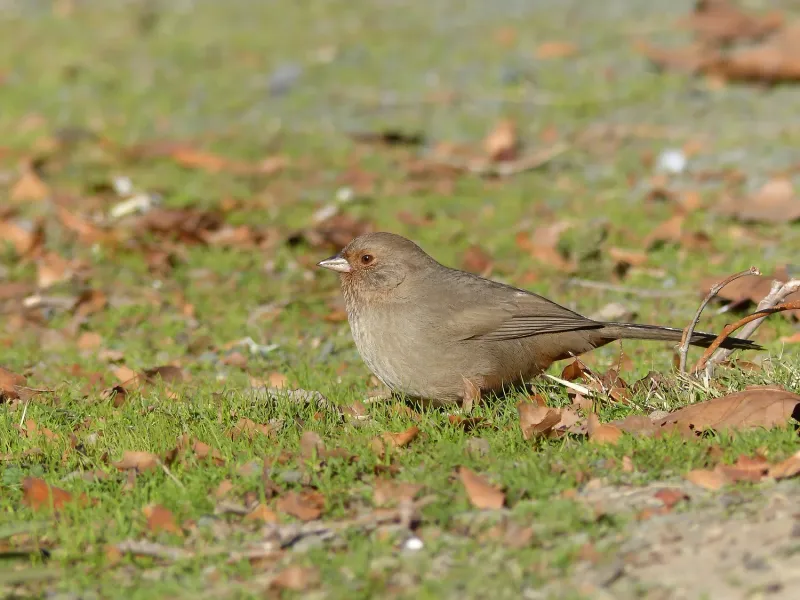
Spend a few minutes near a dense hedge or native shrub patch in almost any California yard and you will likely spot one: a robin-sized bird, entirely warm brown, scratching through the dirt with both feet at once. That is the California Towhee (Melozone crissalis), and its plain appearance is exactly why most people overlook it.
There are no bold wing bars, no flashy colors, just a steady, unhurried bird going about its business on the ground.
Cornell Lab of Ornithology’s California Towhee profile describes it as a large sparrow with a long tail, buffy orange undertail coverts, and a streaked throat patch that shades into a faint necklace of spots. The bill is stout and seed-cracker-shaped.
When two birds meet, you may hear a sharp metallic call or watch a slow, deliberate chasing display between a mated pair that often stays together year-round.
Geographically, this is a California bird. The species occurs primarily in California, western Oregon, and Baja California, and the California Department of Fish and Wildlife’s life-history account confirms its presence across foothills, lowlands, chaparral, coastal scrub, riparian edges, agricultural margins, and urban habitats throughout much of the state.
Readers in Florida or most of Texas will encounter different species entirely. The Eastern Towhee, for example, is a separate bird with its own range and habitat needs and should not be confused with this one.
The California Towhee is also not the same as the Spotted, Canyon, Abert’s, or Green-tailed Towhees. If you are outside coastal or inland California, verify your identification before assuming the bird under your shrubs is this species.
Inside California, though, the combination of all-brown plumage, ground-scratching behavior, and suburban shrub habitat makes the California Towhee one of the most reliably present native birds a homeowner is likely to host, whether or not they have ever noticed it.
What towhees may find while they scratch
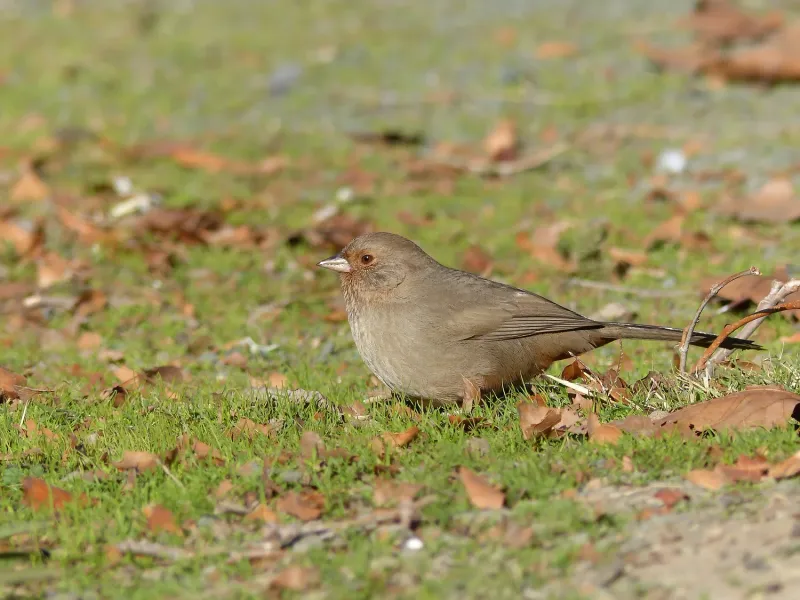
Watch a California Towhee work through a patch of leaf litter and the behavior is surprisingly deliberate. The bird hops forward, then kicks both feet back simultaneously, flinging material aside and exposing whatever is underneath.
Seeds, small insects, and other arthropods that were buried under fallen leaves or loose soil suddenly become available. Cornell’s life-history account describes this double-scratch as the species’ primary foraging method, used consistently on open ground near brushy cover.
Their diet is mostly plant-based. One secondary species account on Animal Diversity Web, which summarizes older food-habit research, suggests a rough breakdown of about 51 percent weed seeds, 28 percent grains, 14 percent insects, and 4 percent fruits.
Treat those figures as a general starting point rather than a fixed rule. Diet shifts with the season, local food availability, breeding demands, and the specific habitat a bird uses, so the proportions can look quite different from one yard or time of year to the next.
What the research does not show is that a towhee or a resident pair will measurably suppress weeds, prevent germination, or reduce named household pests across a yard. A bird may pick up some weed seeds while foraging, and it may eat some insects and arthropods in the process, but no reviewed source establishes that this translates into yard-scale weed control or dependable pest reduction.
Promising that outcome would go further than the evidence supports.
That distinction matters for practical planning. Hand-weeding, mulch, mowing, and other integrated weed-management approaches remain necessary regardless of whether towhees visit.
The birds can complement those efforts in a small way, but they are not a substitute for them. Framing a towhee as a free cleanup crew sets up an expectation the bird simply cannot meet.
Build an edge between cover and open ground
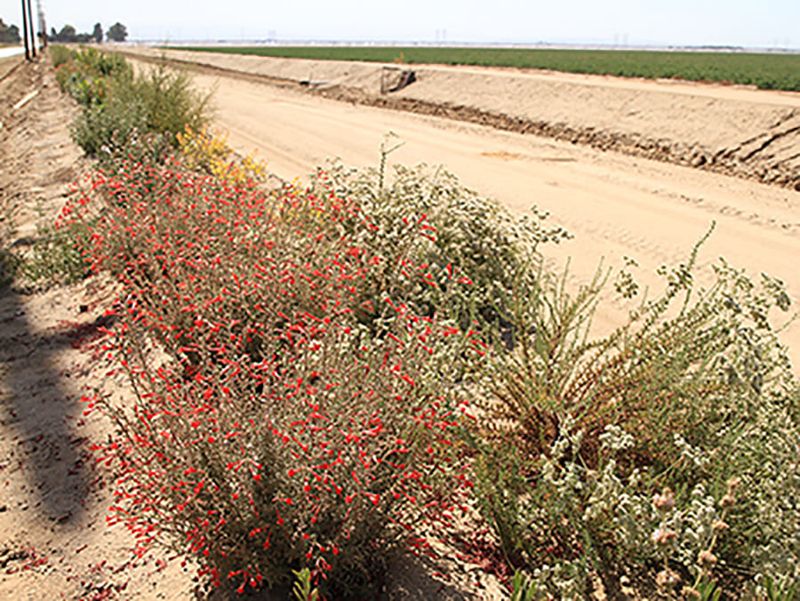
Habitat arrangement matters as much as plant selection. California Towhees need two things close together: dense shrubby cover where they can retreat, roost, and nest, and open ground or leaf-litter patches where they can scratch and forage.
Yards that have one without the other are less useful to the bird. A solid wall of shrubs with no accessible ground edge, or wide open lawn with no nearby shelter, both fall short of what towhees actually use.
The National Park Service’s California Towhee page describes the species as foraging on open ground near brushy cover, which is a useful design prompt. A hedge or dense shrub grouping along a fence line, with a strip of open mulched ground or native groundcover beside it, creates the kind of transition zone the bird prefers.
The edge between shelter and scratching space is where towhees spend a significant portion of their time.
This layout applies across the range of California yard types the species actually uses. The California Department of Fish and Wildlife account notes the bird’s presence in foothills, lowlands, chaparral edges, riparian margins, agricultural areas, and urban landscapes, which means the shrub-and-open-ground pairing is relevant whether you garden in a hillside community, an inland valley, or a coastal suburb.
One important caution from U.S. Forest Service research on California Towhee density and reproductive success: high bird density in a given area does not automatically mean high reproductive success, and suitable habitat does not guarantee that towhees will visit regularly or raise young there.
Neighborhood-scale predator pressure, competition, and local population patterns all play a role. Build the edge because it improves your yard’s habitat quality; do not expect a guaranteed result.
Choose native plants with both habitat and fire safety in mind
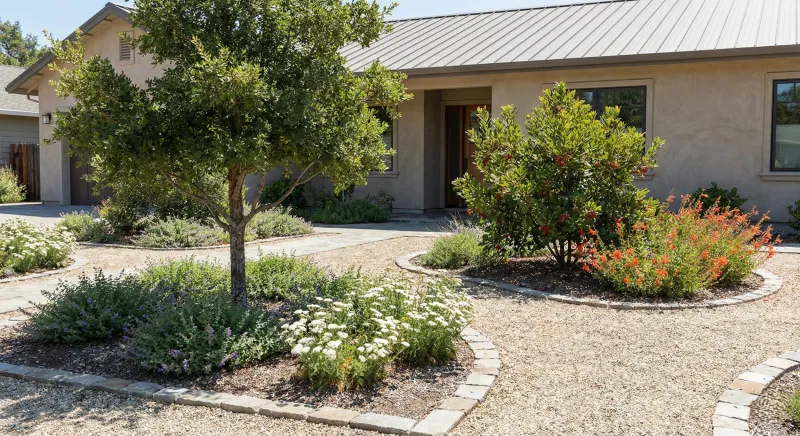
California native plants can do a lot of work at once. Many provide seeds, berries, insect habitat, and nesting shelter that benefit towhees and other yard wildlife, while also being adapted to the state’s dry summers and variable soils.
UC Agriculture and Natural Resources’ guide to gardening for birds with native plants highlights how the right plant choices can support foraging birds across seasons without requiring heavy irrigation.
Plants worth considering include coffeeberry, toyon, ceanothus, coyote bush, native sages, buckwheat, yarrow, native sunflowers, manzanita, and California aster. The California Native Plant Society’s guide to bird gardening in Southern California offers regionally specific suggestions and explains which plants attract the insects and seeds that ground-foraging birds seek.
Treat any plant list as a starting point rather than a universal prescription, because what thrives in a coastal garden may be poorly suited to an inland valley or a foothill site.
Before buying, match each plant to your local climate zone, soil type, mature size, water requirements, and maintenance demands. The California Department of Water Resources’ landscaping guide is a practical reference for water-wise plant selection that holds up across the state’s varied conditions.
Fire safety cannot be an afterthought. CAL FIRE’s defensible-space guidance and local fire district requirements call for adequate spacing between plants, removal of dead or dry material, and maintained clearance zones around structures.
No plant should be treated as fireproof, including natives. Spacing, irrigation, pruning, and routine removal of dead branches and dry debris matter as much as the species you choose.
A well-selected native shrub that is never pruned and surrounded by dry litter creates real fire risk regardless of its origin.
Keep useful leaf litter without creating dry fuel
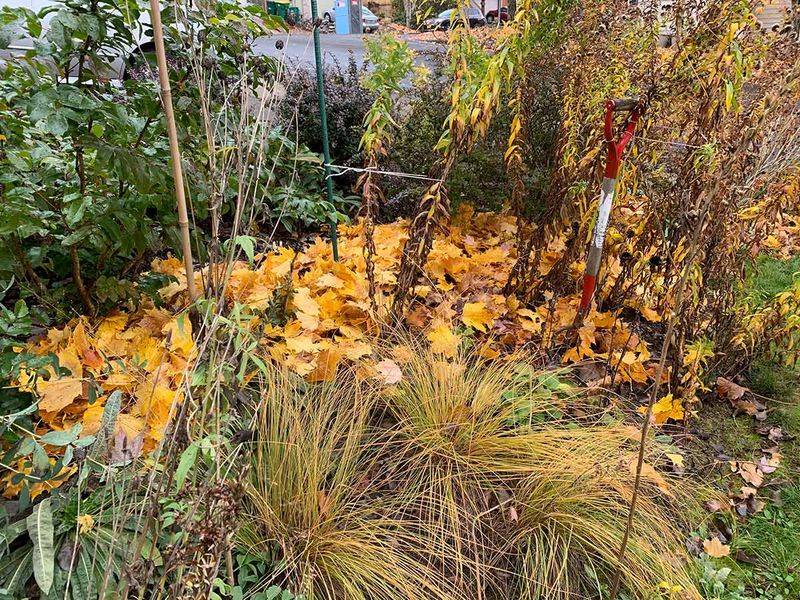
Leaf litter is not yard waste to be eliminated on a schedule. Beneath shrubs and along garden edges, a modest layer of fallen leaves, small twigs, and natural debris can provide towhees with places to scratch and can support the insects and other arthropods that make up part of their diet.
UC Master Gardeners of San Luis Obispo County recommend delaying or reducing leaf cleanup in appropriate garden beds because spring leaf litter supports insect habitat that benefits foraging birds. The Yolo County UC Master Gardener newsletter echoes this point, noting that leaving some organic material in place through the season provides food and cover for ground-level wildlife.
Putting that principle into practice means being deliberate rather than permissive. Retain leaf litter in garden beds away from structures, in areas where it stays reasonably moist or shaded, and where local fire rules allow it.
Thin the layer periodically so it does not pack into dense, dry mats. Remove accumulated debris from areas close to your house, along fence lines adjacent to structures, or anywhere your local fire district’s defensible-space zone applies.
CAL FIRE’s defensible-space requirements and community fire protection district rules are the governing standard in fire-prone areas, and they take precedence over habitat preferences. Leaving leaf litter everywhere, or allowing it to accumulate against a fence, wall, or structure, creates real ignition risk in wildland-interface and hillside communities.
The goal is a yard where some beds retain modest, managed organic material and others are kept clear, not a blanket policy of either full cleanup or full retention.
Favor habitat over seed piles and unnecessary pesticides
The most reliable way to attract California Towhees is to build habitat they can use, not to set out food for them. Scattering large amounts of seed on the ground is not the right approach.
California Department of Fish and Wildlife’s Wildlife Health Lab advises that artificial feeding can attract rodents, which in turn increases the likelihood of rodenticide use nearby. Rodenticides that kill rodents can harm raptors and other wildlife that eat them, creating a chain of unintended consequences.
CDC guidance on backyard wildlife similarly recommends natural food sources and habitat over routine supplemental feeding as the safer primary strategy.
Pesticide use deserves the same measured approach. EPA guidance on reducing pesticide impacts on wildlife recommends using pesticides only when a problem actually requires them, treating only the affected area, and following the product label precisely.
EPA’s ecological risk assessment framework acknowledges that pesticides can affect non-target wildlife and reduce the insect populations that birds depend on for food. That does not mean every product harms towhees in every situation, but broad or routine insecticide applications reduce the arthropod prey base that makes your yard worth visiting.
Reading and following the label is the minimum standard every time.
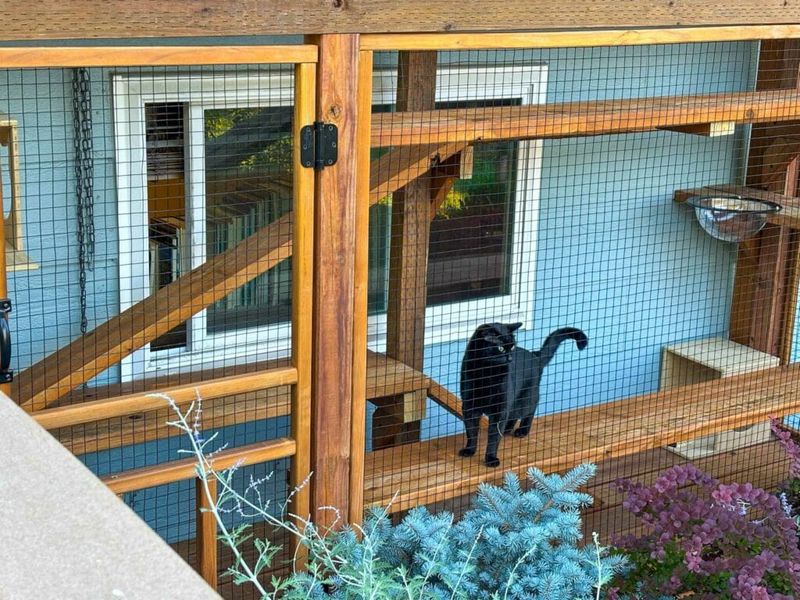
Beyond feeding and chemicals, common yard hazards deserve attention. Audubon’s review of bird-friendly backyard mistakes identifies free-roaming cats as one of the most significant threats to ground-foraging birds like towhees.
Reflective windows cause fatal collisions that are easy to prevent with decals or screens placed on the outside of the glass. Poorly managed feeding stations can spread disease and attract predators.
Addressing these hazards costs little and protects every bird that uses your yard, not just towhees.
Support the bird without expecting a cleanup crew
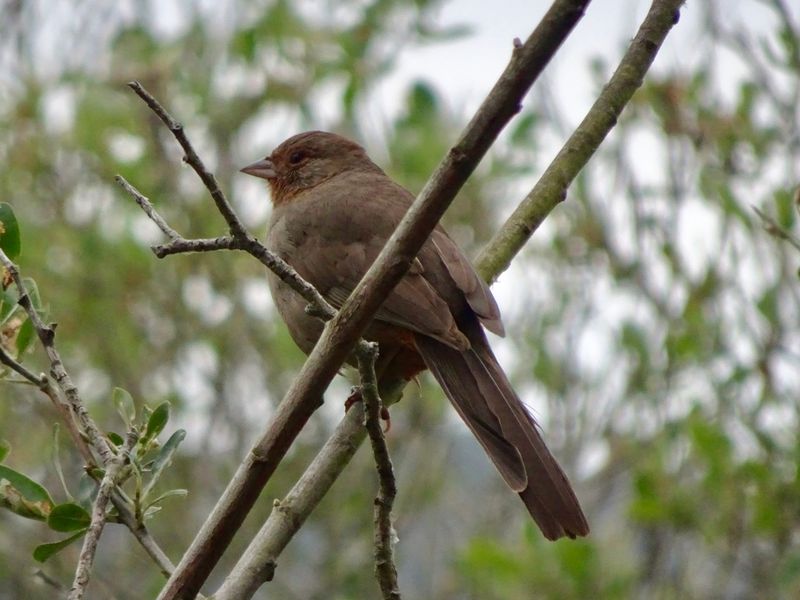
Nests are one part of towhee life that requires particular care. Audubon’s California Towhee field guide notes that the species typically nests in dense shrubs or low trees, sometimes closer to the ground than you might expect.
If you find an active nest while pruning or tidying up, stop work in that area. U.S.
Fish and Wildlife Service guidance on bird nests makes clear that disturbing or removing an active nest can have legal implications under the Migratory Bird Treaty Act, and FWS frequently asked questions explain when and how to check applicable wildlife guidance before taking any action near a nest.
Suitable habitat also does not guarantee regular visitors. U.S.
Forest Service research on California Towhee populations found that high local density does not necessarily translate into high reproductive success, a reminder that neighborhood-level predators, competition, and disturbance shape outcomes as much as your individual yard does. Build good habitat because it improves the yard; measure success by the quality of what you have created, not by a bird count.
A practical checklist for moving forward: maintain a shrub-and-open-ground edge with appropriate spacing for fire safety, retain modest leaf litter only where local defensible-space rules allow, choose native plants matched to your specific site conditions, reduce unnecessary pesticide and artificial feeding inputs, and address cat access, window hazards, and other common threats. Towhees may complement your regular weeding and pest monitoring in small ways, but they work alongside those practices, not instead of them.
A yard built for towhees ends up being a better yard for a lot of other reasons too.