
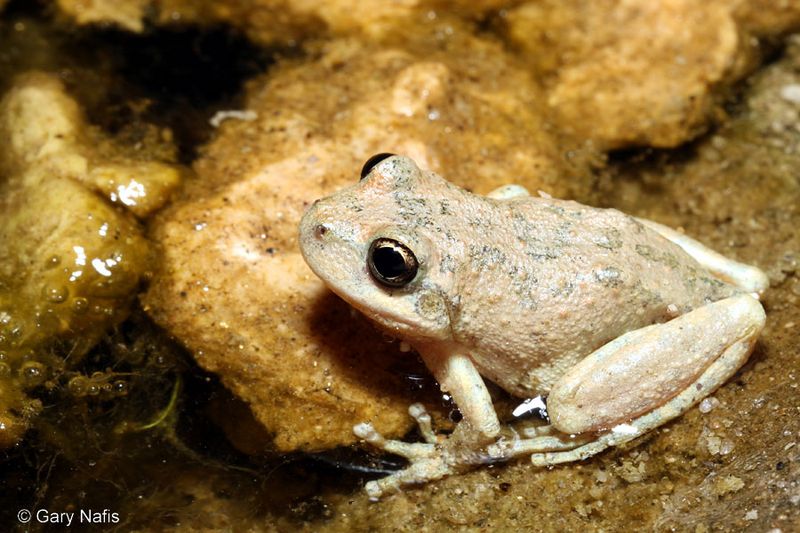
Spotting a small, sandy-gray frog tucked behind a rock or nestled under a leafy shrub in your Southern California yard can feel like a small miracle. That little visitor is likely a California treefrog, a native species with a patchy range and a surprisingly broad appetite for backyard insects.
Before you shoo it away or start rearranging your garden to make it feel more welcome, there are a few things worth understanding about what its presence actually means and what you can do to help without accidentally causing harm.
What a California treefrog sighting really tells you
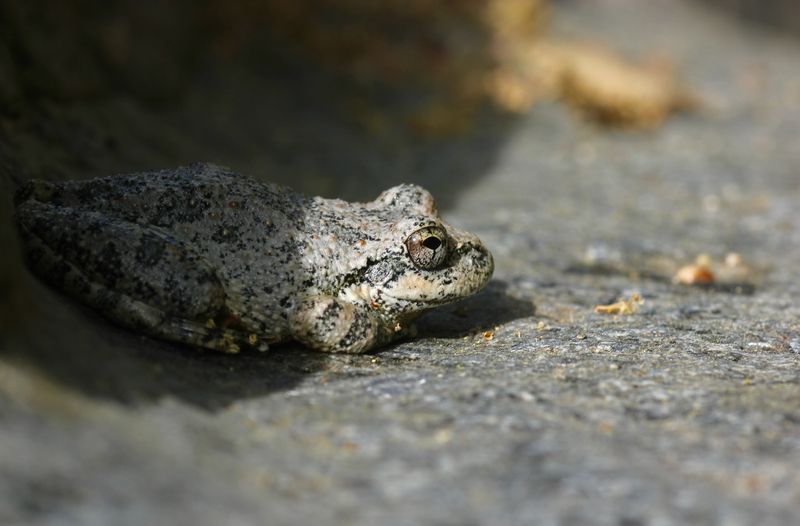
Finding a small, mottled gray frog clinging to a shaded wall or tucked between garden rocks is not something most Southern California homeowners expect, but it happens more often than people realize near the right conditions. The animal you are likely looking at is the California treefrog, known scientifically as Pseudacris cadaverina, a native amphibian with a patchy distribution that runs roughly from San Luis Obispo County south toward the Mexican border, with additional inland populations scattered through parts of Riverside and San Bernardino counties.
According to California Department of Fish and Wildlife species data for the California treefrog, this species is closely associated with rocky streams, canyon streams, desert streams, palm oases, and quiet permanent pools. Adults typically shelter in shaded crevices near water, which explains why one might turn up behind a planter, under a low deck, or beside a dripping irrigation line after dark.
What does a sighting actually mean for your yard? Probably that some usable moisture, shelter, and prey exist somewhere nearby, whether in your garden or in an adjacent drainage, wash, or neighbor’s property.
The National Park Service profile for the California treefrog at Santa Monica Mountains confirms that the species is tied to specific aquatic and rocky habitats rather than any damp suburban garden. A frog passing through your yard is not proof that your property is ideal habitat or that it will stay permanently.
Keeping that distinction in mind matters because it shapes every decision that follows. The practical goal here is to support a native animal that is part of a functioning local food web, not to turn your yard into a frog sanctuary or to lean on the frog as a solution to your mosquito problem.
Those are two very different things, and the rest of this article will help you tell them apart.
A broad insect diet does not make the frog a mosquito-control service
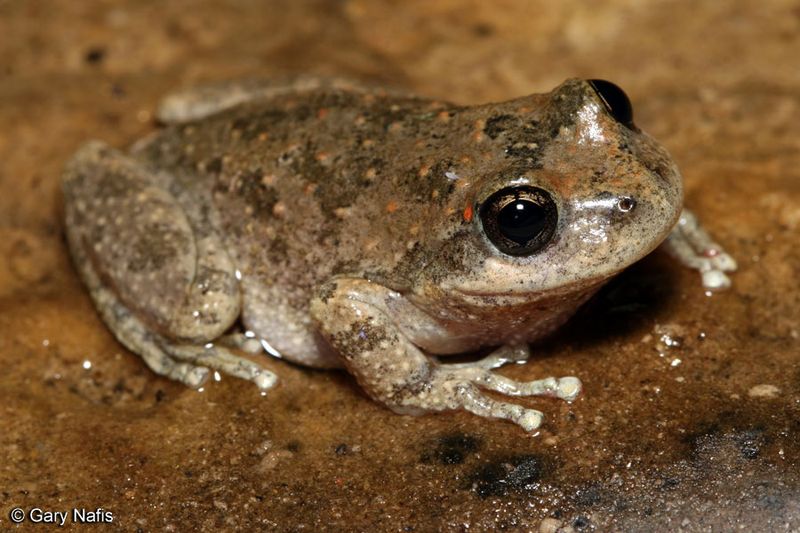
California treefrogs are generalist insectivores, which means they eat a wide variety of small prey rather than targeting any one species. The California Department of Fish and Wildlife species account lists their documented adult diet as spiders, centipedes, caterpillars, grasshoppers, ants, beetles, moths, isopods, bugs, and other small arthropods.
That is a genuinely useful range, and a frog hunting through your garden at night is almost certainly eating things you would rather not have around.
Where things get more complicated is the mosquito question. Homeowners understandably hope that a resident frog means fewer bites, but the evidence for that specific claim is thin.
A University of Wisconsin mosquito resource notes that mosquitoes are not known to be an important part of the adult diet of any frog species. That does not mean a California treefrog never eats a mosquito, but it does mean you should not count on it happening at a scale that reduces your exposure to bites.
Life stage matters here too. Some frog tadpoles have been documented consuming mosquito larvae in controlled settings, and some frog species in other parts of the country may eat adult mosquitoes more regularly.
But evidence varies considerably by species, and the California treefrog’s published diet profile does not establish it as a meaningful residential mosquito predator.
University of Florida IFAS guidance on mosquito control makes the point plainly: natural predators cannot be relied upon for mosquito protection or disease prevention. A California treefrog is a welcome part of your yard’s food web, and it may well be eating beetles or caterpillars that would otherwise damage your plants.
That is worth appreciating on its own terms, without adding a mosquito-suppression promise that the science does not back up.
Preserve existing shade, shelter, and natural refuge
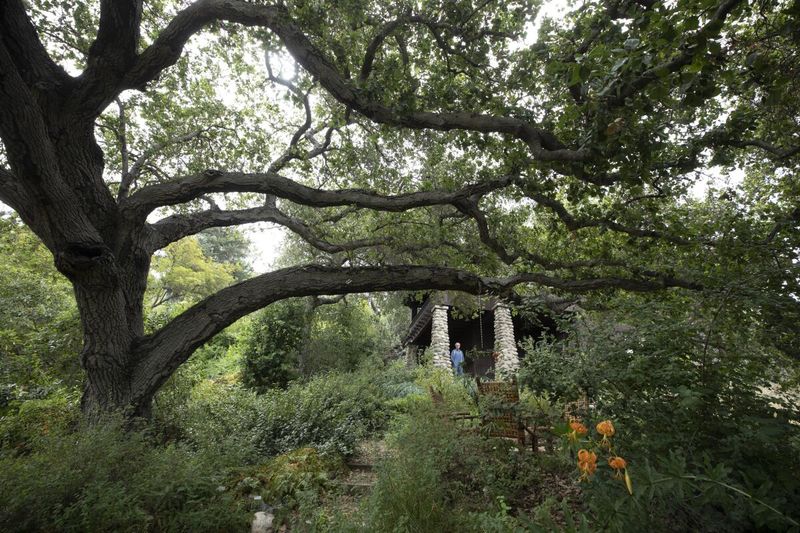
One of the most effective things you can do for a California treefrog is also one of the easiest: leave the sheltered spots in your yard alone. Rocky nooks, shaded corners under native shrubs, patches of leaf litter, and natural crevices near moisture are exactly the kinds of places this species uses for daytime refuge.
Clearing them out because they look messy removes the cover that makes your yard usable to native wildlife in the first place.
The California Department of Fish and Wildlife species account describes adults sheltering in shaded crevices near water, which translates directly to garden features like stacked fieldstone, low-growing groundcovers near a drip line, or an overgrown corner beside a raised bed. None of those require any construction or expense.
They just require you to resist the urge to tidy everything up.
A word of caution about adding new water features: the National Park Service treefrog profile confirms that this species is associated with specific aquatic habitats like rocky streams and quiet permanent pools, not generic ornamental ponds. Installing a decorative pond or leaving out a bowl of water will not reliably attract California treefrogs, and it will create a mosquito-breeding site if it is not properly designed and maintained.
If your yard already has a water feature, keep it. A well-maintained pond with moving water, regular cleaning, and appropriate depth can support wildlife without becoming a mosquito nursery.
The CDC’s home mosquito-control guidance recommends scrubbing and emptying water-holding containers at least weekly, and the same principle applies to any still or slow-moving feature in your yard. Supporting native wildlife and managing mosquito risk are not competing goals when you approach both deliberately.
Manage standing water instead of asking frogs to solve mosquitoes
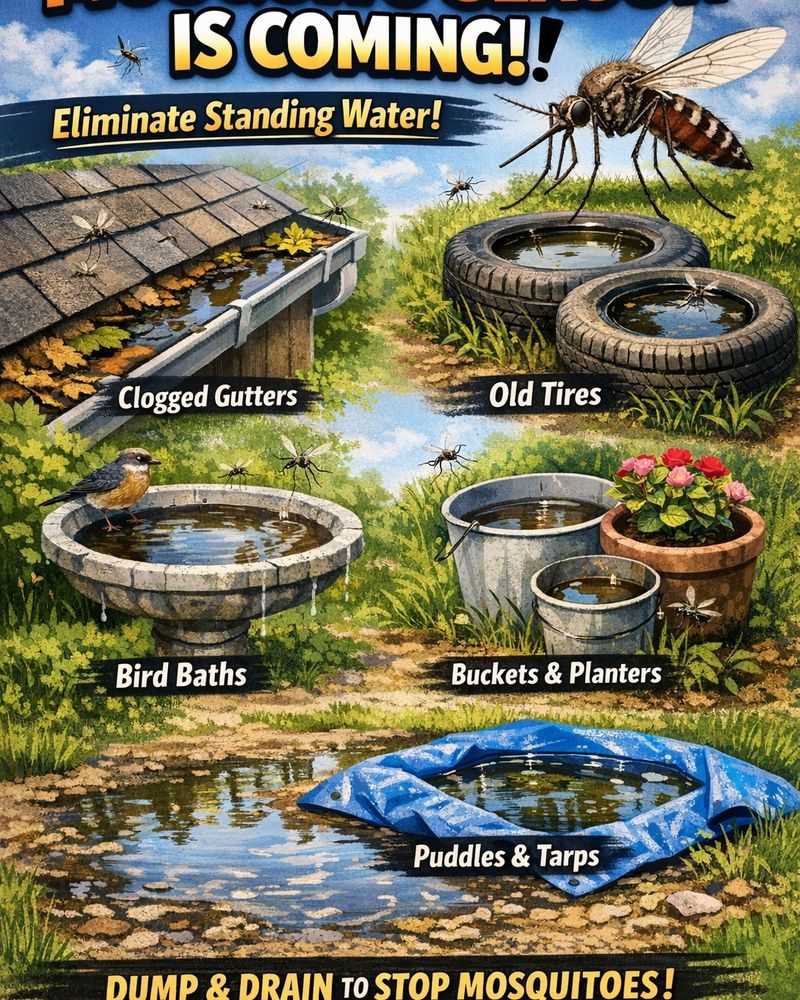
Frogs and mosquitoes can share the same water. That is an important fact to keep front of mind when you are trying to support native amphibians while also keeping your outdoor living space comfortable.
Any container that holds still water long enough for mosquito eggs to hatch, which can happen in as little as a week, is a potential breeding site regardless of whether a frog is nearby.
The CDC’s integrated mosquito management framework identifies source reduction as the most effective and least disruptive control measure available to homeowners. That means going through your yard every week and addressing the places where water collects: birdbaths, plant saucers, clogged gutters, rain barrels with open tops, tarps, buckets, and low spots in the lawn.
Empty them, scrub the sides where eggs can cling, and turn them over or cover them when not in use.
Ponds and larger water features need a different approach. A pond with a pump that keeps water moving is far less hospitable to mosquitoes than a still, neglected one.
For containers that you cannot empty or cover, the CDC home mosquito-control page recommends using a properly labeled larvicide, such as a Bti-based mosquito dunk, which targets mosquito larvae without harming most other wildlife when used as directed.
There is an important distinction to make here. The goal is to eliminate artificial or neglected water-holding sites, not to drain or fill every natural feature in your yard.
Natural pools, tree holes that hold rainwater, and small drainage areas are part of the local ecology. The CDC tree-hole guidance applies specifically to water-holding cavities that function as mosquito sources, not as a license to remove wildlife habitat indiscriminately.
Pair source reduction with the rest of an integrated pest management approach and you will address mosquitoes far more effectively than any frog ever could.
Use pesticides carefully around amphibian habitat
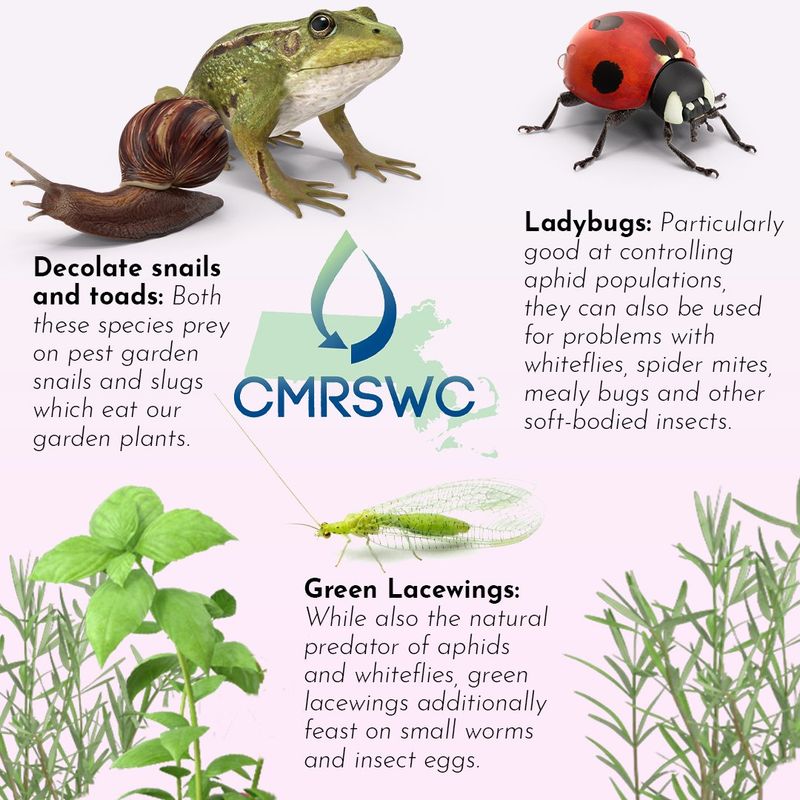
Amphibians absorb substances through their skin in ways that most other backyard animals do not. That biological reality is what makes pesticide choices around frog habitat genuinely consequential, not just a matter of preference.
USGS research on insecticide toxicity to California anurans documents measurable effects on native California frog species from compounds that homeowners commonly apply in yards and gardens.
EPA research on pesticide uptake in frogs confirms that both skin absorption and incidental ingestion through prey are real exposure pathways. Aquatic life stages, including eggs and tadpoles, face additional risk from runoff that carries pesticide residues into ponds, gutters, and drains.
A product that seems targeted and contained on dry land can reach water quickly after irrigation or rain.
The practical sequence is straightforward. Start by identifying exactly what pest you are dealing with, because a misidentified problem often leads to unnecessary treatment.
Where nonchemical options exist, such as physical removal, row covers, or targeted traps, try those first. When a pesticide is genuinely necessary, choose the most selective product registered for that pest, apply it only where the problem exists, and follow every instruction on the label regarding rate, timing, and buffer distances from water.
Broad-spectrum foggers and casual perimeter spraying around shaded, moist areas are the treatments most likely to harm non-target animals including frogs. The UC Statewide IPM Program’s guidance on understanding pesticides reinforces that integrated pest management prioritizes knowing your pest, using the least harmful effective option, and protecting non-target organisms.
Pesticide restraint is not about abandoning pest management. It is about making sure the treatment you choose is actually aimed at the problem you have, with as little collateral impact as possible on the native wildlife sharing your yard.
Leave healthy frogs alone and avoid moving amphibians
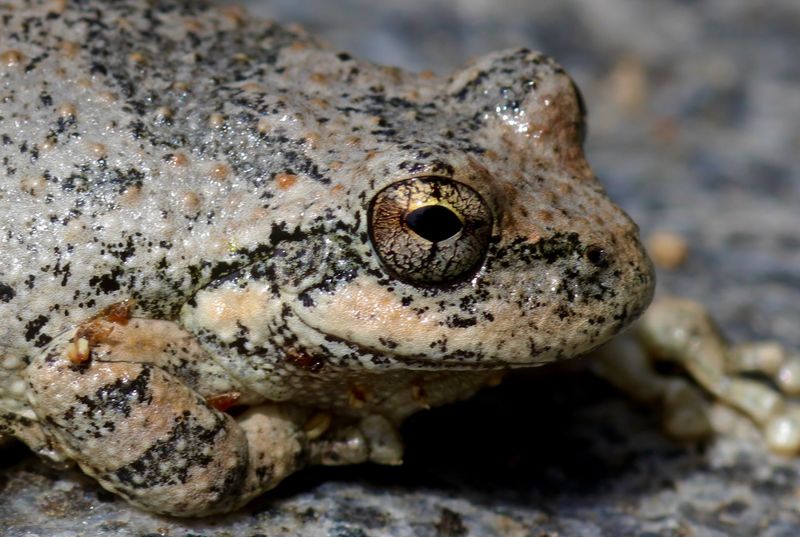
Watching a California treefrog go about its business from a respectful distance is genuinely the best thing most homeowners can do when one shows up in the yard. California Department of Fish and Wildlife guidance on native wildlife is clear on this point: wild animals rarely need human help, and well-meaning intervention often causes more harm than leaving the animal alone.
Handling a healthy frog is unnecessary and carries real risks for the animal. Human hands transfer oils, salts, and chemical residues that can irritate or harm amphibian skin.
More seriously, moving a frog or a container of tadpoles from one pond or yard to another can spread pathogens between populations. California Department of Fish and Wildlife documentation on chytrid fungus identifies this pathogen as a recognized amphibian-health concern in California, and transporting amphibians between water sources is one of the ways it moves into new areas.
Identification matters before any action is taken. California treefrogs are not interchangeable with every small frog found in a Southern California yard.
Pacific treefrogs, Baja California treefrogs, and other species have different ranges, appearances, and habitat needs. If you are unsure what you are looking at, observe without touching and consult a field guide or the California Herps website before drawing conclusions.
A frog sitting quietly in a shaded corner, under a stepping stone, or near a dripping faucet is almost certainly fine. If an animal appears injured, trapped, or is in immediate danger from a pet or power tool, contact a licensed wildlife rehabilitator rather than attempting to handle or relocate it yourself.
That call takes two minutes and puts the animal in far better hands than a well-intentioned garden rescue.
Do not mistake an invasive American bullfrog for a native treefrog
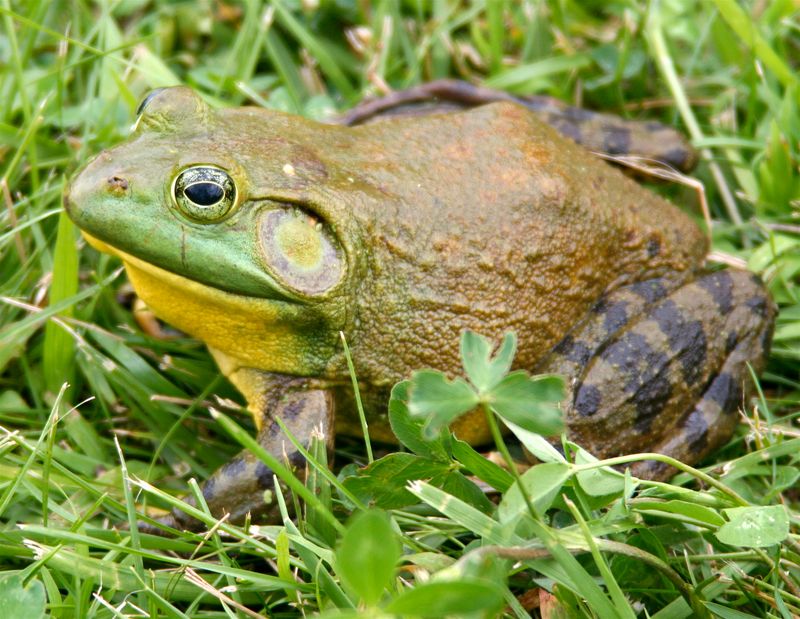
Not every frog in a Southern California yard deserves the same welcome. American bullfrogs are not native to California, and their presence in a garden pond or nearby drainage is a conservation problem rather than a sign of healthy habitat.
Treating a bullfrog as though it were a native California treefrog can lead to decisions that actively harm local wildlife.
According to California Department of Fish and Wildlife’s invasive species profile for the American bullfrog, this large nonnative frog preys on native frogs, birds, fish, and other small animals. It competes directly with species like the California treefrog for habitat and food, and its spread has contributed to population declines in native amphibians across the state.
The disease risk compounds the problem. California Department of Fish and Wildlife chytrid fungus documentation notes that American bullfrogs can carry and transmit chytrid fungus, a pathogen linked to amphibian population declines worldwide.
A bullfrog that appears healthy can still be carrying the pathogen and passing it to native frogs it contacts.
Telling the two species apart is usually straightforward. California treefrogs are small, typically under two inches, with rough, mottled gray or tan skin and a habit of pressing flat against rocky surfaces.
American bullfrogs are much larger, often four to six inches or more, with smooth greenish or brownish skin and prominent circular eardrums. If you spot a large frog in or near a yard pond and are not certain of the species, do not handle or relocate it.
Report the sighting to the California Department of Fish and Wildlife so that trained staff can assess and respond appropriately.
Welcome the frog while using the right tools for mosquitoes

Pulling together everything in this article comes down to a short, practical list. Preserve existing shaded cover, rocks, leaf litter, and natural crevices near moisture.
Reduce unnecessary pesticide use, especially broad-spectrum products applied around moist and sheltered areas. Maintain any water features so that moving water, regular cleaning, and appropriate depth keep them from becoming mosquito nurseries.
Leave wild frogs exactly where you find them unless they are injured, and contact a licensed rehabilitator rather than attempting a backyard rescue.
For mosquito control, use integrated mosquito management: inspect weekly, remove or empty water-holding containers, use a labeled larvicide where containers cannot be dumped, wear repellent when needed, and follow guidance from your local vector control district. The California treefrog’s documented role is as a broad predator of small arthropods in a local food web, not as a substitute for any of those steps.
A California treefrog appearing in your yard is a quiet signal that some corner of your neighborhood still has the conditions native amphibians need. That is genuinely worth protecting, on its own terms, without asking the frog to earn its place by solving your pest problems.
Support the native wildlife sharing your yard, manage mosquitoes with the tools that actually work, and the two goals will take care of each other more reliably than any single creature ever could.