
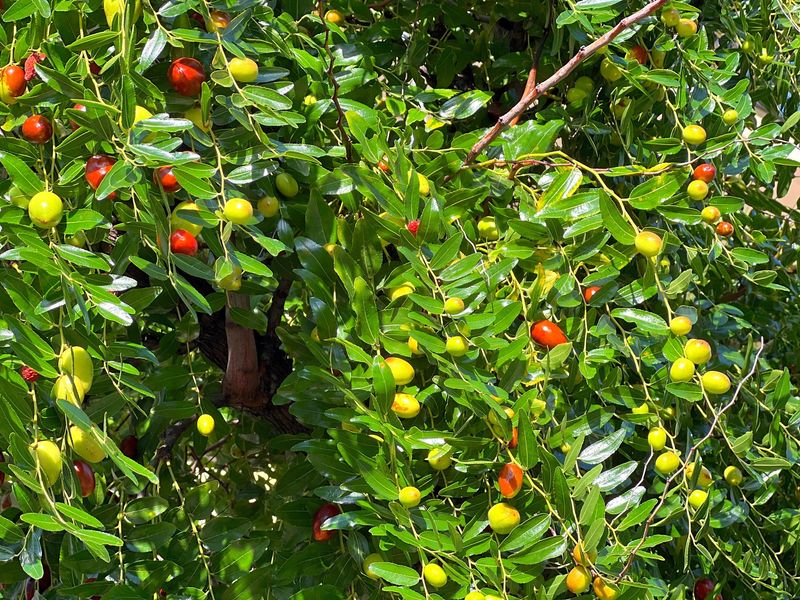
Growing Chinese jujubes in your California yard is rewarding, but knowing exactly when to pick them can feel like a guessing game. Pick too early and the fruit is bland; wait too long and that satisfying crunch disappears.
The good news is that a few simple visual and texture checks will tell you almost everything you need to know, and there is one small change on the skin that signals your picking window is about to close.
Chinese jujube ripeness depends on how you will use the fruit
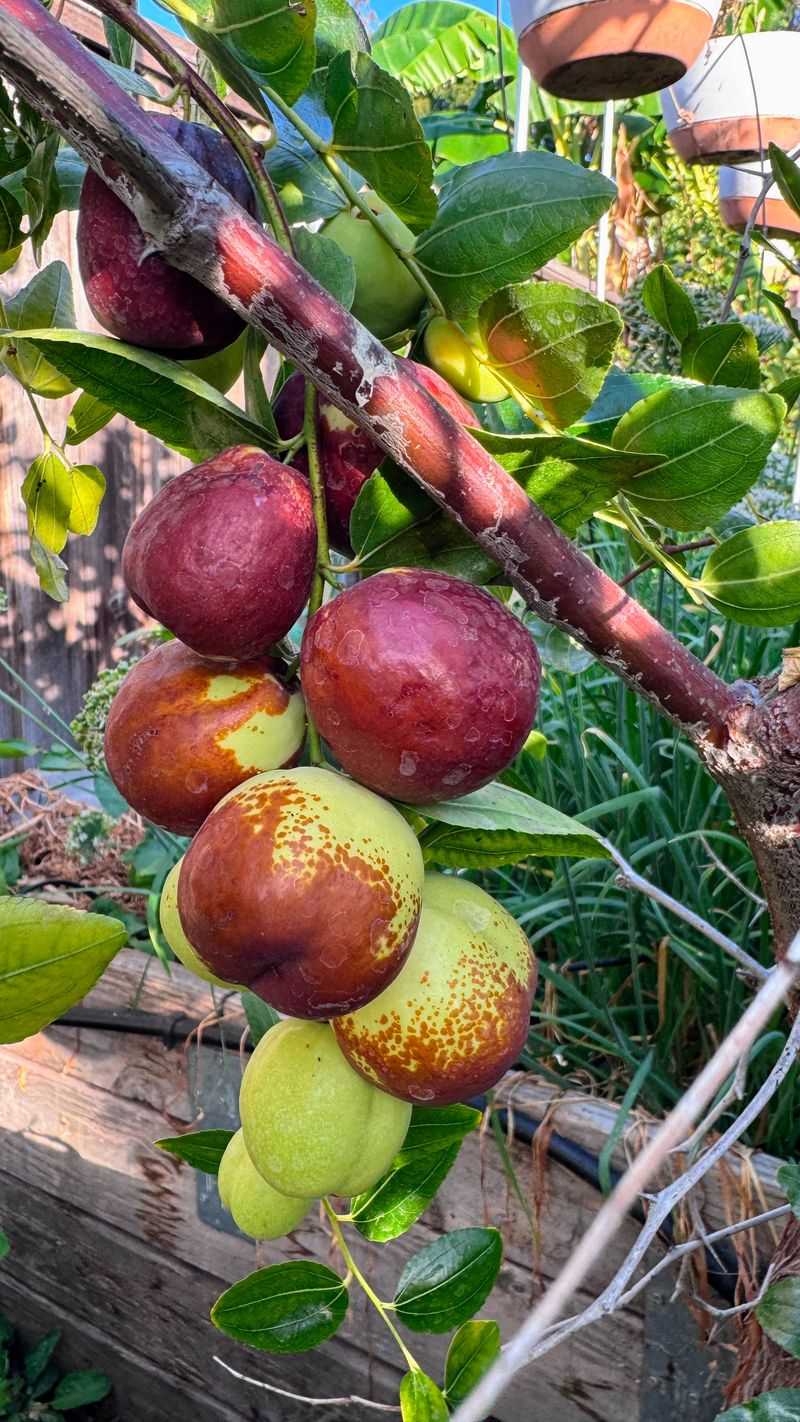
Before checking a single fruit on your tree, it helps to settle one question: what are you planning to do with the harvest? Chinese jujube, Ziziphus jujuba, does not have one universal “ripe” stage.
The right picking moment shifts depending on whether you want a crisp, apple-like snack or a chewy, date-style dried fruit, and the two goals require noticeably different timing.
For fresh eating, the target is firm, fully colored fruit. A jujube at this stage has a satisfying snap when you bite into it and a mildly sweet flavor that many California gardeners find addictive.
New Mexico State University Extension guidance on jujube cultivation describes this crisp, firm stage as the preferred harvest point for fresh-eating varieties, noting that the fruit begins softening and wrinkling several days after reaching full color.
For drying, more color development and some softening are actually desirable. A fruit moving toward a chewier texture is heading in the right direction for a dried product rather than declining toward waste.
California’s long, dry summers can favor natural on-tree drying in some locations, but that approach is weather-dependent and not a requirement.
One important species note: this article covers Chinese jujube, Ziziphus jujuba, which is the species most commonly grown by California home gardeners. UF/IFAS Extension’s overview of jujube as a fruit crop makes clear that Indian jujube, Ziziphus mauritiana, is a distinct species with different growing and ripening behavior.
The harvest cues described here should not be applied automatically to Indian jujube or any other species without separate guidance.
Color marks the tree’s harvest window
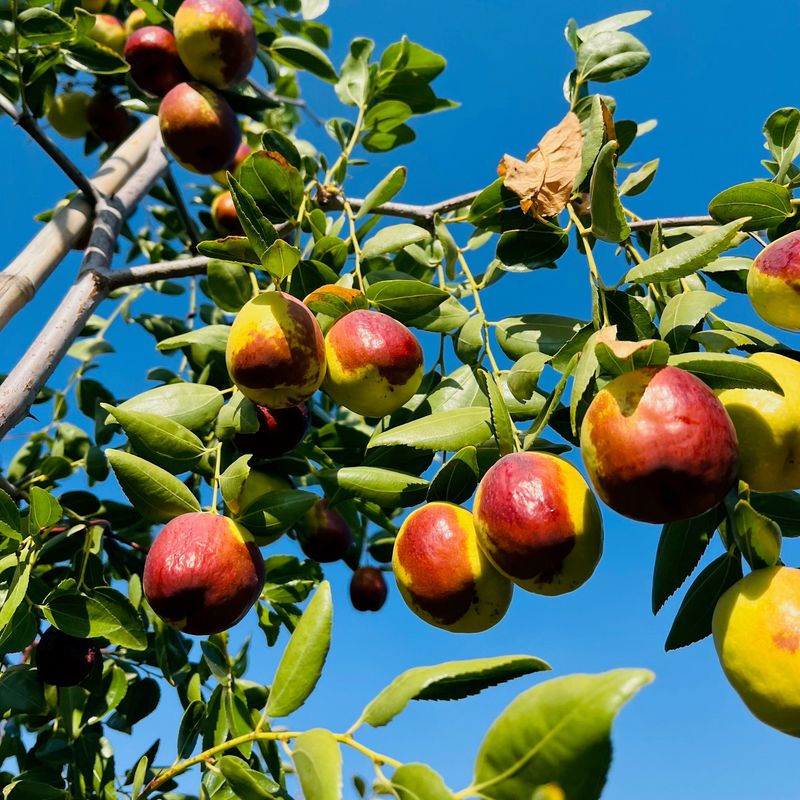
Skin color is the first thing to look at when you walk up to your jujube tree. Chinese jujubes move through a predictable sequence as they mature: green, then whitish-green, then reddish-brown, and finally dark brown or mahogany.
Each stage tells you something specific about where the fruit stands.
Green or whitish-green fruit is generally too early for the best eating quality, and this is not just a matter of taste. UC Davis Postharvest Research guidance on jujube warns that fruit picked while still green does not ripen satisfactorily off the tree.
Unlike a peach or banana, a green Chinese jujube will not quietly sweeten on your counter. What you pick is largely what you get, so patience at the green stage pays off.
Once the fruit shifts into reddish-brown or mahogany territory and still feels firm when you press it gently, you have a strong fresh-eating candidate. NMSU Extension’s jujube fact sheet identifies this fully colored, firm stage as the sweet spot for crisp eating.
The fruit at this point has developed its sugar content and that characteristic crunch without yet moving into the softer, chewier texture that follows.
Color alone, though, cannot give you the complete picture. Cultivar differences, irrigation levels, heat load, and crop volume on the tree all influence how a fruit looks at any given moment.
A firm, fully colored jujube is a reliable candidate; a soft or damaged one of the same color is not. University of Arizona Cooperative Extension’s Chinese jujube guide reinforces that color is a useful primary indicator but works best when paired with a firmness check rather than used on its own.
The first wrinkle signals that crispness is starting to fade
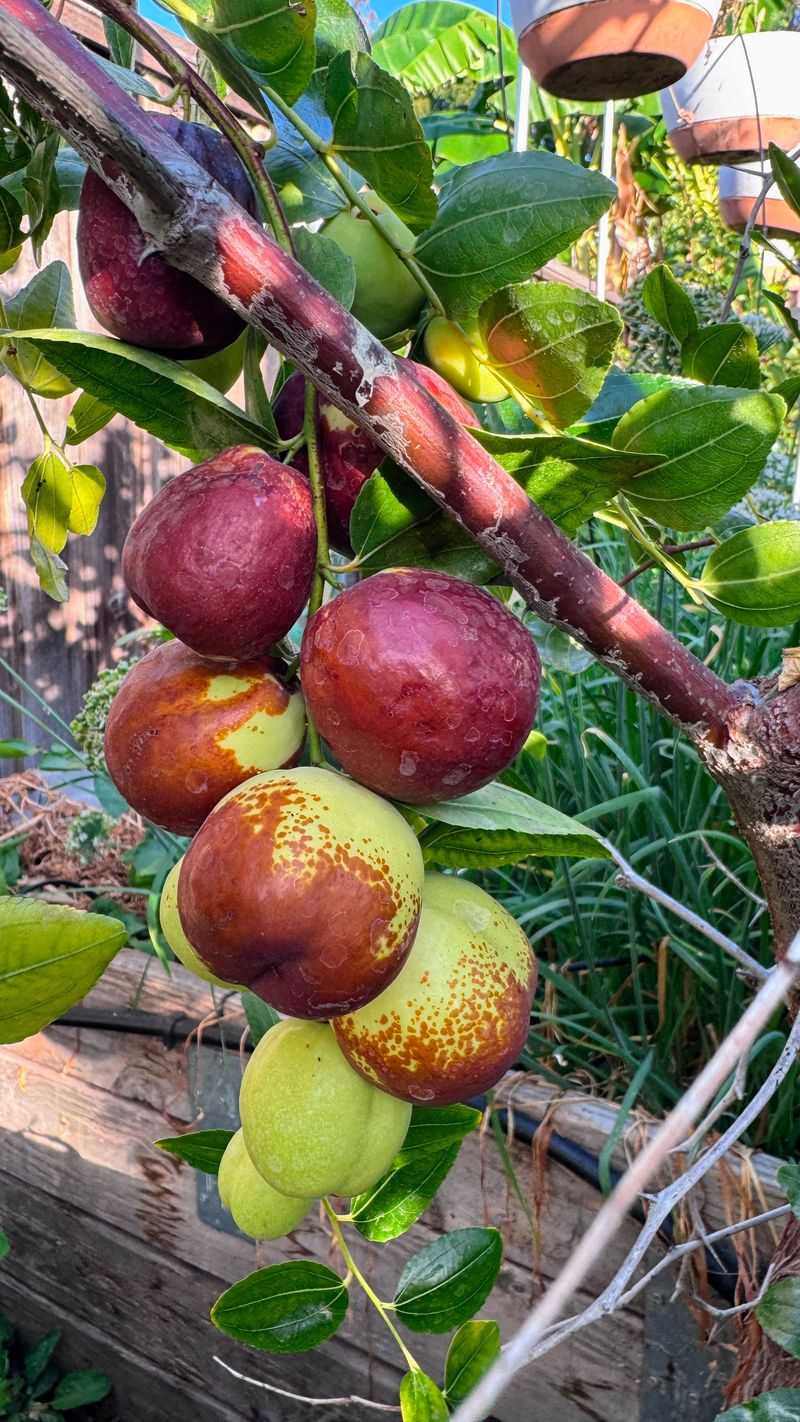
Here is the moment most California gardeners miss. The fruit looks fully colored, it has been hanging on the tree for a few days past the first blush of red-brown, and then a faint crinkle appears across the skin.
That first visible wrinkle is not cosmetic. It is the tree telling you the crisp fresh-eating window is closing and the fruit is moving into a different stage entirely.
University of Arizona Cooperative Extension’s jujube publication describes a roughly three-to-five-day interval between the first brown coloration and the onset of wrinkling as a useful guideline for timing the fresh-eating harvest. Treat that window as a flexible prompt rather than a statewide countdown.
Cultivar, daily heat, irrigation, and local humidity all affect how quickly any individual fruit moves through that gap. A hot inland valley week will compress the window; a cooler coastal stretch may extend it.
NMSU Extension adds that the fruit begins softening and wrinkling several days after reaching full red color, which aligns with the Arizona guidance and gives you a practical cross-check: if the skin is beginning to pucker and the flesh yields more than you expect under light finger pressure, the crisp stage has passed.
Wrinkling by itself does not mean the fruit is ruined. California Rare Fruit Growers’ jujube profile notes that the fruit naturally shifts toward a date-like, chewy texture as it dries, and early wrinkling is part of that normal transition.
The signs that actually indicate a problem are different: visible mold, an off or fermented odor, active soft decay spreading from a crack or wound, severe skin splitting, or extensive insect damage. A recent postharvest review on jujube storage and quality confirms that physical injury and moisture fluctuations accelerate decay, so a wrinkled but otherwise intact fruit in dry California air is a different situation from one that is cracked, leaking, or showing fungal growth.
The practical rule: once you spot the first wrinkles, pick what you want for fresh eating right away, and redirect any wrinkled fruit toward drying rather than the snack bowl.
Use color and firmness to judge each fruit
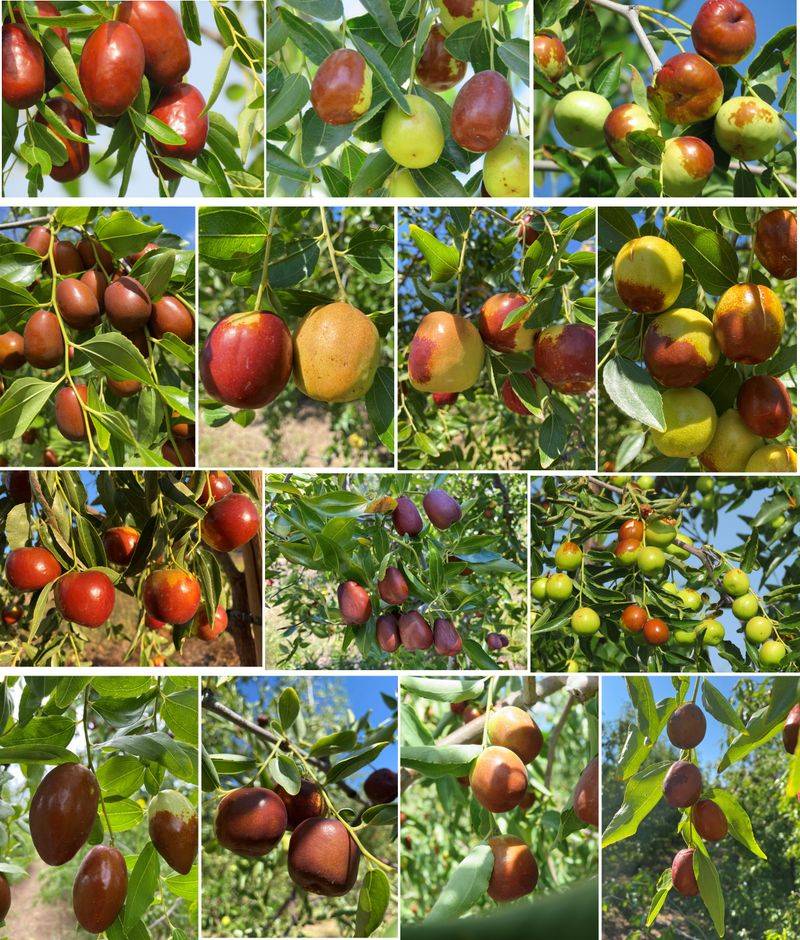
A reliable individual-fruit check takes about three seconds. Look at the color first, then scan for any skin puckering, and finally press the fruit lightly with a fingertip.
Firm flesh that resists gentle pressure is what you want for fresh eating. A fruit that gives noticeably under light pressure has moved past the crisp stage, even if its color still looks appealing.
NMSU Extension recommends manual harvest for fresh-eating cultivars precisely because it gives you the chance to make this call fruit by fruit rather than stripping the tree all at once. Jujubes do not ripen uniformly.
On any given day, one branch may carry perfect mahogany fruit while another holds fruit that is still partly green or already softening. Declaring the whole tree ready at once is the most common harvesting mistake.
Cultivar matters more than many gardeners realize. The ‘Li’ variety, one of the most widely planted fresh-eating types in California, is commonly associated with large, crisp fruit and a mahogany skin at peak eating stage.
Texas A&M AgriLife Extension’s jujube guide identifies mahogany skin and crisp texture as useful maturity cues for ‘Li’ specifically. But ‘Lang,’ ‘Honey Jar,’ ‘GA-866,’ and other cultivars grown across California can have different preferred eating stages, different sizes, and different textures at the same color.
California Rare Fruit Growers notes these cultivar differences and cautions against assuming that one visual standard applies across all named varieties.
Research also confirms that harvest stage has measurable effects on quality. A study published in Scientia Horticulturae on harvest maturity and postharvest quality found that picking stage directly influences firmness, soluble solids content, sensory quality, and how well the fruit holds up in storage.
Picking a day or two early or late is not a neutral choice. The color-plus-firmness check gives you the most reliable on-tree signal available without lab equipment, and repeating it on individual fruits across multiple visits is the most practical way to catch each one at its best.
Plan several picking passes during the California harvest season
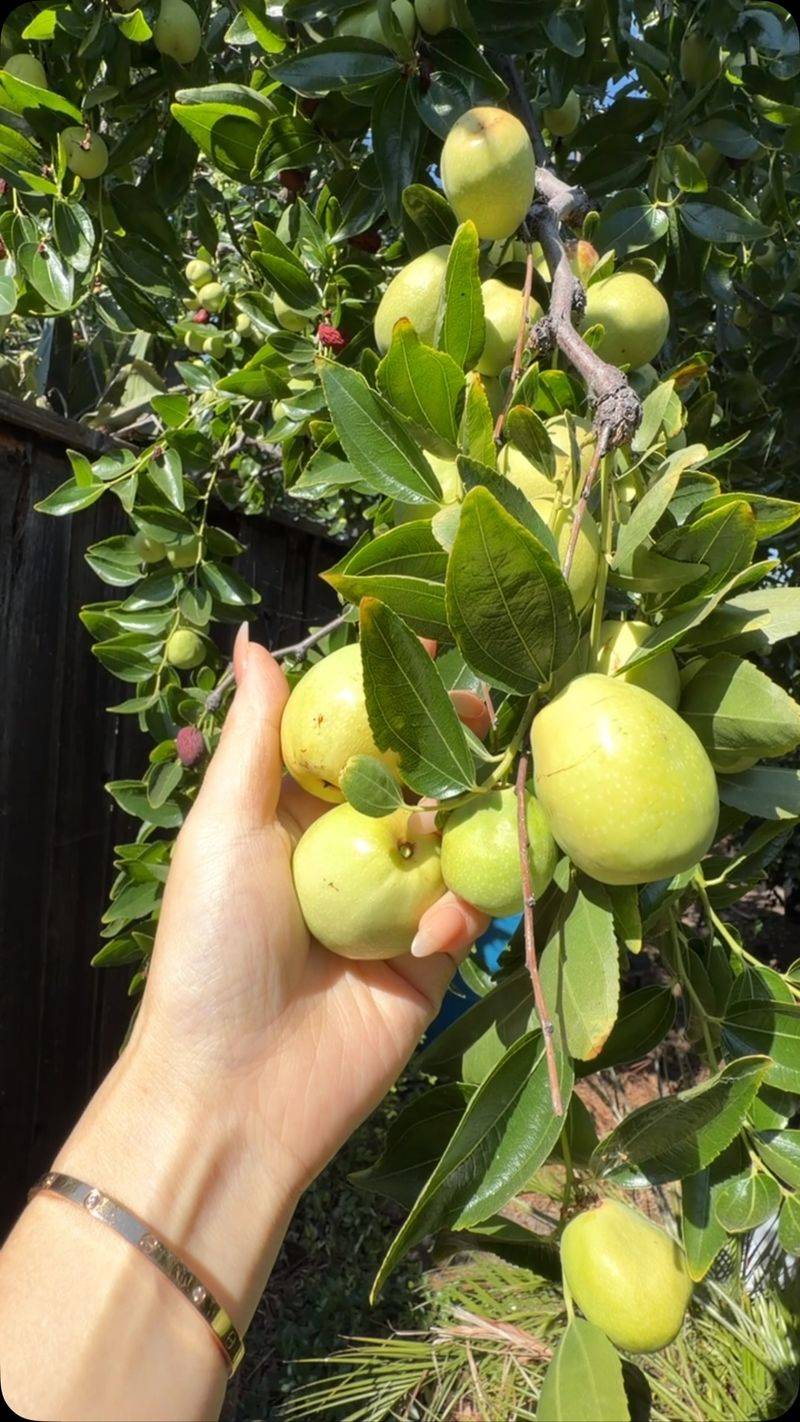
A single harvest day almost never works for jujubes. The tree ripens fruit in waves, not all at once, and a realistic California routine builds in repeated visits to the tree across several weeks rather than one big picking session.
August and September are the most common harvest months for Chinese jujubes in California, but that window shifts with local climate, cultivar, tree age, crop load, and the specific weather pattern of any given year. A UC Agriculture and Natural Resources account of California jujube growing describes harvest spread across several weeks in August and September, which matches what most home gardeners observe.
Treat those months as a general framework, not a statewide schedule.
NMSU Extension and University of Arizona Cooperative Extension both emphasize that jujubes ripen unevenly and that repeated picking over the season is standard practice. A practical approach is to walk the tree every three to five days during the peak color period, pick what has reached full reddish-brown or mahogany color and still feels firm, and leave the rest to continue developing.
California’s dry summer climate can allow fully colored fruit to remain on the tree and begin drying naturally without immediately deteriorating. That is a real advantage compared with humid regions.
However, prolonged hanging is not without risk even in a dry climate. Rain events, marine layer humidity along the coast, insects, birds, and physical damage from wind or branch movement can all reduce quality.
UC Davis postharvest guidance notes that physical injury increases susceptibility to fungal decay, and cracking from moisture fluctuations can open the door to disease. Regular inspection and selective picking are far safer than waiting for the tree to sort itself out.
Choose between on-tree drying and prompt off-tree drying
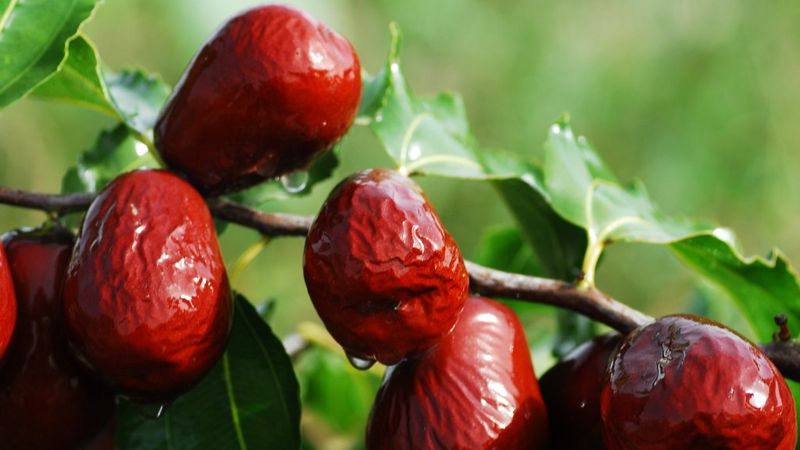
Drying fruit needs a later starting point than crisp fresh eating. For most drying uses, you want fully red to dark red-brown color and a texture that has already begun shifting away from firm crunch toward something softer and more pliable.
NMSU Extension identifies fully red fruit as the preferred harvest stage for drying cultivars, and that guidance holds for California gardeners working with varieties like ‘Lang’ that are commonly dried.
In suitably dry California conditions, leaving fully colored fruit on the tree to wrinkle and dry naturally is a legitimate option. The low humidity and reliable sunshine in many inland California locations can allow this process to work well without significant mold or fermentation risk.
California Rare Fruit Growers notes that jujubes can dry on the tree in California’s arid climate, producing a chewy, date-like result that many people prefer.
On-tree drying is a climate-dependent choice, not a universal recommendation. If your location gets late-summer rain, significant coastal fog, or a stretch of humid weather, leaving fruit on the tree past full color becomes a gamble.
UF/IFAS Extension’s jujube publication underscores that humid conditions favor prompt harvest of fully colored fruit followed by quick off-tree drying to reduce yeast, mold, cracking, and insect risks. California gardeners in coastal zones or areas with variable late-season weather should follow the same logic.
Off-tree drying after harvest is a reliable alternative regardless of your local climate. Pick fully colored fruit before it cracks or shows insect damage, and dry it in a food dehydrator or a well-ventilated dry space.
UC Davis postharvest notes caution that physical damage accelerates decay, so fruit intended for drying should be handled carefully and sorted before going into storage or a dryer. Do not leave fruit on the tree indefinitely or wait for it to fall on its own.
Pick gently and sort fruit before eating or drying
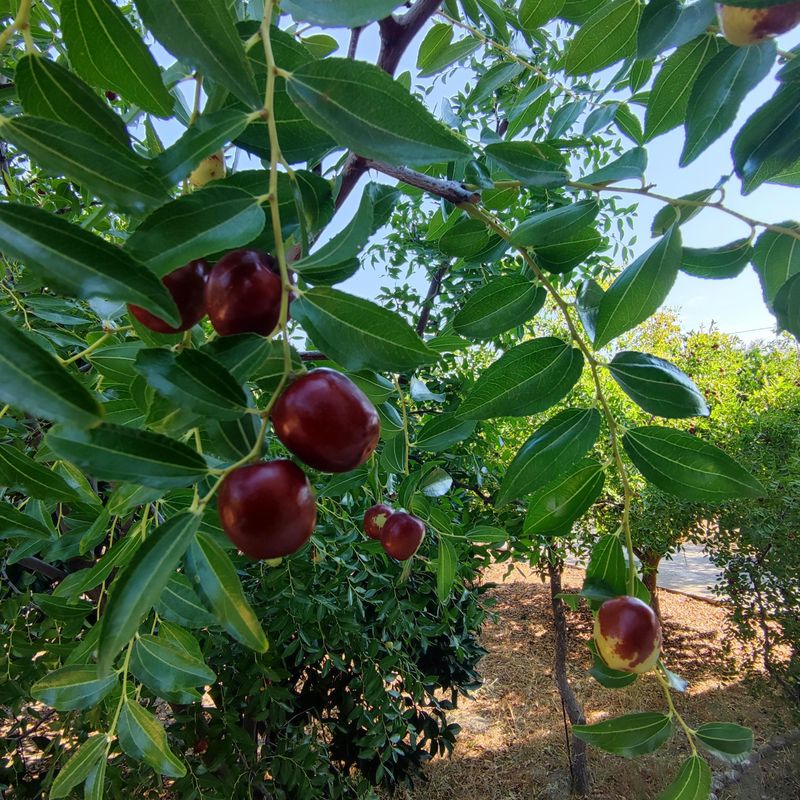
Hand-picking is the right method for fresh-eating jujubes. Grasping each fruit individually and twisting it free with a gentle motion keeps bruising to a minimum.
UC Davis postharvest guidance notes that physical damage increases susceptibility to decay-causing fungi, so a bruised fruit you toss into a basket will not store as well as one handled carefully. Avoid dropping fruit into a container from a height, and do not pile harvested jujubes too deeply where the weight of the top layer crushes those below.
Sort every batch before eating or drying. Discard any fruit showing visible mold, active soft decay, severe skin cracking, or extensive insect damage.
These are not candidates for drying or repurposing. NMSU Extension advises rejecting damaged fruit rather than trying to salvage it, and that advice is especially practical for California gardeners who may find bird pecks, stinkbug punctures, or rain-related splits in a late-season batch.
Every jujube contains a hard, pointed central pit, and this is not a minor detail. Texas A&M AgriLife Extension specifically advises being careful of the pit when eating jujubes, and no variety is truly seedless.
Warn children and anyone unfamiliar with the fruit before they bite in, and remove the pit before adding jujubes to recipes or drying them in ways that might make the pit less obvious.
The usable rule that ties the whole article together: pick colored, firm fruit before obvious wrinkles appear if your goal is a crisp fresh snack, and redirect any wrinkled fruit toward drying only when its condition and the local weather genuinely support that choice. A jujube picked at the right moment, handled carefully, and sorted honestly before eating is the straightforward payoff for paying attention to one small change on the skin.